REVIEW · CASTEL SANTANGELO TOURS
Rome: Castel Sant’Angelo: Private English Tour
Book on Viator →Operated by TRIP IN ART · Bookable on Viator
Castel Sant’Angelo packs a lot of story. I love the private guide (your questions get real answers) and the dedicated ticket line that saves time. One thing to plan for: you still have to go through security, usually a short wait.
You’ll start on the river at St. Angelo Bridge, then move into the fortress to connect Roman empire power to papal defense. In past tours, guides such as George, Giorgio, and Valentina have brought the centuries to life, and the finale is the summit view over Rome.
In This Review
- The Best Part of a Private Castel Sant’Angelo Tour: Going Deeper, Not Wider
- St. Angelo Bridge: 134 CE, Bernini Angels, and the Tiber’s Watch
- Inside Castel Sant’Angelo: How Hadrian Became a Papal Fortress
- Passetto di Borgo: A Star Detail You Can’t Walk Through
- Papal Apartments and Conserved Artwork: What the Tour Really Helps You Notice
- The Summit View: Your Rome Photos Are Set Up for You
- Price and Value: Paying for Time Saved and Story Made Clear
- How the Ticket Line Works (and the Security Step You Can’t Skip)
- Walking Pace, Bags, and Comfort: What to Do Before You Go
- Who This Private Tour Suits Best (and Who Might Feel Meh)
- Should You Book This Private Castel Sant’Angelo Tour?
- FAQ
- How long is the Rome Castel Sant’Angelo private tour?
- Is the tour private, or will I be grouped with strangers?
- Is it offered in English?
- Are tickets included, and do I need to pay an entrance fee?
- Where do we meet for the tour?
- What fitness level do I need?
The Best Part of a Private Castel Sant’Angelo Tour: Going Deeper, Not Wider
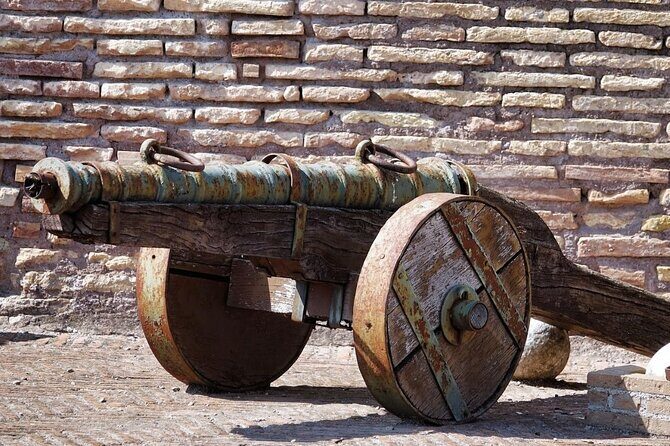
This is a 90-minute, private, English-speaking walking tour focused on one site. That matters in a city where you can easily spend your time herding yourself between monuments.
With a private setup, the guide can slow down where you care—whether it’s Hadrian’s mausoleum roots, papal fortification, or the dramatic angles from the top. And if you want to ask about the famous details you spot on the way (like the angel statues on the bridge), you can.
St. Angelo Bridge: 134 CE, Bernini Angels, and the Tiber’s Watch
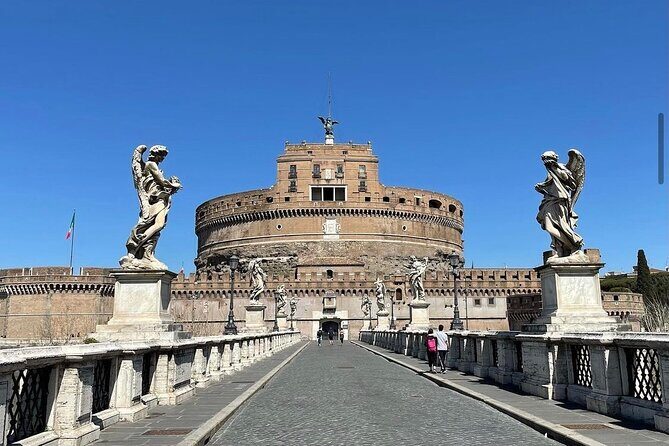
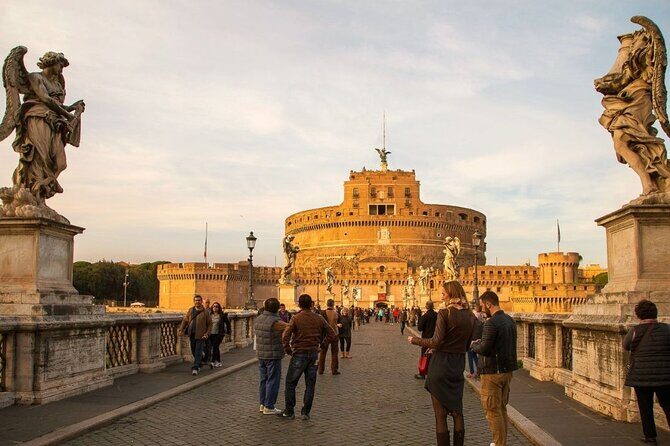
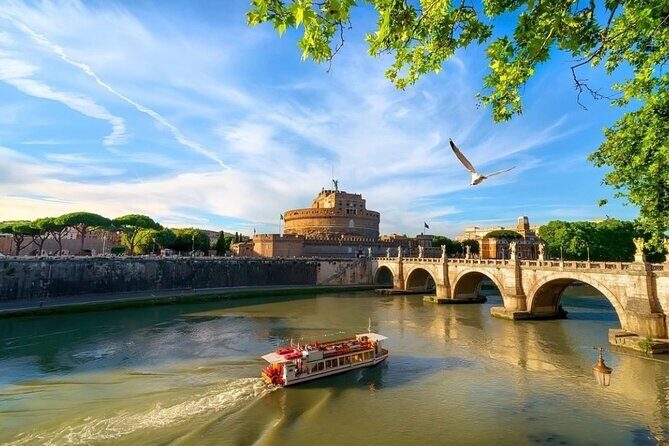
Your tour begins at Castel Sant’Angelo Lungotevere Castello, right by St. Angelo Bridge. This bridge was completed in 134 CE, and it’s not just a pretty approach—it’s a shortcut into the mindset of old Rome: control the river, control the city.
You’ll also hear about the angel statues—works associated with Bernini, Raggi, and Morelli—standing along the route. Even if you’re not a sculpture person, they’re a great way to see how art and power mix here: the bridge reads like a monument, not a crossing.
You can also read our reviews of more private tours in Rome



Inside Castel Sant’Angelo: How Hadrian Became a Papal Fortress
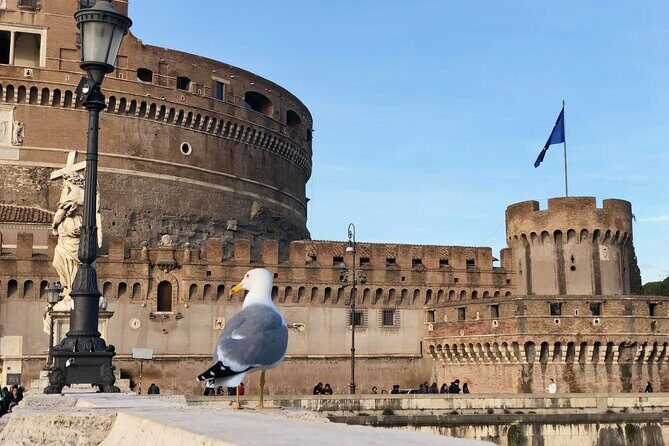
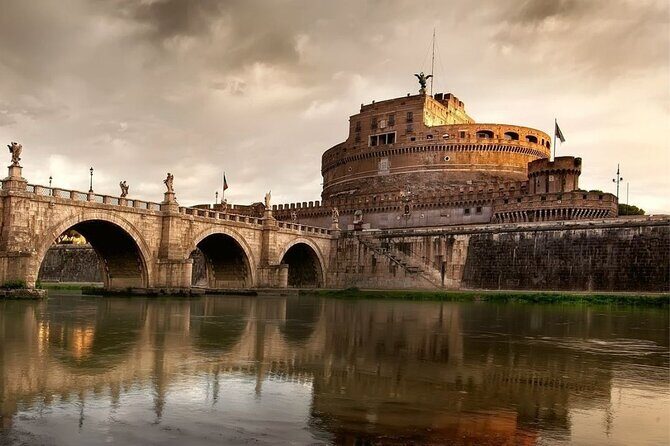
After a quick orientation from outside, you’ll enter the castle and get the bigger storyline pulled tight. Castel Sant’Angelo started as the mausoleum of Emperor Hadrian, then shifted roles as Rome changed.
The guide will connect key chapters you can actually picture: it guarded the Tiber for over 2,000 years, served as a symbol of imperial Rome, and later became a papal fortification. You’ll also hear how it links to the Antonine emperors’ burial traditions until Caracalla, which helps the site feel less random and more like a timeline you can follow.
Passetto di Borgo: A Star Detail You Can’t Walk Through
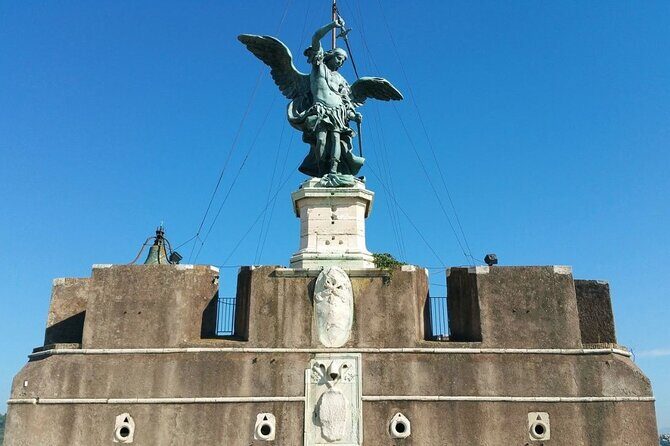
One of the most intriguing parts of the tour is the Passetto di Borgo. This is a tiny elevated passage that once connected Castel Sant’Angelo to the Vatican, made famous through popular culture—Dan Brown’s Angels & Demons—though it’s closed to the public.
Even though you won’t enter it, your guide’s explanation helps you understand why this fortress mattered. It wasn’t only a military structure; it was built around movement and escape, which changes how you read the castle layout once you’re standing inside.
Papal Apartments and Conserved Artwork: What the Tour Really Helps You Notice
When you’re inside, the experience isn’t just a walk-and-look. The tour is designed to point you to specific types of spaces—beautiful halls, conserved artworks, and papal apartments—so you know what you’re seeing and why it’s there.
That’s where a private guide earns its keep. Without one, you might treat the rooms like background to the view. With one, you get context that turns the rooms into evidence: evidence of changing goals, different tastes, and how security and prestige lived side by side.
If you’re the type who likes to understand what you’re looking at, this part is the heart of the visit.
The Summit View: Your Rome Photos Are Set Up for You
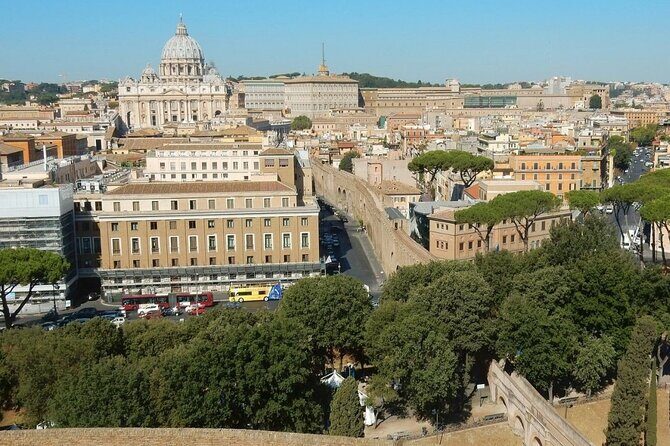
Eventually, you’ll reach the fortress’s summit. The payoff is a panoramic view of Rome, the kind that makes even seasoned walkers stop for a minute and look around.
In the reviews, this is a repeated highlight—especially when the light is soft, since you get long sightlines over the city. If you can, plan your photo stops with the expectation that you’ll want a few minutes of just watching, not just snapping.
This is also a good moment to ask your guide one last question, because they can point out what you’re seeing from up there. It helps the view become a map in your head, not just a pretty picture.






Price and Value: Paying for Time Saved and Story Made Clear
The price is $190.84 per person for about 1 hour 30 minutes. That’s not a bargain price tag, but it’s also not trying to be. You’re paying for a private licensed guide, a dedicated ticket line entrance, and the convenience of organized access.
There’s also a practical detail: site tickets are part of what you’ll receive through the tour staff. The site ticket fee is 16€, and your ticket is delivered at the meeting point. The additional tour amount covers guide services, audio devices if needed, and reservation/amenities.
To me, the value equation is simple:
- If you enjoy asking questions and want the story organized, a private guide saves you from reading everything on your own.
- If you’re happy wandering and don’t care about context, you could potentially spend less elsewhere.
Your best bet is matching the tour style to your travel style.
How the Ticket Line Works (and the Security Step You Can’t Skip)
The tour includes a dedicated ticket line—so you generally skip the long queues. But you will still go through security, and that typically means about a 5–10 minute wait.
So don’t plan this like it’s friction-free. Instead, think of it as a time saver: you’re reducing the biggest delays while still keeping you on the safe side for entry.
You’ll also get headsets if needed, which is helpful in a place where sound can bounce around and groups can get crowded. This is one of those small details that makes the guide easier to hear.
Walking Pace, Bags, and Comfort: What to Do Before You Go
This is a moderate-fitness tour. You’ll do a fair amount of walking and climb up to the summit area, so comfortable shoes matter more than you’d think. You’ll also want to avoid carrying large bags or backpacks, since the castle setting can make bulky items a hassle.
The meeting point is Castel Sant’Angelo Lungotevere Castello, 50, 00193 Roma. Plan to arrive 15 minutes early, because you’ll meet at that time so the team can handle organization and check-in. The tour ends back at the same meeting point.
One more practical note: the site is near public transportation, so you can typically plug it into the rest of your day without a complicated detour.
Who This Private Tour Suits Best (and Who Might Feel Meh)
This is ideal for you if:
- you want a private experience with undivided attention
- you like history that connects emperors, papal power, art, and architecture into one thread
- you care about the view but also want the route to make sense
- you’re traveling with kids or a group where questions matter (private guides can tailor pace)
It’s less ideal if you:
- want to speed through quickly with zero backstory
- hate walking up to viewpoints and prefer flatter sites
- show up without time buffers for security and check-in
One last real-world consideration: one published review reported a day where the guide didn’t show up. That seems to be the exception, but it’s a reminder to keep your day-of contact info handy and double-check confirmations when you’re heading out.
Should You Book This Private Castel Sant’Angelo Tour?
If you want a Rome landmark with a guided storyline and a strong finish at the top, I think this is a smart booking. The combination of private guide attention, skip-the-line access, and the summit view makes it a high hit-rate experience for most travelers who like context, not just photos.
Book it especially if you’ve been to other big-ticket sites and you’re now craving something more focused. Castel Sant’Angelo can feel overwhelming if you’re just wandering. With a guide who explains how the site changed roles over time, it clicks fast.
If you hate stairs or want a free-form self-guided stroll, you might consider other options. But for most people who enjoy history and a great viewpoint, this one earns its price.
FAQ
How long is the Rome Castel Sant’Angelo private tour?
It runs for about 1 hour 30 minutes, including the walking time to the bridge and into the castle up to the summit.
Is the tour private, or will I be grouped with strangers?
It’s a private tour/activity, meaning only your group will participate.
Is it offered in English?
Yes, this experience is offered in English.
Are tickets included, and do I need to pay an entrance fee?
You’ll receive monument tickets delivered by the tour staff at the meeting point. The site ticket fee to the archaeological sites is listed as 16€, while the additional amount covers services like the licensed guide and reservation-related amenities.
Where do we meet for the tour?
You meet at Castel Sant’Angelo Lungotevere Castello, 50, 00193 Roma RM, Italy. The meeting time is 15 minutes before the scheduled departure.
What fitness level do I need?
You should have a moderate physical fitness level. The tour involves walking and reaching the fortress’s summit.