REVIEW · COLOSSEUM TOURS
Rome: Caracalla, Colosseum, Circus Maximus Private Tour
Book on GetYourGuide →Operated by Tour in the City - Travel Agency Rome - · Bookable on GetYourGuide
Romemaking gets real when you walk these ruins with a pro. This private tour ties three headline sites together in a way that makes ancient Rome feel less like sightseeing and more like a story with cause and effect. I especially like how the guide explains the Colosseum so you understand what you are looking at, not just that it is famous. You also get to swap arenas and temples-of-spectacle for the raw everyday drama of Roman public life at Caracalla.
The second thing I like is the pacing: you hit the Colosseum, then the scale-check of Circus Maximus (built for huge chariot crowds), and then you land at the Baths of Caracalla when the light and the mood often shift. One thing to consider: there is airport-style security at the Colosseum, and during busy periods the wait can be up to 30 minutes, so plan to arrive early and travel light.
In This Review
- Key things to know before you go
- How this private Colosseum–Circus Maximus–Caracalla route really works
- Finding the meeting point near the Colosseum Metro
- Entering the Colosseum: what the guide helps you see
- Circus Maximus: chariot racing scale, explained in plain terms
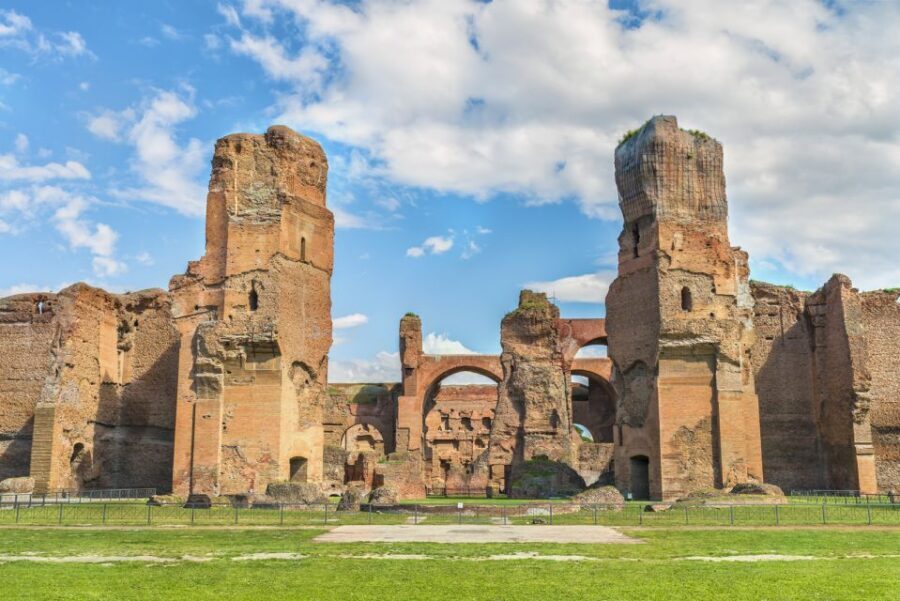
- Baths of Caracalla: Roman public life at its most architectural
- What you get from a private guide (and why it shows)
- Value and cost: is $215.23 per person worth it?
- Smart packing and rules that actually matter
- Who this tour suits best
- Should you book this private Rome tour?
- FAQ
- How long is the private tour?
- Where do I meet the guide?
- What sites are included?
- Is this tour private?
- What languages are available for the guide?
- Can I skip the ticket line for the Colosseum?
- What is the cancellation and refund policy?
Key things to know before you go
- Skip-the-line entry for the Colosseum ticket process, so you lose less time to paperwork and queues
- A professional art historian guide with live commentary in multiple languages
- A tight 3-stop route that moves from gladiator spectacle to chariot racing to public baths
- Colosseum security rules: bring photographic ID, and expect metal-detector style screening
- Pack small: large bags and backpacks are a problem and there is no cloakroom for big items
How this private Colosseum–Circus Maximus–Caracalla route really works
This is a true private guided format. That matters in Rome, because the main sights can be crowded, noisy, and full of people trying to photograph everything at once. With a private guide, you can keep the focus where it should be: on what the site was designed to do, how it functioned, and why it is still impressive today.
Your tour covers three stops that balance spectacle with daily Roman life:
- The Colosseum for entertainment and construction details tied to gladiators
- Circus Maximus for the scale of chariot racing and mass crowds
- The Baths of Caracalla for the grandeur of Roman public bathing, built between AD 212 and 217
The tour runs about 3 hours. The exact starting time depends on availability, so check your slot before you plan meals or nearby sights.
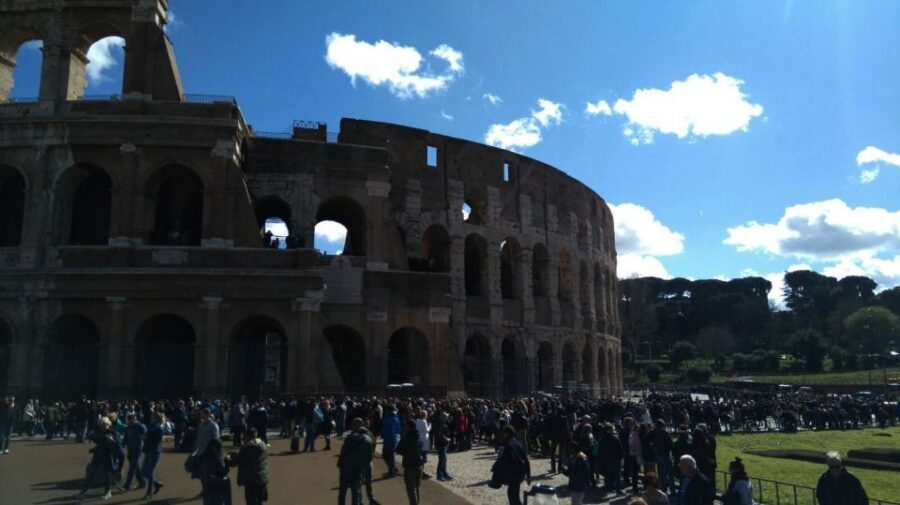
Before you even reach the Colosseum, you will deal with a practical Rome step: security. The Colosseum requires airport-style screening, and in high season you may wait up to 30 minutes. That is not a scare tactic. It is just reality, and it is why I think this tour is best when you are prepared to show up on time and keep your bag policy in mind.
You can also read our reviews of more private tours in Rome

Finding the meeting point near the Colosseum Metro
Meeting point details can make or break your start time. Here, it is very specific: you meet at Via della Polveriera 11, located above and behind the Colosseum Metro Station.
Here is the practical version:
- Go to the Colosseum Metro Station area.
- Cross the small pedestrian bridge just up from and to the side of the 2nd level.
- Walk about 100 meters (around 300 feet) straight ahead from there.
Arrive at least 30 minutes early. You will want that buffer for security planning, photo ID checks, and the simple fact that Rome streets are easier when you are not rushing.
Your tour also lists a starting location at Via delle Terme di Tito, 72. In practice, you meet at Via della Polveriera 11, then your guide leads the group to the start of the on-site sequence.
Entering the Colosseum: what the guide helps you see
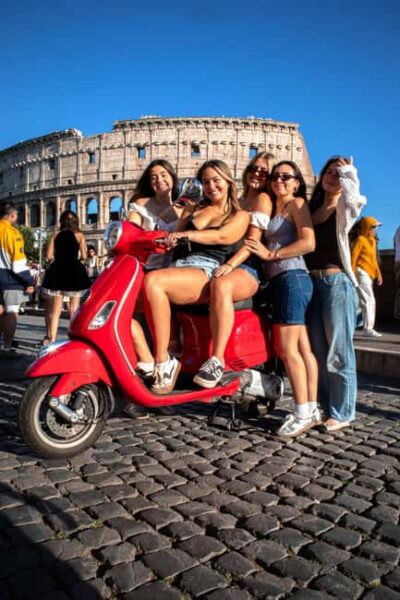
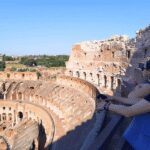
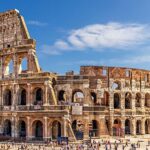
The Colosseum stop is your anchor. This tour includes a private guided tour inside one of the largest and most famous monuments in the world, and it is structured to help you notice details that most people miss while they are just scanning for the best photo angle.
What makes this stop valuable is the way the guide connects three things:
- Construction methods, so you can understand how it was built to last (and why it looks the way it does today)
- The entertainment system, so the place stops feeling like ruins and starts feeling like a working machine
- Gladiator stories, which give human stakes to the stone and arches
You will also get the benefit of not having to wrestle the ticket line. The tour description specifically includes skip-the ticket line, which is a big deal when the crowds surge and you are stuck at the wrong place at the wrong time.
Important practical point: you must plan for Colosseum security. Bring your passport or ID card, plus photographic ID for the security check into the Colosseum. The screening is airport-style, and in busy season the wait can reach up to 30 minutes. If you show up right at your start time with a bag full of extras, you will feel rushed. If you show up early with a small, clean setup, it feels smooth.
Also watch the rules. Inside the Colosseum:
- Selfie sticks are not allowed
- No large bags, backpacks, or suitcases
- You may bring a small bag, but there is no cloakroom service for larger items
And yes, it is unusual, but the rules also say sunglasses are not allowed. That means bring prescription glasses if you need them, but do not plan on wearing sunglasses through the checkpoint.
Circus Maximus: chariot racing scale, explained in plain terms
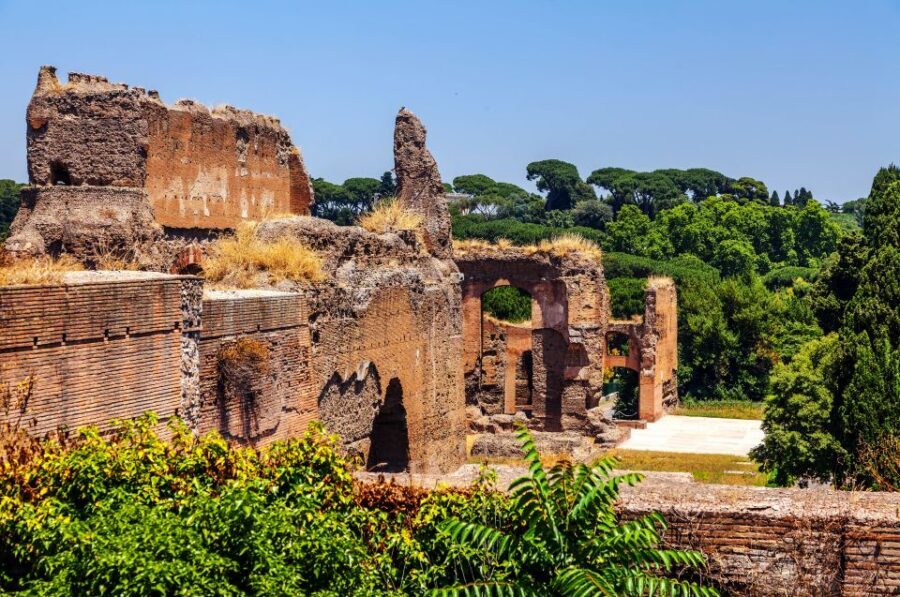
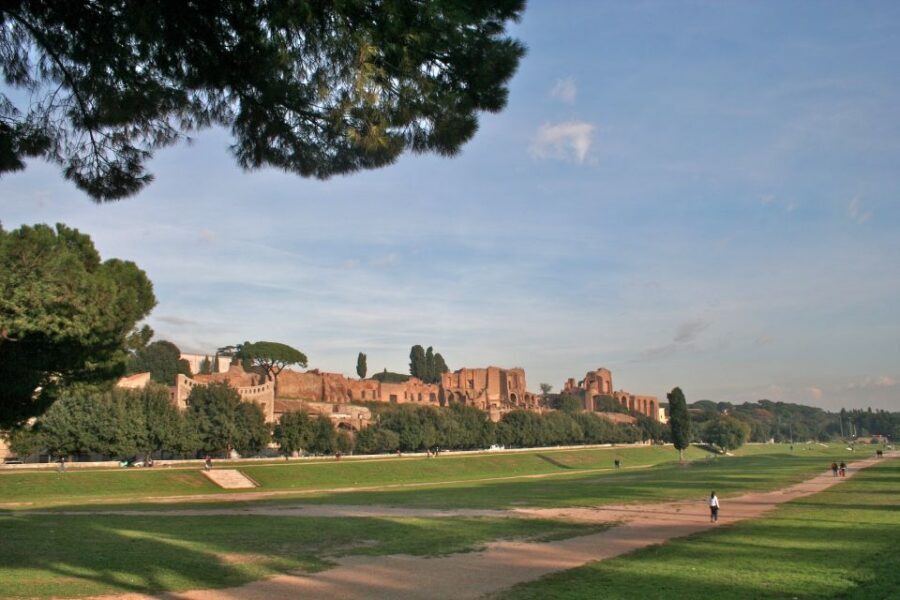
After the Colosseum, you head to Circus Maximus, the home of Roman chariot races. This is one of those places where the space itself tells you the story. Even if the structures are not standing the way they once were, the layout and the sheer scale give you the truth fast.
The tour frames Circus Maximus as:
- The first and largest stadium in ancient Rome
- A site designed for more than 250,000 spectators
That number is huge, and it is exactly why a guide helps. Without context, Circus Maximus can look like open ground and seating traces. With context, it becomes a stage engineered for speed, crowd noise, and big-rhythm spectacle.
The guide’s role here is to help you picture how events flowed:
- Where the action would have been
- How spectators would have packed in for races
- How the site fit into the culture of ancient Rome
If you like understanding how buildings shape behavior, this is your stop. It is also a good mental reset after the Colosseum, because Circus Maximus is about movement and competition rather than enclosed combat arenas.
Baths of Caracalla: Roman public life at its most architectural
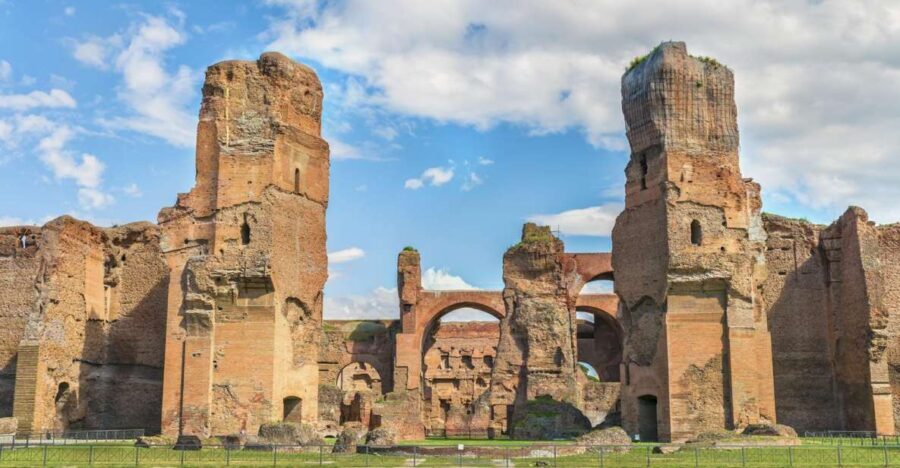
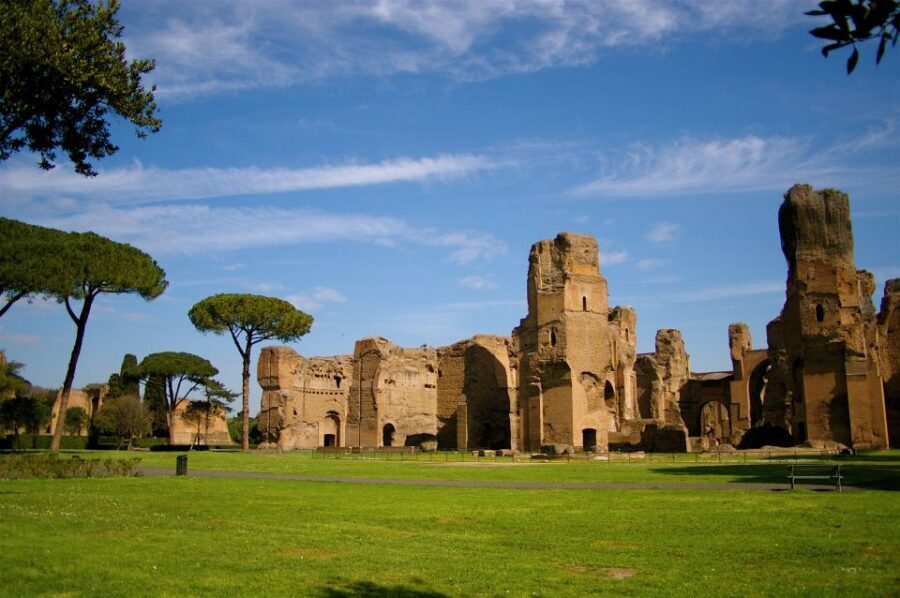
The final stop is the Baths of Caracalla. This is where your tour shifts from stadium spectacle to everyday Roman luxury and discipline. The Baths were built in Rome between AD 212 and 217, during the reigns of Septimius Severus and Caracalla, and they could host more than 1,500 bathers.
The guide positions them as:
- The second-largest Roman public baths
- One of the best preserved baths in Rome
- A masterpiece of Roman architecture
That combination is why you should care. The Baths are not just decorative. They show you how Romans organized public space for health, social life, and routine. When a guide points out the logic of the design, the ruins stop being random walls and become functional layout.
This stop also tends to feel more spacious than the earlier ones. That matters if you want one part of your day that feels less like a sprint. You are still walking, but you are walking through a place designed for slow movement, not fast crowds.
At the end of the tour, you finish around Terme di Caracalla. The meeting-point section of the description also notes the activity ends back at the meeting point. Either way, you should expect to end in the broader Caracalla area and plan your next move based on where your guide wraps up.

What you get from a private guide (and why it shows)
This tour is priced as a private experience, and you are paying for more than access. You are paying for interpretation and control.
Two practical examples from what the tour is built around:
- At the Colosseum, the guide’s focus on construction methods and gladiator stories turns your visit into an actual lesson.
- At Circus Maximus and Caracalla, the guide’s explanations connect scale and design to real behavior—crowds that could reach 250,000 at the Circus, and the 1,500+ bathers who could use Caracalla’s facilities.
There is also a strong comfort factor: you get an expert, and for groups over 8 people, you get headsets so you can hear the guide better. That is one of those behind-the-scenes details that makes a difference in a city full of street noise.
And while the tour description does not list a guide by name, the overall tone from the experience is about leadership. In practice, that means you are less likely to get lost or distracted, and more likely to understand what you are seeing while you are there.
Value and cost: is $215.23 per person worth it?
At $215.23 per person for a roughly 3-hour private tour, you are not buying a bargain. You are buying convenience, time savings, and expert storytelling.
Here is what makes the price make sense:
- Private guided tour (not a big bus group)
- Professional art historian guide
- Entrance fees included per the included items
- Skip-the ticket line for the Colosseum
There is also the reality-check: the price excludes food and drinks, and it excludes transportation to and from the attractions. If you plan to add taxis or extra metro connections, factor that into your total day cost.
One caution: the information section includes both an included and not-included line mentioning entrance fees. That is inconsistent. Before you go, confirm at booking what your ticket coverage includes. The overall tour description strongly signals that admission is handled as part of the tour experience, but you do not want a surprise on the day.
If you are a couple, a small group of friends, or a family with kids who do better with a guide-led route, this is often one of the most efficient ways to see these three major sites without spending half your day figuring out what to do next.
Smart packing and rules that actually matter
This tour runs on-site security and site rules, so pack like you respect the checkpoint.
Bring:
- Passport or ID card
- Comfortable shoes (you are doing a moderate amount of walking)
Plan around the no-go list:
- No pets
- No sunglasses
- No weapons or sharp objects
- No smoking
- No luggage or large bags
- No selfie sticks inside the Colosseum
- No walking frames
- No sprays or aerosols
Dress code is smart casual, but do not overthink it. The important part is shoes and staying comfortable in warm sun or sudden rain.
Also note: the tour may vary depending on weather conditions or events beyond the travel agency’s control. That is normal for Rome. The guide will adjust so you still get the full sequence.
Who this tour suits best
This private tour is a good match if you want:
- A guided explanation of all three sites, not just a quick walk-by
- A format that stays manageable in three hours
- Skip-the-ticket-line value at the Colosseum
- Room for questions through a live guide in your language
It may not be a great fit if:
- You need wheelchair access, since the description says it is not wheelchair accessible
- You are traveling with large bags or suitcases, because there is no cloakroom and entry with big items is restricted
The description also says a children’s discount applies only with a valid ID card, and it notes the tour is suitable for the whole family. So if you are traveling with kids, a private guide can help keep attention on the story at the right pace.
Should you book this private Rome tour?
I would book this if you want a smart, guided way to see three big Roman anchors in one run: the Colosseum, Circus Maximus, and the Baths of Caracalla. The guide-led focus on construction, entertainment, crowd scale, and public bathing is exactly the kind of structure that turns famous ruins into something you can actually remember.
I would hesitate only if you know you will arrive late to Colosseum security or you cannot travel light. The rules about bags, selfie sticks, and the airport-style screening are real, and they reward preparedness.
If you line up early, bring the right ID, and keep your kit small, this feels like one of the most efficient ways to understand Rome’s spectacle and daily life in the same afternoon.
FAQ
How long is the private tour?
The duration is listed as 3 hours.
Where do I meet the guide?
The meeting point is at the tour supplier’s office at Via della Polveriera 11, above and behind the Colosseum Metro Station. You cross a small pedestrian bridge near the 2nd level and then walk about 100 meters straight ahead.
What sites are included?
You’ll visit the Colosseum, Circus Maximus, and the Baths of Caracalla.
Is this tour private?
Yes, it is described as a private group with a live tour guide.
What languages are available for the guide?
The guide is offered in Spanish, English, French, German, Italian, Portuguese, Russian.
Can I skip the ticket line for the Colosseum?
Yes. The tour description says it includes skip the ticket line.
What is the cancellation and refund policy?
You can cancel up to 4 days in advance for a 50% refund.