REVIEW · CYCLING TOURS
Rome By Night E-Bike Tour
Book on Viator →Operated by Rex-Tours · Bookable on Viator
Rome looks different after dark. This tour strings together Rome’s biggest monuments with cool evening air, car-free feelings, and guided stops that are timed for photos, not queues. I like that it’s built around an e-bike route, so you get the sense of distance and drama without the sweaty walk between neighborhoods.
Two things I really like: the way you ride past landmarks staged by floodlights (Colosseum, Forum, Pantheon area, and more), and the small group size that keeps the ride from turning into a shuffle. One possible drawback: it’s a sightseeing tour, not a museum-style experience—plan for short stops and no interior visits at the monuments due to time and line restrictions.
In This Review
- Key highlights worth your attention
- Rome at 7:00 pm: why e-bikes are the smart move
- Meeting near the Pantheon: getting set up fast
- Colosseum and Roman Forum after the crowds: the “no line” feeling
- Pantheon and Piazza Navona: classic Rome in floodlight mode
- Capitoline Hill at Piazza del Campidoglio: one of the best views
- Cats, temples, and the Jewish Ghetto edge: Torre Argentina to Campo de’ Fiori
- Temples of the Tiber: quick stops that make the route make sense
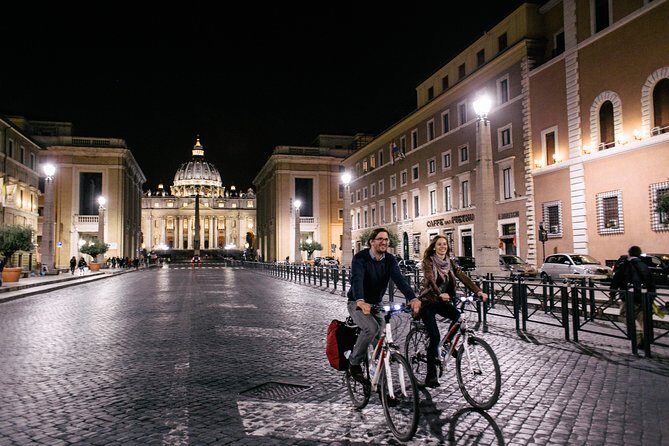
- St. Peter’s Square and the ride back: why the route feels efficient
- What you’re paying for (and what you’re not)
- Who should book this night e-bike ride
- Should you book the Rome By Night e-bike tour?
- FAQ
- How long is the Rome by Night e-bike tour?
- What time does the tour start?
- Where is the meeting point?
- How big is the group?
- Are e-bikes and helmets included?
- Do I need to know how to ride a bike?
- Are we entering monuments like the Colosseum?
- Is the Colosseum ticket included?
- What language is the tour offered in?
- What’s the cancellation and weather situation?
Key highlights worth your attention
- Night lighting over the Colosseum and Roman Forum with time for photos and questions
- E-bike ease that makes hills and longer distances much more manageable
- A tight, small-group pace (capped at up to 8) that keeps you close to your guide
- Convenient start near the Pantheon in Rome’s old town
- Unusual stops such as the Torre Argentina cat sanctuary and the Tempio Maggiore area by the Tiber
Rome at 7:00 pm: why e-bikes are the smart move
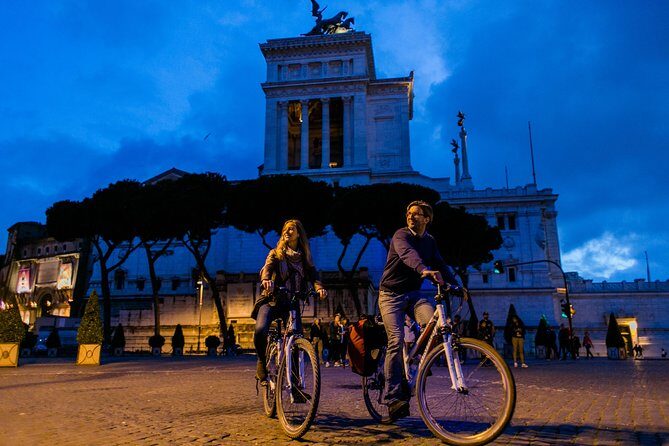
Starting in the old center around 7:00 pm is a smart trick in Rome. The day crowd thins out, streets feel more like local evening life, and the main sights look cinematic under night lighting. Instead of spending your time hunting a route or waiting for pedestrians to filter through narrow streets, you’re moving at a relaxed cycling pace while your guide handles the turns and timing.
The e-bike matters more than you’d think. Rome has slopes, cobblestones, and sudden changes in street level. With an electric assist and a helmet provided, you can focus on enjoying the sights rather than fighting the terrain.
Guides for this kind of tour tend to be energetic and hands-on—names you may see include Leo, Marco, Luca, Luigi, Arturo, Niccolo, and others. The consistent theme is that they keep the group moving, pause for photos, and explain what you’re seeing in plain, story-based ways.
You can also read our reviews of more cycling tours in Rome
Meeting near the Pantheon: getting set up fast
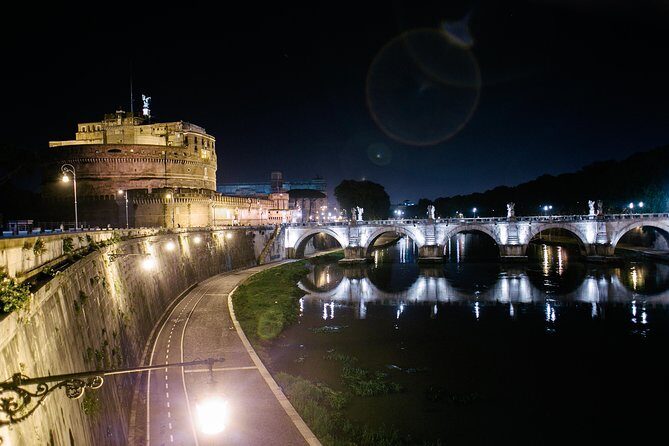
You meet at Via dei Soldati, 27, 00186, right in the historic core. That’s a big win because you’re not trekking across town first. It’s also near public transportation, so you can build your day however you like and still make the evening start.
At the meeting point you’ll:
- meet your guide and group (small and capped for the experience)
- get fitted on your bike
- put on your helmet
- get a quick go-ahead before the ride begins
Also note the basic requirement: you must know how to ride a bike. They provide the e-bike help, but you still need balance and comfort on two wheels.
Colosseum and Roman Forum after the crowds: the “no line” feeling
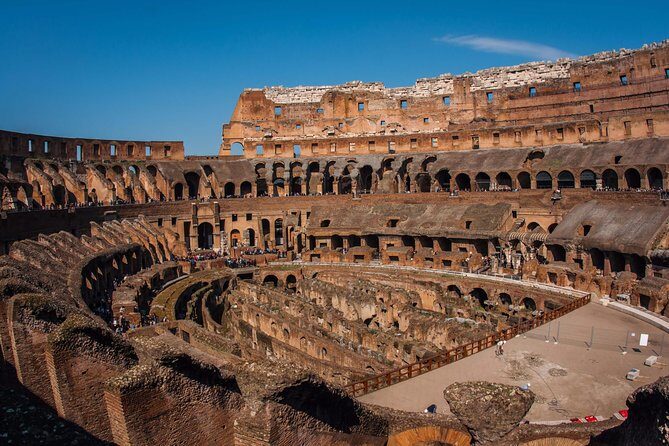
The tour’s first real wow moment is the Colosseum. You stop for about 10 minutes to admire it illuminated at night. Even with a short stop, this is the right monument to start with—because once it’s dark, the scale hits you fast. Your guide shares stories about gladiators, emperors, and Roman spectacle culture, with explanations that aim to be easy to follow while you’re standing there looking up.
A key detail: no entry ticket is included for the Colosseum. So you’re not walking into the arena for this stop. You’re here for the exterior views, photo angles from practical viewpoints, and context while the crowds are thinner.
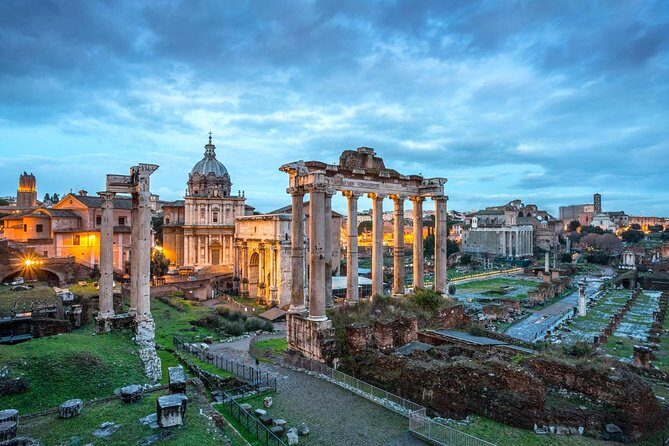
Next comes the Roman Forum, the heart of ancient Rome, with about 15 minutes to take it in. It’s a different kind of dramatic at night—ruins feel less like a “list of sites” and more like a real landscape of power. Expect your guide to connect the Forum to what you just saw at the Colosseum, so the two stops click together in your mind rather than feeling like separate picture stops.
Pantheon and Piazza Navona: classic Rome in floodlight mode
After the big ancient-set-piece energy, the route shifts into postcard Rome.
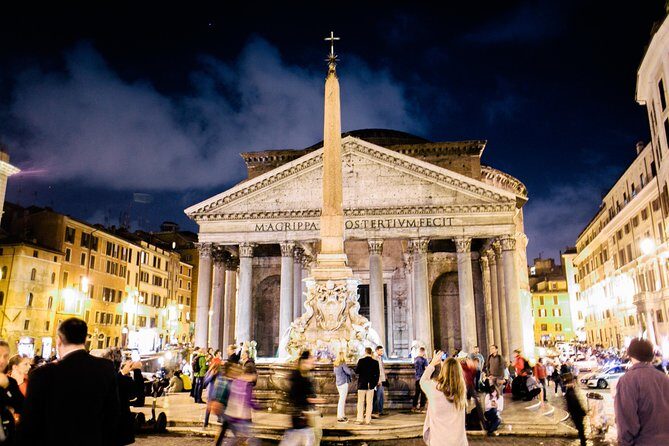
You’ll stop at the Pantheon for about 10 minutes. This is described as Rome’s best-preserved ancient temple, and the stop comes with free admission (and, importantly, you’re not entering as part of this format). Even when you’re just viewing from outside, the shape and rhythm of the building become clearer when you’re not squeezed into day-time foot traffic.
Then you head toward Piazza Navona (about 15 minutes). Here the star is Bernini’s Fontana dei Quattro Fiumi. It’s one of those places where night lighting helps you see details you’d miss in harsh daylight. You also get a sense of how this square works: people drift in, pause, and take photos while the city keeps moving around them.
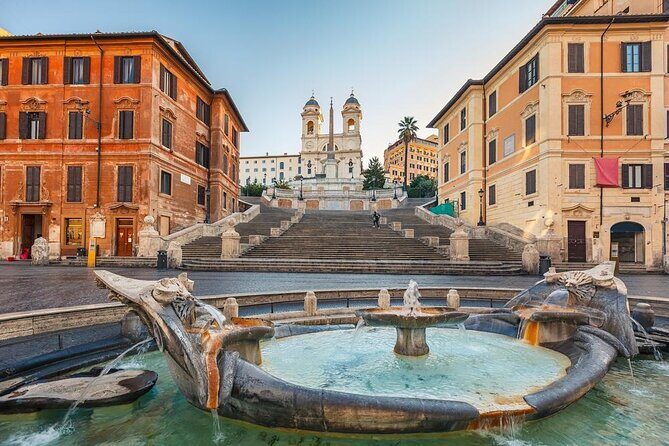
Along the way, you also get photo opportunities at major landmarks like the Spanish Steps and Trevi Fountain, plus other illuminated highlights the route passes near. That’s valuable if this is your first trip and you want to orient yourself fast.
Capitoline Hill at Piazza del Campidoglio: one of the best views
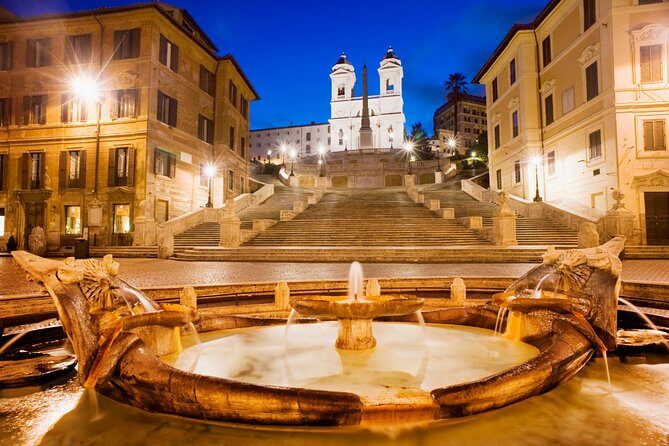
One of my favorite types of stops in Rome is the “look down at the city” moment. You get that at Piazza del Campidoglio on the Capitoline Hill, with about 10 minutes to soak in the viewpoint.
This is where you can see the Forum area and rooftops below from an elevated perspective. Night makes this even better: the shadows define buildings, and the city looks like it’s built in layers. Your guide explains why the square matters in ancient and Renaissance Rome, so your photos have context—not just pretty angles.
If you’re the type who likes to understand geography while you photograph, this is a must-stop vibe.
You can also read our reviews of more evening experiences in Rome

Cats, temples, and the Jewish Ghetto edge: Torre Argentina to Campo de’ Fiori
Rome isn’t only marble and emperors. You’ll also get some human-scale, off-the-usual-beaten-path stops.
At Torre Argentina Cat Sanctuary, you stop for about 5 minutes. You’ll see archaeological remnants tied to Republican-era history and a famous assassination connection. Then the scene shifts to something surprisingly charming: protected cats living among the ruins, cared for by local volunteers. It’s a strange pairing in the best way, and it’s a short stop that feels memorable instead of rushed.
Next is the Tempio Maggiore di Roma along the Tiber, also around 5 minutes. Here the guide explains the history of Rome’s Jewish community and the synagogue’s distinctive architectural style. You’re meant to observe details, take photos if you want, and enjoy the quieter nighttime atmosphere by the river.
Then you head to Campo de’ Fiori for about 5 minutes. This stop is more about feel than monument facts. Your guide shares the story behind the statue of Giordano Bruno, and you get a chance to watch the square as evening life builds—cafés, bars, and locals mixing old-world space with modern routines.
Temples of the Tiber: quick stops that make the route make sense
The tour spends a lot of time near the Tiber, and those river-adjacent stops are some of the best “Rome logic” moments. You’ll connect the idea of trade, power, and worship to the geography of the city.
You’ll see:
- Tempio di Ercole Vincitore (Temple of Hercules Victor), about 2 minutes, praised here for being one of the best-preserved ancient temples, with Greek-inspired design and a calm nighttime setting.
- Tempio di Portuno (Temple of Portunus), about 2 minutes, also highly preserved, with an explanation tied to ports and river trade. You’ll get time for photos while it feels peaceful and lightly lit.
- Teatro di Marcello (The Theatre of Marcellus), about 5 minutes, where the guide explains how it relates to the design ideas that later fed into the Colosseum. This is a “layers of history” stop: ancient structure turned into later buildings over centuries.
Even in short time windows, these stops help you stop thinking of Rome as one big museum. Instead, you see it as a living city where old architecture still sits under everyday streets.
You’ll also make a stop at Piazza Farnese (about 5 minutes), an elegant Renaissance square dominated by Palazzo Farnese. Your guide highlights family history and points out architectural details, including twin fountains made from ancient Roman basins. It’s a quieter moment, good for breathing and taking photos without constant crowd pressure.
St. Peter’s Square and the ride back: why the route feels efficient
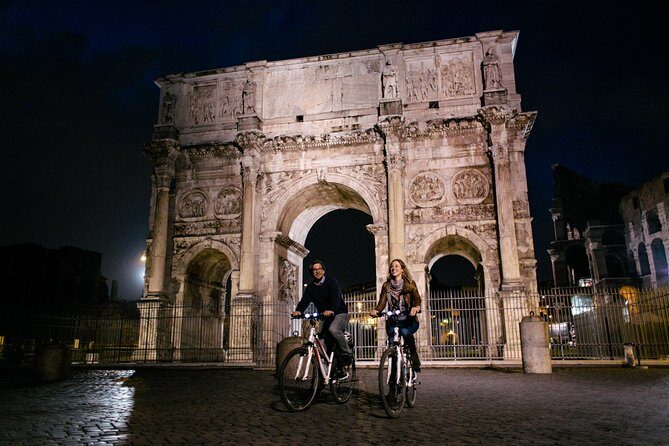
In the tour overview, the ride continues across the Tiber River to St. Peter’s Square, and then returns toward the starting point. Even though you don’t enter monuments as part of this format, you still get the big-location connection: you’re moving from the heart of ancient Rome toward the church-and-state center that shaped later centuries.
This is where the e-bike format really saves your energy. Without electricity you’d spend much more time walking or waiting in traffic flow. With the bike, you’re always “in the story,” keeping momentum between photo stops.
The tour ends back at the meeting point, completing an evening loop that’s designed to give you orientation fast.
What you’re paying for (and what you’re not)
At $82.90 per person for about 3 hours, you’re paying for three practical things:
- Transportation you don’t have to think about. You get the e-bike and helmet, and the guide handles route navigation through dense areas.
- Time strategy. The stops are short, timed, and designed for nighttime viewing with fewer crowds than daytime.
- Guided context. You’re not just snapping photos; you’re getting story-based explanations tied to each site.
What you’re not paying for: monument entrances. The Colosseum ticket is not included, and the tour also notes that you won’t enter monuments or sights due to time restrictions, waiting lines, and closing days. In other words, think of this as the best “exterior + explanation” option if you want to maximize sights during one evening.
That trade-off is fine if you’re spending your remaining days doing deeper visits. If you want a lot of paid entry experiences in one night, you might need a different kind of tour.
Who should book this night e-bike ride
This tour is a great fit if you:
- want top-sight orientation fast (Colosseum, Forum area, Pantheon zone, Navona, and more)
- prefer to avoid daytime crowds
- want to see Rome’s biggest monuments lit up, without doing a long self-guided bike plan
- like a small group setting, not a giant herd
It’s less ideal if you:
- want long, inside-the-monument time at multiple paid sites
- don’t feel comfortable riding a bike, even with electric assist
- need fully flexible pacing with no stop limits
Rain comes up in Rome. The tour runs in all weather conditions, but poor weather can trigger a different date or a full refund. So build the rest of your itinerary with a little breathing room.
Should you book the Rome By Night e-bike tour?
Yes, if your goal is to feel Rome at night and still cover major sights in one compact evening. The best version of this tour works like a guided highlights reel: you get the illuminated wow moments, you learn enough to connect them, and you don’t spend your trip second-guessing routes.
I’d skip it only if you specifically want to enter monuments for extended periods and linger in museums. For that style, you’d likely want separate daytime tickets and a slower plan.
If you book, show up early enough to feel relaxed. And bring your best “stand still for photos” energy—because the whole ride is built around small stops where timing and angle matter.
FAQ
How long is the Rome by Night e-bike tour?
It runs for about 3 hours.
What time does the tour start?
The start time is 7:00 pm.
Where is the meeting point?
You meet at Via dei Soldati, 27, 00186 Roma RM, Italy.
How big is the group?
The experience is limited to a maximum of 8 travelers. It also notes a minimum of 2 people per booking.
Are e-bikes and helmets included?
Yes. The use of a bicycle and a helmet are included.
Do I need to know how to ride a bike?
Yes. Participants must know how to ride a bike.
Are we entering monuments like the Colosseum?
No. The tour does not enter monuments or sights due to time restrictions and related issues, so you’ll get an overview rather than interior visits.
Is the Colosseum ticket included?
No. The Colosseum admission ticket is not included.
What language is the tour offered in?
It’s offered in English.
What’s the cancellation and weather situation?
There is free cancellation up to 24 hours in advance for a full refund. The tour operates in all weather conditions, but if it’s canceled due to poor weather, you’ll be offered a different date or a full refund.