REVIEW · CITY TOURS
Rome by Golfcart: City Ride
Book on GetYourGuide →Operated by Discover Rome Tours · Bookable on GetYourGuide
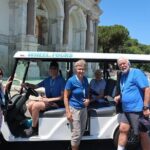
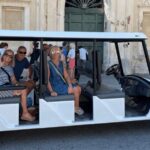
Rome on a cart is a smart move. This private Rome golf cart tour lets you cover major landmarks fast while keeping the vibe relaxed, not exhausting. You’ll ride in an eco-friendly cart with an expert guide sharing stories as you move through Rome, then stop long enough to look, photograph, and reset.
I especially like the pacing. Each main stop is only about 15 minutes, so you don’t get stuck in one spot while everyone else passes you by. I also like that you can get audio support if needed, so you’re not straining to hear from the cart. One thing to consider: with so many stops in a short 3-hour window, there’s less time for long museum-style visits at any one place.
In This Review
- Quick hits
- Why a private golf cart works so well in Rome
- Pickup in the city center: saving time before you even start
- Stop-by-stop: the route that hits Colosseum, Aventine, and the big squares
- The Colosseum: iconic views with a quick guided focus
- Circus Maximus: a wide-open Roman reminder
- Aventine Hill: calm viewpoints, then you’re off again
- Mouth of Truth: short visit, strong photo energy
- The additional stop: a flexible 15 minutes
- Piazza Venezia and Trajan’s Column: grand framing for a guided story
- Piazza Navona: street-life energy in a classic square
- Pantheon: the “wait, that’s right in front of me” moment
- Trevi Fountain and the Spanish Steps: two big-name photo anchors
- Comfort, guidance, and listening: what makes the experience feel easy
- Value check: is $101.11 per person worth it?
- Who this tour suits best
- Should you book Rome by Golfcart: City Ride?
- FAQ
- How long is the Rome by Golfcart: City Ride?
- What is the price per person?
- Is this tour private?
- What landmarks are included?
- Where does pickup happen?
- Is the tour accessible for wheelchair users?
- Is there audio available during the tour?
- Is the tour refundable if plans change?
Quick hits
- Private golf cart comfort: A smoother, less tiring way to see Rome’s highlights in a single afternoon.
- Photo-stop friendly: The route is built for quick views and memorable angles as you move through central areas.
- Stories from real guides: In past tours, guides like Massi have been described as engaging and entertaining.
- Efficient stop-and-go route: You hit big-name sights without the constant backtracking that can happen on foot.
- Easy listening with audio: Audio devices are available if needed.
- English-speaking host: The tour is hosted in English, with pickup from your city-center location.
Why a private golf cart works so well in Rome
Rome is gorgeous, but it can be a workout. Between cobblestones, crowds, and the stop-start rhythm of seeing things outdoors, your energy can disappear before you’ve reached the sights you actually planned for. A private golf cart changes the whole day: you still get the sights, but you spend less time grinding through traffic and foot routes.
This tour’s setup also helps you see the city as a city. Instead of turning each landmark into a separate mission, you glide between them and get a sense of the geography—how the Colosseum zone connects to the Aventine area, how you thread through central squares, and how the classics line up along your route. It’s the kind of overview that makes your next day in Rome easier to enjoy.
And because it’s a private group, you’re not stuck waiting for a large group to catch up. You can enjoy the stops at a more human pace, which matters if you’re traveling with people who prefer fewer surprises and fewer long walks.
One more practical note: this tour is wheelchair accessible, which is a big deal in a city where curb cuts can be inconsistent. If mobility is a factor for you, a cart-based format can remove a lot of friction.
You can also read our reviews of more city tours in Rome

Pickup in the city center: saving time before you even start

You’ll be picked up at a location in the city center (hotel pickup isn’t automatically included unless specified). That’s a key value point. In Rome, “where do we meet?” can turn into a scavenger hunt. City-center pickup means you start viewing sooner and spend less time coordinating.
The tour runs for 3 hours, so every minute matters. The route is structured around short landmark stops—about 15 minutes each—with driving time between areas. That format works best if you want a highlight reel with story context, not a slow day dedicated to one monument.
Think of it like a fast, guided orientation plus photos. You’ll get enough time at key points to understand why people love them, and you’ll leave knowing what you want to see again—if you want a second pass later.
Stop-by-stop: the route that hits Colosseum, Aventine, and the big squares
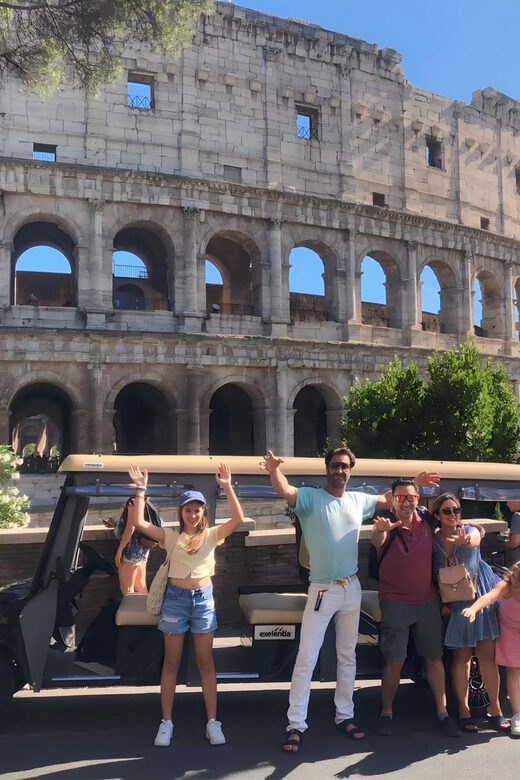
The easiest way to judge a highlights tour is to look at what you actually do at each stop. Here’s how this one tends to feel, and what to watch for.
The Colosseum: iconic views with a quick guided focus
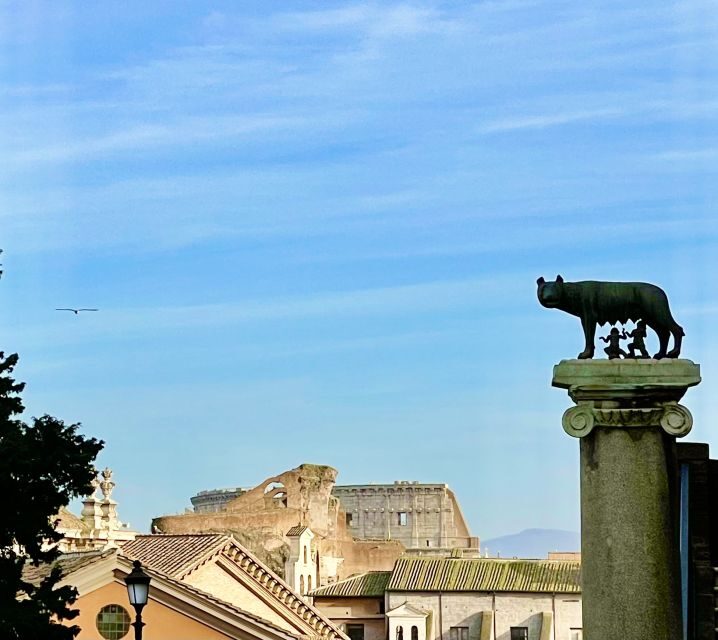
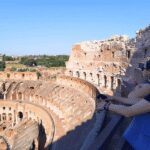
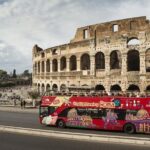
Your first major landmark stop is the Colosseum, with about 15 minutes there. This is the right opening move because the Colosseum is one of those places where even a short visit gives you a lot. From the cart route and your time on-site, you’ll get the sense of scale and the drama that made this place a centerpiece of Roman life.
What I like about starting here: you set your mental map immediately. Once you’ve seen the Colosseum, later stops make more sense because the guide can reference the surrounding areas and how Rome’s layers relate.
The tradeoff: 15 minutes doesn’t turn into a long, detailed visit. If you’re the type who wants to read every panel and linger in one corner, you may need a return visit. For most people, though, it’s a strong “first taste” that keeps the day moving.
Circus Maximus: a wide-open Roman reminder
Next up is Circus Maximus, also about 15 minutes. This stop feels different from the Colosseum. It’s less “stacked monument” and more “this is the space where events happened.” You’ll likely notice how views open up compared to tighter streets.
Why it matters: Circus Maximus helps you connect Roman architecture to Roman spectacle—thinking in terms of crowds and movement rather than just walls. That’s a useful shift, and it can make your whole Rome experience feel less like a checklist.
The drawback to plan for: because the time is short, you’ll be best served by asking the guide one or two questions you care about. Use the stop for big-picture understanding and photos, not for a deep, slow study.


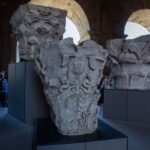
Aventine Hill: calm viewpoints, then you’re off again
Then you head to Aventine Hill for another 15 minutes. This is where the pace changes. Hill areas tend to feel quieter and more view-focused, and they help balance the heavier crowd zones you’ll hit later.
If you’re looking for a moment of calm inside an otherwise busy itinerary, this is a good candidate. It’s also a great stop for photos that show Rome’s breadth rather than just close-up landmark drama.
The consideration: hills can mean uneven ground depending on where you step out and stand. The cart helps you arrive smoothly, but you’ll still want to plan for a bit of walking around viewpoints.
Mouth of Truth: short visit, strong photo energy
You’ll stop at the Mouth of Truth, again around 15 minutes. This is one of those instantly recognizable spots that draws people in for both the story and the picture. With limited time, you’ll want to treat it like a quick check-in: see it, take your photo, and let the guide’s explanation connect it to the surrounding setting.
What makes it worthwhile: it gives your day a playful, memorable moment. Rome has plenty of “serious monuments,” and this is a fun break that still feels authentically Roman.
The practical downside: if the area is busy, you’ll be working within that reality during your short window. Your best strategy is to move quickly once you’re there, so you don’t burn precious minutes.
The additional stop: a flexible 15 minutes
There’s also an extra stop in the middle of the route—another 15-minute visit where the specific landmark name isn’t listed in the details you provided. The good news is that the time allotment is clear, and it’s likely there to fill a logical route connection between major squares and monuments.
If you care about having every location fully identified in advance, you might want to confirm the missing stop name when you book or ask the provider closer to your date.
Piazza Venezia and Trajan’s Column: grand framing for a guided story
Next comes Piazza Venezia and Trajan’s Column, each with about 15 minutes. These stops are great for building context. Squares like Piazza Venezia tend to be “gravity points” where multiple important routes and visual axes converge, so you quickly understand why this area matters.
Trajan’s Column is especially helpful if your guide is explaining what Roman monuments were designed to communicate. It’s the kind of structure that feels more meaningful when someone ties it to who built it and what it was meant to show.
The tradeoff again is time. You’ll get the highlights, but you won’t get a slow, in-depth interpretation of every detail. Still, for most people, this is exactly what you want in a 3-hour cart tour: a clear guided snapshot.
Piazza Navona: street-life energy in a classic square
Then you’ll reach Piazza Navona, with another 15-minute stop. This is one of the most enjoyable squares in Rome for simple wandering and people watching, and it also serves a practical purpose on the itinerary: it lets you pause in a central location that’s easy to photograph from multiple angles.
Even if you don’t spend much time here, the vibe helps you reset. After temples and grand structures, a lively square feels like a breath of fresh air.
Potential consideration: squares can be crowded. In a short stop, you may not get the perfect angle instantly. Build your photo plan around moving a few steps rather than waiting in one place for long.
Pantheon: the “wait, that’s right in front of me” moment
The tour includes a stop at the Pantheon, again about 15 minutes. The Pantheon is one of those places where even a brief arrival makes you stop mid-sentence. The scale and design hit you immediately.
Why it’s smart on this route: Pantheon sits at a point where your tour shifts from sightseeing-from-a-distance to architecture that pulls you in. Even if you only get a short time, you can still capture that “I can’t believe this is here” feeling.
The consideration: 15 minutes at a busy landmark means you’ll want to prioritize what matters to you—wide view, key details, and a quick photo—then let the rest of the time go to walking and listening.
Trevi Fountain and the Spanish Steps: two big-name photo anchors
Finally, you’ll head to Trevi Fountain and then the Spanish Steps, with about 15 minutes at each. These are the most famous “must-see” photo targets, so they work as closing chapters for the itinerary.
What I like here is that the day ends where many first-time visitors want to end anyway. Trevi gives you the iconic water-and-stone composition; the Spanish Steps give you the classic viewpoint and the feeling of Rome as a stage.
The reality check: both can be very busy. Short timing means you’ll see a lot quickly, but you may not feel like you fully “soaked it in.” If you’re the type who likes quiet photos, you might want to plan a separate return later on your own schedule.
And if you’re hoping for extra memories, one past tour highlight included a guide named Massi snapping pictures and sending them to the group afterward. That sort of added help can make your photo output better with less stress—though you shouldn’t assume it will happen for every departure.
Comfort, guidance, and listening: what makes the experience feel easy
The core comfort benefit is simple: you’re on a cart. That means less fatigue, easier navigation, and less time dealing with the physical friction that can slow down a Rome itinerary.
Your guide provides historical insights and stories while you ride. You’ll also have access to audio devices to hear your driver if needed. That matters more than people think. If you’ve ever been in a group tour where half the words disappear under crowd noise, you know why this is valuable.
Language is English, and the host or greeter is described as English-speaking. The practical result is that you can ask follow-up questions without guessing what you heard.
Finally, the tour reviews are consistent on one point: guides put energy into the ride. In one example, Max was praised as excellent, and Massi was described as engaging and entertaining. That kind of guide performance is the difference between a tour that just drops you in front of landmarks and one that helps the landmarks connect.
Value check: is $101.11 per person worth it?
At $101.11 per person for about 3 hours on a private golf cart, the value depends on what you want out of Rome.
If your goal is a highlight route with context, this price is often fair—especially because you’re not paying for museum tickets included (none are listed). You’re paying for the combination of transport, private format, and a guide who keeps the rhythm smooth.
Also, the pricing becomes easier to justify if you’re traveling with people who would find a walking-heavy plan stressful. The cart, city-center pickup, and short time at each stop can make a huge difference for older travelers or anyone who wants to see more without feeling wrecked afterward.
Where it might not fit: if you’re hoping for long, in-depth time inside major sites, a 3-hour cart tour won’t replace a slower day with paid entries and extended stays. This is a strong orientation and photo run, not a substitute for deep dives.
Who this tour suits best
This tour is a great match for people who want efficiency without losing the human touch of a guide.
It’s especially good if you:
- want to see multiple top landmarks in a single morning or afternoon
- prefer a relaxed pace over long walking marathons
- are traveling with family members who may not enjoy lots of steps
- want an English guide and audio support if needed
- like the idea of a private group format rather than joining a crowded bus plan
It may be less ideal if you’re the type who wants long visits, deep museum time, or a lot of free roaming without structure.
Should you book Rome by Golfcart: City Ride?
Yes, if you want a private, cart-based highlights tour that gets you major sights in about 3 hours and helps you understand what you’re looking at. The format is efficient, the comfort is real, and the guide-led storytelling is a standout feature—especially since guides like Massi and Max have earned strong praise for their energy.
I’d say book it if you’re optimizing for time and comfort, not for long, slow landmark study. And if you care about the exact missing stop name (the one unlabeled in the details you shared), ask before you go so the full route feels clear from day one.
FAQ
How long is the Rome by Golfcart: City Ride?
The tour duration is 3 hours.
What is the price per person?
The price is listed as $101.11 per person.
Is this tour private?
Yes. It’s a private group tour.
What landmarks are included?
The included stops include the Colosseum, Circus Maximus, Aventine Hill, Mouth of Truth, Piazza Venezia, Trajan’s Column, Piazza Navona, Pantheon, Trevi Fountain, and the Spanish Steps.
Where does pickup happen?
Pickup is included from any location in the city center. Hotel pickup and drop-off isn’t included unless specified.
Is the tour accessible for wheelchair users?
Yes, the tour is wheelchair accessible.
Is there audio available during the tour?
Audio devices are provided to hear your driver if needed.
Is the tour refundable if plans change?
You can cancel up to 24 hours in advance for a full refund.