REVIEW · CITY TOURS
Rome at Night – Illuminating the Eternal City
Book on Viator →Operated by Roman Vacations · Bookable on Viator
Rome looks different after sunset.
This small-group guided walk strings together Rome’s biggest night-photo moments with real context, moving at a relaxed pace over the city’s cobblestones. I especially like the headsets, so you catch every detail without craning your neck, and I also like the small group size, which makes questions easy instead of awkward.
One thing to plan for: you’re on your feet for about 2 to 3 hours, and the surface is cobblestone, so comfortable shoes matter.
In This Review
- Key Points
- Why Rome Feels More Magical After Dark
- Quick Logistics: Where You Meet, How Long It Takes, and What You Carry
- Spanish Steps at Night: Piazza di Spagna and the English Quarter
- Trevi Fountain Under the Lights: Coins, Statues, and Quick Magic
- The Pantheon Still in Use: Walking Into an Ancient Church
- Piazza Navona After Dark: Fountains, Palaces, and Night-Market Flavor
- What the Expert Guide Actually Adds (And Why the Headsets Matter)
- Pace and Group Size: The Calm Way to See Rome’s Icons
- Who This Tour Is Best For (And Who Might Skip It)
- Should You Book Rome at Night – Illuminating the Eternal City?
- FAQ
- How long is the Rome at Night walk?
- What group size should I expect?
- Where does the tour start and end?
- Are admission tickets required for the stops?
- Does the tour provide help hearing the guide?
- What’s included in the price?
- Can I cancel for a full refund?
- Is there any accessibility info I should know?
Key Points
- Headsets included help you hear your guide clearly even in busy, echoing streets
- Small group (max 15) keeps the pace calm and questions welcome
- A tight route hits Spanish Steps, Trevi, Pantheon, and Piazza Navona in one evening
- Night lighting changes the mood, especially at Trevi Fountain
- Each stop is brief enough to stay moving, but long enough for real commentary
- You can end near Piazza Navona, a great launch point for further wandering and dinner
Why Rome Feels More Magical After Dark
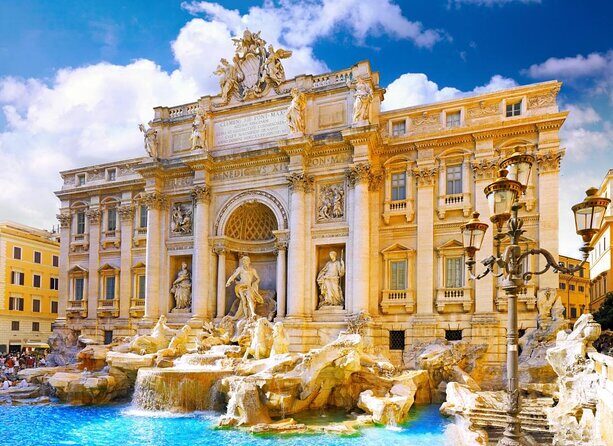
Rome at night has a special look. Not just because the streets glow, but because the monuments look different when the light is controlled. At Trevi Fountain, for example, the modern lighting comes up from below the water, turning statues into something almost unreal. If you’ve seen daytime Trevi in photos, you’ll notice this instantly.
What I like most is that the tour treats the evening like a story you can walk through. Your guide connects what you’re seeing with why it mattered, then lets you pause to take it in. One guide style that shows up in this experience is a more academic, professor-like approach. If you happen to get a guide with that background (names like Paul and John come up in guide anecdotes), the city’s layers start clicking fast, without turning the night into a lecture.
You can also read our reviews of more city tours in Rome


Quick Logistics: Where You Meet, How Long It Takes, and What You Carry
This is a 2 to 3 hour walking tour. It starts at Piazza di Spagna, 26, 00187 Roma RM, Italy and ends at Piazza Navona, 00186 Roma RM, Italy. You’ll want to be at the start on time so the guide can keep the flow tight and the stops on schedule.
The tour uses a mobile ticket, which is convenient if you don’t want to hunt for paper. It’s also set up for a maximum of 15 travelers, which is a big deal in Rome at night. Smaller groups mean less shuffling and more real attention from the guide.
Headsets are provided as necessary, which usually means you can hear clearly even when streets get busy or the group spreads out slightly. That one detail can make the difference between enjoying the walk and spending half the tour repeating yourself like, What did you say?
Spanish Steps at Night: Piazza di Spagna and the English Quarter
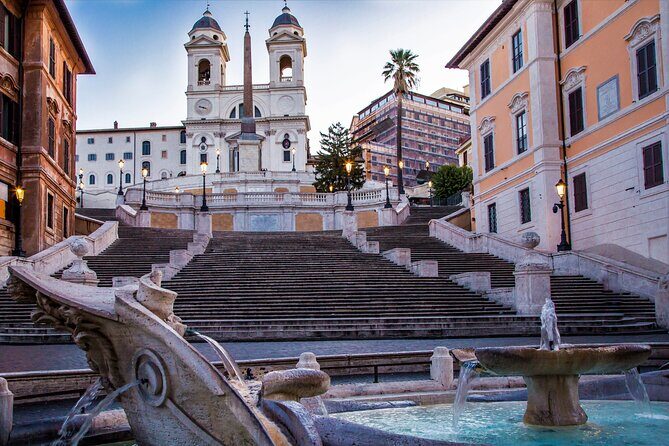
The evening begins in Piazza di Spagna, at the foot of the Spanish Steps. Your guide meets you there and gives a short history before you take in the area.
This first stop is about orientation and atmosphere. You’re not just admiring the steps themselves. You’re also getting a look at the surrounding Quartiere Inglese (English Quarter), a neighborhood that’s been pulling in visitors for centuries. The cool part is how the guide frames the area as a living meeting point for travelers and famous names across time, not just a photogenic backdrop.
The stop is about 10 minutes, so it’s not meant to turn into a long climb or a slow linger. Instead, it sets your eye for what comes next: Rome doesn’t reveal itself in one view here. It reveals itself in layers, block by block.
Practical note: the route after this involves walking through Rome’s streets, so if you’re sensitive to uneven ground, keep your pace steady and watch your footing as the evening progresses.
Trevi Fountain Under the Lights: Coins, Statues, and Quick Magic
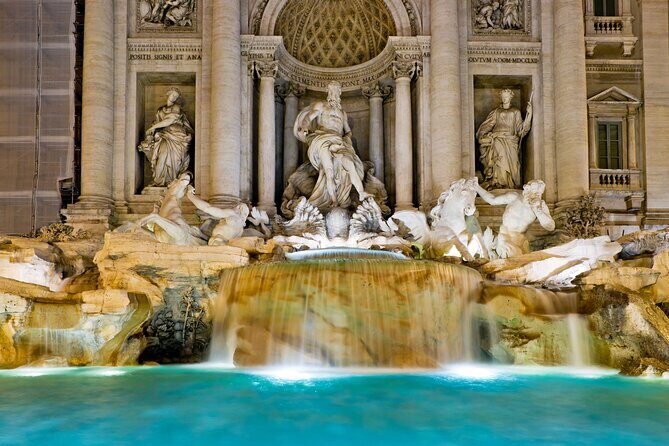
Next comes the walk to Fontana di Trevi, with a bit of storytelling along the way. The tour notes that you’ll pass a few hidden treasures en route, which is where guides can often add extra value. Some guides in this experience lean into side sights beyond the main monuments, and you may get small detours that feel off the beaten path, even while the itinerary stays focused.
Trevi itself gets about 15 minutes. Here’s what makes it special at night: the fountain is famous on every itinerary, but the lighting after dark changes how you read the sculpture and water. With illumination coming from under the basin, the statues look almost otherworldly, which is why so many people say it’s better to see Trevi after dark.
You’ll also be given time for the coin-toss tradition. That’s not just a fun ritual; it’s also a good moment to slow down and do one iconic thing without feeling rushed.
Then you move on quickly—because the Pantheon is next, and night light doesn’t last.
The Pantheon Still in Use: Walking Into an Ancient Church
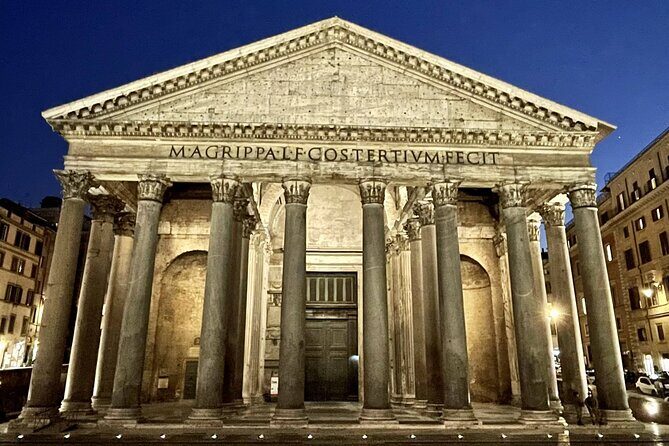
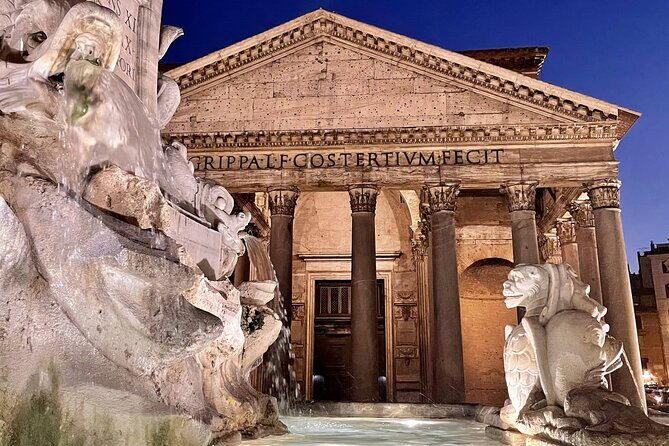
The Pantheon stop is also about 15 minutes, and it’s one of those places where the short time works in your favor. The Pantheon was completed in the early second century, and it still functions today as a church.
That “still in use” part matters. A lot of ancient sites are museum-like, frozen in time. The Pantheon isn’t that. It’s a functioning sacred space wrapped in extraordinary engineering and design. Your guide will help you connect the dots—why it looks the way it does, and what you’re seeing when you look up and through the space.
If you’re the type who likes architecture explanations, this is where the guide can really shine. In a few guide anecdotes from this experience, the commentary includes clear explanations of what you’re looking at and why it’s unusual. Even if you’ve visited other major sites in Rome, the Pantheon can still feel like a reset button: fewer distractions, more awe.
You can also read our reviews of more evening experiences in Rome




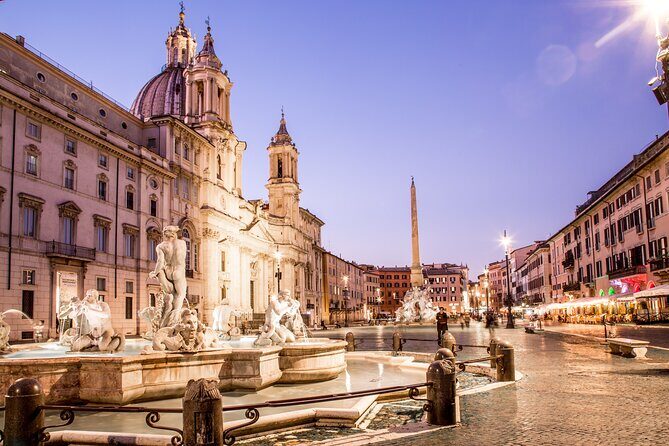
Piazza Navona After Dark: Fountains, Palaces, and Night-Market Flavor
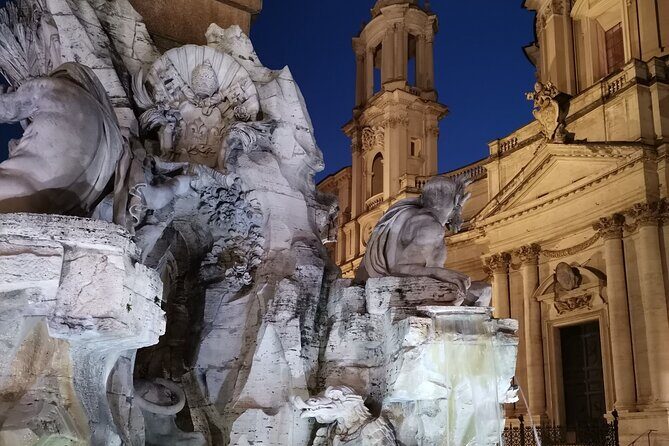
After the Pantheon, the walk continues to Piazza Navona, with about 20 minutes there. This stop is about spectacle and space: elegant fountains meet stately palaces, and the piazza is designed for viewing, not sprinting.
At night, Piazza Navona tends to feel like a stage set. You get time to look, not just stand. And the tour’s seasonal notes add a nice bonus layer:
- In summertime, you may find artists selling their works at night.
- In December, Piazza Navona can hold a Christmas night market, where you can buy traditional Italian gifts and sweets.
That seasonal texture matters because it makes your night feel specific to when you’re there, not like a generic highlights reel.
One small strategy I like: use your Piazza Navona minutes to figure out your next move. Since the tour ends here, you’ll likely want to keep wandering. Think about where you want to eat, which nearby streets you want to explore next, and how long you want to linger by the fountains.
What the Expert Guide Actually Adds (And Why the Headsets Matter)
A walking tour can be “nice” or it can be useful. This one leans useful. The guide commentary turns landmarks into a guided narrative, and the headsets help you stay in that narrative instead of losing half the story.
In guide anecdotes tied to this experience, you see a recurring strength: guides don’t just toss dates at you. They explain ideas in a way that stays relevant. One guide approach described is using modern political examples to make Roman politics feel understandable, which is a clever method if you like big-picture connections. Another guide approach described is professor-level clarity, where the layers of Rome’s history are broken down so you can actually remember them later.
Also, there’s a comfort factor with small groups. When you can hear well, you ask questions. When you can ask questions, you learn things you wouldn’t pick up on your own.
And because this is guided and short-stop focused, you can ask practical follow-ups. Some guides in this experience even share dinner ideas afterward, which is handy if you arrive hungry and overwhelmed by choice.
Pace and Group Size: The Calm Way to See Rome’s Icons

The tour is designed for a relaxed pace with personal attention. With a maximum of 15 people, you’re not stuck in a conga line, and the guide can respond when someone asks something in the moment.
The duration (2 to 3 hours) also hits a sweet spot. It’s long enough to feel like an actual evening plan, but short enough that you still have energy left to explore on your own afterward.
One more detail worth knowing: because the group size can end up smaller than the maximum, the vibe may shift toward a more personal experience. In at least one case tied to this tour, a small group turned into a private-style visit, which is the best-case scenario if you like direct Q&A.
Who This Tour Is Best For (And Who Might Skip It)
This is a great fit if you want an easy evening win in Rome. It’s especially good if you’re arriving and want to get your bearings fast while still seeing world-famous places.
I also think it works well for families and mixed-age groups. In one experience described here, a parent took along a 10-year-old, and the kid stayed engaged the entire time. A big part of that is likely the short stop rhythm plus the guide’s ability to explain things clearly.
Where you might hesitate: if you dislike walking at night, or if you need very long “sit down” time, this route may feel too mobile. It’s built as a guided walk, not a museum tour with benches.
Should You Book Rome at Night – Illuminating the Eternal City?
I’d book it if you want a guided evening that hits four major landmarks—Spanish Steps, Trevi Fountain, Pantheon, and Piazza Navona—without turning into a marathon. The best value here isn’t just that the sights are famous. It’s the combination of headsets, an expert local guide, and a pacing plan that keeps you from getting lost or bored.
I’d skip it only if you already plan to spend your entire evening in one neighborhood and don’t want to move between areas. Otherwise, this is a strong first-night or mid-trip reset plan: you see the icons, you learn what you’re looking at, and you finish in a perfect place to keep going.
If you book, show up ready to walk, keep your schedule flexible around the cobblestones, and bring curiosity. Rome gives back fast when you slow down enough to look.
FAQ
How long is the Rome at Night walk?
It lasts about 2 to 3 hours.
What group size should I expect?
The tour has a maximum of 15 travelers.
Where does the tour start and end?
It starts at Piazza di Spagna, 26 and ends at Piazza Navona.
Are admission tickets required for the stops?
For the listed stops, admission ticket is free (Spanish Steps, Trevi Fountain, Pantheon, and Piazza Navona).
Does the tour provide help hearing the guide?
Yes. Headsets are provided as necessary, so you can hear every word.
What’s included in the price?
You get an expert local guide.
Can I cancel for a full refund?
Yes, you can cancel for a full refund up to 24 hours in advance of the experience start time.
Is there any accessibility info I should know?
The tour allows service animals, and the meeting point is near public transportation.