REVIEW · PRIVATE
Rome: Appian Way Private Tour by Golf Cart -Official Partner
Book on GetYourGuide →Operated by EcoBike Roma - Parco Appia Antica · Bookable on GetYourGuide
Ancient Rome, minus the leg burn. This private, electric golf cart ride through Appia Antica Park is a practical way to see major monuments without feeling like you’re sprinting between ruins. I like that you get a guide with structured stops, and I love that the route includes major set-pieces where Roman engineering still feels real, including the Circus of Maxentius entrance. The main trade-off: not every sight is a full guided stop, since several famous landmarks are pass-bys rather than deep, time-on-site visits.
A 3-hour tour is a sweet spot here. You’ll move at an easy pace, pause for photos, and even put your feet on ancient cobblestones beside chariot traces. If you want every single stop to be a long museum-style experience, you might feel a bit rushed—but if you want to understand the landscape while rolling through it, this format works well.
In This Review
- Key Points You’ll Care About
- Why the Appia Antica by Electric Golf Cart Fits Real Travel Days
- Meeting at Centro Servizi Appia Antica (EcoBike Desk) and Starting Smoothly
- The Electric Cart vs. Walking the Appian Way: What Changes on the Ground
- From Domine Quo Vadis to Quintili’s Villa: The Roman Road Story in One Arc
- San Sebastiano Fuori le Mura: A Pass-By That Sets the Religious Mood
- Circus of Maxentius: When the Tour Actually Lets You Step Into Scale
- Capo di Bove and Villa Capo di Bove: Included Entrance, Strong Visual Payoff
- Metella’s Tomb, Villa Quintili, and the “Pass-By” Strategy
- Photo Stops, Chariot Traces, and the Moment You’ll Actually Remember
- Water, Timing, and How to Dress for Appia Antica Heat
- Optional Catacombs of San Sebastiano: Add It If You Want More Underground Time
- Price and Value for a Private Group Up to 2
- Who This Tour Suits Best (and Who Might Want a Different Format)
- Book This Tour or Skip It? Here’s My Decision Guide
- FAQ
- How long is the Rome Appian Way private golf cart tour?
- Is this tour private?
- What languages are the guide available in?
- Where do I meet the guide?
- Does the tour include entrance fees?
- Are the catacombs included in the price?
- Is hotel pickup or drop-off included?
- Is water provided?
- What’s the price for this tour?
- Can I cancel for a full refund?
Key Points You’ll Care About
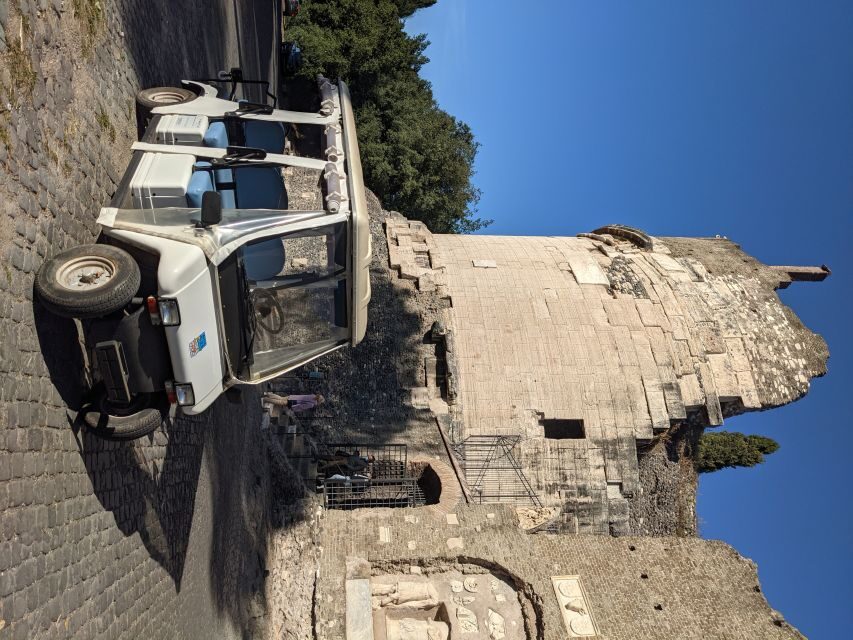
- Electric golf cart comfort: you get shade and a relaxed pace over uneven old stone.
- Included entrances where it counts: the plan covers Circus of Maxentius and Villa Capo di Bove.
- You touch the road’s details: the cobblestones and chariot-trace moments add real texture to photos.
- A defined Roman-road stretch: you cover the first 8 km of the Regina Viarum, from the Domine Quo Vadis area toward Quintili’s Villa.
- Optional catacombs add-on: the itinerary can end near the Catacombs of San Sebastiano, with admission extra.
Why the Appia Antica by Electric Golf Cart Fits Real Travel Days
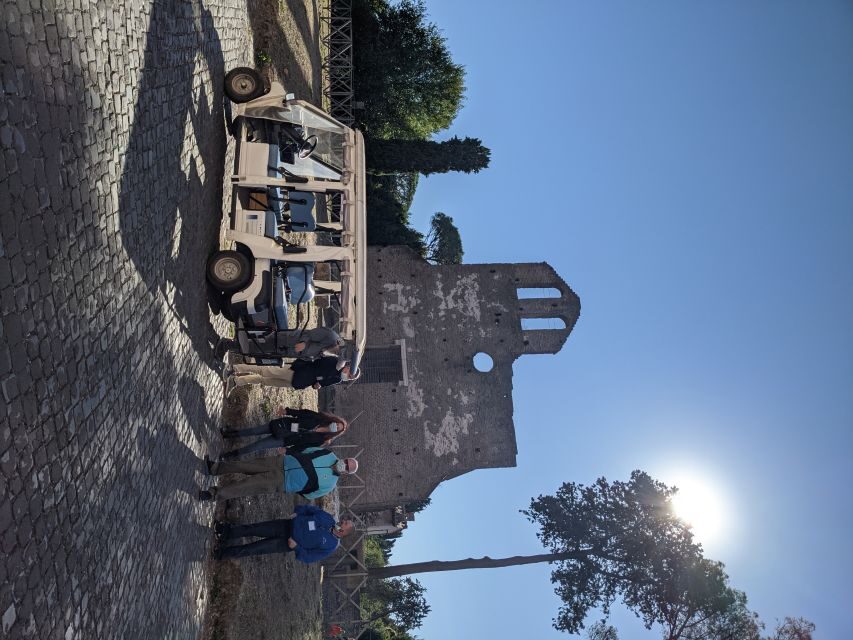
Rome has a way of piling on stairs, crowds, and heat. This tour sidesteps most of that with an electric golf cart format, so you can focus on the scenery instead of burning your energy just getting from one ruin to another. The vibe is more “guided country walk with stops” than “hurry through a checklist.”
You also get a guide-led route with multiple pause points. That matters because the Appian Way can feel like a blur of ancient stone if you’re not sure what you’re looking at. With a guide in the cart, the route becomes readable: road, monuments, and emperors in a sequence that makes sense.
One more practical win: the cart experience keeps you flexible. If you’re in Rome for a short time, this is an efficient way to spend a focused block of time in the Appia Antica Park without committing to a full bike day or a longer walking-only tour.
You can also read our reviews of more private tours in Rome



Meeting at Centro Servizi Appia Antica (EcoBike Desk) and Starting Smoothly
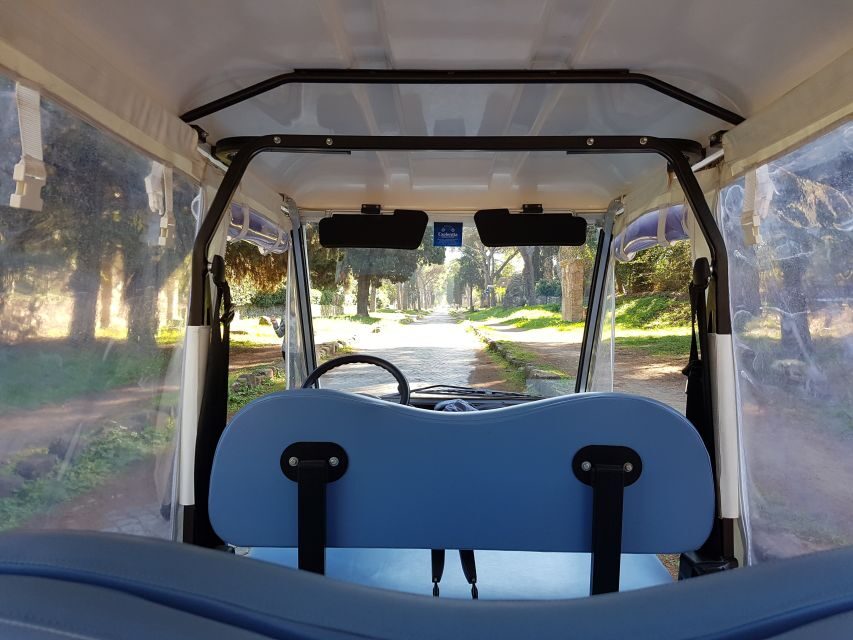
The tour starts at Centro Servizi Appia Antica – EcoBike – Bike Rental. Plan to meet your guide inside the Tourist information office for the Appia Antica Park, and look for the EcoBike logo on the desk. Check in by sharing your reservation ID (or your surname) at that desk.
This setup is simple and pretty reliable as long as you build in a few minutes buffer. The Appia area isn’t in the middle of Rome’s most frantic pedestrian zones, but it can still take a little time to find the correct office inside the park services building.
The good news: the tour ends back at the same meeting point, so you don’t have to figure out an extra transit puzzle afterward.
The Electric Cart vs. Walking the Appian Way: What Changes on the Ground
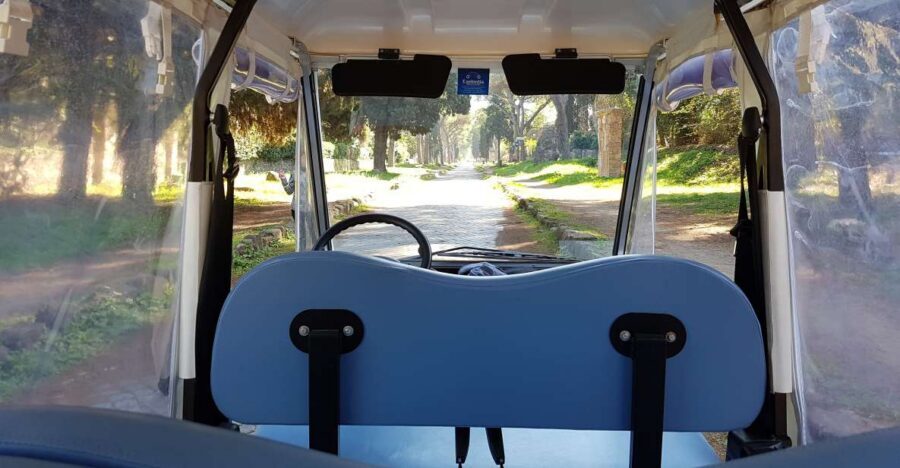
What makes the Appia Antica special is also what can make it slow. The ground is old and uneven, with cobblestones that don’t care about your comfortable shoes. The cart lets you cover longer stretches smoothly, while still giving you moments of physical connection to the place—especially the stop where you can put your feet on ancient cobblestones next to the chariot traces.
That “tiny hands-on” moment is more than a photo spot. It helps you understand what the Roman road felt like for travelers and wagons: worn stone, direct lines, and evidence of repeated passage. When you’re standing there, the Appian Way stops being an abstract idea and starts being a working road in your mind.
One caution: because some stops are short and some are pass-by, you’ll want to be ready to move quickly between viewpoints. If you’re the type who likes to linger and read every information plaque, bring a calm mindset and plan to do a bit of follow-up reading after the tour.
From Domine Quo Vadis to Quintili’s Villa: The Roman Road Story in One Arc
This tour focuses on a very specific segment of the Roman road—about the first 8 km of the Regina Viarum. It runs from the Domine Quo Vadis Church area (tied to the famous encounter between Saint Peter and Jesus) up toward Quintili’s Villa.
Why that stretch is worth your time: the Appian Way isn’t just “an old road.” It’s part of a larger consular project. The original idea involved building a huge network—about 500 km of consular road completed in less than 100 years—and the Appia Antica Park preserves how that road functioned and how later generations used it.
When you reach Quintili’s Villa, you’ll hear the Roman politics angle too. The villa is linked with Emperor Commodus, and it’s also famous in pop culture thanks to references connected to the film Gladiator. Even if you’re not a movie buff, the connection helps modern visitors understand why people keep returning to this site.
Also, the route is designed for pacing. You’re not only riding; you’re getting guided context while moving through a landscape that can otherwise feel repetitive—cobblestone, walls, and tomb shapes. The guide’s job is to tell you what each shape and structure meant, and why it appears where it does along the road.
San Sebastiano Fuori le Mura: A Pass-By That Sets the Religious Mood
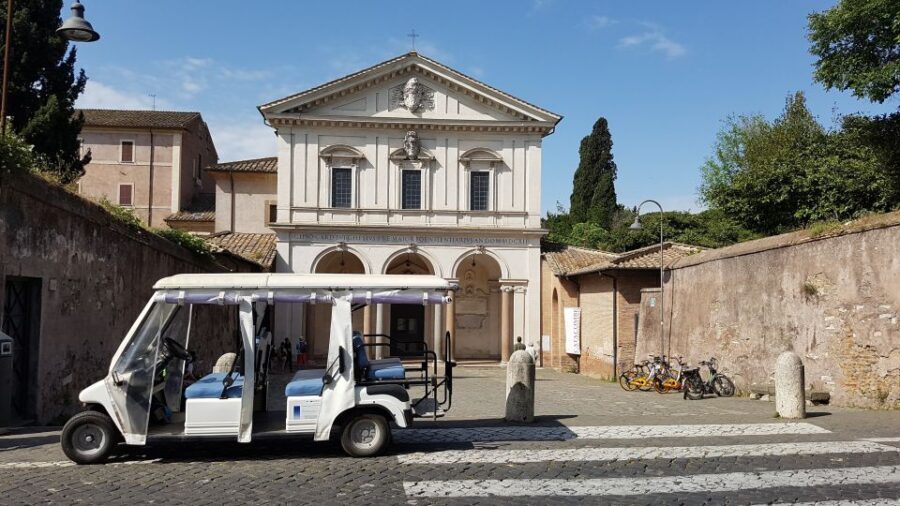
One of the landmarks on the route is the Basilica of San Sebastiano Fuori le Mura. Here, you’ll mainly pass by rather than spend long inside as part of the guided program.
Even as a pass-by, it helps set the tone. The Appia Antica area isn’t only about Roman engineering and emperors—it also became a major Christian landscape over time. Seeing this basilica from the road gives you a visual shift: the same corridor used for imperial power also becomes tied to later religious significance.
If you want more time at places like this, you’d need a longer add-on or a separate stop. For a 3-hour tour, the approach is to keep momentum while still signaling the big layers of the area.






Circus of Maxentius: When the Tour Actually Lets You Step Into Scale
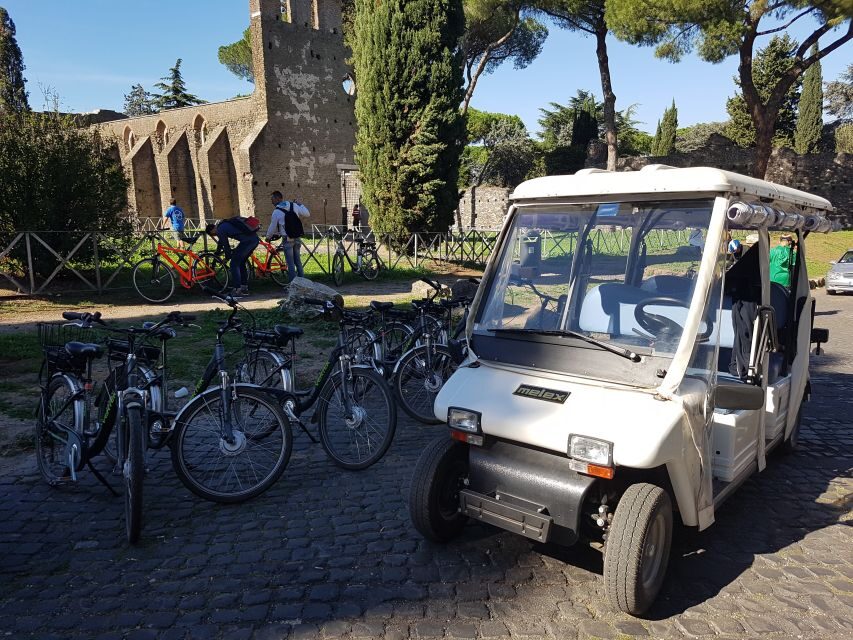
The most rewarding guided stop is the Circus of Maxentius, where the entrance is included. This is one of those sites that looks impressive from outside, but feels different once you’re inside the space.
What I like about this stop is the way it helps you “see” Rome as a system. A circus like this wasn’t just entertainment—it was public spectacle tied to power. As you move through the area, you can connect the road’s function with the life of an empire: people traveling along the Appia Way weren’t only visiting tombs; they were also part of civic moments and grand ceremonies.
Drawback to keep in mind: because your total tour time is limited, the circus visit won’t turn into a full-length architectural seminar. You’ll get enough to understand what it was and why it mattered, but you may want to return later if you’re the type who loves measuring Roman construction details.
Capo di Bove and Villa Capo di Bove: Included Entrance, Strong Visual Payoff
Next is Capo di Bove, with a guided visit that includes entrance to Villa Capo di Bove. This part of the route is valuable because it shifts your attention from “one monument” to how the landscape supports Roman life.
The Appian Way corridor is full of tombs and roadside structures, but Villa Capo di Bove adds a different flavor: it reminds you that emperors, elites, and their estates were living off these routes. That’s why it pairs well with the rest of the story of the road—from Domine Quo Vadis through the imperial-era associations and toward Quintili’s Villa.
Even if you’re not hunting for every archaeological term, the physical atmosphere matters. The route gives you enough time to recognize the scale and the relationship between the villa structures and the surrounding area.
Metella’s Tomb, Villa Quintili, and the “Pass-By” Strategy
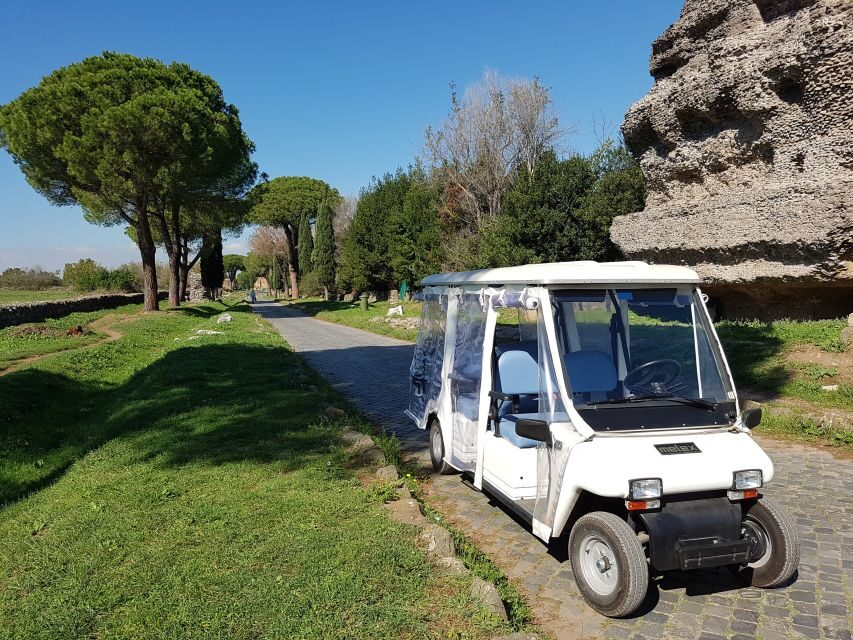
You’ll also encounter several famous sights as pass-bys:
- Tomb of Cecilia Metella (pass by)
- Villa Quintili (pass by)
This is the main place where the tour’s structure might not match your expectations. If you love monuments and want extended guided time at every one, you may wish these were more than quick looks.
Still, pass-bys can be smart when the goal is to learn a route. Here, the pass-by keeps the cart moving and lets you cover multiple major names within your 3-hour window. You get the visual hook, the guide provides the essential context, and you can decide later if you want a deeper return visit.
If you’re a film fan, Villa Quintili can feel especially fun because of its connection to the broader Gladiator cultural footprint mentioned in the tour narrative. That makes a quick stop feel less like skipping and more like setting up a mental bookmark for later.
Photo Stops, Chariot Traces, and the Moment You’ll Actually Remember
There are a few details that make this tour feel more “real” than just riding past ruins. The big one is the moment where you put your feet on the ancient cobblestones next to the chariot traces. That small stop changes your photos. You’re not just photographing stone—you’re photographing wear patterns created by movement over time.
The route also leans into photography by planning stops where you can pause, frame, and shoot without feeling like you’re constantly catching up with the cart. The timing is tight enough to stay efficient, but loose enough to avoid the frustration of “go, go, go.”
Practical tip: bring a camera strap or something secure. On uneven ground and in and out of the cart, you’ll appreciate not juggling gear.
Water, Timing, and How to Dress for Appia Antica Heat
Your tour includes 1/2 liter of water, which is exactly the kind of detail that matters on hot Roman days. Even with shade from the cart, you can still feel sun exposure while you’re standing for guided moments or waiting at photo stops.
Dress with cobblestones in mind. Comfortable shoes are a must, even though most of the time you’re riding. You’ll step off at key points, and the road surface isn’t the friendliest place for slick soles.
If it’s a warm day, plan to wear breathable fabric and consider sunglasses. It’s also smart to have a small hat or cap on hand. The cart helps, but the Appia corridor is still outside.
Optional Catacombs of San Sebastiano: Add It If You Want More Underground Time
The tour includes a potential drop-off near the Catacombs of San Sebastiano. A catacombs visit is available on request, but the entrance fee is not included (listed as €10.00 per person).
This is a great add-on if your goal is to balance day-to-day Rome sightseeing with something darker and quieter. The catacombs also connect naturally with the Appia story, since this area became a significant Christian burial landscape.
One heads-up: because catacombs are extra ticket time and extra walking, only add them if you still want more than the standard 3 hours. If you’re already tight on your schedule, you may prefer to keep it simple and enjoy the Appia segment without stretching the day.
Price and Value for a Private Group Up to 2
Price is $339.86 per group up to 2, for a 3-hour private tour. That may sound steep if you compare it to public transit. But compare it to what you’re actually buying: private access, a guided route, an electric golf cart, and included entrances to major sites.
Included items that affect value:
- Golf cart tour of the Appia Antica Park
- English-speaking guide
- 1/2 liter of water
- Entrance to Circus of Maxentius
- Entrance to Villa Capo di Bove
Not included:
- Catacombs entrance (if you add them): €10.00 per person
- Aqueducts area
- Hotel pickup and drop-off
- Food and drinks
So here’s the real value calculation: if you’d otherwise spend time and effort arranging transport and paying for site entries, the private cart format starts to make sense fast. Two people splitting the group price also helps.
Who gets the best deal from this setup? Couples, small groups, and anyone who wants a guide to “read” the landscape while avoiding the physical slog of long stretches on old stone.
Who This Tour Suits Best (and Who Might Want a Different Format)
This tour is a strong match for:
- people who want a guided introduction to the Appia Antica corridor without committing to a full-day bike or a long hike
- history-focused visitors who like context—road building, emperors, and how later religious layers took root
- anyone who wants to see multiple monuments in a short window
It may be less ideal if you:
- want long guided time at every single famous landmark along the way
- plan to focus heavily on aqueducts area, since that area isn’t included in this plan
A good rule: if you like the idea of understanding a route more than collecting every site, this works.
Book This Tour or Skip It? Here’s My Decision Guide
I’d book this if you want an efficient, comfortable way to experience the Appia Antica Park with a guide and included access to Circus of Maxentius and Villa Capo di Bove. The private 3-hour format is built for travelers who want meaning, not just movement, and the cobblestone + chariot-trace moment is the kind of detail you won’t get from staring at ruins from afar.
Skip it if you know you want aqueduct-focused time or you prefer long, monument-by-monument deep dives. For that style, you’d likely want a different tour format with more on-foot time.
Rating-wise, the tour sits at 4.6, which is a solid signal that the experience lands well when people come prepared for a guided, structured, 3-hour route.
FAQ
How long is the Rome Appian Way private golf cart tour?
It lasts 3 hours.
Is this tour private?
Yes, it’s a private group.
What languages are the guide available in?
The tour guide is listed as English and Italian.
Where do I meet the guide?
Meet inside the Tourist information office of the Appia Antica Park. Look for the EcoBike logo and check in at the desk.
Does the tour include entrance fees?
Yes for Circus of Maxentius and Villa Capo di Bove. Other sites’ entrance fees are not included.
Are the catacombs included in the price?
No. You can request a drop-off near the Catacombs of San Sebastiano, but the catacombs entrance fee is €10.00 per person.
Is hotel pickup or drop-off included?
No, hotel pickup and drop-off are not included.
Is water provided?
Yes, 1/2 liter of water is included.
What’s the price for this tour?
It’s $339.86 per group for up to 2 people.
Can I cancel for a full refund?
Yes, cancellation up to 24 hours in advance is listed for a full refund.