REVIEW · POMPEII
Pompeii Archaeological Small-Group tour for 15 people
Book on Viator →Operated by Askos Tours · Bookable on Viator
Pompeii is a big place. This tour keeps it human-sized and explains what you’re actually looking at. I like the small group pace, and I really like that the guide has an archaeological background. One heads-up: it’s a fast, two-hour route, so if you want long photo stops at everything, you’ll need to manage your expectations.
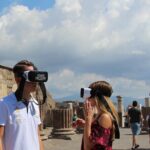
You start at Porta Marina and move through the Forum zone, then into major houses, baths, and the city’s theater and brothel area. It’s a strong mix of public space and everyday life details, plus the stops include entry where it matters. I also like the headsets setup for groups of 10 or more, because Pompeii gets loud fast.
The only potential drawback is coverage. This route does not include every famous spot you might have on your Pompeii wish list, so if you’re hoping for a specific add-on like Villa of the Mysteries, plan your day accordingly.
In This Review
- Key things to know before you go
- Why this Pompeii tour works better than a giant group
- Entering through Porta Marina and getting oriented fast
- Vicolo delle Terme: the street-level clue that makes the city click
- The Forum: Pompeii’s main square in plain terms
- Granaries of the Forum: why casts and details matter
- Houses and wealth: House of Menander and House of Faun
- House of Menander
- House of Faun
- Stabian Baths: the oldest thermal complex in town
- Lupanar: the famous brothel, explained with care
- Teatro Grande: one of Pompeii’s main stages
- The pace: how you fit Pompeii into about two hours
- Price and what you’re really paying for
- Who this tour fits best (and who might want something else)
- Guide quality is the secret ingredient here
- Should you book this Pompeii small-group tour?
- FAQ
- How long is the Pompeii Archaeological Small-Group tour?
- How many people are in the group?
- Is the tour offered in English?
- Is the entrance ticket included?
- Do you provide headsets?
- Where do we meet the guide?
- Where does the tour end?
- Are food and drinks included?
- What is the cancellation policy for a full refund?
Key things to know before you go
- Max 15 people means questions don’t get lost in the crowd.
- Archaeology-focused guidance helps you connect streets, buildings, and finds.
- Pompei Express entrance is included, so you’re not scrambling for tickets.
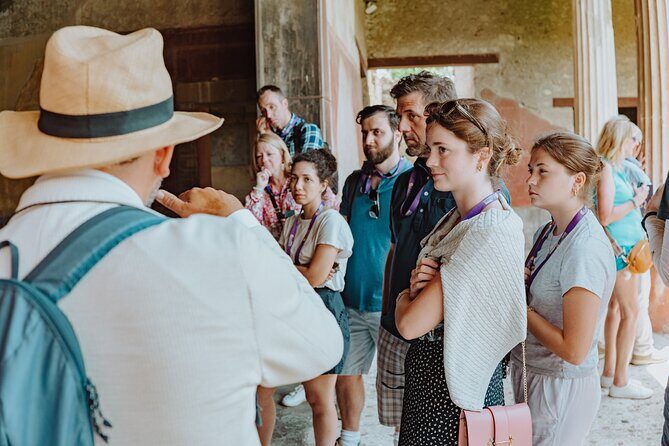
- Headsets help you hear the guide clearly in busier areas.
- You end inside the ruins at Piazza Esedra, which makes it easy to keep exploring on your own.
Why this Pompeii tour works better than a giant group
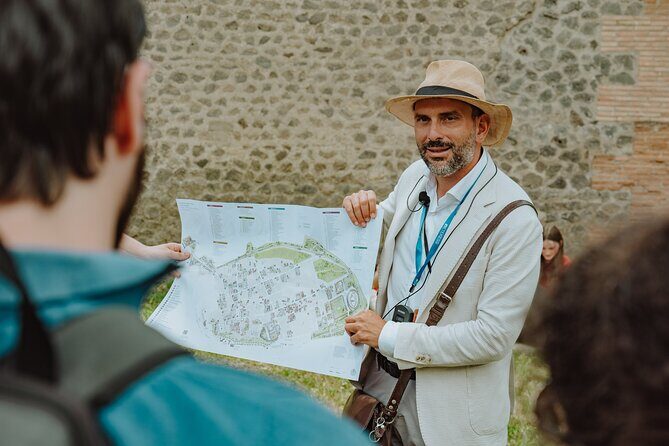
Pompeii can feel like “just keep walking and hope for the best.” This tour fights that problem with a tight group size and a guided route that actually teaches you how to read the city. Instead of treating the ruins like scenery, you get a guided map in your head: where you are, what kind of building you’re seeing, and why that detail matters.
I also like that the tour uses a licensed guide with an archaeological background. That shows up in how you talk about materials, street layout, and the meaning behind artifacts. You don’t just hear what something was; you get a sense of how excavators understand it today.
The price is $77.06 per person for about two hours, and the big value point is that the entrance ticket is wrapped in. You’re paying mostly for expert time plus access, not just a ticket you could buy later.
You can also read our reviews of more tours and experiences in Pompeii.
Entering through Porta Marina and getting oriented fast
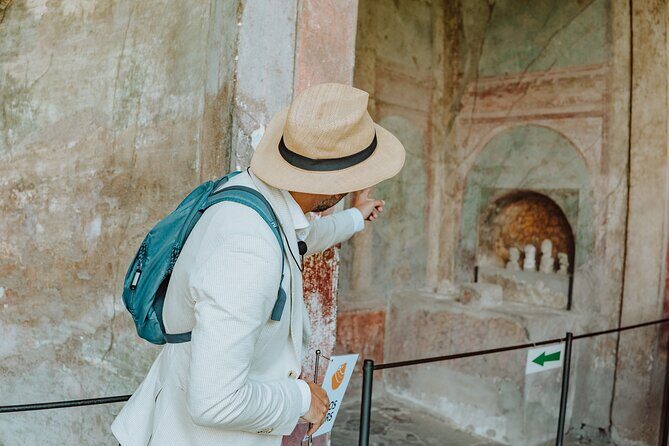
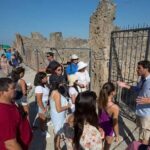
Your day starts at the main entrance area called Porta Marina Superiore. The meeting point is near Hortus bar & Restaurant, and the guide holds an Askos Tours sign so you can spot them without stress. It’s a small thing, but it matters in Pompeii, where entrances and paths can blur together quickly.
The first stop is Piazza Porta Marina, and the timing is short. That’s intentional. You use the first minutes to get your bearings, then you move into narrow streets and key buildings. Even if you’ve seen Pompeii photos before, the guide helps you connect the “pretty ruins” look with the actual city rhythm.
If you show up a bit early, you’ll settle faster. Once you’re inside, the tour moves, and you’ll want your feet ready for the pace.
Vicolo delle Terme: the street-level clue that makes the city click
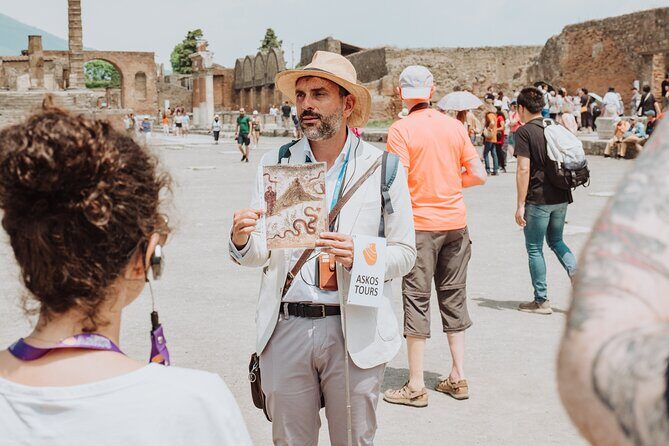
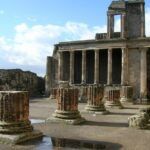
Next you head to Vicolo delle Terme, 2, where you’ll see the basilica as an open portico. This is the kind of stop that sounds small, but it’s one of those “oh, that’s how the city worked” moments.
A portico like this wasn’t just architecture for architecture’s sake. It gave merchants and other activity a sheltered space. When you understand that, you start to read the ruins differently. You begin noticing where people could gather, where shade and shelter might have mattered, and how commerce fit into everyday movement.
This is also a great zone for asking simple questions. If you’re wondering, for example, how crowds might have moved through the day, this is where the guide’s explanations can help you picture it.
The Forum: Pompeii’s main square in plain terms
Then you get to the Foro de Pompeya, the ancient main square. This is where Pompeii feels most “civic.” You’re looking at the kind of space where public life happened: meeting places, ceremonies, and the daily public-facing side of the city.
The value here is the way the tour frames the Forum as a hub rather than a single landmark. You don’t just stand and look. You learn what the square is likely to have been used for and how it connects to nearby structures.
You’ll also feel why the timing is tight. The Forum area can be very active, and the tour has you sampling it efficiently so you don’t lose the rest of the route.
Granaries of the Forum: why casts and details matter
From the main square, you go to the Granaries of the Forum. In this space, you’ll see marble tables and baths for fountains that once adorned entrances of houses. That’s a nice reminder that Pompeii wasn’t only temples and theaters. It had a constant flow of “front-of-house” details that made neighborhoods feel cared for.
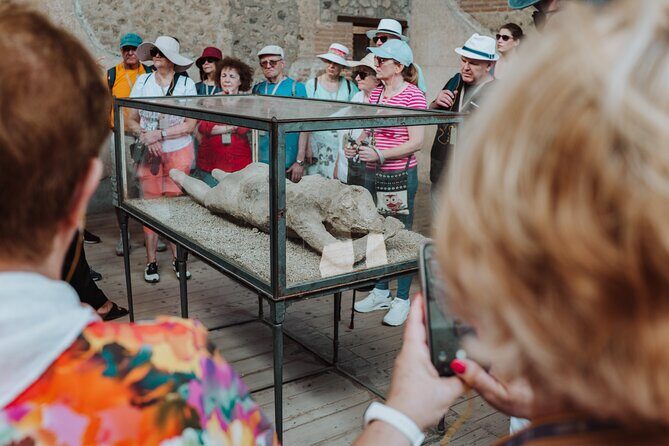
Here’s where it gets especially memorable: you’ll also encounter casts of victims of the eruption, including a cast of a dog and a tree. Those smaller casts can hit harder than the bigger names because they show loss in a human-and-everyday scale. They also make the science and the archaeology feel real, not abstract.
This is the kind of stop that benefits from a good guide. If you’re the type who likes to understand what happened and how archaeologists interpret it, this section tends to land well.
Houses and wealth: House of Menander and House of Faun
The tour then turns toward private life by visiting two major houses: the House of Menander and the House of Faun.
House of Menander
This one is described as among the richest and most magnificent houses in Pompeii, especially for architecture, decoration, and contents. The guide’s job here is to help you spot what makes it “rich” beyond the surface.
Pay attention to layout and decorative choices. In Pompeii, the quality of a home often shows in details like how rooms connect and how decoration is used to shape experience. A skilled guide can point out what would have mattered to the people living there.
House of Faun
Then you move to the House of the Faun, one of the largest and most impressive private residences in the city. “Large” is useful, but what matters most is how size connects to power, status, and daily movement inside the home.
If you like the idea of Pompeii as a living place where social life happened, these house stops give you that angle. You start to see different levels of wealth and how design reflected identity.
A practical tip: when you get into these houses, keep your eyes moving. Don’t get stuck on one room. You’re better off letting the guide’s explanations steer your attention across the big picture.
Stabian Baths: the oldest thermal complex in town
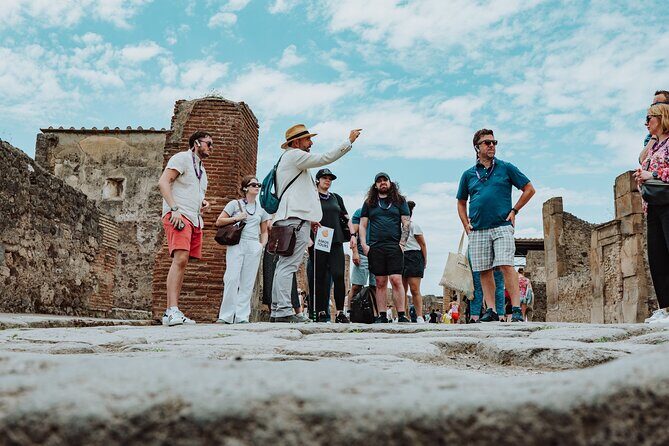
Next comes the Stabian Baths, also known as Terme Stabiane. This area covers a vast site and is described as the oldest thermal complex in Pompeii. That alone makes it worth your time, because baths weren’t just for cleanliness.
They were social spaces. They were part of the city’s routine. When you see the scale of the complex, you understand that bathing culture had infrastructure and momentum, not just casual dips.
This stop also changes the mood of your walk. After walking streets and peeking into homes, the baths feel like a shift back toward community life. You can almost sense how the city might have buzzed in regular cycles.
Lupanar: the famous brothel, explained with care
Then you visit the Lupanar, the most famous brothel in Pompeii. This is a stop where tone matters. It’s not just “shock value.” The guide’s role is to explain what the space was, how it functioned, and how Pompeii’s surviving evidence informs what we can responsibly say.
Even if you’re not seeking adult-themed history, this stop adds context to the city’s social structure. It shows you that the city had entertainment and services as part of ordinary urban life.
I recommend going in with a mindset of understanding place and function, not judging from a distance. A good guide will keep the focus on interpretation and how archaeologists read the evidence.
Teatro Grande: one of Pompeii’s main stages
After the Lupanar, you reach Teatro Grande, the most important theater in Pompeii. This is one of those stops that helps you understand why public architecture mattered. Theater wasn’t only about plays. It was about gathering, visibility, and shared experiences.
The guide can help you see the theater as an engine for community events rather than a pretty ruin to photograph. Even in a short time window, a theater stop gives you a different angle on the city: what people came to watch, and why public performance belonged in the urban center.
If you like ancient entertainment, this is a strong capstone to the public-life sequence.
The pace: how you fit Pompeii into about two hours
The whole tour is about two hours. That’s a good length for first-time Pompeii visitors because you get real highlights without burning the entire day. You also leave time to reset. A two-hour run means you’re more likely to stay mentally fresh, not just physically tired.
You’ll do a walk through the main street as part of the route, connecting major zones so you can feel the city as a connected place. When the tour ends inside the ruins, you’re free to keep wandering around on your own.
That freedom is practical. If you want extra time in a specific area, you can go back and slow down after you’ve already learned what you’re seeing.
And if the day is busy, the guide can work around the flow. On a very crowded holiday period (like the Liberation Day scenario), the tour was adjusted to keep the route moving, and the guide managed the crowds so the two hours still felt purposeful. The takeaway for you: bring patience, and trust that a guide’s routing experience helps when things get packed.
Price and what you’re really paying for
At $77.06 per person, you’re not just buying a ticket and a map. You’re buying:
- Guidance for the full duration
- A licensed guide with archaeological background
- The Pompei Express entrance ticket
- Headsets for groups of 10 or more
- A small group capped at 15
That combo matters because Pompeii is confusing when you don’t know where to look. With a guide, you spend less time asking yourself basic questions and more time understanding what you’re seeing. With headsets, you stay in the conversation even when other groups crowd nearby.
Value isn’t only about cost. It’s about how much meaning you get for your time. This tour is built to deliver a lot of interpretation in a short window.
Who this tour fits best (and who might want something else)
This tour fits you if you want a guided highlights circuit with strong context, especially if you’re interested in how archaeologists interpret surviving evidence. It’s also a good fit for teenagers and adults, where you can handle the seriousness of some stops like the casts and the more adult-themed Lupanar site.
You might want a different option if:
- You only care about one or two “big ticket” sights and want long stretches there.
- You’re hoping for a broader sweep that includes every famous extra site in Pompeii.
Also, the tour is offered in English, and it says most travelers can participate. Service animals are allowed, so that’s covered if you travel with one.
Guide quality is the secret ingredient here
What really makes this tour sing is the human element: the guide. In the experiences I’m drawing from, different guides were praised for being passionate, prepared, and clear—traits that matter in ruins, where it’s easy to get lost in details.
Names that stood out include Mario Celebtano, Rafaelle, Antonella, Camillo Sorrentino, Nicoletta, Hugo, and Teresa. Across that range, the shared theme was strong explanation plus a sense of humor or warmth. That combination keeps the tour from becoming a lecture.
So when you’re booking, think about what you want most. If you want to understand Pompeii instead of just walking through it, prioritize tours where the guide is the main reason to go. This one is built that way.
Should you book this Pompeii small-group tour?
Book it if you want a guided, efficient Pompeii highlight route with an included entrance ticket and real context. Two hours is enough to get your bearings, learn the “why” behind major stops, and still have time afterward to wander at your own speed.
Consider skipping or pairing it with another plan if you’re chasing specific omissions. This route focuses on Porta Marina, the Forum area, two major houses, Stabian Baths, the Lupanar, and Teatro Grande, plus a walk through the main street. If Villa of the Mysteries is your must-see, double-check your full day plan so you don’t assume it’s included.
If you like structure, smaller groups, and a guide who can turn ruins into a story, this is a solid choice.
FAQ
How long is the Pompeii Archaeological Small-Group tour?
The tour lasts about 2 hours.
How many people are in the group?
It’s a small group with a maximum of 15 travelers.
Is the tour offered in English?
Yes, the tour is offered in English.
Is the entrance ticket included?
Yes. The tour includes a Pompei Express entrance ticket.
Do you provide headsets?
Headsets are provided for groups of 10 people or more.
Where do we meet the guide?
You meet at the main entrance area called Porta Marina Superiore, in front of Hortus bar & Restaurant, where the guide holds an Askos Tours sign. The start address given is Via Villa dei Misteri, 2, 80045 Pompei NA.
Where does the tour end?
The tour ends inside the ruins at Piazza Esedra, 80045 Pompei NA. You can then keep wandering on your own.
Are food and drinks included?
No. Food and drinks are not included.
What is the cancellation policy for a full refund?
You can cancel for a full refund up to 24 hours in advance of the experience’s start time. If you cancel less than 24 hours before, the amount paid is not refunded.