REVIEW · CATACOMBS TOURS
Rome: Appian Way, Catacombs & Roman Aqueducts Top EBike Tour
Book on GetYourGuide →Operated by TopTours · Bookable on GetYourGuide
If you like history with momentum, this works. You get out of the city on a quality e-bike and roll through the Appian Way area like an open-air museum, with Roman walls, aqueduct power, and (on the 6-hour version) an underground catacombs visit. Two things I love are the safety-first route and tight guiding (people of very different ages manage it) and the fact that the ride is designed for real cycling comfort with anti-puncture tires and a saddle that won’t punish you. One drawback to plan for: it is still an intermediate ride with a 27 km route, so if you’re worried about stamina or heat, you’ll want to pace yourself.
Guides really shape how good this tour feels. I like that the group stays small (up to 10), and you’ll hear clear history plus practical road-handling, especially during the city connections. Folks share great experiences with guides like Claudia, Fabio, Megan/Meghan, Caterina, Zak, and Areia, and the common theme is calm control over busy intersections.
Also, don’t treat it like a slow sightseeing walk. You’ll cover serious ground, there’s no included food, and some parts can feel taxing even with electric assist—especially in warmer months. For the catacombs: the guided descent is a highlight for some, but if you’re bringing kids who get bored underground, you might rethink the 6-hour option.
In This Review
- Key points worth knowing before you ride
- The Appian Way Experience: Rome Outside the Crowds
- Starting at Via Labicana 49 and Getting Ready on Your Bike
- Aurelian Walls and the Appian Way: Rolling Over 2,300 Years
- Catacombs on the 6-Hour Version: The Underground Stop That Changes the Mood
- Circus of Maxentius, Cecilia Metella, and Villa dei Quintili: Funerary Landmarks with Big Presence
- Parco degli Acquedotti: The Aqueduct Park Portion You’ll Remember
- Caffarella Park and Baths of Caracalla: Green Riding with Roman Weight
- How Hard Is It: Distance, Off-Road Percentage, and Real Traffic
- Bikes, Guides, and Small-Group Value at Around $100
- Who Should Book This Tour (and Who Might Skip It)
- Should You Book This Appian Way E-Bike Tour?
- FAQ
- Where is the meeting point?
- How long is the tour?
- What’s included with the e-bike tour?
- Is the catacombs visit included?
- What is the total distance and how much is off-road?
- What about traffic during the ride?
- What level of fitness do I need?
- Do I need to bring food or drinks?
- What languages are offered by the guide?
- Are children allowed?
Key points worth knowing before you ride
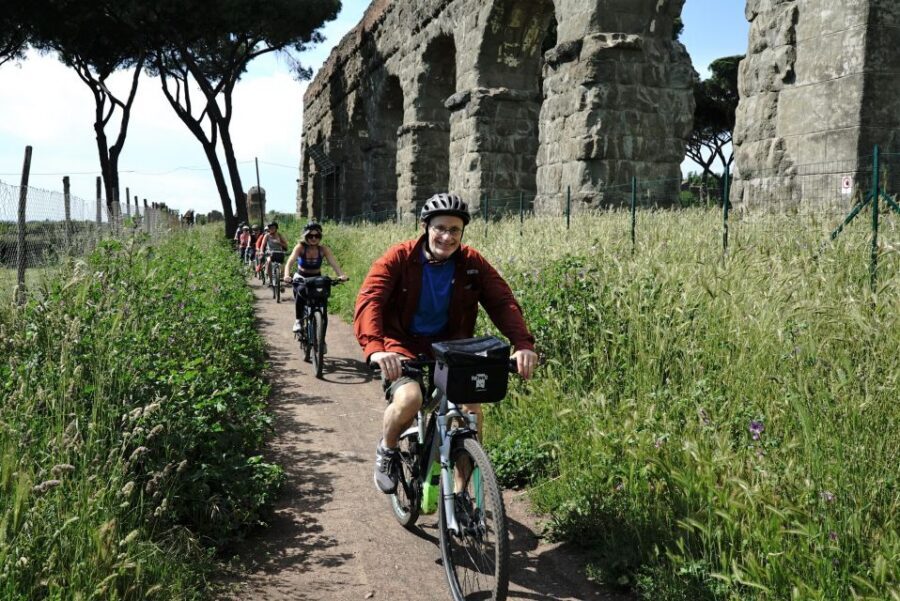
- Small group size (max 10): easier communication and smoother pacing, especially when roads get busy.
- 60% off-road on parks: you trade traffic stress for countryside paths and park riding.
- New Cannondale e-mountain bikes: anti-puncture tires help you keep going, even if the road isn’t perfect.
- Optional 45-minute catacombs visit (6-hour tour): adds a real underground angle to the Roman story.
- Aqueduct Park views: those monumental arches are the payoff photo stop for most people.
The Appian Way Experience: Rome Outside the Crowds
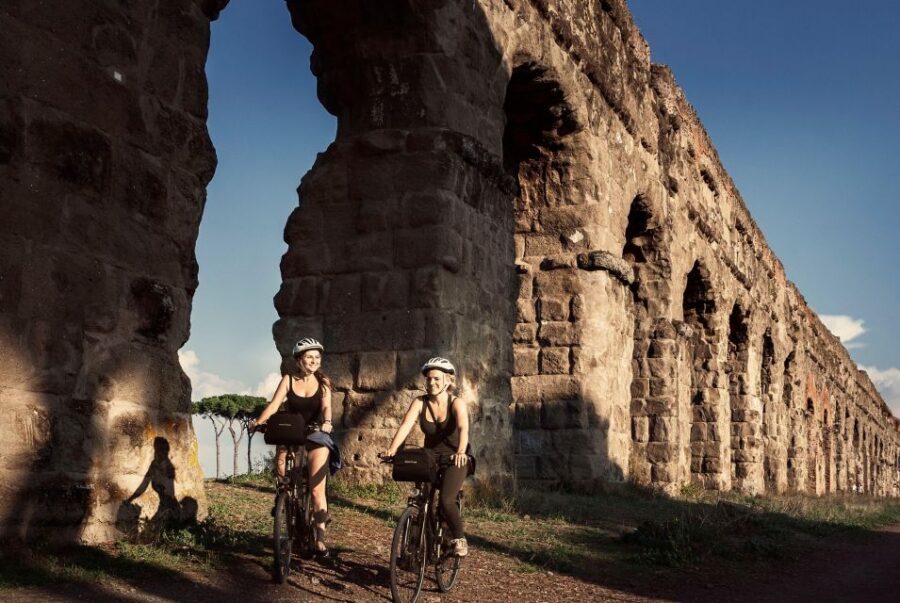
Rome is easy to overdo. Big-ticket sights can turn your day into a line-and-stand exercise. This tour gives you a different rhythm: you leave the center, roll through a landscape where ruins feel spread out instead of stacked, and you watch the city’s story change as you move from walls to roads to aqueducts to parks.
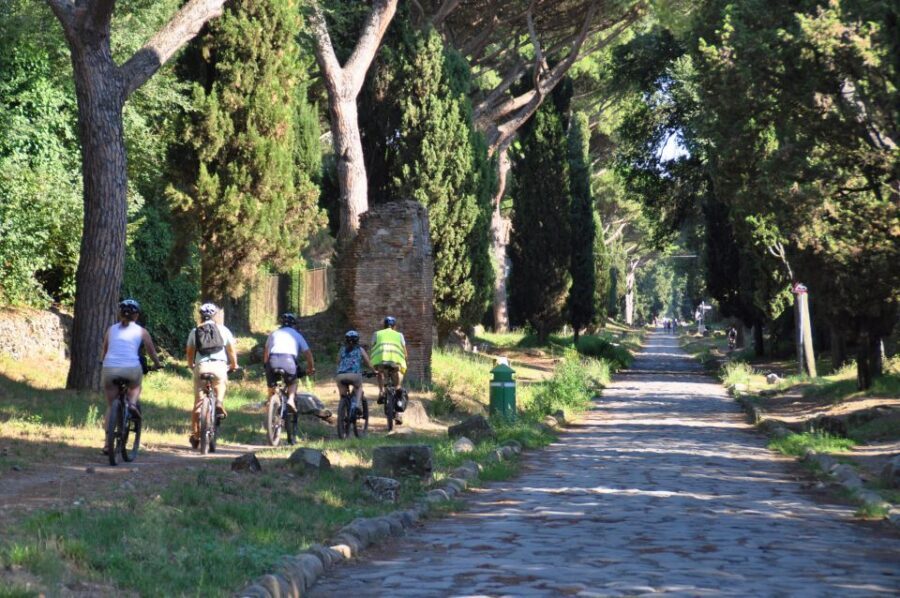
The Appian Way is the star, and not just because it sounds famous. The route follows an ancient road context that feels like it still has purpose: mausoleums, villas, and layers of Roman burial culture along the way. When you’re biking there, you’re not just looking at stone. You’re traveling through a corridor of movement—how people once walked, traveled, and honored the dead.
You also get the “nature in the middle of the city” effect when you reach the countryside zone by Caffarella Valley. It’s a nice reset after the urban connections. And the Aqueduct Park portion hits that rare Rome combo: monumental structures, open air, and space to actually see the arches instead of squeezing in front of them.
You can also read our reviews of more cycling tours in Rome
Starting at Via Labicana 49 and Getting Ready on Your Bike
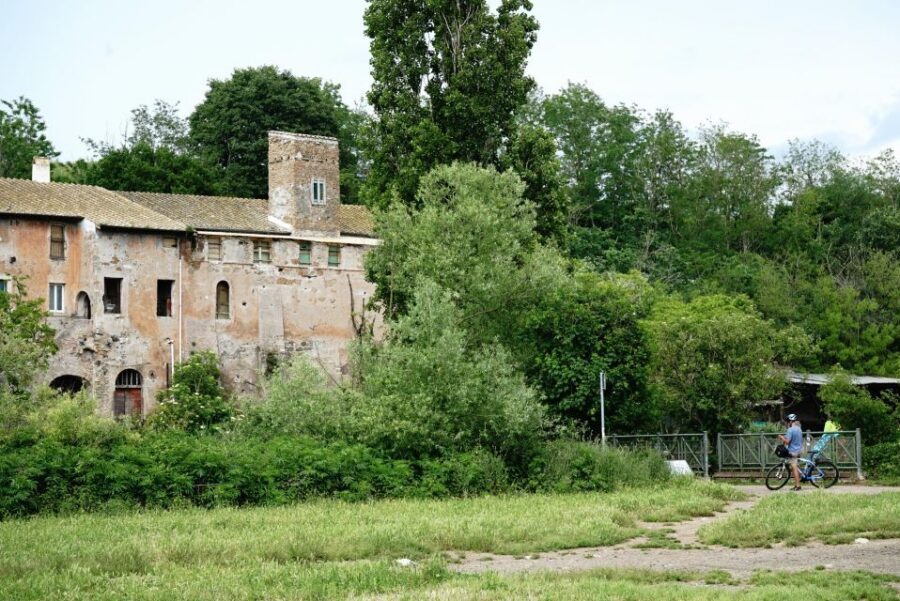
You meet at Via Labicana 49, and it’s a short walk from the Colosseum area. In practice, that’s helpful because you can combine this with your other Roman plans without feeling like you’re commuting across the whole city.
Once you arrive, the tour gives you the gear that matters for comfort and confidence:
- A Cannondale e-bike with a comfortable saddle
- Anti-puncture tires (big deal when you’re riding outdoors on mixed surfaces)
- A helmet (mandatory) and a bottle of water
The bikes are e-mountain style, which is the right choice for this route. You’re not doing hard technical downhill stuff, but you are riding 27 km over mixed surfaces, including off-road stretches. The e-assist is there to keep you from turning the ride into a leg workout for the wrong reasons. People in the group range widely in ability, and that’s usually where the e-bike matters most—making the cycling portion feel doable rather than intimidating.
Tip from how the tour seems to run smoothly: use the assist the way you need it, not how you think you should. If you’re newer to e-bikes, it’s smart to start with more help on early pedal starts and any little climbs, then dial down as you find your rhythm.
Aurelian Walls and the Appian Way: Rolling Over 2,300 Years
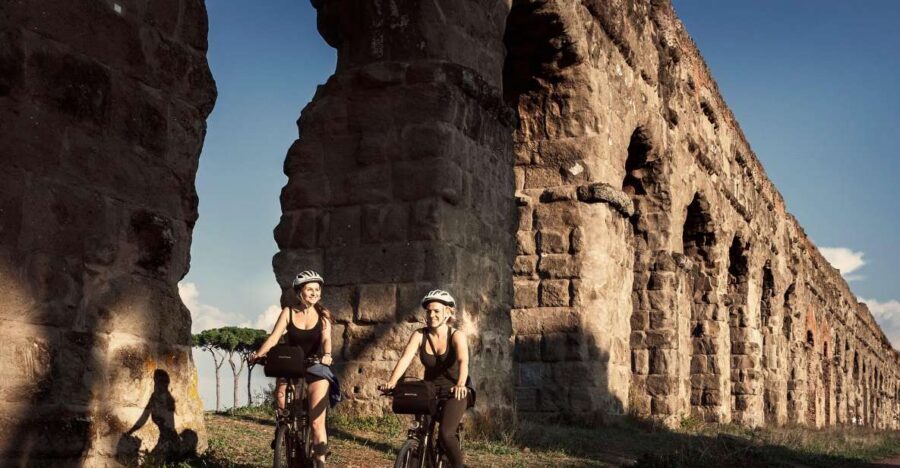
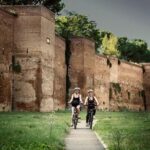
The day’s structure builds from city edge into countryside. You start by passing the Aurelian Walls area, then you push out toward the Ancient Appian Way through the St. Sebastian’s gate zone. That transition is one of the tour’s best parts because it changes how Rome feels in minutes.
On the walls and early city segments, you’re still in Rome traffic reality, even if the group is guided carefully. Expect some traffic connections where you can’t avoid streets, but you’re riding on chosen routes with maximum safety in mind. In other words: yes, you’ll ride through parts of the city, but it shouldn’t feel random or chaotic.
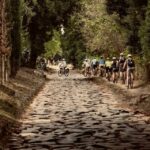
Then the Appian Way section kicks in. This is where biking makes a difference compared to bus or tram. You can feel the road’s scale and the way the landscape stretches. You see why this part of Rome is treated like a long open-air story—mausoleums and villas set along a path that has carried people for centuries.
One more detail I like: the tour doesn’t just name-drop. It connects what you see to how Romans lived and practiced burial culture. When the guide explains the Roman approach to funerary space and imperial-era patterns, the ruins stop being scattered rocks and start acting like a timeline.
Catacombs on the 6-Hour Version: The Underground Stop That Changes the Mood
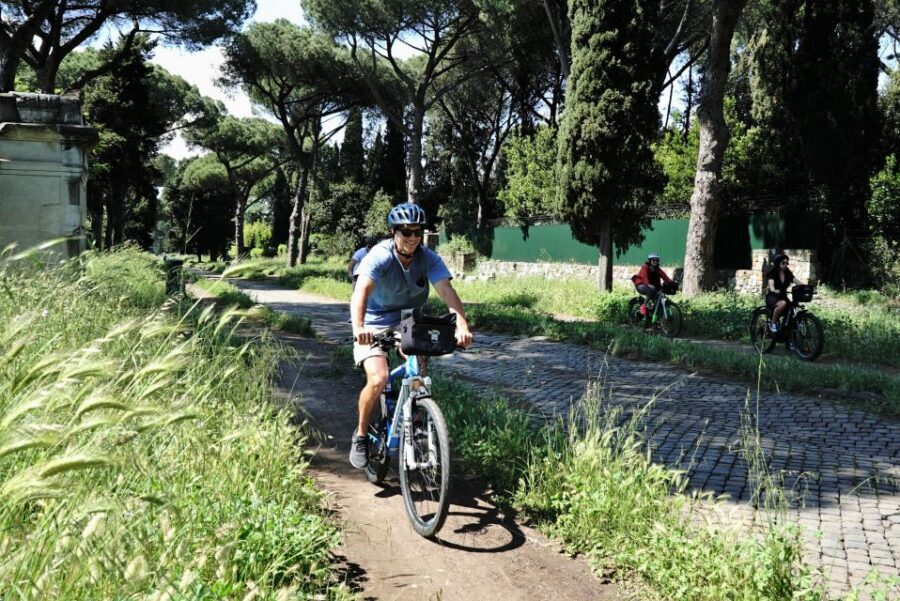
If you choose the 6-hour tour, you add Catacombs of Rome with a guided visit of about 45 minutes. This is the one portion that changes the tone from outdoor cruising to interior exploration.
The tour format is clear: you’ll bike to the catacombs area, then descend corridors and follow a guide. That guided element matters, because underground spaces are easy to feel lost in. With a structured visit, you get context on early Christian burial practices instead of just staring at walls.
Is it for everyone? Not automatically. Some families find the underground portion less exciting for kids who want daylight and quick movement. But for adults who like atmosphere and explanation, it tends to become the “I’m glad I did this” moment. Either way, it’s a real contrast after open-air stone roads and before the aqueduct scenery.
Practical note: since the catacombs portion is only in the longer tour, choose based on your group. If your main goal is the countryside and aqueduct park, the shorter option may feel perfect. If you want the full Roman burial-and-structures arc, the 6-hour version is the one to pick.
Circus of Maxentius, Cecilia Metella, and Villa dei Quintili: Funerary Landmarks with Big Presence
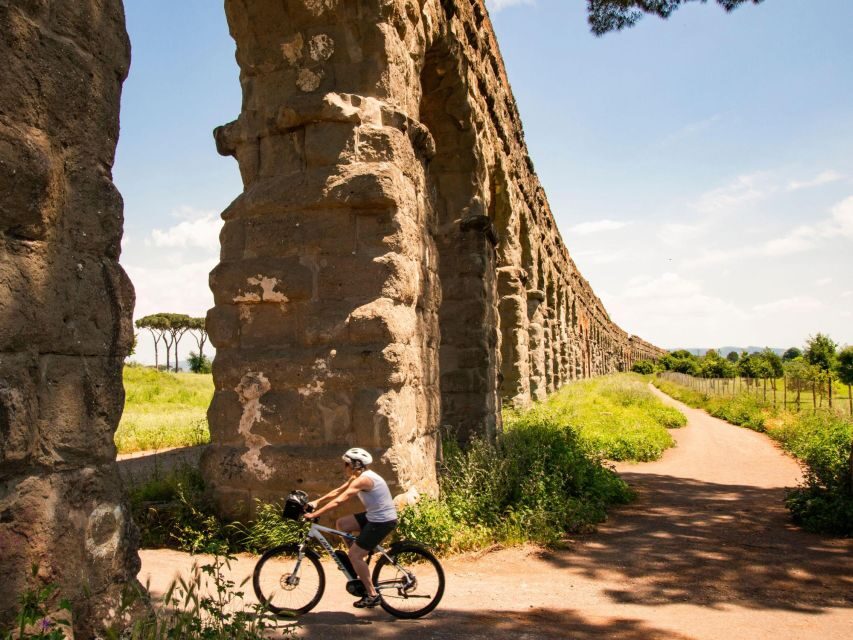
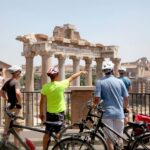
After the Appian Way stretch, you move into a sequence of major landmarks that feel like Roman “set pieces.” Even when you’re not stopping for long, the guide’s pacing helps each site land.
Here’s what you’ll experience in this segment:
- Circus of Maxentius: an impressive stop that connects the Roman road landscape to entertainment and imperial power.
- Tomb of Cecilia Metella: a strong visual anchor along the route, the kind of site that makes you pause without forcing it.
- Villa dei Quintili: an area tied to elite Roman villa life, which helps round out the story beyond roads and tombs.
What makes these stops work on a bike tour is that you’re not fighting crowds in tight lanes. You get short, focused windows to look, then you move on. And because you’re traveling between sites, the locations feel connected rather than like separate museum rooms.
If you enjoy context, the guide is key here. The best tours turn “I see a ruin” into “I understand what this ruin meant.” People highlight how guides like Fabio and Caterina explain details in a way that clicks, and that matches what makes this section feel rewarding.
You can also read our reviews of more tours and experiences in Rome


Parco degli Acquedotti: The Aqueduct Park Portion You’ll Remember
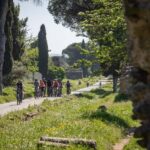
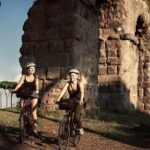
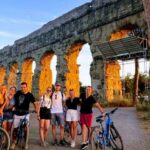
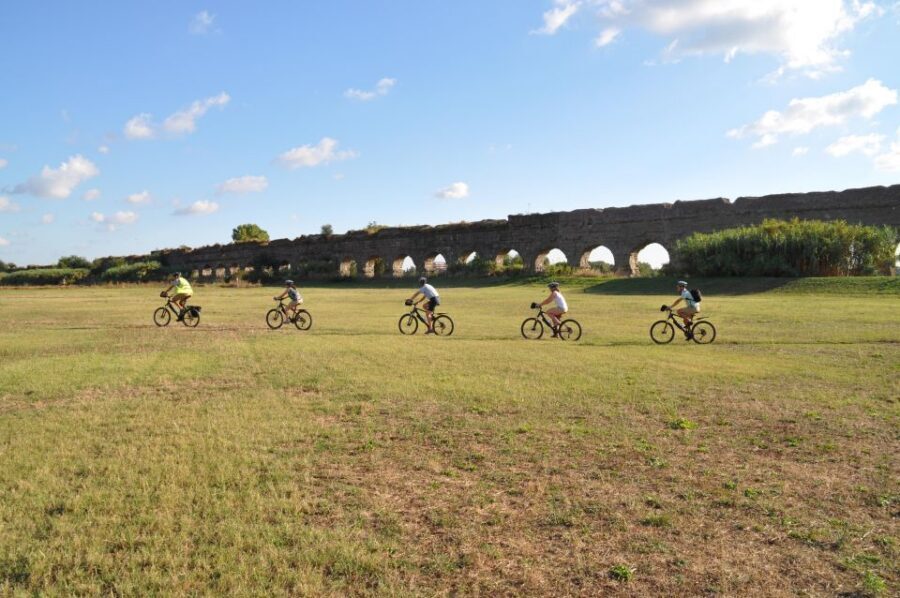
When the day hits the Parco degli Acquedotti, you’re in the payoff zone. The aqueduct arches loom over the landscape, and the scale is the point. You can stand back and still feel the size because you’re in park space, not a jammed-up street.
This is one reason the e-bike format works so well. You get to the aqueduct park feeling like you earned it—after walls, road history, and countryside motion—so the view hits harder. Most people rate the aqueduct section as a top highlight, and it’s easy to see why.
Also, it’s the cleanest “no traffic” feeling portion of the route. The tour is designed so that around 60% of the riding happens in parks with no car traffic. That keeps you relaxed and lets you focus on sightseeing instead of lane anxiety.
If you’re thinking about photography: the aqueduct arches give you lots of angles, and open space makes composition easier. Just take a few minutes to stop, step back, and look at the lines in the structure rather than only shooting from the nearest spot.
Caffarella Park and Baths of Caracalla: Green Riding with Roman Weight
After the aqueduct park, you ride back toward civilization through the Caffarella Valley and Caffarella Park. This is where the tour feels most like a break from city Rome. The landscape shift is noticeable: less stone, more green space, and a calmer pace.
Then you wrap with the Baths of Caracalla area. This stop adds a different kind of Roman monument—less about road-burial culture, more about the grand public life angle. It helps close the loop so the day doesn’t feel one-note.
This closing section is also a nice way to handle your energy. By the time you reach Baths of Caracalla, you’ve already seen the hardest “story concept” pieces. Now you’re finishing with a major site and a final stretch of guided sightseeing.
How Hard Is It: Distance, Off-Road Percentage, and Real Traffic
Let’s talk effort without sugarcoating it.
- Total distance: 27 km (about 17 miles)
- Off-road: about 60%
- City riding: about 40%, with carefully chosen streets
- Traffic: some is unavoidable for connections, but the parks portions have no traffic
The tour level is listed as intermediate, and it can be difficult with a child seat/extension. That matters if you’re bringing kids or if you’re riding with limited stamina. E-bikes help a lot, but they don’t remove the need for basic endurance and comfort with riding for hours.
What I’d do if you’re unsure about your fitness: plan your day so you’re not starting exhausted. You’ll get breaks and guide structure, but this is still a full cycling outing.
Warm weather warning is real too. One review noted it would be tougher later in summer due to heat. Even with e-assist, you’re outside in the Roman countryside environment. If you can, pick a season and start time that keeps heat manageable.
And yes—intersections can feel intimidating in big cities. The guides are clearly trained for this. People repeatedly praise how guides handled busy streets with calm control, like Claudia guiding safely through traffic and Fabio keeping the group secure. That said, you still want to ride confidently and follow instructions closely.
Bikes, Guides, and Small-Group Value at Around $100
At about $100 per person, the value is tied to what’s included and what you’re not paying extra for.
You’re getting:
- A quality Cannondale e-bike with anti-puncture tires
- A helmet (mandatory)
- A guide
- Water
- Optional catacombs guided visit in the 6-hour version
- A small group size (up to 10)
For Rome, that pricing makes sense because you’re buying time and access: the route takes you through places most visitors don’t reach on foot without serious logistics. You also avoid the “where do we go next” problem. The guide’s job is to keep you moving safely, explain what you’re seeing, and manage the group so you can relax.
If you’re comparing options, think about your goal:
- If you mainly want Appian Way plus aqueduct park and countryside scenery, you may find the shorter tour fits better.
- If you want the full story arc including early Christian burial sites, the 6-hour tour justifies its added time with the catacombs component.
In plain terms: it feels like a strong deal when your priority is time-efficient outdoor Rome with a real local plan.
Who Should Book This Tour (and Who Might Skip It)
This is a great match if you:
- Want to see more Rome in fewer hours than a walking-only day
- Enjoy cycling but don’t want the ride to become a struggle
- Like ruins with outdoor space instead of museum crowd pressure
- Want expert guiding for safety on the city connections
It might not be the best fit if you:
- Hate any underground visits and you’re choosing a group format that includes catacombs
- Have very limited riding stamina and want something more gentle
- Travel with kids who get bored in quieter indoor spaces (the catacombs can be a slower, stiller moment)
If you’re new to e-bikes, you’re not alone. Several people highlighted how quickly they got used to the bikes and how the electric assist made the day accessible. That’s a good sign for first-timers.
Should You Book This Appian Way E-Bike Tour?
Yes, if you want a day that feels like Rome moving through the landscape instead of Rome stuck in lines. The Appian Way-to-aqueduct combination is a smart use of time, and the small-group, safety-focused guiding is what keeps it from feeling like a risky stunt.
I’d book the 6-hour tour if the catacombs fit your group and you’re curious about early Christian burial history. I’d choose the shorter option if your priority is the open-air ruins, aqueduct park, and countryside riding with less time underground.
Either way: bring a calm riding attitude, dress for the weather, and go with the flow of a guided day. You’ll come back with images and stories that feel tied together, not chopped into separate tourist stops.
FAQ
Where is the meeting point?
The meeting point is Via Labicana 49, about a 5-minute walk from the Colosseum.
How long is the tour?
It runs for 4 to 6 hours, depending on the option you choose.
What’s included with the e-bike tour?
You’ll get a Cannondale e-mountain bike with anti-puncture tires and a comfortable saddle, a helmet, a guide, and a bottle of water.
Is the catacombs visit included?
The guided visit of the catacombs is only included on the 6-hour tour, with about a 45-minute guided visit.
What is the total distance and how much is off-road?
The tour covers 27 km (about 17 miles), with about 60% off-road and about 40% in the city.
What about traffic during the ride?
Some traffic is unavoidable in the city when connecting to the Appian Way to the Aqueducts Park. In the park sections, there is no traffic.
What level of fitness do I need?
The tour is listed as intermediate. It can be difficult with a child seat or child extension.
Do I need to bring food or drinks?
Food and drinks are not included, though there are places along the route where you can purchase some.
What languages are offered by the guide?
The tour offers live guides in English, Italian, Dutch, French, German, and Spanish.
Are children allowed?
Infants aged 1–4 travel on a child seat and travel free of charge. Children aged 5–8 join with a child extension. Children aged 9 and above (over 140 cm / 55 inches) can ride an e-bike. Babies under 1 year are not suitable.