REVIEW · CYCLING TOURS
Rome: Appian Way and Roman Countryside Electric Bike Tour
Book on GetYourGuide →Operated by Rome for You - RM - 1436156 · Bookable on GetYourGuide
The Appian Way feels different on an e-bike. This 4-hour Rome countryside outing takes you off the main streets and onto Regina Viarum, the ancient road that still shows its original paving. You’re not just passing monuments—you’re seeing how a single route linked power, faith, and everyday movement in ancient Lazio.
I especially love how much you cover without the stress. On an e-bike with a helmet, cobblestones and gentle hills feel manageable, so you can spend your energy looking closely at the ruins instead of fighting your legs. I also like the guide-led storytelling—names I saw in real bookings include Emiliano and Libero, and their pacing and humor come through.
One thing to consider: the tour can include major stops like the Saint Callixtus and Saint Sebastian catacombs, but there’s enough variation that you should confirm you’ll actually enter both areas the day you go. Also, an e-bike battery hiccup is rare, but one participant reported reduced assist mid-ride, so it’s smart to ask how the team handles bike issues if they happen.
In This Review
- Key points before you go
- Entering Rome’s oldest road: the Via di S. Calisto start
- Riding the Appian Way (Regina Viarum): why this road mattered
- The big monuments you’ll see: ruins, imperial power, and mausoleums
- Saint Callixtus and Saint Sebastian catacombs: how faith took space
- Aqueducts Park: two Roman aqueducts still standing well
- Caffarella Park return ride: archaeology plus a working farm
- The e-bike reality check: comfort, pace, and bike reliability
- Price and value at $88 for 4 hours
- Who this Appian Way e-bike tour suits best
- Should you book Rome: Appian Way and Roman Countryside Electric Bike Tour?
- FAQ
- Where does the tour meet?
- How long is the Rome Appian Way and Roman Countryside e-bike tour?
- What’s included in the price?
- Is hotel pickup or drop-off included?
- What should I bring for the tour?
- Is the tour suitable if I can’t ride a bike?
Key points before you go
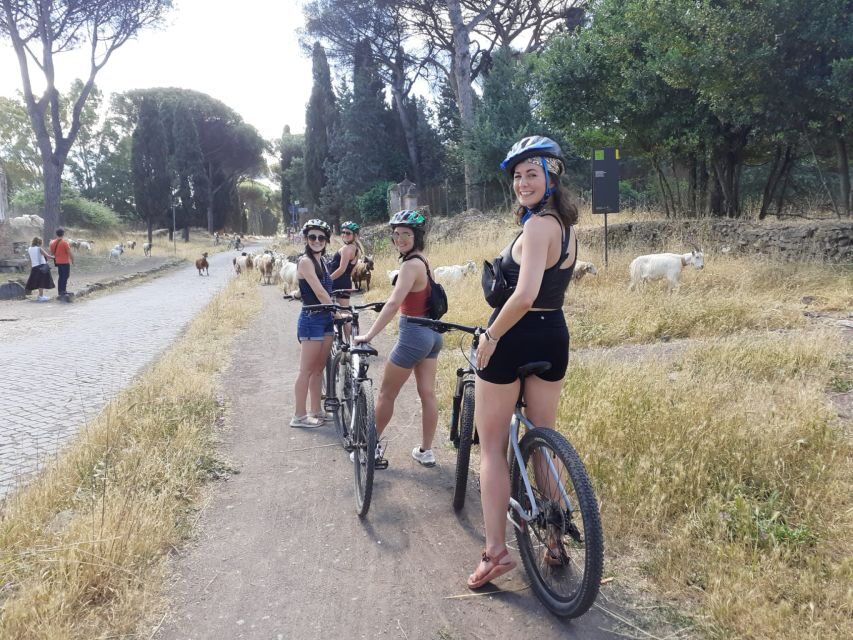
- Regina Viarum in action: ride along the Appian Way, often described as the first Roman highway, with much of the original paving still visible
- A mix of worlds in one route: ruins, an imperial palace, pagan mausoleums, and Christian catacombs along the same corridor
- Aqueducts Park for serious photo ops: see a park known for preserving two Roman aqueducts in excellent condition
- Caffarella Park beyond the postcard: return through an area with archaeological sites plus a working farm and ecological value
- E-bike comfort matters: helmets are provided and the assist helps you handle the road’s texture and mild elevation
- Guide quality is the difference-maker: Emiliano and Libero are named in top-rated experiences for a reason—clear explanations and good attention to the group
Entering Rome’s oldest road: the Via di S. Calisto start
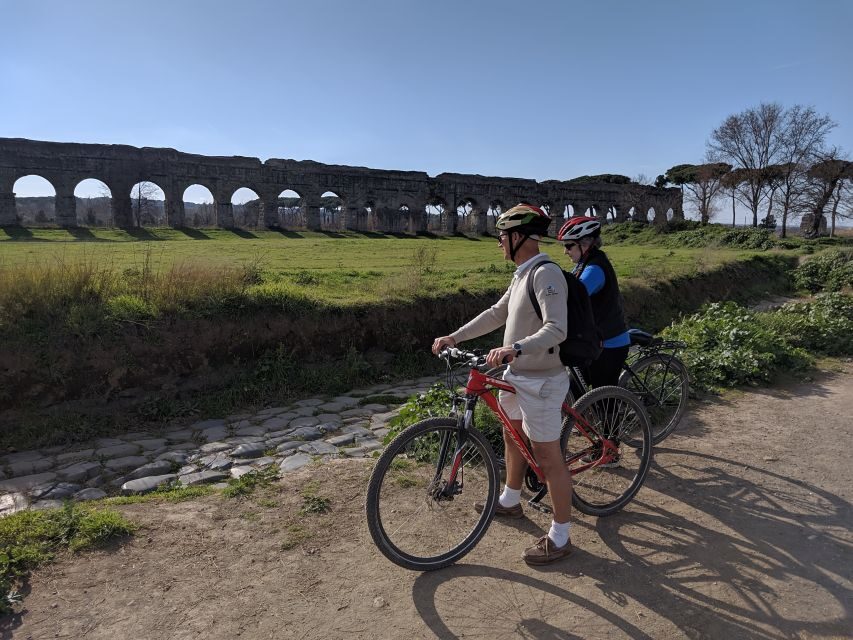
Your tour begins at Via di S. Calisto, 9. Arrive about 15 minutes early so you can get set up without rushing. That small buffer helps, because you’ll want to feel steady before you roll onto a route where the ground changes quickly and the scenery shifts into deep history.
This is one of those tours where the first minutes matter. Once you leave the inner-city flow behind, you’ll notice two things: the air cools a bit, and your attention zooms in on texture—stone, paths, walls, and the way ruins sit in the countryside. An e-bike makes that easier because you can actually look around while staying comfortable.
If you’re planning your day, I like slotting this earlier in the trip. It’s the kind of experience that makes later Rome sights click, because you understand the city’s “infrastructure brain”—roads, water, and power—rather than only its big-name buildings.
You can also read our reviews of more cycling tours in Rome
Riding the Appian Way (Regina Viarum): why this road mattered
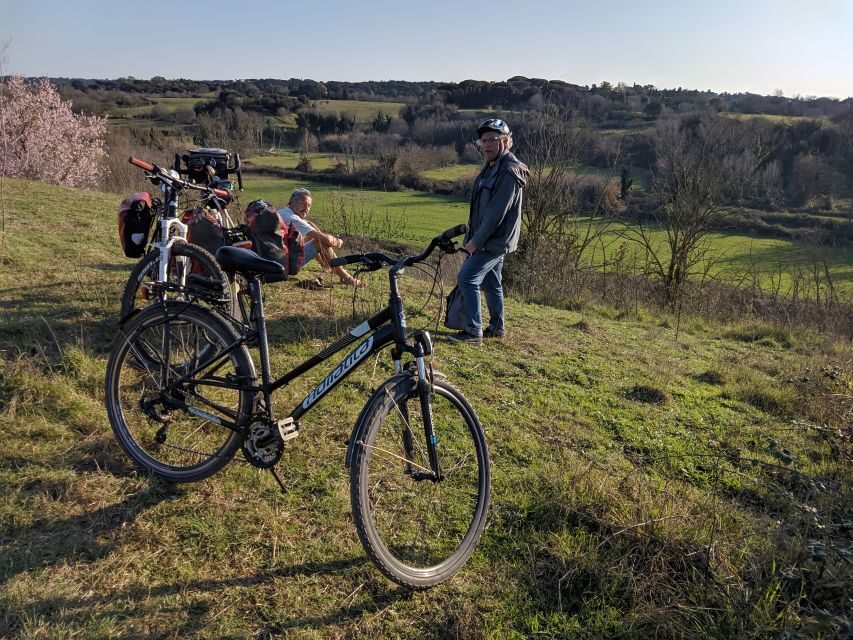
The Appian Way—also called Regina Viarum—was constructed in the 4th century BC. You’re riding a route built for movement: transporting military supplies, supporting the Roman state, and providing access for important families to build tombs and mausoleums.
Here’s the key idea I’d want you to absorb as you ride: this road wasn’t just a path. It was a political statement in stone. The same corridor that served armies and logistics also became a stage for elite burial monuments. That dual purpose is why the countryside feels so thick with meaning even when you’re simply pedaling.
You’ll still see a lot of the original paving. That matters more than it sounds. On asphalt tours, history stays flat. On the Appian Way, the stone under your wheels reminds you how “real” ancient engineering was—hard-wearing, intentional, and made to last. If you’re the type who likes learning why things were built the way they were, this will click fast.
The big monuments you’ll see: ruins, imperial power, and mausoleums
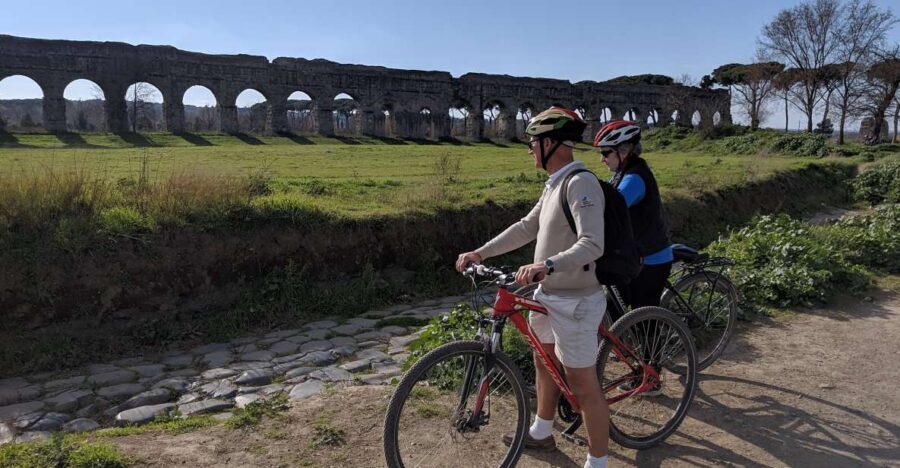
The route includes several layers of Rome in the same ride. Expect to pass ancient Roman ruins, plus statues, and an imperial palace. You’ll also encounter pagan mausoleums, which are a crucial part of the Appian Way’s story because they show what the corridor looked like before Christianity became dominant in public space.
What I like about this approach is that it prevents the common Rome problem: seeing everything as separate museum items. Here, the guide-led explanation helps you connect dots. The Appian Way becomes a timeline you can feel—how authority changes, how beliefs change, and how the road keeps carrying life through the centuries.
One practical note: with an e-bike tour, you’ll likely spend more time observing from the saddle and stopping briefly for photos and context. That’s a trade-off, but it’s also the value. You’re not trying to squeeze every inch into one day. You’re getting the “spine” of the Roman countryside, guided and coherent.
Saint Callixtus and Saint Sebastian catacombs: how faith took space
A standout promise on this tour is the visit focus on Christian catacombs, specifically Saint Callixtus and Saint Sebastian. The guide will explain how this road became a place where political, military, and religious power overlapped.
Even if you know Roman history already, catacombs reward you for paying attention. Don’t treat them like a quick stop. Listen to how the guide frames the purpose of burial spaces and how communities used underground settings to preserve identity and memory.
That said, I’d plan with a little realism. One participant reported that the catacombs visit didn’t include entering the sites as expected, and the group only passed in front. I can’t guarantee that will happen on your date—but if catacombs are the make-or-break part for you, ask the operator directly whether both stops include actual entry and not just viewpoints.
What you can control: bring comfortable clothing for cooler interior spaces if you do go inside. Also, wear shoes that let you stand and step carefully. The e-bike ride is comfortable; the walking inside (if included) is where you want good footing.
Aqueducts Park: two Roman aqueducts still standing well
Halfway through (and then again on the way back), you’ll get a big change of pace: water engineering in the countryside. The tour includes the Aqueducts Park, described as the only park that preserves two Roman aqueducts still in excellent condition.
This is one of the most satisfying segments because aqueducts are easy to admire from a distance, but they also tell you something concrete about Roman priorities. They engineered distance. They engineered reliability. And they did it with a system that shaped settlement patterns long before modern suburbs existed.
If you’re a visual learner, you’ll probably find yourself doing that classic slow-pan: look up, then look along the line where the aqueduct channels run, then look back at the countryside around it. That geometry helps you understand the scale of Rome’s water logic.
Also, it’s a nice contrast after tombs and catacombs. One tour, and you’ve shifted from death and belief to survival and daily life—via water.
You can also read our reviews of more tours and experiences in Rome




Caffarella Park return ride: archaeology plus a working farm
On the second half of the tour, you’ll head back through Caffarella Park. This area is known for a mix of archaeological sites and a working farm, with considerable ecological value.
This section feels different from the strict “monument corridor” feeling you may get on the Appian Way itself. Instead of only stopping at high-profile sites, you get a broader sense of how people use and live around ancient remnants. The working farm detail matters here. It keeps the day from feeling like a full-time history lecture. You’re seeing how countryside life continues in the same general space where Romans once built and traveled.
If you like photos, this is where you’ll probably find the most relaxed shots: open skies, stone ruins in context, and fewer crowds than you’d see in the city core.
The e-bike reality check: comfort, pace, and bike reliability
The tour includes e-bikes and helmets, and the assist is what makes this experience accessible for more people than a traditional cycling day. One booking noted the ride is about 20 miles or so, which means you’ll want comfortable riding clothes and shoes. Even with assistance, you’ll still be moving for hours—this isn’t a slow rolling promenade.
Here’s my practical advice:
- Wear comfortable riding shorts and supportive shoes. No special gear is needed, but your feet and backside matter.
- Bring an ID: a passport or ID card is required, and a copy is accepted.
- Plan for cobblestones. The road texture is part of the point, but it can feel rough if you’re not used to it.
Reliability is the only real “watch out” category. One participant reported the bike’s electrical support cut out mid-ride, and that the office was closed on return, with no follow-up or compensation. That’s not something you can predict ahead of time—but it’s a reminder to ask a simple question before you set off: if the assist fails, what’s the plan for getting everyone back?
Also, this tour is not suitable for people who can’t ride a bike. If you’re uncertain about balancing, braking, or handling turns, you’ll probably stress more than you’ll enjoy.
Price and value at $88 for 4 hours
At $88 per person for about 4 hours, you’re paying for three things at once: an e-bike with helmet, a live multilingual guide, and the effort of getting you through a specific historic route with stops that connect the dots. You’re also saving the hassle of coordinating your own transport and bike logistics.
Is it expensive? Compared to a self-guided walk, yes. Compared to renting a bike, figuring out where to go, and paying for a guide to explain what you’re seeing, the price can feel fair—especially because the day includes multiple major categories: ruins, tombs/mausoleums, catacomb focus, aqueduct views, and park scenery.
My value take: this is best when you want the Roman countryside with structure. If you’re happy wandering on your own, you might find cheaper options. But if you want a coherent story and a ride that turns scattered sights into a single understanding, this price makes sense.
Who this Appian Way e-bike tour suits best
This tour fits you if:
- You want ancient Rome beyond the big ticket sites
- You like history explained in a walking-and-looking way (not just from behind glass)
- You can ride a bike comfortably for a few hours, even on uneven surfaces
- You want the countryside angle: aqueduct views and Caffarella Park on the same day
It may not be ideal if:
- You need a wheelchair-friendly or fully low-effort experience (this is biking)
- Catacombs inside are your one non-negotiable, and you don’t want any chance of a pass-by stop. In that case, ask before booking or when you confirm.
Should you book Rome: Appian Way and Roman Countryside Electric Bike Tour?
I’d book this if you’re craving a Rome day that feels lived-in and connected. The Appian Way is the backbone, and the added stops—catacombs focus, aqueducts, and Caffarella Park—keep it from turning into a single straight line of photos.
Do it with one mindset: you’re learning through movement. That’s why the e-bike works. It gives you enough comfort to actually pay attention. If you confirm catacomb entry and you’re comfortable riding, you’re set up for a memorable slice of Lazio that most people never experience in a guided, practical way.
If you want, tell me your travel month and your riding comfort level (beginner, intermediate). I can help you choose the best time of day and what to wear for the smoothest ride.
FAQ
Where does the tour meet?
The meeting point is Via di S. Calisto, 9. Plan to arrive about 15 minutes before the start time.
How long is the Rome Appian Way and Roman Countryside e-bike tour?
The tour duration is 4 hours.
What’s included in the price?
The tour includes e-bikes and helmets.
Is hotel pickup or drop-off included?
No. Hotel pickup and drop-off are not included.
What should I bring for the tour?
Bring a passport or ID card. A copy is accepted.
Is the tour suitable if I can’t ride a bike?
No. The tour is not suitable for people who can’t ride a bike.