REVIEW · VATICAN TOURS
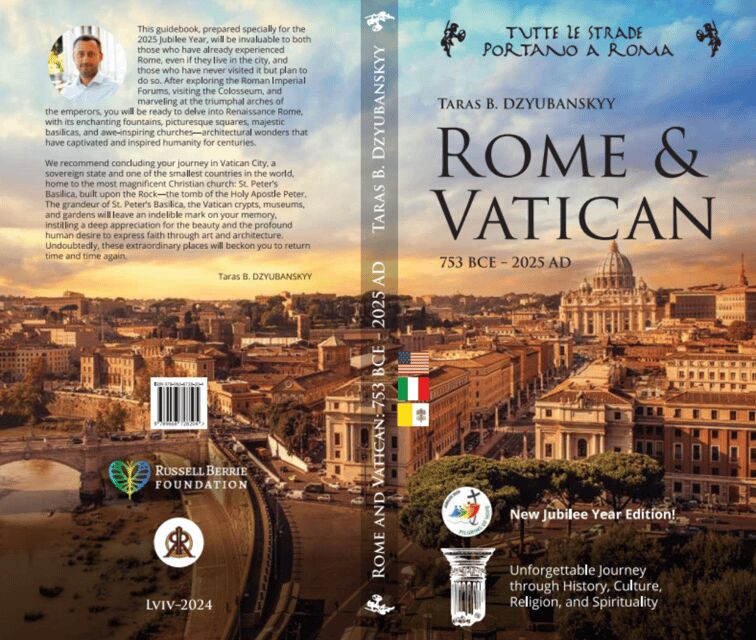
“Rome and Vatican: 753BCE – 2025AD” Jubilee Year Guidebook
Book on GetYourGuide →Operated by Taras Dzyubanskyy · Bookable on GetYourGuide
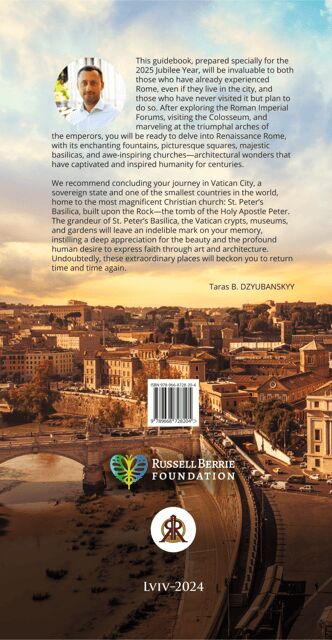
Rome feels different when you have a timeline. This Jubilee Year 2025 guidebook connects 753 BCE to 2025 AD across Rome and the Vatican, so the monuments don’t feel like random stops. I like how the author, Dr. Taras Dzyubanskyy, frames what you’re seeing with clear religious and historical context, especially around St. Peter’s tomb and the Necropolis. I also like that it’s built for the way you actually travel: maps, walking tours, and practical recommendations for your leisure time.
One thing to consider: this is not a live guide. You’ll be using the book yourself for your 1-hour visit, and there’s one reported hiccup about where to pick up the materials on the ground, so it helps to double-check what you’re meant to collect and where.
In This Review
- Key things I’d focus on before you go
- Jubilee Year 2025: 753 BCE to 2025 AD in one compact visit
- The real deal: you’re buying a guidebook, not a storyteller in person
- Following the book’s route logic through Rome’s ancient streets
- Vatican Museums and the Sistine Chapel: using commentary to see more
- St. Peter’s Basilica: where the guide helps you look for meaning
- The Tomb of Peter and the Vatican Necropolis: the part people remember
- Early Jewish origins of Christianity: a perspective shift you can actually use
- Price and value: why $29 can be a smart move or a mismatch
- What to wear and bring (because Vatican rules are strict)
- Who this guidebook tour suits best
- Should you book this Jubilee Year guidebook?
- FAQ
- What exactly is included?
- Is there a live guide during this experience?
- How long is the experience valid?
- Does it include skipping the ticket line?
- Do I need to book in advance?
- What should I bring with me?
- Are there any clothing or photo restrictions?
- What about cancellation?
Key things I’d focus on before you go
- Jubilee Year 2025 lens tying together Rome and the Vatican across a long timeline
- Maps and walking tours that help you move through Rome’s ancient streets faster
- St. Peter’s tomb + Vatican Necropolis explained in a way that’s easy to follow
- Sistine Chapel and St. Peter’s Basilica with commentary that helps you look smarter
- Early Jewish origins of Christianity put into context, not left as trivia
Jubilee Year 2025: 753 BCE to 2025 AD in one compact visit
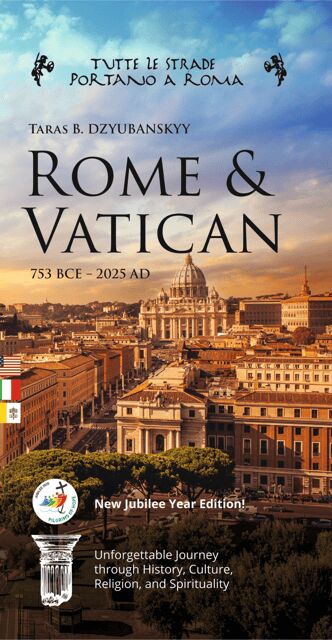
If you only have a little time in Rome and the Vatican, a normal itinerary can feel like a checklist. This guidebook tries to solve that. It’s structured around a huge arc, starting at 753 BCE and running up to the Jubilee Year 2025, so you can see how ideas, places, and religious roots evolved over centuries.
That matters because Rome and the Vatican are layered places. You stand in front of something famous, then you look deeper and realize the same themes show up again and again: power, faith, art, and identity. The book’s job is to give you a way to make sense of that layering quickly—without turning your trip into homework.
And yes, it’s also designed for real visitors. The tone and structure aim to help you navigate the big names (like the Vatican Museums and Sistine Chapel) while also slowing down for the lesser-known weightier parts, like the Vatican Necropolis and the humble Tomb of Peter.
You can also read our reviews of more tours and experiences in Rome.


The real deal: you’re buying a guidebook, not a storyteller in person
The biggest value question here is simple: what you get for $29 is a guidebook experience for 1 hour, not a live tour. The listing description is very clear: the included item is the book titled Discover Rome and the Vatican: The Ultimate Traveler’s Guide, and a live guide is not included.
So think of this as planning support you can carry, reference, and use while you’re walking. The book includes chapters meant to work like mini tours—history and cultural context paired with “what to look for” guidance. It also includes detailed maps and walking tours, plus insider tips and historical notes, along with photography that helps you recognize what you’re seeing.
Here’s the practical part: in a place where crowds can slow you down, having a ready-made narrative in your hands can reduce the time you spend guessing. You don’t have to decide on the spot what’s worth your attention; you can follow the book’s flow.
Still, there’s a trade-off. If you love live Q&A, spontaneous detours, or a guide who answers your exact question in real time, this won’t scratch that itch. You’ll be doing the thinking—and the asking—yourself.
Following the book’s route logic through Rome’s ancient streets
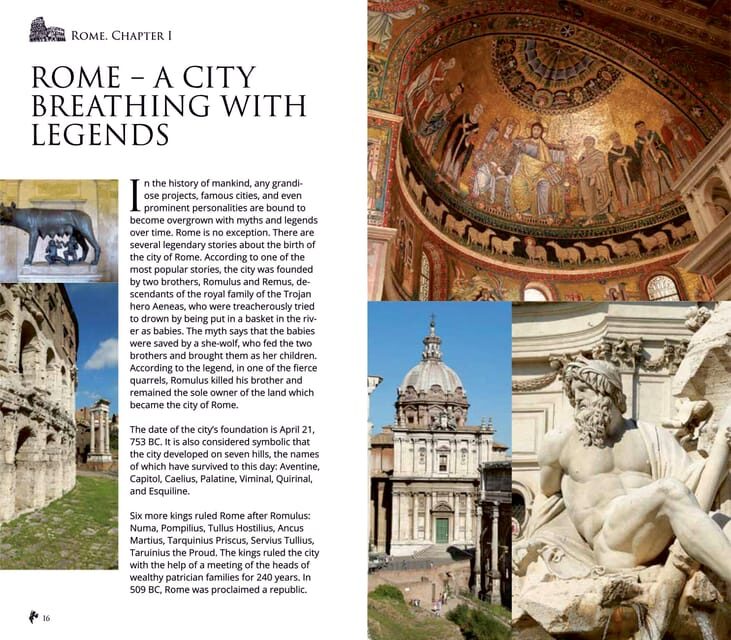
Even if your time is short, Rome rewards structure. The guidebook is built around navigation help: walking tours and detailed maps meant to get you moving through the “ancient street” maze with less confusion.
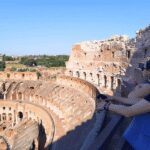
It also gives you context for major monuments, including the Colosseum. The point isn’t just to say, that’s famous. The point is to understand why it belongs in a longer story that reaches forward to the Vatican. Rome’s sites aren’t isolated; they’re connected by the way the city kept reinventing itself.
When you use a book like this on-site, you’re not just looking at stones. You’re learning how different periods shaped what later visitors inherited. That’s especially useful during a Jubilee Year, when you’ll see religious references everywhere—on signage, in art, in how people talk about pilgrimage, and in how the Vatican connects modern visitors to early Christian origins.
For me, the win is this: you can keep your momentum. You won’t spend your best minutes standing in front of something big, then blankly thinking, now what?
Vatican Museums and the Sistine Chapel: using commentary to see more
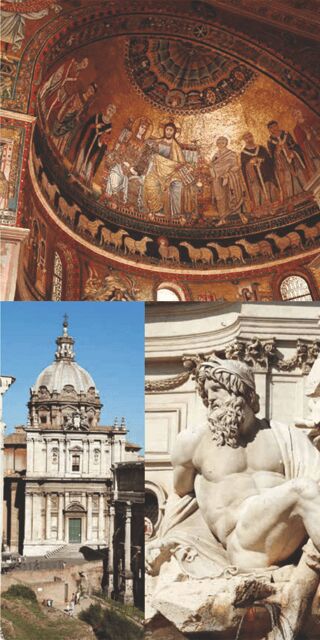
The guidebook sets you up to enjoy the Vatican Museums and the Sistine Chapel with more than just visual wow. It includes must-see highlights and commentary designed to help you understand what you’re looking at as you look at it.
That’s a big deal because the Vatican is one of those places where your brain can go into overload mode. You see ceiling after ceiling, painting after painting, and suddenly it’s hard to remember what mattered. With the book’s chapter-style approach, you can focus your attention. You’re not trying to memorize everything. You’re learning the key threads so the art makes more sense.
A practical advantage: when you know what you’re hunting for—specific themes, key artworks, or the story the guidebook is linking—you lose less time drifting. In a short 1-hour window, this kind of direction is what turns “I saw a lot” into “I got something.”
And if you’re the kind of person who takes photos, the book also helps you decide what’s worth capturing and what isn’t. That way your camera roll becomes a trip record, not just a pile of blurry highlights.
St. Peter’s Basilica: where the guide helps you look for meaning
St. Peter’s Basilica is already worth the visit on sight alone. But the guidebook adds one useful layer: it doesn’t treat the basilica like a stand-alone monument. It connects it to the story of early Christianity and the idea of a humble foundation—especially through its focus on the Tomb of Peter.
That connection changes the way you move through the space. Instead of seeing only architecture and famous artworks, you start looking for how belief is expressed in place: where people gather, how sacred space is marked, and why certain elements matter to pilgrims.
Even if you’re not religious in a formal way, you can still appreciate the cultural logic. Pilgrimage is part history, part art history, part human psychology. This book helps you notice that, which makes the basilica feel less like a museum stop and more like a living symbol.
The Tomb of Peter and the Vatican Necropolis: the part people remember
If you care about the roots of Christianity and want something more grounded than famous frescoes, this is the section the guidebook leans into.
The highlights specifically call out the Vatican Necropolis and the humble Tomb of Peter, and one strong review response praised Dr. Taras Dzyubanskyy as an expert on St Peter’s tomb and the necropolis. That kind of targeted expertise matters because this area can feel confusing without context. It’s not just “an old place.” It’s where early religious identity connects to later church history.
Why this matters for you: the Tomb of Peter and the Necropolis are the kind of experiences where details can either feel abstract or feel real. A guidebook that’s written to explain the connection between archaeology, belief, and tradition helps you make that jump.
This is also where the book’s Jubilee Year framing feels practical. In a pilgrimage year, people aren’t just sightseeing—they’re trying to understand why these sites hold meaning for visitors today. This book is aimed at that question.
Early Jewish origins of Christianity: a perspective shift you can actually use
One of the more interesting inclusions is the guidebook’s discussion of the historical Jewish origins of Christianity. That’s not trivia. It changes how you interpret the whole story you’re walking through.
Many first-time visitors meet Christianity in a purely later, institutional form—church structures, tradition, art iconography. By understanding its Jewish beginnings, you can better understand the continuity of ideas rather than treating Christianity as something that suddenly broke from the past.
The value here is mental. It gives you a framework you can carry while you’re looking at sacred art and sacred space. When you’ve got the right context, scenes stop looking random. Symbols and themes start to feel connected.
And because this is a book you can revisit, it’s not a one-and-done moment. You’ll likely remember it longer than a spoken lecture because you can re-read sections when you’re calmer.
Price and value: why $29 can be a smart move or a mismatch
At $29 per person for a 1-hour guidebook experience, this is priced like planning help, not like a full guided tour. That can be a good deal if you prefer self-paced travel and you enjoy reading on the move.
You also get a key practical advantage listed with the experience: skip the ticket line. That’s the kind of value that can easily outweigh the cost if crowds are heavy. It can save time you’d otherwise spend waiting, which is exactly what you want when your overall window is short.
The mismatch risk is also real. If you expect a live guide, Q&A, and hands-on guidance, the price will feel low but the experience won’t deliver what you wanted. And because this is built around a book, people who need constant prompting or step-by-step direction might find the self-guide format stressful.
So treat it like this: if you want a well-written reference you can use during the visit, you’re in the right lane. If you want a guide to control pacing and logistics, you should probably look for a live-tour option instead.
What to wear and bring (because Vatican rules are strict)
This experience has clear practical rules, and following them makes your visit smoother. Bring comfortable shoes, a camera, and water. You’ll be walking, and you’ll want your feet on your side.
On the clothing front, shorts, short skirts, and sleeveless shirts are not allowed. Also, flash photography is not allowed, and backpacks are not allowed.
That dress code detail matters more than people expect. It’s easy to underestimate how quickly a simple rule can slow you down if you’re underdressed. So if you’re packing lightly, plan to cover up.
One more tip: wear something you can sit and stand in without fuss. Places like St. Peter’s and other sacred areas tend to have areas where you’ll stop often, look upward, and spend a bit of time waiting out crowd flow.
Who this guidebook tour suits best
This experience is a fit if you want a guided story without the guide standing next to you. You’ll get the most from it if you:
- Like self-paced travel with reference material
- Want help connecting Rome sites and Vatican sites into one timeline
- Care about the Tomb of Peter, the Necropolis, and early Christianity context
- Prefer maps and walking guidance over random browsing
It’s probably not the best fit if you strongly need a live guide for explanation, or if you expect the experience to function like a traditional escorted tour.
Also, be aware there’s conflicting information about wheelchair support: the experience is listed as wheelchair accessible, but it’s also marked not suitable for wheelchair users. If mobility is part of your plan, you should verify fit with the provider before committing.
Should you book this Jubilee Year guidebook?
I’d book it if you want a short, focused way to see Rome and the Vatican with meaning attached. The biggest strength is the author’s emphasis on core sacred sites—especially the Tomb of Peter and the Vatican Necropolis—and the way the book uses maps, walking tours, and commentary to keep you oriented.
I wouldn’t book it if you want a live guide in your language of choice, or if you can’t handle a self-guided format where the book is doing most of the work. Also, if you’re the type who hates any uncertainty about pickup on the ground, take that one reported collection issue seriously and confirm how you’ll receive your materials before you arrive.
If you want to spend your time looking with understanding, not just looking, this guidebook is a solid bet for a Jubilee Year visit.
FAQ
What exactly is included?
You get the guidebook Discover Rome and the Vatican: The Ultimate Traveler’s Guide.
Is there a live guide during this experience?
No. A live guide is not included.
How long is the experience valid?
It’s valid for 1 hour.
Does it include skipping the ticket line?
Yes, it’s listed as skip the ticket line.
Do I need to book in advance?
Yes. Booking the book in advance is required.
What should I bring with me?
Comfortable shoes, a camera, and water.
Are there any clothing or photo restrictions?
Yes. Shorts, short skirts, and sleeveless shirts are not allowed. Flash photography is also not allowed. Backpacks are not allowed.
What about cancellation?
Free cancellation is available up to 24 hours in advance for a full refund.