REVIEW · PRIVATE
Vatican Private Tour with Skip-the-Line & Expert Guide
Book on GetYourGuide →Operated by City Lights Tours · Bookable on GetYourGuide
A visit to the Vatican feels like a sprint. This private tour turns it into a plan: you get fast-track skip-the-line entry, a licensed expert guide in your language, and a route through the Vatican Museums that still lets you set the pace. I like the way the guide can answer your questions in real time, and I especially appreciate the attention to specifics that guides such as Valentina and Andrea are known for, including adapting the tour when someone has mobility challenges.
Two big wins: you’re not stuck in a crowd, and you’re guided from room to room with purpose, from the Pio Clementino Museum to the Raphael Rooms and the Sistine Chapel. The main thing to consider is the St. Peter’s part: due to the 2025 Jubilee, the passage from the Sistine Chapel to St. Peter’s Basilica isn’t always open, so Basilica access depends on select days and advance details.
In This Review
- Key things to know before you go
- Value and pacing: what “private” changes inside the Vatican
- Start smart: meeting point, timing, and what to wear
- Vatican Museums stop: getting oriented without losing your focus
- Pio Clementino: the statues that explain how the Vatican “thinks”
- Upper Galleries: Maps, Candelabra, and the fun of being led to what you’d miss
- Raphael Rooms: where stories move faster than you expect
- Sistine Chapel: seeing it properly in real time
- St. Peter’s Basilica: optional access, Jubilee rules, and how to plan
- The private-guide experience: what stands out from real-world feedback
- Price and value: what $621.08 buys you for 3 hours
- Who this tour fits best (and who should look elsewhere)
- Practical tips that make this tour feel effortless
- Should you book this Vatican private tour?
- FAQ
- How long is the Vatican private tour?
- Does this tour skip the lines?
- What languages are available for the guide?
- Is St. Peter’s Basilica always included?
- What should I wear or bring?
- Are headsets provided?
Key things to know before you go
- Skip-the-line entry into the Vatican Museums (less time waiting, more time looking)
- Private, licensed guide who speaks your language and answers questions as you move
- A focused route that includes Pio Clementino, Upper Galleries, Raphael Rooms, and the Sistine Chapel
- Smaller-group feel with comfortable pacing (and headsets for groups with 6+)
- St. Peter’s Basilica access only on select days, with extra info needed if your option includes it
- Dress and bag rules matter (long pants; no large bags or umbrellas)
Value and pacing: what “private” changes inside the Vatican
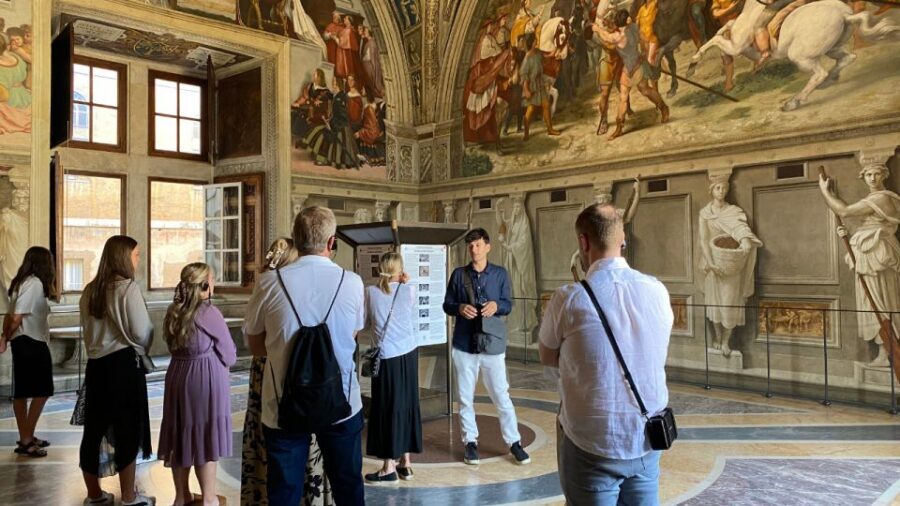
The Vatican Museums can be overwhelming. Not because the art isn’t amazing, but because the experience can turn into a blur when you’re trying to keep up with a big group and a moving crowd.
This tour is built around the opposite idea: you skip lines, then you move room by room with an expert beside you. You’ll spend your 3 hours in the spaces that matter most, but you won’t feel yanked along like you’re trying to win a race. That’s a real value for you because the Vatican is about looking carefully and asking questions, not just checking off rooms.
You can also read our reviews of more guided tours in Rome



Start smart: meeting point, timing, and what to wear

Your guide meets you at bar Da Paolo near Viale Vaticano, 104. Look for a board with the name tied to your booking.
Arrive on time. Entrance is time-sensitive, and the Vatican’s security timing doesn’t care that your train was late. Also plan your outfit: this is a holy site setting, so shoulders and knees must be covered. Bring long pants, and keep things practical—no luggage or large bags, and no umbrellas.
If you want to make this smooth, pack light and dress early. You’ll save time at security and avoid that end-of-tour scramble.
Vatican Museums stop: getting oriented without losing your focus
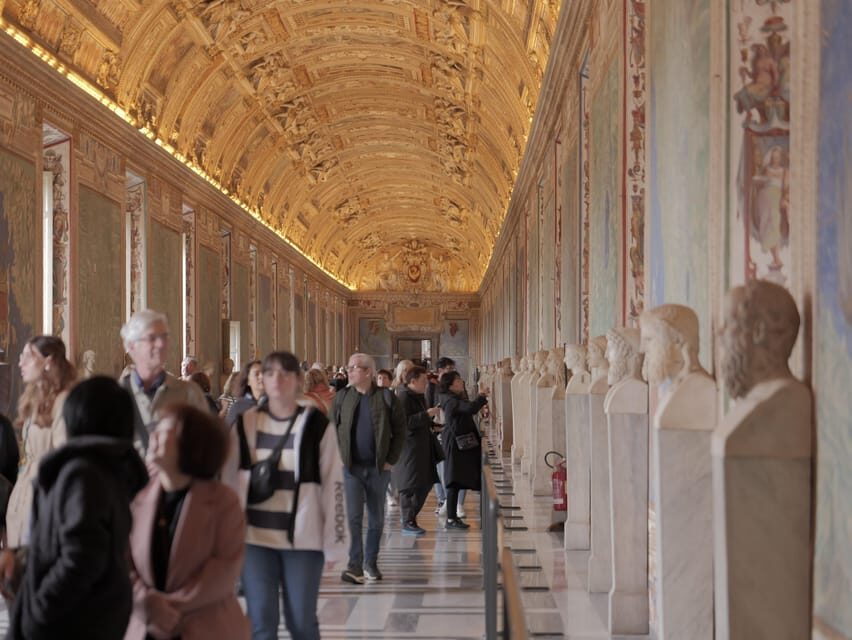
Once you’re inside, the tour starts with the Vatican Museums experience itself. This is where your guide helps you get your bearings fast—so you can actually understand what you’re seeing instead of guessing.
What I like about having a guide here is simple: the Vatican is packed with works that have layers. Even when you recognize a name, there’s usually a story behind why it’s here, what it represents, and how people read it in different centuries. With your guide, you can ask follow-up questions while it’s still fresh.
A private setting also means you can linger when something catches your eye. One person may want to read details; another may want the big-picture meaning. You don’t have to choose only one.
Pio Clementino: the statues that explain how the Vatican “thinks”
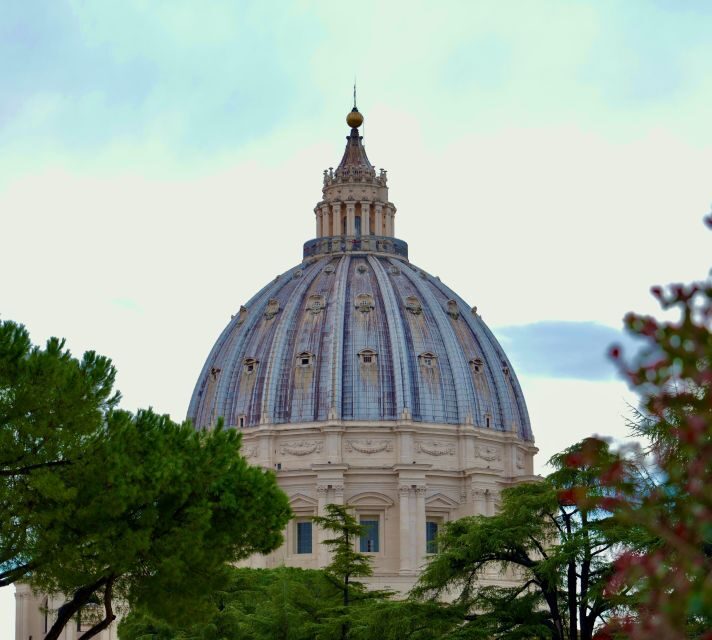
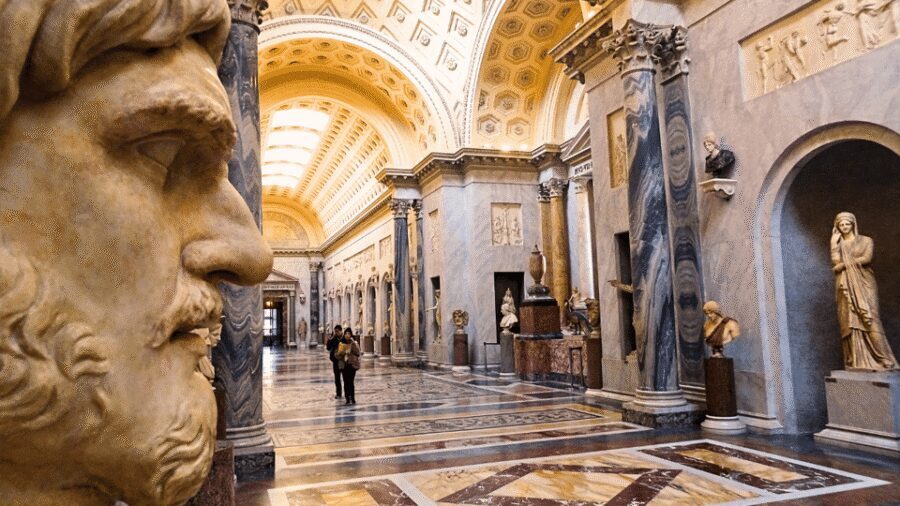
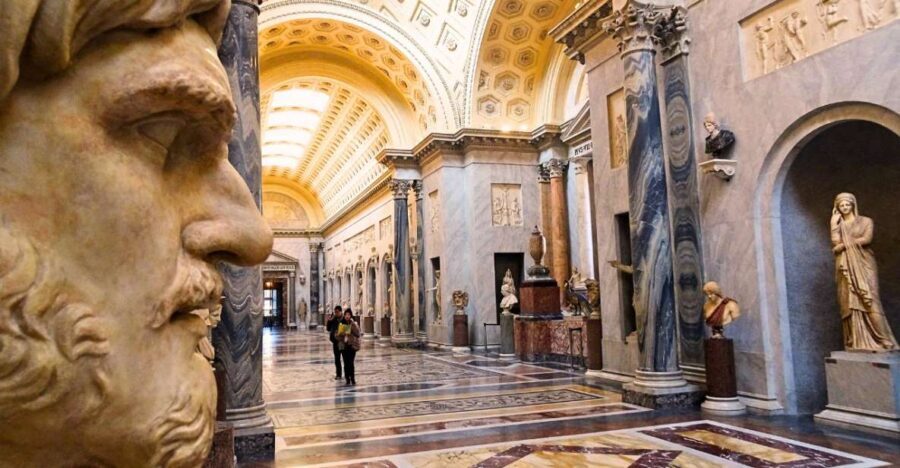
A key stop is the Museo Pio Clementino. This area is famous for sculpture, and it’s not just pretty bodies behind ropes. The guide helps you connect the dots between classical forms and how the Vatican later showcased them.
You’ll also spend time around the Octagonal Courtyard area. That courtyard is the kind of spot where an audio guide can help, but a live guide helps more because you can ask what to look for: proportions, poses, and the reasons certain works became models of taste.
This stop is especially valuable if you’re curious about why these artworks were collected and displayed the way they were. You’ll leave with a better sense of how ancient Rome fed later European art.
Possible drawback: if you’re only interested in the biggest famous images, you might need a little patience. This part is slow-looking by design. But if you enjoy sculpture and want to understand it, it’s a highlight.
Upper Galleries: Maps, Candelabra, and the fun of being led to what you’d miss
After Pio Clementino, the tour moves through the Upper Galleries, including the Gallery of the Candelabra and the Gallery of Tapestries. These rooms can feel like they blur together if you’re walking without a plan. With a guide, you get a clearer idea of what each space is trying to show.
The Gallery of the Candelabra is a great example. It’s easy to think it’s just décor. Your guide will point out how the overall presentation shapes what you notice—and why the Vatican cared about display.
Then comes the Gallery of Tapestries. Even if you’ve seen photos, you’ll likely be glad you’re there in person. Large rooms change your scale perception. You can’t fully sense the room’s impact from a screen.
The benefit here is that you’re not just moving along. You’re learning what to see.
You can also read our reviews of more private tours in Rome





Raphael Rooms: where stories move faster than you expect
The tour includes the Raphael Rooms, also called the Stanze di Raffaello. This is a “stop-and-stare” zone, because Raphael’s work is about narrative. You can’t just glance at it—you need guidance to connect the scenes.
A guide helps you read the logic of the frescoes: the characters, the symbolism, and what the scenes communicate beyond the obvious figures. In a private format, you can ask questions like you’re talking to a teacher. That’s what makes the difference between art as decoration and art as meaning.
If you’re traveling with kids or teens who get impatient, this is still manageable because the guide can speed up or slow down based on your group’s reactions. You get control of the pace without losing structure.
Sistine Chapel: seeing it properly in real time
The tour’s final major interior moment is the Sistine Chapel. This room has one job: make you look up. But the “how” matters. The chapel is more powerful when you understand what you’re noticing—who is where, what the composition suggests, and why certain elements stand out.
Your guide’s role here is not just to recite facts. It’s to make the art feel readable so you can follow along while you’re standing there. That’s also where the tour’s skip-the-line value pays off, since the chapel area can get chaotic quickly.
Dress rules still matter here. Keep your shoulders and knees covered, and remember the restrictions on bags and umbrellas. Arrive prepared and you’ll spend more time looking and less time dealing with logistics.
St. Peter’s Basilica: optional access, Jubilee rules, and how to plan
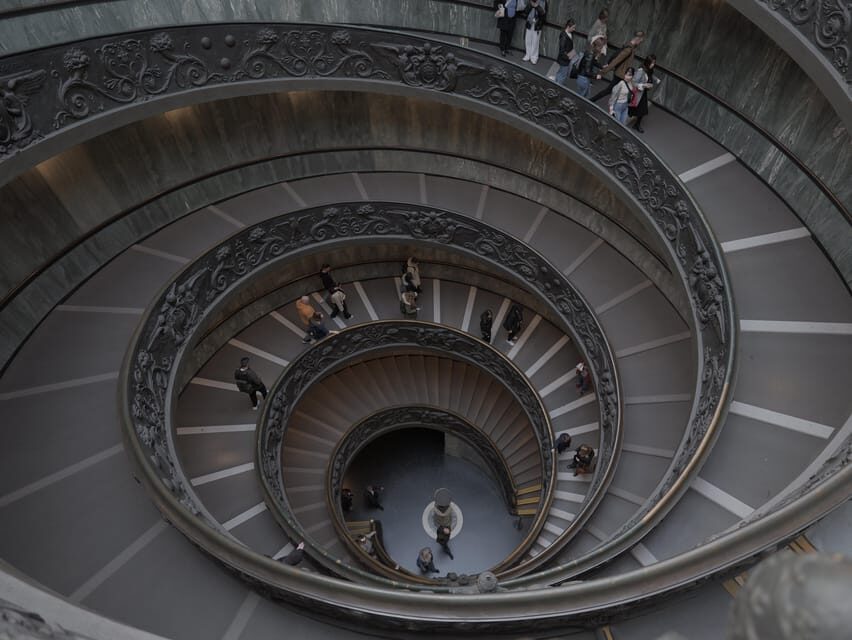
This is the part with the most moving pieces.
The tour can include St. Peter’s Basilica and guided viewing. But due to the 2025 Jubilee celebrations, the passage from the Vatican Museums to St. Peter’s Basilica isn’t always open. Only on selected days, groups may access the Basilica through a privileged passage from the Sistine Chapel.
If your booking includes the Basilica access option, you’ll need to provide full names and dates of birth (as on ID) for all participants at least 3 days in advance. If you don’t meet that timing requirement, Basilica entry cannot be guaranteed.
What that means for you: don’t assume Basilica access is automatic even if the itinerary includes it. Plan for a “best-case, good-case” mindset. If the passage isn’t available, you’ll still have the Vatican Museums and Sistine Chapel experience—which are the core of this tour.
The private-guide experience: what stands out from real-world feedback
With a tour like this, the quality hinges on the guide. The most praised part of this experience centers on attentive, kind guidance and matching the pace to your group.
Guides like Valentina are noted for being so knowledgeable and thoughtful that people felt happy just spending the time in the setting with her. Andrea stands out for customizing the tour for an 87-year-old mother with physical challenges, which is a reminder that a private guide can adapt in ways group tours usually can’t. For you, that’s practical: if you want a calmer rhythm, you’ll likely get it. If you’re traveling with someone who needs extra time, you’re in the right format.
Price and value: what $621.08 buys you for 3 hours
The price listed is $621.08 per group (up to 3 people) for about 3 hours. For the Vatican, that isn’t cheap, but private access and licensed guidance have real costs—especially when you factor in skip-the-line entry and the guide’s time inside multiple major rooms.
Here’s the value lens:
- If you’re a couple or small group, the per-person cost can feel reasonable compared with buying multiple tickets plus trying to manage lines on your own.
- If you care about understanding what you’re seeing (not just walking), the live guide is where the money turns into value.
- If you need flexibility—slower pace, extra explanations, accommodations—a private format gives you that control.
Where it might not be the best deal: if you’re comfortable navigating alone and don’t care much about context. If that’s you, a self-guided plan might feel cheaper. But if you want the Vatican to make sense while you’re there, this price is easier to justify.
Who this tour fits best (and who should look elsewhere)
This works best for you if:
- you want skip-the-line and less stress
- you prefer asking questions instead of scanning a phone screen
- you want a strong highlight route: Pio Clementino → Upper Galleries → Raphael Rooms → Sistine Chapel
- you’re traveling with a partner, small group, or someone who benefits from a paced plan
It may be less ideal if:
- you’re traveling with large baggage or expect to carry bulky items (rules are strict here)
- you’re counting on St. Peter’s Basilica access as a must-have on your specific date (Jubilee schedule can affect it)
Practical tips that make this tour feel effortless
- Bring long pants and dress with covered shoulders in mind, even in warm weather.
- Plan to be early so entry runs on time.
- Keep bags small to avoid security delays.
- If Basilica access is important, send the names and dates of birth at least 3 days in advance.
- Choose shoes that handle indoor walking without drama. You’ll be on your feet.
Should you book this Vatican private tour?
I’d book it if you want the Vatican to feel organized and meaningful instead of chaotic. The mix of skip-the-line, a licensed guide, and a route that hits the major rooms without turning into a sprint is exactly what makes this kind of tour worth doing.
If you’re on a tight schedule, the 3-hour duration is a plus. If you’re hoping for St. Peter’s Basilica too, just remember the 2025 Jubilee passage isn’t always open, so book with flexibility in mind.
FAQ
How long is the Vatican private tour?
It lasts about 3 hours, and starting times depend on availability.
Does this tour skip the lines?
Yes. You get skip-the-line access to the Vatican Museums. St. Peter’s Basilica access (when available) is also handled with a privileged passage on select days.
What languages are available for the guide?
The guide is available in French, Croatian, Dutch, German, Hungarian, Japanese, Korean, Polish, Portuguese, Romanian, Russian, Serbian, Spanish, Chinese, and English.
Is St. Peter’s Basilica always included?
Not always. Due to the 2025 Jubilee, the passage from the Vatican Museums to St. Peter’s Basilica may not be open. Basilica access is only on selected days.
What should I wear or bring?
You should wear long pants, and your shoulders and knees must be covered for access to holy sites. Bring what you need for a day outside and indoors, but keep it light.
Are headsets provided?
Headsets are provided for groups with 6+ participants to help you hear the guide clearly.
If you tell me your travel month, group size, and whether you’re aiming for St. Peter’s Basilica, I can help you think through the best timing and how strict the dress/security planning should be for your day.