REVIEW · ROME
Roman Domus of Palazzo Valentini Ticket
Book on Viator →Operated by Weekend in Italy · Bookable on Viator
Rome hides a house underfoot.
This 1.5-hour guided look at the Domus of Palazzo Valentini shows how a 16th-century palace was built over imperial-era homes, then brings the rooms back with virtual reconstructions using projections and light effects. I especially liked how the route makes sense as you move from space to space, with mosaics and wall decorations visible as you go.
I also really liked the small-group feel (max 15) and the sheer clarity of the multimedia setup, which helps you understand what you’re staring at. One possible drawback: the tour starts at a location that can be easy to miss, and you’ll also be walking on a glass floor, so if heights make you uneasy, plan for that.
Key points to know before you go
- Roman rooms preserved beneath a Renaissance façade: a 16th-century Palazzo built over the earlier patrician Domus
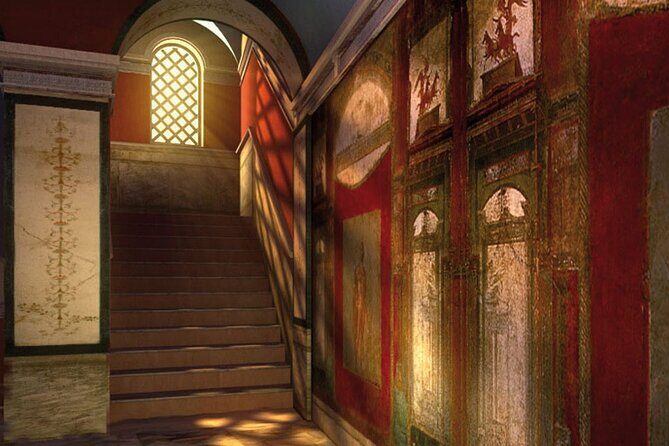
- Light, video, and projections that rebuild spaces: you’ll see how walls, peristyles, and rooms worked
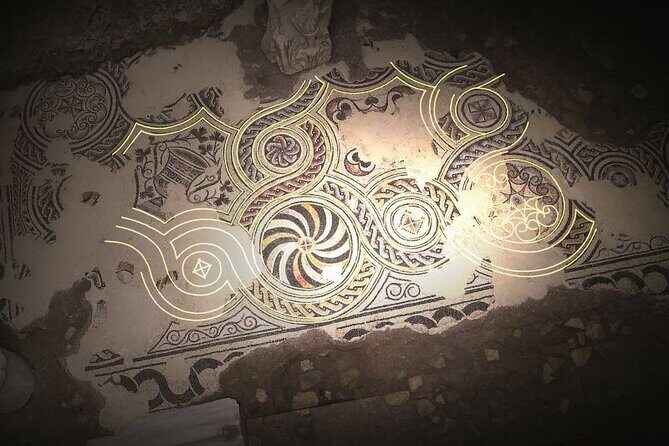
- Mosaics and floor remains you can actually study: polychrome floors, paving blocks, and decorative fragments
- Walking on glass floors over illuminated archaeology: safe, but it takes a moment to get used to
- Small-group pacing (up to 15): easier to hear the guide and keep your footing
- A short, story-based film moment may add context: one highlight is tied to Trajan’s column storyline
In This Review
- Palazzo Valentini’s Roman House: What This Tour Really Shows
- The 16th-Century Palazzo Above, and the Imperia-Era Domus Beneath
- Stop 1: Walking the Domus Route With Light-and-Video Reconstructions
- Mosaics, Floors, and the Details Your Eyes Will Want to Catch
- The Glass Floor Reality Check: Safe, Interesting, and Not for Everyone
- Who This Tour Suits Best (And Who Might Want a Different Fit)
- Time, Group Size, and How to Keep the Day Stress-Free
- Price and Value: Is It Worth Paying for?
- Finding the Start: The One Logistics Detail You Must Not Ignore
- What I’d Do Differently Next Time (So You Get More Out of It)
- Should You Book Roman Domus of Palazzo Valentini?
- FAQ
- How long is the Roman Domus of Palazzo Valentini tour?
- Where is the meeting point, and where does the tour end?
- What is the group size?
- Do I need to print and show a voucher?
- Is food or drink included?
- Is the ticket refundable or changeable?
Palazzo Valentini’s Roman House: What This Tour Really Shows
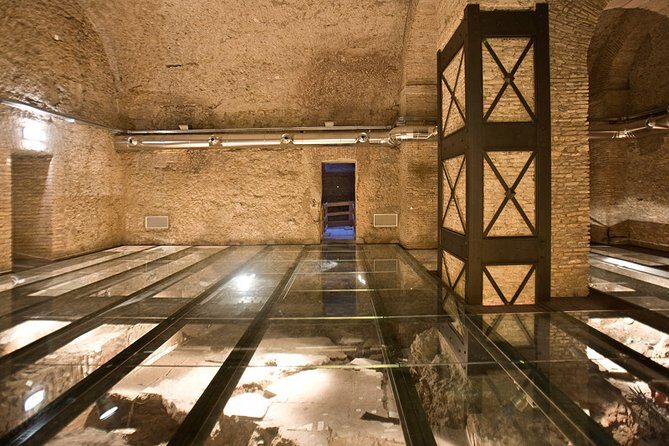
If you think you know Rome’s ancient houses from books, this tour helps you see them in 3D. You start above ground in the Palazzo Valentini complex, but the main experience happens below it, where archaeological excavations reveal rooms from the imperial age. The whole point is to connect the ruins to daily life—then help your brain fill in the missing parts with smart reconstructions.
You’re looking at a patrician Domus, the kind of home linked to powerful families, not a humble apartment building. The excavations have been turned into a permanent exhibition, and the multimedia program is designed to explain the layout and function of different areas—think baths, kitchens, courtyards, and decorated living spaces—without turning it into a lecture-only format.
This is not “ancient Rome, but blurry.” It’s ancient Rome with lighting that guides your eyes. You’ll spend a lot of time standing and walking slowly, but the payoff is that you can actually understand what each fragment might have been part of.
The 16th-Century Palazzo Above, and the Imperia-Era Domus Beneath
Here’s the clever part: Palazzo Valentini doesn’t just sit next to the archaeology—it was built over it. The 16th-century structure layers the centuries, so the Domus is literally part of the building’s underworld. That’s why the tour feels so different from places where ruins stand out in open air.
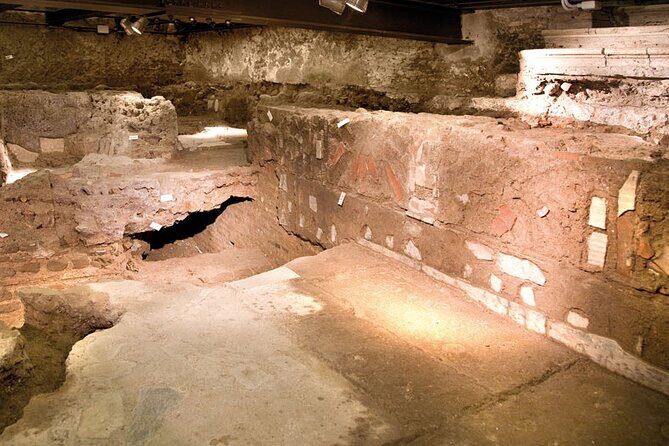
As you move through the exhibition, you’re following a scenic route through remnants of the Roman residential complex. You’ll see things like:
- Mosaic sections and floor remains
- Decorative wall remnants
- Polychrome flooring fragments and paving blocks
- The kinds of architectural spaces that suggest how the home was organized
The guide’s job is to help you mentally reconstruct the original layout. Virtual reconstructions and graphics fill in what time removed. If you’ve ever visited ruins and thought, So… what was this room for?, this format targets exactly that question.
One small reality check: you won’t “tour a fully restored house.” You’ll tour archaeology plus interpretation. That’s still worth it, because you’re getting a clear framework for reading the stones and tiles.
You can also read our reviews of more tours and experiences in Rome



Stop 1: Walking the Domus Route With Light-and-Video Reconstructions
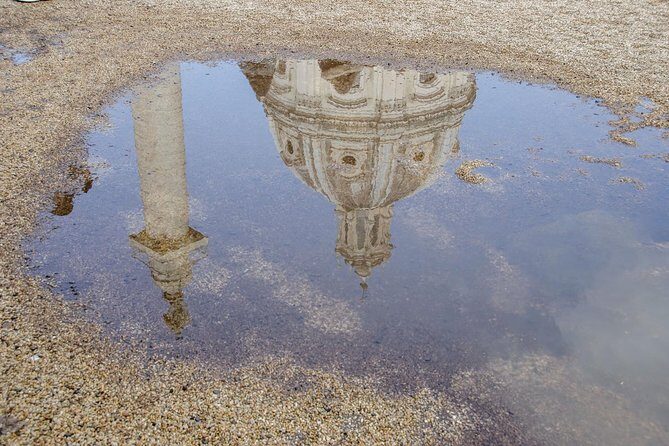
Your entire visit is essentially one main stop: Le Domus Romane di Palazzo Valentini. It’s mapped as an indoor route through the excavations, enhanced with virtual reconstruction tools—projections, graphics, and video—to recreate how different areas likely looked and functioned.
Expect a guided walkthrough that ties together what you’re seeing:
- Walls and room outlines that tell you where you are in the home
- Peristyles, which are columned porches around a courtyard area
- Kitchens and bath areas (the kind of spaces that show how Roman daily routines worked)
- Furnishings and interior decoration, reconstructed through multimedia rather than replaced brick-by-brick
What makes this work is the pacing of the show. You see a piece of ruin, then the program shifts your understanding by projecting a reconstruction onto surfaces or nearby areas. It feels less like staring at fragments and more like watching a story play over real evidence.
From the reviews, the lighting approach is consistently the star. People describe it as an experience that brings the house to life, and that tracks with what you’ll feel in the room: the tech doesn’t just look cool—it helps you locate meaning fast.
Mosaics, Floors, and the Details Your Eyes Will Want to Catch

Rome is famous for grand monuments, but this tour puts your attention at floor level—where most of the realism lives. You’ll encounter mosaics and decorative remnants, including polychrome flooring fragments and paving blocks. These aren’t just pretty. They’re clues about wealth, taste, and how spaces were used.
One moment that stands out is when the reconstructions and lighting point out relationships between floors, room boundaries, and decorative elements. It helps you realize that the house wasn’t one big room—it was a set of connected spaces with their own roles.
If you like “slow looking,” this is a good stop. You can’t race through it like an outdoor ruin. The setting encourages patience, and that’s where the tour earns its time.
The Glass Floor Reality Check: Safe, Interesting, and Not for Everyone
You’ll spend part of the tour walking on a glass floor suspended above the archaeological remains. In practice, it’s safe, and the tour is designed around it. But the glass floor is still a factor you should plan for, because some people get nervous with height—even when the surface is stable.
Here’s how to handle it:
- Wear comfortable, grippy shoes. You’ll likely be moving slowly while looking down and around.
- If you’re height-sensitive, try to keep your gaze on the guide or the projected reconstructions rather than staring through the glass.
- Give yourself a minute at the start to adjust. The first step is usually the biggest mental hurdle.
The experience can feel a little like a movie set over real history. That’s not a bad thing. It just means your body and your brain need a moment to agree on what you’re seeing.
Who This Tour Suits Best (And Who Might Want a Different Fit)
This is a great choice if you want ancient Roman life explained in a way that matches how you actually learn—by seeing things together, not just reading about them. The format works well for people who:
- Enjoy multimedia presentations when they’re grounded in real artifacts
- Want to understand the layout of a Roman domus without needing deep prior knowledge
- Appreciate mosaics, Roman domestic architecture, and decorative design
It can also be a surprisingly family-friendly pick, since the lighting and visual effects can hold kids’ interest. That said, some kids may feel uneasy with the glass floor, and the tour involves standing and walking through multiple areas, sometimes with darker moments during the presentations.
If you hate standing for long stretches or want a purely “hands-on archaeological” experience with minimal tech, you might find the approach too theatrical. Still, the overall consensus is that the visuals add real clarity, not just entertainment.






Time, Group Size, and How to Keep the Day Stress-Free
Plan for about 1.5 hours for the main experience. Some descriptions call it about an hour, but the on-site pacing and the multimedia moments make it feel closer to the longer end of that range.
The tour keeps groups small, with a maximum of 15 travelers, which matters more than you might think. In a museum-with-tech setting, small groups help you:
- hear the guide clearly
- move at a human pace
- avoid getting stuck behind someone who’s stopping to photograph
Timing-wise, there are multiple departure times during the day. That gives you flexibility when you’re lining up Rome sights. If you can, pick a slot when you’re not rushing from another timed entry.
Also, you’ll be walking back to the start point at the end, so you don’t need to plan a separate pickup.
Price and Value: Is It Worth Paying for?
On your booking, the listed price is $0.00, and the ticket includes admission and booking fees. Even if your paid price is higher on another date, the value equation usually comes from what you get for that time:
- an official guided visit to the domus exhibition
- the admission component to see the excavations
- a multimedia program designed to interpret ruins in place
The group size (max 15) and the fact that you’re not just looking at objects—you’re shown how the spaces likely function—are the real value drivers.
One review also mentions comparing it to bigger-ticket Roman combo visits later in the week, calling this a bargain for what it delivers. That matches the idea here: you’re spending a short chunk of time for a very concentrated “understanding” experience.
Finding the Start: The One Logistics Detail You Must Not Ignore
The meeting point is Via delle Terme di Traiano, 85, 00184 Roma RM. The issue is that the start can be surprisingly non-obvious in practice. Several people point out that it’s easy to miss the door or not find the exact spot quickly.
My advice: arrive early, not just on time. Use your map, then confirm the exact building entrance before your group is called. If you show up right at the minute, you’ll feel rushed, and this tour needs you calm enough to look down and follow projections.
This activity is near public transportation, which helps a lot. You won’t need a car or complicated transfer planning. Just give yourself a buffer so the experience starts on a good note.
What I’d Do Differently Next Time (So You Get More Out of It)
If I were planning this day again, I’d do two things:
1) I’d wear shoes I can stand in comfortably. The tour involves a lot of slow walking and looking.
2) I’d mentally switch expectations from sightseeing to reading a map in real time. The domus layout is easier to understand when you treat the projections and light cues as instructions.
It’s also worth arriving with the right mindset: you’re looking at excavations that are centuries removed, then paired with reconstructions. That’s how you get the best result—evidence first, interpretation alongside it.
Should You Book Roman Domus of Palazzo Valentini?
Book this if you want ancient Rome explained through real ruins plus reconstructions—especially if you love mosaics, floor-level detail, and the idea of seeing how rooms connect. The small-group setup and the light-and-video format are exactly the kind of thing that turns confusion into clarity fast.
Skip or reconsider if:
- you strongly dislike glass floors or heights
- you hate standing and walking through multiple indoor stations
- you need a tour that focuses less on multimedia reconstructions and more on traditional guided commentary only
If you’re in central Rome with time for one “different kind of Roman site,” this is a strong pick. You leave with images of a Roman home you can actually picture, not just fragments you hope to interpret later.
FAQ
How long is the Roman Domus of Palazzo Valentini tour?
The experience is approximately 1 hour, with the visit described as lasting about 1.5 hours.
Where is the meeting point, and where does the tour end?
The tour starts at Via delle Terme di Traiano, 85, 00184 Roma RM, Italy and ends back at the same meeting point.
What is the group size?
This activity has a maximum of 15 travelers.
Do I need to print and show a voucher?
Yes. You must print and present your confirmation voucher to redeem tickets at the time of your visit.
Is food or drink included?
No. Food and drinks are not included.
Is the ticket refundable or changeable?
No. The experience is non-refundable and cannot be changed for any reason.