REVIEW · OSTIA ANTICA
Rome: Ostia Antica Private Van Tour with an Archaeologist
Book on GetYourGuide →Operated by Rome in tours · Bookable on GetYourGuide
Ancient Rome, minus the crowd noise. A private van tour to Ostia Antica is a smart way to see how Romans lived, not just what they built. I like the PhD archaeologist guiding the walk, because the site becomes understandable fast. I also like the private transport—your ride is there and ready for the full tour, which keeps the day from turning into a transit puzzle. One drawback to consider: this is a 4-hour window, so it’s great for highlights, but it may feel short if you want to linger slowly over every corner.
If you want Roman ruins without the Rome-at-peak-hours feeling, this is the kind of plan that helps. You’ll start with pickup from your centrally located hotel, then ride out for about 45 minutes before a guided visit and walk of roughly 2.5 hours. The start time is flexible, and the group stays private, so you can move at a pace that fits you. You’ll also get headsets for larger private parties, which helps when you’re listening to an academic explain details while everyone is walking.
In This Review
- Why Ostia Antica Works Better Than Another Rome Ruin Stop
- Hotel Pickup and a Private Van Ride That Keeps You on Schedule
- Meeting the PhD Archaeologist Guide (and Ferdinando’s Style of Explaining)
- Your Walk Begins on the Main Street: Decumanus Maximus
- Caupona, Thermopolium, and the Square of the Guilds (Food and Trade Energy)
- Caupona: where people ate and drank
- Thermopolium: a bar-stop inside the ancient day
- Square of the Guilds: commerce in motion
- Baths and Firemen Barracks: Roman Systems You Can Sense
- The Major Site Stops: Forum, Temples, Basilica, and More
- No Lines, Private Timing, and Headsets for Clear Listening
- Price and Value: Is $450.56 Per Person Worth It?
- What to Expect From the Total 4-Hour Plan
- Who This Ostia Antica Private Van Tour Suits Best
- Should You Book This Ostia Antica Private Van Tour?
- FAQ
- How long is the Ostia Antica private van tour?
- Is hotel pickup included?
- Who will guide the tour?
- How long do we spend at Ostia Antica?
- Is transportation included?
- Are ticket fees included?
- Is food included?
- Are headsets provided?
Why Ostia Antica Works Better Than Another Rome Ruin Stop
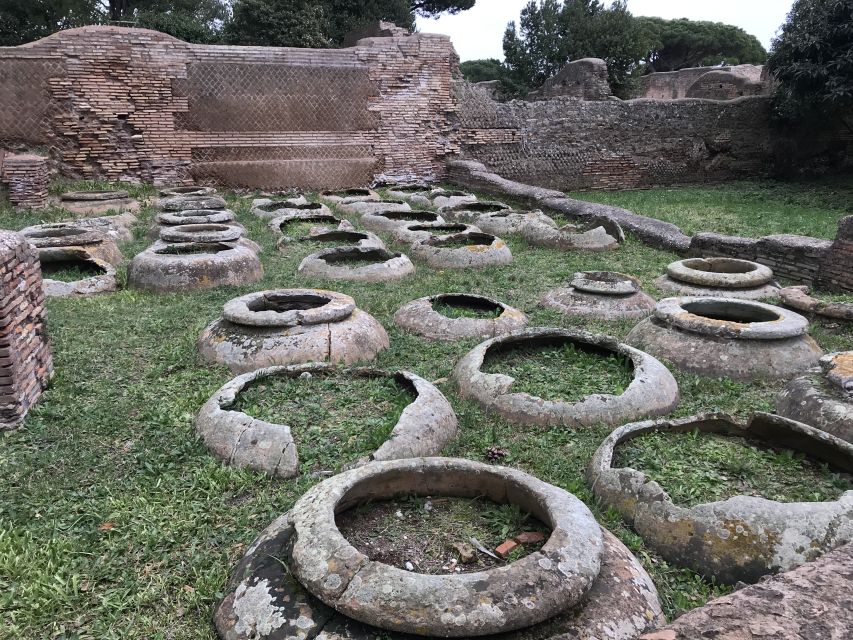
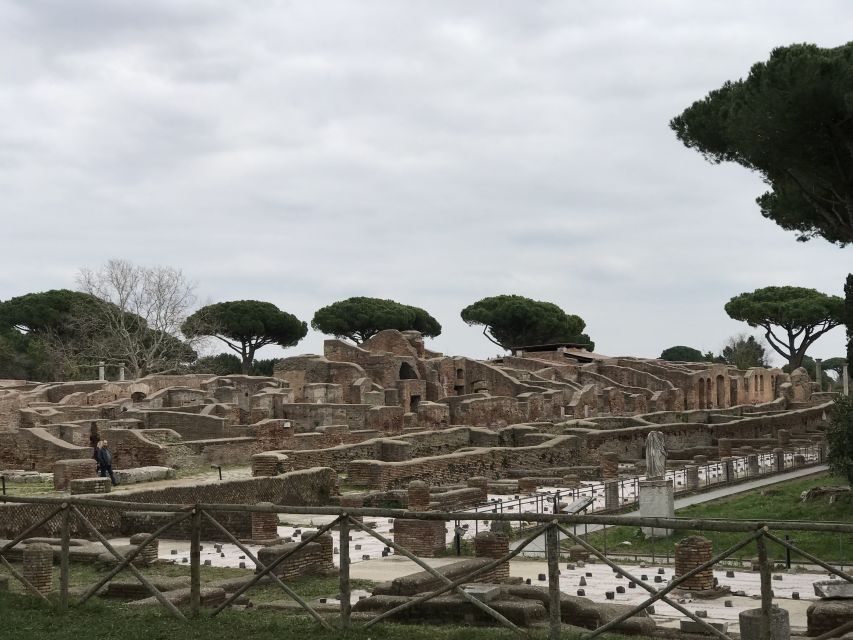
Ostia Antica sits outside central Rome, and that simple location change matters. You get the Roman street-grid feeling—especially the walk along the main street, the Decumanus Maximus—without the same kind of crush you’d expect back in town. It’s also a site where daily life shows up in stone: places for eating, trading, baths, and even firefighting, so you’re not stuck staring at only temples or monuments.
The private setup helps too. Your guide works with your interests, so you’re not forced into a one-size-fits-all script. I like that you’re not just hearing facts—you’re being shown how those spaces would’ve functioned, and that’s what makes the ruins stick in your head after the tour ends.
Hotel Pickup and a Private Van Ride That Keeps You on Schedule
The tour starts with pickup from your hotel in Rome (within a defined central area). You meet your archaeologist guide, then settle into the private car or van. Expect about 45 minutes of driving each way, plus around 2.5 hours on site.
This matters for value. With a private vehicle, you’re not negotiating public transit times, waiting for shuttles, or trying to align your timing with multiple independent visitors. It’s also the practical fix for tours that start too early or feel chaotic—because you get flexible starting times and a plan that actually holds together for the full 4 hours.
You can also read our reviews of more tours and experiences in Ostia Antica.

Meeting the PhD Archaeologist Guide (and Ferdinando’s Style of Explaining)
The biggest quality lever here is the guide: a local PhD archaeologist who’s at your disposal for the day. That’s a big difference from many standard tours where you get a quick overview and then walk on your own.
In at least one set of real outings, the guide was Ferdinando, described as a professional archaeologist with a high level of expertise. What I take from that kind of feedback is simple: the explanation lands better when the guide can connect what you’re seeing to how the Romans lived, and when they can answer follow-up questions in a real, confident way.
You can also tailor the pace. The structure isn’t rigid: you can customize the itinerary to your interests using your guide’s recommendations. If you like markets and everyday services, lean into the street-level stops. If you’re more curious about civic life and public systems, spend your “attention budget” on the baths, the fire-related areas, and the forum-adjacent spaces.
Your Walk Begins on the Main Street: Decumanus Maximus
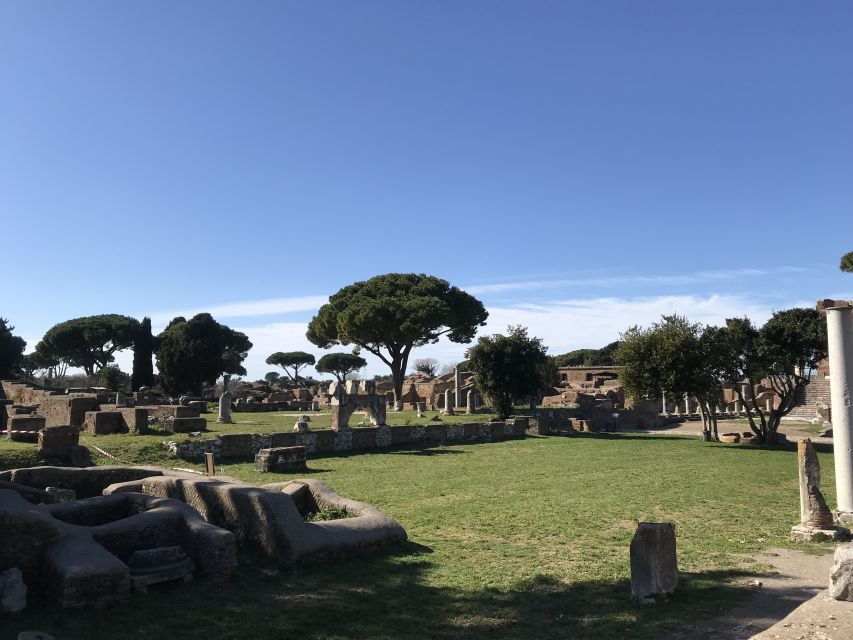
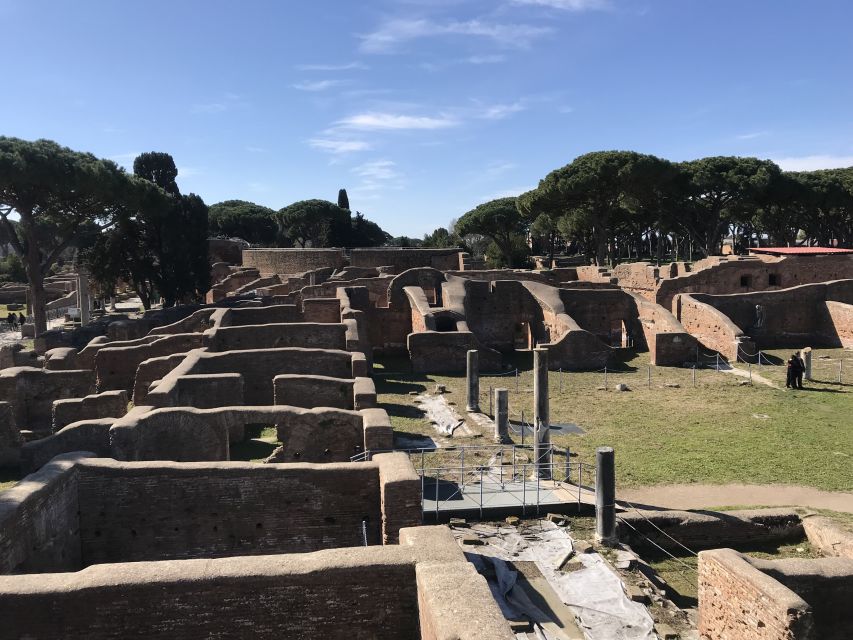
One of the best parts of this tour is how it starts your mental picture of ancient Ostia. You’ll stroll along the Decumanus Maximus, the main street of the site, and your guide uses that axis to frame daily life.
Here’s why this stop works so well: a major road is more than just a walking route. It’s a way to understand movement—how people traveled, where goods traveled, and where you’d expect activity to collect. Even without getting lost in complicated terminology, you’ll get a clearer sense of the layout. You’re not just visiting individual buildings; you’re learning how the town organized itself.
Caupona, Thermopolium, and the Square of the Guilds (Food and Trade Energy)
After the main street orientation, you shift to the spaces where Romans actually spent time: food, drink, commerce, and social routine.
Caupona: where people ate and drank
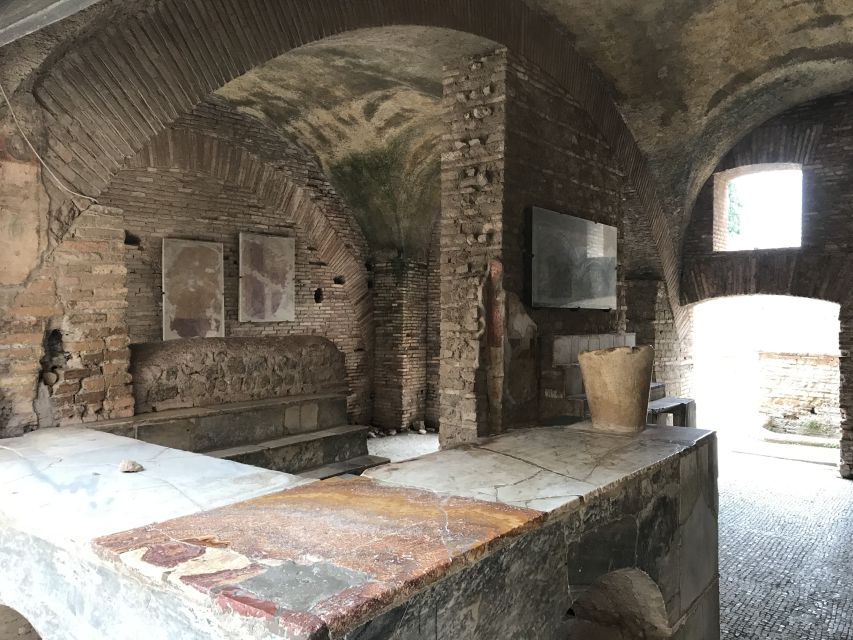
You’ll visit the Caupona, described in the tour as a place where Romans would have enjoyed an evening of eating and drinking. This is the kind of stop that makes ruins feel human. Instead of thinking only about religious buildings, you get a grounded image of leisure and routine—someone grabbing a meal, people chatting, and a local rhythm that repeated day after day.
Thermopolium: a bar-stop inside the ancient day
Next is the Thermopolium bar. Even if you don’t know what the word means before you go, the tour positions it as part of everyday refreshment. It’s the “grab-and-go” energy of ancient town life, which is exactly the kind of detail that helps you picture Romans as real people with real habits.
Square of the Guilds: commerce in motion
Then you reach the Square of the Guilds, explained as the main commerce and trade center. I like this stop because it connects the street walk to economics. You start to understand where the money energy lived, where work groups likely gathered, and how trade would’ve shaped the town’s daily flow.
Potential consideration: if you’re mostly focused on big-ticket architecture and grand views, these market and food stops might feel more “everyday” than “wow.” But if you like cultural understanding, these are often the moments that make Ostia feel most alive.
Baths and Firemen Barracks: Roman Systems You Can Sense
Public spaces are where Ostia really pulls its weight, and this tour specifically steers you toward how the town worked for residents.
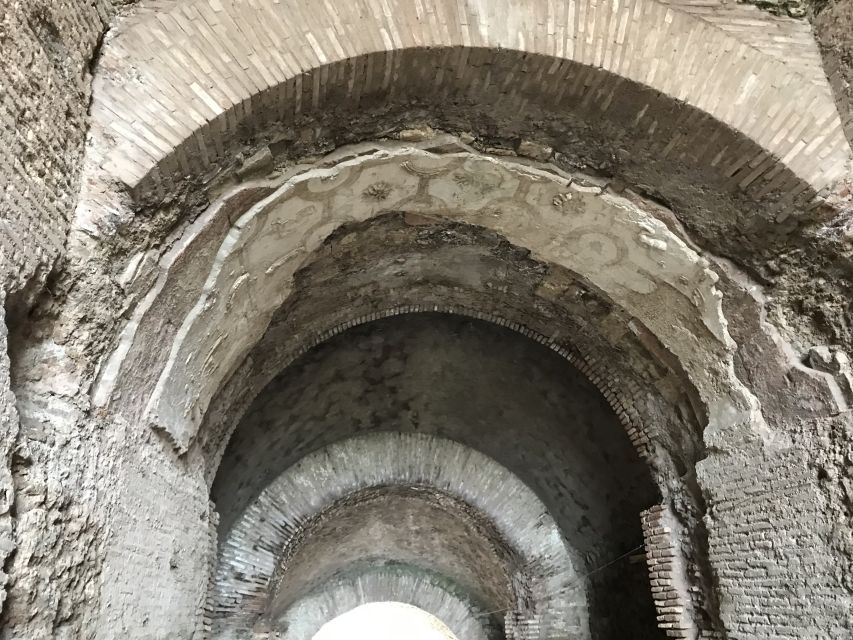
You’ll wander through the old public baths and then visit the firemen barracks area to learn about how Romans prevented and extinguished fire. That last detail is so practical it almost feels modern: fire safety wasn’t just an afterthought. Your guide uses the site to show you how organized civic services could be.
Why I think this part matters for you: it’s easy to tour ruins and only think about “what it looked like.” But firefighting and baths are about operations—maintenance, services, and public responsibility. When you connect those systems to the physical layout, you get a more complete understanding of life in a Roman town.
The Major Site Stops: Forum, Temples, Basilica, and More
As the walk continues, you’ll hit a set of major locations that help you balance the everyday stops with the formal civic and religious areas.
Depending on your pace, you’ll include sights such as:
- the Castrum
- the Forum
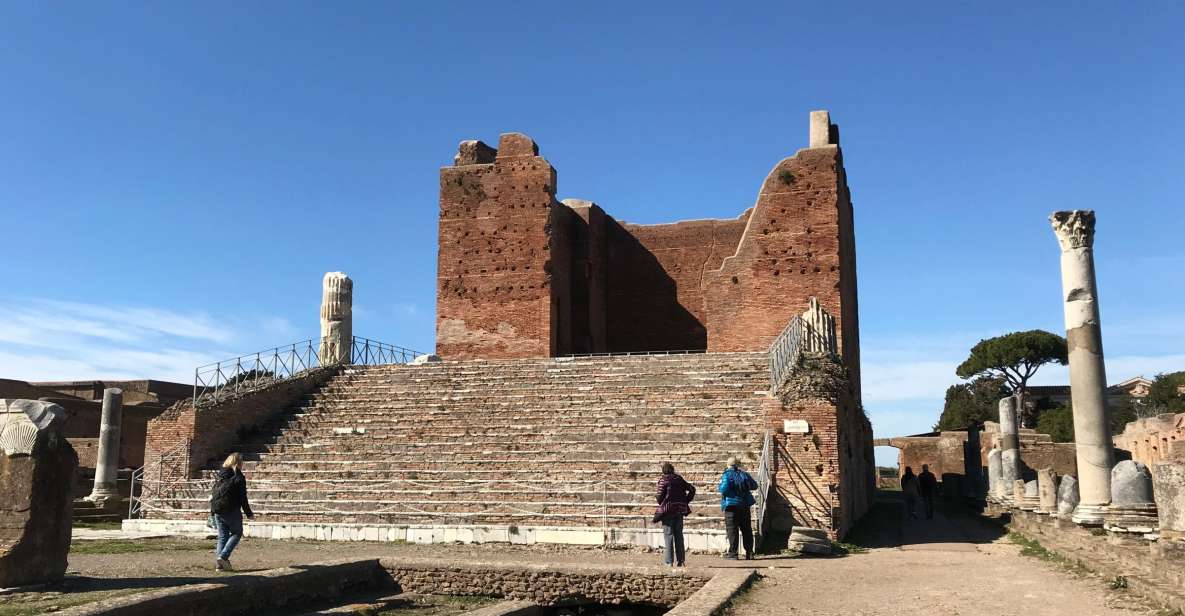
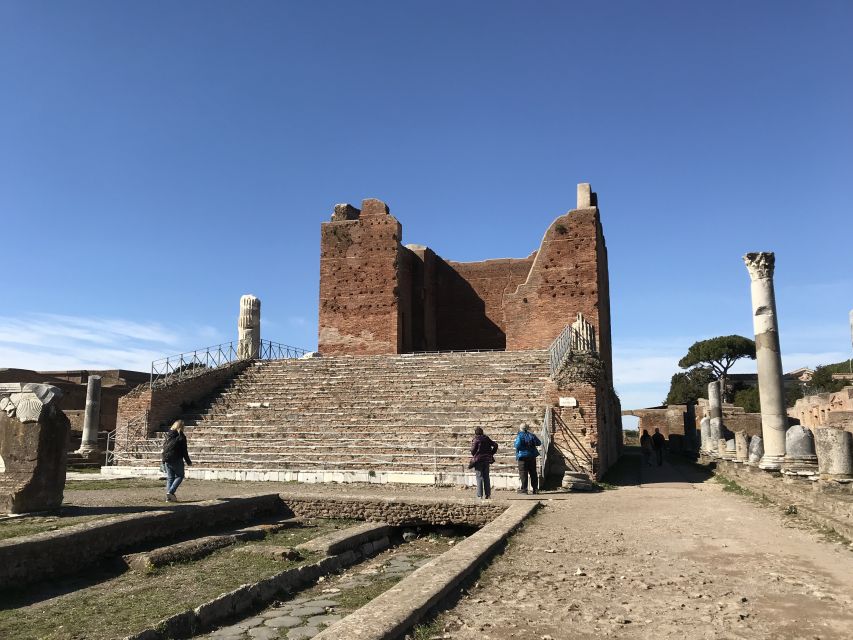
- the Capitolium
- the Basilica
- the Temple of Rome and Augustus
- the Bath of Neptune and the Bath of the Forum
- plus smaller named landmarks like the Cippus of Caninius
Here’s the value of combining these: the everyday rhythm (food, trade, services) sits side-by-side with civic authority and institutional spaces. You start to see how the town served multiple needs: commerce, governance, worship, and public routines.
Small practical note: because the visit is guided and time-based, you won’t spend hours on every single structure. That’s not a flaw—it’s how the tour fits into 4 hours while still covering multiple categories of sites. If you fall in love with one area, you can ask your guide to spend a bit more attention there before moving on.
No Lines, Private Timing, and Headsets for Clear Listening
The tour is built to reduce friction. You’ll have flexible start times, and the experience is designed to help you avoid lines and crowd pressure. That’s a real quality-of-day difference, especially if your time in Rome is tight.
Also, you’ll get headsets for parties of 6 or more. That matters if you’re in a group that might otherwise struggle to hear a guide while walking through open areas. Clear listening makes a huge difference when your guide is a PhD archaeologist explaining how spaces functioned.
If you’re sensitive to walking, this is still a walking-focused experience because you’re touring and strolling on site for about 2.5 hours. The good news is it’s private and guided, so you can pace yourself and take short breaks as needed.
Price and Value: Is $450.56 Per Person Worth It?
At $450.56 per person, this isn’t a budget excursion. But it isn’t just you paying for transportation and a ticket. The value case here is the bundle:
- A private PhD archaeologist guide at your disposal
- Private tour structure
- Transportation to and from Ostia in an optional luxury car or van
- Ticket fees included
- Headsets for larger private parties
When I judge value, I look at what you don’t have to solve yourself. You’re not arranging transport, not coordinating multiple schedules, and not hoping a standard group guide can slow down for your questions. You’re also getting coverage of a full range of site highlights—street life, food and drink spaces, trade, public baths, fire safety, and major civic/religious areas—inside one efficient outing.
If you enjoy museum-like explanation while still seeing things in person, the price makes more sense. If you’re the type who prefers self-guided wandering and doesn’t care about guided interpretation, you might choose differently. But if you want the ruins to click into place, this is the kind of pricing that pays for clarity.
What to Expect From the Total 4-Hour Plan
Here’s the practical rhythm you should plan around:
- Pickup from your centrally located Rome hotel
- About 45 minutes of van time out to Ostia Antica
- Roughly 2.5 hours of guided touring and walking
- About 45 minutes back to Rome
The clean structure is part of why this tour is easy to fit into a Roman schedule. It’s short enough to pair with other activities in Rome the same day, and long enough to get real context on multiple site areas.
Just know what you’re choosing: highlights plus guided interpretation, not a slow, pick-your-own-adventure day.
Who This Ostia Antica Private Van Tour Suits Best
This tour fits you if:
- you want a guided understanding of everyday Roman life, not just pictures
- you like asking questions and getting straight answers from a PhD archaeologist
- you prefer fewer crowds and cleaner logistics
- you want a private experience with a vehicle at your disposal for the tour window
It might be less ideal if:
- you only want free-roaming time and don’t care about archaeology commentary
- you’re hoping to treat it like a long, flexible day at your own pace
- you’re not interested in the everyday Roman spaces (food, trade, baths, and civic systems) that make Ostia special in this format
Should You Book This Ostia Antica Private Van Tour?
I’d book it if you want your day to feel guided, comfortable, and mentally rewarding. The standout strength is the combination of a PhD archaeologist with a private, time-managed visit that covers both daily life and major civic/religious spaces—without you spending your energy on crowds and logistics.
Before you book, think about your personal style. If you’ll appreciate interpretation as much as visuals, the price starts to look like value. If you’re more into roaming solo with minimal structure, you may feel boxed in by the 4-hour format.
FAQ
How long is the Ostia Antica private van tour?
The tour lasts about 4 hours.
Is hotel pickup included?
Yes. Pickup is included from your accommodation in central Rome, and you should wait in the hotel lobby about 5 minutes before the scheduled time.
Who will guide the tour?
You’ll have a local PhD archaeologist guide available for the entire tour. The tour is live-guided in Italian or English.
How long do we spend at Ostia Antica?
You’ll have about 2.5 hours for the guided visit and walking at Ostia Antica.
Is transportation included?
Yes. You’ll have transportation to and from the site in an optional luxury car or van, and it’s at your disposal for the entire tour.
Are ticket fees included?
Yes. Ticket fees are included in the tour price.
Is food included?
No. Food and souvenirs are not included.
Are headsets provided?
Headsets are included for parties of 6 people or more.