REVIEW · OSTIA ANTICA
Rome: Ostia Antica Half Day Semi-Private Tour with Guide
Book on GetYourGuide →Bookable on GetYourGuide
Ostia Antica is a time machine with sandals. This half-day visit focuses on Rome’s Ancient Harbour, a major trade and commerce hub right by the Mediterranean, and it’s paced for real learning, not a sprint. With a professional English-speaking guide and a small group, you get the key places that explain how Romans moved goods, ran buildings, and lived their daily lives.
I especially like two parts of this tour: the Baths of Neptune with its well-preserved mosaic, and the way the guide connects “cool ruins” to systems Romans actually used, like commerce spaces plus hot-and-cold water plumbing in buildings. It’s the kind of tour where the site stops being just stone and starts acting like a working city.
One consideration: 2.5 hours is short, so you’ll see the most important highlights rather than the whole archaeological complex. If you’re the type who wants to wander freely for hours on your own, you might crave more time after the guided portion.
In This Review
- Key Things I’d Focus On
- Why Ostia Antica Feels Different From Other Roman Ruins
- Small-Group Semi-Private Touring (What You Gain With Up to 6 People)
- Getting There and Getting In Without Losing Your Morning
- Neptune Baths: When a Mosaic Tells You How Romans Refreshed
- Necropoli di Porto: The City’s Edges and How Romans Remembered
- Piazza della Minerva: Forum Energy Without Feeling Like a Textbook
- Forum of Corporations and Trade Spaces: Where Business Was Built Into the City
- Ancient Bakery, Latrines, and “Small” Stops That Make It Real
- Teatro di Ostia: Entertainment for a City of Thousands
- Roman Engineering and Commerce: How the Tour Connects Past to Present
- Price and Value: Is $146.14 a Smart Deal for 2.5 Hours?
- Who Should Book This Ostia Antica Tour
- Should You Book This Ostia Antica Half-Day Tour?
- FAQ
- FAQ
- How long is the Ostia Antica half-day tour?
- What group size is it?
- Is the tour guided in English?
- Where do we meet the guide?
- Are entrance tickets included?
- Which areas are included during the visit?
- Do we have to buy tickets or wait in line?
- What should I bring on the day?
- Can I cancel for a refund?
Key Things I’d Focus On
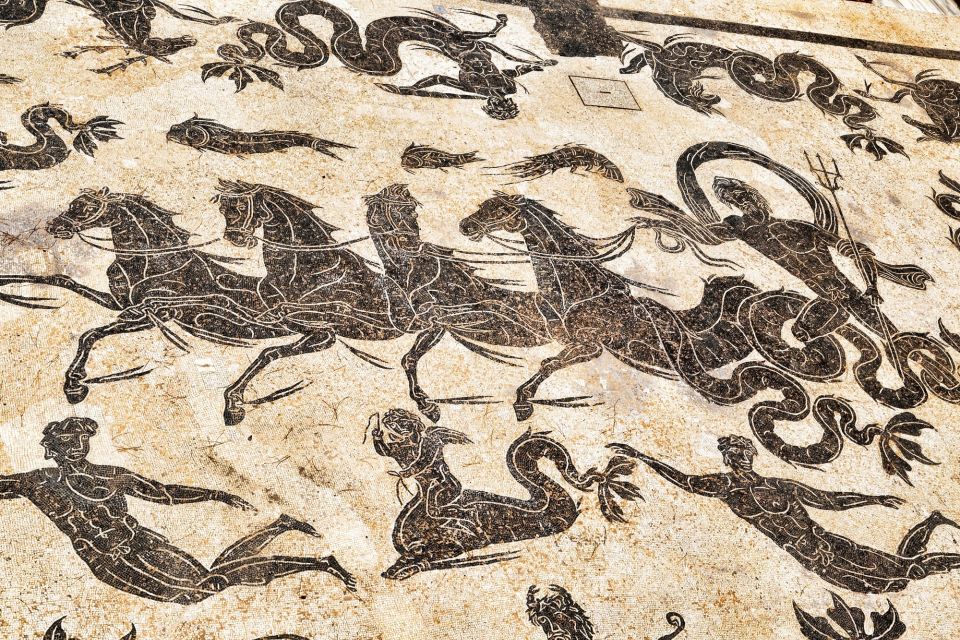
- Baths of Neptune mosaic: a standout visual tied to the city’s public bathing culture.
- Forum of Corporations and trade spaces: you’ll understand how business operated under the Empire.
- Ancient storefront life: the guide helps you picture daily transactions, not just monuments.
- Teatro di Ostia: learn how events and seating capacity shaped community gatherings.
- Roman engineering details: explanations include how hot and cold water systems worked in buildings.
Why Ostia Antica Feels Different From Other Roman Ruins
Ostia Antica isn’t about one famous empire icon. It’s about the machine that fed the capital. This is where Rome’s trade and commerce ran day after day, and the location matters: it sits as an ancient harbour city on the Mediterranean, so the stories you hear connect to shipping, warehouses, goods, and people moving through.
I like that the tour is designed around cause and effect. The guide doesn’t just point at walls; you’ll connect the sites to the Roman economy and the everyday rhythm of a large, working city. That makes the place feel more human and less museum-like.
You’ll also get a helpful sweep of the city’s layout, from public spaces to entertainment and practical infrastructure. Even in a short timeframe, you can start forming a map in your head, which is a big win when you’re visiting an archaeological site.
Small-Group Semi-Private Touring (What You Gain With Up to 6 People)
This is a small group experience capped at 6 participants, which is exactly what you want for ruins that require explanation. With fewer people, the guide can slow down when a question comes up and can point out details you’d miss while trying to read signs.
It also helps with pacing. Ostia Antica can feel spread out, and a guided structure keeps you from wasting time guessing where to look next. Plus, feedback highlights guides like Tiffany for perfectly timed tours with lots of interesting information, and Federico for clear, strong guiding.
The group size also supports a more personal feel. You’re not just following a moving line; you’re learning as the guide walks you through the logic of the site.
Getting There and Getting In Without Losing Your Morning
Your meeting point is at the entrance of the Ostia Antica archaeological site, directly outside the ticket office. Your guide holds a LivTours sign so you can find them quickly, and the tour includes entrance tickets, so you’re not scrambling mid-walk.
There’s also a big practical win: you skip the ticket line. At a busy site, that time saved can be the difference between enjoying the ruins calmly and feeling like you got stuck in a queue.
Before you go, bring your passport or ID card. It’s a small thing, but it’s the kind of requirement that can slow you down if you forget.
If you’re used to doing “self-guided ruins,” this format is a nice change. You’ll still be walking the site, but the guide helps you prioritize what matters.
Neptune Baths: When a Mosaic Tells You How Romans Refreshed
The Baths of Neptune are one of the stops that makes this tour feel worth it fast. You’re not just seeing an old building. You’re seeing a preserved mosaic of Neptune, the god of the sea, which fits the harbour setting in a way that feels logical rather than random.
Baths in Roman life weren’t only about hygiene. They were social space, daily routine, and a statement about civic culture. With a guided explanation, you can connect this to Ostia’s role as a major commercial city: people came here for work, trade, and community, and public spaces like baths supported all of that.
One reason this stop is so effective in a half day: it’s visual and memorable. Even if you forget details later, you’ll likely remember the mosaic and the way it symbolically links sea life to Roman worship and leisure.
If you care about art detail, this is where the tour gives you the most “stand still and look” moment.
Necropoli di Porto: The City’s Edges and How Romans Remembered
Next comes Necropoli di Porto, which helps balance the tour. Trade cities aren’t only about commerce during waking hours. They also show how communities handled death and memory.
This stop is valuable because it adds context. When you only focus on forums, theatres, and baths, a city can start to feel unreal. Necropoleis bring you back to human scale: families, burial customs, and how the living used space beyond the city core.
I like that this tour doesn’t treat the cemetery area like a quick detour. A guided explanation is exactly what you need here, because it’s easy to feel lost when the site isn’t as instantly readable as, say, a theatre.
You’re also learning the broader picture of Ostia as a full city, not just a set of landmarks. That helps the rest of the stops land better.
Piazza della Minerva: Forum Energy Without Feeling Like a Textbook
Piazza della Minerva is the kind of stop that can easily be overlooked if you’re visiting on your own. On a guided half day, it becomes a checkpoint for understanding the city’s rhythm—public movement, civic presence, and how spaces were arranged for crowds.
The guide’s job here is to connect what you’re seeing to the bigger commercial story. Ostia’s forums and business areas weren’t separate worlds. They were part of how the city functioned daily: people arrived, bought and sold, ate, attended events, and moved through the city’s public zones.
I like this stop because it helps you transition from the reflective tone of the necropolis back into the active theme of commerce and civic life. It’s a good pacing choice for a shorter tour.
Forum of Corporations and Trade Spaces: Where Business Was Built Into the City
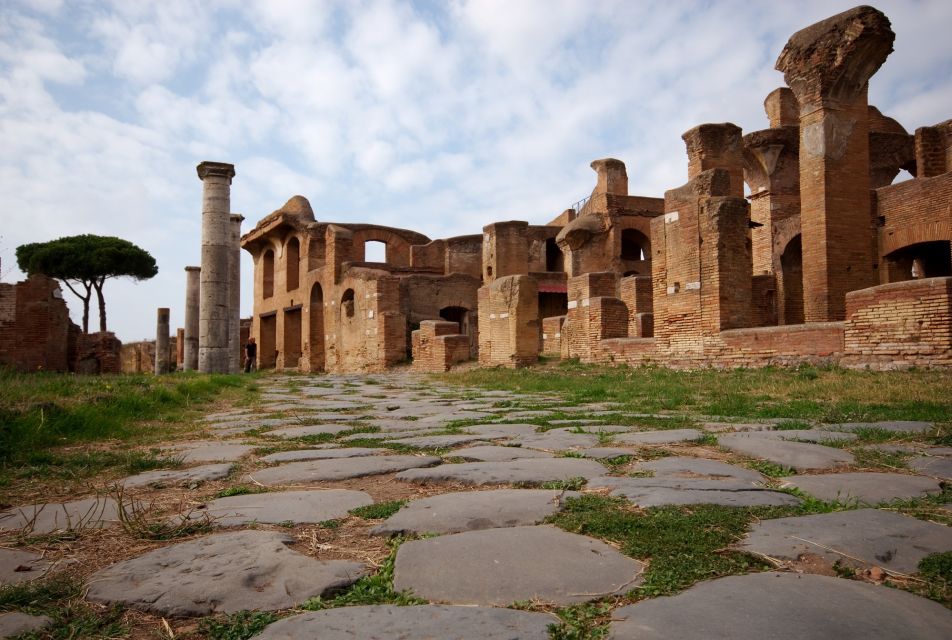
Ostia’s headline business areas are the Forum of Corporations and related trade zones, including the Square of the Corporations and the Forum setting tied to Augustus-era commerce. This is where the tour earns its “more than sightseeing” badge.
You’ll learn what the Forum of Corporations meant: a center of commerce and trade in Rome during the time of Emperor Augustus. That doesn’t just sound impressive. It tells you why Ostia mattered to the Empire. Ships didn’t arrive for decoration. They arrived with goods needed to support population growth.
The guide also brings in practical Roman details, including ancient storefront-style activity. Even without taking you into every tiny corner, the tour helps you picture how people conducted transactions and how the city supported a complex network of exchange.
This is also where the engineering lessons become more than trivia. The tour talks about hot and cold water systems in buildings, showing how Romans built advanced infrastructure to support everyday comfort in a working city.
Ancient Bakery, Latrines, and “Small” Stops That Make It Real
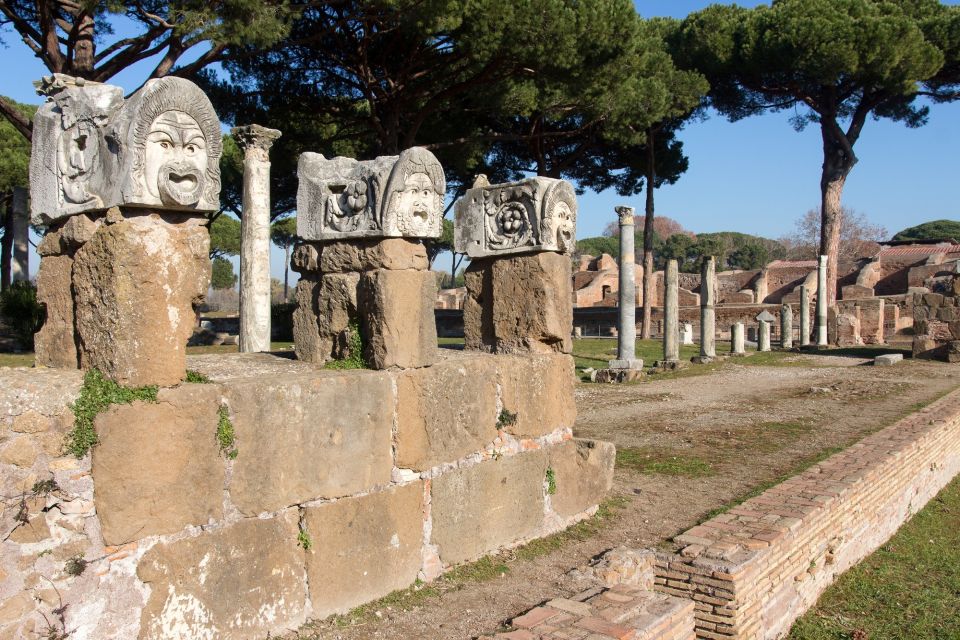
Included in your experience are the ancient bakery and ancient latrines. These are the places I love in a Roman city tour because they make the site feel lived-in. A grand forum tells you what mattered to leadership. A bakery and latrines tell you what mattered to regular people.
The ancient bakery reinforces why Ostia was essential. Rome’s growing population needed a steady food supply, and a major trade harbour helped move it. Seeing this part of the city conceptually anchors the trade story in real needs.
The latrines do the same in a different way. When you hear the guide connect infrastructure to daily routine, it transforms what might look like ruins into proof of organization and public practicality.
In a half day, these “less glamorous” components are what keep the tour from feeling like a greatest-hits list. They’re the glue that turns highlights into a functioning mental model of Ostia.
Teatro di Ostia: Entertainment for a City of Thousands
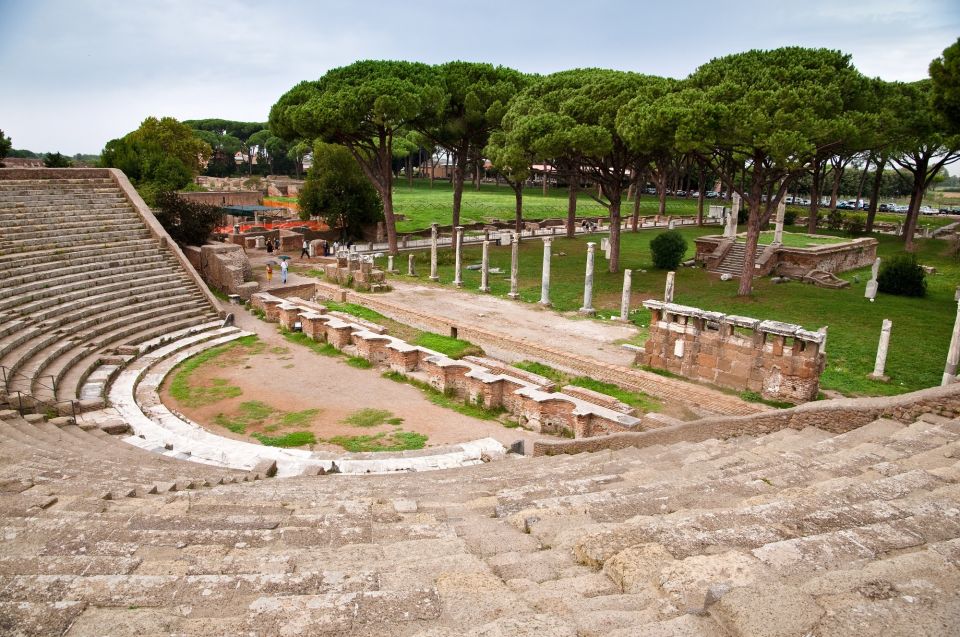
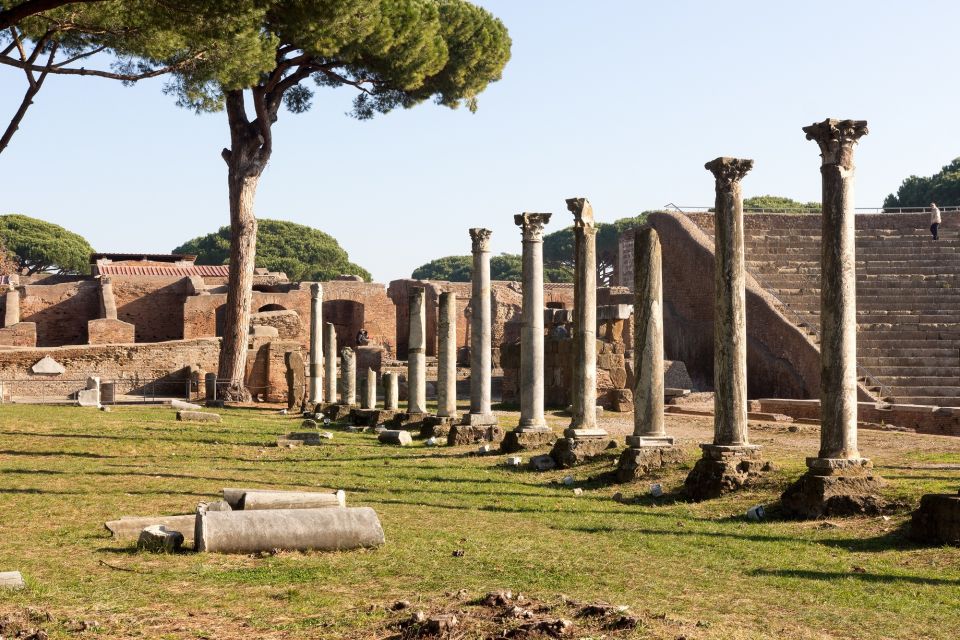
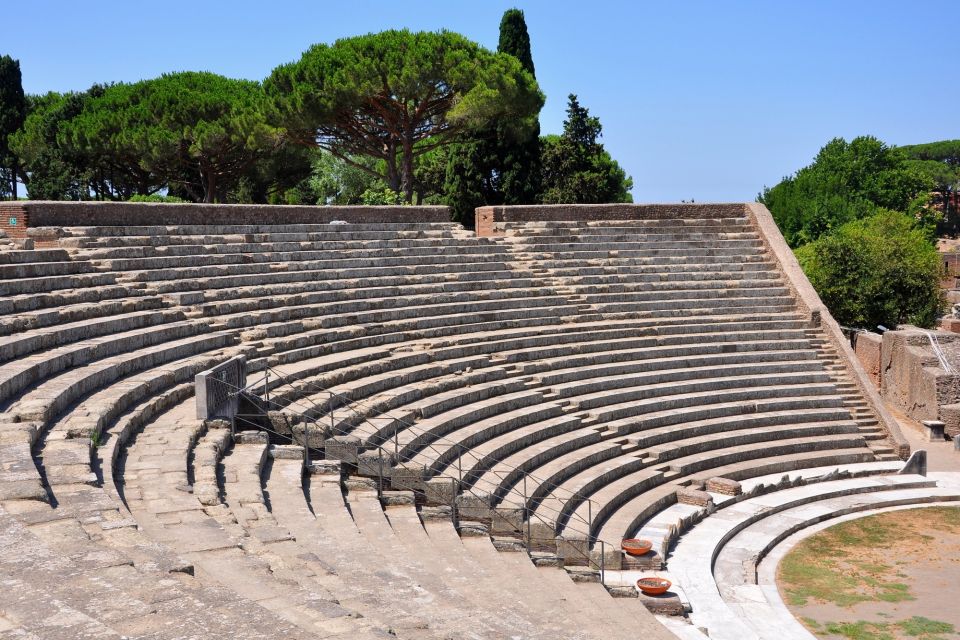
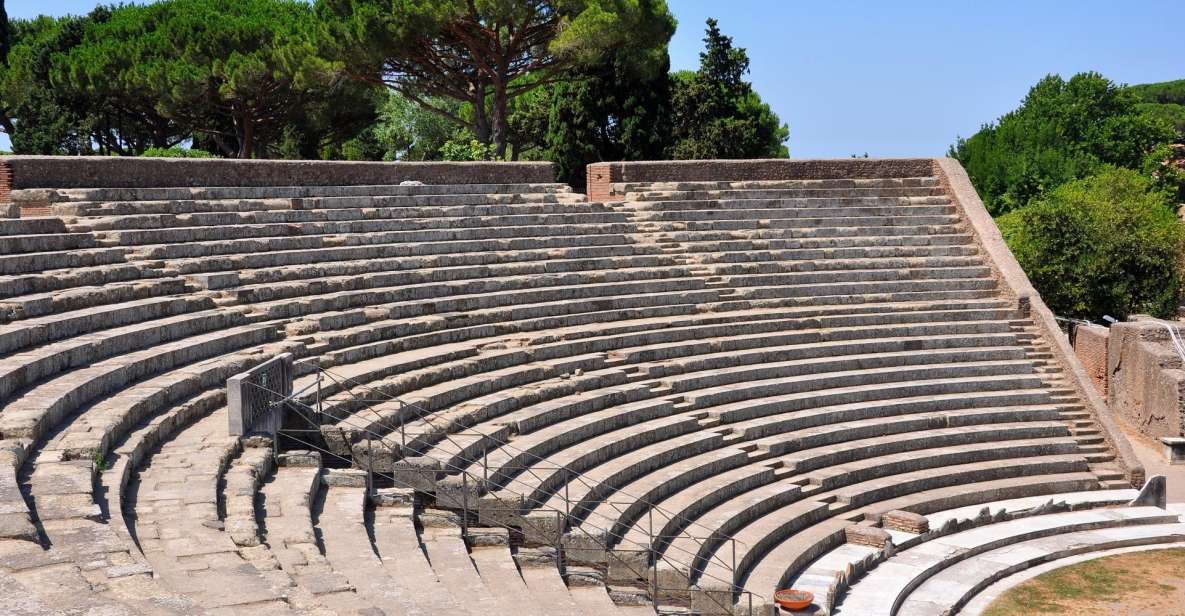
The Teatro di Ostia is the stop that rounds out the city as more than a trade center. The tour explains events held here and notes that the amphitheatre area once held up to 3,500 onlookers, which gives you a sense of scale right away.
Entertainment mattered in Roman life because it brought people together. In a city tied to shipping schedules and work cycles, public events helped build community and keep a shared culture alive.
This is where the guide’s timing and explanation really matters. A theatre can look straightforward until someone explains what it was used for and why it fit the city’s social structure. When the guide’s explanation is strong, you start seeing the theatre as a “people machine,” not just stone steps.
If you like visual context, this stop also helps you understand sightlines and the logic of crowd movement, even without modern staging.
Roman Engineering and Commerce: How the Tour Connects Past to Present
One of the best parts of this tour is how it frames Roman engineering and commerce as linked systems. You’ll hear how advanced Roman planning supported trade and how that network helped shape the success of the Empire.
The hot-and-cold water system point is a good example of why this tour works. Instead of treating technology like a trivia fact, the guide connects it to comfort and function. It’s another way of saying Rome didn’t only build monuments. It built infrastructure.
This kind of explanation helps you see Ostia as a prototype of city life. Even though the details are ancient, the basic idea is familiar: transport and supply chains support populations, which creates demand, which drives building and public space.
That’s also why Ostia makes such a strong half-day choice. You leave with a clearer understanding of how a large city actually runs.
Price and Value: Is $146.14 a Smart Deal for 2.5 Hours?
At $146.14 per person for about 2.5 hours, you’re paying for a guided, small-group format plus entrance coverage for key areas. This price can make sense if you want real guidance through a complex site rather than spending time piecing together your own route.
Here’s the value logic I use:
- You’re getting entrance tickets included, so you’re not double-paying for access.
- You’re getting a professional guide in English, which is crucial at a site where many features need context.
- You’re getting a small group cap at 6, which improves pacing and interaction.
If you’re traveling with someone who also likes explanations, this can feel like a bargain compared to hiring a private guide. If you prefer totally free wandering and you already know Roman history in depth, you might compare it against a self-guided plan.
For most people, though, this price lands in the “worth it” zone because it buys you clarity fast.
Who Should Book This Ostia Antica Tour
This tour fits best if you:
- Want the main highlights but also want explanations that connect the dots.
- Prefer small groups rather than a large bus-style crowd.
- Enjoy Roman mosaics, public buildings, and practical life details like latrines and bakeries.
It’s also a good choice if you’re short on time in Rome but still want more than the obvious major sights. Ostia delivers a different angle on the Roman world: commerce, engineering, and how the Empire sustained its population.
You might consider something longer if you’re the type who wants to linger in one area or who likes reading every inscription without a set schedule.
Should You Book This Ostia Antica Half-Day Tour?
If you want a fast, focused way to understand Ostia Antica, I’d book it. The combination of Baths of Neptune, trade-focused forum areas, practical everyday infrastructure, and the Teatro di Ostia gives you a complete picture in a short window.
Also, the small group size and skip-the-line setup make it easier to enjoy the ruins without friction. Just be honest about your time budget: if you can only do half a day, this is built for that reality.
FAQ
FAQ
How long is the Ostia Antica half-day tour?
It lasts about 2.5 hours.
What group size is it?
It’s a small group limited to 6 participants.
Is the tour guided in English?
Yes, the live guide is English.
Where do we meet the guide?
You meet at the entrance of the Ostia Antica archaeological site, directly outside the ticket office, and the guide will be holding a LivTours sign.
Are entrance tickets included?
Yes. The entrance tickets for Ostia Antica are included in the tour.
Which areas are included during the visit?
Included highlights are the Baths of Neptune, Ostia necropolis, Piazza della Minerva, the ancient theatre of Ostia, the square of the corporations, the ancient bakery, the Ostia forum, and ancient latrines.
Do we have to buy tickets or wait in line?
The experience includes skip the ticket line, and entrance tickets are part of what you pay for.
What should I bring on the day?
Bring a passport or ID card.
Can I cancel for a refund?
Free cancellation is offered up to 24 hours in advance for a full refund.