REVIEW · COLOSSEUM TOURS
Tour of Gladiators Arena and Colosseum with Imperial Forum
Book on Viator →Operated by CENTURION OF ROME - TOUR EXPERIENCE · Bookable on Viator
A day in Rome that ends at the Forum feels like a time machine. I like two things a lot: access to the Colosseum arena floor and the tight, guided route through Palatine Hill plus the Imperial-era center. The main thing to consider is timing and access: the tour is planned around timed entry, and if the arena floor is closed, the itinerary shifts and you’ll get a €10 per-person refund.
This is a shared, small-group tour (up to 20 people) in English, with a mobile ticket and expert guide. You get the “gladiators” moment up close, then Roman politics and legends in a very walkable sequence across three of Rome’s most important sites.
In This Review
- Key Highlights That Matter on the Ground
- A Small-Group Colosseum Day: Arena Floor to the Roman Heart
- Entering the Colosseum with Arena Access (What You’ll Actually Do)
- How the Arena Visit Works (and the Backup Plan If It’s Closed)
- Palatine Hill: From the Arch of Constantine to Rome’s Sacred Ground
- Via dei Fori Imperiali and the Roman Forum Core
- What You’ll See in the Forum: Curia, Rostrum, and Triumph Arches
- Timing, Group Size, and Where You’ll Spend Your Minutes
- Meeting Point, Mobile Ticket, and ID Checks (Don’t Skip These)
- Price and Value for $246.33: When the Arena Access Pays Off
- Who This Tour Fits Best (and Who Might Prefer Something Else)
- Should You Book This Imperial Forum + Gladiators Tour?
- FAQ
- How long is the Gladiators Arena and Colosseum with Imperial Forum tour?
- Does this tour include entry to the Colosseum arena floor?
- What happens if the arena floor is closed on my visit day?
- Where do I meet the guide, and where does the tour end?
- What ID do I need for the Colosseum and Roman Forum?
- Is this tour private?
Key Highlights That Matter on the Ground
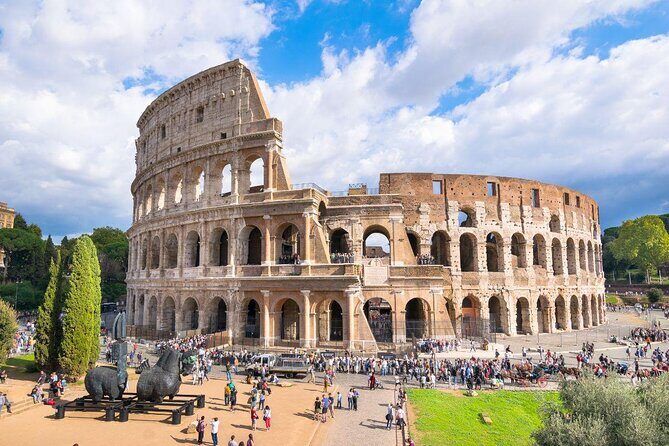
- Arena floor access at the Colosseum with limited seating and a more exclusive-feeling visit
- Palatine Hill + two major triumphal-arch viewpoints (including the Arch of Constantine)
- Via Sacra and Roman Forum core buildings, like the Curia and rostrum area
- Small-group format (max 20) for easier pacing than big bus-style tours
- Backup plan if the arena closes: you tour the 1st and 2nd floors instead, plus a €10 refund
A Small-Group Colosseum Day: Arena Floor to the Roman Heart
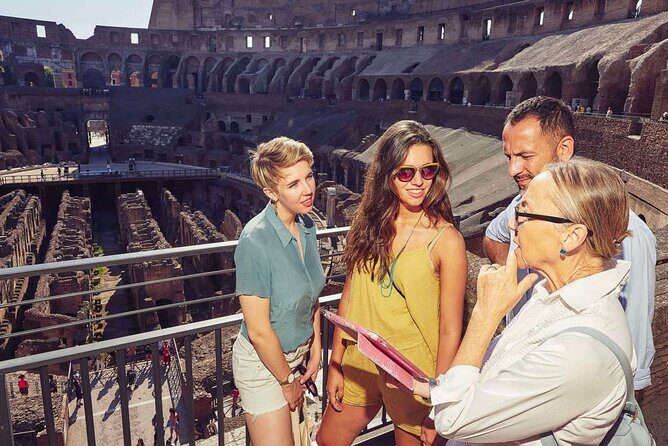
If you’re trying to choose between seeing the Colosseum from the outside and actually getting inside the story, this kind of tour makes the decision easy. The big draw here is that you don’t just stand and look—you go down to the arena where the gladiators fought, and your visit is guided rather than “wander at your own speed.”
Then the tour keeps rolling. After the Colosseum, you move to Palatine Hill, the myth-and-power center of ancient Rome, and finish in the Roman Forum / Imperial Forums area, walking the kind of routes that connected emperors, politics, and public ceremonies.
The value question is simple: this price is steep, but it includes entry + arena access + reservation fees, and you’re also paying for guided interpretation across multiple major sites in one go.
You can also read our reviews of more tours and experiences in Rome.



Entering the Colosseum with Arena Access (What You’ll Actually Do)
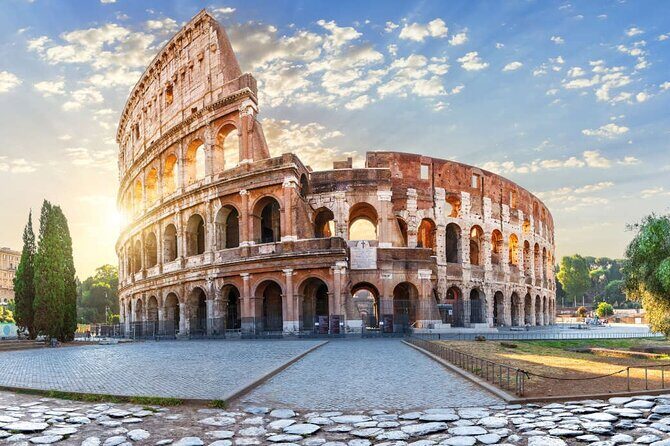
Your first stop is the Colosseum, with a focused visit that includes a reserved-feeling path to get you into the amphitheater experience properly. The tour includes a dedicated block of time at the Colosseum, and the itinerary specifically calls out that the arena floor visit is more exclusive than a general walkthrough.
The practical difference shows up in how it feels. You’re not doing the usual “line, photos, quick glance.” Instead, the tour is built around getting you into the action space—the arena floor—and then using a guide to connect the structure you see to what it was built to do.
What you should look for during this part
- The change in perspective once you’re down at arena level. The Colosseum stops being a monument and starts being a performance space.
- How the amphitheater’s design relates to crowd movement and spectacle (even if you only catch a few key points from your guide, that mental model helps).
- The sense of scale: the tour’s arena access highlights how the space worked for both combat and showmanship.
You also get admission included for the Colosseum with arena access, plus the Colosseum reservation fee included in the package.
How the Arena Visit Works (and the Backup Plan If It’s Closed)
The tour’s “gladiators” promise is real, with time allocated for the arena. But Rome is Rome, and the site can change access conditions for public safety. That’s why this tour includes a clear alternative.
If the arena section is closed, you are not left with a half-baked experience. You’ll explore the 1st and 2nd floors of the Colosseum instead, and your arena access becomes an overview rather than that direct walk-on visit. In that case, you receive a €10 refund per person, handled via PayPal or bank account.
Two smart ways to think about this before you book:
- It reduces the risk of paying for something that becomes impossible on the day.
- You still get a guided Colosseum experience; the change is about where you stand inside the building, not whether the tour happens.
Palatine Hill: From the Arch of Constantine to Rome’s Sacred Ground
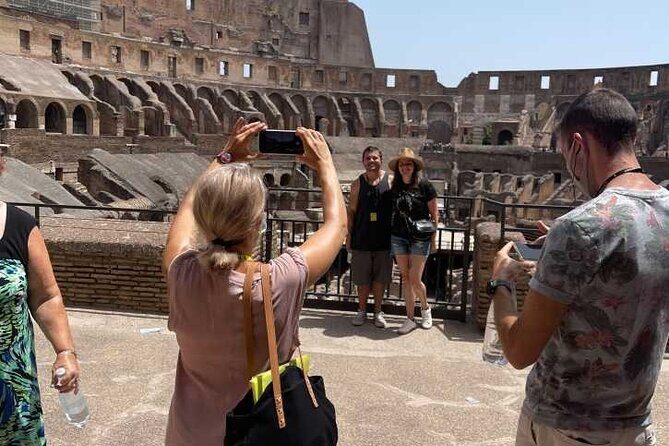
After the Colosseum, you shift from entertainment architecture to political and religious symbolism. Your route takes you through the area dominated by the Arch of Constantine, one of the few triumphal arches still standing in Rome.
This part matters because it shows how Roman power used art as messaging. The arch isn’t just an old stone postcard. The tour focuses on its decorative reliefs and statues, and on how public art worked as propaganda and celebration—basically, the Empire making its case in stone.
Then you move toward Palatine Hill, described as one of Rome’s seven hills and treated as a place dense with the city’s earliest memories. The guide is set up to pay attention to the kind of sacred spaces Romans associated with foundational myths and key legendary events.
What you’ll likely appreciate here
- The shift from “big crowd spectacle” to “the story Rome told about itself.”
- Palatine’s role as a symbol: this is not just a hill you walk up; it’s a landscape tied to origin myths and power.
- How arches act like historical signposts on a route you’d otherwise see only as architecture.
Via dei Fori Imperiali and the Roman Forum Core
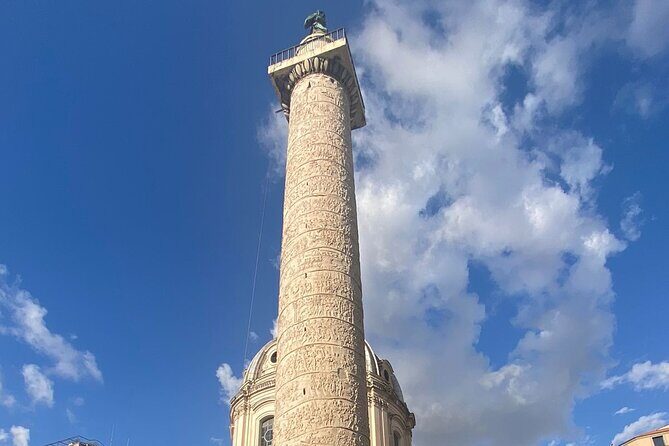
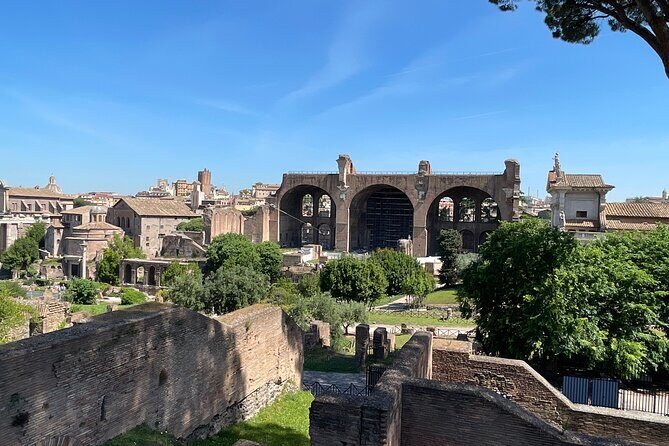
From Palatine Hill, the tour descends into the valley that held the Roman Forum and the Imperial Forums—the beating center of ancient public life. This is where your guided walk becomes more than site-hopping, because you’re following a processional route known as the Via Sacra, the road connected to triumphs and ceremonial movement.
Your guide points out how everyday life, politics, and legends overlap in this area. That’s important because the Forum can feel confusing if you visit without interpretation: it’s ruins, and ruins don’t automatically tell you what they meant.
Where your tour time goes in this stop
You get guided time that focuses on key structures and political spaces, including:
- The Curia, presented here as the official seat of Roman senators that still survives intact
- The rostrums area, the platform connected with speeches
- The area associated with assemblies and elections of magistrates
- The grand triumphal arches you encounter in the Forum space
Even if you only catch a few names and functions, the effect is useful. You start seeing the Forum as a machine for public decision-making and ceremonial theater.



What You’ll See in the Forum: Curia, Rostrum, and Triumph Arches
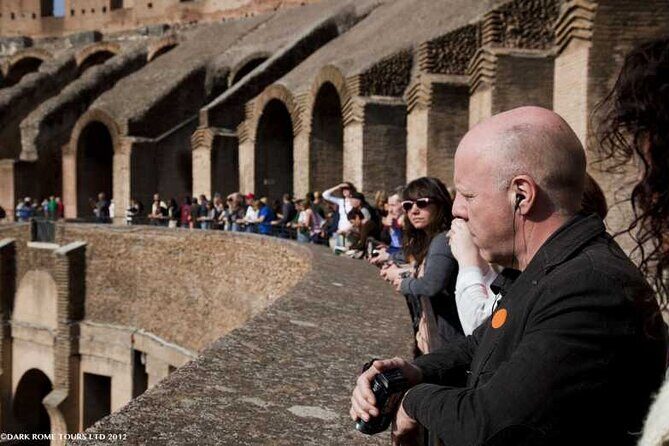
If you’re the type who likes “aha” moments—where a ruin suddenly has a job—this is where the tour earns its keep.
The tour doesn’t just point out stones. It frames what each space was for:
- The Curia helps you picture governance happening in a dedicated, institutional setting.
- The rostrums make you think about public speaking as political power—where messaging and crowd reaction mattered.
- The assembly/election spaces connect the physical layout to how Romans chose leaders.
Then there are the triumphal arches. These are more than decorative. They’re designed to turn conquest into public meaning, and your guide connects that to the way Rome used architecture to show who was in charge.
This stop is also the best reason to pick a guided format over a self-guided shuffle. The Forum is dense, and your time is limited. A guide helps you prioritize the “functions” behind the sights.
Timing, Group Size, and Where You’ll Spend Your Minutes
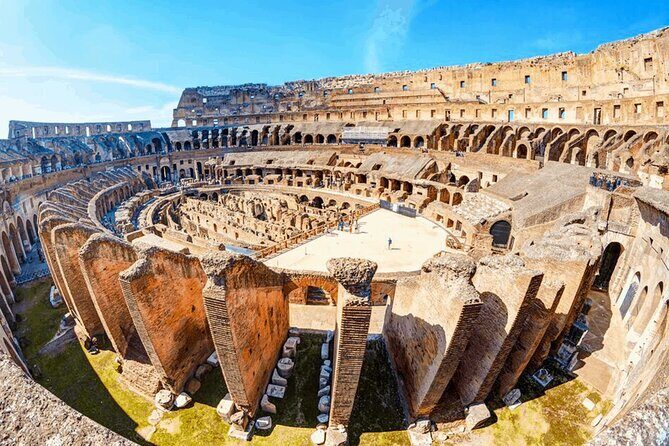
On paper, the tour is listed at about 2 hours 50 minutes. It also specifies a shared group size with a cap of 20 travelers, which is one reason this can feel smoother than the big crowds at peak times.
Stop pacing is built into the schedule:
- Colosseum + arena floor gets a dedicated block (40 minutes)
- Palatine Hill gets another focused block (30 minutes)
- Via dei Fori Imperiali / Forum core walk rounds out the experience (50 minutes)
In a city like Rome, the hidden variable is always timed entry and the flow between sites. Still, the structure here is clear: the Colosseum is the “big moment,” then Palatine shifts you to origin myth and power symbolism, and the Forum ties it all together with the public-life spaces.
Meeting Point, Mobile Ticket, and ID Checks (Don’t Skip These)
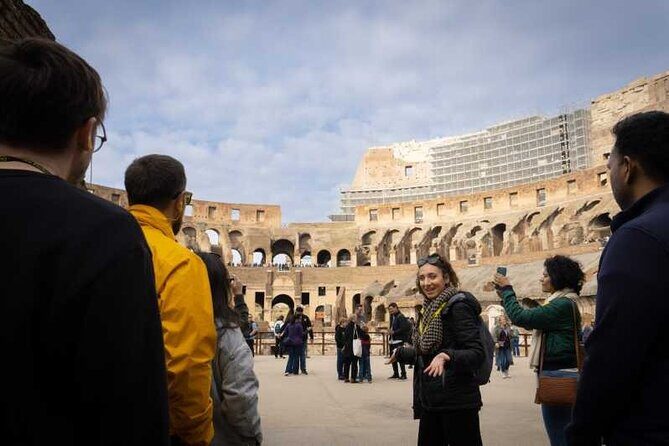
This tour uses mobile tickets, and you’ll get boarding information sent online. Support is available at boarding time, and you’re asked to leave a WhatsApp number so staff can reach you once you book.
Your meeting point is:
Via dei SS. Quattro, 81, 00184 Roma RM, Italy
Your tour ends at:
Via dei Fori Imperiali, Roma RM, Italy
Now the part that can truly derail your day: name and ID matching. You must provide full traveler names when booking, and each traveler must present a valid passport or ID document that matches what was entered. If the names don’t match, entry to the Colosseum and Roman Forum can be refused.
Also note: the tour is English and is described as suitable for most travelers, but like any major-sight experience, you should expect a fair amount of walking across uneven historic terrain.
Price and Value for $246.33: When the Arena Access Pays Off
The price is $246.33 per person for a nearly three-hour guided experience. That sounds like a lot—until you look at what’s bundled.
You’re not just paying for a guide:
- The package includes entry to the Colosseum, Roman Forum, and Palatine Hill
- It includes the Colosseum ticket with arena access, valued at €24 per person
- It includes a Colosseum reservation fee, valued at €2 per person
The remainder of what you pay covers the guided tour and the services around getting you in with a reserved, scheduled experience. If you care about the arena specifically, you’re paying for the unique access part, not just a “Colosseum view” experience.
Two value tips before you commit:
- If you’re planning other tours tightly on the same day, don’t stack them too close. The Forum area takes time, and timed entry can shift pacing.
- Since this tour is shared, you trade privacy for a group format and price control.
Who This Tour Fits Best (and Who Might Prefer Something Else)
This tour is a great fit if:
- You want the Colosseum arena floor moment rather than a standard walkthrough
- You like learning context: how Roman spaces connect to politics, propaganda, and public rituals
- You want one coordinated plan covering Colosseum + Palatine Hill + Forum without stitching together separate visits
You might think twice if:
- You mainly want photos and don’t care about guided interpretation. For a more casual visit, a self-guided plan can be less expensive.
- You’re extremely schedule-sensitive. Timed entry and site access rules can affect the flow, and the experience is built around that structure.
Overall, if your Rome wish list includes gladiators and the Forum as more than a ruin field, this does a strong job linking the dots in one morning/afternoon block.
Should You Book This Imperial Forum + Gladiators Tour?
I’d book it if you want the best chance of turning the Colosseum from an iconic photo into something you understand—then following that understanding right into Palatine Hill and the Roman Forum’s political machinery.
Skip-booking logic goes like this:
- If arena access is the non-negotiable item on your list, the included ticket + reservation are a big part of the value equation.
- If you’re comfortable paying extra for guide-led prioritizing (and you bring correct ID details), this is the kind of tour that saves you time and confusion in a crowded, layered site.
If, on the other hand, you’re traveling on a tight budget or you just want flexible wandering, you may find a less expensive self-guided visit works fine. But for gladiators-on-the-floor plus a guided Forum route, this tour is built for that exact outcome.
FAQ
How long is the Gladiators Arena and Colosseum with Imperial Forum tour?
The tour runs about 2 hours 50 minutes.
Does this tour include entry to the Colosseum arena floor?
Yes. It includes a Colosseum entrance ticket with arena access, valued at €24 per person, plus a reservation fee.
What happens if the arena floor is closed on my visit day?
If the arena section is closed for public safety, you’ll visit the 1st and 2nd floors instead. You’ll get a refund of €10 per person via PayPal or bank account.
Where do I meet the guide, and where does the tour end?
You start at Via dei SS. Quattro, 81, 00184 Roma RM, Italy, and the tour ends at Via dei Fori Imperiali, Roma RM.
What ID do I need for the Colosseum and Roman Forum?
Each traveler must present a valid passport or ID document that matches the full name provided at booking.
Is this tour private?
No. It’s a shared tour with a maximum of 20 travelers.