REVIEW · COLOSSEUM TOURS
Colosseum Arena and Ancient Rome Private Tour
Book on Viator →Operated by Rome Group Tours · Bookable on Viator
Seeing the Colosseum from the arena changes everything. This private tour gets you into the Colosseum through a restricted arena entrance via Gladiator’s Gate, then continues to Palatine Hill and the Roman Forum at your own pace.
I love two things right away: you’re not stuck in a big group shuffle, and your guide can answer questions as they come up. The best part for many people is the time your guide gives you, including patience with photo requests, plus steady communication from booking until you meet up.
One thing to plan for: this is still a lot of walking, and Colosseum entry is strict. Your ID must match your booking name exactly, and bags are limited to 30x40x15cm with no storage on-site.
In This Review
- Quick hits before you go
- Inside the Colosseum: Gladiator’s Gate and the arena floor
- What could slow you down here?
- Palatine Hill’s origins and imperial ruins in 45 minutes
- A practical note on pace
- For Your Eyes Only: Roman Forum highlights with maps and visual aids
- Best way to use this stop
- How the private format works for real people
- Tickets, mobile entry, and ID rules you must take seriously
- What I recommend packing for this kind of tour
- Shoes, weather, and water: small comfort wins
- Where you meet and how the tour ends
- Price and value: is $135 a good deal?
- Who this tour is best for
- Should you book this private Colosseum, Palatine Hill, and Forum tour?
- FAQ
- FAQ
- How long is the Colosseum Arena and Ancient Rome private tour?
- What does the tour include?
- Is this a private tour?
- Do I enter the Colosseum through a special entrance?
- What ID do I need for Colosseum entry?
- Are digital or photocopied IDs accepted?
- Is the tour refundable if I cancel?
Quick hits before you go
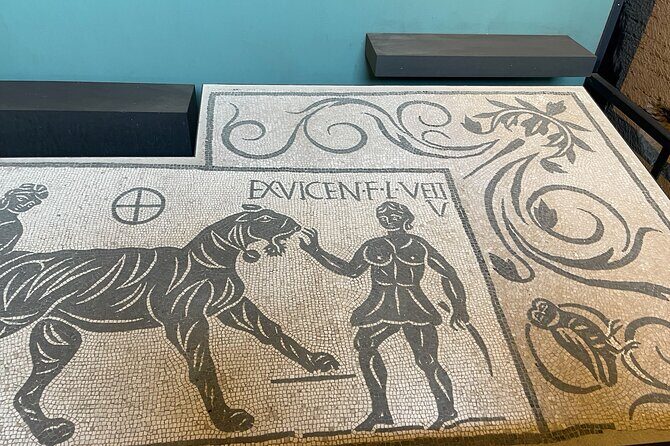
- Gladiator’s Gate entrance for true arena-floor access, not just a viewpoint.
- Arena floor moments with views toward the hypogeum area.
- Palatine Hill panoramic stops over the Forum and the Circus Maximus.
- Roman Forum key buildings like Curia Julia, Temple of Vesta, and the Rostra with maps/visual aids.
- Private, customizable pacing so you can slow down for details or photos.
- Mobile ticket + name-matched ID is required for entry, no exceptions for digital copies.
Inside the Colosseum: Gladiator’s Gate and the arena floor
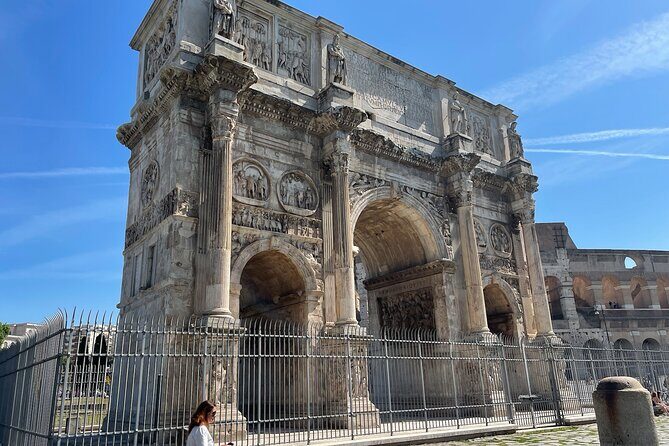
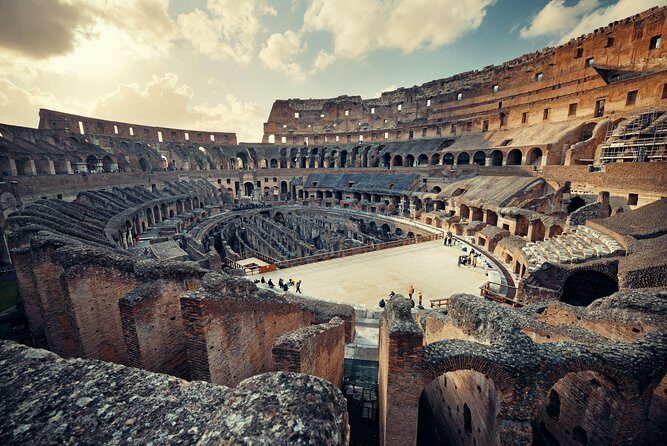
The first stop is the Colosseum, and the difference is where you enter. Instead of typical museum-style gates, you go in through a restricted entrance reserved for arena tours—Gladiator’s Gate. That means you step into a space that feels closer to what gladiators would have faced, with the arena floor under your feet and a crowd-energy vibe that’s hard to replicate from the outside.
Your guide walks you through what you’re seeing, with practical context on construction and purpose—how this massive structure was designed for spectacle and what that meant for Roman culture. If you like learning with your eyes (rather than only reading plaques), this kind of guided pacing is exactly what makes the Colosseum feel alive.
A standout moment is the way the route connects you to views toward the underground hypogeum. Even if you don’t fully tour underground spaces, getting the visual reference while you stand on the arena level helps you understand how the show worked and how performers moved behind the scenes.
And yes, you’ll want photos. This tour is set up so your guide will take time with them. I’d treat photography as part of the experience here, not something you squeeze in between hurried steps.
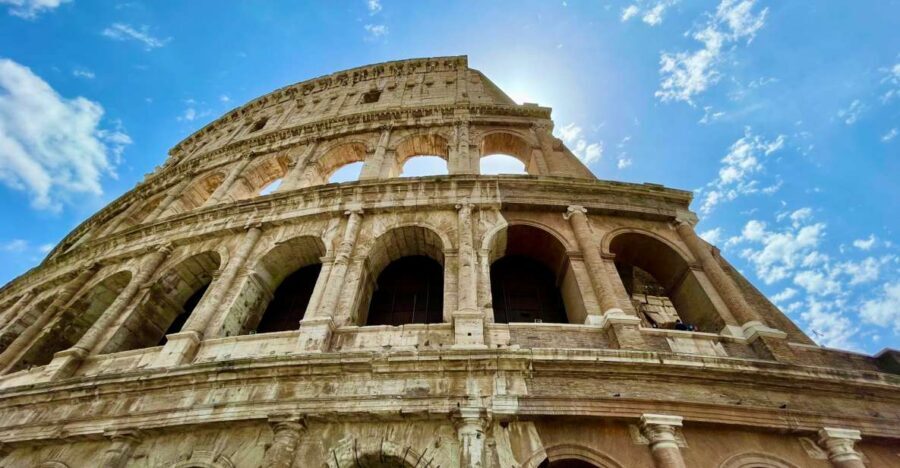
Upper-tier views are another smart payoff. After the arena-floor time, you’ll ascend to the upper tier for views back down into the interior and out toward Rome. From up high, the scale clicks: you can see how the Colosseum dominates the area and how the city wraps around ancient stones.
You can also read our reviews of more private tours in Rome


What could slow you down here?
Plan for crowds and the realities of security and entry flow at the Colosseum. Also, the non-transferable ticket is tied to the name on your booking, so double-check you’ve entered your name exactly as it appears on your accepted ID.
Palatine Hill’s origins and imperial ruins in 45 minutes
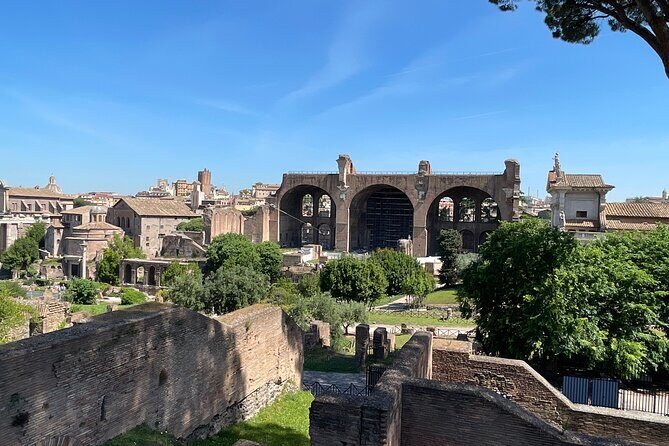
Next comes Palatine Hill, where the tour shifts from spectacle to origins and power. This is the hill people associate with the myth of Romulus and Remus, and your guide uses that story as a way to frame why this area mattered from the earliest ideas of Rome. You’ll walk away with a clearer sense of how myth and politics blurred together in the Roman imagination.
Then the focus gets more concrete: you’ll explore remains of imperial palaces—the kind of luxury that matched emperors and top aristocrats. Even when ruins look fragmentary, standing on the hill helps you connect the dots. You can start to imagine daily life for the people who lived here and how their status would have been staged to the public.
The real reason I like Palatine Hill as a stop is the view. You’ll enjoy panoramic scenes of the Roman Forum and the Circus Maximus, and these views are genuinely useful for orientation. When you later look at the Forum, it helps to already have a mental map of where everything sits relative to the big spaces.
Time is tighter here—about 45 minutes—so it’s not a slow archaeological stroll. It’s more like a focused route that gets you the big story beats plus a strong photo payoff.
A practical note on pace
Because this is private, you can ask your guide to linger on what grabs you. If you care more about the imperial leftovers, you’ll spend more time there. If you’re mainly here for viewpoints, you can bias the walk toward the best angles.
For Your Eyes Only: Roman Forum highlights with maps and visual aids
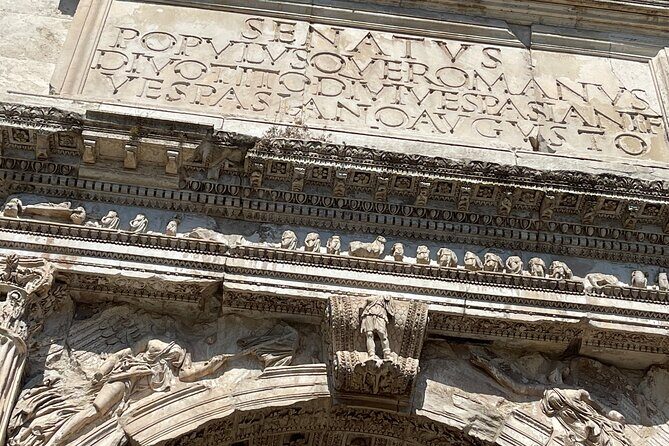
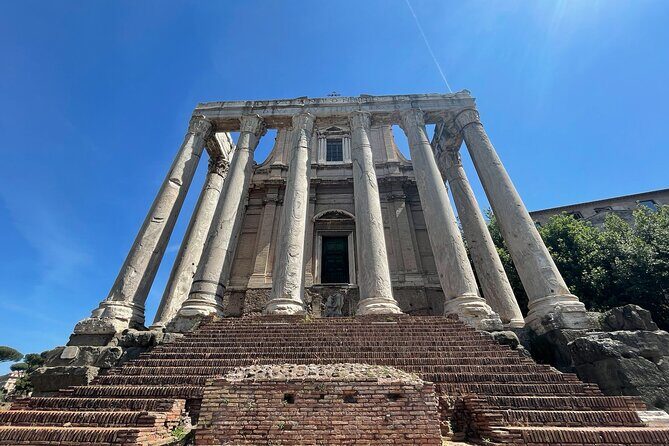
The Roman Forum is the third and final major stop, and it’s where you start feeling like the city’s political engine is under your feet. This part of the tour centers on walking through the ancient city center and hearing how it functioned socially, politically, and religiously.
Your guide brings you to key structures, including:
- Curia Julia (Senate House)
- Temple of Vesta
- The Rostra, where famous public speeches were delivered
Here’s why that list matters: it’s not just name-dropping. With the right walking route, you begin to connect institutions to the space they occupied. You’re not only looking at stones; you’re learning what people did in those areas and how public life unfolded.
What helps a lot is the use of maps and visual aids from your guide. When you’re in a ruin field, it’s easy to get lost in what’s missing. Visuals help you rebuild the original layout in your head, so you can follow the story without constantly guessing.
You’ll have about 45 minutes at the Forum, which is enough time to hit the big sites without turning it into a marathon. If you’ve ever visited and felt like you needed a decoder ring, this is the kind of guided framing that fixes that problem.






Best way to use this stop
Take a minute before each key site and ask yourself: what was the job of this place? Then listen for your guide’s explanation. You’ll remember more, and the Forum stops being a maze of ruins.
How the private format works for real people
This isn’t a group bus tour. It’s a true private experience, so it’s just your party. That changes everything about flow. You can ask questions on the spot, and you don’t have to wait for someone else’s pace.
I also like that the tour is described as completely customizable to your preferences. That usually means you can adjust where your attention goes most—arena perspective, views from Palatine Hill, or Forum politics.
The guide’s style also matters, and the strongest feedback here is about patience and thorough explanations. One review noted the guide took her time, gave a thorough explanation start to finish, and was very patient with photo requests. That matches what I’d want from a Colosseum tour: enough time to look up, look around, and ask questions, without feeling rushed.
Another underrated value point: the company stays in contact from booking until arrival. For a timed-ticket experience, that kind of communication helps you feel organized instead of anxious.
Tickets, mobile entry, and ID rules you must take seriously
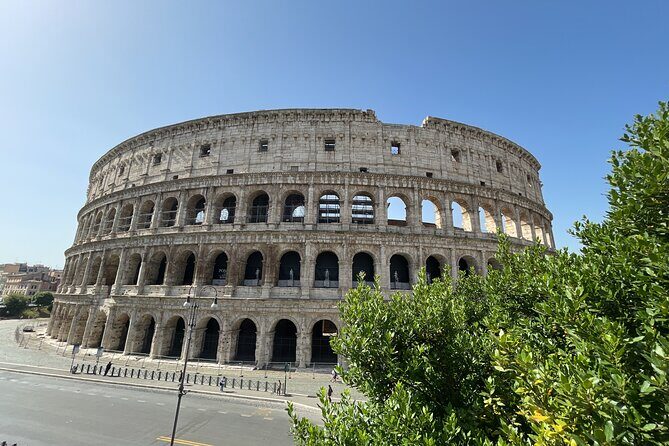
This tour includes admission tickets, and you’ll have a mobile ticket. Still, the Colosseum’s name-matching rules are strict: tickets are non-transferable and tied to the name on your booking. The name on your accepted ID must match exactly.
Accepted IDs are:
- Passport
- Driver’s license
- Official National ID card
And here’s the critical part: photocopies or digital versions are not accepted. If you forget your ID—or if the spelling doesn’t match—Colosseum staff won’t allow entry.
Also note the bag limits: bags must be no larger than 30x40x15cm, and there are no storage facilities at the Colosseum. Bring what you need, keep it small, and leave extra stuff at your accommodation.
Security rules are similar to airport screening: dangerous items are prohibited.
What I recommend packing for this kind of tour
Keep your day kit simple. A small bag, water bottle, and comfy shoes. If you’re the type who likes extra layers, pack them in a way that doesn’t break the bag size rule.
Shoes, weather, and water: small comfort wins
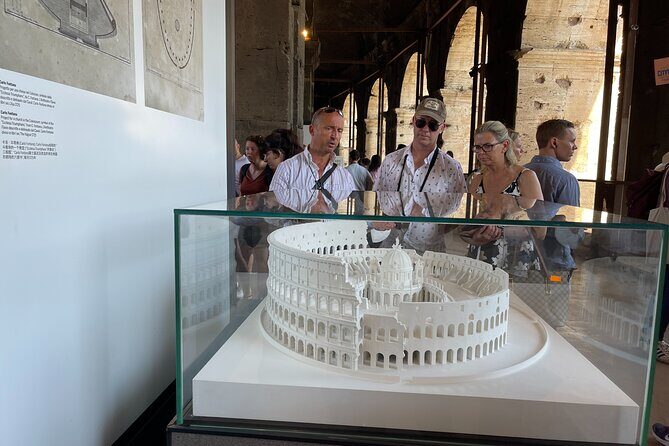
There’s no formal dress code, but the tour involves a fair amount of walking. If your shoes aren’t comfortable for uneven ground, your feet will tell you about it quickly. Go for supportive footwear and clothes suited to weather.
For hydration, you can bring a water bottle. You’ll also find free water fountains and nearby kiosks where you can refill.
This matters because the tour is paced by stops and guided moments, not long sit-down breaks. Staying comfortable makes the historical parts more enjoyable, not more exhausting.
Where you meet and how the tour ends
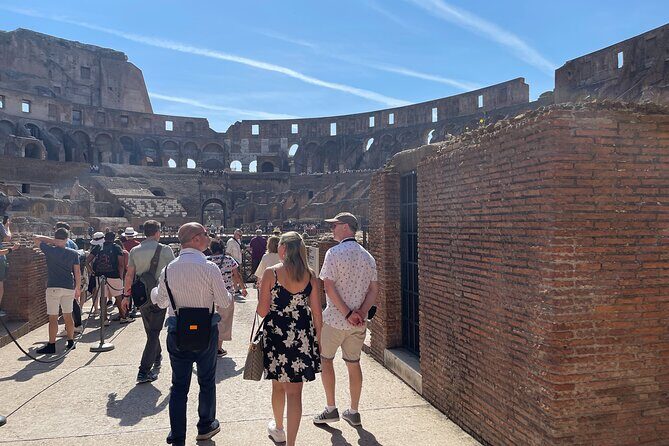
The tour starts at Casa dell’Acqua, Piazza del Colosseo 58, 00184 Roma RM. The activity ends back at the same meeting point.
That end-at-start detail is more helpful than it sounds. It makes planning dinner or a next stop easier because you’re not dropped somewhere far away.
Price and value: is $135 a good deal?
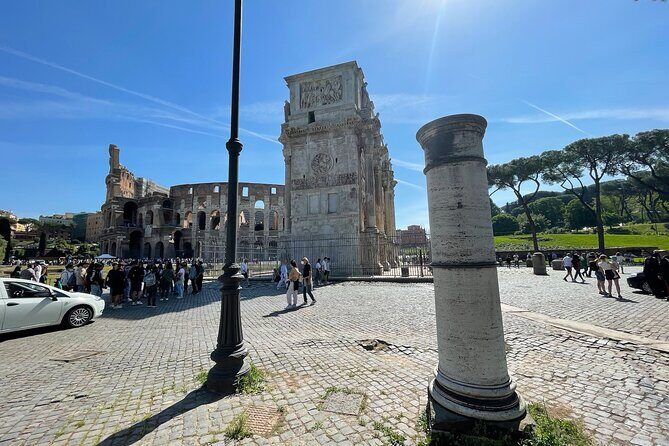
At $135 for about 3 hours, the value depends on what you want out of Rome. If you’re comfortable with self-guided visits, you could pay less. But if you want arena access plus expert guidance through the Forum and Palatine Hill, this price starts to make sense.
Here’s what you’re buying beyond access:
- Private pacing with a guide who can answer questions
- Arena entry via Gladiator’s Gate, which is a big differentiator
- Guided explanations that help ruins make sense
- Tickets for the major sites included in the experience
For many people, the biggest value is time and clarity. A guided route reduces guesswork, and arena-floor access makes the Colosseum feel like something more than a photo stop. In a city where many sights are spread out and confusing, paying for a guide can be money well spent.
Who this tour is best for
This tour is a strong fit if you:
- Want arena-floor access rather than only viewing from the stands
- Prefer a private guide who adapts to your questions and pace
- Enjoy connecting the dots between the Colosseum, the Forum, and the imperial power center on Palatine Hill
- Travel with family and want someone who can handle slower moments and photo requests
It may be less ideal if you have very limited mobility, since the tour calls for moderate physical fitness and includes walking between major areas.
Should you book this private Colosseum, Palatine Hill, and Forum tour?
If your goal is to see Rome’s heart in the most meaningful order—and not waste time guessing what you’re looking at—I’d lean yes. Gladiator’s Gate arena access plus a guide who takes time is the kind of combination that upgrades your visit fast.
Book it if:
- You want a private pace
- You care about understanding what happened in these spaces
- You’d rather pay for entry + guidance than piece it together yourself
Consider another option if:
- You’re on a tight budget and only want quick exterior views
- You’re very sensitive to strict entry rules and want zero ID stress (because here, names and documents matter)
FAQ
FAQ
How long is the Colosseum Arena and Ancient Rome private tour?
It runs for about 3 hours.
What does the tour include?
You get guided access to the Colosseum, Palatine Hill, and the Roman Forum, and admission tickets are included.
Is this a private tour?
Yes. It’s a private tour/activity, so only your group participates.
Do I enter the Colosseum through a special entrance?
You enter via a restricted entrance reserved for arena tours, specifically through Gladiator’s Gate.
What ID do I need for Colosseum entry?
You must bring an accepted ID: passport, driver’s license, or an official national ID card. The name must match the name you provided during booking.
Are digital or photocopied IDs accepted?
No. Photocopies or digital versions are not accepted.
Is the tour refundable if I cancel?
No. The experience is non-refundable and cannot be changed for any reason.