REVIEW · NAPLES
From Naples: Pompeii & Herculaneum with Archaeologist Guide
Book on GetYourGuide →Bookable on GetYourGuide
Two cities, one volcanic deadline. I like this tour for one simple reason: you get an archaeologist-led walk through Pompeii and Herculaneum without wasting half your day in queues. I also love the small-group feel (limited to 20) and the practical setup, from the pickup at Starhotels Terminus to a smooth minibus ride with an English-speaking driver.
One catch: the sites involve stairs and steep grades, and it is not recommended for people with limited mobility. If you pack light (no large bags) and wear solid shoes, you’ll handle it fine.
In This Review
- Key things I’d prioritize on this tour
- Naples to Vesuvius Country, Without the Stress
- Herculaneum First: Mud Burial That Kept the Town Visible
- A note on comfort
- Herculaneum Stops You Should Be Looking For
- The 40-Minute Pompeii Lunch Break: Use It Like a Pro
- Pompeii’s Two-Hour Walk: Public Buildings and Everyday Rooms
- Skip-the-Line Tickets: What They Actually Do for You
- Group Size, Timing, and the Feel of 7 Hours
- Guides Matter: Names That Show Up in the Best Feedback
- Cost and Value: Is $168.79 Worth It?
- Practical Tips Before You Go (So You Don’t Lose Time)
- Who This Tour Fits Best
- Should You Book This Pompeii and Herculaneum Tour?
- FAQ
- How long is the Pompeii and Herculaneum tour from Naples?
- Where do I meet for the tour in Naples?
- How is transportation handled during the day?
- Does the tour include skip-the-line tickets?
- Is lunch included?
- Is the tour suitable for people with mobility impairments?
- What should I bring, and are bags allowed?
Key things I’d prioritize on this tour

- Skip-the-line entry so you spend more time looking and less time waiting
- Herculaneum’s unusual preservation: mud burial and surviving objects like carbonized wood and paintings
- Archaeologist-led explanations with guides praised by name, including Raphael, Roberta, Michele, Gennaro, and Julia
- Pompeii highlights in a focused walk: Forum, Basilica, major houses, and public venues
- A pace that fits one day: about two hours in each site plus built-in breaks
Naples to Vesuvius Country, Without the Stress
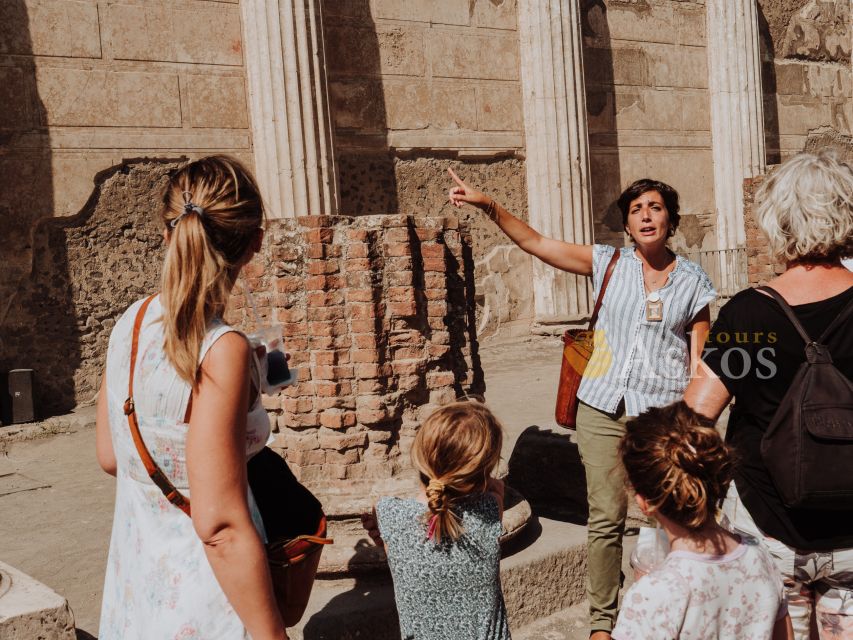
This is the kind of day trip that starts like a vacation should: you meet at the Starhotels Terminus entrance, right opposite the train station. Look for the Askos Tours guide holding an ASKOS TOURS sign, then you’re off in a modern minibus with a professional English-speaking driver.
The travel time is reasonable for a two-site hit. You transfer to Herculaneum first, then later head to Pompeii. The upside of this order is that Herculaneum sets the emotional and visual tone fast: you see what the eruption did to a coastal town in a different way than Pompeii.
If you’re worried about logistics, don’t be. One nice detail I appreciate is that the driver waits up to 5 minutes if you’re late. That’s not a guarantee, but it shows they plan for real life.
Herculaneum First: Mud Burial That Kept the Town Visible
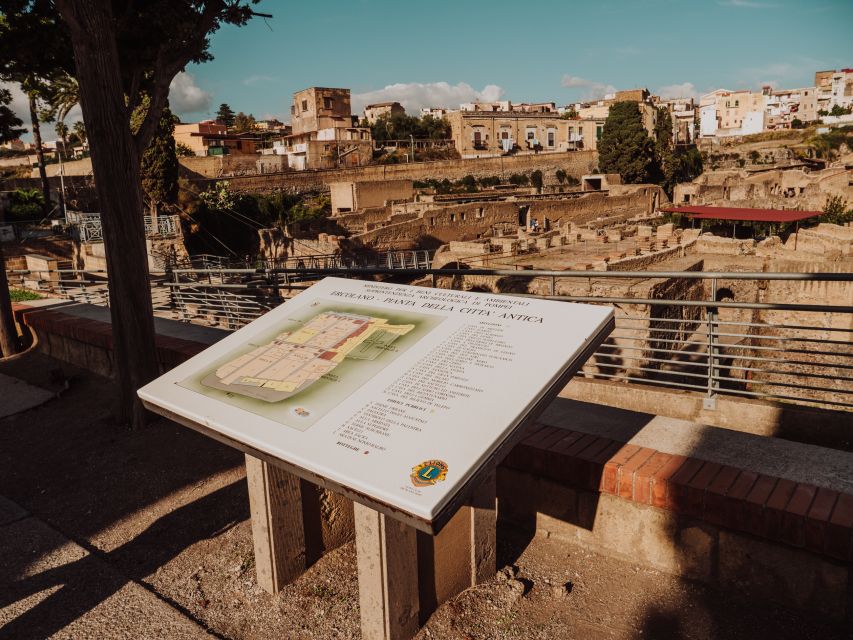
Herculaneum is the star when you want the feeling of a place caught mid-breath. The site is known for being buried under about 20 meters of mud after a landslide triggered by the eruption, and that kind of burial is why you get so much survival of everyday material.
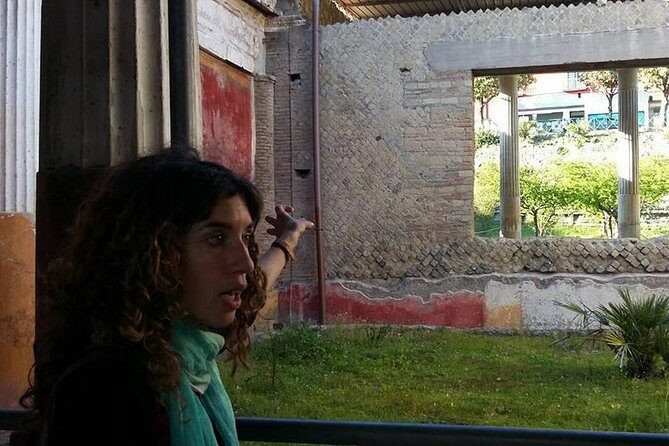
You spend about two hours here on a guided walk. This is where an archaeologist guide makes the biggest difference: they explain not just what you’re seeing, but why it looks the way it looks. I especially like that Herculaneum can feel more human-scale than Pompeii, partly because the preservation means you’re seeing the stuff people used.
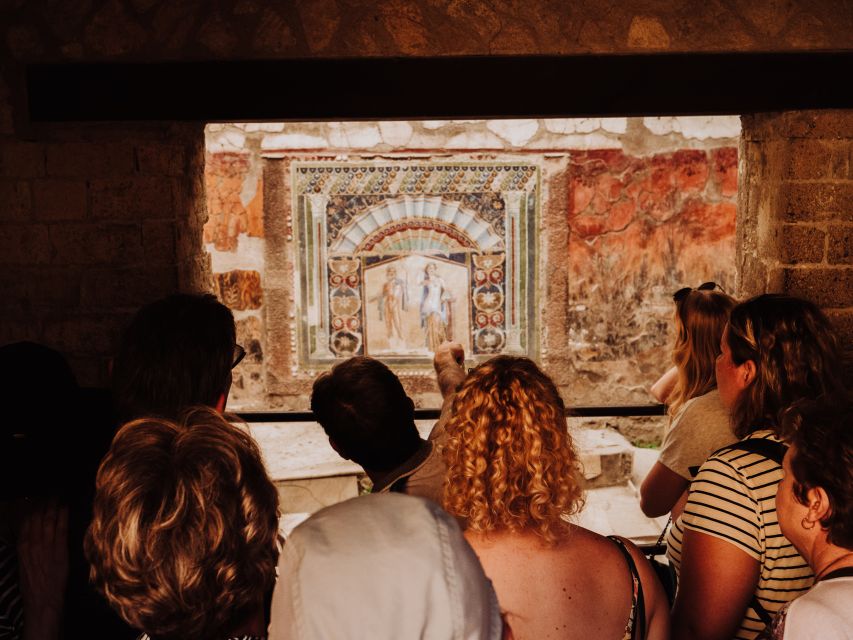
In the mix are carbonized wooden objects, intact paintings, and mosaics that are still preserved. That is the practical point for you: when other ruins are mostly walls and stones, Herculaneum gives you more of the visual proof of daily life.
A note on comfort
Herculaneum can mean more walking than you expect, with changes in elevation and lots of steps. The tour itself is not recommended for wheelchair users or people with mobility impairments. Even fit walkers should plan slow breaks and keep water handy.
Herculaneum Stops You Should Be Looking For
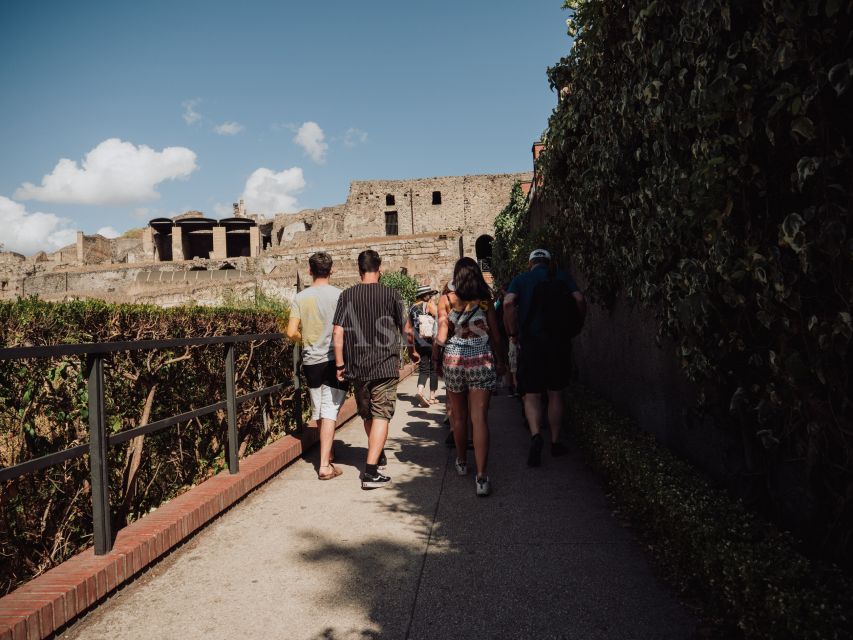
The tour doesn’t try to make you memorize an archaeology textbook. Instead, it hits the places that tell the clearest story of how the town worked and what happened in 79 AD.
Here are the highlights you’ll likely connect with as you move through the site:
- Temple of the Augustali: A key public landmark, useful for understanding civic religion and community identity.
- The beach with more than 300 skeletons found: It’s heavy, but it’s also one of the most direct ways the eruption becomes real. It’s the kind of stop where a guide’s framing matters.
- Thermal Baths: You get a peek into leisure and routine. Roman baths weren’t just about hygiene; they were social infrastructure.
- Forum: The civic center helps you connect the dots between houses and public life.
- Samnite House and the Gymnasium: These locations support the story of domestic life plus education and exercise spaces.
- House of the Dears: A house stop that helps the town feel personal, not just archaeological.
Some of the best feedback I saw praised specific guides for handling details well. Names that came up again and again included Raphael, Roberta, and Gennaro (and also Julia for her thorough answers). Even if your guide isn’t one of those names, the fact that archaeologists run the program is what matters.
One extra perk: a review noted headsets were used, which is a smart way to keep you from craning your neck every time the guide moves to the next stop. If headsets are offered on your date, grab them. You’ll hear more and move with less friction.
The 40-Minute Pompeii Lunch Break: Use It Like a Pro
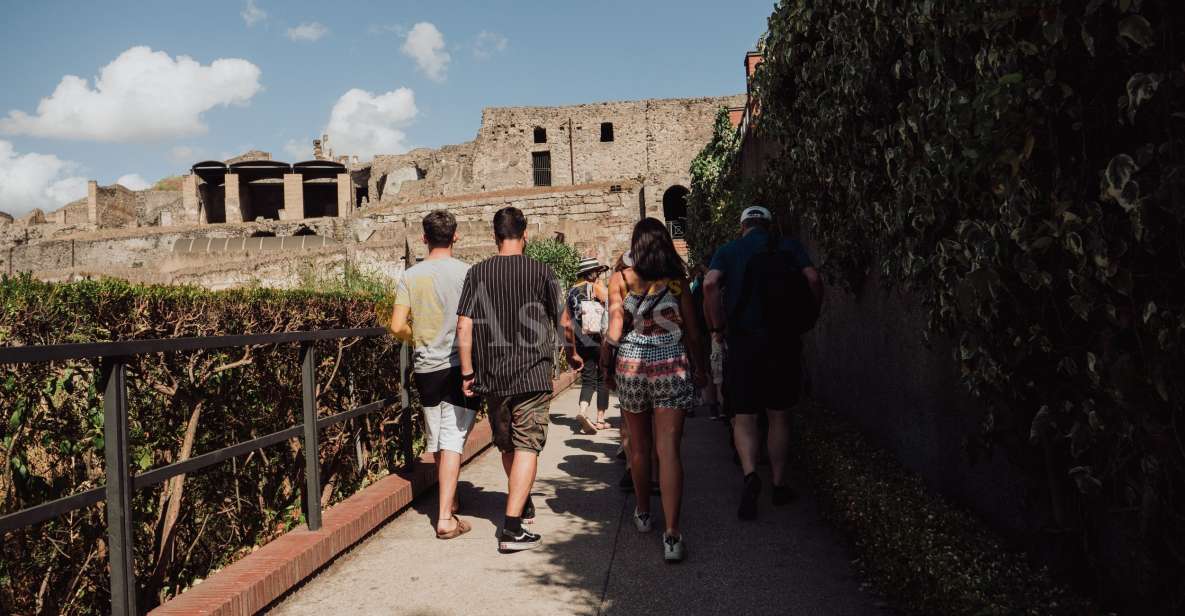
After Herculaneum, you travel to Pompeii and then get a break before the Pompeii walk. You’ll have about 45 minutes here for break time, which is your real chance to reset.
Keep your expectations realistic. This is not long enough to sit through a big meal unless you’re lucky with timing. If you want control, plan a snack or light food so you don’t scramble at the last minute. One review also flagged that eating inside Pompeii can run expensive, with people suggesting bringing your own food if you want to avoid paying more once you’re in.
Here’s how I’d use the break:
- Step away from the busiest entrances so you’re not stuck in bottlenecks.
- Use the bathroom if you can. You won’t always find an easy option once you’re deeper in.
- Rehydrate. You’ll do more walking after this.
Pompeii’s Two-Hour Walk: Public Buildings and Everyday Rooms
Then it’s time for Pompeii. You get about two hours on a guided route through major spaces, plus a chance to absorb how Romans lived right before the eruption buried the city in volcanic ash.
What I like about this format is that you’re not trying to see everything. You’re seeing the right things in the right order, so the city makes sense as a system.
Pompeii is famous for being “big,” but the tour keeps it manageable by focusing on high-value areas. You’ll cover major public buildings and private houses, including:
- Marina Gate: A strong starting point for orienting you to the city.
- Basilica: The legal and civic heart, where public life and administration met.
- Forum: The social and political center, the place where you feel how daily routines connected to power.
- Forum Baths: Another Roman comfort zone, showing how leisure blended with schedule.
- Lupanar (brothel): A frank look at city commerce and social reality.
- Bakery: Food production points to daily survival and supply systems.
- House of Faun: A big, famous house that gives you scale and architectural ambition.
- Termopolium Capuano: A quick way to picture street-level eating and casual food.
- House of Tragic Poet: Another household stop that helps you imagine lived-in interiors.
- Plaster casts: A gut-punch but important. These casts show where bodies and positions were found, making the disaster visual.
The eruption story is part of the walk. You’ll hear how the area was buried by the volcanic ashes of Mount Vesuvius in 79 AD, and how that burial preserved parts of the city. That context turns what could feel like random ruins into a timeline you can follow.
Skip-the-Line Tickets: What They Actually Do for You
Pompeii and Herculaneum are busy, and lines can steal your attention. This tour includes skip-the-line entry using a Pompei Express ticket for Pompeii and includes the Herculaneum entrance ticket (listed at €16 each).
Why that matters for you: Pompeii is huge, and your time is limited by the one-day format. If you lose 45 minutes in a queue, you’re basically paying with your “looking time.” Skip-the-line helps you start seeing sooner, which keeps the day feeling like a tour instead of a marathon.
Also, once you’re inside, you’re moving with a guide. You’re not stuck trying to decide where to go first. That makes your day more efficient, even if you’re tempted to go solo.
Group Size, Timing, and the Feel of 7 Hours
This tour runs about 7 hours total. The schedule is built around a shared minibus pickup and two guided blocks of roughly two hours each.
That mix typically works well because it avoids the two extremes:
- Too fast to understand anything
- Too slow to finish the main highlights
A small group also changes the vibe. Many people praised the manageable size, noting it felt personal rather than crowded. If your guide is strong, you get questions answered instead of being ignored while they rush to the next photo stop.
Still, plan for pace. You’re walking between ruins, and you’ll climb and descend. This is a “good shoes” tour, not a “cute sandals and good vibes” tour.
Guides Matter: Names That Show Up in the Best Feedback

One reason this day trip rates so well is that the guides are not just enthusiastic—they’re the archaeologist type. Names that appeared in standout feedback include:
- Raphael (praised for humor and for spotting small but meaningful details)
- Michele (a working archaeologist in the feedback)
- Roberta (noted for warmth and patience with questions)
- Gennaro / Giarno (praised for solid English and good pacing)
- Julia (praised for careful, thorough answers)
- Vito (praised for excellent English)
You won’t pick your guide from the info you provided, but here’s what you can take from it: look for dates where an archaeologist guide is confirmed, and come ready to ask questions. This tour rewards curiosity.
Cost and Value: Is $168.79 Worth It?
At $168.79 per person for a full day, you’re paying for a bundle: transport, professional guide time, and entrance access that prevents wasted queue time.
What you get in the price:
- Shared minibus transportation
- Pompei Express entrance ticket for Pompeii
- Herculaneum entrance ticket (€16 each)
- Archaeologist guide
- Tolls and parking
What you don’t get:
- Meals
So is it value? For me, yes—if you want both sites in one day and you don’t want to spend your Naples time stuck on transportation planning. If you tried to DIY both from Naples with local transit and timed tickets, the logistics load would likely erase a chunk of the savings.
Where the price can feel less friendly is if you need a long meal. Lunch here is time-limited, and if you don’t plan ahead you may end up paying restaurant prices for a quick option.
But if you pack a snack, treat the breaks as breaks, and focus on the guided stops, this is a strong use of a single day.
Practical Tips Before You Go (So You Don’t Lose Time)
These small moves keep the day smooth:
- Wear comfortable walking shoes. You’ll be on uneven surfaces and stairways.
- Bring a passport or ID card.
- Keep luggage out. Large bags are not allowed.
- If rain threatens, bring a raincoat. The tour runs rain or shine.
- Plan for steps. This is explicitly not for wheelchair users or people with mobility impairments.
- If you need baby seating, seats are available on request.
One more practical thing: buy yourself a calmer mindset. Pompeii and Herculaneum can hit hard emotionally. You don’t need to rush to “get through it.” Let the guide’s pacing help you take in the human details.
Who This Tour Fits Best
This tour is best for you if:
- You want an archaeologist-led day with clear highlights
- You value skip-the-line entry and a structured route
- You like a small-group format and English explanations
- You’re comfortable with stairs and uneven walking
It may be less suitable if:
- You have limited mobility
- You need a lot of meal time (lunch is a shorter break)
- You want maximum free time roaming without guidance
Should You Book This Pompeii and Herculaneum Tour?
I’d book it if you’re in Naples with limited time and you want the best chance of seeing both cities’ signature moments in one coherent day. The value isn’t just the access—it’s the way the archaeologist guide connects sites, burial context, and everyday Roman life so you leave with a story, not a list of stones.
But if stairs and grades are a real challenge for you, skip this format and look for an alternative that matches your pace and mobility needs.
FAQ
How long is the Pompeii and Herculaneum tour from Naples?
The tour duration is 7 hours.
Where do I meet for the tour in Naples?
Meet at the Starhotels Terminus entrance, located opposite the station. Look for the guide holding an ASKOS TOURS sign.
How is transportation handled during the day?
You travel by modern minibus with a professional English-speaking driver.
Does the tour include skip-the-line tickets?
Yes. Pompeii uses Pompei Express entrance tickets to avoid long lines, and Herculaneum entry is included.
Is lunch included?
No. Meals are not included, and there is a break time before the Pompeii guided portion.
Is the tour suitable for people with mobility impairments?
No. The tour is not recommended for people with limited mobility and is not suitable for wheelchair users.
What should I bring, and are bags allowed?
Bring a passport or ID card. Large bags or luggage are not allowed.