REVIEW · NAPLES
From Naples: Herculaneum, Vesuvius, and Pompeii Trip
Book on GetYourGuide →Operated by VISITING CAMPANIA S.R.L. · Bookable on GetYourGuide
Three ruins. One day. Lots to see.
This trip is interesting because it strings together the sites that turned Vesuvius’s 79 A.D. eruption into the most famous disaster story in Roman history. You get Naples transportation plus entrance tickets, so the day runs like a plan instead of a scavenger hunt. I really like that the schedule gives you real breathing room with free time at each place, and I also like the Vesuvius crater time you get on the same day. The main drawback is simple: fitting Pompeii, Herculaneum, and a volcano into 8.5 hours can feel like a sprint if you want deep, slow exploring.
The flow is designed for momentum. You start near Via Galileo Ferraris, ride out together, then rotate between viewpoints and ruins without long waits for entry. I’d think of it as a high-value overview that still lets you see a lot on your own terms.
One more note up front: it’s not a guided-with-a-livemap experience. A driver is included, and there’s an audio guide for Pompeii, but there’s no person guide included.
In This Review
- Key highlights to know before you go
- A Single-Day Vesuvius and Ruins Plan (Pompeii + Herculaneum + Volcano)
- Naples Pickup at Via Galileo Ferraris: Where the day starts cleanly
- Vesuvius National Park Time: Crater access plus real breathing room
- Herculaneum: Why the smaller site can still feel huge
- Pompeii Ruins With Audio Guide: A big site, a helpful system
- The timing reality of 8.5 hours: How to make it feel like more
- Price and value: What you’re really paying for
- Practical stuff that affects your day (ID, luggage, and pacing)
- Who should book this tour, and who should skip it
- Should you book? My straight answer
- FAQ
- How long is the trip?
- Where does the tour start in Naples?
- How many stops are included?
- Are entrance tickets included?
- Is an audio guide included?
- Do I need an ID for the audio guide?
- Is food included?
- Is there a person guide?
- Is the tour suitable for people with mobility impairments?
- What luggage can I bring?
Key highlights to know before you go
- Comfortable transfers from Naples: organized rides between all three stops to reduce hassle.
- Vesuvius access with national park time: you’re dropped at about 1000 meters and given free time to reach the crater area.
- Two big archaeological sites with free time: roughly 2 hours each at Herculaneum and Pompeii.
- Skip-the-ticket-line approach: ticketing is handled for you, so you start seeing instead of waiting.
- Pompeii audio guide languages: audio is available for Pompeii in several languages, including English and French.
- Tight day, not slow travel: great if you’re short on time, less ideal if you want to linger in every street.
A Single-Day Vesuvius and Ruins Plan (Pompeii + Herculaneum + Volcano)
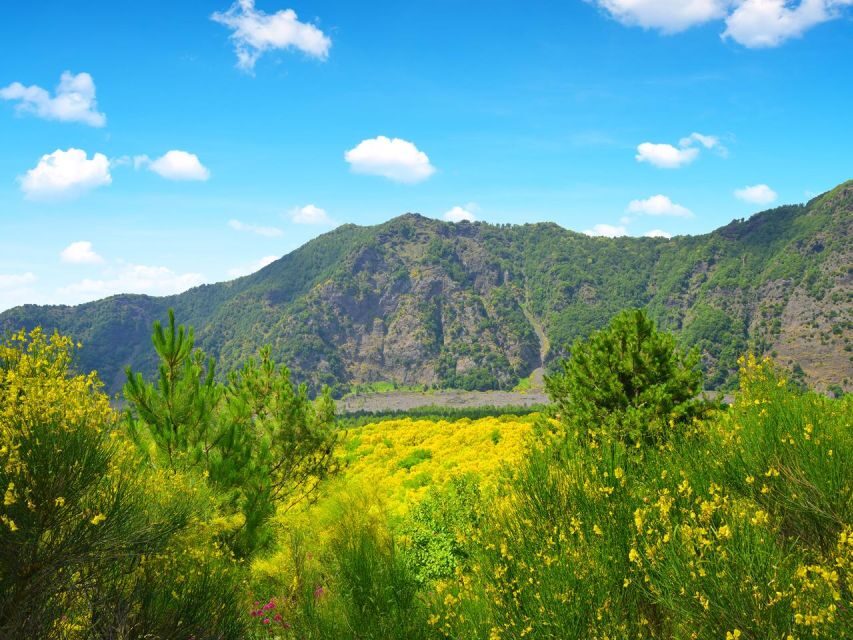
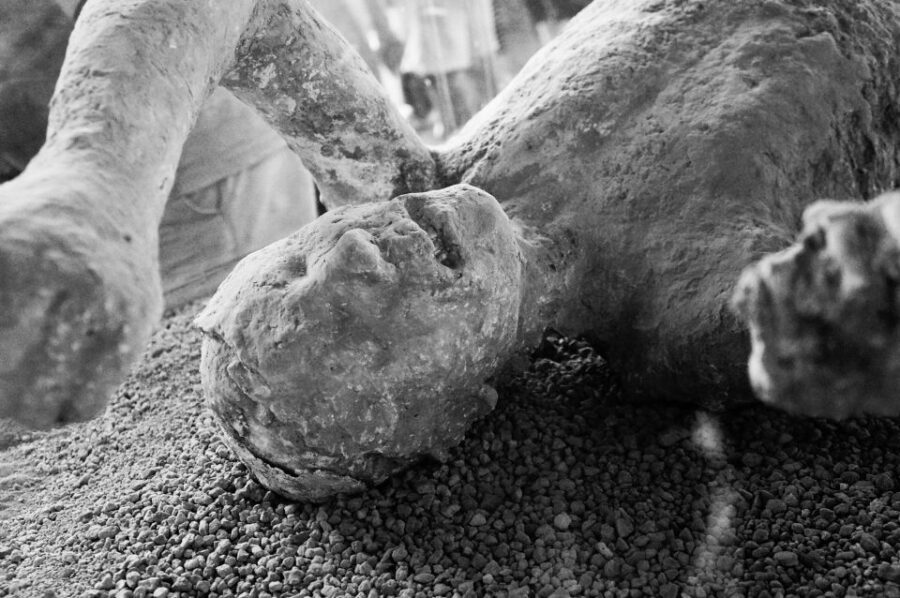
This is the classic Campania “power combo”: Pompeii and Herculaneum for the human scale of the tragedy, plus Vesuvius for the cause. Together, they show you how the eruption froze buildings, art, and street life in time—then adds the full force of the volcano’s landscape into the same story.
What I like most about this setup is the balance of big impact and personal pacing. You aren’t locked into one guided narration for the whole day. Instead, you get structured transport and tickets, and then you can spend your time inside the ruins how you want—standing close to frescoes, scanning building layouts, or just absorbing the scale.
Still, the day is packed. You should go in expecting you’ll be choosing what to see most carefully, because the itinerary doesn’t pretend you can do everything deeply at three separate UNESCO World Heritage areas.
You can also read our reviews of more tours and experiences in Naples.


Naples Pickup at Via Galileo Ferraris: Where the day starts cleanly
The meeting point is Via Galileo Ferraris, 40 (you can use coordinates 40.8505189, 14.2747942). The bus has the logo Around Vesuvio, and you’re picked up at Hotel Ramada on Via G Ferraris n.4.
Why this matters: it reduces the usual stress in Naples. Instead of arranging your own ride to the outskirts or hunting down a meeting spot, you start with a clear plan and a driver who handles the movement between sites.
The transfers are also part of the value. The itinerary includes multiple coach legs (about 40 minutes to the volcano, then short rides between Vesuvius, Herculaneum, and Pompeii, finishing with a return ride to the same meeting point). When everything runs on schedule, you get more time with the actual places rather than time fighting traffic.
One caution: bring only a little bag. Oversize luggage isn’t allowed, and the tour is built around a day where space on the coach matters.
Vesuvius National Park Time: Crater access plus real breathing room

Your volcano stop is built around time at Mount Vesuvius with 1.5 hours of free time. You’re transferred and stopped at about 1000 meters of height, and then you have time to visit the volcano and reach the crater area.
This is one of the best parts of the trip because Vesuvius isn’t just a photo stop. You’re actually given enough time to make it meaningful. In the reviews, people consistently praised the coordination and the fact that the whole day stayed smooth. The volcano portion is a big reason why: you get that combination of history and physical presence, which hits differently than looking at ruins alone.
A practical way to set expectations: this is not a long summit stay. You’ll have a window to do the crater-area visit, but your time afterward needs to stay efficient so you don’t feel rushed at the two archaeological sites.
Also note: the national park entrance ticket is included (listed as €11.68). That’s helpful because it avoids the extra step of managing park entry when you’re already dealing with transport and site timing.
Herculaneum: Why the smaller site can still feel huge

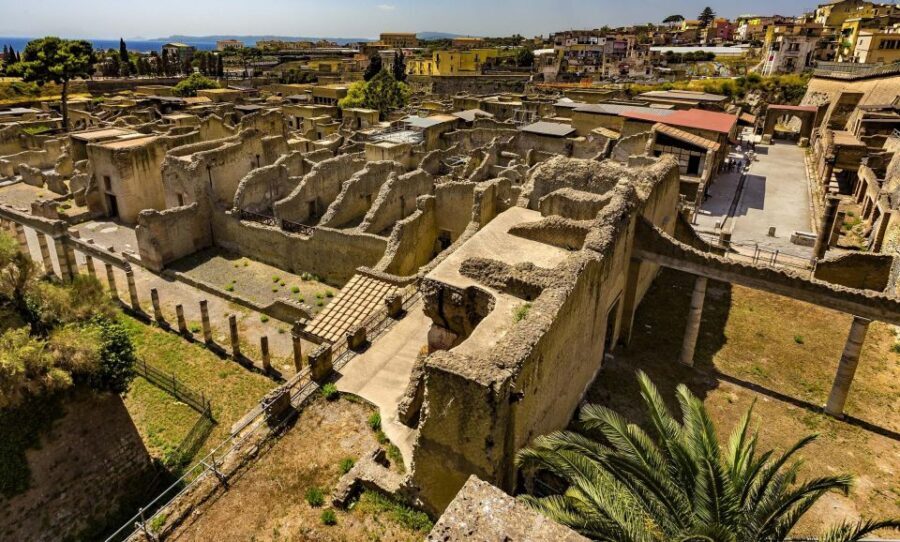
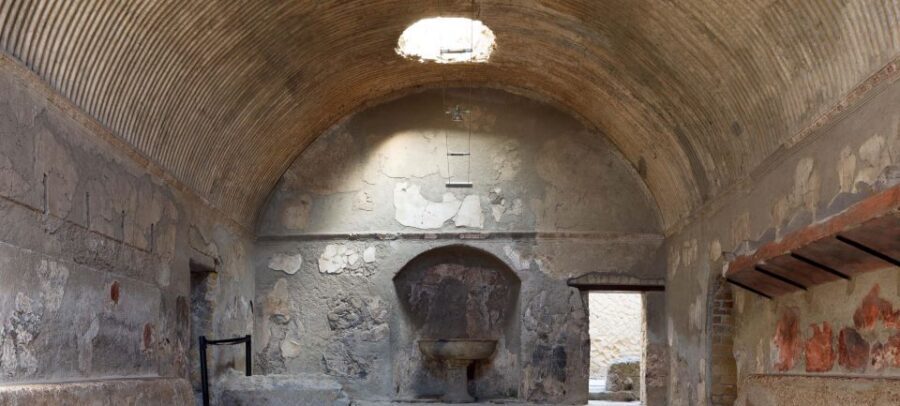
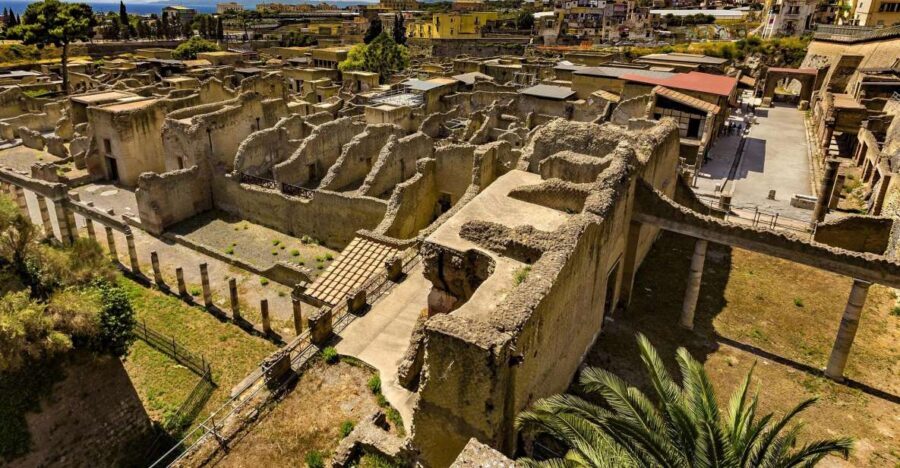
After the volcano, the next stop is Archaeological Site of Herculaneum with about 2 hours of free time. Herculaneum is famous for how much has survived from Roman life, and it’s also a key part of the same eruption story that made Pompeii so recognizable.
The value here is pace. Two hours is long enough to see a lot without turning every step into a checklist. If Pompeii feels overwhelming, Herculaneum can feel more digestible—still intense, but easier to take in at human scale.
The other advantage is that you’re there after the volcano, not before. That ordering helps your brain connect cause and effect: first the mountain that did the damage, then the town that got preserved.
One thing to keep in mind: the tour specifically mentions audio guides for Pompeii ruins only. So at Herculaneum, you’ll be relying on your own reading (or whatever you bring on your phone), plus whatever signage and context you find on site.
Pompeii Ruins With Audio Guide: A big site, a helpful system
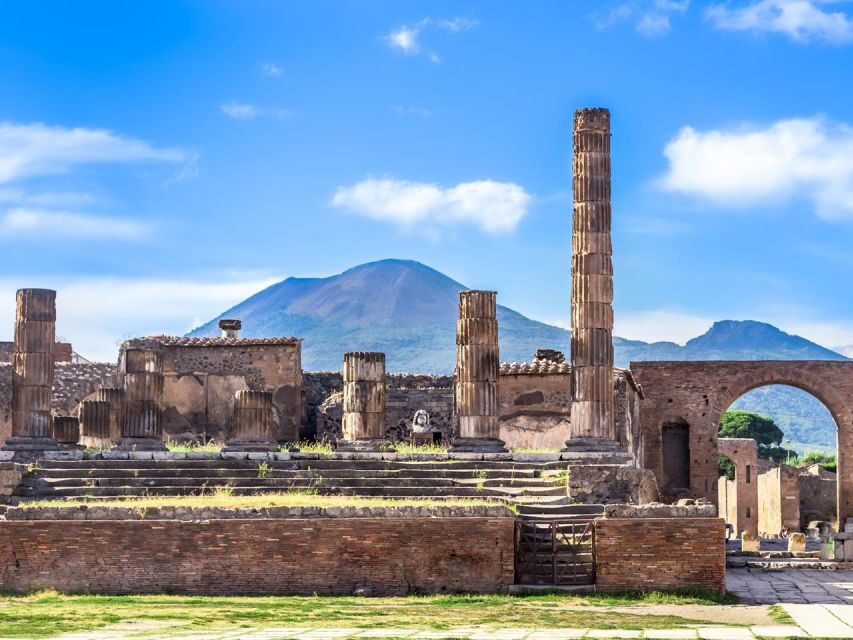
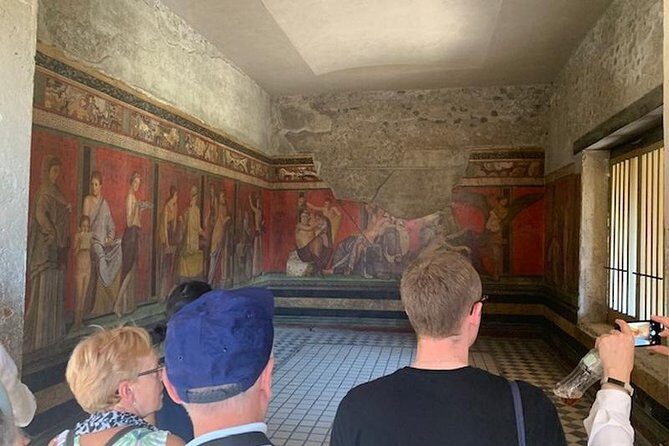
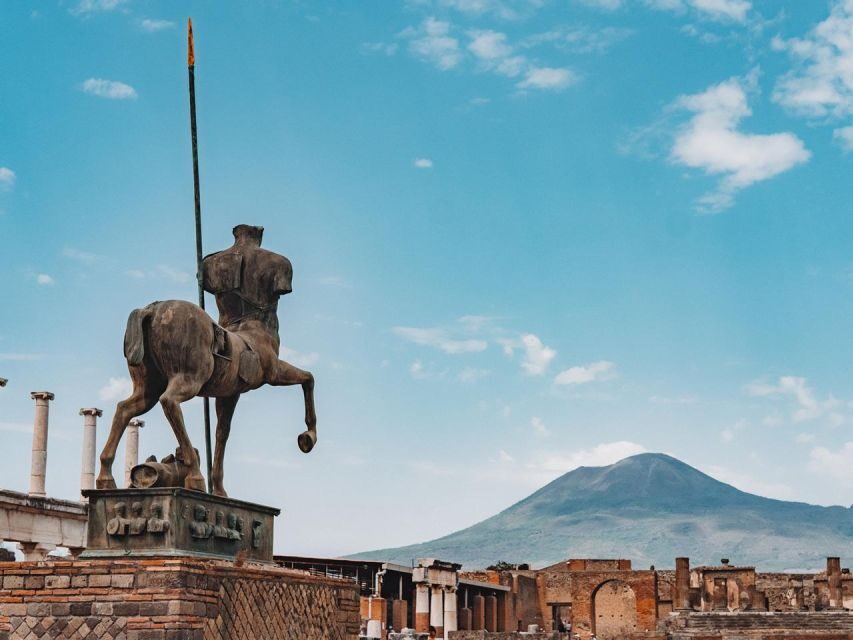
Your final archaeology stop is Pompeii Archaeological Site with about 2 hours of free time. Tickets for Pompeii are included (listed as €20.00), and the tour is set up to help you avoid ticket-line delays.
Pompeii is where the audio guide becomes especially useful. You’ll have an audio guide for Pompeii ruins, with languages including English, French, German, Italian, Spanish, and others (Chinese, Dutch, Hebrew, Portuguese, Russian are also available). It’s a solid way to keep moving without feeling totally lost, especially in a huge site where it’s easy to wander without a plan.
Two practical tips based on the rules you’re given:
- Bring your passport or ID card. The tour notes it’s important to have a valid ID document to rent the audio guide.
- Don’t overpack. Oversize luggage isn’t allowed, and you’ll want a bag that’s easy to manage during walk-throughs.
Pompeii also tends to be the emotional peak of the day for many people. In the reviews, the volcano visit plus Pompeii were called spectacular, and the organization between sites was praised. This tour is built to reproduce that smooth experience rather than having you split your day between separate ticket purchases and multiple transport plans.


The timing reality of 8.5 hours: How to make it feel like more
This tour runs about 8.5 hours, including travel and site time. Here’s the time rhythm you’re working with:
- Bus to the volcano area: about 40 minutes
- Vesuvius free time: 1.5 hours
- Ride to Herculaneum: about 30 minutes
- Herculaneum free time: 2 hours
- Ride to Pompeii: about 30 minutes
- Pompeii free time: 2 hours
- Return ride: about 40 minutes
That’s a lot of moving parts, and it can feel like a lot—because it is. One of the main considerations is that “three sites in one day” can be too much if you want to explore slowly or cover every major section. If your goal is detailed museum-style studying of every corner, you may feel shorted.
But if your goal is to check off Pompeii and Herculaneum and still stand near the crater area of Vesuvius, this structure makes sense. It’s basically an on-ramp into the region’s highlights: you see the big things, you get your bearings fast, and you avoid the time sinks that usually happen when you’re piecing transport together alone.
Price and value: What you’re really paying for

The price is listed as $152.93 per person. On paper, it’s not cheap, so the real question is what you get that you’d otherwise spend your time and energy coordinating.
Included in the cost:
- Pickup in Naples (Hotel Ramada, Via G Ferraris n.4)
- Transfers between all stops and return drop-off to the same meeting point
- Entrance tickets for the archaeological sites and Vesuvius National Park
- Pompeii entry ticket (listed as €20.00)
- Vesuvius National Park ticket (listed as €11.68)
- Audio guides for Pompeii ruins (in multiple languages)
- Booking fee
Not included:
- Food and beverages
- Person guide
So where’s the value? It’s in the combination: transportation + entry + audio + reduced friction. If you’ve ever tried to do Vesuvius and both ruins by yourself, you know how quickly your day can collapse into logistics. Paying for a structured plan often saves you hours, and that matters when the day is already limited.
One more angle: because food isn’t included, you should expect extra spending there. The upside is you keep control over what and where you eat, instead of being pushed into whatever meal plan comes with the tour.
Practical stuff that affects your day (ID, luggage, and pacing)
A few rules can make or break how smooth your day feels:
- Bring passport or ID card. The audio guide rental specifically calls out needing a valid ID document.
- Keep luggage small. Oversize luggage isn’t allowed, only a little bag.
- Not for everyone: the tour is not suitable for people with mobility impairments.
- Driver English is included, and the audio guide languages for Pompeii are broad. If you speak one of the listed languages, you’ll be set.
If you’re the type who likes to plan ahead, pick your must-see priorities for Pompeii and Herculaneum before you arrive. With only about two hours at each site, your best strategy is to choose a few targets and move on if your time is running out.
And if you’re someone who hates waiting, the fact that the tour includes a skip-the-ticket-line approach can really help. When you land in a busy place, every minute you save matters.
Who should book this tour, and who should skip it
This is a great match if:
- you want a full day with the biggest Campania hits in one go
- you don’t want to worry about public transport or arranging separate entries
- you like using audio guides to keep your pace while still learning the basics
It might not be the best fit if:
- you want slow, detailed exploration at one site for hours
- you’re counting on a person guide to explain everything on-site (a person guide isn’t included)
- you need mobility-friendly accommodations (the tour says it’s not suitable for mobility impairments)
Should you book? My straight answer
If your time in Naples is limited and you want Vesuvius plus both major ruins without turning the day into logistics, I think this is a solid booking. You’re paying for organization, tickets, and transportation, and the schedule gives enough free time to make each stop feel worthwhile.
Just go in honestly expecting a packed day. If you want to linger like a slow traveler, look for options that focus on one site at a time. If you want the big highlights with a plan, this one delivers.
FAQ
How long is the trip?
It lasts about 8.5 hours.
Where does the tour start in Naples?
The meeting point is Via Galileo Ferraris, 40 (coordinates: 40.8505189, 14.2747942). The bus has the logo Around Vesuvio.
How many stops are included?
You visit Mount Vesuvius, the Archaeological Site of Herculaneum, and the Pompeii Archaeological Site.
Are entrance tickets included?
Yes. Entrance tickets for the archaeological sites and Vesuvius National Park are included, including the listed Vesuvius National Park ticket (€11.68) and the Pompeii ticket (€20.00).
Is an audio guide included?
Yes. Audio guides are included for visiting Pompeii ruins, and they are available in multiple languages.
Do I need an ID for the audio guide?
Yes. You’re asked to bring a valid passport or ID card, and the tour notes it’s important to have a valid ID document to rent the audio guide.
Is food included?
No. Food and beverages are not included.
Is there a person guide?
No. A person guide isn’t included.
Is the tour suitable for people with mobility impairments?
No, it is not suitable for people with mobility impairments.
What luggage can I bring?
Oversize luggage isn’t allowed. The tour notes that you should bring only a little bag.