REVIEW · OSTIA ANTICA TOURS
Ostia Antica Private Guided Tour with Optional Transfer from Rome
Book on Viator →Operated by Raphael Tours & Events · Bookable on Viator
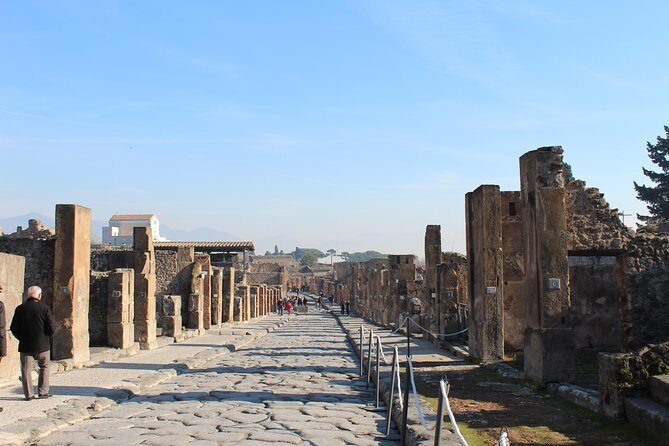
Roman ruins feel strangely lived-in. Ostia Antica was Rome’s port, and this tour leads you through the big sights like Porta Romana and the Decumanus Maximus. I love the way a local expert keeps the walk readable, so the site doesn’t feel like scattered piles of stone.
I also like the focus on details you can actually see up close—especially the Baths of Neptune and its black-and-white mosaic work. You’re not just looking, you’re learning what daily life may have felt like.
One consideration: the walking is real. Expect about 2 km over uneven ground, so wear comfortable shoes and plan for breaks.
In This Review
- Key things I’d plan around
- Why Ostia Antica makes a strong Rome day trip
- How the pace and walking distance really work
- Starting at the ticket office: Porta Romana and the Decumanus Maximus
- The Terme di Nettuno area: amphitheater, baths, and mosaics
- Temple of Rome and Augustus, plus the guild square and Capitolium
- Forum and the big idea behind how the ruins are arranged
- Optional transfer from Rome: planning your return without stress
- Value for $318.36: what’s included, and why that changes the math
- Morning versus afternoon: when you’ll enjoy Ostia most
- Who this private guided tour is best for
- Should you book this Ostia Antica private guided tour?
- FAQ
- How long is the Ostia Antica private guided tour?
- Is the tour private or shared?
- What language is the guide?
- How much walking is involved?
- Where does the tour start?
- What’s included in the price?
- Is food included?
- Is hotel pickup or drop-off included?
- Can I choose a morning or afternoon departure?
- Can I cancel for a full refund?
Key things I’d plan around
- Skip-the-line entry is built in with an admission ticket included
- 2.5-hour guided walk with breaks, for roughly 2 km total
- Main-street route through Porta Romana and the central boulevard of Decumanus Maximus
- Neptune area highlights: Terme di Nettuno, amphitheater remains, and Neptune-themed mosaics
- Public life in stone: Temple of Rome and Augustus, Square of the Guilds, and the Capitolium
- Morning or afternoon departures so you can match the day to your Rome schedule
Why Ostia Antica makes a strong Rome day trip
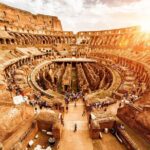
If your Rome itinerary already includes Colosseum-type drama, Ostia Antica offers a different kind of punch: a Roman port city that now sits quietly, like a set that stopped mid-scene. The scale is big enough to feel like a real town, but the tour is short enough that you still finish with energy for the rest of your day in Rome.
What makes this experience worth your time is the way you move. You start at the Ostia Antica ticket office, then follow a route that mirrors how people would have traveled through town—through the monumental gate, down the main boulevard, and toward the civic and religious heart. That structure turns the ruins into a story with direction, instead of a map you have to solve on your own.
A private guide also matters here. In a place this spread out, having someone point out what’s important helps you avoid the common mistake of only noticing the most obvious blocks. You end up with a clearer sense of Roman daily life: where people gathered, how they relaxed, and what they believed mattered.
You can also read our reviews of more guided tours in Rome



How the pace and walking distance really work
This is a roughly 3-hour experience, with a 2.5-hour walking component. The good news is that the tour includes breaks so you can sit, absorb the scale, and catch your breath. The tour involves about 2 km of walking, which is manageable for many people, but you’ll still want footwear with grip.
Ostia Antica can mean dusty paths, uneven surfaces, and long stretches between major highlights. If you’re the type who wants photos at every stop, you’ll probably slow the pace a bit—so it’s smart to treat the guided stops as your “must-see” list and let the smaller details happen between them.
If you’re traveling with kids, the tour data says children must be accompanied by an adult. With younger legs, you’ll likely need to lean into the guide’s pacing and take the built-in breaks seriously. Think of it as a history walk with rests, not a sprint.
Starting at the ticket office: Porta Romana and the Decumanus Maximus
Your tour starts at the Ostia Antica ticket office at Viale dei Romagnoli in Lido di Ostia. From the first moments, you’re set up to feel oriented fast, which is exactly what you want at a site where many streets are now abandoned.
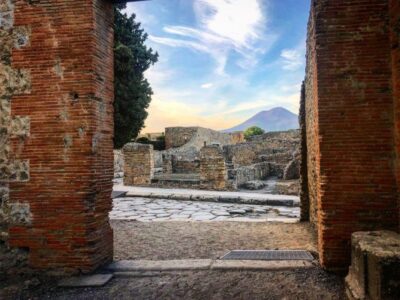
One of the first major impressions is Porta Romana, a monumental gate that frames the transition from the modern world into the old one. Standing near a structure like this, you can understand why a city would announce itself at entry points. It’s not just a background wall—it’s a statement about how important movement in and out of the city was for trade and daily life.
Then you move onto the central boulevard of Decumanus Maximus. This is the kind of main street that helps you visualize the city’s rhythm: pedestrians, commerce, and the constant “go here, then there” logic of an active port. With your guide explaining what you’re seeing as you walk, you’ll get more out of the street alignment and the surviving architectural elements than you would flipping through captions after the fact.
The Terme di Nettuno area: amphitheater, baths, and mosaics
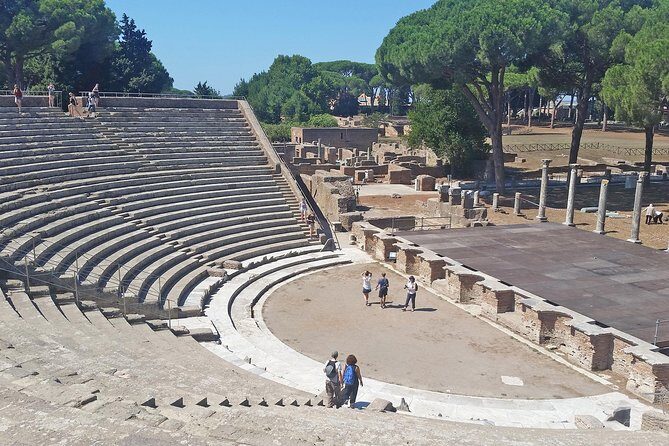
Ostia Antica’s relaxed, everyday side shows up strongly around the thermal and entertainment zones. A key stop is the remains of the Terme di Nettuno amphitheater, along with the thermal baths nearby. Even in ruins, these spaces communicate how Romans spent leisure time.
You’ll get a chance to peek into the thermal baths, which is a big deal because baths weren’t just about cleanliness. They were social spaces, conversation hubs, and part of the city’s public culture. Seeing the layout and hearing how it functioned helps you understand why cities invested in these buildings.
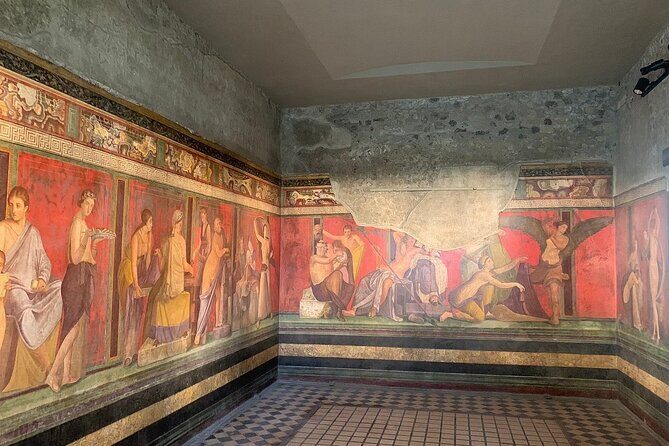
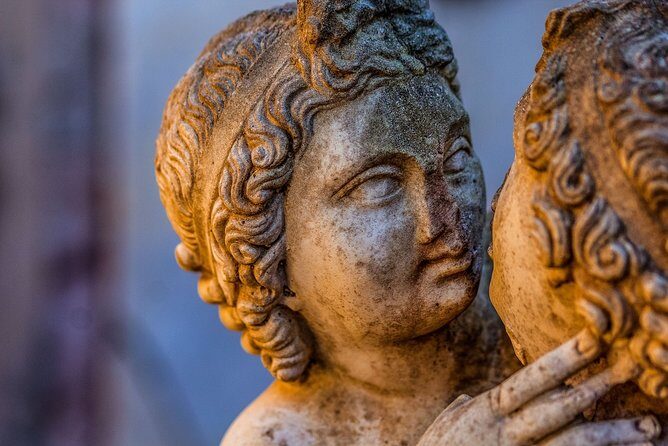
Then comes one of the most memorable visual moments: the black-and-white mosaic work connected to Neptune themes. The tour highlights the mosaics of Neptune (and related figures), which is the sort of decorative detail that makes the site feel unexpectedly human. When you look at mosaics like these, you stop thinking only in terms of grand monuments and start thinking about taste, identity, and storytelling in everyday rooms.
If you like archaeology that connects to real routines—work, travel, rest—this portion of the walk is where you’ll feel the site click.
Temple of Rome and Augustus, plus the guild square and Capitolium
After the baths and leisure zone, the tour shifts toward the civic and spiritual “center of gravity” of the city. You’ll see the Temple of Rome and Augustus, a powerful reminder of how religion and politics blended in the Roman world.
This stop isn’t just about admiring columns or fragments. It’s about understanding why a place like Ostia mattered to the empire. As a port city, it was tied to movement of goods and people. That makes symbols of Roman authority and worship especially meaningful.
Next, the route includes the Square of the Guilds. Even if only portions survive, a guild square hints at the groups that made the city run—people organizing trade, labor, and shared interests. It’s one more piece in building the mental picture of how a port community functioned beyond shipping.
Finally, you’ll encounter the Capitolium, which rounds out the civic-religious theme. It’s the kind of site that helps you understand why these cities were built as more than marketplaces. They were cultural machines, designed to tell people where they belonged.
You can also read our reviews of more private tours in Rome



Forum and the big idea behind how the ruins are arranged
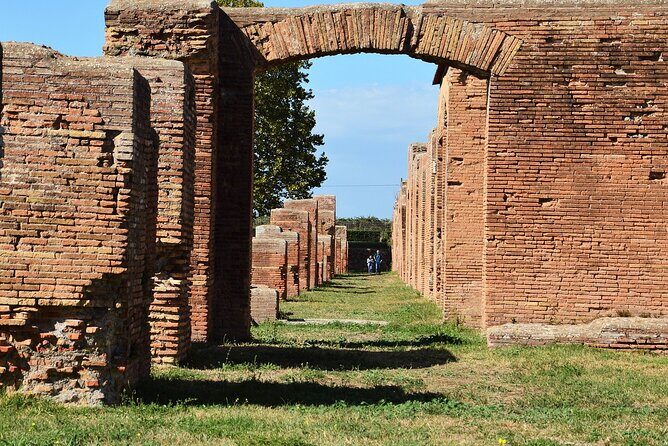
Near the center of the experience, you’ll get time around areas tied to the forum—the once-active hub of city life. The tour’s narrative approach helps you connect dots: streets funnel into public spaces, public spaces connect to temples and institutions, and daily life spills between them.
This matters because Ostia Antica can look confusing if you treat it like a checklist of monuments. Instead, you’ll see how the city’s layout shaped movement and social behavior. You’re basically learning how the built environment coached people: where to go for public affairs, where leisure happened, and how the city organized itself around belief and commerce.
One benefit I really value with a good private guide is that they explain the “why” while you’re still standing in place. At Ostia, that immediacy makes a difference. The site is quiet now, so the explanation is what brings the bustle back into focus.
Optional transfer from Rome: planning your return without stress
The tour includes an end point that works with your chosen return plan. After the guided walking portion, you can either return to the train station or meet your driver for the return journey to Rome, depending on how you arrange the optional transfer.
This is worth thinking about because transit fatigue can ruin a good day trip. If you’d rather keep things simple, the option to meet a driver can reduce hassle after you’re already tired from walking. If you prefer flexibility and you’re comfortable with local transit, returning via train can keep the schedule in your hands.
Either way, your guided time at the site remains the focus. You’re not stuck with a long, unplanned gap between the last ruins stop and getting back to Rome.
Value for $318.36: what’s included, and why that changes the math
The price is listed as $318.36 per person, and that number looks steep at first glance. But for this kind of experience, the real question is what’s bundled versus what you’d pay separately.
What you get includes:
- A local guide
- A private tour (only your group participates)
- Skip-the-line tickets
- An admission ticket included in the tour
That combination matters in Italy, where time waiting at entrances can eat into your day. It also means you’re buying more than entry—you’re buying interpretation and pacing.
What you don’t get is also clear: no hotel pickup/drop-off and no food or drinks. So if you’re coming from a hotel in Rome, you’ll want to factor in how you’ll reach Lido di Ostia (or whether you choose the optional transfer).
In practical terms, I’d see this as good value if:
- You’re traveling as a couple or family and want a true private guide
- You care about understanding the buildings, not just seeing them
- You’d rather spend money on guidance than time lost to planning
If you’re solo and purely price-sensitive, private tours can feel harder to justify. But here, the skip-the-line entry plus a focused 2.5-hour guided route is a solid way to “buy back” time.
Morning versus afternoon: when you’ll enjoy Ostia most
The tour offers choice of morning or afternoon departure, which is helpful in Rome. Your main enemy at any outdoor site is weather. This experience specifically calls out that it requires good weather.
So I’d match your departure to your energy level and your plans. A morning start can feel easier because you’re fresh for the 2 km walk. An afternoon start can work well if you like a slower rhythm and you plan a light morning in Rome before heading out.
Either way, bring the same basics: comfortable shoes, water, and a mindset that ruins still need breaks. Your guide’s pace includes pauses to sit and enjoy the site, so use that time rather than rushing.
Who this private guided tour is best for
This is a great fit if you want a guided Roman-port story with real structure. You’ll likely enjoy it most if you fall into one (or more) of these groups:
- History lovers who want Roman daily life explained, not just named landmarks
- Travelers who prefer private pacing over joining a larger crowd
- People who enjoy archaeology when it’s connected to behavior: leisure, trade, belief, and public life
- Families that can keep kids with an adult and stay comfortable on a 2 km walk
It may be less ideal if you’re looking for minimal walking or a totally stroller-friendly day, because the site involves uneven ground and real walking time.
Language is English, and the tour notes that most travelers can participate. That’s reassuring, but still treat the walking distance seriously.
Should you book this Ostia Antica private guided tour?
I’d book it if you want to leave with understanding, not just photos. The private guide format, the skip-the-line entry, and the focused route through Porta Romana, Decumanus Maximus, Neptune-related baths and mosaics, and the Temple of Rome and Augustus make the time feel efficient.
I’d think twice if you’re traveling with very limited mobility needs or you’re hoping for a mostly flat, short stroll. The walk is about 2 km, and Ostia is an outdoor archaeological park with ground that won’t feel like a paved sidewalk.
If you do book, aim to show up with comfortable shoes and a little patience for breaks. This is exactly the kind of day trip where a guide turns silence into context—and that’s what makes Ostia Antica stick with you long after you head back to Rome.
FAQ
How long is the Ostia Antica private guided tour?
It’s approximately 3 hours total, including about a 2.5-hour guided walking tour.
Is the tour private or shared?
It’s a private tour/activity, and only your group participates.
What language is the guide?
The tour is offered in English.
How much walking is involved?
About 2 km of walking is involved, with breaks to sit and enjoy the site.
Where does the tour start?
Meet at the Ostia Antica ticket office at Viale dei Romagnoli, Lido di Ostia RM, Italy.
What’s included in the price?
Included are the local guide, private tour, skip-the-line tickets, and an admission ticket.
Is food included?
No. Food and drinks aren’t included.
Is hotel pickup or drop-off included?
No. Hotel pickup and drop-off aren’t included.
Can I choose a morning or afternoon departure?
Yes, you can choose either a morning or afternoon departure.
Can I cancel for a full refund?
Yes. You can cancel up to 24 hours in advance for a full refund, and the experience may also be rescheduled or refunded if it’s canceled due to poor weather.