REVIEW · OSTIA ANTICA
From Rome: Ostia Antica 4-Hour Guided Tour
Book on GetYourGuide →Operated by Roma Experience Tours · Bookable on GetYourGuide
Rome’s ancient port is closer than you think.
Ostia Antica feels like a real time capsule—Roman ruins laid out in streets, shops, tombs, and public buildings. I love that you get a quick, no-stress trip from the city (about 20 minutes by train), and I love how the guide brings the site to life with specific stops like the Roman theater and the Capitolium. One possible downside: food and drinks aren’t included, so plan to use the on-site restaurant/cafe or bring a light snack for the day.
This is the kind of half-day tour that works because it’s structured but not rushed. You’ll follow an expert guide through the “mouth” of the Tiber area—where this port city once processed goods headed to Rome—and you’ll see some of the best-preserved parts of the ancient world in a setting that often feels calmer than the more famous sites. If your walking pace is slow, budget extra time in the Necropolis area and wear good shoes; the ground can be uneven.
In This Review
- Key highlights to look forward to
- Getting from Rome to Ostia Antica without wasting a day
- The port city at the mouth of the Tiber: why Ostia feels different
- The Roman theater that still does its job
- Capitolium, Baths of Neptune, and the House of Diana: seeing public life in layers
- The Capitolium: politics made stone
- Baths of Neptune: where leisure met Roman engineering
- House of Diana: private luxury with a story
- Shops, mosaics, and how daily life survived the centuries
- The brothel and Rome’s so-called sinful side (handled thoughtfully)
- The Necropolis tombs: when the tour gets quiet and eerie
- Well-preserved temples and the feeling of walking through time
- How the 4.5 hours will feel in real life
- Price and value: when $648.74 per person makes sense
- Who should book this Ostia Antica tour
- Should you book Ostia Antica with a private guide?
- FAQ
- How long is the Ostia Antica tour from Rome?
- What’s included in the price?
- Is food and drinks included?
- Is this a private group tour?
- What languages is the guide available in?
- What do I need to bring?
- Is the tour suitable for wheelchair users or mobility impairments?
Key highlights to look forward to
- A train ride of about 20 minutes from Rome, making a half-day feel genuinely doable
- The well-preserved Roman theater, still tied to occasional performances
- Capitolium, Baths of Neptune, and the House of Diana, clustered so you can connect the city’s public life
- Ancient shops and mosaics, including a fish shop with striking mosaic work
- The Necropolis tombs, where the atmosphere turns quiet and eerie fast
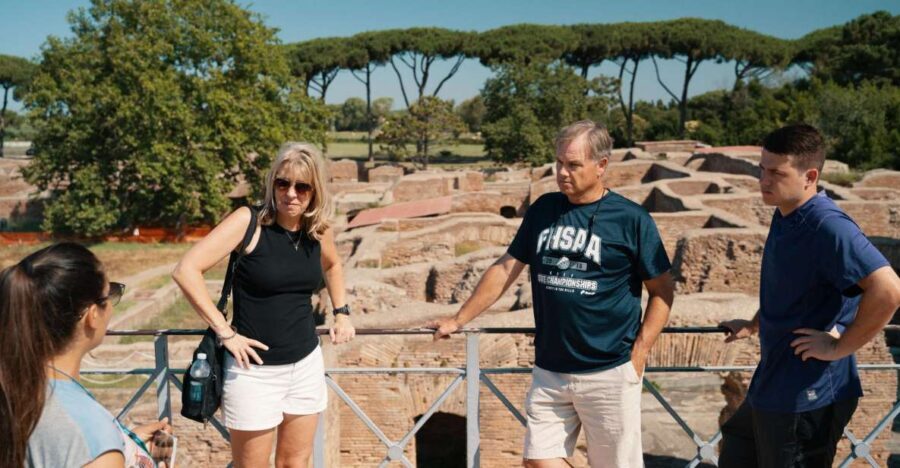
- Private group feel, with a guide who can pace to your questions (including named guides like Valeria)
Getting from Rome to Ostia Antica without wasting a day
The best part of this outing is how little it depends on logistics. You’ll start in Rome and take the train to Ostia Antica in under 20 minutes—fast enough that you’re not losing your morning (or afternoon) to transit. From a value point of view, this matters: time is the one thing you can’t buy back when you’re touring Rome.
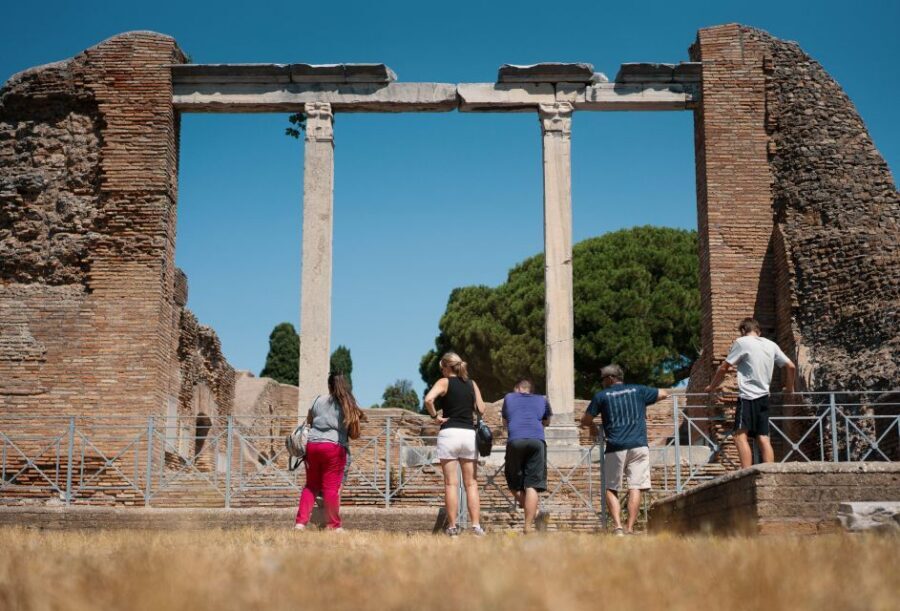
Once you arrive, the guided format helps you get oriented immediately. Ostia Antica is big, and it’s easy to wander in circles if you’re doing it on your own with just a map. With a guide, you move from one “story” to the next: the port city’s role in shipping and daily life, then the public monuments, then the more private and darker corners like the necropolis and the brothel area.
The tour is also set up to reduce friction. You have admission included, plus train tickets and skip-the-ticket-line access. That combination is exactly what you want on a half-day: you should spend your energy looking at ruins, not waiting in queues.
One practical tip from your end: the tour runs about 4.5 hours, so bring realistic expectations. You’ll see a lot, but you won’t have unlimited time to linger at every mosaic or inscription. If you like photos, take short bursts and keep moving—then return to the best spots only if time allows.
You can also read our reviews of more tours and experiences in Ostia Antica.

The port city at the mouth of the Tiber: why Ostia feels different
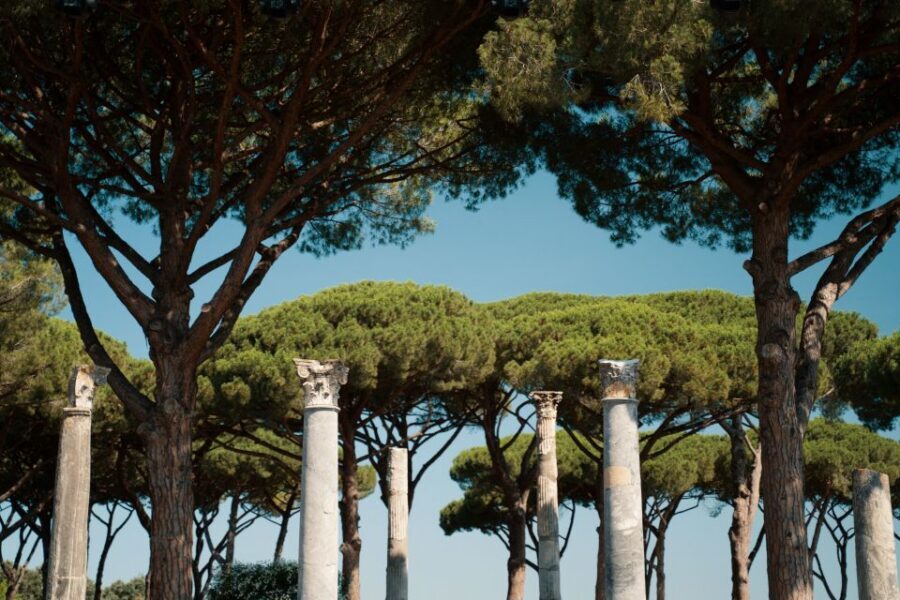
Ostia Antica was Rome’s gateway—a city that acted like a gatekeeper for goods and people entering the empire. It sat at the “mouth” of the River Tiber, which is a simple phrase until you understand what it meant: shipping and processing happened here before life returned to Rome’s streets.
A good guide doesn’t just point at buildings; they connect them. Expect to hear how Ostia handled the movement of supplies from far away: grains from Sicily, marble from Africa, slaves from Asia, and wine from Spain. The point isn’t to memorize trade routes. It’s to understand why the city looked and functioned the way it did. When you stand in a port-focused urban layout, you start seeing the logic behind markets, shops, warehouses, and public spaces.
Ostia also has a quality that I really appreciate in archaeological sites: it’s readable. Streets and neighborhoods are laid out in a way that makes daily life feel tangible rather than abstract. You’re not just viewing isolated monuments; you’re walking through a functioning town-world.
The tour description also frames Ostia as often less crowded than Pompeii, and that’s a big deal for how the ruins land. When crowds are lower, you can actually slow down in the quieter corners—especially around tombs and interior spaces.
The Roman theater that still does its job
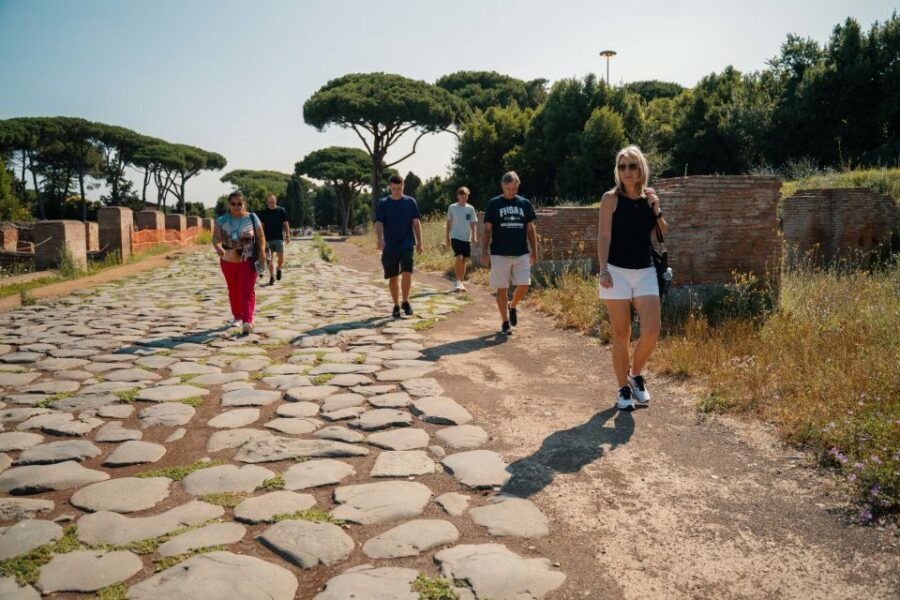
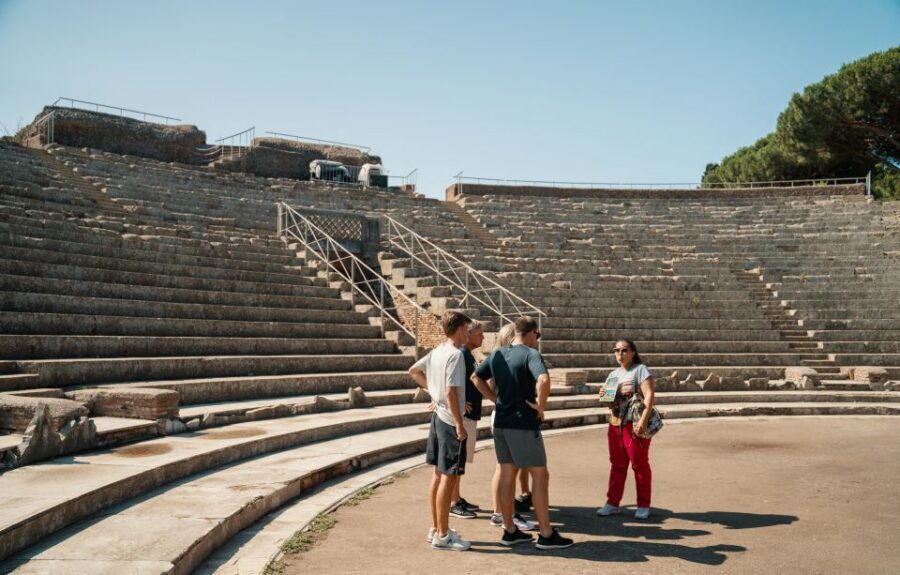
If you only remember one stop, make it the Roman theater of Ostia Antica. The reason this theater impresses is basic: it’s well preserved and still relevant. The tour experience highlights that it’s used for occasional performances today.
Stand inside and you’ll see the brilliance of Roman entertainment design: visibility, acoustics, and layout meant large crowds could experience the same event together. Even if you don’t catch a performance on your visit, the shape of the space does the work for you. You get a strong sense of how public life operated—not just for politicians, but for everyday residents and visitors.
What I like most about this stop on a guided tour is the context. A guide will help you connect what you’re seeing to the wider city: entertainment in a port city wasn’t an afterthought. People came and went through Ostia, and a theater gave the community a shared rhythm.
Drawback-wise, this stop depends on where the day takes you next. If it’s a high-walking day, you may feel a bit rushed around the theater. It’s worth slowing your pace here if you care about photos, because this is the kind of place where the angle matters.
Capitolium, Baths of Neptune, and the House of Diana: seeing public life in layers
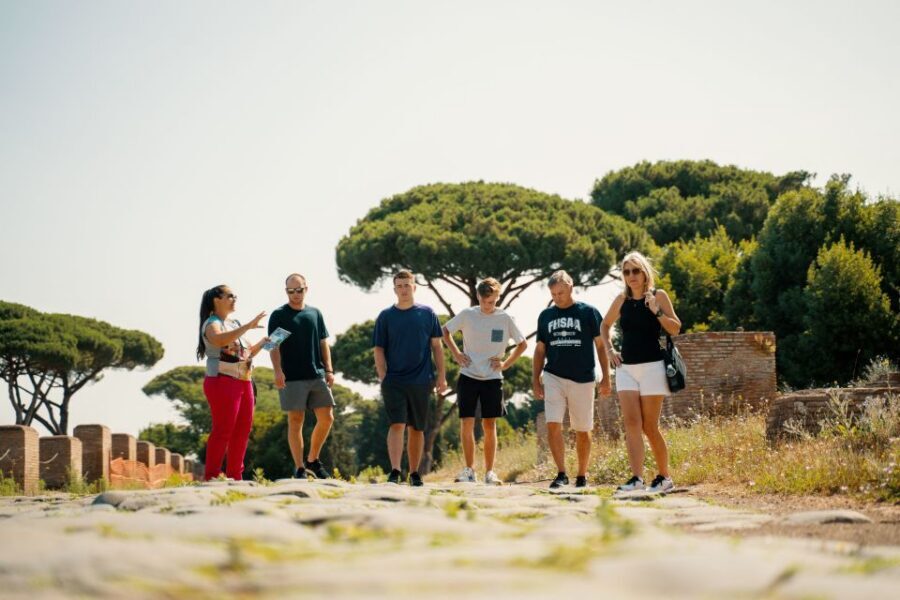
Ostia’s heart of public life is where the city turns from “daily town” to “Roman power.” On this tour, you’ll hit three big anchors: the Capitolium, the Baths of Neptune, and the House of Diana.
The Capitolium: politics made stone
The Capitolium is central to Roman public religion and civic identity. In a port city, it’s also a reminder that Ostia wasn’t some remote trading outpost. It was fully part of the empire’s official world.
A guide’s job here is to keep it from becoming just “another temple.” You’ll likely hear what the Capitolium represents and why it sat at the center of public life. Once you understand that, the buildings don’t feel random—they feel like the city’s operating system.
Baths of Neptune: where leisure met Roman engineering
The Baths of Neptune add another layer: Roman leisure. Even without going into technical details, you can read the purpose in the space—bathing and social time as a daily rhythm. Roman baths were where people talked, relaxed, and built relationships.
If you enjoy architecture, this is a great moment to look closely. On a ruins visit, tiny surviving details help you “see” how something once worked. Just remember: baths areas can involve more walking on uneven surfaces, so keep your shoes on and your steps careful.
House of Diana: private luxury with a story
Then you’ll move into the House of Diana, which offers a different angle on Ostia. Houses like this help you understand that not everyone experienced the port city in the same way. A private home shows how wealth, taste, and household life looked in Roman society.
The tour promises entry into private houses of former citizens, and that’s a big reason this experience works better than a quick drive-by. When you’re allowed inside, you get a more human scale view of the past.
Shops, mosaics, and how daily life survived the centuries
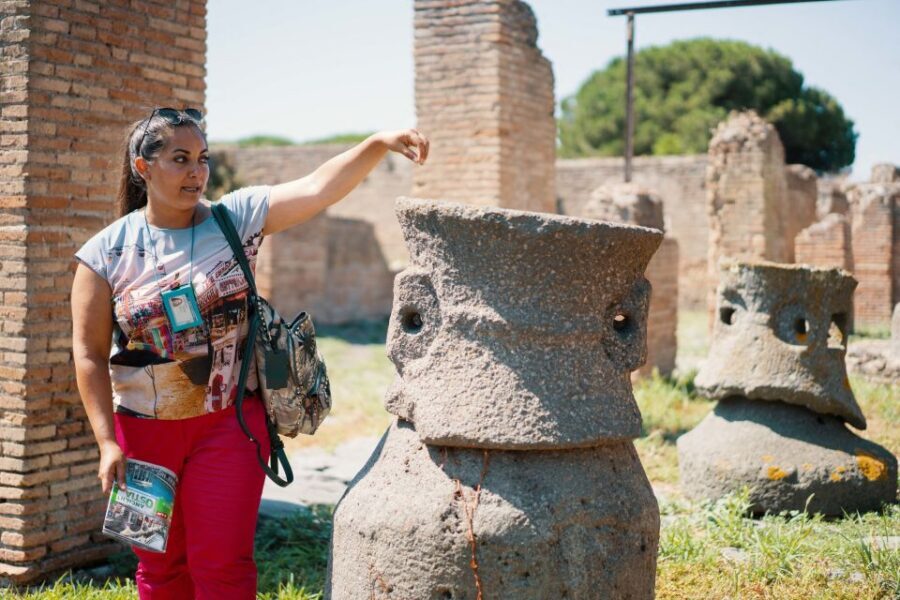
One of my favorite parts of any archaeological visit is when it gets specific about everyday behavior. Ostia delivers that through shops and small spaces that feel practical.
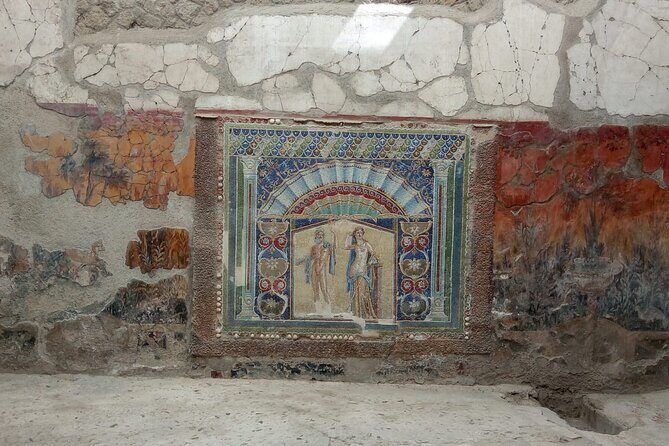
You’ll see ancient shop areas that remain intact—like a fish shop with mosaics that are described as stunning. A fish shop might sound ordinary until you realize what a mosaic says: money, craft, and pride. People cared about branding their businesses, even 2,000 years ago.
This is also where the port-city story becomes more than trade facts. The guide ties the presence of imported goods to local processing and retail. You start to see Ostia as a real workflow: supplies arrive, work happens, goods sell, and life continues.
If you like taking photos, give yourself a little time here. Mosaics and shop layouts often reward close looking. On a half-day tour, you won’t stare for hours—but you can still capture the “wow” details if you stay present for a few minutes at each stop.
The brothel and Rome’s so-called sinful side (handled thoughtfully)
Ostia doesn’t only show temples and theaters. The tour also includes a look at Rome’s “sinful side” via the local brothel area.
This can be a tricky topic at ruins, because it’s easy to turn it into sensational tourism. The guided approach is what keeps it useful. You’re not just seeing a label. You’re getting cultural context—how the city made room for realities of adult life, and how public and private economies mixed in Roman society.
If you’re traveling with teens or prefer “cleaner” narratives, you’ll want to know this is part of the planned stops. Still, it’s framed as a historical look at the realities of the port city, not shock value.
The Necropolis tombs: when the tour gets quiet and eerie
The Necropolis is where Ostia shifts mood. Tombs can be powerful on their own, but here the description leans into the feeling: eerie, quiet, and unsettling in a good way.
Why that matters: museums can present death as a concept. In a necropolis, death becomes architecture and placement. You can read how communities organized memory and passage.
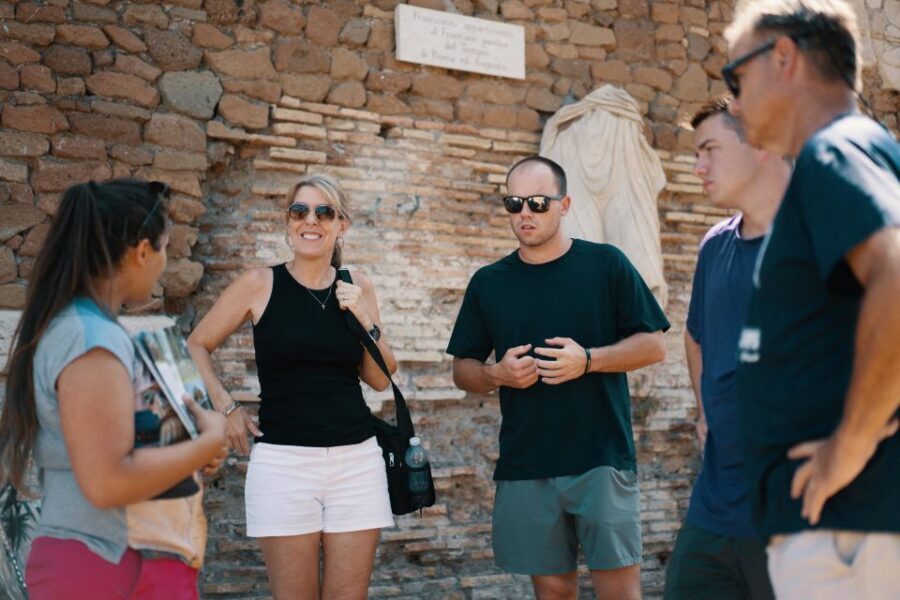
On a guided tour, the Necropolis visit is especially valuable because the guide helps you interpret what you’re seeing. Otherwise, tombs risk becoming just “stone shapes.” With context, they become part of the city’s full story—from markets and baths to the way people planned for legacy.
Practical note: this area often encourages slower walking and careful footing. Keep your hat and water (if you’re bringing your own) ready, because even shaded ruins can feel warm in Lazio sun.
Well-preserved temples and the feeling of walking through time
Beyond the big hits, you’ll also discover remarkably well-preserved Roman temples and other monuments across the site. This is where Ostia earns its comparison to other famous places.
The key advantage is preservation plus layout. You’re not chasing scattered fragments. You’re walking through a connected urban fabric where multiple building types survive: religious spaces, entertainment, domestic areas, and commercial zones.
This makes it easier for you to build a “mental map” by the end of the tour. Instead of leaving with a list of sites, you leave with an understanding of how the city worked and why it mattered to Rome.
The half-day format also forces smart prioritization. You’ll hit the highlights that tie together the biggest themes: empire logistics, public power, daily commerce, and the quieter spaces people used to remember the dead.
How the 4.5 hours will feel in real life
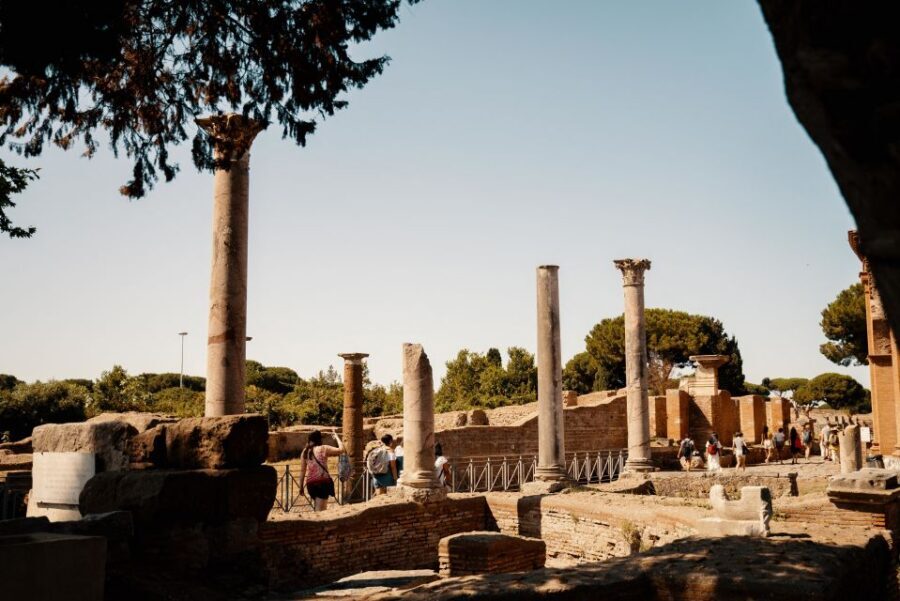
A 4.5-hour tour is long enough to feel satisfying, short enough to keep you from feeling cooked. You’ll have time to see a wide range of spaces—public monuments, houses, markets, theater, brothel area, and necropolis—without the pressure of a full day.
Still, it’s not a slow stroll. This is a ruin site, and you’ll be walking between stops over uneven ground. A “private group” format helps a lot because the guide can pace you, and you can ask questions without a herd moving behind you.
In one piece of feedback tied to the meeting point, the Piramide metro meeting spot was described as a bit dodgy for waiting. That’s a small detail, but it’s worth noting if you’re arriving early or meeting a group in a place that doesn’t feel comfortable. The good news is that pickup is built into the experience, so if you’re worried about meeting points, use the pickup option tied to your hotel or address.
Price and value: when $648.74 per person makes sense
At $648.74 per person, this isn’t a budget tour. The only way it makes sense is value-by-design, and this experience is built that way.
Here’s where the money goes:
- Guide expertise during the half-day, so you get meaning, not just photos
- Admission included, which saves time and avoids add-on surprises
- Train tickets included, which keeps logistics simple
- Private group feel, meaning you’re not fighting crowds or squeezing questions into spare seconds
- Skip-the-line access, which matters because waiting can chew up your limited time
Food and drinks aren’t included, but there is a restaurant and cafe inside the park, so you’re not stuck improvising.
So when is it worth it? If you want a guided experience that compresses a lot of top-quality stops into one clean outing, and you prefer not to wrestle with transit and self-guided priorities, this price can feel fair.
When is it less ideal? If you’re a solo traveler on a tight schedule and you’re happy with a self-paced visit, you may decide to spend less elsewhere. This tour is premium by nature because it’s private and guided from the city.
Who should book this Ostia Antica tour
This tour is a strong fit if you:
- Want a guided half-day instead of spending hours sorting out a self-route
- Like archaeology that shows real daily life, not just big monuments
- Prefer a private group pace where you can ask questions and move at a comfortable speed
- Care about well-preserved Roman sites like the theater and the Capitolium area
It may not be the best fit if:
- You need wheelchair access or have mobility limitations, since it’s listed as not suitable for wheelchair users and not suitable for people with mobility impairments
- You’re sensitive to guided discussions that include the brothel stop
Should you book Ostia Antica with a private guide?
My take: book it if you want your time in Ostia to feel guided, connected, and genuinely worth your half-day. The combination of included train + admission, skip-the-line, and a route that covers the big themes of port-city life makes this feel efficient, not just “expensive.”
If you care most about seeing the theater, learning how Ostia fed Rome, and getting context for places like the Necropolis and the brothel area, this is an excellent format. Just go in prepared to walk, bring comfortable shoes and a hat, and plan for your own lunch or a cafe stop since food and drinks aren’t included.
FAQ
How long is the Ostia Antica tour from Rome?
The tour duration is about 4.5 hours.
What’s included in the price?
The package includes the admission ticket, the train ticket, and a live guide.
Is food and drinks included?
No. Food and drinks are not included, but there is a restaurant and cafe inside the park for breaks.
Is this a private group tour?
Yes, it’s listed as a private group.
What languages is the guide available in?
The live guide is available in English, Arabic, French, and Spanish.
What do I need to bring?
Bring a passport or ID card, comfortable shoes, and weather-appropriate clothing. A hat is strongly recommended.
Is the tour suitable for wheelchair users or mobility impairments?
No. It’s listed as not suitable for wheelchair users and not suitable for people with mobility impairments.