REVIEW · NAPLES
From Naples: 2-Hour Herculaneum Kid-Friendly Tour
Book on GetYourGuide →Operated by Askos Tours · Bookable on GetYourGuide
If your kids think history means boring timelines, this tour changes the deal with a custom kid-focused guide and a fast-moving walk through an astonishingly well-preserved Roman town. What makes it work is the way your guide uses tablets, reconstructions, and multimedia to help young minds “see” what life looked like, not just read about it.
I especially love how the route targets the places kids naturally latch onto: houses with standout features, public spaces, and the famous House of the Skeletons. I also like the pacing of a 2-hour format, because it’s long enough to feel like you explored, without dragging into everyone’s lunch-bag meltdown.
One thing to keep in mind: it’s a walking tour with no transportation, so you’ll want to plan for walking time and crowds in the archaeological area.
In This Review
- Key things you’ll get from this kid-friendly Herculaneum tour
- Herculaneum for kids: what makes this tour different
- Where you start (and how easy the meeting is)
- A 2-hour walking loop: how to think about the pace
- The street-and-house route: stops that actually help kids connect
- Northern Cardo: getting your bearings fast
- House of Neptune and Amphitrite: a story-friendly house stop
- Casa del Salone Nero / House of the Black Saloon: when décor becomes a clue
- Casa dei Cervi / House of the Deer: fun at the name level
- House of the Skeletons: the big emotional wow moment
- Sacellum of the Augustales: a chance to talk religion without the lecture tone
- The public-life stops: where Roman daily life comes alive
- Using tablets and reconstructions: why it matters more than you think
- Price and value: what you’re paying for at $206.75 per person
- Practical tips for families on this kind of Herculaneum walk
- Who this tour is best for (and who might want something else)
- Should you book this kid-friendly 2-hour Herculaneum tour?
Key things you’ll get from this kid-friendly Herculaneum tour
- Kid-specialized guiding that keeps attention on the right details
- Tablets, reconstructions, and multimedia to make the buried city easier to understand
- A tour route built around Roman daily life, from markets to baths
- Big wow moments, like skeleton victims found at the beach area
- Focused stops in famous houses, including Neptune and Amphitrite and the Black Saloon
Herculaneum for kids: what makes this tour different
Herculaneum is the kind of place that can either “click” fast or completely flop, depending on how it’s presented. This tour is built around the reality that kids need concrete visuals, quick payoff, and a guide who can answer their questions without turning the whole thing into a lecture.
The core idea is simple. You don’t just walk past ruins. You move through the town layout and the guide points out how the space functioned for Roman life: where people ate, shopped, bathed, worshipped, and gathered. And because everything is well-preserved, your guide can take moments that feel confusing on your own and turn them into clear, kid-friendly stories.
The “secret sauce” is the use of tablets, reconstructions, and multimedia. It’s not there for decoration. It helps you bridge the gap between what’s visible now and what once stood here—so kids can picture houses, rooms, and street life rather than staring at stone and thinking, okay, so where’s the rest?
You can also read our reviews of more tours and experiences in Naples

Where you start (and how easy the meeting is)
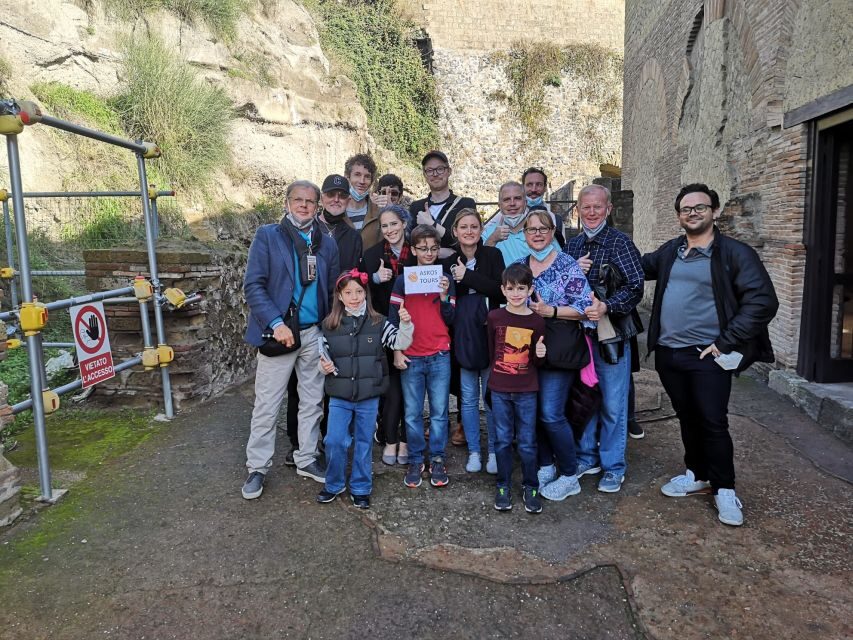
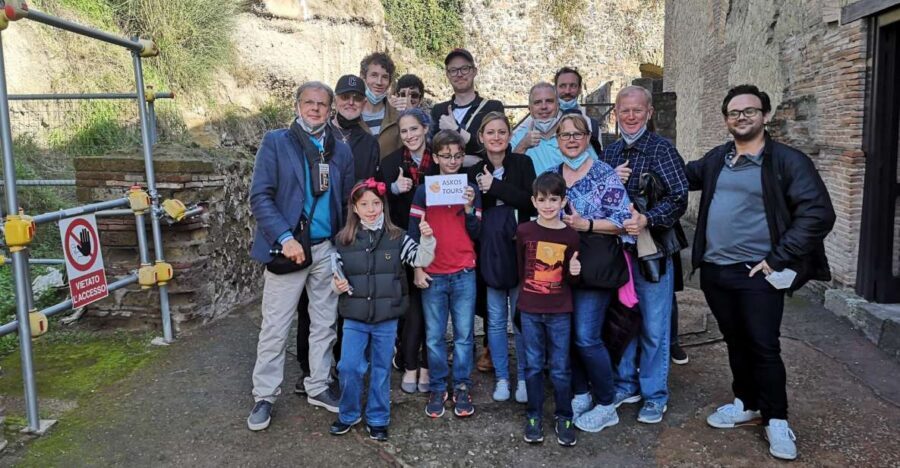
You meet at the ticket office of the Herculaneum ruins, at Via dei Papiri Ercolanesi, 21. Your guide will be holding a sign with your name so you can find the group without guesswork.
The good part of this for families: your first 10 minutes matter. No “meet at the fountain” scavenger hunt. No standing around translating directions while kids get restless. Once you’re matched up with your guide, the tour stays focused.
Also note the tour ends back at the same starting point. That makes planning easier—especially if you’re trying to time a later meal or nap.
A 2-hour walking loop: how to think about the pace
This is a 2-hour guided walking tour. No transportation is included, so you’re doing the exploring on foot.
That format matters. With a walking tour, the guide can keep momentum and adjust on the fly if kids want to see something again or if a group moves at a slower pace. It also means you’ll feel the geography: street, doorway, courtyard, public space—one step at a time.
Here’s what you can expect in terms of flow. The tour takes you through the Northern Cardo, the north-south road oriented in the town. From there, you get into standout houses and key public areas. The result is not just a list of buildings. It’s a “move through how a town worked” experience.
If your kids are younger, bring the mindset that you’ll get more from short attention bursts than from expecting them to stand still. The tour is designed for that, with the guide tailoring focus to children’s needs.
The street-and-house route: stops that actually help kids connect
One of the smartest things about this itinerary is that it mixes categories kids understand quickly: homes, food, baths, temples, and the big emotional history moments. Each stop builds a mental map, so Herculaneum starts to feel like a place where people lived—not a frozen set of stones.
Northern Cardo: getting your bearings fast
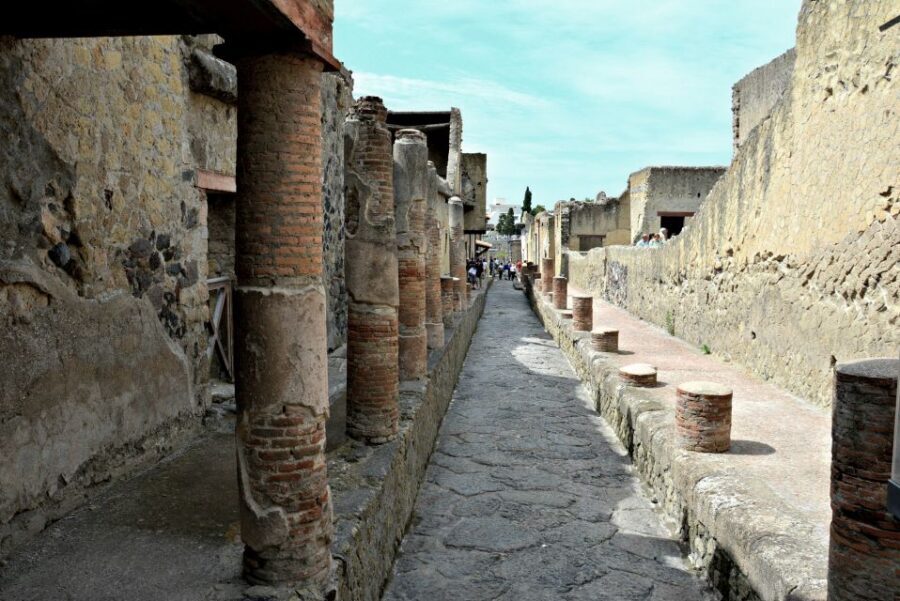
Your tour begins by visiting the Northern Cardo, the road spine of town. For kids, roads are intuitive. You can frame this right away: people walked here, traded here, traveled along here. A good road reference point is gold because it stops the rest of the site from feeling random.


House of Neptune and Amphitrite: a story-friendly house stop
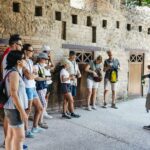
You’ll visit the Casa di Nettuno ed Anfitrite (also listed as House of Neptune and Amphitrite). Houses are where kids often get curious—who lived here, what rooms were for what, why the home had certain features.
In a kid-friendly tour, this is less about architecture jargon and more about “here’s where daily life happened.” Even for adults, it’s one of those stops where the setting helps the explanations land.
Casa del Salone Nero / House of the Black Saloon: when décor becomes a clue
Next comes Casa del Salone Nero (also listed as House of the Black Saloon). The name alone helps. Kids remember it, and the contrast with other houses makes it easier to compare spaces.
This is the kind of stop where multimedia and reconstructions can matter, because the guide can help you imagine the parts you can’t instantly read from ruins alone.
Casa dei Cervi / House of the Deer: fun at the name level
You’ll also visit Casa dei Cervi (the deer house). Even if kids don’t know the reference, they connect to the idea that artwork and symbols mattered. A standout theme helps them remember the tour.
House of the Skeletons: the big emotional wow moment
Then comes one of the most memorable stops: the House of Skeletons. This is where the tour leans into a reality-driven story of the eruption’s victims.
Kids can handle serious material when it’s framed clearly and kept age-appropriate. The tour’s design for children is exactly why this isn’t just a grim “look and move on” stop. You get a guided approach that keeps the experience understandable.
Sacellum of the Augustales: a chance to talk religion without the lecture tone
You’ll visit the Sacellum of The Augustales. Sacred spaces can be tricky for kids—too abstract—but a guided stop helps you connect worship to community life. Instead of treating it like a history term, the guide turns it into a place where people gathered and observed rituals.
The public-life stops: where Roman daily life comes alive
The tour doesn’t only sprint through houses. It also includes several public and semi-public sites that give you a “what did people do here?” answer.
Here are the kinds of stops you’ll cover:
- Thermopolium: a spot for food (the listing even frames it as restaurant food). Kids love food stories.
- Men’s thermal bath: baths are easy for kids to grasp as daily routines—wash, relax, socialize.
- Temple of Augustali and forum (main square): these explain power, belief, and community gathering.
- Bakery and gym: daily life basics that make the town feel lived-in.
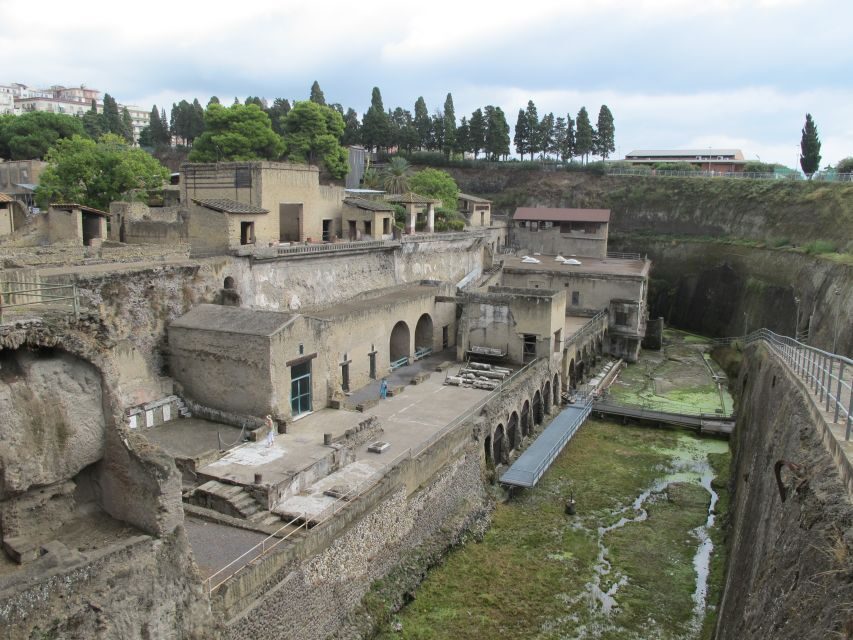
- Marina gate terrace of Marcus Nonius Balbus and the beach area where hundreds of skeletons of the victims were discovered: the emotional and geographic “end of the story” portion.
Even if you’re not trying to memorize Roman culture, these stops keep the experience grounded. You start to see Herculaneum as a full environment—streets leading to places that served real needs.
Using tablets and reconstructions: why it matters more than you think
A lot of family tours rely on the guide’s voice alone. This one adds tools that help kids process what they’re seeing.
The tour uses tablets, reconstructions, and multimedia to connect ruins to reality. That’s important because archaeological sites can be visually incomplete. You might see a wall, but not the room shape. You might see a doorway, but not the street scene. Reconstructions help you fill those gaps without guessing.
For adults too, this is a win. It’s easier to appreciate what preservation means when you’re not constantly stopping to wonder, what was missing here? Your guide can point to features and then use visuals to clarify them.
Price and value: what you’re paying for at $206.75 per person
At $206.75 per person for a 2-hour private group tour, the price isn’t “cheap,” but it also isn’t just paying for entry-level facts. You’re paying for a kid-specialized guide, private-group attention, and the guided experience inside one of the most important archaeological sites in Italy.
What’s included:
- A local certified guide specialized in tours with children
- Herculaneum admission, listed as 16.00 euros each
- The guided walking tour itself, using tablets and multimedia tools
- Skip the ticket line
What’s not included:
- Transportation
- Meals
So where’s the value? It’s in the combination. The admission fee is already baked in, and the guide’s job isn’t only interpretation—it’s pacing, attention management, and choosing what matters to kids in a site with dozens of possible sights. If you’ve ever tried to tour an archaeological park with children on your own, you already know how quickly it turns into “stop, read, bored, move, repeat.” This tour is designed to avoid that cycle.
Also, there’s a flexibility angle: the tour offers reserve now & pay later and free cancellation up to 24 hours in advance. That’s helpful if Naples plans shift due to weather or energy levels.
One more practical note: on the first Sunday of each month, entrance is free of charge, but tickets can’t be reserved ahead of time, so entry isn’t guaranteed. If your schedule lands on that day, you’re taking a small gamble. If you want certainty, book for another day.
Practical tips for families on this kind of Herculaneum walk
You’ll walk. A lot of kids do fine with the right expectations, but you should plan for it.
- Wear shoes you don’t mind getting a bit dusty or uneven-surface tired
- Bring water for the two-hour window (meals aren’t included)
- If your kids ask nonstop questions, that’s part of the design—let them. The guide is specialized for this kind of pacing.
And because this is a private group, you’re not stuck with other family schedules. The guide can adapt to your pace and attention level more than you’d get on a large group tour.
Who this tour is best for (and who might want something else)
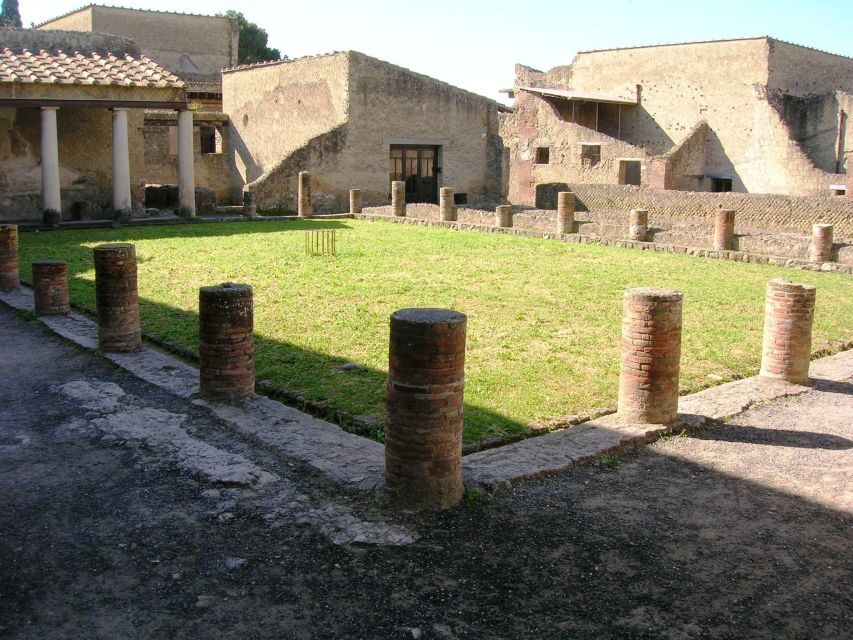
This tour is a strong fit if:
- You’re traveling with kids who need visual explanations and short, story-based stops
- You want a structured route that hits major areas without you planning every turn
- You like the idea of learning daily Roman life through houses, baths, food spots, and the public forum
It may be less ideal if:
- Your child finds walking long distances hard, since there’s no transportation included
- Your party needs a smoother, non-walking format (this is still a walking tour through the site)
One tricky detail: the information lists both wheelchair accessibility and also states it is not suitable for wheelchair users. If wheelchair access matters for you, confirm directly with Askos Tours before booking.
Should you book this kid-friendly 2-hour Herculaneum tour?
I think it’s a solid yes for families who want a guided experience that keeps kids engaged and gives you a clear sense of Herculaneum as a working town. The combination of a child-specialized guide plus tablets, reconstructions, and multimedia is exactly what turns ruins into something kids can grasp.
Book it if your top goal is a high-attention, kid-friendly walkthrough that still hits the major wow stops—houses, baths, food, and the powerful story around the victims discovered at the beach area. If your group prefers DIY touring, or if walking is a major challenge, you might consider a different format.