REVIEW · NAPLES
Herculaneum Private Walking Guided Tour 2 hours
Book on Viator →Operated by Tour Guide Naples · Bookable on Viator
Herculaneum pulls you in fast. This 2-hour private walking guided tour brings the buried Roman city back to life with clear, human stories—family roles, religion, beliefs, and how daily life worked in an elite resort. Herculaneum is special because it was covered by mud, not just ash, so so much survived in a more intimate way than you might expect from a major archaeological site.
I love the private guide format. You’re with your own group only, so the pace stays practical, and the explanations can fit your interests—especially if you’re bringing teens or want more meaning than facts. One possible drawback: the site requires extra planning for entrance fees, since the Parco Acheologico di Ercolano ticket is not included.
I also really like how the guide connects what you see to what Romans believed and feared. From temples and superstitions to funeral rites and the typology of Roman houses, the tour focuses on Roman private life, not just stone walls. Since the experience is a walking tour (about 2 hours), wear comfortable shoes and expect a steady pace over ancient ground.
In This Review
- Key highlights to look for
- Why Herculaneum feels smaller, closer, and easier than Pompeii
- Parco Acheologico di Ercolano: what your 2-hour walk covers
- How the volcanic mud changed what you can see (wood, food, fabrics)
- Roman daily life, religion, and funerals: what your guide will connect
- Guides matter: the pace and family-friendly tone you’ll want
- Price and logistics: what is included, what you pay on site
- Should you book this private walking tour?
- FAQ
- How long is the Herculaneum private walking guided tour?
- What time does the tour start?
- Where does the tour meet?
- Does the tour price include the entrance ticket to Parco Acheologico di Ercolano?
- What’s included in the tour?
- Is this a private tour?
- Do I need a mobile ticket?
- Is the tour accessible for most people?
- Can I cancel for a full refund?
Key highlights to look for
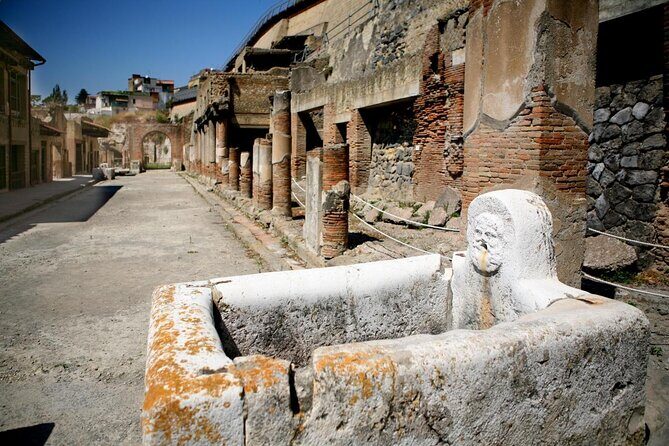
- Mud-preserved details that help you picture daily life, not just ruins
- Private-only group time with a licensed guide
- Roman home life on display, including house types and practical domestic spaces
- Religion, beliefs, and funerals tied directly to what you’re seeing
- A site that’s easier to cover in one visit than Pompeii, with less rushing
- Mobile ticket included, so you can keep things simple that morning
Why Herculaneum feels smaller, closer, and easier than Pompeii
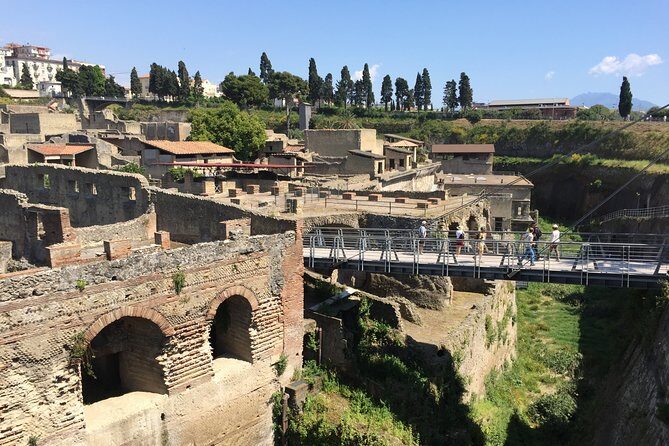
If you’re trying to choose between Herculaneum and Pompeii, here’s the big difference that matters on a day trip: Herculaneum tends to feel quieter and more “whole-site in one go.” That makes it a strong match for a focused 2-hour visit where you want the overview without burning half your day. The ruins also feel more personal. When a city is preserved in a way that captures details of everyday life, you spend less time thinking about scale and more time imagining people.
This tour is built around that idea: you’re not just strolling through big blocks of stone. The focus is on what made Herculaneum a Roman community—how families organized life, what religion looked like, and how people explained the world through beliefs and superstitions. Dating to the 4th century BC, the city was thought to be linked to the legendary Hercules, and the guided storytelling keeps that early myth in the background while the Roman reality moves to the front.
Also, the timing matters. A 9:00 am start gives you a calmer start to the site experience, which helps if you prefer not to spend your best energy dodging crowds.
You can also read our reviews of more walking tours in Naples



Parco Acheologico di Ercolano: what your 2-hour walk covers
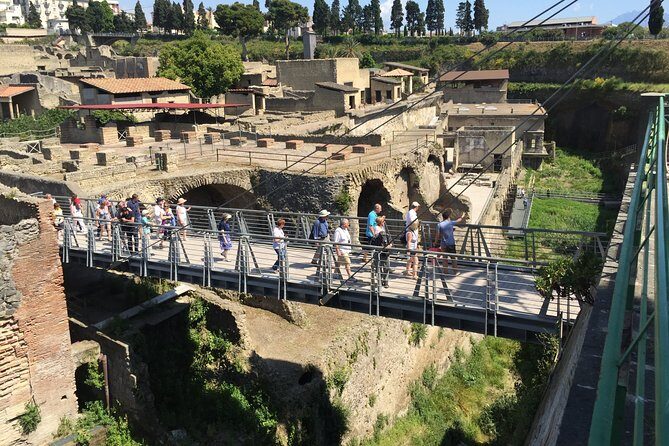
Your walk centers on the Parco Acheologico di Ercolano (Ercolano Scavi), and the tour is designed to use your time well. Expect the guide to lead you through the core areas of the archaeological park and keep the story moving, so you’re not just collecting disconnected stops.
Here’s what the tour emphasizes as it moves through the ruins:
- Culture and daily life: You’ll get the social structure of the time, including the role of the family.
- Religion and rituals: Temples, religious practice, and what people believed about unseen forces.
- Funeral rites: How Romans handled death, which helps you understand the city’s worldview.
- Roman houses: The typology of Roman homes—how private domestic spaces were laid out and used.
What I like about this structure is that it gives you a mental map. You start seeing buildings as systems: where people gathered, where they ate, how status showed up in architecture, and how belief influenced daily routines. It’s not “look and guess.” The guide keeps steering you back to meaning.
And because this is a private tour, you can ask more than you’d normally ask on a larger group walk. That matters at an archaeological site, where the small details often carry the most payoff.
How the volcanic mud changed what you can see (wood, food, fabrics)
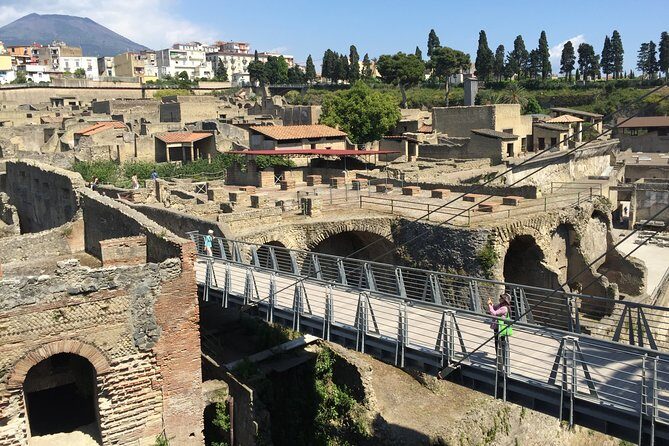
Pompeii is famous, but the reason Herculaneum stands out is what buried it. Both cities were devastated by the same volcanic eruption linked to Mount Vesuvius in 79 AD. The difference is the material that covered Herculaneum afterward: a torrent of mud. That muddy burial helped protect ruins from atmospheric damage and also from illegal excavations, which means you get a more intact glimpse of daily life.
This is where the tour becomes more than a standard “ancient city tour.” The preservation can include wooden elements, foodstuffs, and fabrics, plus architecture that helps you picture how the city functioned as a private place, not just a public stage. When those materials survive, the whole experience feels closer to the people who lived there.
You don’t need to be an expert to appreciate that. Even if you only pick up a few key details, you’ll likely remember the feeling of standing in spaces that look like they could have been interrupted mid-life.
Roman daily life, religion, and funerals: what your guide will connect

The strongest part of this kind of tour is not the listing of artifacts. It’s the translation from stone to people. This guided walk aims to do that directly: it explains culture, the role of the family, religious life with temples, and the web of beliefs and superstitions that shaped decisions and expectations.
One reason I recommend a guide here is that religion and funerals can be hard to “see” in ruins unless someone explains what you’re supposed to notice. Once you understand funeral rites and what Romans believed about death and protection, the architecture starts to feel less random. It also helps you understand why private life was built around more than comfort. It was built around meaning.
The tour also focuses on typology of Roman houses. That’s a fancy phrase, but the practical payoff is simple: you’ll come away understanding how Roman domestic spaces worked as real homes. You’ll be thinking in terms of how rooms related to one another, how household life unfolded, and how elite resort life differed from what you might imagine from a generic “Roman house” picture.
And if you’ve already visited Pompeii, this is a smart follow-up. Pompeii can make you feel like you’re studying a city in ruins. Herculaneum feels more like you’re studying lives that were preserved mid-story.
Guides matter: the pace and family-friendly tone you’ll want
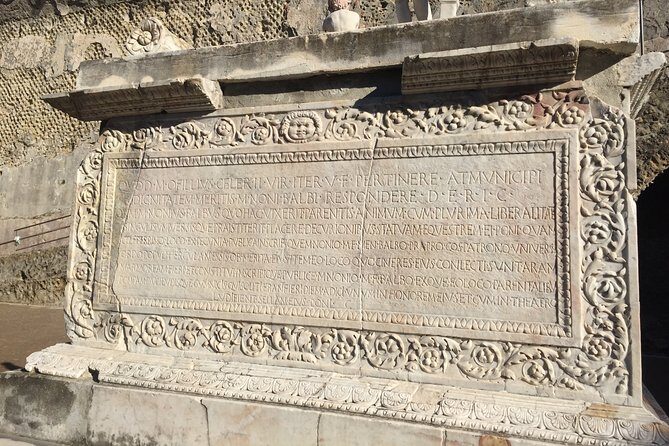
At this price point, the guide is the product. The good news is that the tour is consistently delivered with a high-energy, explain-it-like-it-matters approach.
You’ll see names pop up again and again in this experience’s feedback: Roberta has been praised for friendliness and for making the site come alive, including for teenage kids. Gennaro is described as both knowledgeable and fun, and he’s credited with keeping Herculaneum’s story lively. Ornella is singled out for making two hours fly. There’s also strong praise for professional archaeologist-level interpretation from guides such as Alfredo De Luca.
Even when the tour is set for two hours, the best guides don’t just run the clock—they shape the rhythm. That’s especially valuable if your group includes mixed ages. One group described a visit with children and adults together, and they still managed to get solid time inside the site while staying engaged.
If you’re a cruise passenger, there’s another practical perk you might care about: some experiences in this provider network include pickup support. Andrew and driver Pasquale, for example, were mentioned for picking guests up at a ship and answering questions during the drive. Your exact plan depends on your day, but it’s a signal that the team thinks about the whole journey, not just the final walk.
You can also read our reviews of more guided tours in Naples



Price and logistics: what is included, what you pay on site
Let’s talk value, since $195.91 per person is not a bargain-basement tour. The good value part is what you get with that price:
- A licensed tour guide is included.
- It’s a private tour/activity, so only your group participates.
- You receive a mobile ticket.
- The tour lasts about 2 hours, so you’re not signing up for a half-day commitment.
The part you need to budget separately is the entrance ticket to Parco Acheologico di Ercolano. The tour includes the guide and the walk, but entrance fee is not included. That’s normal for some guided experiences, but it’s worth noting so you don’t get a surprise at check-in.
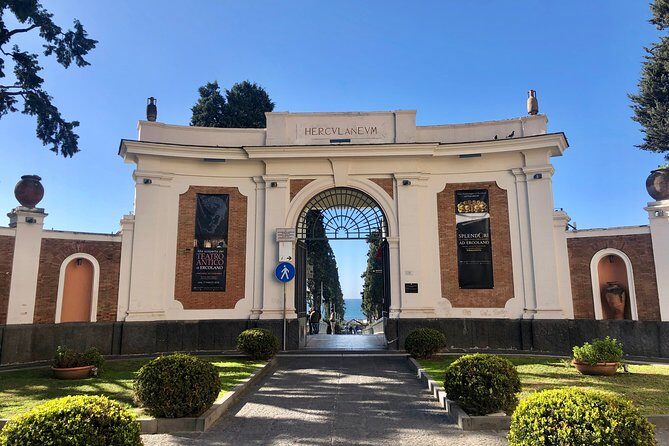
Also note the meeting point: you start at Ercolano Scavi (80056 Ercolano, Metropolitan City of Naples, Italy). The tour is set to begin at 9:00 am, and it ends back at the meeting point. The tour is described as being near public transportation, and most travelers can participate, which is helpful if you’re not planning to drive.
One more practical consideration: because it’s private, the price often makes the most sense when you have enough people to share it. If you’re traveling solo or as a couple, it can still be worth it for the guide attention, but it’s the kind of spend where you should decide based on what you want most: time saved, context explained, and a smooth pacing with no waiting around.
Should you book this private walking tour?
Book it if you want the Roman city to feel like a lived place. This is the kind of tour that works well when you care about more than a quick highlight loop—when you want culture, religion, funerals, and household life tied to the actual layout and preserved details.
Don’t book it if you’re only looking for a loose self-guided stroll and you’re happy to figure out the meanings of temples, beliefs, and house types on your own. Since the entrance fee isn’t included and the tour cost is relatively high, you’d probably get better value from a cheaper group option or an audio-guided approach if you don’t care much about interpretation.
A good decision rule: if you’ll actually ask questions and want someone to point out why Herculaneum survived in such a personal way, the private guide price is easier to justify. If you mainly want photos and a quick walk, you might feel the time is too structured.
FAQ
How long is the Herculaneum private walking guided tour?
The tour is about 2 hours.
What time does the tour start?
The start time listed is 9:00 am.
Where does the tour meet?
It starts at Ercolano Scavi, 80056 Ercolano, Metropolitan City of Naples, Italy.
Does the tour price include the entrance ticket to Parco Acheologico di Ercolano?
No. The entrance fee for Parco Acheologico di Ercolano is not included.
What’s included in the tour?
A licensed tour guide is included.
Is this a private tour?
Yes. It’s a private tour/activity, so only your group participates.
Do I need a mobile ticket?
Yes. The experience includes a mobile ticket.
Is the tour accessible for most people?
Most travelers can participate.
Can I cancel for a full refund?
Yes, you can cancel up to 24 hours in advance for a full refund.