REVIEW · PRIVATE
Private Vatican Tour with Sistine Chapel, Fast-Access Tickets
Book on Viator →Operated by Vatican Private Tour Guide · Bookable on Viator
The Vatican can be a loud maze. This private, fast-access tour keeps things calm and focused, with a trained art historian guiding you through the places that matter most.
I love how the visit is built for time and attention: you get a skip-the-line start, then a clear path through Vatican Museums, the Sistine Chapel, and into St. Peter’s Basilica before you finish out in St. Peter’s Square. The second thing I really liked is how your guide doesn’t just point at art. Guides like Thomas and Francesco lean into details, stories, and even helpful visuals during the walk, so you understand what you’re looking at instead of just moving through crowds.
One practical consideration: Vatican access can change last minute. Busy days around Pope Francis, plus Jubilee-related limits, can mean parts of the plan close or the Basilica route gets adjusted. The good news is you’ll get an alternative that still keeps you inside the Vatican and seeing key art.
In This Review
- What makes this private route work
- Key things to know before you go
- Skipping the line at the Vatican: how it changes the whole day
- Museums first: where you’ll start and what’s worth your attention
- Time reality check
- The Vatican “must-sees” you’ll cover without feeling rushed
- Sistine Chapel: how the guide helps you see Michelangelo and beyond
- What you should expect in practice
- St. Peter’s Basilica: Pietà, side chapels, and the papal crypt
- The one-liner drawback
- St. Peter’s Square finish: Pope’s Palace and Swiss Guards
- Value and price: what you’re really paying for at $426.50
- Dress code, last-minute closures, and Jubilee surprises
- Who should book this tour, and who should skip it
- Should you book this private Vatican tour?
- FAQ
- How long is the private Vatican tour?
- What does the fast-access skip-the-line ticket include?
- Is this tour private, or will I be with other people?
- What language is the tour offered in?
- Are admission tickets included?
- Where do I meet the guide, and where does the tour end?
- What dress code is required?
- What happens if parts of the Vatican close last minute due to Pope events?
- Can St. Peter’s Basilica be guaranteed during Jubilee?
- Is the price refundable if I cancel?
What makes this private route work
If you’ve ever tried to tour the Vatican on your own, you know the problem isn’t lack of masterpieces. It’s the bottleneck energy: long lines, confusing pathways, and the way you get rushed without realizing it. This tour solves that by starting you early in the Museums with fast access and then keeping you moving in a logical order.
And yes, you still see the big icons. But what makes this tour worth your attention is the pace and the pointing. Your guide helps you notice the little stuff, like which rooms to prioritize and what visual clues to look for in chapel frescoes and church art.
Key things to know before you go
- Skip-the-line entry so your time goes to art, not queues
- Trained art historian guidance, not a quick facts script
- A route that targets Belvedere Courtyard, Pio-Clementino Museum, Raphael Rooms
- Sistine Chapel rules handled smoothly, with a prep talk before you enter
- You’ll see St. Peter’s Basilica side chapels, Michelangelo’s Pietà, and the papal crypt
- The tour ends in St. Peter’s Square for a view of Pope’s Palace and Swiss Guards
You can also read our reviews of more tours and experiences in Rome
Skipping the line at the Vatican: how it changes the whole day
Let’s be honest: most Vatican “days” go like this. You spend a big chunk of time standing still, then you sprint through rooms trying to catch up. This tour flips that. With guaranteed skip-the-line access, you start moving right away after meeting at Viale Vaticano, 100.
The biggest value of this isn’t just convenience. It’s psychological. When you walk in at speed, you stop feeling behind. You can actually look. You also get room to ask questions without the tour equivalent of a school bell constantly ringing.
Also, you’re not stuck in a giant mass. This is private, meaning it’s only your group. That matters in the Sistine Chapel, where sound is controlled and space is tight. It’s also useful in St. Peter’s Basilica, where side chapels and crypt entrances can get busy.
Museums first: where you’ll start and what’s worth your attention
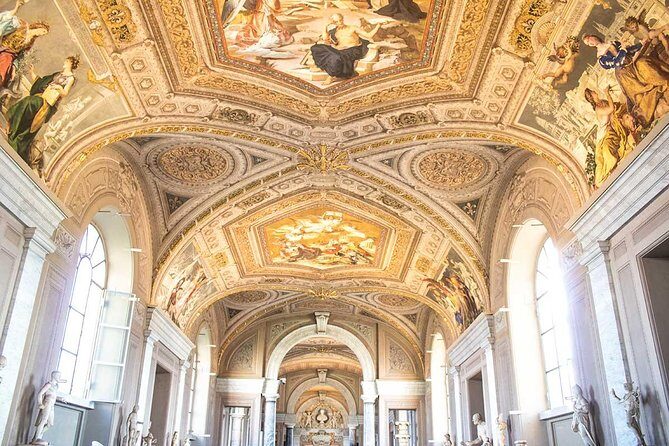
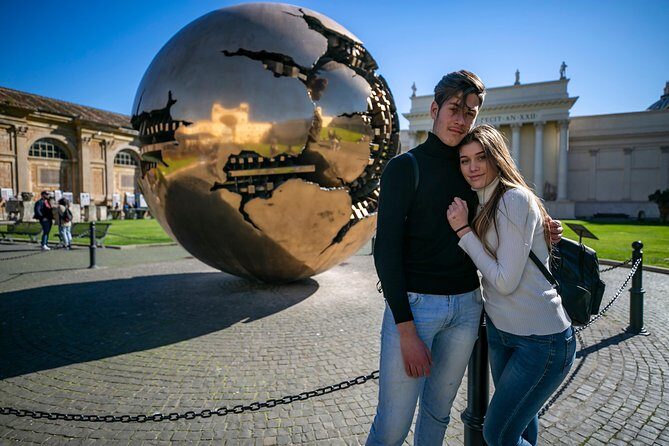
The Museums portion is designed like a hit list, but with enough context to feel satisfying. You begin with a fast entry and head toward the Belvedere Courtyard and the Pio-Clementino Museum, which is packed with Ancient Roman and Greek statues. This is a smart opening, because it gets you into the Vatican’s visual language before the pressure of the Sistine Chapel hits.
From there, the route moves through two gallery stops that many self-guided visitors skip too fast:
- Gallery of Tapestries: great for texture and scale. You’ll get a sense of how the Vatican used art to project power and storytelling through woven works.
- Gallery of Maps: the guide walks you through one of the most important displays of Renaissance maps in the world, helping you look beyond the fact that they’re detailed.
If you want one “pause moment” in the Museums, it’s Raphael’s Rooms. You’ll spend time in the spaces painted for Pope Julius II, including works such as Parnassus and School of Athens. In a crowded free-for-all, those rooms can feel like wallpaper to you. With a guide, you learn what to look for—figures, symbolism, and the way Raphael staged scenes to communicate ideas.
Time reality check
The Museums stop is about 1 hour. That’s not long, but it’s long enough for a guided path that doesn’t turn into a blur. If you personally love ancient sculpture, you’ll still get plenty of impact early on. If you’re more into Renaissance painting, you’ll get to Raphael’s rooms and the big chapel prelude soon after.
The Vatican “must-sees” you’ll cover without feeling rushed
After the Maps gallery comes the Sobiesky Room, where you’ll see one of the largest paintings in the Vatican—followed by a stop in the Room of the Immaculate Conception with frescoes you’ll look at with your guide’s commentary.
These are the kinds of rooms people walk past because they don’t realize what they’re standing in front of. With this tour format, you don’t just tick boxes. You get enough explanation to make the art click.
I also like that the guide keeps the Museums path intentionally connected to what comes next. By the time you reach the Sistine Chapel, you’re not entering with blank eyes. You’ve already been trained to look for technique, composition, and symbolism.
And if you’re someone who tends to wander off and then lose the group in big sites, private pacing helps a lot. You go where your guide points, and you don’t end up spending ten minutes searching for the last turn.
You can also read our reviews of more private tours in Rome


Sistine Chapel: how the guide helps you see Michelangelo and beyond
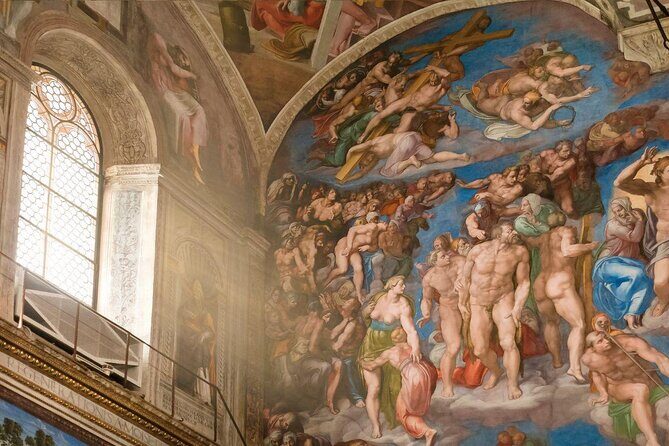
Sistine Chapel time is about 1 hour, and the rules are strict: there’s no talking inside. Before you enter, your guide sets you up with what you’ll be seeing, including frescoes by Michelangelo, Botticelli, and other famous artists.
That pre-brief matters. People often step into the Sistine Chapel and immediately feel overwhelmed. You’re looking up at ceilings that seem designed to take over your entire attention. A guide’s job here is to slow you down without making you lose the moment.
A strong point from the experiences shared by guide coverage (including names like Sara, Macelliano, and Natalia) is how they help you find a good viewing position once inside. You’ll be guided so you can actually see rather than constantly crane your neck over shoulders.
What you should expect in practice
- You’ll enter with your guide’s context so frescoes make sense fast
- You’ll likely spend time absorbing details rather than racing
- Your visit stays respectful of the chapel’s silence and flow
If your priority is the Sistine Chapel ceiling as an art experience, this is one of the simplest ways to get it without sacrificing the rest of the day.
St. Peter’s Basilica: Pietà, side chapels, and the papal crypt
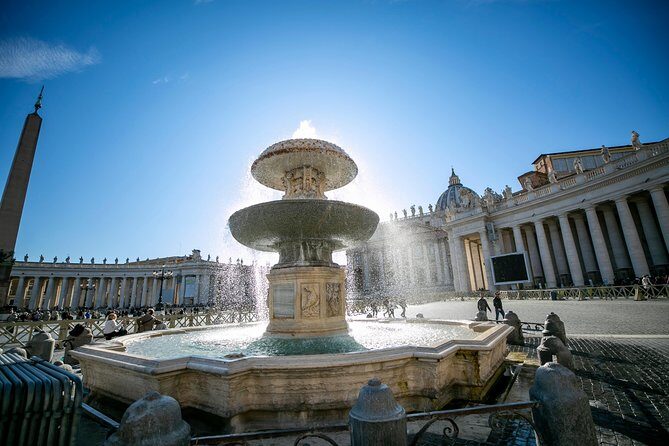
Next comes St. Peter’s Basilica, around 30 minutes. This stop is valuable because it includes more than the famous façade-level attractions. You’ll explore side chapels with hidden crypts, which is where the “church as living site” feeling shows up.
You’ll see Michelangelo’s Pietà, and your guide will explain why it’s the only work of his that he signed. That detail is easy to miss if you just stare at the marble and move on. Here, you’ll know what to look for and why it matters.
You’ll also get guidance around major church art, including Bernini’s altarpiece and an explanation of how Michelangelo’s approach helped him win major recognition for painting St. Peter’s magnificent dome.
Then you go below ground for the papal crypt, where many popes are interred. This is a quieter part of the complex, and it often feels like a reset after the intensity above. If you’re a Catholic visitor, it’s described as a site of pilgrimage for many. Even if you’re not, it adds depth because you’re seeing the Vatican as both artwork and a sacred workplace.
The one-liner drawback
Thirty minutes in a basilica this size can feel short if you’re a completist. But the payoff is that you leave with a structured view of the most meaningful stops instead of wandering until you’re tired.
St. Peter’s Square finish: Pope’s Palace and Swiss Guards
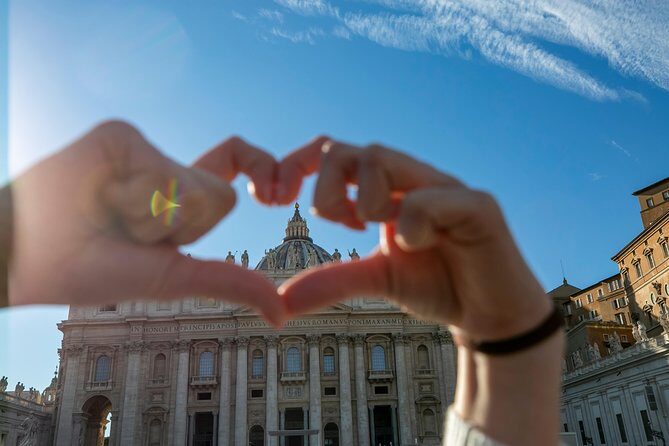
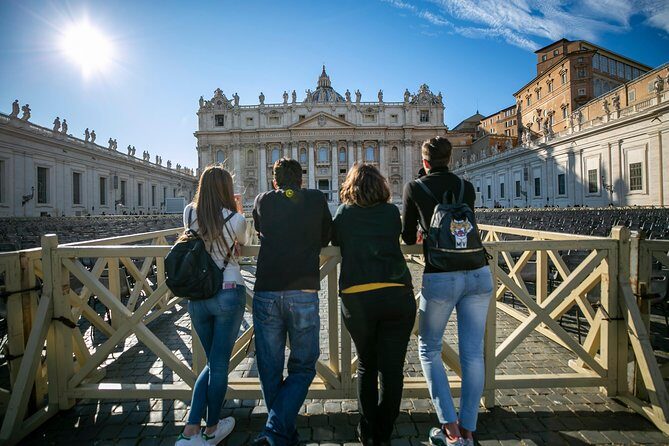
The tour ends in St. Peter’s Square, with about 30 minutes to take it in. This is a smart finish because the Basilica can exhaust you, while the open square gives your body a chance to breathe.
You’ll be able to see the Pope’s Palace and catch a glimpse of the Swiss Guards. It’s also the part where you can shift from gallery mode to real-world Rome atmosphere. Even if you’ve seen photos a thousand times, seeing the scale in person helps.
Tip for your photos: don’t just shoot straight-on. Turn your body slightly while you look. The square’s structure gives you better frames when you let your angle change.
Value and price: what you’re really paying for at $426.50
At $426.50 per person for roughly 3 hours, this isn’t a budget option. But value isn’t only about cost. It’s about what you’re buying with that money:
- Guaranteed line-skip at a site where lines can eat most of your day
- A private format that keeps you from being herded like a stamp
- A professional art historian guide, which changes how much you get from each stop
- A tightly managed route that includes Museums, Sistine Chapel, Basilica highlights, and crypt access
If you’re traveling in a group, the private nature can also feel more rational, because your time isn’t split across a large group where questions and pace tend to get flattened.
One more value detail: the tour is booked far in advance on average (about 82 days). That’s usually a sign that the timing gets snapped up during busy seasons. If you’re set on doing it, waiting can turn into a scramble.
Dress code, last-minute closures, and Jubilee surprises
This tour takes place in working religious spaces, so you need to plan like a grown-up: no shorts or sleeveless tops, and your knees and shoulders must be covered for both men and women. If you show up in the wrong outfit, you can be refused entry. It’s not a “maybe” rule.
Then there are the Vatican’s real-life curveballs. Because of Pope Francis activity, some areas might close last minute. The plan is to adjust: your guide will provide an alternative focusing on the Vatican Museums if needed.
Also, due to the Jubilee, St. Peter’s Basilica might not be accessible as part of the tour in some situations. If that happens, you can go afterward, but you’ll have to queue then. This is the kind of detail you should treat seriously when planning the rest of your day.
The takeaway: pack flexibility. If you plan your schedule with buffers, these changes feel less like disruptions and more like part of the Vatican’s rhythm.
Who should book this tour, and who should skip it
This is a strong fit if you:
- Want maximum art impact in a short window
- Prefer private guidance over crowd pacing
- Like having someone explain what you’re seeing before you get overwhelmed
- Care about both the art (Raphael, Michelangelo) and the religious context (crypt, Basilica)
It may be less ideal if you:
- Want to spend half a day wandering freely without a schedule
- Dislike the idea that closures can force route changes
- Expect every space to be guaranteed regardless of Vatican events
If you’re the kind of visitor who needs a plan to actually look, this is the plan.
Should you book this private Vatican tour?
I’d book it if your goal is a smart, art-focused Vatican day that starts fast and ends in St. Peter’s Square. The skip-the-line access and the art historian guide are the two big reasons this feels worth the price. You’re not paying just to enter; you’re paying to understand and to see more effectively in the time you have.
Do it if your schedule is tight, your time is valuable, and you want the Vatican without the chaos. Just make sure you pack the right clothing and leave some breathing room in case Pope-related or Jubilee-related access changes happen.
If you want a Vatican visit that feels like a conversation with the art instead of a sprint through crowds, this one makes that possible.
FAQ
How long is the private Vatican tour?
It runs for about 3 hours (approx.), with time split between Vatican Museums, the Sistine Chapel, St. Peter’s Basilica, and St. Peter’s Square.
What does the fast-access skip-the-line ticket include?
You get guaranteed skip-the-line access for the Vatican Museums portion so you can start quickly at the entrance.
Is this tour private, or will I be with other people?
It’s private. Only your group will participate.
What language is the tour offered in?
The tour is offered in English.
Are admission tickets included?
Yes. Admission tickets are included for Vatican Museums, the Sistine Chapel, St. Peter’s Basilica, and St. Peter’s Square.
Where do I meet the guide, and where does the tour end?
You meet at Viale Vaticano, 100, 00192 Roma RM, Italy. The tour ends in St. Peter’s Square (Piazza San Pietro, 00120).
What dress code is required?
You must have knees and shoulders covered. No shorts or sleeveless tops are allowed, and you may risk refused entry if you don’t follow the dress rules.
What happens if parts of the Vatican close last minute due to Pope events?
Some areas might close without prior notice. If that happens, your guide will provide an alternative focusing on the Vatican Museums.
Can St. Peter’s Basilica be guaranteed during Jubilee?
Not always. Due to the Jubilee, the Basilica might not be accessible as part of the tour, though you can visit it after the tour by queuing.
Is the price refundable if I cancel?
No. The experience is non-refundable and cannot be changed for any reason.