REVIEW · MUSEUMS
Private Vatican Tour: Egyptian and Etruscan Museum with transfers
Book on Viator →Operated by Eyes of Rome · Bookable on Viator
The Vatican line is the real villain. This private tour tackles it with fast-track priority entry and a private guide who steers you through the museums with a plan. You’ll also get the Egyptian and Etruscan Museums pairing, the Golden Room, and a focused look at Michelangelo before finishing at St. Peter’s Basilica.
What I like most is the special access to the Egyptian Museum and Etruscan Museum areas (including the Golden Room that’s mostly closed to the public). I also like how the visit to the Sistine Chapel isn’t just a stop for photos; your guide explains what you’re seeing, so it actually lands. A possible downside: this is about 3 hours 30 minutes of serious walking and standing, and the dress code is strict, so you’ll want to plan for covered knees and shoulders.
In This Review
- Key highlights that matter on the ground
- Fast-Track Entry and Transfers From Central Hotels
- Egyptian Museum: Mummies, Papyrus, and Why It Works in Half a Day
- Etruscan Museum and the Golden Room You’ll Be Glad You Saw
- Belvedere Courtyard, Key Sculptures, and the Pomodoro Moment
- Gallery of Maps and Tapestries: Art That Teaches You How Italy Looked
- Candelabra Gallery: When Greek and Roman Art Meets a Grand Room
- Sistine Chapel: Michelangelo With Meaning, Not Just Mere Looking
- St. Peter’s Basilica in One Careful Hour: Pietà and Bernini’s Baldachin
- Price and Value: What You’re Actually Paying For
- Who This Tour Fits Best (and Who Might Be Happier Alone)
- Should You Book This Private Vatican Tour?
- FAQ
- FAQ
- How long is the private Vatican tour?
- Is this a private tour?
- Do you pick up from my hotel?
- What language is the tour offered in?
- Does the tour include tickets and entry fees?
- Is fast-track entry included?
- Which areas does the tour cover?
- What should I wear to enter the museums and churches?
Key highlights that matter on the ground
- Skip the long entry lines with prebooked priority access
- Private guide, Blue Badge level expertise for your group only
- Egyptian Museum + Etruscan Museum special access, including the Golden Room
- Gallery of Maps and Gallery of Tapestries for art that also tells stories and history
- Sistine Chapel time with guide context on Michelangelo’s frescoes
- Round-trip hotel transfers from hotels within the Aurelian Walls
Fast-Track Entry and Transfers From Central Hotels
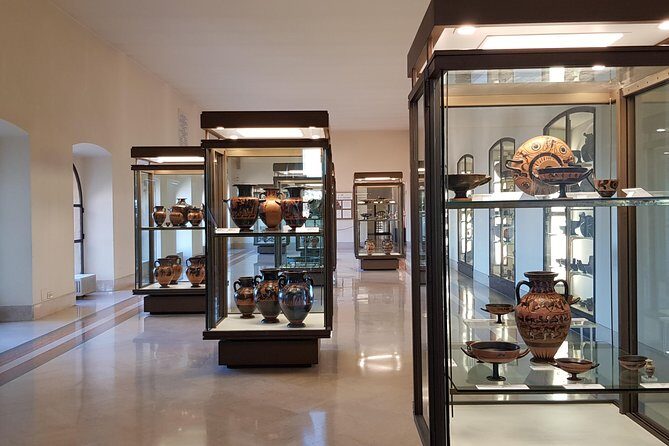
This tour is built for one simple goal: getting you into the Vatican Museums without spending your morning in a moving line that drains energy. You meet your private vehicle outside your hotel, and the pickup is only for hotels within the Aurelian Walls, which keeps the drive time reasonable and the schedule tight.
From there, it’s straight to the Vatican Museums with guaranteed fast-track entry. That’s not a small thing. The Vatican is one of those places where the “where do I start?” question can steal your joy. Fast-track access helps you start with momentum instead of stress. You’ll also have a professional Blue Badge guide, which is the kind of credential that usually correlates with clear explanations and smooth museum navigation.
One more practical note: the tour includes transfers in a sanitized vehicle. And because of the Jubilee, some monuments may be under restoration or closed during extraordinary celebrations. If you’re traveling in that window, keep an eye out for messages from the operator so you don’t get surprised if something changes.
You can also read our reviews of more private tours in Rome



Egyptian Museum: Mummies, Papyrus, and Why It Works in Half a Day
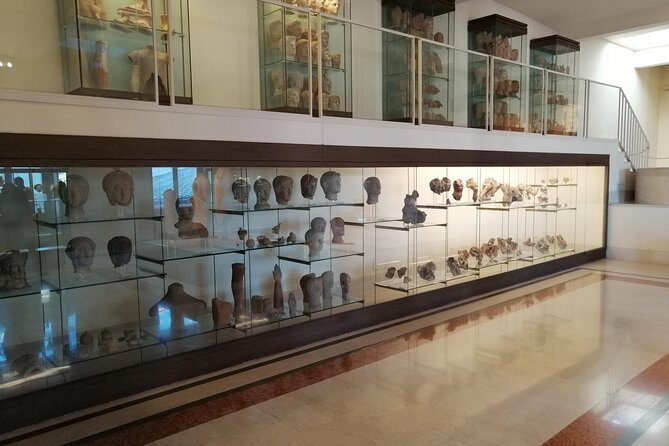
The Egyptian Museum stop is short on paper (about 10 minutes), but it’s intentionally shaped for impact. You’re not trying to “complete” Egypt in Rome. You’re getting a guided hit of recognizable favorites and the key context that makes the objects feel less like random display cases and more like a world.
In the Vatican’s Egyptian collection, you can expect artifacts tied to daily life and belief systems, including mummies, papyri, and hieroglyphic inscriptions. What makes this stop work on a private tour is your guide’s pacing. In a busy, self-guided walk, you can drift. Here, you’re guided toward the items that most quickly explain what you’re looking at.
Also, pairing Egypt with Etruscan art makes sense. It keeps the museum from feeling like a single long blur. Your brain gets a new visual language every so often: bronze and jewelry for the Etruscans, then funerary objects and writing materials for Egypt. It’s a smart way to stay engaged in a place so big it can easily overwhelm.
Etruscan Museum and the Golden Room You’ll Be Glad You Saw
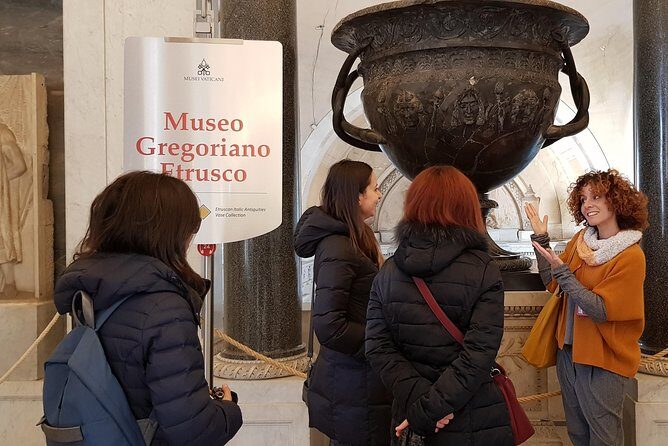
If Egypt is the “ancient Egypt” chapter, the Etruscan Museum is the twist. The highlight is the Golden Room, part of the Etruscan Museum, which is mostly closed to the general public. That’s where the tour earns its keep: access to an area you normally can’t count on.
In the Golden Room, you’ll see jewelry dating between the 9th and 1st century BC, spanning the Iron Age through the period when the Etruscan cities gradually merged into the structure of the Roman state. Even if you’re not a classic-arts scholar, that timeline helps. You start to see the Etruscans not as a vague “older Italy,” but as a culture that changes and adapts as power shifts.
After that, you’ll move through key parts of the museum complex and the Belvedere Courtyard. This is where the atmosphere of the Vatican shifts from “rooms of objects” to “a place designed for masterpieces.” Your guide can point out what to notice, so you’re not just passing through.
One realistic caution: the Etruscan portion is still museum-speed. The tour doesn’t pretend you’ll leave with encyclopedic knowledge. It’s more like getting the best chapter summaries with a guide who actually explains what matters.
Belvedere Courtyard, Key Sculptures, and the Pomodoro Moment
Museum highlights usually fall into two types: famous works you recognize, and “only-here” stops you might miss. This tour gives you both.
Inside the sculpture museum section, you’ll have time for famous pieces tied to Renaissance admiration, including the Laocoön and the Belvedere Torso. These sculptures mattered to Michelangelo and other Renaissance artists, and your guide can help you connect why that recognition is still felt today. When you look with that context in mind, details like posture, surface, and composition become more than visual trivia.
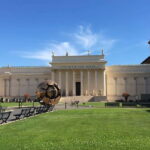
Then there’s the outside/transition area feel that makes the Vatican more enjoyable: the Belvedere courtyard and the Cortile della Pigna. Here, the tour specifically includes “Sphere within a Sphere” by Arnaldo Pomodoro. It’s a modern work placed in a classic setting, with that textured cracked bronze look and the idea of a smaller sphere inside a larger one. It’s the kind of stop that breaks the museum pattern and gives your eyes something different to focus on.
This section is also where you get the chance to pause. If you’re prone to power-walking, use that pause. Stand still for a moment in the courtyard. Rome’s museum spaces are often designed like stages, and you’ll appreciate it more if you stop trying to conquer everything.
Gallery of Maps and Tapestries: Art That Teaches You How Italy Looked
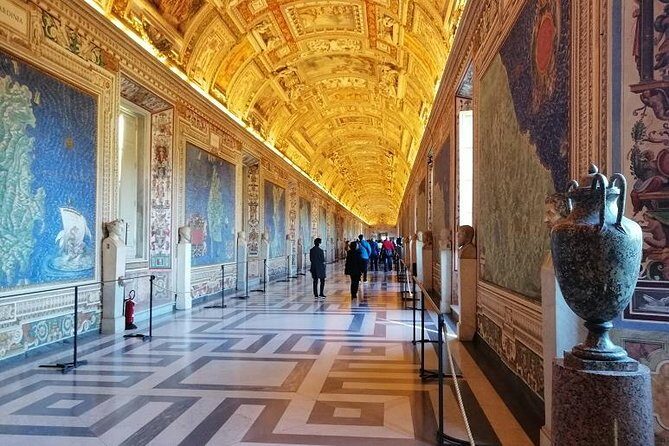
After the Etruscan and sculpture areas, the tour shifts into Renaissance storytelling. The Gallery of Maps (Galleria delle Carte Geografiche) is one of the most interesting “how do I organize time in my head” experiences at the Vatican.
These maps were created in the 16th century under Pope Gregory XIII and stretch across about 120 meters. That length matters: it’s meant to be walked and studied, so the tour’s short guided timing (about 5 minutes) is likely to feel fast, but the payoff comes from knowing what you’re looking at. You’re not just seeing painted geography. You’re seeing how people in that era imagined and defined regions.
Then you move to the Gallery of Tapestries. These are 15th- and 16th-century works woven with scenes from biblical and historical narratives. They were inspired by designs from Raphael’s school, which helps explain the strong Renaissance storytelling style. Tapestries can feel decorative if you only glance. On a guided visit, you learn what to look for in the scenes and the narrative logic.
Because these gallery stops are brief, you’ll get more from your guide than from soaking in every detail. If you want “slow looking,” you’ll still have plenty to do after the tour, but this structured half-day is built for the big ideas.
You can also read our reviews of more museum experiences in Rome




Candelabra Gallery: When Greek and Roman Art Meets a Grand Room
The Gallery of the Candelabras is included as a short stop (about 5 minutes), but it’s not random. It’s named for a large marble candelabra that divides the gallery into thematic sections. The collection includes Greek and Roman statues, sarcophagi, and reliefs, with the gallery set up in the late 18th century.
This matters because it changes your viewing. You’re not only seeing artifacts; you’re seeing how a later era organized classical art into themes. It’s a reminder that the Vatican isn’t just a vault of ancient pieces. It’s also a place where interpretation and display design are part of the experience.
If you’re someone who likes architecture and arrangement, this quick stop can feel more meaningful than its time suggests. If you hate being rushed, plan to spend longer on your own later, because this tour moves you along to keep the full arc intact.
Sistine Chapel: Michelangelo With Meaning, Not Just Mere Looking
The Sistine Chapel visit is about 15 minutes, with your guide focusing on the details and hidden meanings behind Michelangelo’s frescoes. This is one of the best parts of a guided Vatican day because the Sistine Chapel can feel like a wall of art when you’re looking without a guide.
Your guide’s job here is to help you recognize the storytelling logic, the symbolism, and what Michelangelo was communicating through the composition. That’s the difference between seeing images and understanding what you’re seeing.
Here’s a practical tip: keep your time respectful. The chapel is not for stretching out or wandering aimlessly. If you go in thinking you’ll “read” every panel, you may miss the point. Instead, let your guide point you toward key moments, then take a careful look at those spots once you know what you’re aiming to see.
This part is also where you feel the value of the earlier structure. By the time you reach the Sistine Chapel, you’ve already had several museum rooms and thematic shifts, so your brain is primed to spot meaning, not just objects.
St. Peter’s Basilica in One Careful Hour: Pietà and Bernini’s Baldachin
The tour ends with St. Peter’s Basilica, with about 1 hour inside. St. Peter’s entry is free, but the art inside is anything but. You’ll have a chance to see masterpieces like Michelangelo’s Pietà and Bernini’s Baldachin.
The Baldachin is a centerpiece of the basilica interior, designed by Gian Lorenzo Bernini as a bronze canopy over the high altar. It towers over 90 feet tall and is packed with intricate details. Standing near it changes your sense of scale. It feels less like “a decoration” and more like architecture made into sculpture.
You’ll also get outside time for an outside view from St. Peter’s Square. That’s useful because it helps you place the basilica in its urban setting. You get the best of both worlds: the intimacy of the interior works, then the broader perspective outside.
One honest consideration: St. Peter’s can still be crowded even with a guided day. Your guide can help you make quicker choices about where to look first, which is a big part of why private tours work here.
Price and Value: What You’re Actually Paying For
At $541.85 per person for an approximately 3 hours 30 minute private tour, this is not a budget Vatican plan. You’re paying for a bundle: priority entry, a professional Blue Badge guide, special access elements (including the Golden Room), and round-trip transfers.
So what makes it worth it? You’re buying back time and energy. The Vatican is huge. Priority entry is a time multiplier, especially during peak hours. And the guide’s context is hard to replicate with a self-guided audio app, because you’re getting explanations targeted to the objects you’re standing in front of.
There’s also a built-in efficiency: this tour hits major museum areas that people typically spend an entire day trying to cover. You may not get every last room, but you’ll leave with the most important anchors: Egyptian artifacts, Etruscan jewelry and the Golden Room, Renaissance galleries like Maps and Tapestries, the Sistine Chapel interpretation focus, then St. Peter’s major art.
Group discounts can help too, since the tour lists group discounts. If you’re traveling with family or friends, it can turn from “splurge” into “smart planning.”
Who This Tour Fits Best (and Who Might Be Happier Alone)
This private Vatican tour is ideal if you:
- Want fast-track access and hate the idea of losing half your day to queues
- Enjoy art with explanation, especially at the Sistine Chapel
- Want a “best-of” day that still includes distinct themes like Egyptian and Etruscan museums
- Are staying in a hotel within the Aurelian Walls and want transfers handled
It may not be ideal if you:
- Prefer to wander freely with no structure (this tour is guided and time-boxed)
- Struggle with strict museum rules like the dress code (no shorts or sleeveless tops; knees and shoulders must be covered)
- Don’t match the pickup zone (pickup is only available for centrally located hotels within the Aurelian Walls)
Also, if you’re visiting during Jubilee-era closures or restorations, some monuments can be affected. The operator may message you about changes, so treat your schedule as flexible even with a plan.
Should You Book This Private Vatican Tour?
If you want the Vatican without the usual stress, I’d book it. The combination of priority entry, a private Blue Badge guide, and the Egyptian + Etruscan special access (including the Golden Room) is exactly what makes a short Vatican day feel satisfying instead of incomplete.
It’s also a smart choice for first-timers. You’ll cover the major landmarks plus the thematic stops people usually miss when they rush. And since you end with time to continue exploring Rome independently, you’re not trapped inside the Vatican bubble all day.
Just be ready for the practical stuff: dress code compliance, comfortable shoes, and the reality that even a private tour still means standing in crowded sacred spaces.
FAQ
FAQ
How long is the private Vatican tour?
The tour runs for about 3 hours 30 minutes.
Is this a private tour?
Yes. It’s a private tour/activity, and only your group will participate.
Do you pick up from my hotel?
Hotel pickup and drop-off are included for centrally located hotels within the Aurelian Walls only.
What language is the tour offered in?
The tour is offered in English.
Does the tour include tickets and entry fees?
Admission tickets are included for the Vatican Museums stops listed in the itinerary. St. Peter’s Basilica entry is included as free admission.
Is fast-track entry included?
Yes. You get guaranteed skip-the-line access with prebooked priority entry.
Which areas does the tour cover?
The tour covers the Vatican Museums, including the Egyptian Museum and Etruscan Museum, plus the Gallery of Maps, Gallery of Tapestries, Gallery of the Candelabras, the Sistine Chapel, and St. Peter’s Basilica.
What should I wear to enter the museums and churches?
A dress code is required. No shorts or sleeveless tops are allowed. Knees and shoulders must be covered for both men and women.