REVIEW · MUSEUMS
Private Tour: Vatican Museums, Sistine Chapel & St Peter Basilica
Book on Viator →Operated by MisterTour · Bookable on Viator
That Vatican crowd energy is real. This private route is built to save your time while still hitting the real highlights—Vatican Museums, Sistine Chapel, and St Peter’s Basilica—without feeling rushed between them. You’ll get a guide’s narration plus smart pacing through the big rooms, including the Raphael Rooms with Renaissance frescoes.
Two things I really like about this experience are the line-sparing VIP entrance for the Vatican Museums and the way your path can be tailored to your interests. Add in the practical setup—headsets when the group is larger than five—so you don’t miss details while you’re craning for ceiling art.
One thing to consider: the tour is only about 3 hours total, so you’ll see a curated slice of the Vatican rather than every single room and hallway.
In This Review
- Key highlights you’ll feel right away
- A VIP Vatican route built for a short visit
- Where you meet and how the timing works
- Vatican Museums: the smart sweep from courtyards to grand galleries
- Raphael Rooms: why this stop lands so well
- Sistine Chapel in 30 minutes: what to focus on
- St Peter’s Basilica: finishing with the big space and big art
- Private guide + headsets: where the money actually goes
- Price and value: when $463.46 makes sense
- Who this tour fits best in Rome
- Quick practical tips before you go
- Should you book this Vatican private tour?
- FAQ
- Is this tour private?
- How long is the Vatican Museums, Sistine Chapel, and St Peter’s Basilica tour?
- Does the price include admission tickets?
- What areas are covered inside the Vatican Museums?
- Are headsets provided?
- Where does the tour start and end?
- What language is the tour offered in?
- Is there an age or fitness requirement?
- Are service animals allowed?
- What happens if I cancel?
- How far in advance do people typically book?
Key highlights you’ll feel right away
- VIP entrance to the Vatican Museums to cut down the worst of the wait before you even start viewing.
- Raphael Rooms on the itinerary, including frescoes by Renaissance master Raphael.
- Sistine Chapel focus on the ceiling and the Last Judgment, with just enough time to actually look.
- Headsets for larger groups, so you can hear your guide’s commentary without straining.
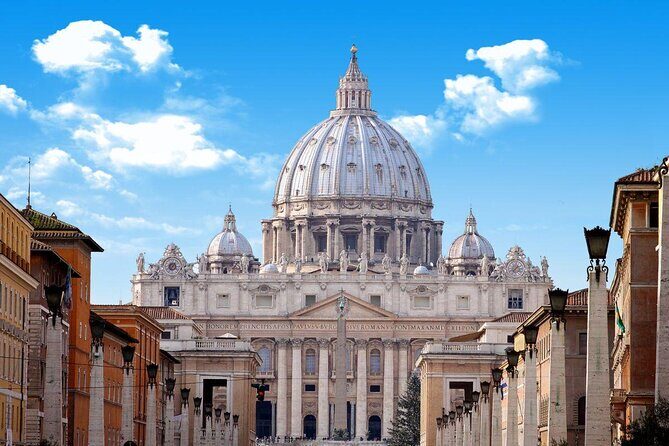
- St Peter’s Basilica as the final stop, ending right where you want to be: in the Piazza San Pietro area.
A VIP Vatican route built for a short visit
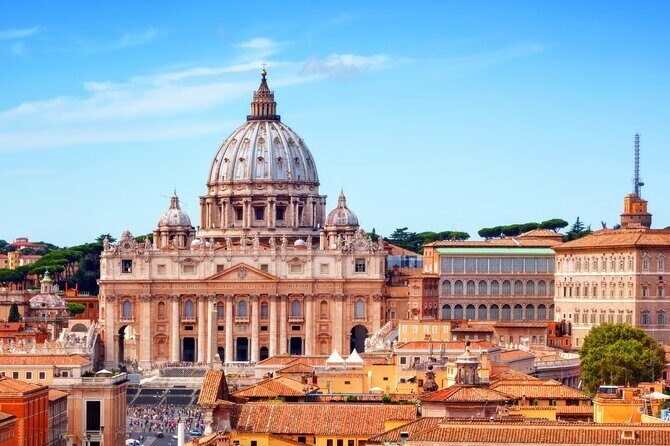
The Vatican can feel like a maze if you’re going solo. This is the opposite vibe: a private format with a guide who helps you move with purpose, then gives you enough context to make the art make sense fast.
The best part for me is the trade-off. You’re not trying to cram everything into a day. Instead, you’re spending your limited time on the rooms that people remember—and doing it with fewer interruptions than the standard entry shuffle.
Because it’s private, your guide can also steer the experience toward what you care about, whether that’s frescoes, grand architecture, or the big-picture story of what you’re seeing as you walk from room to room.
You can also read our reviews of more private tours in Rome

Where you meet and how the timing works
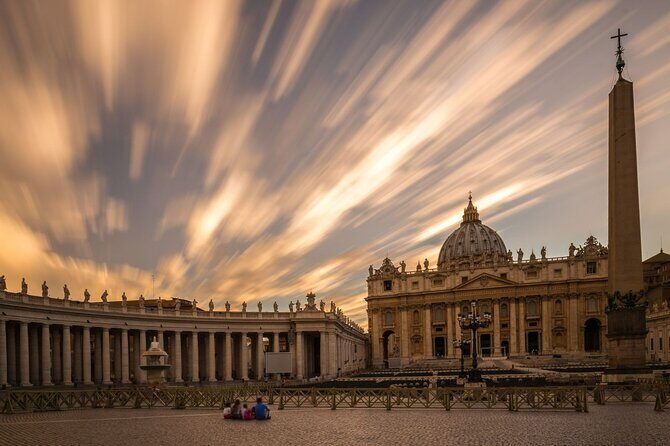
You’ll meet at Viale dei Bastioni di Michelangelo, 21, 00192 Roma RM. The tour ends at St Peter’s Basilica, Piazza San Pietro, 00120 Città del Vaticano, Vatican City—right where it makes sense to keep exploring on your own.
Timing matters here because Vatican Museums alone can eat half a day if you’re not careful. This tour keeps it tight and readable: about 2 hours in Vatican Museums, 30 minutes in the Sistine Chapel, and about 30 minutes in St Peter’s Basilica.
That schedule is also why headsets matter. When you’re standing still in major rooms, you don’t want to keep asking each other What did they say? The headset setup (used when the group is larger than five) is a small detail that makes a big difference in how much you actually take in.
Vatican Museums: the smart sweep from courtyards to grand galleries
Your Vatican Museums visit is built around a sequence that keeps you moving through major sections without disappearing into random side rooms. You start with a special entrance that helps you avoid the long wait right up front.
Once you’re in, you’ll pass through a handful of iconic spaces that teach you how the Vatican “thinks” visually—collecting, displaying, and celebrating art in a way that feels like a curated museum of museum history.
Here’s what you can expect to see on this route:
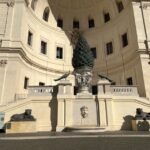
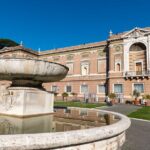
- Pinecone Courtyard: one of those visual anchors that makes the museum feel like a destination, not just a corridor.
- Gallery of Tapestries: an art form people often skip, even though it’s a major part of how stories were displayed and preserved.
- Gallery of Candelabra: classical-looking sculpture and decoration that helps you read the Renaissance taste for antiquity.
- Hall of Maps: a room that’s less about a single masterpiece and more about scale, detail, and what the Vatican wanted to show the world.
- Raphael Rooms: the centerpiece for many visitors, because these frescoes are where art, power, and storytelling lock together.
The practical value: this layout lets you see variety—textural art, sculpture-inspired design, big-scale rooms—so the experience doesn’t become repetitive after an hour.
The caution: because this is a 3-hour overall tour, you won’t linger for ages in every room. If you’re the type who wants to study brushwork in peace for half an hour at a time, you’ll probably want a longer independent museum plan later.
Raphael Rooms: why this stop lands so well
The Raphael Rooms are often where the “wow” factor turns into “I get it now.” You’re not just looking at pretty frescoes—you’re seeing how Renaissance thinkers built meaning through composition, figures, and symbolism.
This tour specifically includes the Raphael Rooms, and the way the guide contextualizes what you’re seeing is the difference between “I saw paintings” and “I understand the scenes.” One guide you may run into is Linda Gutiérrez, who’s highlighted in feedback for explaining Rafael and Michelangelo in a way that really helps you track ideas as you move from room to room.
If you’re wondering why the rooms matter, here’s the simplest explanation: fresco cycles like these are designed to be read as a narrative. When you have a guide pointing out what to notice, the paintings stop being isolated images and start feeling like chapters.
The other nice thing is pacing. Raphael Rooms are popular, and time can evaporate fast. With a private guide handling the flow, you spend more of your time looking and less of it waiting for the group to catch up.
Sistine Chapel in 30 minutes: what to focus on
The Sistine Chapel is not really a “scan and move on” place. It’s the kind of room where you need to slow down mentally, even if the schedule is tight.
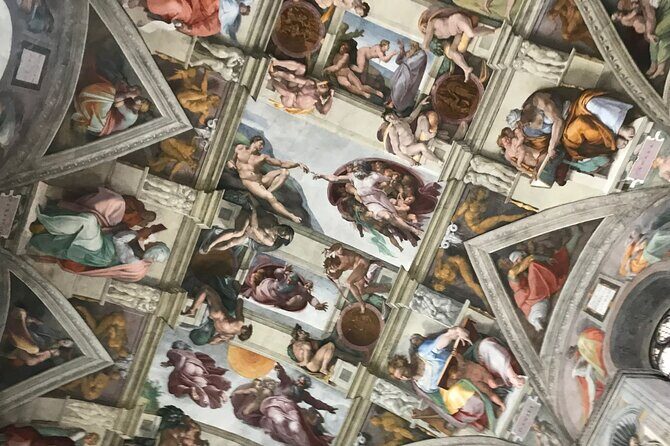
In about 30 minutes, you’ll spend your time on two major Michelangelo works: the ceiling and the Last Judgment. That’s a good pairing because it gives you the full range of his vision—ceiling storytelling overhead, and then the dramatic moral and cosmic intensity of the Last Judgment.
A standout advantage of a guided private setup: you can take advantage of moments that might not be obvious on your own. In at least one experience, the guide helped a group get into the line for a personal blessing opportunity in the Sistine Chapel when that option was available. Even if you don’t target that specifically, it shows how much a guide’s timing and awareness can affect what you experience.
The consideration: 30 minutes goes quickly in a space where people naturally want to look upward for long stretches. If you’re sensitive to crowds or you need frequent breaks, plan for that mentally and keep your eyes on the two big targets: ceiling scenes first, then the Last Judgment.
You can also read our reviews of more museum experiences in Rome


St Peter’s Basilica: finishing with the big space and big art
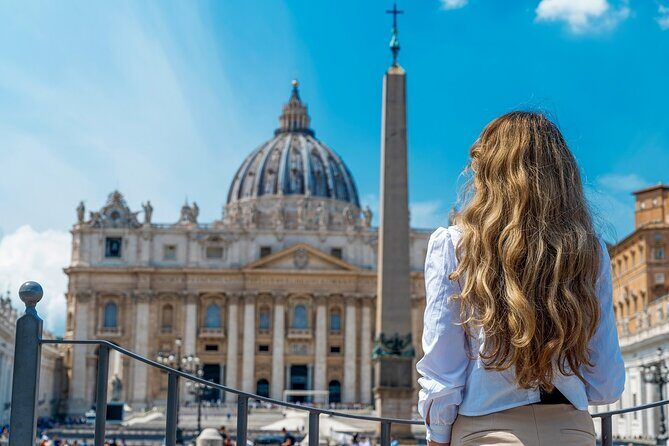
You end in St Peter’s Basilica, with about 30 minutes in the church itself. This is a smart final choice because the basilica is visually overwhelming in the best way, and you don’t need the museum context to understand why people fall for it.
You’ll focus on the architecture and the breathtaking artworks inside. The goal isn’t to “see everything.” It’s to leave you with an informed first impression so you can keep exploring afterward, whether you walk around the nave again or step out toward Piazza San Pietro for a breather.
If you’ve only ever seen photos of the basilica, seeing it in person is often a shock—not because it’s smaller or bigger, but because it feels layered. Stone, sculpture, sightlines, and light all work together, and a guide helps you notice what you’d otherwise miss.
The only drawback to keep in mind is that 30 minutes is a taste, not a full basilica study. If you want to read inscriptions, explore side chapels deeply, or chase every view, you’ll want extra time after the tour.
Private guide + headsets: where the money actually goes
At $463.46 per person for roughly 3 hours, the price isn’t low. But for a private Vatican day, what you’re paying for is not just access—it’s friction reduction and interpretation.
There are two value levers built in:
- You skip the long wait entering the Vatican Museums via a special entrance.
- You get a private guide who can adjust the journey to your preferences, plus headsets for groups larger than five.
Interpretation is the underrated value. The Vatican Museums are full of famous names, but the magic happens when someone helps you connect the dots—what you’re looking at, why it exists, and how it fits into the larger artistic conversation.
If you’ve ever walked through a museum thinking you should be impressed but couldn’t say why, you’ll understand why people love this kind of guided format. The guide’s job here isn’t to recite facts. It’s to point your eyes at the right things at the right moment.
And feedback backs that up. The overall rating is 5 out of 5 from six reviews, with repeated praise for guide skill, patience, and making the visit feel smooth through crowds.
Price and value: when $463.46 makes sense
Let’s do the honest math in human terms. This tour includes admission tickets for each stop—Vatican Museums, Sistine Chapel, and St Peter’s Basilica. That matters because tickets can be a separate line item when you book components yourself.
You’re also buying time savings. The Vatican line environment can wreck even good itineraries. When your entry is handled with a special entrance, you spend more minutes actually inside the rooms rather than losing your day to queue logistics.
So is it worth it? It tends to be worth it if:
- you want a guided experience rather than a self-guided sprint,
- you’re short on time in Rome,
- you care about understanding what you’re seeing (especially in the Raphael Rooms and Sistine Chapel).
It might not be worth it if you’re comfortable figuring things out solo and you’re staying long enough that you can afford a slower day in the Vatican.
Who this tour fits best in Rome
This private tour works best for people with a moderate fitness level who want to hit major Vatican landmarks in one concentrated plan. The pacing is still walk-and-stand heavy, especially in museum areas, but it’s designed as a focused visit rather than a marathon.
It’s also a solid choice if you’re:
- traveling as a couple or small group who wants privacy and direct answers,
- a first-timer who wants the strongest hits without guessing what matters most,
- someone who enjoys art explanations and wants a guide to help with context.
If you’re the type who wants to spend hours in one room or you’re aiming to see every single wing, you’ll likely want a longer itinerary and some independent time later.
Quick practical tips before you go
- Wear shoes you can stand in for a while. This is a “feet will talk” day.
- Have your expectations set for a curated route. You’ll get depth on key stops, not an exhaustive museum crawl.
- Bring a mindset for looking up. Sistine Chapel and the basilica both reward that habit.
- If your group size is above five, count on headsets to keep the guide’s voice clear.
And yes, the Vatican can be crowded. This tour’s structure is designed to help you feel in control anyway.
Should you book this Vatican private tour?
Book it if you want a private, time-efficient way to see Vatican Museums, the Raphael Rooms, the Sistine Chapel ceiling and Last Judgment, and finish in St Peter’s Basilica—without spending your whole trip inside a queue.
Skip it or pair it with extra time if you’re chasing every room and chapel in the Vatican. A 3-hour format is a highlight reel, not a full museum doctorate.
If I were helping you decide between options, I’d lean toward booking when your priorities are (1) fewer lines, (2) expert guidance that makes the art click, and (3) a smooth, well-paced day that ends exactly where you want to be.
FAQ
Is this tour private?
Yes. It’s a private tour/activity, so only your group participates.
How long is the Vatican Museums, Sistine Chapel, and St Peter’s Basilica tour?
It’s about 3 hours (approx.).
Does the price include admission tickets?
Yes. Admission tickets are included for the Vatican Museums, the Sistine Chapel, and St Peter’s Basilica.
What areas are covered inside the Vatican Museums?
You’ll visit major sections such as the Pinecone Courtyard, the Gallery of Tapestries, the Gallery of Candelabra, the Hall of Maps, and the Raphael Rooms.
Are headsets provided?
Headsets are used for groups larger than five so you can hear your guide clearly.
Where does the tour start and end?
It starts at Viale dei Bastioni di Michelangelo, 21, 00192 Roma RM, Italy and ends at St Peter’s Basilica, Piazza San Pietro, 00120 Città del Vaticano, Vatican City.
What language is the tour offered in?
It’s offered in English.
Is there an age or fitness requirement?
Travelers should have a moderate physical fitness level.
Are service animals allowed?
Yes, service animals are allowed.
What happens if I cancel?
This experience is non-refundable and cannot be changed for any reason.
How far in advance do people typically book?
On average, it’s booked 255 days in advance, so earlier planning can help.