REVIEW · CATACOMBS TOURS
Private Tour of Catacombs and Ancient Appian Way (hotel pick up)
Book on Viator →Operated by Eternal City Private and Guided Tours · Bookable on Viator
Underground Rome has a weird way of sticking with you.
This private half-day links ancient Rome to early Christianity, with hotel pickup, a guided visit in the Catacombs of St. Callixtus, and walks at a few of the Appian Way’s most meaningful stops.
I especially like the convenience of being collected from your hotel and shuttled around in a private vehicle. And I love that the day doesn’t stop at the catacombs: you also reach St. Paul Outside the Walls, where the basilica’s long gallery of pope portraits makes the whole story feel continuous. In the best versions of this tour, guides like Stefano, Patrick, or Victor make the history feel personal instead of like a list.
The main caution: in the catacombs, you should expect simple tombs carved into rock—less dramatic than some photos promise—and the on-site experience can feel crowded if the group is larger than ideal.
In This Review
- Key things I’d plan around
- Porta San Sebastiano to the Appian Way: setting the scene fast
- Catacombs of St. Callixtus: what you’re really paying for
- What you can expect to see
- Why a guide makes a huge difference here
- Photo expectations
- The Appian Way walk: short time, big symbolism
- Where this stop works best
- Domine Quo Vadis: the footprints stop that slows you down
- Basilica Papale di San Paolo fuori le Mura: pope portraits and a feeling of continuity
- Tour pace and what the private format really buys you
- The rhythm of the day
- Vehicle size: small can be fine, sometimes it’s not
- Price and logistics: when this tour feels worth it
- Why some people feel cheated
- Why others say it’s money well spent
- My practical rule
- Who this tour suits best (and who might want another option)
- Should you book the Catacombs and Ancient Appian Way private tour?
- FAQ
- How long is the Catacombs and Ancient Appian Way tour?
- Is this a private tour or a group tour?
- Do I get hotel pickup in Rome?
- What’s included with the price?
- Are tickets handled digitally?
- What language is the tour offered in?
- Which sites are part of the itinerary besides the catacombs?
Key things I’d plan around
- Hotel pickup by private vehicle: fewer logistics headaches, especially in hot months
- Catacombs ticket is included: you don’t have to worry about entry on the day
- Porta San Sebastiano and Via Appia Antica stops: quick but iconic markers along the Appian Way
- Domine Quo Vadis footprints: a quiet, moving tradition tied to Saint Peter
- St. Paul Outside the Walls: pope portrait gallery plus a powerful sense of place
- Value depends on the guide experience: if the catacombs group is loud or hard to hear, the impact can drop
Porta San Sebastiano to the Appian Way: setting the scene fast
The tour starts at Porta San Sebastiano, also known historically as Porta Appia. This is a big, well-preserved gate in the Aurelian Walls, and it’s the kind of Roman structure that makes you understand why cities needed fortifications in the first place.
You’re not here for a long museum moment. It’s more like a smart “wake up and look around” stop. You’ll get a short introduction to how this gateway connects to the Appian Way—the so-called Queen of Roads—and to the military logic of Rome’s defenses. Even if your time is tight, seeing the gate in person is a useful anchor before you go underground.
If you like architecture and urban planning, this stop pays off. It gives context for what’s coming next: a road system that mattered for movement, power, and survival.
You can also read our reviews of more private tours in Rome



Catacombs of St. Callixtus: what you’re really paying for
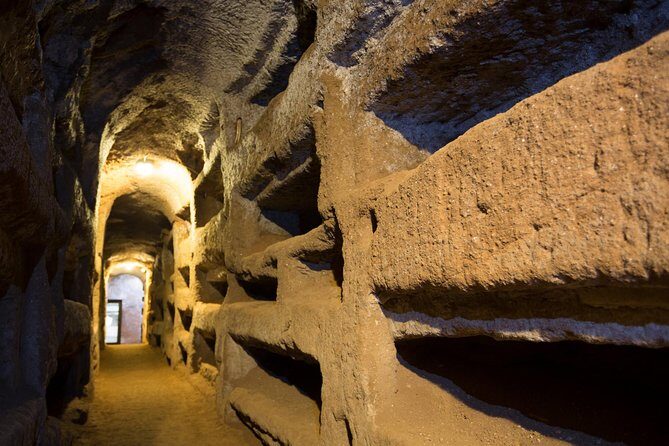
The headline is the Catacombs of San Callisto (St. Callixtus). These are early Christian burial catacombs, established in the 2nd century, and they functioned as an important cemetery connected with the Church of Rome. That matters, because you’re not just looking at spooky tunnels. You’re looking at a form of early public memory—how a community marked lives and faith underground.
What you can expect to see
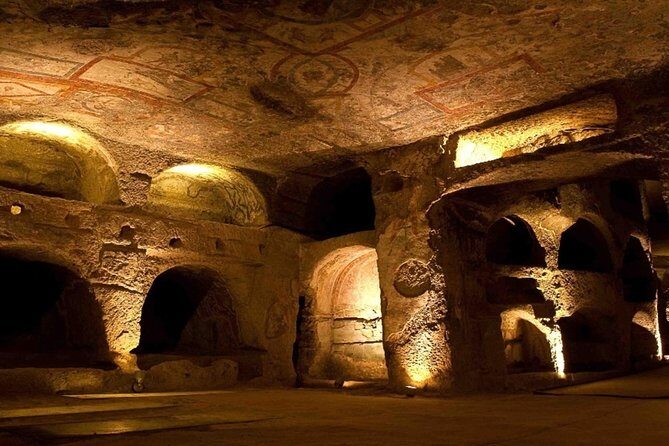
You should picture a labyrinth of passageways and tomb spaces carved into rock. The guided time is about 45 minutes, which is long enough to see the main areas but not long enough to treat it like a full-day expedition.
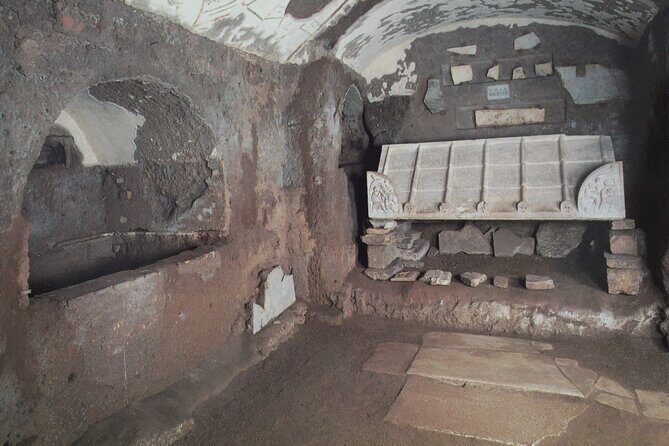
One thing I’d be upfront about: catacombs are not a movie set with bodies on display. Several experiences on this tour come with a similar reality check—visitors often describe seeing “holes in the wall” and tomb openings rather than dramatic scenes. That doesn’t make it pointless. It’s just different from the expectation people bring from Halloween-style cave tours.
Why a guide makes a huge difference here
Inside the catacombs, the best tours feel like a conversion of your attention. A strong guide helps you read the space—where people were laid to rest, how the tunnels connect, and why the site matters. In positive reviews, guides named like Patrick or Stefano are praised for making the place feel understandable and even moving. In weaker experiences, the same site can feel flat, often because the guide is hard to hear or the on-site group is larger than ideal.
So here’s your practical approach: when you enter, treat it like an educational sprint. Ask a question early. Get your bearings quickly. Then follow the guide’s cues so you’re not just drifting through dark corridors.
Photo expectations
You might find that photography is not allowed inside, and one visitor specifically mentioned that they weren’t told in advance. If photos matter to you, plan for a “go and look” visit instead of a “document everything” one.






The Appian Way walk: short time, big symbolism
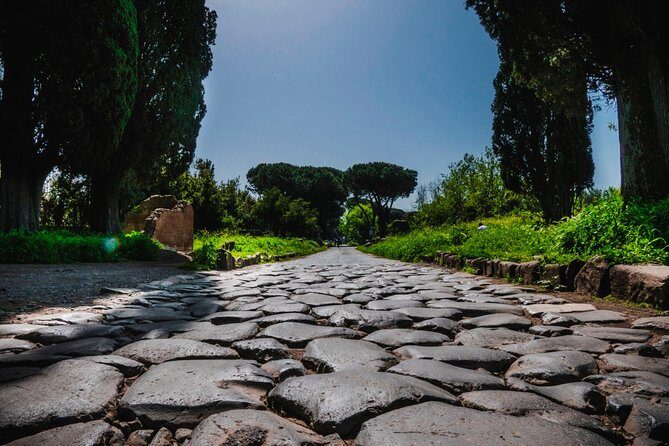
After the underground portion, you’ll step back into daylight at the Appian Way (Via Appia Antica). The time here is about 15 minutes, so think “taste of the road,” not “walk the whole ancient route.”
This matters because the Appian Way can be a whole day activity if you go deeper into the preserved stretches. On this tour, you get the most important idea: you’re standing on a road that shaped movement for centuries. The stops nearby tie into legends and famous names—Spartacus and his followers are part of the story you’ll hear, along with references to figures like Crassus and Commodus.
Where this stop works best
If you want one Appian Way highlight without the stress of planning transport and pacing, this is the right version. If you’re hoping for a long hike with quiet countryside, you’ll probably wish for more time outside the city.
Domine Quo Vadis: the footprints stop that slows you down
One of the most human, emotionally focused stops is Chiesa del Domine Quo Vadis, also known as the Church of Saint Mary in Palmis. It’s small, but it carries heavy tradition tied to the legendary encounter between Saint Peter and a vision of Christ.
The story you’ll hear is simple and direct: Peter asks Domine, quo vadis?—Lord, where are you going?—and the tradition says Jesus replies that he is going to Rome to be crucified again. Peter returns, and the meaning lands as more than a religious anecdote. It’s about fear, choice, and what it costs to turn back.
Inside, there’s a marble slab believed to bear the footprints of Christ. Even if you’re not chasing miracles, the physical marker helps you connect the story to your body. It’s one of those stops where the guide can steer you away from “fact-checking” and toward noticing how the place is designed to make you reflect.
Basilica Papale di San Paolo fuori le Mura: pope portraits and a feeling of continuity

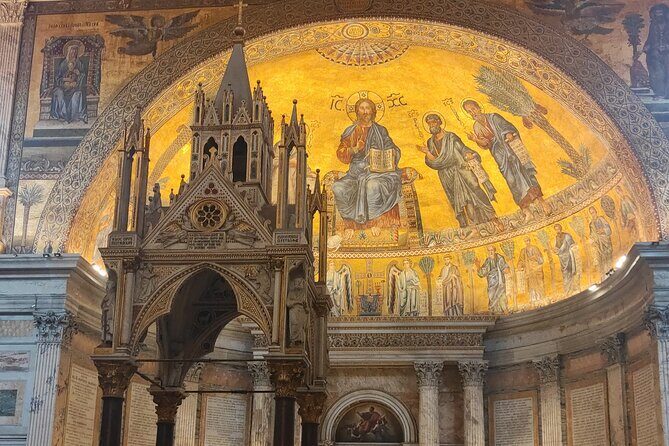
You finish at Basilica of Saint Paul Outside the Walls, one of Rome’s four major basilicas. It’s built over the burial site of Saint Paul the Apostle, and it’s a far calmer atmosphere than the busy city center.
This stop is about 20 minutes, and during that time the standout feature described in the itinerary is the long gallery with medallion portraits of every pope. That sounds like a background detail until you see it. Then it becomes a powerful reminder that this isn’t a single moment in time—it’s a chain of leadership and memory.
If you’re visiting during the Jubilee period (the tour name references Jubilee 2025), you might also find extra spiritual energy. People mention how special St. Paul’s feels in that context, and that matches what the building already does on an ordinary day: it slows your thoughts down.
Practical note: churches can be crowded, and your time is limited. If you want photos, pick your moment fast—don’t get stuck at the first angle and run out of time.
Tour pace and what the private format really buys you
This is listed as a private tour, meaning it’s for your group only. That said, one part is still operated like a formal site visit: the catacombs visit is a guided group tour at the location. In practice, your overall day stays private, but you might still experience the on-site reality of group logistics.
The rhythm of the day
A typical flow looks like this:
- short orientation at Porta San Sebastiano
- guided time in the catacombs (about 45 minutes)
- quick stop and walk on the Appian Way (about 15 minutes)
- reflective church stop at Domine Quo Vadis (about 15 minutes)
- final basilica visit at St. Paul Outside the Walls (about 20 minutes)
That pacing is efficient. It’s also why the tour can work well for people who hate long transit days.
Vehicle size: small can be fine, sometimes it’s not
The tour uses a private vehicle, and experiences vary. One visitor noted that a car meant for four adults felt small, while another praised a comfortable Mercedes. If you’re tall, carry a lot of bags, or you’re traveling with four, it’s worth mentally preparing for a tighter ride than you’d expect from a minivan.
Your guide also matters. In strong reviews, driver-guides like Lorenzo and Alessandro (and others) are described as knowledgeable and accommodating. In weaker reviews, some people felt the day was more “transport” than a fully guided narrative, especially if English comprehension wasn’t easy.
Price and logistics: when this tour feels worth it

At $190.67 per person for about 2 hours 30 minutes, you’re not just paying for site entrances. You’re paying for:
- hotel pickup and drop-off
- private transportation and local driving time
- human interpretation while you’re moving between locations
- catacombs admission being included
- coordination of multiple stops in a short window
So how do you judge value? By matching your expectations to what the catacombs actually are.
Why some people feel cheated
A common complaint is simple: the catacombs entrance fee on your own is far cheaper than the full tour package, so people feel like they’re paying mostly for a private car. If the catacombs themselves feel underwhelming to you, or if you can’t hear the guide well, the math looks bad fast.
Why others say it’s money well spent
When the guide is strong and the catacombs visit is handled well, this tour can feel like a high-efficiency history lesson. People mention learning new details about Roman underground burial life and finding the Appian Way gorgeous in person. Others call the day worth it because St. Paul Outside the Walls turns into a major payoff—especially when time is tight and you can’t stitch together multiple sites yourself.
My practical rule
If you’re the type who gets more from a good storyteller than from wandering alone, the private format can justify the price. If you mostly want photos and minimal guidance, you may want to consider self-planning and paying only for the catacombs entry.
Who this tour suits best (and who might want another option)
This tour is a good fit if:
- you want one smooth plan with hotel pickup
- you like early Christianity and Roman history connected by real places
- you value having someone interpret what you’re seeing
It’s less ideal if:
- you expect dramatic underground sets like a theme attraction
- you need a very quiet, uncrowded museum-like experience inside the catacombs
- you’re traveling with the expectation of lots of Appian Way walking time
Should you book the Catacombs and Ancient Appian Way private tour?
I’d book it if you want a time-efficient way to hit the Appian Way corridor plus the big spiritual end-stop at St. Paul Outside the Walls, and you know you’ll benefit from a strong guide. The Catacombs of St. Callixtus can be genuinely fascinating, but the experience hinges on hearing the guide and adjusting expectations toward rock-carved tombs rather than spectacle.
I wouldn’t book it blindly if you’re extremely price-sensitive or if you mainly want scenery and long walks. In that case, consider whether self-entry plus a shorter plan might fit you better.
Either way, the best move is simple: when you book, pay attention to what the tour includes (especially catacombs guidance and the number of guided stops), and show up ready to ask questions once you’re underground.
FAQ
How long is the Catacombs and Ancient Appian Way tour?
It runs about 2 hours 30 minutes.
Is this a private tour or a group tour?
It’s a private tour/activity for your group, but the catacombs visit itself is a guided group tour operated at the site.
Do I get hotel pickup in Rome?
Yes, pickup is offered. You’ll need to provide your hotel name.
What’s included with the price?
Admission tickets to the Catacombs of St. Callixtus are included, and the tour includes guided time at the catacombs plus stops at Porta San Sebastiano, the Appian Way, Domine Quo Vadis, and Basilica of Saint Paul Outside the Walls.
Are tickets handled digitally?
You get a mobile ticket.
What language is the tour offered in?
The tour is offered in English.
Which sites are part of the itinerary besides the catacombs?
You’ll visit Porta San Sebastiano, the Appian Way (Via Appia Antica), the Church of Domine Quo Vadis, and the Basilica of Saint Paul Outside the Walls.