REVIEW · ROME
Welcome To Rome Experience
Book on Viator →Operated by Welcome To Rome · Bookable on Viator
Some cities need a slow start. Rome doesn’t.
The Welcome To Rome Experience is a one-hour, multimedia history primer that helps you see the city in time periods, not just in monuments. Two things I’d put at the top: the 3D reconstructions (how buildings looked then vs. now) and the way the audio story is paced so families can follow it. The main drawback to keep in mind: it’s more visual and scripted than hands-on archaeology, so very young kids or teens who want action may lose interest.
I like that it’s set in the city center with multiple showings daily, so you can slot it in early without wrecking your day. You’ll also get a quick sense of how Rome formed, including the early geology/volcano angle before the city grows into the eras you’ll see outside. If you’re hoping for a long, detailed lecture on ancient Rome, you might leave wanting more.
In This Review
- Key highlights to know before you go
- Welcome To Rome: what this experience actually is
- Where to find it on Corso Vittorio Emanuele II
- The one-hour flow: four stations, then the auditorium film
- Stop 1: Welcome To Rome and how the story is staged
- The 3D reconstructions: why they help more than you expect
- The audio guide: good detail, but expect some narration
- The auditorium movie: the part people use to tie it all together
- Timing matters: when to fit it into your Rome day
- Price and value: does $21.77 feel fair?
- Who should book (and who might skip)
- Practical tips to make it work smoothly
- What to do after: turning the show into better sightseeing
- Should you book the Welcome To Rome Experience?
- FAQ
- How long is the Welcome To Rome Experience?
- What language is the show offered in?
- Is there a mobile ticket?
- Where is the show located?
- What is the latest time I can enter?
- Does it include admission?
- Is it family-friendly?
- Are service animals allowed?
- Is it near public transportation?
- Can I get a refund if my plans change?
Key highlights to know before you go
- Pre-purchased tickets save time and reduce standing around before the show starts
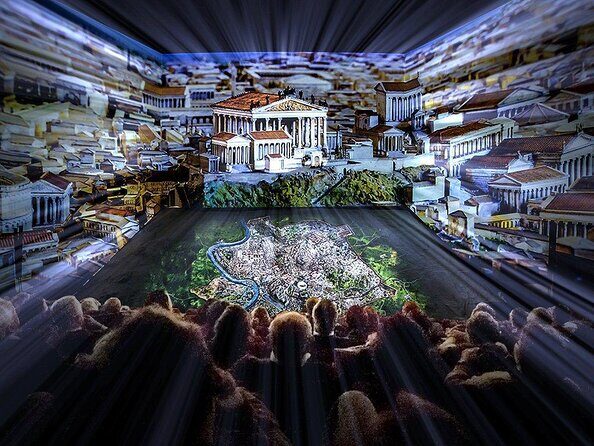
- 3D models + audio help you picture Rome across time periods, not as a pile of ruins
- Four short station stops (with audio in your chosen language) before the main film
- ~30-minute auditorium movie gives you a clear arc and a solid ending
- Great first-day fit for families and first-time visitors who want context fast
Welcome To Rome: what this experience actually is
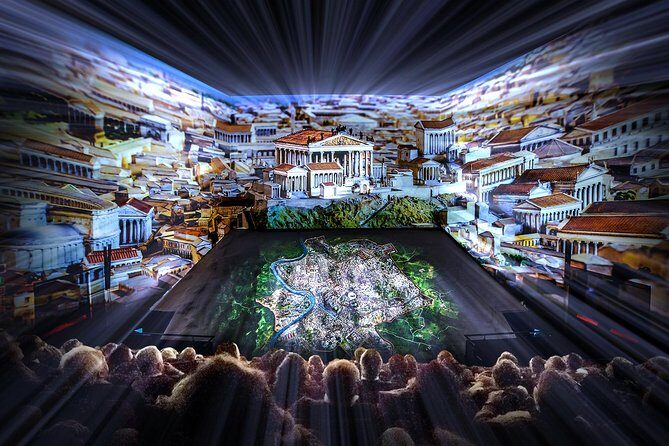
Welcome To Rome Experience is a multimedia history show designed to orient you fast. You’re not walking through the Forum or climbing anything. Instead, you watch reconstructions, listen through an audio guide, and move through stations that tie Rome’s story to what you’ll recognize later on the streets.
The big win is that it’s built for comprehension. Rome can feel confusing on day one: emperors, churches, reinventions, and “wait, what used to be here?” This show narrows it down to a clean path, using visuals and narration so the city starts making sense.
You can think of it as a practical “map for your imagination.” After you watch, sites like Palatine Hill, the Roman Forum, the Colosseum, and Circus Maximus are easier to interpret. You’ll know what time period you’re seeing, and why the city keeps changing.
You can also read our reviews of more tours and experiences in Rome.



Where to find it on Corso Vittorio Emanuele II
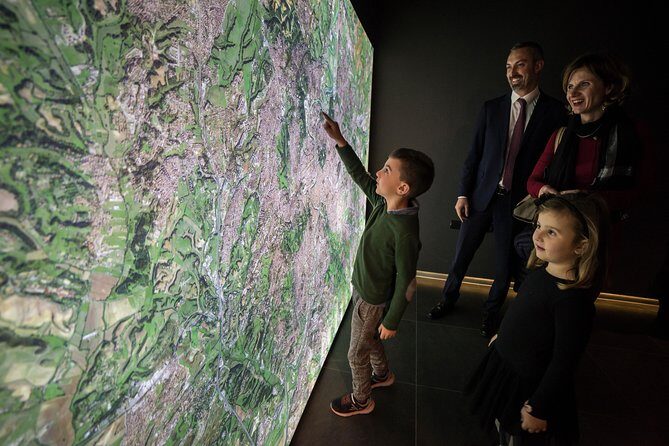
The address is Corso Vittorio Emanuele II, 203 – 00186 Roma (RM). That’s central Rome, which matters because you don’t want to spend your limited first hours in transit.
It’s also listed as near public transportation, so you can connect easily from major routes or from hotels that are close enough to walk for part of the way. If your plan is to do this early and then head out for outdoor sights, being in the middle of things is a real advantage.
The one-hour flow: four stations, then the auditorium film
The pacing is part of the design. You’re looking at about an hour total, so it works when you’re tired from travel or when kids need shorter blocks.
The show is structured in a way that keeps you moving:
- You go through multiple small rooms/stations with audio guidance and visual displays
- You then transition into a main auditorium for a longer video
From the experience description and the way it’s described in feedback, those station rooms include 3D projection/diorama-style visuals and a guided narrative. You’re basically building Rome in your head step by step.
A key detail: the main auditorium portion is described as around 30 minutes. That means you get a “sit and follow” moment after the station stops, which helps families who can’t keep a long standing pace.
Stop 1: Welcome To Rome and how the story is staged

Stop 1 is the core of the show: Welcome To Rome. You’ll be surrounded by the tale of Rome’s history with projections and interactive exhibitions. In plain terms, the format is designed to help you visualize how Rome grew from early beginnings into the city you see in layers today.
One review specifically notes the show begins with a brief geological explanation of early Rome’s landscape, including a volcano-related start. That’s a clever choice because it answers the question people don’t always ask: why did Rome become Rome in the first place?
Then the show moves through architectural eras. You’re not just hearing names of periods. The visuals are meant to show changes—how buildings and structures evolve across time. Multiple comments mention that the experience creates a sense of time travel by showing what locations and monuments look like now, then morphing into how they may have looked in ancient periods.
And yes, the visuals are a big part of why people rate this so highly. When the dioramas, models, and graphics work well, the story clicks. You walk out with a clearer framework for what you’ll see outdoors.
The 3D reconstructions: why they help more than you expect
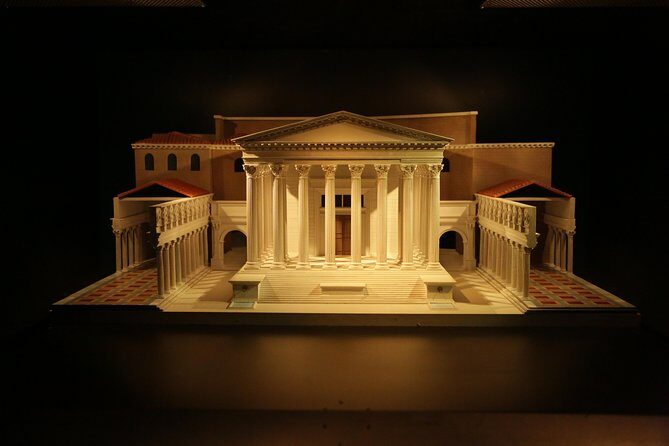
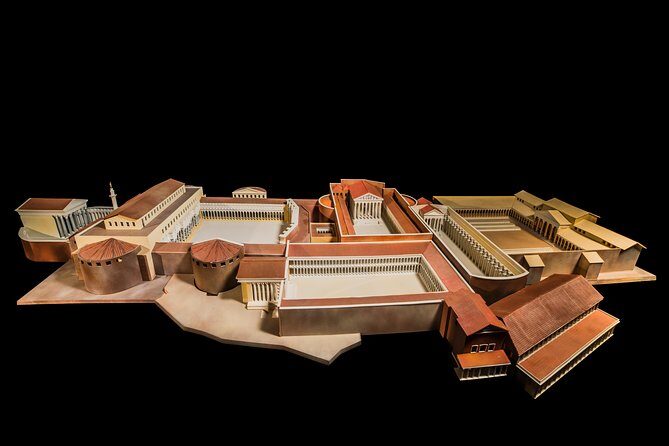
The most praised element here is the 3D aspect, especially the contrast between old reconstructions and the remains you see today. This is not just decoration. It helps you read ruins like a puzzle.
For example, when you later stand near the Roman Forum or Palatine Hill, you’ll likely notice more than “rocks and columns.” You’ll start asking better questions, like what walls were doing, where structures once connected, and why the city shape makes sense in certain periods.
A few feedback notes also mention models and graphics that make the “big picture” easier to hold. That’s important in Rome, where your brain gets overloaded quickly. This experience gives you a storyline you can carry with you.
If you’re visiting with kids, the 3D and the audio pacing can keep attention better than a typical museum lecture. Several comments call out that an 11-year-old (and families generally) found the audio interesting and easy to follow. Still, there’s also a caution: younger kids under about 8 may struggle to stay engaged for long, especially if they want more play and less explanation.



The audio guide: good detail, but expect some narration
The show includes audio along with video and interactive elements. The feedback is clear that the audio is detailed enough to be interesting, but not so heavy that it requires expert background.
Also, since the show is offered in English, it’s straightforward for English-speaking visitors and families. Audio guides in English can be a relief when you’re trying to keep everyone on the same page.
One practical thing: if radios or audio equipment isn’t working, staff can often replace it. There’s at least one mention of audio radios not functioning properly, with a staff member stepping in quickly to swap for a working one. That’s good to know because it means your experience shouldn’t fully break if the tech glitches.
The auditorium movie: the part people use to tie it all together
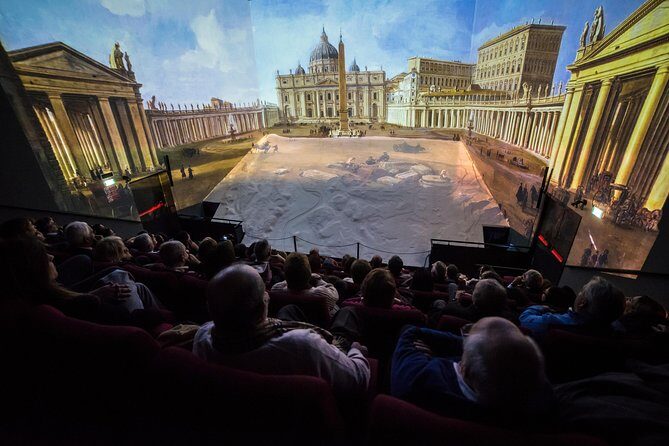
After the station stops, you get the main film in an auditorium. The tone shifts from moving around to sitting and absorbing.
This is where a lot of viewers feel the show really lands. Multiple comments highlight that the film is engaging and that it ties together the story after the diorama-like sections. For some visitors, the movie is the favorite piece, while for others it’s the reconstructions that steal the show.
There’s one potential downside noted: the auditorium is the only place where you can sit, and some people complained about broken seats or the condition of the space. That doesn’t mean it will be a problem for you, but it’s worth keeping in mind if you’re sensitive to seating comfort.
Timing matters: when to fit it into your Rome day
If I’m planning your itinerary for maximum payoff, this is a great first stop. People repeatedly describe it as a foundation for later visits, especially for sites where the layouts are confusing without context.
You’ll likely get the most value if you do it early in the trip, then return to what you learned when you see the Forum, Colosseum, Palatine Hill, and nearby church/museum areas. The show also seems to cover the progression between major eras (Classical through later periods), so the transition to Renaissance and Baroque sights can feel smoother.
One detail that helps planning: the last entry is one hour before closing. So don’t treat it like a vague “whenever” activity. Check the closing time for the day and get there in time to enter.
Price and value: does $21.77 feel fair?
At $21.77 per person, Welcome To Rome is not a free museum add-on. It costs money for a scripted show, so your value test is simple: do you want a fast Rome orientation in about an hour?
For many people, the answer is yes. The rating is strong—4.7 out of 5 with 95% recommending it—and the most common reasons are predictable: you get a concise history arc, strong visuals, and a built-in way to connect the city you’ll walk through.
The show is also short. You’re buying time and clarity. In a place like Rome, saving even a half day of confusion can feel worth it.
That said, there are real cautions. One review bluntly calls it overpriced and describes the rooms as empty and cold. Another says the execution felt mediocre, pointing out multiple small rooms where you stand, plus an auditorium with cleanliness issues like dirty bathrooms.
So here’s my balanced take: if you like visuals and want a quick, structured narrative, the price can make sense. If you want deep, long-form ancient-history detail or you hate the idea of multiple short station stops, you may feel the cost doesn’t match your expectations.
Who should book (and who might skip)
This is best for:
- First-time Rome visitors who want the city to make sense fast
- Families who appreciate a paced show in English with visuals kids can follow
- People who like models, projections, and “then vs. now” comparisons
It may be less satisfying for:
- History lovers who want more depth than a one-hour show can offer
- Teens or older kids who prefer interactive activities over narration
- Very young children under roughly 8, based on comments about staying engaged
If you’re in doubt, think about your travel style. If you’re the type who enjoys a good movie, strong diagrams, and learning on your feet, you’ll probably enjoy this. If you want to spend every minute outdoors or you only want free sights, you might skip it.
Practical tips to make it work smoothly
A few small things can make a big difference with a multimedia show like this.
Arrive early if you can. One comment says you can show up early and start the program. That’s useful if you want to avoid stress and get settled.
Wear comfortable shoes. The experience includes moving between four stations before the auditorium film. Several reviews mention it can be tiring to move between the stations, especially if you need frequent seating breaks.
Pay attention to audio equipment. If a radio doesn’t work, don’t just tolerate it. There’s evidence staff can replace it with a working one.
Plan a short mental break. Even though you’re in a show, you’re still moving through rooms. If your group includes someone who gets restless easily, build in patience for transitions.
And if you’re with kids, bring the kind of energy that helps them enjoy learning. The show is structured for attention, but it still depends on how your group takes in stories.
What to do after: turning the show into better sightseeing
The best part about a Rome orientation show is what it unlocks afterward. You’ll get value when you walk into outdoor sites and museums with better expectations.
For example, people explicitly mention that this kind of context makes it easier to imagine what Rome looked like near the Palatine Hill, Roman Forum, and the Colosseum. That’s not magic. It’s pattern recognition: once you’ve seen how structures evolved in the show, the city stops being random.
You may also find it helps with churches and palaces later on, because the show’s eras connect to the visual styles you’ll see across Renaissance and Baroque Rome.
If you’re building a route, consider this sequence: do the show early, then group nearby sights so the story you just learned keeps paying off.
Should you book the Welcome To Rome Experience?
I think you should book it if you want a fast, family-friendly Rome history orientation and you enjoy learning through 3D visuals, audio, and a short film. The strong rating and the repeated praise for the one-hour format make it a solid “first-day context” choice.
Skip or be cautious if you hate scripted narration, want deep ancient-Rome detail, or expect a fully comfortable, museum-like environment with lots of seating. A few comments point to cold rooms, cleanliness complaints, and equipment issues, so if those things would ruin your day, plan accordingly.
FAQ
How long is the Welcome To Rome Experience?
It runs about 1 hour (approx.).
What language is the show offered in?
The experience is offered in English.
Is there a mobile ticket?
Yes. The experience includes a mobile ticket.
Where is the show located?
It is at Corso Vittorio Emanuele II, 203 – 00186 Roma (RM).
What is the latest time I can enter?
The last entry is one hour before closing.
Does it include admission?
Yes. The admission ticket is included.
Is it family-friendly?
Most travelers say it works well for families, and kids often enjoy the visuals and audio. That said, some feedback suggests it can be harder for children under 8.
Are service animals allowed?
Yes, service animals are allowed.
Is it near public transportation?
Yes. It is listed as near public transportation.
Can I get a refund if my plans change?
You can get a full refund if you cancel up to 24 hours in advance of the experience start time. If you cancel less than 24 hours before, the amount paid is not refunded.