REVIEW · PRIVATE
Private Tivoli: Hadrian’s Villa and Villa d’Este with Pick-up from Rome
Book on Viator →Operated by Exploro Tours · Bookable on Viator
Hadrian’s Villa and Villa d’Este are a perfect break.
This private Tivoli outing swaps Rome’s noise for Roman ruins, Renaissance waterworks, and the kind of storytelling you can actually follow. Two UNESCO sites sit about 50 minutes from the city, and the day is timed to keep the walking manageable without rushing the key sights. Villa Adriana brings you inside Hadrian’s imagination, then Villa d’Este turns fountain math into real showmanship.
I especially like how the tour leans into what you’re seeing, not just dates and names. The guides—like Pasqualino, who brings a very hands-on, physical way of explaining things, and Valentina, who’s clearly passionate about art history and architecture with strong English—make the sites click fast. And with a professional, punctual driver like Paolo in the reviews, you spend more time looking around and less time worrying about getting in and out of Tivoli.
One thing to consider: this is a 6-hour day with real walking across historic sites, so comfy shoes matter. Also, the tour covers admissions and transportation, but it doesn’t include food or drinks—so plan to handle meals on your own.
In This Review
- Key Highlights You’ll Notice Right Away
- Tivoli Day Trip: Why This Pair of UNESCO Sites Works
- Villa Adriana: Thermal Baths, Dining Halls, and Hadrian’s Design Ideas
- Walking the Roman Ruins Like a Story (Not a Checklist)
- Villa d’Este: The Fountains, the Water Organ, and Rainbow Effects
- Pickup and Getting Back Smoothly in Rome
- Price and Value: What $662.44 Per Person Really Buys
- Who Should Book This Private Tivoli Tour
- Should You Book Private Tivoli: Hadrian’s Villa and Villa d’Este?
- FAQ
- How long is the Private Tivoli tour?
- What attractions are included?
- Are admission tickets included?
- Do you offer hotel pickup and drop-off in Rome?
- Is the tour private?
- Is the tour offered in English?
- Do I need to be able to walk a lot?
- Are food and drinks included?
- What if the weather is poor?
- Are service animals allowed?
Key Highlights You’ll Notice Right Away
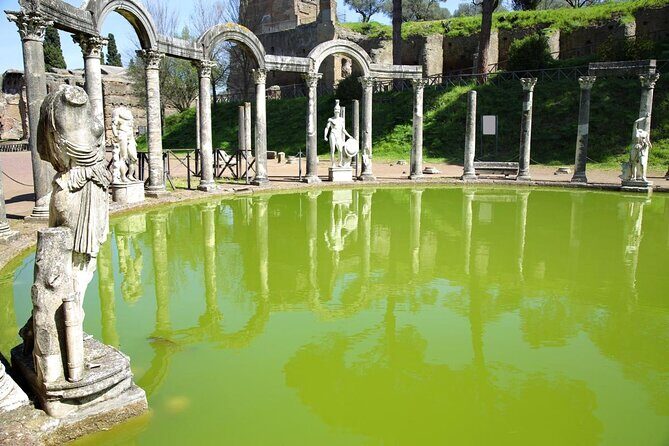
- UNESCO pairing in one day: Hadrian’s Villa (Villa Adriana) plus Villa d’Este, both admission-included.
- Roman design that feels alive: thermal bath spaces and dining halls take on a different mood when they’re wrapped in greenery.
- Renaissance water spectacle: forced creek engineering, a big waterfall effect, and rainbow visuals tied to the fountains.
- Water organ performance windows: the organ plays at set times, so timing your viewing can pay off.
- Pickup from your Rome address: city-center accommodation pickup and drop-off reduces stress.
- English guidance, examples included: guides like Valentina and Pasqualino have strong on-site presentation skills.
Tivoli Day Trip: Why This Pair of UNESCO Sites Works

Tivoli is the kind of place where one stop might feel like a detour—until you connect the dots. This tour does that well by pairing two very different “worlds” in a single outing.
First, you head to Hadrian’s Villa, built by Emperor Hadrian, who was an inveterate traveler and an amateur architect. The site isn’t just ruins on a hill. It’s a whole concept of distance from the city: spaces for relaxation, dining, and bathing, designed to feel removed and curated by design. Even after the villa was abandoned and covered by wood and wild vegetation, you can still sense the structure underneath.
Then you move to Villa d’Este, where the focus shifts from Roman engineering and imperial leisure to Renaissance cleverness—and yes, drama. The gardens are famous for water systems that start with a forced natural creek and distribute water through a chain of fountains. The result is a show you can watch with your eyes, plus a water organ performance that turns plumbing into music.
The practical win: the transport is handled, admissions are included for both places, and you don’t have to coordinate transit on your own. For a lot of people, that’s the real value of private tours in Italy—less “where do we go next?” and more “what am I looking at?”
You can also read our reviews of more private tours in Rome



Villa Adriana: Thermal Baths, Dining Halls, and Hadrian’s Design Ideas
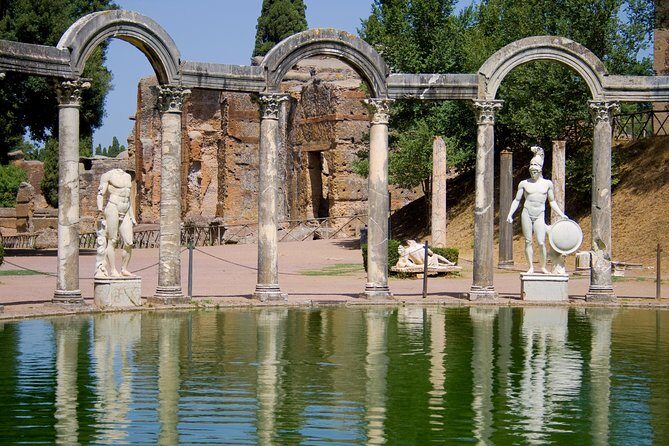
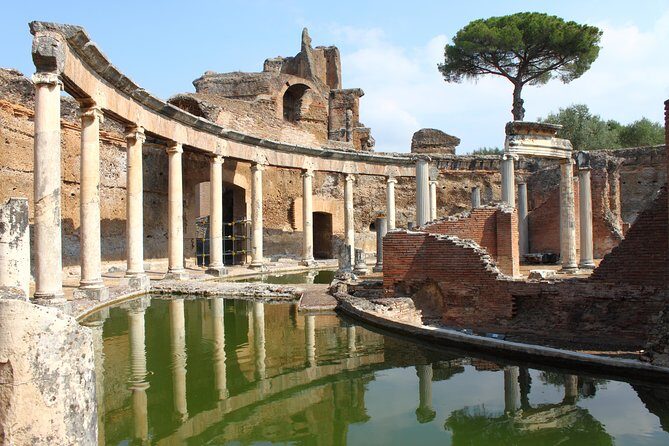
Hadrian’s Villa—Villa Adriana—takes you away from Rome chaos in a way that feels almost cinematic. You’re in Tivoli, and you’re walking through spaces that once functioned like high-style country retreat rooms. The time on site is about 3 hours, with admission included.
What I think makes Villa Adriana work is how varied the experience feels even though it’s a ruined complex. You get to picture everyday luxury in Roman terms: thermal baths, dining areas, and the surrounding garden spaces that grew back as the empire declined and the property was abandoned. The story that guides often emphasize—marbles being recycled later into other complexes—adds a grounded layer to the romance. You see that materials had a life after this villa’s glory era.
You’ll likely hear how Hadrian used innovation and references from across the empire. He visited far-flung places, then brought those ideas back, shaping the villa into something like an imperial “museum of experiences.” In that sense, it’s easier to understand than you might expect. Instead of trying to decode every brick, you’re learning how the pieces connect: bathing, dining, leisure, and the controlled feeling of being tucked away from the outside world.
A small reality check: you’re still walking through archaeological grounds. Paths can be uneven, and greenery can mean slick patches after rain. If you’re coming in from Rome, wear shoes you trust. You’ll also want a layer you can adjust to—Tivoli can feel cooler or warmer depending on the day, and you’ll be out enough to feel it.
Walking the Roman Ruins Like a Story (Not a Checklist)
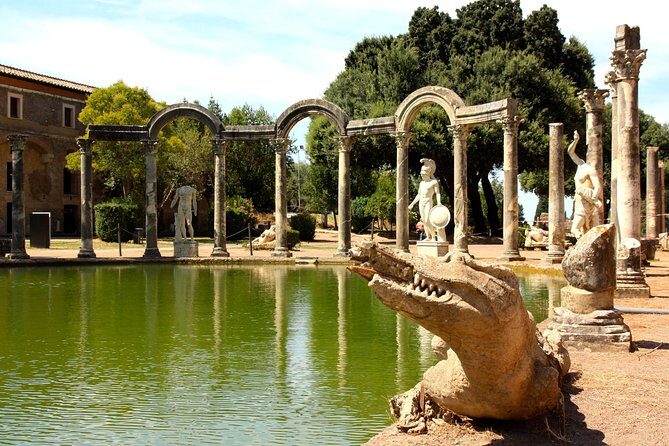
This stop isn’t just about “seeing old stuff.” It’s about understanding why it was built and why it mattered to someone like Hadrian.
Guides commonly point out how the villa’s rooms once looked and functioned differently than the ruins today. Thermal baths and dining halls weren’t meant to be solemn. They were built for comfort, status, and a kind of controlled pleasure. The way vegetation grows in around the remains can make those spaces feel like wild greenhouses—softening the severity you might expect from Roman stone.
This is also where the best guiding makes a difference. In the reviews, Pasqualino is praised for being hands-on and very physical in the way he explains what you’re looking at. That style helps a lot at Villa Adriana, because the site can feel sprawling if you’re only reading a map. When someone shows you how a feature works, you stop thinking in terms of random ruins and start thinking in terms of layout and purpose.
One more useful note: you’re getting a guided narrative while you walk, which is often far more satisfying than trying to “self-tour” this complex using phone notes. If you’re traveling with family or you just don’t want your brain to do too much heavy lifting, this is a smart way to spend the morning.
Villa d’Este: The Fountains, the Water Organ, and Rainbow Effects
After Villa Adriana, you shift from Roman opulence and greenery to Renaissance spectacle. Villa d’Este is shorter on paper—about 1 hour—but it’s packed.
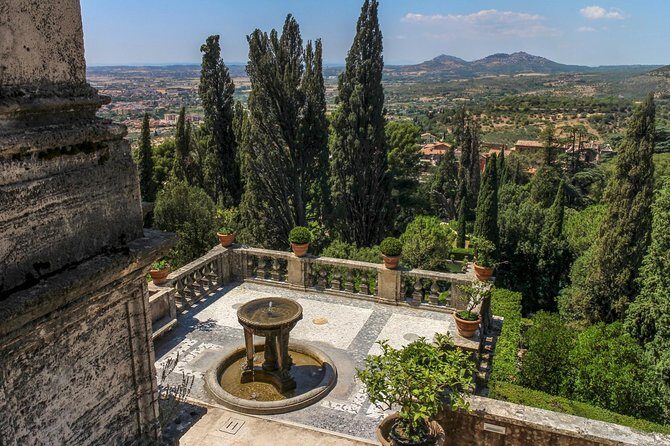
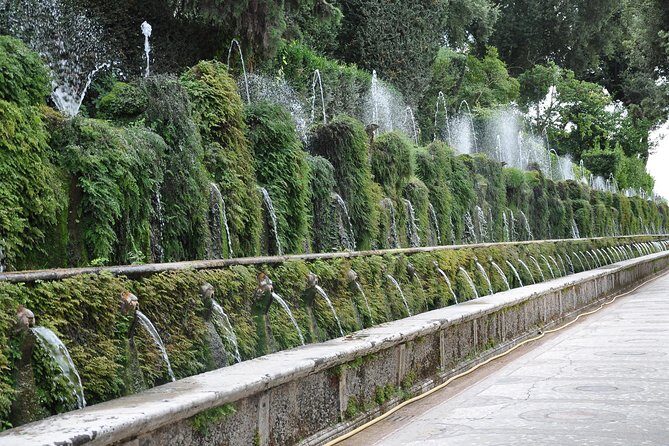
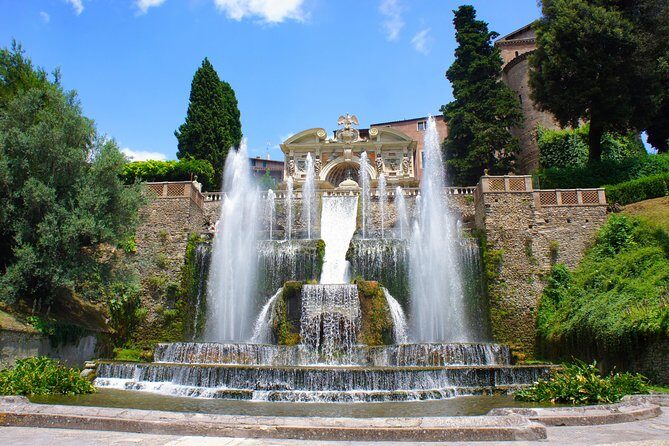
This is the garden designed for Cardinal Ippolito d’Este, built with an ambitious idea: the creators forced a natural creek to run and then used that water to power fountains that cascade down toward the valley. The scale is hard to grasp until you stand in it. You see patterns carved by flowing water across marble-tiled plains, and you often get the waterfall effect that’s famous here.
And then there’s the part you can feel in your eyes: rainbow effects. When conditions line up, mist and spray can create rainbow visuals right where the water hits the surfaces. It’s not guaranteed every second, but if you’re there at the right moment—especially near high-water features—you’ll be glad you brought the right attitude: slow down and watch.
The water organ is another headline moment. The organ plays at given times, so it helps if you’re not rushing through the garden like you’re late for coffee. If you hear it starting, pause. If you’re not sure where it’s coming from, ask your guide to point it out. That kind of instruction saves you from wandering for the sound.
Because the stop is only an hour, pace matters. This is a good day-trip choice if you want variety without burning your whole afternoon. It’s also a good reason to pick private guidance: you can prioritize what you most want to see rather than following a fixed group route.
Pickup and Getting Back Smoothly in Rome
The logistics here are as important as the sights. You get hotel pick-up and drop-off from accommodations in central Rome. That includes hotels, B&Bs, and apartments. You’ll just need to provide your accommodation name and address when you reserve.
That door-to-door approach saves energy. In Rome, the “fun” parts—walking alleys, figuring out one-way streets, waiting for late trams—can eat time. With a private vehicle and a professional driver, your day starts cleaner and ends cleaner too.
The tour runs around 6 hours total, so you’re not stuck on the road all day. You’re out long enough to appreciate both UNESCO sites, but short enough to still have an evening in Rome afterward—dinner, a relaxed walk, or a gelato mission. The driver also takes you back to your accommodation, or you can request another drop-off location in Rome.
One more practical point: this is listed for travelers with moderate physical fitness. That usually means you can handle walking for stretches, but you shouldn’t expect everything to be flat or effortless. If you’re planning to go, plan your day clothes accordingly: comfortable wear and walking shoes.






Price and Value: What $662.44 Per Person Really Buys
At $662.44 per person for a 6-hour private experience, this isn’t a budget day. The fair question is: what are you paying for besides sightseeing?
You’re paying for three concrete things:
- Private transportation with pickup and drop-off from central Rome
- Admission tickets included for both UNESCO sites
- English guidance on-site (with strong examples like Valentina and Pasqualino in the reviews)
When you add those up, the price starts to make more sense—especially if you’re comparing it to the cost and time friction of trying to arrange transit, tickets, and a guide separately. Private days in Italy often cost more, but they also remove stress. For this itinerary, stress removal matters because Tivoli is far enough from Rome that transit planning can turn into a whole project.
One drawback shows up in the feedback too: the tour can feel expensive, and a comment mentioned the lack of an included light snack. Food and drinks aren’t included, so plan to eat before you go or stop during your own time window. Think of this day as a “sights and stories” outing, not a picnic package.
If you’re the type who hates rushing, likes walking with direction, and wants to see two major sites without juggling logistics, the value can be solid. If you’re purely price-focused and you’re comfortable handling transit and admissions yourself, you might decide to do it independently.
Who Should Book This Private Tivoli Tour
This tour fits best if you want:
- A private, English-speaking experience with guidance
- A practical way to see two UNESCO sites without spending time coordinating transport
- A calmer, Rome-free day that still feels connected to the big themes of Roman and Renaissance design
It’s also a great fit if you’ve already seen the big Roman icons like the Colosseum and Pantheon and you want something more off the main squeeze. Hadrian’s Villa and Villa d’Este are major in their own right, but the experience feels less “tour bus factory” when you go privately.
Skip it or think twice if:
- Your group struggles with walking archaeological sites
- You’re trying to keep the day under a tight budget
- You need food included on schedule (you’ll need to handle meals and drinks yourself)
And one nice note: service animals are allowed on this tour. If that applies to you, it’s worth confirming details directly during booking.
Should You Book Private Tivoli: Hadrian’s Villa and Villa d’Este?
If you want a day that feels like a story—Roman leisure, then Renaissance engineering—book it. The pairing is smart, the admissions are included, and pickup from your Rome address cuts the hassle.
I’d especially consider it if you’re traveling with family, want your time controlled (about 6 hours), and care about explanation while you walk. When the guide is strong—like Valentina’s art-and-architecture approach or Pasqualino’s physical, hands-on style—the ruins and fountains stop being abstract and start making sense fast.
If budget is your top priority, you can likely DIY Tivoli. But if you value time, comfort, and someone helping you understand what you’re seeing, this private setup is the cleanest way to do it.
FAQ
How long is the Private Tivoli tour?
It runs for about 6 hours total.
What attractions are included?
You visit Villa Adriana (Hadrian’s Villa) and Villa d’Este.
Are admission tickets included?
Yes. Admission tickets for both attractions are included.
Do you offer hotel pickup and drop-off in Rome?
Yes. Pickup is offered from accommodations in Rome’s city center (hotels, B&Bs, and apartments). You’ll need to include your accommodation name and address when booking.
Is the tour private?
Yes. Only your group participates.
Is the tour offered in English?
Yes, the tour is offered in English.
Do I need to be able to walk a lot?
You should have a moderate physical fitness level. Comfortable clothing and walking shoes are recommended.
Are food and drinks included?
No. Food and drinks are not included.
What if the weather is poor?
This experience requires good weather. If it’s canceled due to poor weather, you’ll be offered a different date or a full refund.
Are service animals allowed?
Yes, service animals are allowed.