REVIEW · FOOD
Private Roman Vegetarian Food Tour
Book on Viator →Operated by Walkingourmet · Bookable on Viator
Vegetarian Rome, properly done. This private tour strings together market stops and classic meatless Roman bites, with a guide who explains what you’re tasting and why it matters in the city. You’ll move through areas like Campo de’ Fiori and Piazza Navona, then head toward the Jewish Community of Rome for a recipe you may not have seen anywhere else.
Two things I like a lot here are the mix of savory and sweet (cheeses, bruschetta-style flavors, tiramisu, gelato), and the way guides keep it personal. Names that have shown up for past groups include Vaneeza, Silvia, Orso, and Gabrielle, with Sabina also mentioned as a co-host. One possible drawback: it’s still a walking tour through central Rome, so plan on comfy shoes and a steady pace.
In This Review
- Key Things to Know Before You Go
- A Vegetarian Rome Tour That Feels Like a Walk With a Friend
- Campo de’ Fiori: Getting Oriented and Starting With the Real Stuff
- Piazza Navona: Fresh Fruit and Seasonal Market Finds
- Campo de’ Fiori Again: Cheese and Pear Energy
- Jewish-Roman Artichokes: The Recipe Stop You’ll Remember
- Rione Parione and Eustachio: Gelato, Chocolate, and Espresso
- What You’ll Likely Taste (Beyond the Usual Tourist List)
- How the Private Format Changes Everything
- Timing, Walking, and What to Wear
- English, Mobile Ticket, and Getting There Easily
- Price and Value: Is $112.38 Worth It?
- Who This Tour Suits Best
- Should You Book This Private Roman Vegetarian Food Tour?
- FAQ
- How long is the private Roman vegetarian food tour?
- Is the tour private?
- What language is the tour offered in?
- Where does the tour start and end?
- What food experiences are included?
- Are admission tickets included?
- Is there a free cancellation option?
Key Things to Know Before You Go
- Private group experience: only your group joins, so the guide can tailor pacing and questions.
- Market-to-dessert flow: you start with fresh stalls and end with gelato and sweets.
- Jewish-Roman artichokes: a standout, specific recipe theme that makes this feel more than a generic food crawl.
- True espresso culture focus: coffee is presented as an Italian blend, not just a quick caffeine stop.
- A guide who tells the story behind the food: you’re not only sampling; you’re learning how recipes fit local life.
- English-language tour: easier for solo visitors and English-speaking couples and families.
A Vegetarian Rome Tour That Feels Like a Walk With a Friend
Rome can be surprisingly easy as a vegetarian—if you know where to look. This tour is built to help you do that fast. Instead of throwing you into a long list of restaurants, you get a guided route that uses markets, a Jewish recipe stop, and a final tasting stretch for sweets and coffee.
One reason I recommend this format is that it gives you a food map. After you’ve tasted cheeses, pastry, and gelato in the right places, you’ll feel more confident ordering on your own. You’ll also pick up useful “what to look for” habits—like how to spot a good gelato texture or what goes with classic bites.
You can also read our reviews of more food & drink experiences in Rome


Campo de’ Fiori: Getting Oriented and Starting With the Real Stuff
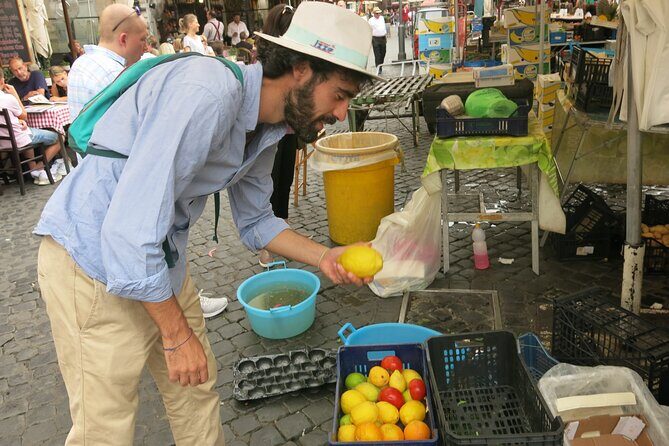
Your tour starts at P.za Campo de’ Fiori, 00186 Roma RM. The guide meets you there and gets you moving quickly, with an intro to some of the best local vegetarian food options you’ll sample across the next hours.
Stop 1 is about setup and taste—about getting your bearings and making sure you understand the style of flavors you’ll keep encountering. Even though it’s short (about 15 minutes), it’s the kind of start that keeps you from feeling lost in a big public square.
What to expect: a quick introduction to local market flavors and the first vegetarian tastings. The tour also uses this area again later, so you won’t feel like you’re sprinting through sights. You’ll have a chance to compare what you notice the first time versus the second time.
Piazza Navona: Fresh Fruit and Seasonal Market Finds
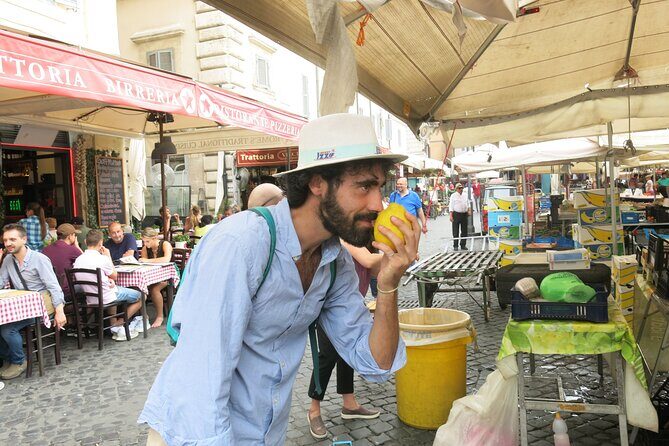
Next up is Piazza Navona, where the focus shifts from general orientation to seasonal goods from stalls all around you. You get about another 15 minutes here, which is perfect in Rome: just enough time to taste and soak in the atmosphere without turning it into a marathon.
What I like about this stop is the practicality. Fresh fruit and market items are easy to replicate later on your own if you’re observant. You learn what looks good in the moment—rather than relying on a fixed menu.
Potential drawback to keep in mind: if you’re sensitive to crowds or prefer quieter food experiences, Piazza Navona can feel busy. The tour moves at a pace that keeps it focused, but you’re still in a famous central area.
Campo de’ Fiori Again: Cheese and Pear Energy
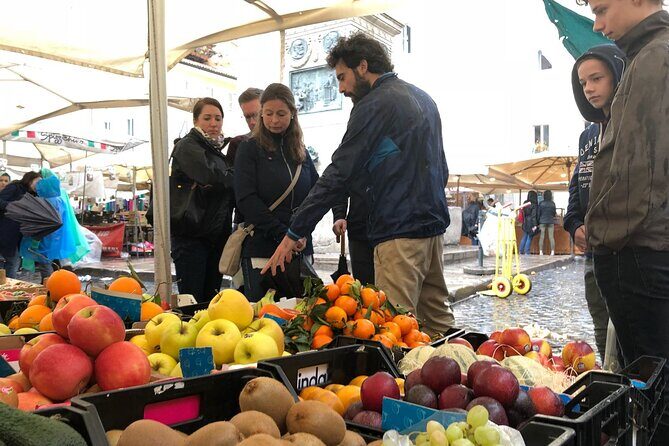
You return to Campo de’ Fiori for another short tasting moment (about 15 minutes). This stop has a fun, memorable theme: cheese and pear, plus “farmer stories” that connect the ingredients to local life.
That theme matters more than it sounds. In Rome, vegetarian eating isn’t just about swapping in pasta without meat. It’s about pairing ingredients well—sweet with salty, soft cheeses with something crisp or fresh. This kind of guided pairing helps you understand why certain combinations feel so Roman.
You also get another round of market observation time. That second pass is the secret sauce. The first time you’re tasting and learning. The second time, you notice details you missed: what’s being offered, what looks fresh, and what the locals seem to choose.
Jewish-Roman Artichokes: The Recipe Stop You’ll Remember
Then you head to the Jewish Community of Rome area for a specific food focus: Jewish-Roman artichokes. This is one of the most unique parts of the tour because it’s not a vague “try some Italian snacks” moment. You’re learning a distinct culinary idea.
The timing here is about 20 minutes. It’s long enough to make the stop feel meaningful, but not so long you lose momentum. Artichokes are a great vegetarian anchor: they’re flavorful on their own, and they work well with sauces, herbs, and traditional Roman cooking styles.
Why this is valuable: it gives you a concrete example of how vegetarian food can be tied to a community and a tradition, not just to personal preference. Once you’ve tasted something like this with context, you’ll understand that vegetarian Rome is more than pizza and pasta. It’s also vegetable-based cooking done with intention.
You can also read our reviews of more tours and experiences in Rome



Rione Parione and Eustachio: Gelato, Chocolate, and Espresso
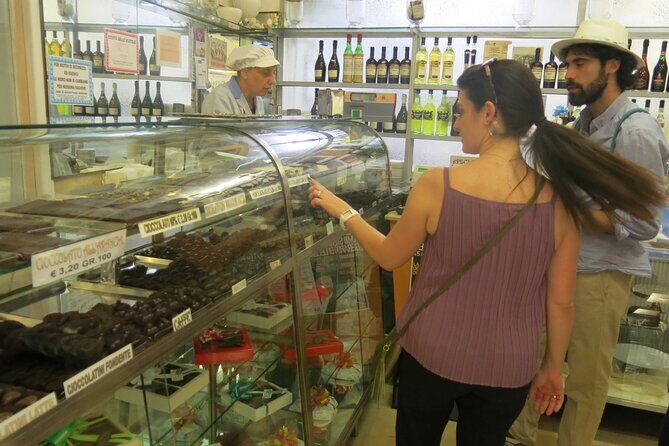
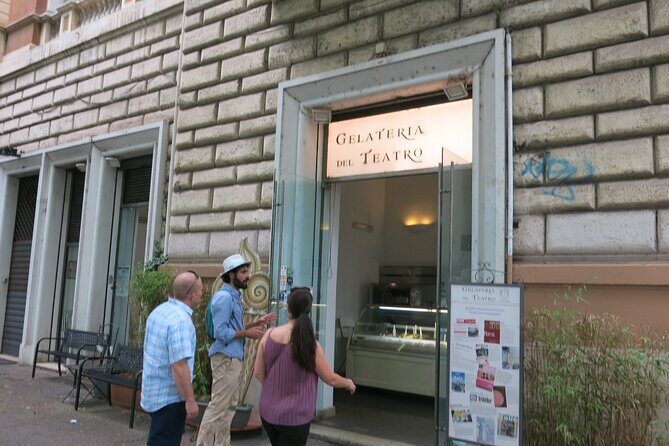
The final stretch takes you through Rione Parione and Eustachio, and this is where the tour turns into a full-on dessert and coffee finale. You’re in this part of the itinerary for about 1 hour 20 minutes, so you get time to slow down and enjoy without feeling rushed.
Here’s what’s emphasized in this segment:
- A gelateria experience, with talk about what authentic cream looks like
- Home-made chocolate from a top-awarded patisserie (the award level isn’t specified, but the quality claim is part of the pitch)
- Espresso that’s described as a real Italian blend—coffee is treated as a real stop, not an afterthought
This is also where you may notice how different guides pace the sweets. One group experience described gelato plus Maritozzi with espresso, and another mentioned things like canoli. The exact lineup can vary by guide and timing, but the core idea stays the same: you end with classic Roman comfort foods for vegetarians.
A practical note: since this portion includes multiple sweet stops, plan to feel a bit full when you leave. Rome portions can be generous. The tour’s tastings are designed to keep you comfortable, but your sweet tooth will earn a little payback.
What You’ll Likely Taste (Beyond the Usual Tourist List)
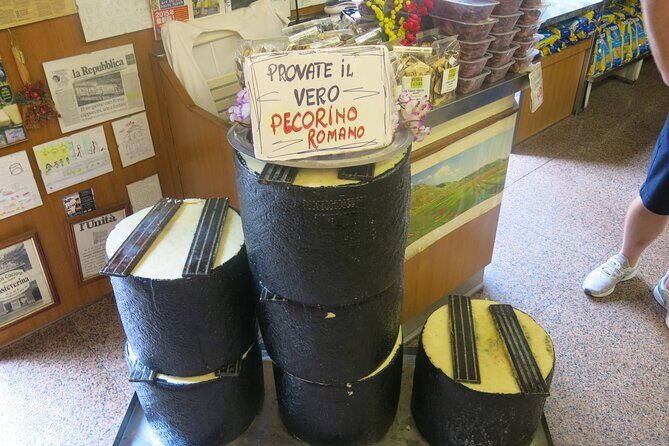
This tour is built around well-known vegetarian-friendly Roman foods, plus a few higher-value surprises. From the tour highlights and the food variety described, you can expect a mix like:
- Bruschetta-style flavors and other fresh bites
- Cheeses (often shown as part of how locals build snacks)
- Tiramisu
- Gelato
- Pizza
- Suppli, a Roman classic that works well without meat
- Falafel in the Jewish district
- Artichokes with a Jewish-Roman twist
- Maritozzi with espresso
- Canoli
- Coffee using a proper Italian espresso blend
- Homemade chocolate from a praised patisserie
I like that the menu isn’t all desserts. Sweet stops are part of the story, but savory bites show up too. That makes the tour feel like actual meal planning, not just candy with extra walking.
How the Private Format Changes Everything
This is a private experience, meaning only your group participates. That matters more than people think. In a crowd tour, the guide has to hit a schedule. In a private tour, the guide can slow down when a question is good—or speed up when your group is ready.
The interviews and experiences shared in the past highlight this personalization. Guides like Vaneeza and Silvia were described as warm and passionate, and Orso and Gabrielle were praised for making it feel fun and tailored. One group even noted restaurant and sightseeing tips beyond the food tastings.
If you’re traveling with family, this private format is a big plus. Kids and teens often do better with a guide who can steer attention. It also helps if you’re a couple who wants a more relaxed pace, or if you’re solo and prefer a guide who can talk at your speed.
Timing, Walking, and What to Wear
The tour runs about 2 hours 30 minutes. That’s long enough to make it worth your planning, but short enough that it still fits well into a day of sightseeing.
It’s also a walking route through central Rome, and one tip that comes up consistently: wear super comfortable shoes. Rome sidewalks are uneven, and you’ll spend enough time on your feet that your footwear choices affect your whole mood.
A smart strategy: plan to eat lightly before you go if you can. You’ll end with gelato and sweets, so arriving hungry is fine, but arriving ravenous can turn the last half into a sugar coma. Aim for “a little snack first,” then let the guide’s tastings do the rest.
English, Mobile Ticket, and Getting There Easily
This tour is offered in English, with a mobile ticket you can use for the experience. It’s also noted as being near public transportation, which is useful if you’re bouncing between neighborhoods during your Rome trip.
Meeting point is straightforward: P.za Campo de’ Fiori. The route ends back at the meeting point, so you’re not stuck figuring out how to get home from some far edge of the city. That simple end point is underrated value, especially after eating and walking for hours.
Price and Value: Is $112.38 Worth It?
At $112.38 per person, you’re paying for more than food. You’re paying for:
1) guided pacing across multiple areas,
2) tastings that include both savory and sweet,
3) and at least some admission tickets included in the stops.
The stops are listed with admission at certain segments, while others are marked free. That kind of structure matters because it can offset part of your cost versus trying to replicate everything on your own.
The private element also shifts the value equation. If you’re traveling with a small group, private food tours often work out better than you’d expect because you’re not paying for a huge random crowd. If you’re traveling solo, it’s still a good value when you think about convenience: you don’t need to hunt for the right gelateria, pastry shop, or recipe-focused stop. The guide brings you there in one smooth route.
Who This Tour Suits Best
This one fits you if:
- You eat vegetarian and want Roman-style food, not generic “vegetarian options”
- You like learning while tasting—especially recipe-focused stops like the Jewish-Roman artichokes
- You want a guided route through Campo de’ Fiori, Piazza Navona, and nearby neighborhoods
- You appreciate good coffee culture and want espresso done properly
You might skip it if:
- You want a fully seated meal with minimal walking
- You dislike dessert stops (the final stretch is heavily sweet-focused)
- You’re looking for a very strict budget option without any paid tastings
Should You Book This Private Roman Vegetarian Food Tour?
Yes, if you want a fast, friendly way to learn how Rome does vegetarian food beyond basic pasta orders. The best reason to book is the mix: markets for fresh ingredients, a distinct recipe stop at the Jewish Community of Rome, and a finish that takes gelato, chocolate, and espresso seriously.
If your goal is to leave with food confidence—what to order, where to look, and how to judge quality—this tour gives you that in a focused 2.5-hour window.
If you’re unsure, do this one thought test: would you rather spend your energy chasing down multiple spots on your own, or would you rather let a guide handle the route and tasting lineup? For most people, the answer is pretty clear.
FAQ
How long is the private Roman vegetarian food tour?
It lasts about 2 hours 30 minutes.
Is the tour private?
Yes. It’s a private tour/activity, so only your group participates.
What language is the tour offered in?
The tour is offered in English.
Where does the tour start and end?
It starts at P.za Campo de’ Fiori, 00186 Roma RM, Italy and ends back at the same meeting point.
What food experiences are included?
You’ll taste vegetarian local favorites such as cheeses, bruschetta-style treats, tiramisu, gelato, and other items like pizza, suppli, falafels, Jewish-Roman artichokes, and desserts such as canoli or Maritozzi, along with espresso and chocolate.
Are admission tickets included?
Some stops include admission tickets, while other stops are listed as free.
Is there a free cancellation option?
Yes. You can cancel for a full refund up to 24 hours in advance of the experience start time.
If you tell me your travel dates and group size, I can help you sanity-check whether the timing fits your Rome day and what to eat beforehand so you enjoy the full tasting run.