REVIEW · POMPEII
Private Pompeii Tour with 3D Virtual Reality Headset – Tour Assistant Only
Book on Viator →Operated by Flashback Journey to Pompeii · Bookable on Viator
Pompeii comes alive in your hands. This private tour pairs a real walk through the ruins with 3D VR that recreates ancient streets and buildings as they likely looked around 2,000 years ago. I love the 5-minute VR headset training and the audio commentary that guides you without needing to hunt for explanations on site. One heads-up: your tour assistant is there to help you experience the tour, but they are not allowed to answer questions about the archaeology.
You can choose a morning or afternoon departure, and the timing works well if you’re trying to beat the bigger crowds at Pompeii. The skip-the-line entrance fee and the admission ticket are part of what you pay, so you’re not burning vacation time waiting at the gate. After the headset segments, you still get that slow, human pace—pausing to absorb the scale of the place while the ruins do their silent talking.
This VR experience is fun, but it’s not for everyone. The headsets require decent comfort with motion and balance, and the provider strongly recommends medical caution for pregnancy, certain vision issues, heart conditions, and anyone with seizure history or pacemakers.
In This Review
- Key Points to Know Before You Go
- A 2.5-Hour Private Pompeii Snapshot With 3D Headsets
- Meeting at Hotel Vittoria and Getting Moving
- Entering the Ruins: The VR Headset Training First
- Inside Pompeii: What the VR Reconstruction Actually Shows
- The Walking Portion: Real Scale After the Headset
- Tour Assistant vs. Licensed Guide: The Limits You Should Know
- Languages and Audio: Picking What You’ll Hear
- Price and Value: Why $124.02 Can Make Sense
- Comfort, Safety, and Who Should Think Twice About VR
- Planning Tips That Make the Tour Easier
- Should You Book This Pompeii VR Tour?
- FAQ
- How long is the Pompeii private VR tour?
- Is admission to Pompeii included?
- Do I need a licensed guide for archaeology questions?
- What languages are available during the experience?
- What’s the minimum age to use the VR headset?
- What should I do if I’m worried about VR safety?
Key Points to Know Before You Go
- Private by design: only your group participates, with a dedicated tour assistant/escort.
- VR starts with training: you get about 5 minutes to learn the headset before entering the ruins.
- Multilingual audio in the headset: commentary is available in six languages, while the assistant speaks English and Italian.
- Up to 15 3D VR videos: you’ll see multiple reconstructions of temples, homes, shops, theaters, streets, and markets.
- Walking on uneven terrain: comfortable shoes matter because you’re moving through real archaeological ground.
- Age guidance for VR: minimum age is 9 to use a headset; it’s not recommended for kids under 13 (Gear VR guidance).
A 2.5-Hour Private Pompeii Snapshot With 3D Headsets
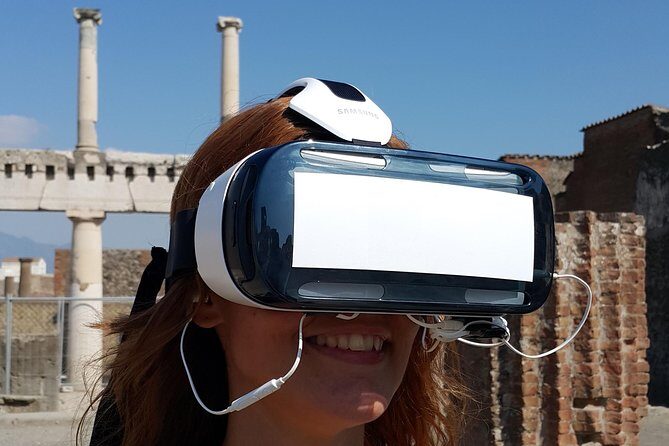
This tour is built for people who want more than the usual “stone and plaques” experience. You’re not just looking at ruins—you’re also shown what parts of Pompeii may have looked like before the eruption covered the city.
At about 2 hours 30 minutes, the pacing feels intentional: enough time to do the headset segments, plus time to walk, look, and take photos. It’s also private, which usually means less stress and fewer “where do we meet again” moments.
The key idea here is simple: the VR gives context fast, and then the real ruins make that context stick. I like tours that let you connect the dots without requiring a ton of prior knowledge.
You can also read our reviews of more private tours in Pompeii



Meeting at Hotel Vittoria and Getting Moving
Your tour starts at Hotel Vittoria in Pompeii (Piazza Esedra area). You’ll end back in town at Piazza Immacolata, which is handy for continuing your day by foot or with nearby transport.
Because there’s no hotel pickup or drop-off, I’d plan to arrive a bit early on your own. The meeting area is described as near public transportation, which helps if you’re relying on trains or local buses for getting to Pompeii.
Also, set your departure time when you book. You can choose morning or afternoon, but the right starting time matters because the whole schedule is built around it.
Entering the Ruins: The VR Headset Training First
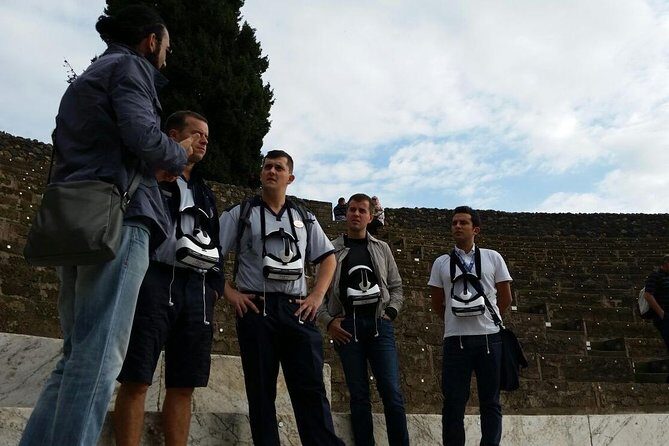
Right before you head into the archaeological area, you’ll get a short 5-minute training on the VR headsets. The instruction time is brief, which is good news if you’re not into tech lessons while on vacation.
You’ll use Samsung/Oculus Gear VR style headsets. Each adult and youth gets a headset, and the minimum age to use one is 9.
This is where you’ll learn the basics you need so the rest of your time is about the story, not fiddling with settings. And since you’re walking on uneven ground, you’ll want that practice done before you move deeper into the ruins.
Inside Pompeii: What the VR Reconstruction Actually Shows
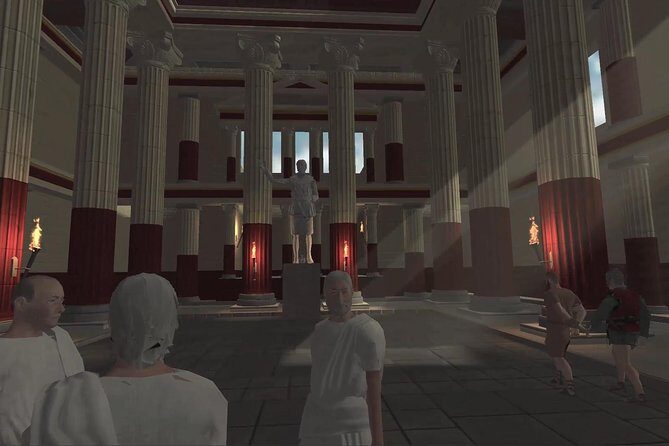
Once you’re inside, the experience becomes a guided blend of VR and real-world walking. The tour assistant accompanies you through the ruins, while the headsets deliver the 3D reconstructions.
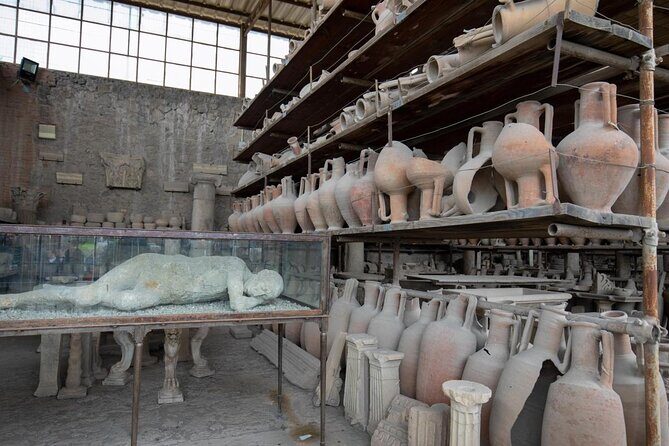
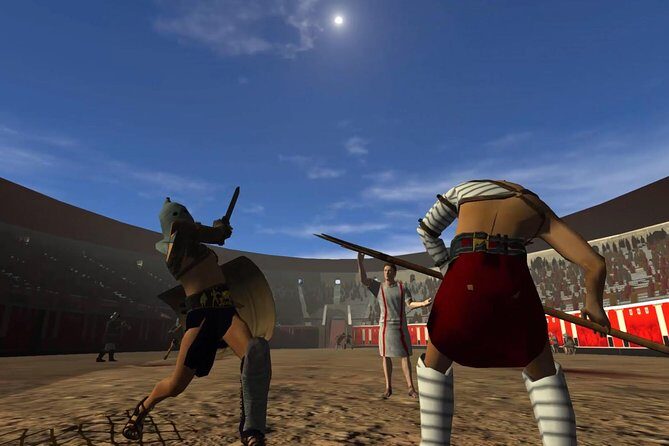
The big promise is that you’ll watch up to 15 3D virtual reality videos showing parts of Pompeii as it was before Mount Vesuvius. Think in terms of city-life spaces: temples, homes, shops, theaters, streets, and markets.
That matters because Pompeii can feel oddly disconnected if you only see isolated walls and columns. The VR helps you connect what you’re looking at to how people might have moved through and used these spaces.
A practical note: the VR experience is paired with commentary. The assistant won’t be doing archaeology lecturing, but your headset audio is meant to explain what you’re seeing. You can listen in English, Italian, German, French, Spanish, or Russian—so you’re not stuck with a language barrier.
The Walking Portion: Real Scale After the Headset
After (or between) headset segments, you’ll walk and soak up the atmosphere the old-fashioned way. That’s not just “waiting around.” The ruins are where you understand size, layout, and texture.
This tour’s walking time is part of what makes the VR feel grounded. You don’t leave with a purely tech experience. You leave with a better sense of place: courtyards feel like courtyards, streets feel like streets, and suddenly the city reads as a city instead of a museum of parts.
Wear comfortable shoes. The terrain is uneven, and you’ll be moving on real archaeological ground. If you go with sandals or shoes that don’t grip well, Pompeii will remind you fast.






Tour Assistant vs. Licensed Guide: The Limits You Should Know

Here’s an important distinction: the tour assistant is not a licensed guide, so they are not allowed to answer questions about the archaeological site. They can help run the tour experience and keep things moving, and they speak English and Italian.
That means this tour works best if you want structured context through the headset audio, not a back-and-forth Q&A about artifacts, excavation history, or scholarly debates.
If you love to ask deep questions while touring, you might find you want a licensed guide for those moments. The headset audio covers a lot, but it’s not the same as a specialist answering your specific questions on the spot.
If you’re traveling with kids or a group that wants clear guidance, this style can actually be a plus. The assistant can focus on smooth logistics—helping you handle the headset, timing your photo stops, and keeping the tour on track.
Languages and Audio: Picking What You’ll Hear
You get a two-layer language setup.
- The assistant speaks English and Italian.
- The headset commentary is available in six languages: English, Italian, German, French, Spanish, and Russian.
In real terms, that means even if your assistant language is limited to English or Italian, you can still choose a comfortable language for the historical narration. I’d pick the headset language you understand best, since that’s what will carry most of the explanation.
It’s also helpful because it reduces the need to interrupt the tour. You can listen, look, and keep moving without stopping every few minutes to translate.
Price and Value: Why $124.02 Can Make Sense
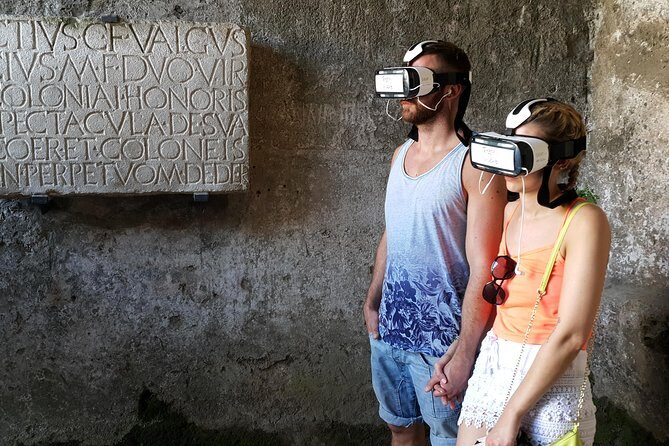
At $124.02 per person, this is not the cheapest way into Pompeii. But you’re paying for a bundle: headset use, a skip-the-line entrance fee, and a private tour assistant/escort for the duration.
What you’re buying here is time saved and context added:
- The admission ticket is included.
- The skip-the-line entrance fee is included.
- Headsets are included, with one per adult/youth.
- You also get that guided structure inside the ruins.
What’s not included is transportation to and from Pompeii, hotel pickup, or drop-off. That means your value depends on how easily you can get to the meeting point on your own. If you’re already planning to take trains or buses into Pompeii, that’s usually manageable and keeps your overall costs in check.
One small expectation-setting point: some people who use modern tech may find the graphics less polished than current gaming visuals. The focus isn’t on looking like a state-of-the-art video game—it’s on historical reconstruction and storytelling.
Comfort, Safety, and Who Should Think Twice About VR
VR safety notes are not boring paperwork here—they’re the difference between a great hour and a rough one. The tour provider recommends consulting a doctor before going if you are pregnant, elderly, have pre-existing binocular vision abnormalities, psychiatric disorders, or a heart condition.
They also flag rare severe dizziness risk (about 1 in 4,000) for people using VR. If you’ve had seizures, loss of awareness, or symptoms linked to epilepsy, check with a doctor first.
There are also very practical comfort requirements:
- A comfortable VR experience needs an unimpaired sense of motion and balance.
- If you feel symptoms like dizziness, disorientation, nausea, eye strain, altered vision, or involuntary movement, stop using the headset immediately.
- Symptoms may linger and become more noticeable hours after use.
And if you have a pacemaker or implanted medical device, don’t use the Gear VR without consulting your doctor or the manufacturer of your device. The VR system can emit radio waves that might affect nearby electronics.
For kids: the minimum age to use the headset is 9, but Gear VR guidance says it’s not recommended for children under 13. Parents are responsible for safety and should monitor children closely during and after use.
Planning Tips That Make the Tour Easier
A few small habits make this kind of tour smoother.
Pack light. You’ll be walking and using a headset, so minimize bags and bulky backpacks. If you need a bag, a lightweight shoulder bag is a better bet.
Dress for the weather. The tour operates in all safe weather conditions, so bring what you need for sun or rain. Pompeii can be hot, and stone absorbs heat.
Finally, be realistic about how much you can handle tech while walking. If you’re already tired, stressed, or prone to motion discomfort, consider whether VR is worth it for you—or plan for extra breaks with the assistant.
Should You Book This Pompeii VR Tour?
Book it if you want Pompeii to feel like a living place. The combination of real ruins plus headset reconstructions makes it easier to understand the city layout and daily spaces, without needing a licensed guide to answer everything.
Skip it (or think hard first) if:
- You have concerns about VR motion sickness or have medical risks related to seizures or implanted devices.
- You mainly want deep, on-the-spot archaeology Q&A. The assistant can’t answer archaeological questions.
If you’re the type of traveler who likes clear structure—especially with languages handled by headset audio—this private format can be a good value. It’s also a strong fit for families with kids who meet the age rules and can handle the headset responsibly.
FAQ
How long is the Pompeii private VR tour?
It runs for about 2 hours 30 minutes.
Is admission to Pompeii included?
Yes. The admission ticket is included, and the tour includes a skip-the-line entrance fee.
Do I need a licensed guide for archaeology questions?
No. The tour assistant is not a licensed guide and is not allowed to answer questions about the archaeological site.
What languages are available during the experience?
The tour assistant speaks English and Italian. The headset commentary is available in English, Italian, German, French, Spanish, and Russian.
What’s the minimum age to use the VR headset?
The minimum age is 9. Use is not recommended for children under 13 based on the headset manufacturer guidance.
What should I do if I’m worried about VR safety?
The provider recommends consulting a doctor before the tour if you have medical conditions such as pregnancy, certain vision abnormalities, psychiatric disorders, heart conditions, or a pacemaker/implanted device. Stop using the headset immediately if you experience dizziness, nausea, visual changes, or other concerning symptoms.