REVIEW · PRIVATE
Private Piazza’s, Fountains, Monuments & Basilicas Rome Golf Cart
Book on Viator →Operated by Maya Tours · Bookable on Viator
Rome gets easier with a golf cart.
This private ride turns the city into something you can actually read, with unobstructed views instead of squinting past a bus window. I also love how fast it orients you as you glide between major stops, so you leave with a clear mental map of Rome’s highlights. One thing to consider: most sights are seen from the outside, and entry isn’t included, so plan for that if you want inside access.
You’ll hear live commentary that stretches from the city’s legendary beginnings to later emperors and popes. Options for morning or afternoon timing help you match the tour to your energy level, and the private setup means you’re not stuck in a crowd shuffle. For first-timers, this kind of overview can save you hours of guessing.
In This Review
- Key Things I’d Focus On Before Booking
- Why a Private Golf Cart Route Makes Rome Click
- Price and Value: What You’re Paying For
- Meeting on Via Germanico and Finishing at Piazza del Popolo
- Belvedere del Gianicolo: The View That Explains Rome
- Fontana dell’Acqua Paola (Il Fontanone): Water, Power, and Planning
- Trastevere, the Romulus and Remus Legend, and Bocca della Verità
- Parco Savello and Villa Medici Keyhole Views
- Pyramid of Cestius and the Aurelian Walls: Rome’s Built Edges
- Baths of Caracalla, Palatine Hill, and the Arch of Constantine
- Basilica Stops and the Colosseum–Forum Core
- Roman Ghetto and Castel Sant’Angelo: Learning Rome’s Layers
- Piazza Navona, Pantheon, Trevi, and the Spanish Steps Axis
- Villa Medici to Piazza del Popolo: Ending With a Big Return Point
- What the Best Drivers Really Add (And Why It Matters)
- Should You Book This Golf Cart Tour?
- FAQ
- How long is the Private Piazza’s, Fountains, Monuments & Basilicas Rome Golf Cart tour?
- How much does the tour cost?
- Is this tour private?
- Are tickets or entry fees included for monuments and attractions?
- Do I get to choose between morning and afternoon timings?
- What language is the live commentary offered in?
- Where do I meet the driver, and where do we end?
- Can I cancel for a full refund?
Key Things I’d Focus On Before Booking
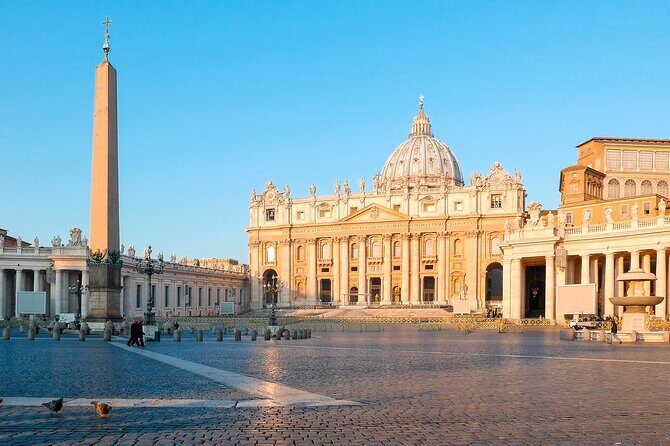
- Unobstructed sightlines compared with buses, so photos and orientation are easier
- Live commentary in English that ties sites together across millennia
- Outside-only viewing for ticketed places, which keeps the tour moving
- Panoramas included, like Belvedere del Gianicolo looking over the Tiber and Rome
- A practical route flow, ending around Piazza del Popolo so you’re back near central Rome
- Jubilee-era restoration updates possible, so you may get small changes to what you can view
Why a Private Golf Cart Route Makes Rome Click
Rome is huge, and it’s not the same city in every direction. This tour helps you build a correct mental picture quickly, because you’re not stuck doing long, frustrating foot migrations between far-flung sights. The golf cart format also gives you better angles for looking and photographing, which matters when you’re trying to understand how neighborhoods stack on top of each other.
The best part is the combination of transport + live guide talk. You don’t just park, point, and move on. You’re riding while the story connects the dots, so you understand why the Colosseum sits near the Forum, why major churches anchor older city spaces, and why certain hills mattered.
One more practical bonus: since it’s private, the group stays together. That means you spend less time waiting, and more time actually seeing. In Rome, time is everything.
You can also read our reviews of more private tours in Rome
Price and Value: What You’re Paying For
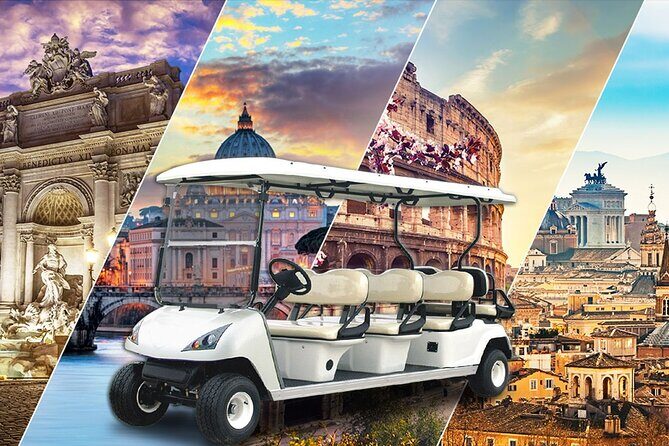
At $150.18 per person for about 3 to 4 hours, this isn’t a budget option. But you are paying for private transportation plus live commentary, and the cart can take you to viewpoints and tight-area edges without turning the day into a legs-only endurance test.
It also helps that tickets aren’t part of the package. Since stops that require entry are visited from the outside, you’re not paying extra for admission fees you might not want to use that day. If you plan to return later for specific interiors like the Pantheon or a basilica, this tour can act like a high-quality briefing first.
There’s also mention of group discounts, so if you’re traveling as a small group, the cost can feel more reasonable per person.
Meeting on Via Germanico and Finishing at Piazza del Popolo
You start at the Maya Tours office near Via Germanico, 16, 00192 Roma RM. Your driver will pick you up from there—go inside, check in at the front desk, and you’ll be set.
The tour ends at Piazza del Popolo (or close by, based on request). That finish is handy because it drops you near a major hub for further exploring, dinner plans, or a walk to nearby sights you might already have in mind.
Timing matters here. Choose morning or afternoon based on your plans for later, because this route is designed to give you a full Rome overview in one go.
Belvedere del Gianicolo: The View That Explains Rome
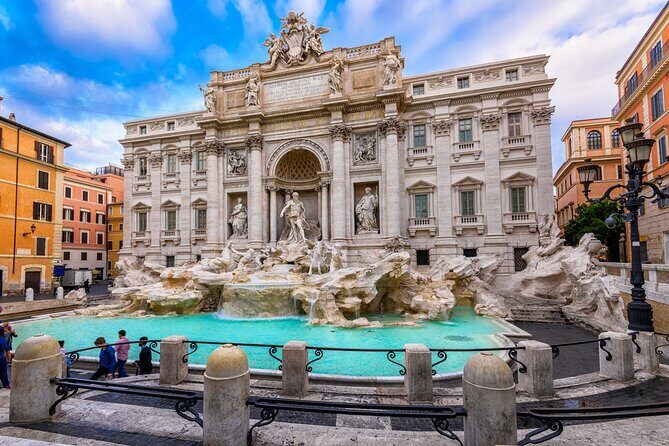
Early on, you head to the Belvedere del Gianicolo, a hilltop terrace on the right bank of the Tiber. The setting is described as one of the most evocative panoramas in the Capital, climbed on a slope dotted with plane trees.
This is the kind of stop that makes the rest of the tour easier to understand. When you see the city laid out across hills and rivers, the later monuments and basilicas stop feeling random. You start noticing how Rome grew upward and outward, and how the Tiber shaped movement and power.
A quick consideration: panoramas can be affected by weather and crowds. If you go in the afternoon, you may get different lighting for photos than a morning departure—so think about what you want your images to show.
Fontana dell’Acqua Paola (Il Fontanone): Water, Power, and Planning
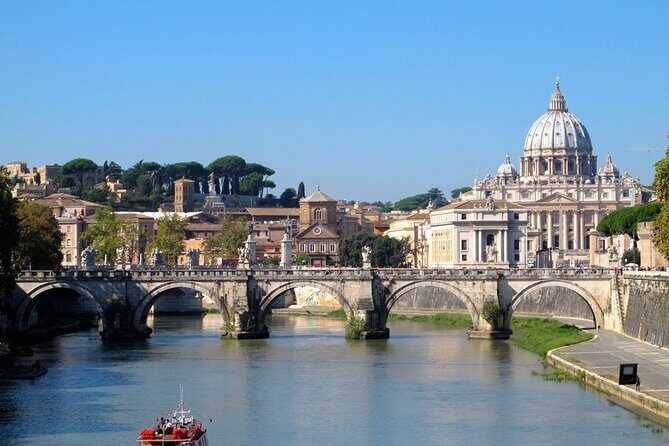
Next comes Fontana dell’Acqua Paola, also known as Il Fontanone, located on Janiculum Hill near San Pietro in Montorio. It was built in 1612 to mark the end of the Acqua Paola aqueduct, restored by Pope Paul V—so it’s not just decorative. It’s a city infrastructure story made monumental.
From the cart, you can take in the scale without the stress of navigating tight areas on foot. And since it’s an aqueduct-era landmark, the guide’s commentary can connect it to how Rome’s leadership invested in systems that made daily life possible.
This stop is especially worthwhile if you like the idea that fountains were about more than beauty. In Rome, water is politics and engineering.






Trastevere, the Romulus and Remus Legend, and Bocca della Verità
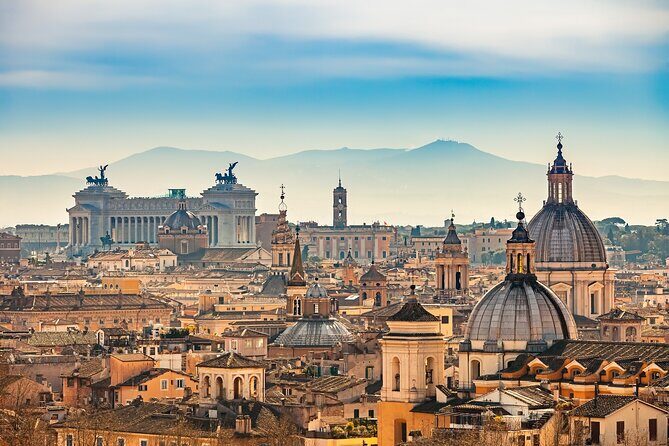
You’ll then ride into Trastevere, known for its working-class roots and for being a creative, bohemian mix of trattorias, craft beer pubs, and artisan shops. Even if you don’t stop for food on this tour, the neighborhood feel helps you understand why Rome isn’t only churches and ruins—it’s lived-in city culture.
From there, you’ll move to the area tied to the legend that Rome’s history begins by the Tiber: Romulus and Remus placed in a basket, the river embracing and protecting them, and the she-wolf symbol entering the story. In 753 AC, Romulus is said to found Rome. Hearing it in context while you’re near the river makes the legend feel less like a disconnected myth and more like something anchored to geography.
Then you reach the Mouth of Truth, an ancient Roman marble mask on the left wall of the portico of Santa Maria in Cosmedin, at Piazza della Bocca della Verità. This is a simple stop, but it’s one of the most famous visual anchors in central Rome. If you’ve seen it in stories and films, seeing it in its real setting helps it click.
Outside viewing is the norm here too. If your goal is to spend lots of time inside specific churches, you’ll likely want to build extra time separately.
Parco Savello and Villa Medici Keyhole Views
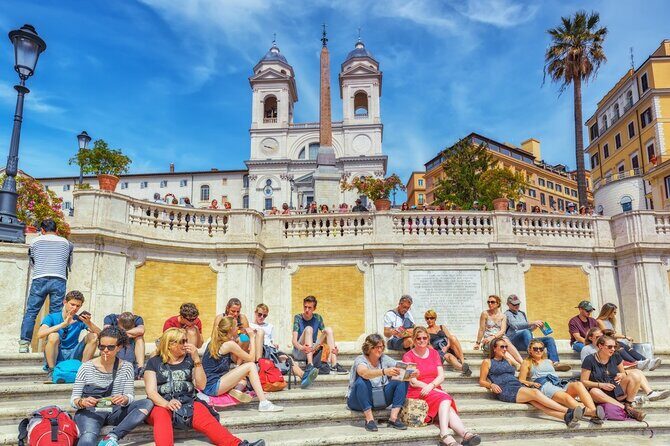
The route includes the Orange Trees Garden, the name used for Parco Savello on the Aventine Hill. The park is about 7,800 square meters, designed in 1932 by Raffaele De Vico, and it offers excellent views over the city.
Aventine Hill matters here because the views aren’t just pretty. They’re your chance to see how Rome’s layout changes from hill to hill—how one viewpoint feels like you’re looking from a different city than the streets below.
Next comes the Villa Medici area, famous for Il Buco Della Serratura, the small keyhole in the arch-headed central portone. Through it, you can see the copper-green dome of Saint Peter’s Basilica at the end of a garden allée framed by clipped cypresses. The keyhole itself is small. The payoff is big: it’s one of those Rome moments that feels designed for the imagination.
Note the practical tradeoff: this is a viewpoint-and-photo style stop. If you want to slow-walk gardens and go deeper inside, you’ll need a separate visit.
Pyramid of Cestius and the Aurelian Walls: Rome’s Built Edges
If you like the idea of Rome as a city with boundaries, you’ll enjoy the stop near the Pyramid of Cestius. It’s described as an ancient Roman pyramid near Porta San Paolo and the Protestant Cemetery, built as a tomb for Gaius Cestius. It’s also built in the style of Nubian pyramids, which makes it stand out from the typical Roman look.
Then you move along the story of Rome’s defenses with the Aurelian Walls, built between 271 AD and 275 AD during Emperor Aurelian’s reign. These walls replaced the earlier Servian Wall from the 4th century BC. Even when you’re just viewing from outside, the idea is clear: Rome hardened itself, then expanded and transformed while keeping a line of protection.
These stops are where the live guide commentary really earns its keep. If you’re trying to picture where ancient Rome ended and later Rome began, walls and tomb structures are some of the best visual clues.
Baths of Caracalla, Palatine Hill, and the Arch of Constantine
The tour covers major power-symbols in one arc: Baths of Caracalla, Palatine Hill, and the Arch of Constantine.
The Baths of Caracalla were Rome’s second largest public baths after Diocletian’s baths, likely built between AD 212 and 216/217 under Septimius Severus and Caracalla. Baths are a great lens because they show how Romans handled health, leisure, and social life at a huge scale.
Then you reach Palatine Hill, described as the centremost of the seven hills of Rome and called the first nucleus of the Roman Empire. It’s the sort of place where the guide can help you connect legends, imperial authority, and the way elite power gathered on certain slopes.
Finally, you see the Arch of Constantine, commissioned by the Roman Senate to commemorate Constantine’s victory over Maxentius at the Battle of the Milvian Bridge in AD 312. Triumphal arches are not subtle. They were built to announce control, and the guide can walk you through why that mattered politically.
Outside viewing works well for these monumental structures, since the scale is the point.
Basilica Stops and the Colosseum–Forum Core
Two major basilica moments are included: Basilica of Saint Mary Major (Santa Maria Maggiore) and the church area tied to the Mouth of Truth earlier. Santa Maria Maggiore is described as one of the four major papal basilicas, one of the Seven Pilgrim Churches, and the largest Marian church in Rome.
From there, the tour hits the core of ancient Rome with three linked landmarks: the Colosseum, the Roman Forum, and Circus Maximus.
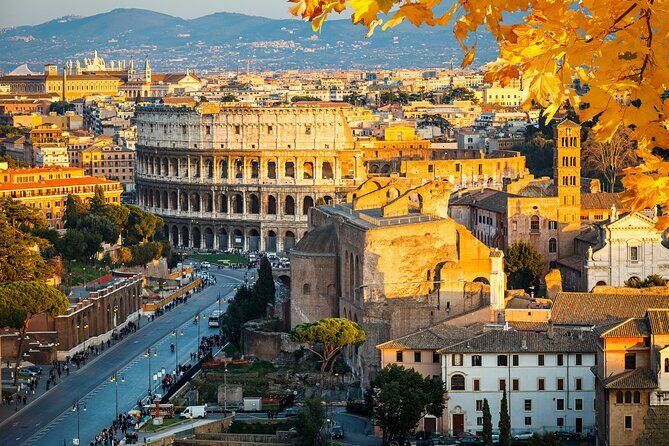
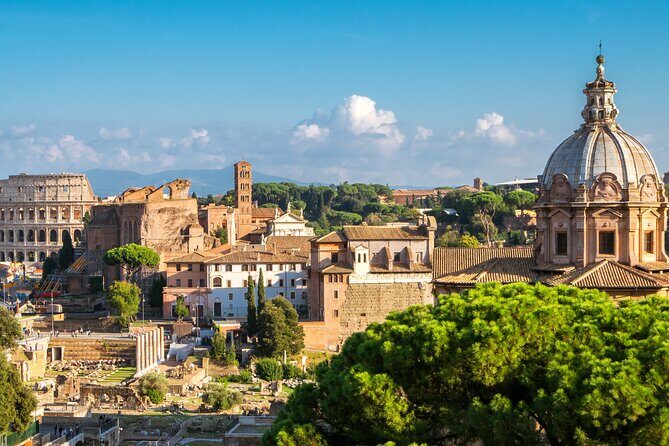
- The Colosseum is described as the largest ancient amphitheater ever built and still the largest standing amphitheatre in the world. It’s iconic for a reason, and seeing it as part of a larger route helps you understand why the Forum mattered nearby.
- The Roman Forum was the center of government and public life, once a marketplace, originally referred to as Forum Magnum.
- Circus Maximus was the first and largest stadium in ancient Rome, a chariot-racing and entertainment venue in the valley between the Aventine and Palatine hills.
This grouping is smart for first-timers. You don’t just see one big ruin. You see how entertainment, power, and daily civic life clustered in the same zone.
If you’re hoping for ticketed access inside the Colosseum or for extended time in the Forum, remember entry isn’t included here. You can still get the big-picture impact, then return later for deeper exploration.
Roman Ghetto and Castel Sant’Angelo: Learning Rome’s Layers
You’ll also pass the Roman Ghetto (Ghetto di Roma), established in 1555 in Rione Sant’Angelo near the Tiber and around the Theatre of Marcellus. The tour framing matters here. The ghetto isn’t just a historic label; it’s an example of how Rome’s governance and society changed over time.
Next comes the Mausoleum of Hadrian, also known as Castel Sant’Angelo. It began as a mausoleum commissioned by Emperor Hadrian for himself and his family. Later, popes used it as a fortress and castle, and it’s now a museum. Even from outside, the structure communicates its multiple identities: empire monument, defensive stronghold, and modern cultural site.
This stretch is the best reminder that Rome isn’t only ancient. It’s continuously repurposed. You see that in how a tomb becomes a fortress and then a museum.
Piazza Navona, Pantheon, Trevi, and the Spanish Steps Axis
The itinerary then flows into some of the most famous street-life spaces in central Rome, where crowds gather for a reason.
You’ll reach Piazza Navona, built on the site of the 1st century AD Stadium of Domitian. It follows the elongated oval shape of the ancient stadium where Romans watched agones.
Then it’s the Pantheon, originally a Roman temple and, since AD 609, a Catholic church. The current building was ordered by Emperor Hadrian, probably dedicated around AD 126. Even without entry, the Pantheon stop is worth it because it signals how Roman engineering carried into later religious life.
After that, you head to the Trevi Fountain, designed by Nicola Salvi and completed in 1762. It’s a classic focal point, but the real value here is timing and viewpoint. If you’re seeing it as one stop in a longer route, you’ll pay attention to surrounding streets and scale, not just the fountain itself.
Next are the Spanish Steps, climbing between Piazza di Spagna and Piazza Trinità dei Monti, dominated at the top by the Trinità dei Monti church. Seeing the steps from the right angle helps you understand why they’re the meeting point for so many itineraries.
Villa Medici to Piazza del Popolo: Ending With a Big Return Point
You’ll also see Villa Medici (on the Pincian Hill next to Trinità dei Monti). It ties back to those elevated viewpoints, especially if the route timing gives you clear sightlines.
Then you finish at Piazza del Popolo, one of Rome’s largest squares. The name means People’s Square, but historically it references poplars connected to the church of Santa Maria del Popolo.
This finale is a smart move. You end in a public place with lots of onward options, which helps if you want to continue your day with dinner or a self-guided wander based on what you just learned.
What the Best Drivers Really Add (And Why It Matters)
A tour like this is only as good as the ride-time storytelling. On this route, the guide work is often what makes people feel like they got more than they paid for.
You’ll hear from different guides and drivers, including Ahmed, Claudio, and Alfredo Noya (also written as Alfonso Noye in one account), each praised for making Rome understandable through the right details. Claudio, in particular, is described as passionate about explaining fountains and sculptures, while Ahmed was noted for being attentive and safety-minded, especially with younger kids in the group.
Even if your tour staff differs, the pattern is consistent: the cart keeps you moving, and the guide makes the movement meaningful. That’s the whole point.
Should You Book This Golf Cart Tour?
Book it if you want a fast, guided orientation to Rome’s biggest landmarks, especially on a first or second day. It’s also a strong pick if you don’t want ticket lines to eat your time, since the plan is built around outside viewing paired with live commentary.
Skip it (or pair it with more specific visits) if your priority is long interior time inside major sites. This tour is designed to show you where things are and why they matter. You’ll still want separate time for deeper, ticketed exploration.
Also, book with flexibility in mind. The tour notes that during the Jubilee, some monuments or areas may be under restoration, so you might get updates that slightly alter what’s available to view.
FAQ
How long is the Private Piazza’s, Fountains, Monuments & Basilicas Rome Golf Cart tour?
It runs about 3 to 4 hours.
How much does the tour cost?
The price is $150.18 per person.
Is this tour private?
Yes. It’s private transportation for your group only.
Are tickets or entry fees included for monuments and attractions?
No. Entry inside monuments and attractions isn’t included, and sights that require tickets are only visited from the outside.
Do I get to choose between morning and afternoon timings?
Yes. You can choose between morning and afternoon tour timings.
What language is the live commentary offered in?
The tour is offered in English.
Where do I meet the driver, and where do we end?
You check in at the Maya Tours office; the start point is Via Germanico, 16, 00192 Roma RM. The tour ends at Piazza del Popolo, or close by upon request.
Can I cancel for a full refund?
Yes. You can cancel for a full refund up to 24 hours in advance. If you cancel less than 24 hours before the start time, the amount paid won’t be refunded.