REVIEW · POMPEII DAY TRIPS
Private Guided Day Tour to Pompeii and the Royal Palace of Caserta
Book on Viator →Operated by Enjoy your Italy tour · Bookable on Viator
An ancient city plus a royal palace in one day? Yes. This private tour stitches together Pompeii and the Reggia di Caserta with early-morning pickup, guided time in the ruins, and a planned highlight route in Caserta.
I like that you get real structure: a private guide in Pompeii for the key sights, then a focused visit in the palace and park. I also like the practical pacing, with about two hours in Pompeii and two in Caserta, plus a set lunch window so you are not scrambling. One drawback: both Pompeii and Caserta are huge, so you will only see a slice, not the whole story.
In This Review
- Key highlights at a glance
- From Rome at 7:00 to Naples-area sights without the hassle
- Pompeii in about 2 hours: the stops that actually teach you the city
- The main consideration
- Pompeii guide vs audio: how to choose your style
- Caserta’s Royal Palace in 2 hours: smart highlights in a huge building
- One big win: the palace park
- Driving times, lunch, and keeping your day from slipping
- Price and value: what your $506.35 per person is really buying
- Who this tour fits best (and who should look elsewhere)
- Common frustrations to plan around
- Should you book this Pompeii and Caserta day?
- FAQ
- How long is the Private Guided Day Tour to Pompeii and the Royal Palace of Caserta?
- What time does the tour start, and is pickup available?
- Is the tour private?
- Does the price include admission tickets for Pompeii and Caserta?
- Is lunch included?
- Do I get a guide at both Pompeii and Caserta?
- How much time do you spend at each main site?
- What group sizes can the vehicle handle?
- What language is the tour offered in?
- Can I cancel for a full refund?
Key highlights at a glance
- Pompeii’s top stops in a tight schedule, including La Casa del Fauno, the Villa dei Misteri, and the Stabian Baths
- Temple of Apollo plus the bronze statue connection inside the ruins complex
- Cave Canem mosaic (House of the Tragic Poet) for a memorable, easy-to-spot detail
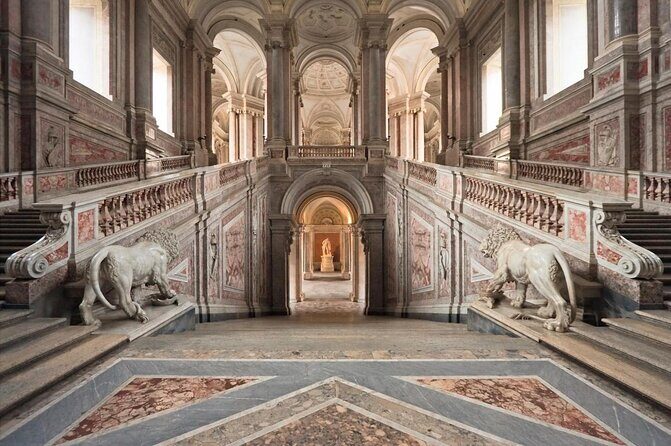
- Reggia di Caserta’s highlight route, including the Grand Staircase and major rooms like Sala di Alessandro and Sala di Marte
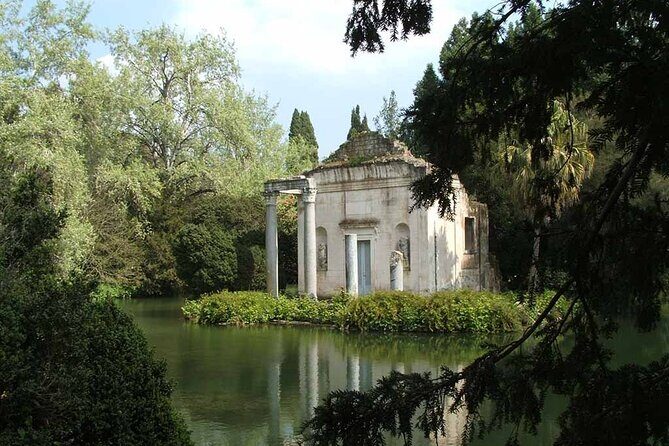
- A park built for views and sound, with waterfalls, sculptures, and monumental fountains
From Rome at 7:00 to Naples-area sights without the hassle
This is a full-day plan with a 7:00 am start, and that early departure matters more than it sounds. You are covering real distance, and you want daylight for walking and photos. The tour includes private transportation, and the driver is set up to meet you—your pickup note to the reception is that the driver will be waiting for you.
The day is also designed to feel doable. You spend roughly 2.5 hours traveling to Pompeii, then add time for guided touring, a transfer to Caserta, and the return trip (about 2 hours 20 minutes back). If you have ever tried to connect Rome to Pompeii and Caserta by public transport in one day, you know why private wheels are a big deal.
For group size, the tour scales sensibly: up to 3 people travel in a car, and 4–7 people use a 7-seater SUV. That means fewer stop-and-go complications than shared shuttles.
You can also read our reviews of more guided tours in Rome



Pompeii in about 2 hours: the stops that actually teach you the city

Pompeii is not one attraction. It is a whole city frozen in time. That is exactly why this tour’s approach helps: it gives you a guided hit list of the most important places, so you leave with a mental map instead of random ruins photos.
You start by visiting major sites in the park, beginning with La Casa del Fauno, described as one of the most important villas in Pompeii. The remains cover about 3,000 square meters, which gives you the scale of wealthy Roman domestic life. Then you move to the Forum of Pompeii, the nerve center where civic life happened—markets, decisions, daily bustle.
Next comes Villa dei Misteri, known for its splendid frescoes with life-size human figures. This is the kind of stop where a guide’s context changes everything. You are not just looking at paint on a wall; you are seeing how people staged stories and identities.
Then you will visit the Lupanare, with its erotic frescoes. This can feel like a contrast after the dignified civic spaces—an important reminder that Pompeii included every day life, including what we would now call adult culture. It is also one of those stops where people either lean in or skip ahead. If you are comfortable with the subject, it helps round out the picture.
A standout museum-like moment is the Temple of Apollo, where a bronze statue is kept inside. That detail matters: it is not just ruins you are walking through, it is a mix of stone and preserved objects that connect you to the religious side of the city.
You also see a minor amphitheater, then move to the Stabian Baths, noted as the oldest complex in Pompeii. You are shown spaces like gyms, changing rooms, latrines, and swimming pools. This is great for getting a feel for routines—what people did to stay clean, socialize, and exercise.
Finally, end with a visual “aha” moment: Cave Canem Mosaic, part of the House of the Tragic Poet. It is a mosaic floor featuring a dog—easy to remember, and a good way to mark the tour in your head.
The main consideration
Two hours in Pompeii is never enough to “absorb everything.” It is a focused sampler. If you want slow wandering, extra stops, and time for side streets, you would need more than this day. But if your goal is to understand Pompeii’s layout and highlights, this plan is tuned for that.
Pompeii guide vs audio: how to choose your style

In Pompeii, the tour is set up with a private guide. That is the big quality difference. A guide can explain why places matter, not just what they were called.
One thing to keep in mind from experience with tours like this: if you switch from the guide approach to an audio route, you may lose some of that “why it mattered” context. The ruins can feel more like a puzzle without someone to point out the connections. On the other hand, if you prefer to control your pace and like reading panels, an audio option can still work—just understand it changes the learning curve.
My practical advice: if you care about comprehension, do the guide time. Ask your guide to help you connect the Forum, the baths, and the villas into one city story instead of separate sightseeing stops.
Caserta’s Royal Palace in 2 hours: smart highlights in a huge building
After Pompeii, you have time to regroup. You transfer toward Caserta in about 50 minutes, and the schedule includes a short, structured visit in the palace and then the grounds.
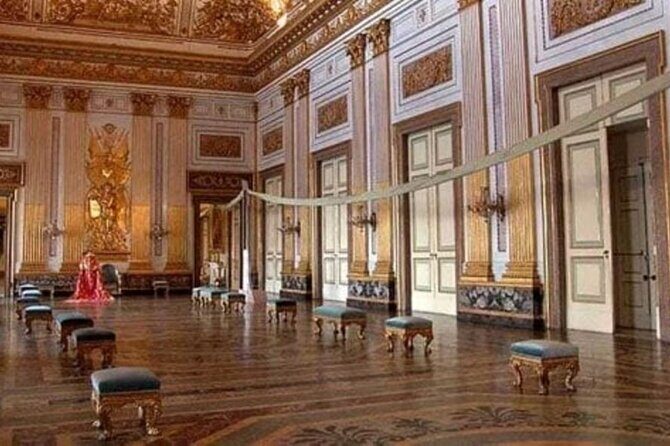
The Reggia di Caserta is mind-boggling in size: 1,200 rooms and about 47,000 square meters. You obviously do not see all of it. You see the portion that has the best flow and the most “wow” moments—so you still come away feeling like you experienced the palace, not just a corridor.
Inside, you start with the Grand Staircase, then move to the Vestibule, the royal apartments, and the Palatine Chapel. From there, the itinerary focuses on major rooms: Sala di Alessandro, Sala di Marte, and Sala di Astrea. These names are useful because they give you anchor points, and once you have anchor points, you remember the palace instead of forgetting it the moment you walk out.
The tour then finishes with more private and performance-facing spaces: the private rooms of Francesco and Murat, the Court Theater, and then the Library and Reading Rooms. You also get the foundation-time connection—when the stone foundation was laid in 1752. That helps your brain place the palace in the timeline, not just the decoration.
You can also read our reviews of more private tours in Rome






One big win: the palace park
If you want one moment that can steal the day, it is the grounds. The Parco della Reggia is described as one of Europe’s most beautiful parks, with waterfalls, sculptures, and many monumental fountains.
In particular, the concept of a fountain that is fed by a waterfall is exactly the kind of engineering-and-design detail that turns pretty scenery into a story. The park also gives you breathing room after walking Pompeii—more open space, more air, less crunch of ancient floors.
Driving times, lunch, and keeping your day from slipping

This is a long day, so the details that sound small are actually what keeps it pleasant.
You have about one hour for lunch, with the choice to eat in local restaurants. Lunch is not included, so you’ll pay your own way. A good strategy: pick a place close to the palace area once you arrive, so you spend your lunch time eating—not wandering.
One practical tip from experience with this specific route: if you ask your driver for a recommendation near Caserta, you can save time and guesswork. A past participant mentioned a meal near the palace at PizzArt, described as divine and easy to reach by walking from the grounds.
Also, expect your day to feel like a sequence:
- morning drive
- guided Pompeii walking
- transfer to Caserta
- palace visit
- park time
- return drive
If you are the type who gets cranky when schedules are tight, plan to move slower inside the big sites where the walking is easy. Outside, use the schedule like a safety rail.
Price and value: what your $506.35 per person is really buying

At $506.35 per person for about 9 hours, the headline number feels steep—until you translate it into what is included.
You get:
- Private transportation for the full day
- Admission ticket included for Pompeii
- Admission ticket included for Caserta
- A private guide in Pompeii
- An audio guide experience at the Royal Palace of Caserta
Lunch is not included, so that is the one obvious extra cost. Still, when you add up private transfers plus guide time plus the entry tickets, the price starts to look more normal. This is especially true if you would otherwise pay for two separate days, or if you are traveling with friends and still want one coordinated plan.
Value is also about risk control. Pompeii and Caserta can be logistically awkward if you are managing timing and connections on your own. With a driver handling the day’s transitions, you spend your energy on the sights.
Who this tour fits best (and who should look elsewhere)
This is a good match if:
- you want a first-timer’s hit list for Pompeii and Caserta
- you like structure more than free-roaming
- you are short on time and want a single coordinated day
- you appreciate a private guide for Pompeii’s context
It is less ideal if:
- you dream of spending half a day in one museum hallway without looking at the clock
- you want to fully explore every corner of Pompeii or the entire palace
- you prefer a slower walking pace and lots of detours
Also, the tour notes say most travelers can participate, which usually means it is not trying to be limited by extreme activity levels. Still, both stops involve walking on-site, so comfortable shoes are smart.
Common frustrations to plan around

Here is what can trip you up, and how to avoid it.
Big sites, short windows. Pompeii takes the whole day for deep explorers. Caserta also could take days if you like gardens and rooms in detail. This tour gives you a focused path. That is a feature, but it also means you may want to return someday.
Choosing your information style. Pompeii is where a guide can give you the most payoff. If you choose an audio route instead, you may enjoy it less as a learning experience. If you want stories, do the guide time.
Long day fatigue. Even with comfortable transport, you are awake early and you are out late. Bring water, and try to keep your lunch decision simple and quick.
Should you book this Pompeii and Caserta day?
If you want one day that feels organized, where you get the key Pompeii sites and the most memorable rooms and grounds at Caserta, this is a strong choice. I especially like the combo of private transportation and guided Pompeii, plus the fact that Caserta includes major interior highlights and time in the park with waterfalls and monumental fountains.
You should book if:
- you want an efficient, high-signal day
- you value being guided through Pompeii’s top stops
- you like the idea of pairing ruined streets with royal interiors and dramatic fountains
You might skip or swap plans if:
- you hate time limits inside major attractions
- you want to fully explore everything at both sites
Overall, this tour works best as a smart sampler: a day where you leave with clear mental anchors—Pompeii’s Forum and baths, Caserta’s staircase and rooms—plus one of those park scenes you will keep thinking about on the rest of your trip.
FAQ
How long is the Private Guided Day Tour to Pompeii and the Royal Palace of Caserta?
It runs for about 9 hours.
What time does the tour start, and is pickup available?
The start time is 7:00 am, and pickup is offered. The driver is arranged to meet you through your reception notice.
Is the tour private?
Yes. It is a private tour/activity, with only your group participating.
Does the price include admission tickets for Pompeii and Caserta?
Yes. Admission tickets are included for both stops.
Is lunch included?
No. Lunch is not included, but you have about one hour to eat at restaurants.
Do I get a guide at both Pompeii and Caserta?
In Pompeii you have a private guide. At the Royal Palace of Caserta you use an audio guide.
How much time do you spend at each main site?
Pompeii is about 2 hours, and Caserta is about 2 hours as well.
What group sizes can the vehicle handle?
Up to 3 people travel in a car like a DA. From 4 to 7 people travel in a 7-seater SUV.
What language is the tour offered in?
It is offered in English.
Can I cancel for a full refund?
Yes. You can cancel up to 24 hours in advance for a full refund.