REVIEW · CITY TOURS
Private city tour in Rome with driver-guide
Book on Viator →Operated by Carratonitours · Bookable on Viator
Rome hits fast. A private car-and-driver tour lets you stack the big Roman sights without the daily transit headache. You get commentary that tracks your interests, and a route that stays flexible if your mood or pace changes.
I like two things a lot: the air-conditioned comfort of a door-to-door vehicle, and the way the driver-guide turns monuments into stories you can actually use. You also get a sequence of stops that feels like the best parts of a city “orientation” tour, but with more personal attention.
The only downside to know up front is short stop times. You’ll see a lot up close, but this is not a slow, full-day museum crawl—so you’ll want to decide what matters most before you arrive.
In This Review
- Key highlights at a glance
- A private Rome city tour that saves your energy
- The smart 4-hour flow from Piazza Venezia toward the Vatican
- Stop 1: Vittoriano (Monumento a Vittorio Emanuele II) in Piazza Venezia
- Stop 2: Circus Maximus
- Stop 3: Foro di Traiano
- Trevi, Pantheon, and the classic Rome trio
- Stop 4: Trevi Fountain (Fontana di Trevi)
- Stop 5: Pantheon
- Stop 6: Piazza di Spagna
- St. Peter’s Square plus Santa Sabina: Vatican time without a grind
- Stop 7: St. Peter’s Square
- Stop 8: Basilica di Santa Sabina (Aventine)
- Capitoline Hill and Campidoglio’s classic geometry
- Why the price can feel fair for a private Rome day
- Comfort and timing: what to expect when stops are short
- Tips to ask your driver-guide on day one
- Who this private Rome tour suits best
- Should you book this private city tour in Rome?
- FAQ
- How long is the private Rome city tour?
- Is this tour private, and is it offered in English?
- Do you get hotel pickup and drop-off?
- What about airport pickup?
- Are admission tickets included?
- What’s included and not included?
- Can I cancel for a full refund?
Key highlights at a glance
- Private for just your party with pickup and drop-off
- Car + driver-guide for ~9 major sights in about 4 hours
- Free-entry stops listed for key landmarks like the Pantheon and Trevi Fountain area
- Flexible pacing with quick exteriors and optional walk-ins where timing works
- Comfort extras in the vehicle (some cars have water, Wi-Fi, and charging)
- Great for time-crunched days and first-time Rome orientation
A private Rome city tour that saves your energy
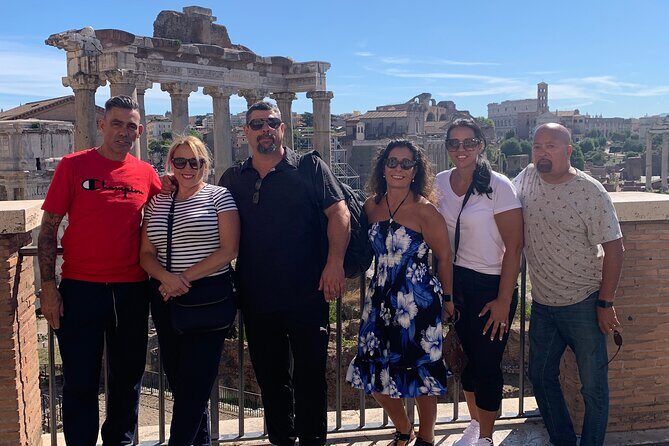
Rome is gorgeous, but it can be exhausting. This kind of private driver-guide setup cuts out the worst parts of the day: figuring out transit, arriving to the wrong place, and playing time roulette with crowds.
The pitch here is simple. You spend 4 hours in a comfortable vehicle while a driver-guide explains what you’re seeing in plain, practical terms. Then you step out where it counts—usually for views, quick photo moments, and short walks that make the next stop easier. One review story that stuck with me: guides often help you get your bearings fast, especially if you’ve only got a couple days.
You can also read our reviews of more guided tours in Rome



The smart 4-hour flow from Piazza Venezia toward the Vatican
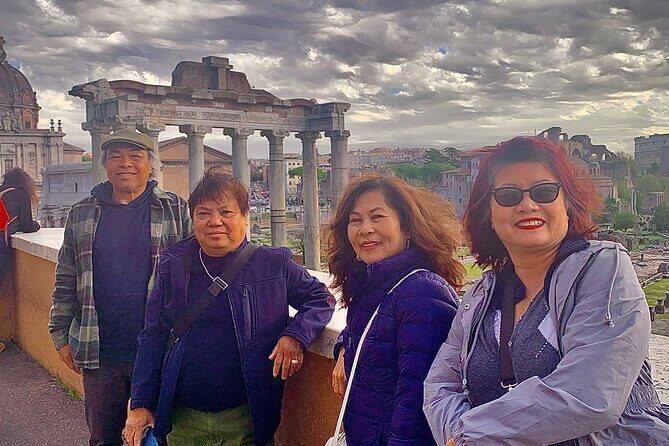
The route starts with the big, symbolic monuments, then moves through ancient Rome, then hits classic icons, and finishes with the Vatican zone and old-city viewpoints. The timing works because each stop feeds the next one—you go from “Italy as a modern nation” to “Rome as an empire,” then to “Rome as a spiritual center.”
Here’s how the pacing tends to feel.
Stop 1: Vittoriano (Monumento a Vittorio Emanuele II) in Piazza Venezia
You begin at the Vittoriano, also known as Altare della Patria, a massive monument built between 1895 and 1927 to honor Victor Emmanuel II, the first king of unified Italy. It’s not ancient Rome, but it’s a perfect opener because it gives you a sense of how the modern city frames its past.
What I like: it sets the tone. From here, the rest of Rome feels less random. The guide commentary can connect the dots between eras without turning into a lecture.
A small consideration: it’s large, so in a short stop you’ll mostly be taking in the exterior scale and the surrounding views, not lingering like a museum visit.
Stop 2: Circus Maximus
Next is Circo Massimo, Rome’s famous chariot-racing venue. It was first constructed in the 6th century BCE and later used for other huge public events, including Roman Games and gladiator-style spectacles. Chariots last raced here in the 6th century CE, and the site today is a powerful place to imagine what crowds sounded like.
What you’ll enjoy: this is one of those stops where the guide’s story matters, because the ground doesn’t come with obvious labels. Even without long walking, you start to picture the arena life.
Time reality: at about 15 minutes, you’ll want quick photos and one or two focused moments of imagining, rather than expecting a full dig.
Stop 3: Foro di Traiano
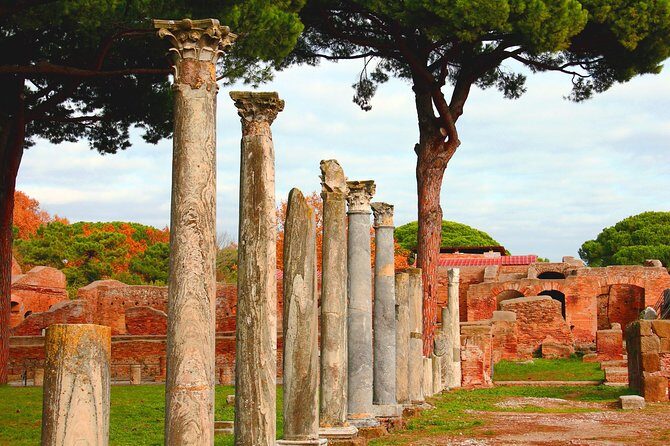
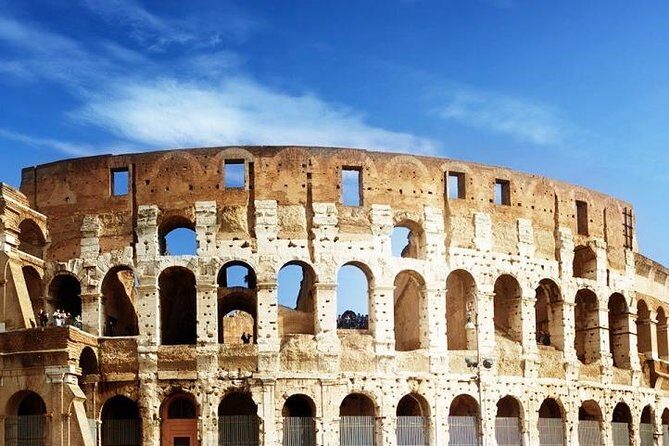
Then comes Trajan’s Forum, tied to Trajan’s conquest of Dacia and dated around the early 2nd century. The forum’s inauguration and the Trajan’s Column dates (mid-110s) help you understand this wasn’t just a random construction—it was the kind of state project designed to project power.
Why it’s a good fit for a drive-and-guide tour: it’s a strong “ancient Rome” stop without the intensity of the biggest crowds elsewhere. In a limited time window, this kind of stop can feel more manageable.
One practical note: ruins are weather-dependent. If it’s cold or rainy, a shorter, guided stop is exactly what you want.
You can also read our reviews of more city tours in Rome


Trevi, Pantheon, and the classic Rome trio
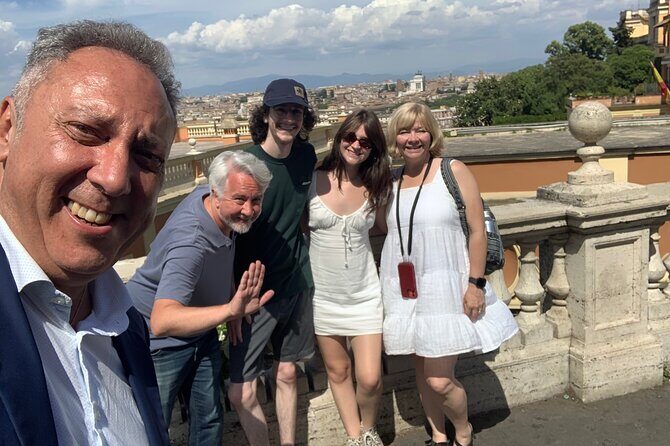
After the ancient intro, the tour pivots toward the Rome you came for: art, iconic architecture, and that postcard feeling—without you needing to plan a transport puzzle.
Stop 4: Trevi Fountain (Fontana di Trevi)
Trevi Fountain is one of the world’s best-known fountains, designed by Nicola Salvi and completed by Giuseppe Pannini. The scale is part of why it’s unforgettable: it rises about 26 meters and stretches nearly 50 meters across.
This stop is listed at 30 minutes, which is the sweet spot for Trevi on a private tour: enough time to stand back, get your shot, and soak it in without feeling rushed.
A tiny tip that can pay off: bring coins ahead of time. One guide story really illustrates why—one driver pulled coins from his pocket so his guests could still take part in the tradition. That kind of helpful improvisation can happen, but don’t bet your whole experience on it.
Potential drawback: Trevi is busy. Even with a private tour, you’ll want to keep your expectations realistic: you’re not avoiding crowds so much as using a good time plan and getting in close.
Stop 5: Pantheon
The Pantheon is the showpiece you can’t skip in Rome. Built originally as a temple, rebuilt around AD 126 under Hadrian, and now known as the best preserved of all Roman buildings. In practical terms, it’s the place where you feel the scale of Roman design in seconds.
You get about 20 minutes here. That’s not a long visit, but it’s enough time to appreciate the big interior effect and get your bearings if you’re planning to return later.
What to watch for: in short windows, what matters is how you use the time. If you’re aiming for interior photos or quiet moments, go for the earliest or most open-feeling time your guide can manage.
Stop 6: Piazza di Spagna
From Pantheon area energy, the tour heads to Piazza di Spagna, at the bottom of the Spanish Steps. This square sits by the historical Palazzo di Spagna, the seat of the Spanish embassy to the Holy See, and you’ll also see the Column of the Immaculate Conception nearby.
You get about 20 minutes. Expect this to work best as a quick visual stop—views, street atmosphere, and photos—rather than a long linger.
Practical consideration: this is another popular area. The advantage of a private setup is that you’re not stuck doing a slow shuffle to find the right angle.
St. Peter’s Square plus Santa Sabina: Vatican time without a grind

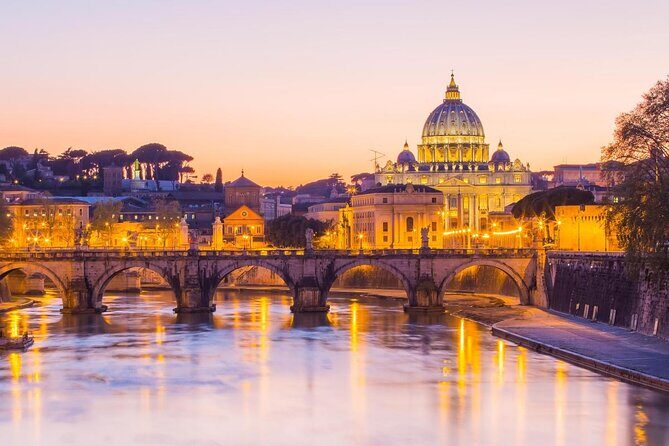
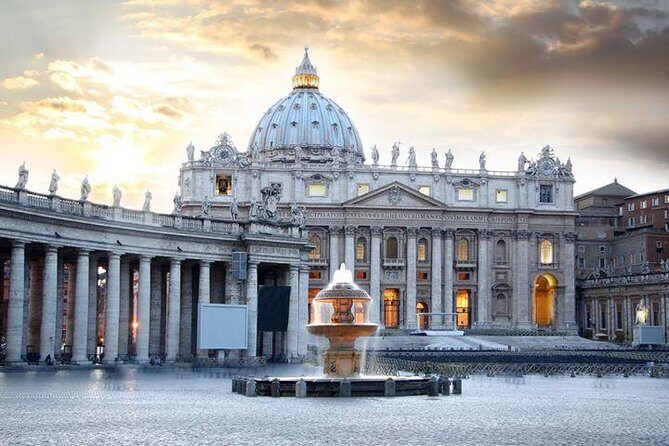
The tour shifts into Vatican territory with a stop at St. Peter’s Square—the center of Christianity, set by St. Peter’s Basilica, the world’s largest church. The basilica’s construction took over 100 years, which is a reminder that grand buildings in Rome weren’t quick projects even when they had all the money.
The listed stop time is 30 minutes, which gives you room for a proper look at the square layout and a calm moment before you head onward.
Stop 7: St. Peter’s Square
What makes this work on a 4-hour tour is that you’re getting the big “Vatican” overview without turning your day into an all-morning waiting game. You also get driver-guide commentary that can help you connect what you’re seeing to why it’s central.
A small note: church areas can involve rules about behavior and entry times. Your driver-guide can usually help you adjust your plan if the flow is tight.
Stop 8: Basilica di Santa Sabina (Aventine)
Then you slip into a different mood with Santa Sabina on the Aventine Hill. It’s the mother church of the Dominican order (Order of Preachers). Compared with the Vatican zone, this stop can feel calmer and more local.
The stop is 15 minutes, which is right for a quick architecture look and a bit of context. If you want Rome to feel like more than a list of famous landmarks, this kind of church stop does that.
Why it’s good value in a short tour: you get variety—ancient scale, Baroque icons, Vatican power, and then a quieter spiritual site—without extending the day.
Capitoline Hill and Campidoglio’s classic geometry
The final stop is Piazza del Campidoglio on Capitoline Hill, tied to the old Roman seat of power. The square follows Michelangelo’s design ideas for a uniform layout, and the setting is a strong closing image: you’re ending on a place that feels intentionally “designed,” like Rome is pointing you back toward the idea of civic order.
You get about 15 minutes here.
What I like: it’s a fitting end. After centuries of building, rebuilding, and remaking the story of Rome, you finish with a perspective that helps the city feel ordered instead of chaotic.
Why the price can feel fair for a private Rome day
At $407.41 per person for about 4 hours, you’re paying for a few big things at once:
- a private ride (no sharing),
- pickup and drop-off,
- an official driver-guide with historical commentary,
- a comfortable vehicle with efficient air conditioning,
- and a route loaded with major sights.
This is the kind of experience where the value depends on you. If you’re traveling as a couple, a family, or a small group and you’d otherwise spend the day hopping between taxis, buses, and walking, the private setup can actually make sense.
Also, the stop list marks admission tickets as free for the highlights included. That can remove friction and add up in real terms.
What’s not included: drinks and alcoholic drinks, and souvenir photo sales. You’ll want to budget for water from the café side if you run through what the car provides.
Comfort and timing: what to expect when stops are short
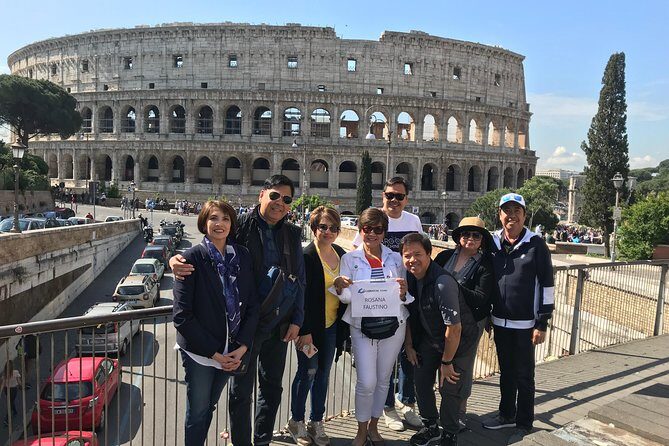
This tour is designed for balance: enough time to see a lot, not so much time that you burn the whole day standing in lines.
In real-world experience, I’d expect this rhythm:
- you drive between clusters of sights,
- you stop, get a guided rundown, then step out for the key moments,
- and you keep moving before you lose your energy.
The vehicle is described as comfortable with good air conditioning. Several guides have also been praised for making the car experience pleasant, with details like water and even in some cases Wi-Fi and charging stations.
Your best move to get the most from it: be clear at the start. If your top priority is Trevi photos, tell the guide. If you care more about Vatican art and structure, say that. The route is flexible, and guides have tailored mornings to the exact focus of the group—one review even noted a guide customizing for limited mobility.
Tips to ask your driver-guide on day one
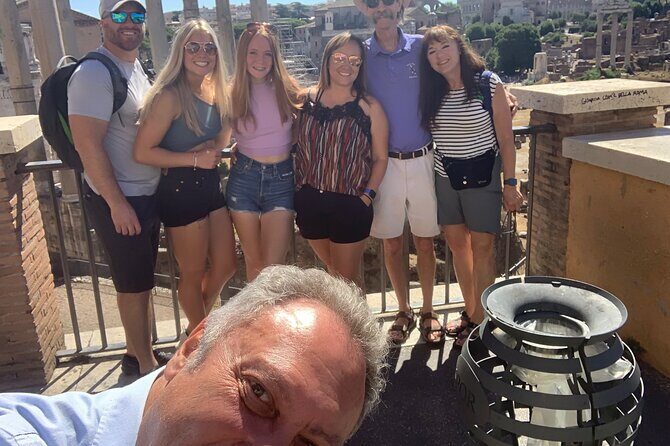
You’ll get the most out of this tour if you treat it like a working conversation, not a script.
Consider asking:
- What’s the one spot from today that you’d return to if you had another hour?
- If we only have time for one quick walk-in, where should we spend it (Pantheon vs. a basilica)?
- Can you time Trevi and Pantheon for the least painful crowd moments?
And if you’re the type who likes food breaks (who isn’t in Rome?), bring it up early. One driver was even helpful with finding and reserving a Filipino restaurant for a later meal. Another made time for gelato and cappuccino style stops when the schedule allowed. That’s not required, but it’s a sign of the practical hospitality you can expect.
Who this private Rome tour suits best
This is a great match if:
- you’re short on time and want a confident overview of major landmarks,
- you don’t want to wrestle with taxis, buses, or ride-hailing in busy areas,
- you’d rather sit and learn while still getting out for key views,
- you’re traveling with kids and want fewer long walks,
- you have limited mobility and want the plan adapted to reduce hassle,
- or you’re visiting for the first time and want the tour to set up your next days.
It can also be a smart “first morning” pick, especially if you’re using Rome over 2–4 days. Think of it as your map in motion: it helps you choose what to see in depth later.
Should you book this private city tour in Rome?
Book it if you want maximum impact in a short time and you like the idea of car comfort plus driver-guided context. The route hits major classics—Vittoriano, Circus Maximus, Trajan’s Forum, Trevi, Pantheon, Spanish Steps area, St. Peter’s Square—then adds variety with Santa Sabina and the Capitoline Hill finale.
Skip it if you’re the type who wants long museum time, slow wandering, and lots of ticketed entry beyond what fits into short stops. If you want Rome at a walking pace with lots of deep dives, you may feel boxed in by the schedule.
If your goal is to get oriented fast, see the big icons up close, and keep the day comfortable, this private driver-guide setup is a strong choice.
FAQ
How long is the private Rome city tour?
It runs for about 4 hours.
Is this tour private, and is it offered in English?
Yes. It’s private for just your group, and it’s offered in English.
Do you get hotel pickup and drop-off?
Yes. Pickup is offered from vacation rentals and points of interest, and the tour includes hotel pickup and drop-off. It does not pick up at ports.
What about airport pickup?
Airport pickup is available, but the start time depends on your plane arrival. The flight number is very important.
Are admission tickets included?
The stops listed for the tour show admission ticket free for each of those highlights.
What’s included and not included?
Included are the private tour, local taxes, hotel pickup and drop-off, a comfortable air-conditioned vehicle, and an official driver with historical knowledge of the monuments. Drinks and alcoholic drinks are not included, and souvenir photos are available to purchase separately.
Can I cancel for a full refund?
Yes. Free cancellation is available up to 24 hours in advance for a full refund.