REVIEW · ROME
Renaissance Scarlet Ladies Tour: Caravaggio’s and Borgia’s Women
Book on Viator →Operated by Storytelling Rome Tours & Walks · Bookable on Viator
Scarlet women. Dark corners of Rome.
This tour turns Renaissance Rome into a story about women who shaped art, power, and survival—often while men got all the credit. You’ll move through historic churches and courtyards in a way that makes the places feel lived-in, not like a checklist. Expect storytelling that connects the art you see to the real people behind it, led in a small group that leaves room to ask questions.
I especially love the two-way mix of famous names and overlooked sites. You start with Lady Lucrezia and end by Piazza Farnese with Giulia Farnese, but along the way you also get Caravaggio’s early connections and courtesan-owned streets like Via dei Coronari. The vibe is also very practical: it’s a guided walk that’s long enough to make connections, yet not so long that you feel run over.
One consideration: you will walk. It’s a 3-hour afternoon with multiple church stops, so wear solid shoes and plan for stairs and uneven stone in central Rome. Also, there’s a chance to pause for a snack bar halfway, but snacks cost extra.
In This Review
- Key highlights that make this tour worth your time
- Renaissance Rome, but with the women in focus
- Why the small group and Massimo’s storytelling work so well
- Price and value: what $47.07 buys you in real terms
- From Campidoglio to Piazza Farnese: the route and what to expect
- Basilica San Marco Evangelista: Lady Lucrezia and how a statue becomes a story
- Villa Doria Pamphilj courtyard: Anna Bianchini and Caravaggio’s first model
- Santa Maria Sopra Minerva: courtesan success and the art inside the church
- Sant’Agostino: the women connected to the church and Caravaggio’s canvas
- Via dei Coronari: watching courtesan-era buildings up close
- Campo de’ Fiori: Vannozza Cattanei and Borgia-family power
- Piazza Farnese ending: Giulia Farnese and a moving finale
- What you’ll notice in Rome after this walk
- Who should book this tour (and who should think twice)
- Should you book the Renaissance Scarlet Ladies Tour?
- FAQ
- What’s the duration of the Renaissance Scarlet Ladies walking tour?
- What time does the tour start and where does it end?
- Is the tour offered in English?
- How big is the group?
- Do I need to buy separate tickets to the sites?
- Is the ticket mobile?
- Are snacks included?
- Can I cancel for a full refund?
Key highlights that make this tour worth your time
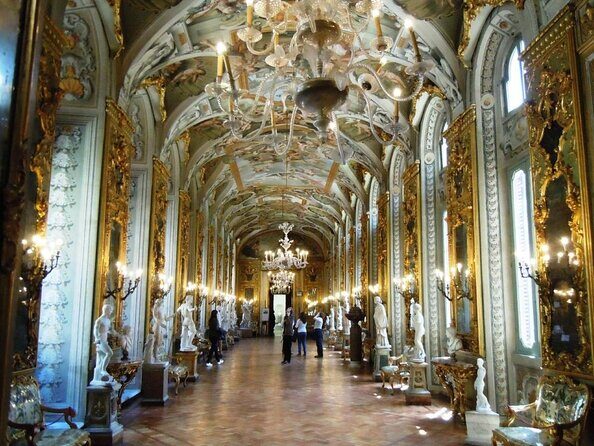
- Massimo’s style: fast, funny, and focused storytelling that keeps the historical details from turning into lectures
- Women-centered Rome: Lady Lucrezia, Anna Bianchini, Vannozza Cattanei, and Giulia Farnese are tied to specific places you can stand in
- Caravaggio links you can follow: Anna Bianchini is described as Caravaggio’s first model and one he used most
- Church interiors you’d skip: Santa Maria Sopra Minerva and Sant’Agostino are included for what they hold and the women connected to them
- A route with texture: you walk past buildings once linked to courtesans, not just the postcard stops
Renaissance Rome, but with the women in focus
Rome’s Renaissance story usually gets told through popes, kings, and generals. This tour shifts the lens. You’ll hear how women operated in the shadows and at court, and how money, reputation, and patronage could make or break a life.
That change matters because the art and architecture you see were never made in a vacuum. When you learn that a statue called Lady Lucrezia traces back to a courtesan life, or that a painter’s muse was an actual person with a story, the setting stops being scenery. It becomes a social map.
And yes, some of the names you’ll hear are famous. But the real payoff is that the tour ties them to physical locations you can revisit later and reinterpret.
You can also read our reviews of more tours and experiences in Rome.



Why the small group and Massimo’s storytelling work so well
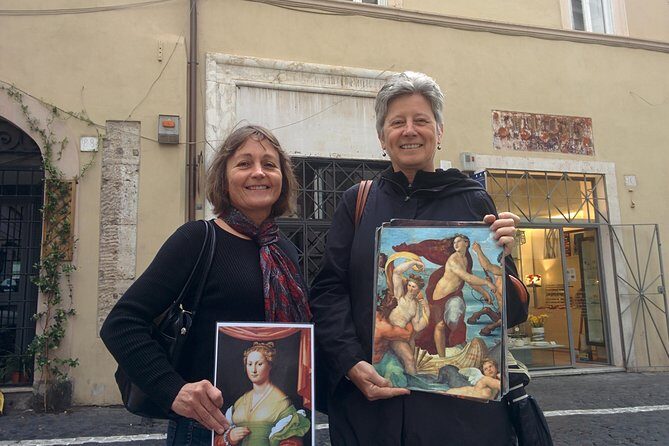
This is led by a guide from Storytelling Rome Tours & Walks, and Massimo is the name that comes up again and again for bringing the subject to life. The common thread is simple: he mixes humor with clarity, so you understand what you’re looking at without feeling buried.
A small group cap of 18 travelers is a big deal here. You get enough space to ask questions without the guide turning into a microphone for a crowd. That helps when the stories get complicated, like when court politics and personal survival overlap.
One smart part of the approach is how he keeps the pace controlled. Multiple reviews describe the tour as in-depth without feeling overbearing, and the schedule supports that: each stop is timed so you get a story beat, then move.
Price and value: what $47.07 buys you in real terms
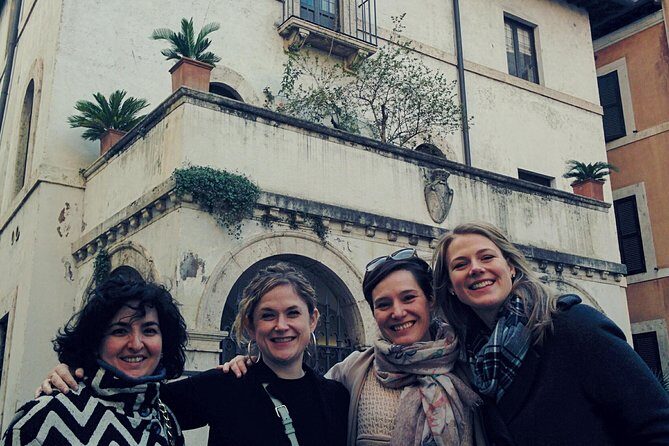
At $47.07 per person for about 3 hours, you’re paying for a guided experience that’s more than narration. You’re getting a structured walk that hits specific sites tied to court and art stories, plus a guide who connects those dots.
A practical value point: the major stops listed on the tour are free to enter at the time shown (admission ticket free for the stops included). So you’re not paying extra museum-style entry fees on top of the tour cost.
Also, the tour is offered in English, and you receive a mobile ticket. That reduces friction, especially if you’re already navigating multiple bookings in Rome.
Lastly, this tour is often booked about 41 days in advance on average. If you’re traveling during peak weeks or a popular day of the week, I’d treat it like a “book it early” kind of plan, not an afterthought.
From Campidoglio to Piazza Farnese: the route and what to expect
You start at the Basilica of St Mark Evangelist at Campidoglio, near Piazza di S. Marco. The tour begins at 2:30 pm and ends in Piazza Farnese, a very central spot beside the area around Campo de’ Fiori and close to Piazza Navona.
That ending location is handy for two reasons. First, it drops you right into a lively part of the city where it’s easy to grab dinner. Second, Piazza Farnese sits near transport options, including a taxi stand and bus stops—useful when you’re tired at the end of a walking day.
The format is straightforward: timed stops outside and inside churches, with story threads that move forward each time. You’ll also have the option to stop at a snack bar halfway through at your own cost.
If you like walking tours, you’ll probably find this one fits the sweet spot. It’s long enough to feel like you saw a real neighborhood, but short enough to still enjoy the rest of your afternoon or evening.
Basilica San Marco Evangelista: Lady Lucrezia and how a statue becomes a story
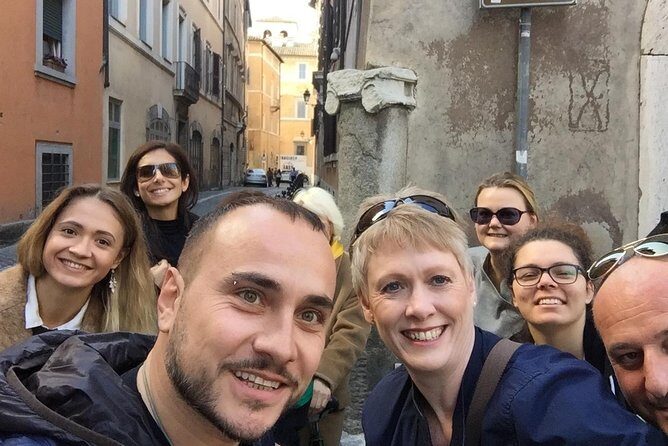
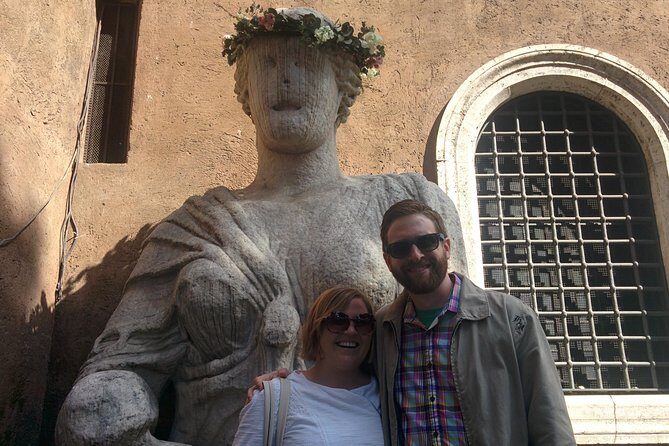
The tour begins with a massive statue tied to a courtesan named Lady Lucrezia. The link goes back to 1477, when the statue was named after a famous courtesan, and today people still recognize it by that name.
This opening choice is smart. Instead of starting with a “big church, big dome” moment, the tour starts with a symbol of how women’s identities got turned into public artifacts. You learn that a reputation could be carved into stone—or at least preserved there.
In practice, this first stop sets the tone for the rest of the walk. You’re not just collecting facts; you’re learning how to read the city—who gets memorialized, who gets erased, and who gets remembered indirectly through art.



Villa Doria Pamphilj courtyard: Anna Bianchini and Caravaggio’s first model
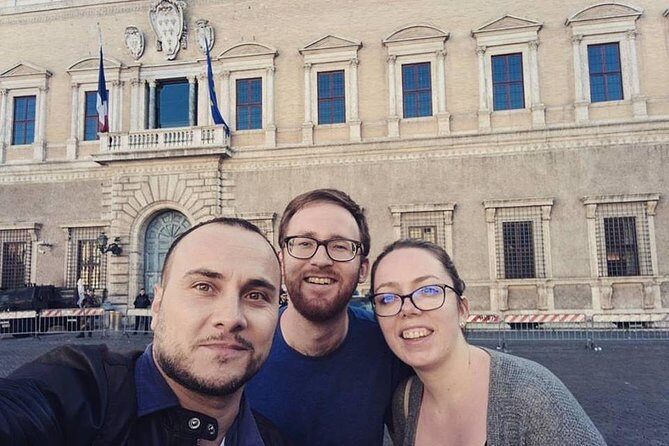
Next comes a stop in the courtyard of Villa Doria Pamphilj, where the story shifts from courtesan legend to artist-muse reality. Here you talk about Anna Bianchini, described as Caravaggio’s first model and also the one who modeled for him most often.
That matters for how you’ll view Caravaggio afterward. When you know a painter worked repeatedly with a specific person, you start to notice patterns in mood and presentation that feel less like random inspiration and more like a working relationship. Even if you’re not a hardcore art detective, the story gives you a better lens.
It also keeps the tour from becoming one-note. You get both social history and art history, with women in the center of each.
Santa Maria Sopra Minerva: courtesan success and the art inside the church
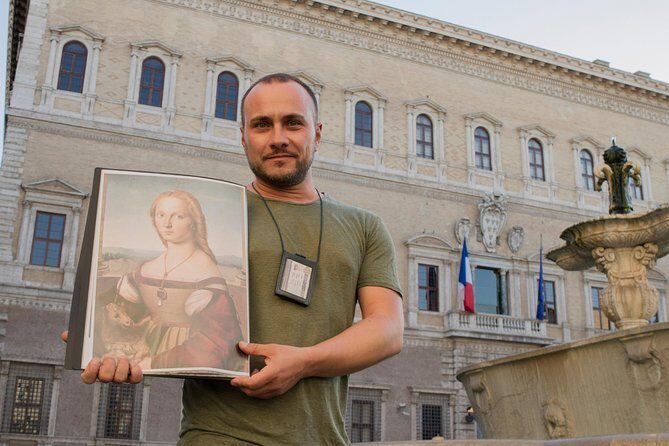
Then you enter the church of Santa Maria Sopra Minerva, where the tour explains the story of one of Europe’s most successful courtesans in the early 1500s. This is one of those stops that works best if you take a moment to look slowly once you’re inside.
Churches like this can feel like they’re built to overwhelm. The tour counters that by turning the focus to a specific person and a specific idea: how a reputation could function like influence.
You’ll also get the feeling that you’re seeing part of Rome that normal sightseeing streams often skip. It’s not just “a church you pass.” It’s a church that holds narrative weight.
Sant’Agostino: the women connected to the church and Caravaggio’s canvas
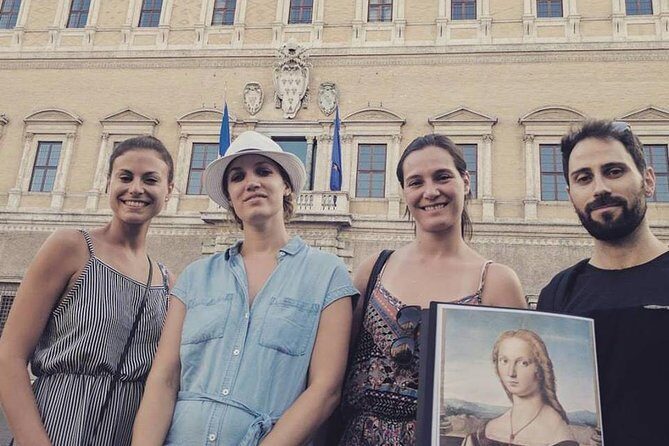
At Basilica S. Agostino, the theme becomes even more direct. The church is historically related to women, and the story includes an important Caravaggio connection: the original canvas called Virgin Mary and the Pilgrims.
This stop is a good example of why the tour is worth doing even if you think you already know Rome’s big names. Instead of only talking about famous paintings in general terms, the guide grounds it in a specific place where the work is tied to the site.
If you like “see it, then understand it” moments, this is one of your best chances in the walk. You’ll finish the church feeling like the painting has context beyond its title.
Via dei Coronari: watching courtesan-era buildings up close
The tour then shifts from interiors to streets, taking you along Via dei Coronari, where you walk among original 15th- and 16th-century buildings that were owned by courtesans.
This is where the city gets physical. It’s one thing to hear stories about courtesans in abstract terms, and another to stand along a street and realize the built environment connected to their daily life. The tour frames it as a way to bring the stories to life through what you can actually see.
Practical note: this segment is shorter, but it’s dense. You’ll want to pay attention to what the guide points out, because the street itself won’t explain anything on its own.
Campo de’ Fiori: Vannozza Cattanei and Borgia-family power
In Campo de’ Fiori, the tour leans into Borgia history with the story of Vannozza Cattanei, the mother of Cesare and Lucrezia Borgia. The guide presents this as a favorite story for many people because it’s dramatic and human at the same time.
This stop gives you political context. It’s not just romance or scandal in the background; it’s a family story where influence travels through relationships, and women play key roles in that movement.
Also, it’s a useful reset in tone. If earlier stops felt art-heavy, this adds court-level story pressure—why the women mattered to power, not just to culture.
Piazza Farnese ending: Giulia Farnese and a moving finale
The tour ends in Piazza Farnese, by Palazzo Farnese, which today is the French Embassy. The last story focuses on Giulia Farnese, and the finale is described as particularly moving.
This ending works because the tour has been building toward it. By the time you reach Piazza Farnese, you’ve seen multiple women’s stories in different settings—statues, courtyards, churches, and street life. Then the guide closes with a person tied to high visibility and lasting legacy.
In other words, you don’t just finish at a pretty square. You finish with a story that lands.
What you’ll notice in Rome after this walk
Even if you don’t do another museum right away, the tour changes how you read art and space. You’ll be more alert to how women get represented—or quietly left out.
You’ll also have a clearer handle on Caravaggio connections. Anna Bianchini is presented as a first and frequent model for him, and you’ll have a specific Caravaggio-linked work to remember at Sant’Agostino. That turns random paintings you might see later into something more personal and trackable.
Most importantly, you’ll come away with a sense of economic reality: how reputation, patronage, and power intersected with daily survival. That theme is what makes the stories feel more than just drama.
Who should book this tour (and who should think twice)
This works best if you like history that isn’t only about rulers. If you’re into art and you want to understand why certain subjects and models mattered, you’ll enjoy the way the guide connects women to artistic creation.
It also suits people who already know some famous Rome sights. You’ll get a different angle on the city, including churches and streets that many first-timers skip.
If you dislike walking or you want a “sit down most of the time” experience, you might find it tiring. It’s a walking tour, and it includes multiple church entries plus street segments.
Should you book the Renaissance Scarlet Ladies Tour?
Yes—if your goal is to see Renaissance Rome through human stories tied to specific places, this is a strong afternoon choice. The guide name Massimo is a standout for a reason: the pacing, humor, and clarity keep the topic engaging, and the small group format makes it easy to ask questions.
I’d especially book it if you care about women’s roles in art and power, and if you want more than postcard Rome. If walking fits your travel style and you’re okay spending a few hours in church interiors and old streets, this tour is one of the better ways to get real meaning out of the city’s art and architecture.
FAQ
What’s the duration of the Renaissance Scarlet Ladies walking tour?
The tour runs for approximately 3 hours.
What time does the tour start and where does it end?
It starts at 2:30 pm. It begins at the Basilica of St Mark Evangelist at Campidoglio and ends in Piazza Farnese (44, 00186 Roma RM, Italy).
Is the tour offered in English?
Yes, the tour is offered in English.
How big is the group?
The tour has a maximum of 18 travelers.
Do I need to buy separate tickets to the sites?
No. The stops listed on the tour show admission ticket free, and the included item is the guided tour.
Is the ticket mobile?
Yes. The tour uses a mobile ticket.
Are snacks included?
A snack bar stop is possible halfway through, but snacks are not included in the tour cost.
Can I cancel for a full refund?
Yes, you can cancel up to 24 hours in advance for a full refund. Cancellation less than 24 hours before the start time is not refundable.