Pompeii is never just ruins.
This 2-hour guided visit focuses on the most important public and private buildings, plus lesser-frequented corners of the Pompeii Archaeological Park, led by authorized Professional Local Tourist guides from the Campania Region. You’ll also move in a way that helps you picture daily life in a city frozen in time by the 79 A.D. eruption.
What I like most is the mix: you get big-name anchors like the Forum and the Thermal Baths, but you also get to walk the areas people often skip. I especially love the stop-and-stare moments, like the plaster casts of victims and the brothel called the Lupanare with its erotic frescoes, explained in context rather than just shown. And the guiding matters here, too. In real world experience, guides such as Ilaria make the city feel readable, with clear answers and real enthusiasm when questions pop up.
One possible drawback: the experience is good only if you plan for Pompeii as an outdoor site. The 16 euro admission ticket isn’t included, and weather can affect what you want to do that day at the ruins.
In This Review
- Key things to know before you go
- Entering Pompeii Through the “Easy to See” Route
- Forum, Thermal Baths, and the Streets That Explain the City
- The Lupanare: Where Pompeii Gets Honest
- Plaster Casts in the Southern Ruins
- Theaters and the North-Side Crossing
- How Much Walking Is Involved (And Who It Fits)
- Price and Value for Up to 6 People
- Guides Make or Break Pompeii
- Weather Reality: Plan for Pompeii as Outdoors
- Pairing This Tour With the Rest of Your Day
- Should You Book This Pompeii Buried-City Tour?
- FAQ
- Is the Pompeii admission ticket included?
- How long is the tour?
- What’s the group size?
- Where do we meet?
- What time does it run?
- What fitness level do I need?
Key things to know before you go
- Authorized, professional local guides run the tour with Campania Region oversight.
- A small private group keeps the pace comfortable, up to 6 people.
- Uncrowded southern ruins are part of the route, not just the main sights.
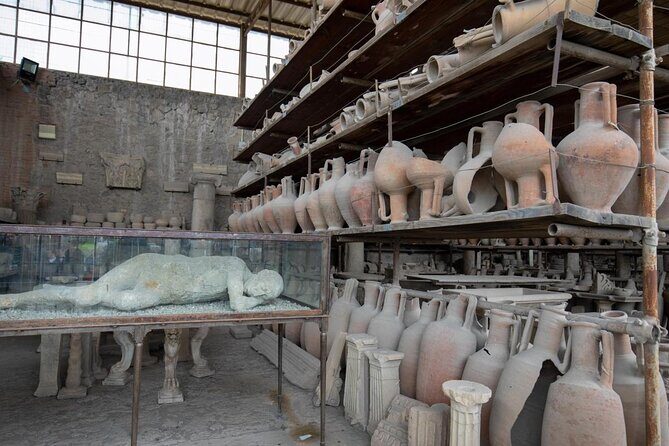
- Plaster casts of victims add a haunting, hands-on sense of what happened.
- The Lupanare (with erotic frescoes) gives you a blunt look at ancient society.
- Tickets are extra: Pompeii admission is 16 euro per person, and free for under 18 with ID.
Entering Pompeii Through the “Easy to See” Route
Pompeii can feel overwhelming fast. The ground is uneven, the scale is huge, and you can end up wandering without a clean storyline. This tour helps you avoid that. You meet at Pompei Porta Marina (scavi) and then head into the ancient city with a guide who is focused on the most meaningful stops instead of trying to show you everything.
The timing is also sensible. You’re out for about 2 hours, which is long enough to see the heart of the city and still short enough that you won’t feel like you’re losing an entire day to walking. And because it’s a private group for up to 6, you’ll likely move at a pace that matches your questions and photo breaks rather than being dragged by a big bus group.
There’s also a “this is why the route matters” element: the tour includes time in the southern part of the ruins, where you’ll get a calmer view of the city layout. That matters because Pompeii isn’t just about one famous street. It’s about how neighborhoods connect, where people gathered, and how daily routines worked.
You can also read our reviews of more city tours in Pompeii
Forum, Thermal Baths, and the Streets That Explain the City
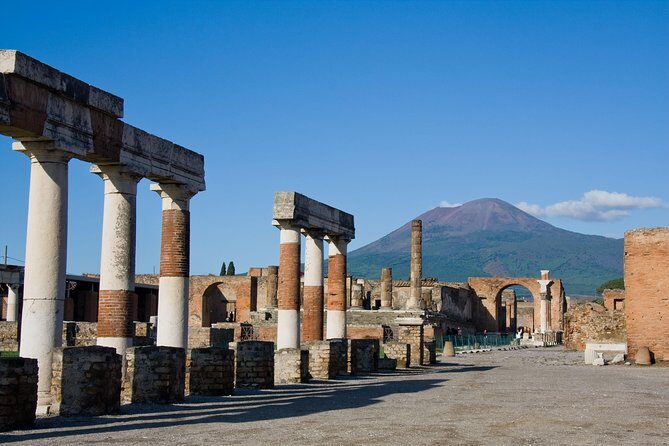
Your main walk starts with the Pompeii Archaeological Park and moves through both public and private buildings. The Forum is one of those places where your brain quickly switches on. It’s where civic life happened, so even without technical details, you can understand the purpose of the space: this is where people came together, discussed issues, and kept the city functioning.
Next come the Thermal Baths. Baths in Roman life were not just for hygiene. They were social spaces. That’s why I like this stop: even when you’re standing in stone foundations, you can still imagine the rhythms—warm, hotter, cooler zones; people lingering; gossip swapping hands. A guide helps you read the layout so it’s not just “rooms” but a functioning system.
After that, you’ll see Menandro’s House. This is the kind of stop that rewards your attention. Private homes in Pompeii show you how wealth, taste, and daily routines could look when someone’s world is fairly small and fully visible. It also helps you balance the big civic sites with real household life, so Pompeii starts to feel less like a museum and more like a place people lived.
The Lupanare: Where Pompeii Gets Honest
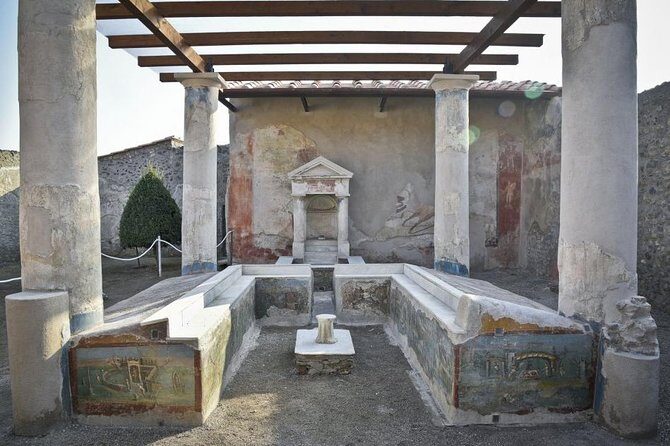
Not every Pompeii tour spends time on the Lupanare, the brothel area known for its erotic frescoes. This one does, and it’s one of the most memorable parts for the right reasons.
If you’re worried that this stop will feel like shock for shock’s sake, don’t. The value here is context. A good guide can connect what you’re seeing to the reality of ancient urban life—how adults found entertainment, how commerce worked, and how art was used to communicate. You’ll still notice that the frescoes are explicit by modern standards, but the experience becomes more about understanding society than simply reacting.
This is also a stop that benefits from a smaller group. You’ll have space to look closely, then ask questions without feeling like you’re slowing down a cattle line. And once you see how the Lupanare fits into the broader neighborhood, it becomes easier to understand why Pompeii is so compelling: the city covers everything, not just the polite parts.
Plaster Casts in the Southern Ruins
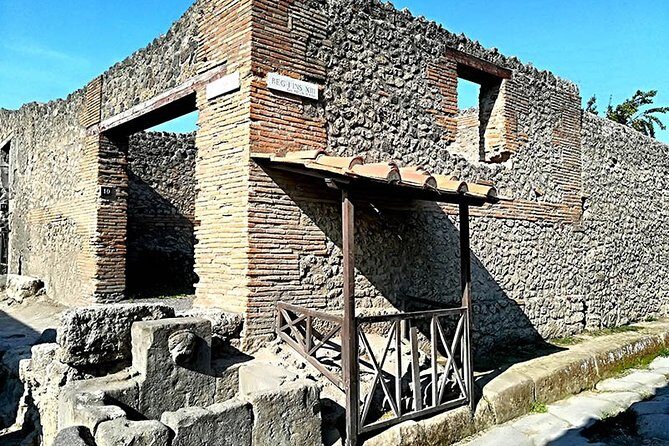
One of Pompeii’s most intense features is the plaster casts—the famous molded figures of those who died during the eruption of Mount Vesuvius in 79 A.D. Here, the tour leans into the emotional gravity without turning it into a sprint-by photo stop.
I like the fact that you walk through these moments in the uncrowded southern section. It helps your brain slow down enough to process what you’re actually looking at. The plaster casts aren’t just a dramatic set piece. They make the eruption feel personal—like this wasn’t a distant event from a textbook, but a catastrophe that froze a living city in the worst possible moment.
This is the point where the guide’s role matters most. You’ll get explanations about what you’re seeing and how to interpret the display in a way that respects its meaning. You’ll also likely notice how the surrounding street and building remains frame the casts, reminding you that these victims weren’t in a vacuum. They were in Pompeii.
Theaters and the North-Side Crossing
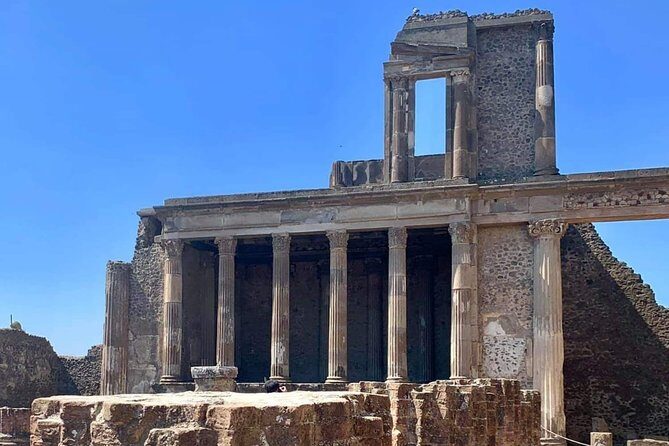
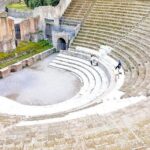
After the southern highlights, the tour heads toward the theaters. You’ll have about half an hour in that theater area, which is a smart chunk of time. Pompeii’s theaters aren’t just cool architecture. They show you what Romans did for entertainment and how public spaces were designed to bring people together.
Then you cross streets along the north side. This is where you get the “Pompeii is a city, not a list of sights” effect. The streets and building shapes help you understand movement through town—where you might walk, where crowds could gather, and how neighborhoods relate to major gathering spots.
This section can be especially rewarding if you’re the type who likes to look at layout. Even if you don’t study architecture, you can still “read” the city’s logic: big gathering places, side streets, residential areas, and the way public life and private life overlap.





How Much Walking Is Involved (And Who It Fits)
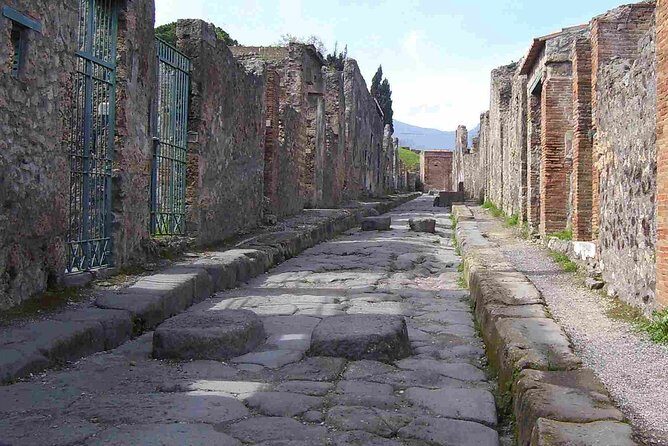
This works best if you have moderate physical fitness. Pompeii has rough surfaces, uneven ground, and lots of walking, even on a curated route. The good news is that you’re not trying to do Pompeii solo with no plan. The guide keeps you moving efficiently between key areas, so you’re not wasting time circling around for answers.
If you’re traveling with knee issues or you tire easily on uneven pavement, you’ll want to think carefully. This is a walking-focused experience, and the setting is outdoors. Still, because it’s a small group, it’s usually easier to move at a pace that feels manageable.
This tour is a strong fit if you want a clear narrative in a limited time. It’s also a good choice if you’re returning to Naples or Rome and you don’t want a huge time commitment. You’ll be able to say you saw the essentials plus the memorable extras, without turning the day into a marathon.
Price and Value for Up to 6 People
The price is $229.28 per group, up to 6 people. That structure is where the value story starts. If you have a full group, your effective cost per person drops a lot. If you’re traveling as a couple or solo, the cost per person is higher, but you still get the benefit of private guiding rather than a crowded, less flexible walk.
One important budgeting note: Pompeii admission tickets are not included. You’ll need to pay 16 euro per person (and under 18 can enter free with valid ID). Add that into your planning before you book, especially if you’re comparing it to self-guided entry tickets.
Also note the experience includes guided service, but it’s not trying to sell you add-ons. The focus stays on the walk itself: what you see, why it matters, and how to connect the dots between major sites and the quieter corners.
For me, the value comes from two things: you get a guided route that avoids aimless wandering, and you get stops that many “quick Pompeii” tours skip, like the Lupanare and time in the southern section.
Guides Make or Break Pompeii
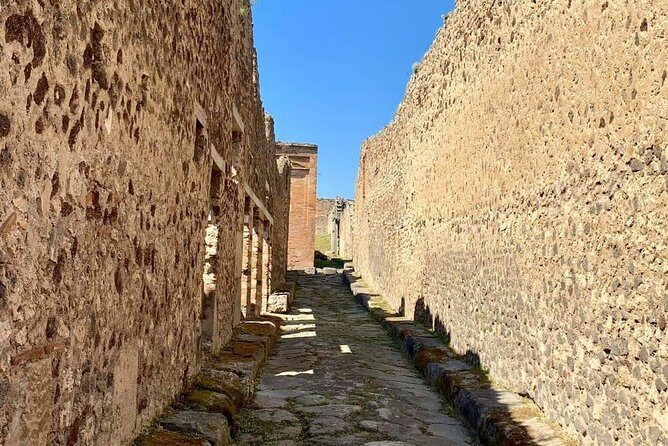
Pompeii has a lot going on, and without interpretation it can feel like “more stones, more streets.” The best part of this tour is the human side: the guide is there to help you see what you’re standing in front of.
The reviews highlight how guides such as Ilaria manage that. You can feel the difference when a guide can answer questions clearly and tie the sights to daily life, not just dates. That matters for you because it turns Pompeii into something you can actually remember.
It’s also worth noting that this tour is described as being led by authorized guides. That doesn’t automatically mean every moment is perfect, but it does signal professionalism. In a place like Pompeii—where you can quickly lose context—having a real guide is the whole point.
Weather Reality: Plan for Pompeii as Outdoors
Even when the tour itself is solid, weather can change how your day feels at Pompeii. One review story talks about rain, lightning, hail, and flooding ruining plans for Vesuvius and Naples. You can’t control that. What you can control is your readiness.
This tour requires good weather, and if it gets canceled due to poor conditions, you should expect a different date or a full refund. So if you’re traveling in shoulder season or rainy months, keep your schedule flexible.
If rain is possible, pack smart. Think waterproof shoes or shoe covers, a light rain layer, and a small bag you trust. Pompeii stones don’t forgive slips, and your comfort on uneven surfaces matters more than you’d expect.
Pairing This Tour With the Rest of Your Day
With 2 hours at Pompeii, you’ll likely want to think about what you want afterward. The opening hours run from 9:00 AM to 1:00 PM across the week for the listed season window, so you can’t drift too late and still expect a full visit.
If you want more than what this tour covers, plan an extra self-guided window either before or after. If you’re planning a day trip that includes Naples or the Vesuvius area, start Pompeii earlier rather than later. You’ll still be dealing with weather, but you’ll reduce the odds that the whole day turns into a scramble.
Also, because this tour focuses on key buildings and emotionally strong stops, it gives you a good foundation. Once you’ve got the story, walking additional streets on your own can feel less like wandering and more like exploring with purpose.
Should You Book This Pompeii Buried-City Tour?
I’d book this if you want a guided Pompeii that stays focused, sees both public and private sites, and includes the memorable extras like the Lupanare and the plaster casts. The price structure works best for a group of friends or family up to 6, but even smaller groups can make sense if you value a professional, guided route over trying to piece Pompeii together alone.
Skip it or reconsider if you know you can’t handle outdoor uneven walking, or if you’re traveling with a tight schedule and you’re not prepared for weather disruptions. This is one of those places where comfort and timing matter more than you think.
If you want Pompeii to feel like a city with people, rules, entertainment, and tragedy, this tour is a strong way to get there in a couple of hours.
FAQ
Is the Pompeii admission ticket included?
No. Admission tickets cost 16 euro per person and are not included. Free entrance is available for under 18 with a valid ID document.
How long is the tour?
The tour lasts about 2 hours.
What’s the group size?
It’s a private tour, and only your group participates. The tour is priced for up to 6 people.
Where do we meet?
The meeting point is Pompei-porta Marina – scavi (80045 Pompei, Metropolitan City of Naples, Italy). The activity ends back at the meeting point.
What time does it run?
The listed opening hours are 9:00 AM to 1:00 PM, Monday through Sunday, during the season shown.
What fitness level do I need?
You should have moderate physical fitness since it involves walking through the archaeological park.