REVIEW · POMPEII
Pompeii Ancient City Walking Tour – Italian & English Guide
Book on Viator →Operated by Sesto Continente Tours · Bookable on Viator
Pompeii is big, and this helps you move. This two-day guided route is built for first-timers: you get entry-gate facilitation plus a guided walk through Pompeii’s most famous temples and houses. I also like the focus on the house mosaics and frescoes you’ll remember long after you leave. One drawback to keep in mind: the Pompeii entrance ticket isn’t included (it’s extra), and many stops are brief, so you’ll want to save time later for your personal favorites.
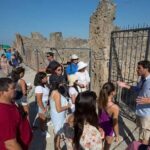
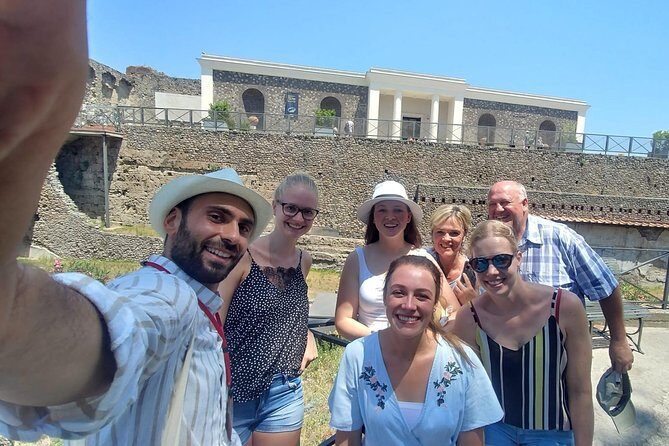
I like the group size limits here—up to 25 people—because it keeps the experience from turning into a noisy stampede. The tour is offered in English, and in a real-life mixed-language situation, the guide (Simone) was able to repeat explanations in Italian when needed.
Day 1 is the main archaeological workout, with entry into the Pompeii Archaeological Park. Day 2 switches gears to a Roman Catholic Sanctuary visit that’s included for about an hour, so you’re not just repeating ruins-on-ruins all day.
In This Review
- Key things I’d circle before you book
- Entering Pompeii at the right moment: meet at Piazza Porta Marina
- Day 1 route: from amphitheater scale to temple details
- Pompeii Archaeological Park (the main walking spine)
- Casa del Fauno: mosaics with blockbuster names
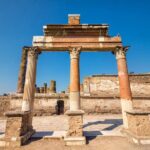
- Tempio di Giove Capitolino: where history meets Vesuvius
- Temple of Apollo: the oldest religious building idea
- Roman Amphitheater: scale you can actually feel
- Casa del Menandro: the fresco that gives the name
- Casa dei Vettii: freed slaves and a home built to show it
- Villa dei Misteri: nine scenes and the ritual of adulthood
- Day 2 in Pompeii: a calmer hour at the Roman Catholic Sanctuary
- What the price really means: $36.12 plus a €22 entrance ticket
- Group size, pace, and language: what to expect on the ground
- How to make this tour work with your own time
- Should you book? My quick decision guide
- FAQ
- How much does the Pompeii Ancient City Walking Tour cost?
- How long is the tour?
- Is the Pompeii entrance ticket included?
- What language is the tour offered in?
- Where do I meet the tour?
- What group size should I expect?
- What if the weather is bad or the tour needs to be changed?
Key things I’d circle before you book
- Skip some “stuck at the ticket office” friction thanks to entry-gate help from the guide
- A long start inside the Pompeii Archaeological Park before you hop house-to-house
- House stops with famous artwork names like the mosaic in Casa del Fauno and the fresco naming Casa del Menandro
- Villa dei Misteri with a clear story arc built around nine painted scenes and the cult of Dionysus
- Day 2 includes the Roman Catholic Sanctuary of Pompeii with the ticket included
Entering Pompeii at the right moment: meet at Piazza Porta Marina
This tour meets at Piazza Porta Marina in Pompeii, and it ends back at the same spot. That sounds basic, but it matters here, because Pompeii is so large that one wrong turn can eat up the best part of your day.
A small but practical win is the included facilitation at the entrance to the ticket office. The goal isn’t magic; it’s saving you time and confusion. When you arrive, have your booking ready and be on time. Also: arrive early enough to locate the group. One unhappy experience you should learn from is a case where the tour operator didn’t show up or answer questions and the group toured on their own. I can’t control that kind of glitch, but I can help you reduce the risk: show up a few minutes early and keep your confirmation information accessible.
Getting there is straightforward since the meeting point is near public transportation. That’s helpful if you’re juggling trains, buses, or a tight itinerary in Naples.
You can also read our reviews of more walking tours in Pompeii

Day 1 route: from amphitheater scale to temple details
Day 1 is where you’ll feel Pompeii’s size and drama. The day begins with the Pompeii Archaeological Park visit in the company of your guide. After entering, you’ll move through some of the site’s biggest anchors: the amphitheater, and several major temples, plus well-known houses and villas.
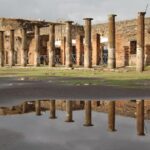
Pompeii Archaeological Park (the main walking spine)
You’ll spend about two hours in the archaeological park. That’s a solid chunk for a first visit, especially because you’re not just walking through randomly—you’re guided so you understand what you’re seeing as you see it. If you’ve only ever read about Pompeii, this is the point where it starts to feel real.
Inside, your route is designed to connect big, easy-to-recognize structures and artwork-heavy homes:
- Anfiteatro (Roman Amphitheater)
- Tempio di Apollo (Temple of Apollo)
- Tempio di Giove Capitolino (Capitoline Jupiter / Capitoline triad space)
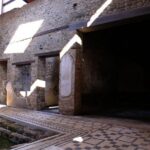
- Multiple houses including Casa del Fauno, Casa del Menandro, and Casa dei Vettii
- Then you head to the famous Villa dei Misteri
Admission for the park isn’t included in the tour price, so you’ll want your ticket squared away ahead of time (more on that in the price section).
Casa del Fauno: mosaics with blockbuster names
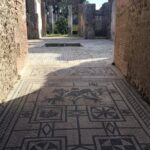
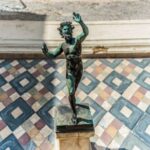
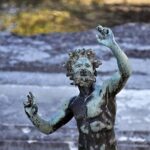
One of the most memorable stops is Casa del Fauno, known here for hosting a reproduction of the famous mosaic of Alexander the Great—depicting the battle between Alexander and the Persian king Darius III. Even if you don’t feel like a full-on art scholar, this kind of image-based detail helps you orient Pompeii emotionally. You start seeing the homes as cultural statements, not just shells.
It’s a short stop (about 10 minutes), so treat it like a taste. If you love mosaics, you’ll likely want extra time on your own later.
Tempio di Giove Capitolino: where history meets Vesuvius
Another quick stop (around 10 minutes) is the Capitoline Jupiter temple. The guide frames it with a key visual: Vesuvius rises in the background. That’s one of those things that’s hard to explain in advance, but once you’re there, it gives you a stronger sense of place—how close this city was to the mountain that changed everything.
Even in a short visit, you’ll get the religious context of the Capitoline triad: Jupiter, Juno, and Minerva. This is useful if you want more than architecture.
You can also read our reviews of more guided tours in Pompeii


Temple of Apollo: the oldest religious building idea
You’ll also hit the Temple of Apollo (about 10 minutes). In this tour framing, it’s considered the oldest religious building in Pompeii, and you’ll see a reproduction of a bronze statue of Apollo presented as the prophetic archer—standing like he’s holding a bow and arrow.
Again, quick stop length means you’re collecting anchors, not finishing a museum lecture. But it’s a good way to start learning the vocabulary of Pompeii.
Roman Amphitheater: scale you can actually feel
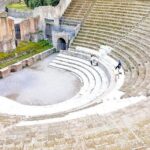
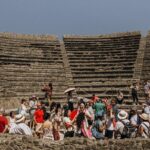
The Roman Amphitheater is one of the most dramatic stops on the route. The tour notes it was built around 80 BC and was used for gladiator shows, with a capacity of up to 20,000 spectators. The seating is described as divided into three sections by social class, which is an important detail if you’re trying to understand Roman life beyond stone monuments.
Your time here is short (about 10 minutes), but even that can help you “get the shape” of the place: where the crowd stood and where the action would have taken place.
Casa del Menandro: the fresco that gives the name
Casa del Menandro is another stop designed to connect a recognizable artwork to the house name. This home is named not by the original owners but by a fresco showing the Greek poet Menander. That approach—naming by art—helps you make sense of why Pompeii’s homes have the names they do.
It’s another brief 10-minute stop, so it’s best as orientation. If this is the kind of detail you want, plan to return later on your own time.
Casa dei Vettii: freed slaves and a home built to show it
Next up is Casa dei Vettii (about 10 minutes). The tour focuses on the brothers Vettii, described here as freed slaves who didn’t hold back on spending to display their new social position. The house is known for beautiful wall paintings and frescoes.
This is a good stop when you’re thinking about everyday aspiration and status—not just worship and entertainment.
Villa dei Misteri: nine scenes and the ritual of adulthood
The big finale of Day 1 is Villa dei Misteri (about 10 minutes). Here, the tour gives you the most structured story in the itinerary: there are nine painted scenes in sequence on the walls of the “Initiation Room,” showing a rite of passage for a bride moving into adult life. The tour also connects it to the cult of Dionysus, the Greek god tied here to wine and fertility.
This is one of those stops where a guide’s framing helps you avoid just staring at walls. Even if your time is limited, the story structure makes the visit stick.
Day 2 in Pompeii: a calmer hour at the Roman Catholic Sanctuary
Day 2 includes a visit to the Roman Catholic Sanctuary of Pompeii, listed as a free visit of about one hour with admission included.
This is a helpful shift after all the archaeological walking. You get a different kind of meaning in Pompeii—less about Roman domestic life and public architecture, more about modern devotion connected to the town. If you’re trying to pace yourself, this second day format makes sense: it’s not just a second round of the same ruins.
The timing is also practical. With only about an hour there, you still keep flexibility for lunch or extra time in the areas you liked best from Day 1.
What the price really means: $36.12 plus a €22 entrance ticket
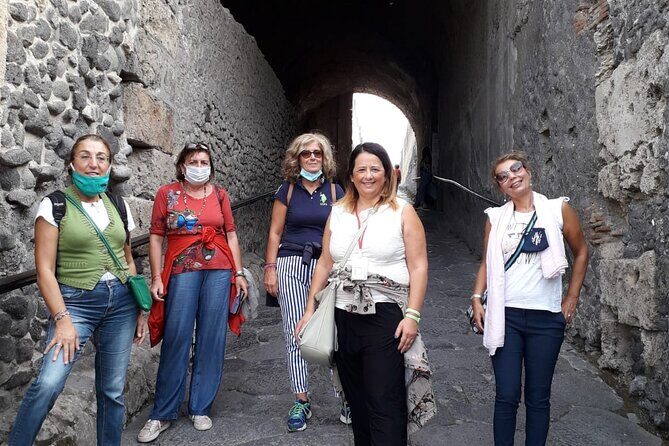
The tour price is $36.12 per person, and the Pompeii entrance fee is €22.00 per person—not included. That means your real baseline cost is closer to tour + ticket, depending on currency conversion and how you handle the booking.
Is it worth paying extra for the guide? I think yes, especially because Pompeii rewards context. A guide helps you connect buildings, artwork, and the reasons homes have the names they do. Also, the tour includes facilitation at the ticket office entrance, which can make the day feel less like logistics and more like sightseeing.
One more thing: entry is free for certain visitors—minors under 18, EU seniors age 65+, and some categories like EU journalists and EU students/teachers. If you fit one of those categories, your total cost shrinks quickly, making this style of guided route an even better value.
Group size, pace, and language: what to expect on the ground
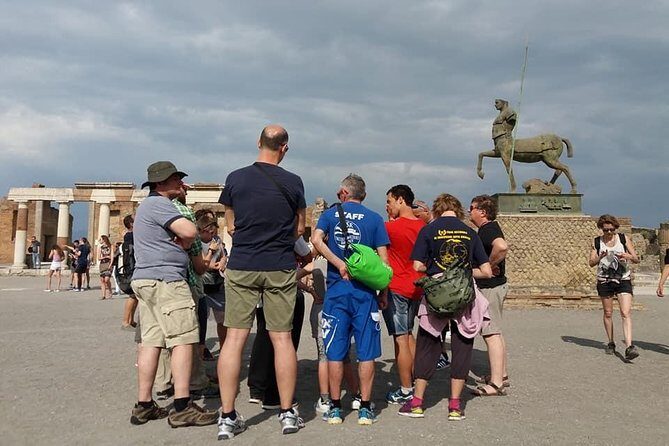
The group size tops out at 25 travelers, which is large enough to feel lively but small enough that you’re not completely swallowed by the crowd.
The tour is offered in English, and the experience can handle real-world language needs. In an earlier mixed-language situation, the guide Simone handled the English portion and also repeated explanations in Italian when people had questions. That’s a strong sign that the guiding style is practical, not robotic.
Pace is the trade-off. Many stops are around 10 minutes, which is great for covering Pompeii efficiently. It also means you won’t stand forever in front of each mosaic or fresco. If you’re the type who likes slow looking, plan on returning later—either the next day or after the tour ends—to spend time deeper where you felt the strongest connection.
How to make this tour work with your own time
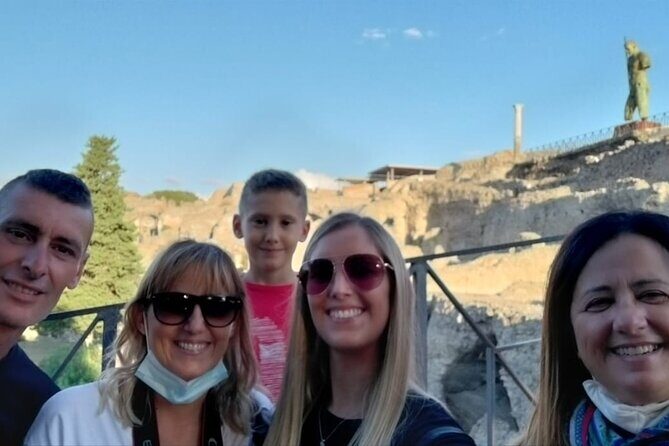
Here’s how I’d structure your expectations.
First, treat Day 1 as a “you will remember this” tour. You’ll see:
- the amphitheater’s scale and social seating idea
- Apollo and Jupiter temple contexts
- major houses like Fauno, Menandro, and Vettii
- and the most narrative-heavy stop of the day: Villa dei Misteri
Second, treat Day 2 as a reset and a change of tone. One hour at the sanctuary is enough to keep your energy up and still feel you’ve used the second day well.
If you have limited time in Naples/Pompeii, this two-day structure is a smart use of hours. If you have extra days, you’ll likely want to come back for unhurried repeats—especially around the artwork-heavy homes.
Should you book? My quick decision guide
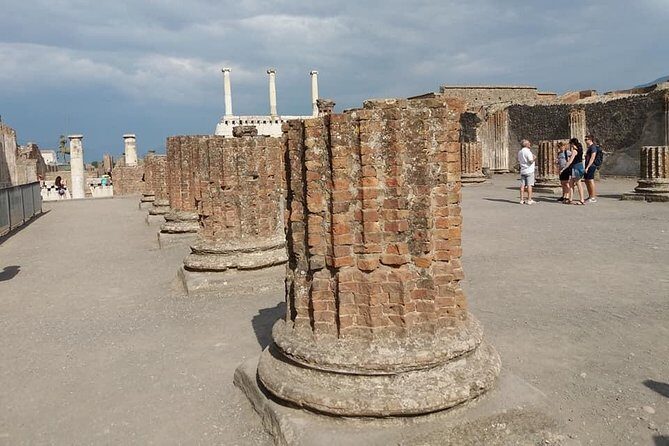
Book it if:
- You want a structured first visit to Pompeii with a guide connecting temples, amphitheater, and art-heavy houses.
- You value ticket office entry facilitation so you lose less time to lines and confusion.
- You’re okay with short stop lengths and prefer a “taste + context” approach.
Skip it (or book with eyes open) if:
- You’re planning around very strict timing and can’t handle any meeting-day miscommunication.
- You hate walking fast through a lot of sites and would rather do a slower, self-paced museum-like experience.
- You already know Pompeii well and mainly want to revisit one or two spots for long, deep viewing.
One practical final thought: show up early at Piazza Porta Marina, keep your confirmation details handy, and don’t assume the day will be perfect. With a guide and a clear route, this tour is an efficient way to understand Pompeii instead of just passing through it.
FAQ
How much does the Pompeii Ancient City Walking Tour cost?
The tour is priced at $36.12 per person. The Pompeii entrance fee is not included in that price.
How long is the tour?
It’s listed as approximately 2 days.
Is the Pompeii entrance ticket included?
No. The Pompeii entrance ticket costs €22.00 per person and is not included. The Roman Catholic Sanctuary visit on Day 2 is included.
What language is the tour offered in?
The tour is offered in English. In at least one mixed-language situation, the guide was able to repeat explanations in Italian when needed.
Where do I meet the tour?
You meet at Piazza Porta Marina, 80045 Pompei NA, Italy, and the tour ends back at the same meeting point.
What group size should I expect?
The tour has a maximum of 25 travelers.
What if the weather is bad or the tour needs to be changed?
The experience requires good weather. If it’s canceled due to poor weather, you’ll be offered a different date or a full refund. Free cancellation is available up to 24 hours in advance for a full refund.