REVIEW · POMPEII
Pompeii Express: 1-Hour Guided Tour
Book on Viator →Operated by Enjoy Pompeii · Bookable on Viator
This one-hour tour is built for people who want the main hits fast, without spending ages baking in the sun. I like that you get guided storytelling instead of wandering lost, and I also like how the route is paced so you can see a lot of Pompeii in a short window.
One thing to plan for: the tour price covers the guide, but Pompeii site entry (about €19) is not included. If you show up assuming everything is bundled, you’ll feel that sting.
In This Review
- Key points to know before you go
- Pompeii in One Hour: what this express format does best
- Who this suits
- Getting to the group: start at Ristorante Bar Sgambati
- Price and ticket math: $21.99 is for the guide
- Stop 1: Pompeii Archaeological Park and the Vesuvius context
- Admission note that actually matters
- Foro de Pompeya: where public life happened
- The Beware of the Dog mosaic: one photo, big reputation
- Thermopolium VI: ancient fast food and what Romans ate
- Casa dei Vettii: fresco-packed luxury and practical household lessons
- What the best guides add in that one hour
- Logistics that help you enjoy the hour (instead of managing it)
- Weather, group size, and why they affect your plan
- Should you book Pompeii Express?
- FAQ
- How long is the Pompeii Express guided tour?
- What is the tour price?
- Do I need to buy a Pompeii entry ticket separately?
- Is the guided tour ticket mobile?
- Where do I meet the guide?
- Where does the tour end?
- What are the main stops during the tour?
- Is there a limit on group size?
- What is the weather policy?
- Can I get a refund if I cancel?
Key points to know before you go
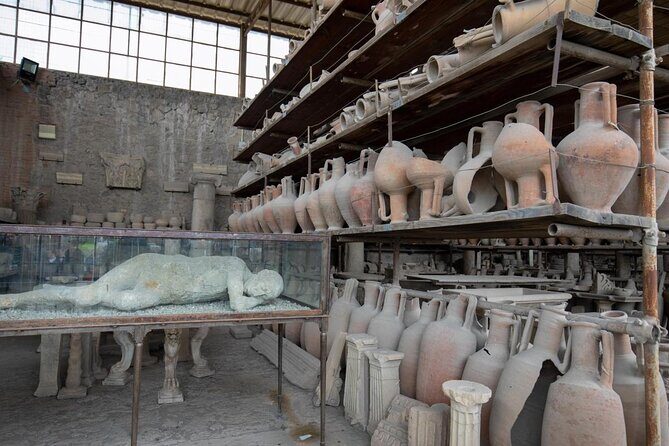
- A true highlights loop: Pompeii’s Forum area, a stop for the famous mosaic, plus Thermopolium VI and Casa dei Vettii.
- Fast pacing helps in the heat: short stops add up to a lot without an all-day slog.
- You’ll learn daily life details: the guide connects the ruins to how Romans actually ate, shopped, and lived.
- Fresco lovers will care: Casa dei Vettii is the payoff, with well-preserved wall paintings.
- Guide quality matters: Sasa gets praised for being relaxed, knowledgeable, and funny.
- Meeting spot can be tricky: one review noted there was no signage, so arrive a few minutes early.
Pompeii in One Hour: what this express format does best
Pompeii is one of those places where the size can surprise you. The city sprawls, the sun adds up, and it’s easy to spend your energy just figuring out where you are. This is why I like a short guided format. It doesn’t try to teach everything. It tries to get you oriented and show you the best-known sights with a human voice doing the connecting work.
The tour runs about 1 hour, and the group stays small, with a maximum of 20 people. That matters because you can usually hear the guide, and you’re less likely to get stuck behind a cluster of slow walkers. It’s also a practical choice if you’re combining Pompeii with other stops in the area and you don’t want to lose half a day.
You can also read our reviews of more guided tours in Pompeii


Who this suits
If you’re the type who likes to get your bearings quickly, you’ll probably enjoy this. I especially think it’s a good fit if:
- you’re visiting Pompeii in summer or heat-sensitive conditions
- you want the headline sights without deep scholarly homework
- you have limited mobility for long, unstructured walking
- you prefer a plan so you don’t burn time making decisions
If you love museum-style lingering—staring at details for an hour at a single room—this may feel too brief. You’ll still see the key moments, but you won’t slow all the way down.
Getting to the group: start at Ristorante Bar Sgambati
The tour begins at Ristorante Bar Sgambati, Via Villa dei Misteri, 1, 80045 Pompei. It ends at Via Villa dei Misteri, 2. That second address is handy because it means you’re not stuck at the same exact spot all day.
Here’s the practical part: do yourself a favor and arrive early. One piece of feedback called out that there wasn’t clear signage for where to find your group. In other words, show up a few minutes before start time, confirm you’re at the right meeting point, and keep your phone ready for the mobile ticket.
I also suggest taking a quick look at your map app and saving the end address too. Pompeii can look confusing at street level, even when you’re in the right area. If you know both addresses up front, you’ll spend less time guessing.
Price and ticket math: $21.99 is for the guide
At $21.99 per person, this tour’s price is comparatively low for a guided experience. But here’s the detail that affects your real total: Pompeii site admission is not included. The site entry is listed at €19.00 per person.
So the value equation is basically:
- you pay for the guide through the tour
- you pay the separate site ticket for Pompeii entry
That split isn’t automatically a deal-breaker. In fact, it can be normal in busy heritage sites. What matters is your expectations. If you add the site entry fee in advance, the guided hour starts to look like good value: you’re paying to have someone keep the route tight and the explanations understandable.
Also note: the tour uses a mobile ticket, which is convenient. Less paper, fewer lost-print worries.
Stop 1: Pompeii Archaeological Park and the Vesuvius context
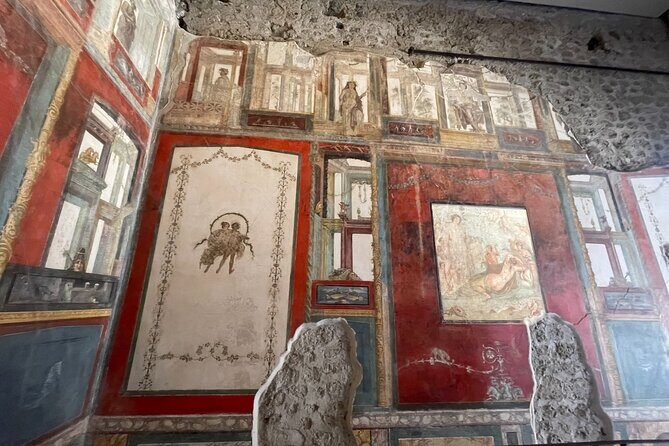
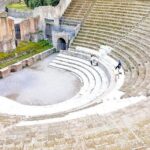
You start at Pompeii Archaeological Park, the big umbrella area where the ancient city lies beneath layers of volcanic history. The guide frames the setting with the core event—Pompeii was buried after the eruption of Mt. Vesuvius roughly 2,000 years ago—and then moves quickly into what you’re looking at.
The payoff of this first stop is mental orientation. In a place like Pompeii, it helps to know what you’re seeing before you step deeper into the grid of streets and ruins. Even a short guided introduction can turn a pile of walls into a place with routines and relationships.
Time on this stop is short, so don’t expect a slow walk through everything. Think of it as setting the stage so the rest of the hour makes sense.


Admission note that actually matters
The tour description indicates that admission ticket coverage for the site itself is not included. So if you want a smooth visit, make sure your Pompeii entry is sorted before you arrive. Otherwise, your guided “highlights hour” can shrink fast while you handle ticket questions.
Foro de Pompeya: where public life happened
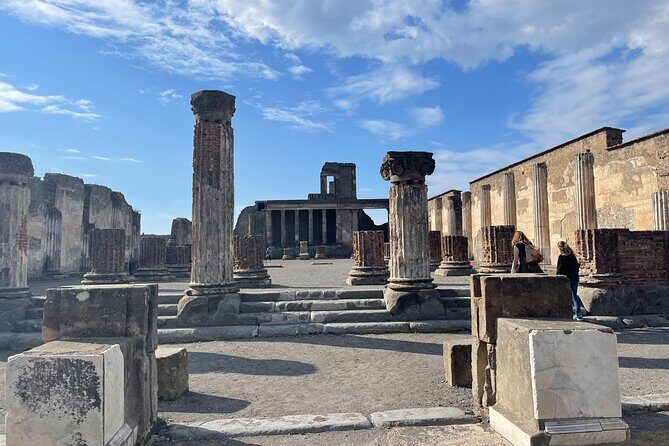
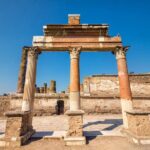
Next comes Foro de Pompeya—the ancient square and its public buildings. This stop is all about social geography. When I visit Roman cities, I like to picture who gathered where, for what, and how that shaped daily life. The Forum zone is where the city’s public face lived.
Even with limited time, a guide can help you notice things you’d otherwise skip:
- how public buildings relate to the open space
- how the layout suggests movement and gathering
- why this area reads as a civic hub rather than just “another ruin”
You’ll get only a brief taste here (the tour keeps it efficient), but it’s a good one because it helps you see Pompeii as a functioning place, not just a lineup of individual artifacts.
The Beware of the Dog mosaic: one photo, big reputation
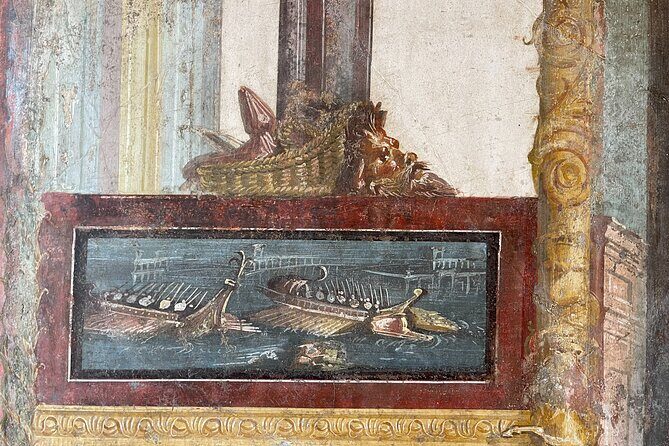
Then you’ll hit one of Pompeii’s most famous visual moments: the Beware of the dog mosaic. The wording is straightforward, but the reason it’s beloved isn’t only because it’s famous. It’s because it feels personal.
You’re looking at a tiny slice of everyday signals—an entrance warning, a household message—almost like a 2,000-year-old street poster. It’s the kind of stop where you might take a quick photo, but you also get a small jolt of realism: someone placed this where people would actually see it.
This is a short stop, so come with your photo expectations set. Don’t plan on spending ten minutes composing the perfect shot. Use the moment well, then keep moving.
Thermopolium VI: ancient fast food and what Romans ate
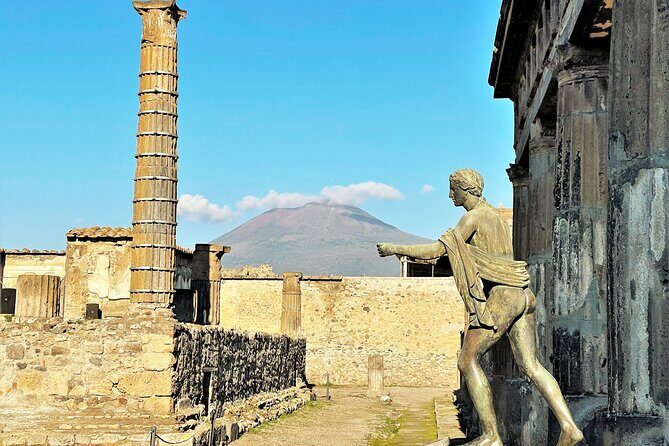
After the mosaic, you’ll visit Thermopolium VI—an ancient fast-food type of place. If you’ve ever wondered what “eating out” looked like back then, this is where the tour starts to feel more alive.
The guide explains what Romans used here, and that’s the key. Food stops are often more interesting when you’re given context. Instead of only seeing a counter or a layout, you understand it as a place for quick service and daily consumption.
This stop tends to be a favorite because it hits a modern nerve. Even if you don’t catch every detail, you’ll leave with a sharper idea of:
- how quick meals fit into city life
- how prepared food existed in Pompeii
- how ordinary people likely moved through spaces like this
Time here is longer than the Forum stop, so you get a bit more explanation and breathing room.
Casa dei Vettii: fresco-packed luxury and practical household lessons
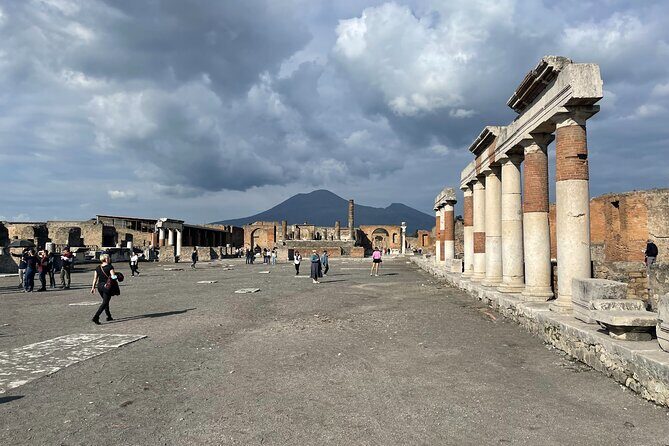
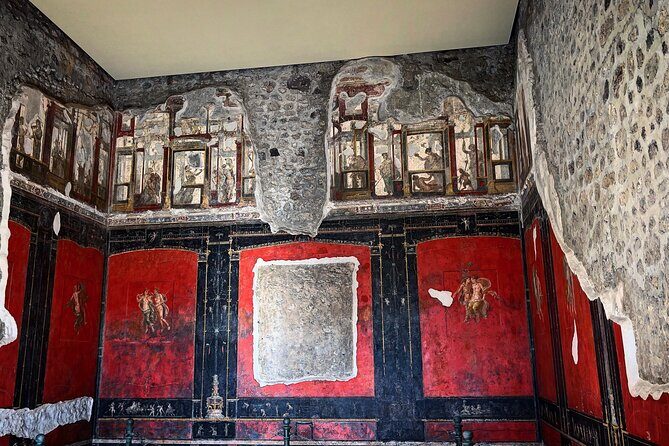
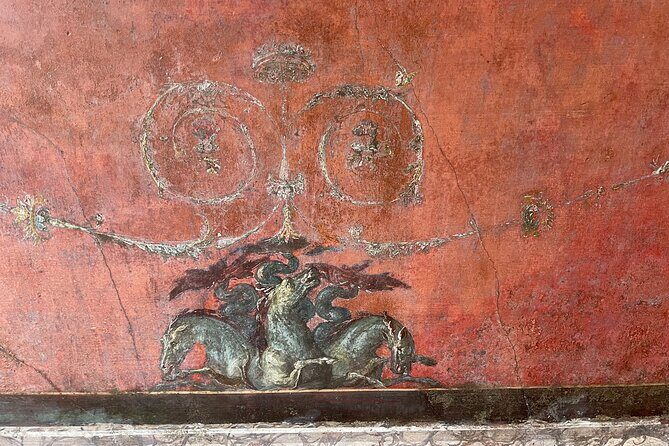
The biggest “wow” moment is Casa dei Vettii, one of the richest Pompeian houses with best-preserved fresco paintings. This is where the tour cashes in your limited time. A guide can point out why these paintings matter: they’re not just decoration. They show how wealth expressed itself through interiors and how people wanted their homes to feel.
What I like about this stop is that it’s not only about luxury. You also learn about domestic life and how the house design worked in the real world—how sustainable the setup could be in a city with intense sun.
In practical terms, this is the place you want to pay attention to the most if you’re the kind of visitor who thinks in details:
- look at what’s preserved and why
- notice what the walls were communicating visually
- connect the rooms to day-to-day life rather than treating it like a static showroom
This part gets around 15 minutes in the plan, which is just enough to appreciate the standout areas. If you want more time here, treat this as your “first look,” then plan a longer return on another day.
What the best guides add in that one hour
Because the schedule is tight, the guide’s skill has outsized impact. One set of feedback specifically praised a guide named Sasa for being relaxed, knowledgeable, and funny. That kind of delivery matters because Pompeii’s story can feel heavy if the explanation is dry. A guide with timing helps you stay engaged without getting overwhelmed.
Also, one comment noted a guide who went up to an extra hour to make sure the group saw key significant sites. That’s not something you should count on, but it tells you the tour can be flexible when the guide thinks it’s worth it.
My advice: go in with a calm attitude. In a short tour, any delay at the start affects everything. If you’re patient and ready to walk, you’ll get more value out of the experience.
Logistics that help you enjoy the hour (instead of managing it)
Even the best guided plan can feel stressful if you arrive under-prepared. Here are the practical things that will help you enjoy the one-hour experience:
- Wear shoes you trust for uneven stone and museum-ruin surfaces.
- Carry water. A “quick” Pompeii still adds up in warmth.
- Bring your phone battery. You’re using a mobile ticket.
- Arrive at the meeting spot early since signage might be unclear.
One more tip: keep your pace consistent. The tour’s strength is that it stays efficient. If you stop to read every inscription, you can slow the group and lose the flow of the hour.
Weather, group size, and why they affect your plan
The experience requires good weather. That’s not just a comfort issue in Pompeii—it can affect the day’s ability to move through the site and see the stops comfortably. If the weather turns, you could be offered a different date or a full refund.
With a maximum of 20 travelers, you’re not dealing with a massive crowd. But it’s still a group. If you’re a fast walker, you may have to slow down. If you’re a slower walker, you’ll need to communicate that early so the guide can pace the stops.
Should you book Pompeii Express?
Book this tour if you want a smart, time-saving way to see Pompeii’s biggest highlights with clear guidance. At $21.99, it’s a reasonable spend for a guided 1-hour introduction—especially if you’ll also get the separate €19 site entry sorted ahead of time.
Skip it (or consider a longer independent visit) if you want to linger room by room, or if you hate group pacing. Also, if you’re the type who needs perfect signage and zero confusion at the start, arrive early and double-check the meeting address.
Overall, this is a solid choice for first-timers who want Pompeii to make sense quickly. You’ll leave knowing the Forum zone, the famous mosaic moment, the Thermopolium VI scene, and the fresco-rich Casa dei Vettii—and you won’t feel like you spent your vacation just fighting the map.
FAQ
How long is the Pompeii Express guided tour?
The tour lasts about 1 hour.
What is the tour price?
The price is $21.99 per person.
Do I need to buy a Pompeii entry ticket separately?
Yes. Entry ticket to Pompeii Site is not included. The entry fee listed is €19.00 per person.
Is the guided tour ticket mobile?
Yes. The tour uses a mobile ticket.
Where do I meet the guide?
The start point is Ristorante Bar Sgambati, Via Villa dei Misteri, 1, 80045 Pompei NA, Italy.
Where does the tour end?
The tour ends at Via Villa dei Misteri, 2, 80045 Pompei NA, Italy.
What are the main stops during the tour?
You’ll see Pompeii Archaeological Park, Foro de Pompeya, Thermopolium VI, and Casa dei Vettii, including a famous Beware of the dog mosaic stop.
Is there a limit on group size?
Yes. The maximum group size is 20 travelers.
What is the weather policy?
This experience requires good weather. If it’s canceled due to poor weather, you’ll be offered a different date or a full refund.
Can I get a refund if I cancel?
Yes. You can cancel up to 24 hours in advance for a full refund. Within 24 hours, the amount paid is not refunded.