REVIEW · 2-HOUR EXPERIENCES
National Museum of Palazzo Massimo: 2-Hour Private Tour
Book on GetYourGuide →Operated by Rome Guides · Bookable on GetYourGuide
Two hours, and Rome feels closer.
This private tour of the National Museum of Palazzo Massimo is a fast, focused way to understand how Romans lived—through the objects they left behind. I love how you get hands-on context for everyday Roman life, and I especially love seeing major hits like the ancient calendars from Praeneste and Anzio and the famous Boxer at Rest statue up close.
You’ll move at museum speed, but you won’t feel rushed. The pro, English-speaking guide helps turn names and dates into plain meaning—how Romans kept time, portrayed heroes, and decorated homes. The only real drawback is that with a fixed 2-hour tour, it’s not designed for slow wandering and reading every wall text at leisure.
One more practical consideration: luggage or large bags aren’t allowed, so plan to travel light. If you show up prepared and want clear explanations, you’ll get excellent value from the time.
In This Review
- Key highlights you’ll actually care about
- Why Palazzo Massimo feels better than a quick photo stop
- Meet your guide and get oriented fast
- Roman timekeeping: the calendars from Praeneste and Anzio
- The Boxer at Rest: why this statue hits harder with context
- Villa of Livia frescoes: learning what Romans meant by a decorated home
- Marble gods: Roman and Greek deities in one visual conversation
- Portonaccio sarcophagus: funerals, religious belief, and a battle scene
- How this tour turns a museum visit into a clear story
- Price and value for a private 2-hour tour
- Who this private tour suits best
- A practical note on what to do (and what not to do)
- Should you book this Palazzo Massimo private tour?
- FAQ
- How long is the National Museum of Palazzo Massimo private tour?
- Is this tour private or shared?
- What languages are offered for the guide?
- What’s included in the price?
- Is hotel pickup or drop-off included?
- Where do we meet the guide?
- What time should we arrive?
- Is the tour canceled for bad weather?
- Are luggage or large bags allowed?
Key highlights you’ll actually care about
- Roman calendars from Praeneste and Anzio: see how timekeeping wasn’t abstract, it was part of civic life
- The Boxer at Rest: a top-tier ancient sculpture that’s easier to appreciate with expert context
- Villa of Livia frescoes: understand what Roman interiors communicated about taste and status
- Marble gods, Roman and Greek: spot how belief and art mixed across cultures
- Sarcophagus of Portonaccio: a major funerary piece with a battle scene that begs for interpretation
Why Palazzo Massimo feels better than a quick photo stop
Palazzo Massimo is one of those Rome museums where the art doesn’t just sit there. It explains a whole system. You’re not only looking at sculptures and paintings—you’re seeing how Romans thought about time, power, home, and the afterlife. That’s why this tour works: you’re guided through the museum’s big story, not just its big objects.
What I like most is the museum’s mix. You get public life (calendars, institutions) and private life (house decoration, frescoes). You also get religion that shows up in places you might not expect, like how funerary art tells you what people believed would happen next.
You can also read our reviews of more private tours in Rome


Meet your guide and get oriented fast
This is a private group tour, and it starts with simple, clear logistics. You’ll arrive about 15 minutes early at the museum entrance, where your guide waits holding a sign with the tour name. Tickets are distributed at the start, and the tour ends back at the meeting point.
Your guide is English-speaking (with Italian also available), and the pacing is built for comprehension. In other words: you won’t spend 45 minutes trying to connect random rooms to ancient life. You’ll start getting the pattern right away, then build on it as you move from highlight to highlight.
Also: it runs rain or shine. So if Rome weather tries to ruin your day, you’re still inside the museum, doing the most Roman thing possible—staring respectfully at ancient stuff.
Roman timekeeping: the calendars from Praeneste and Anzio
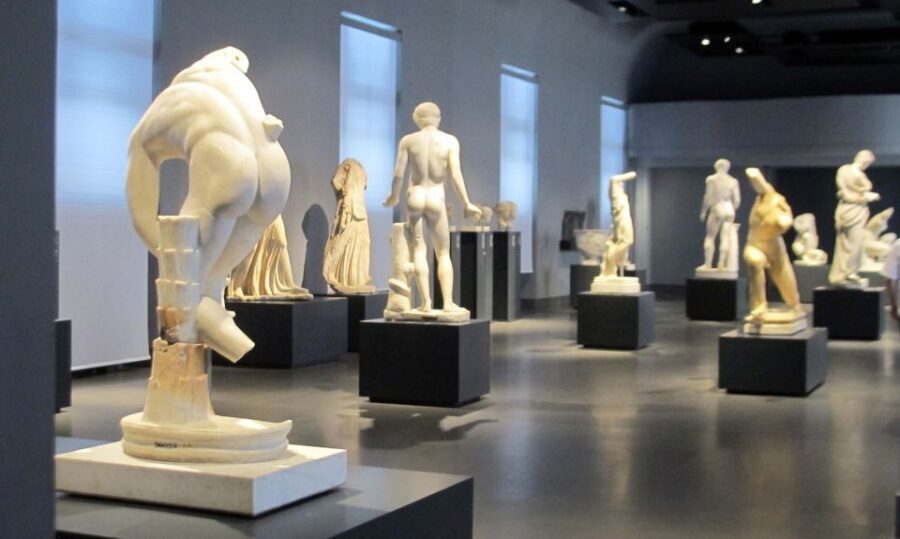
One of the most satisfying moments on this tour is when you see ancient calendars associated with Praeneste and Anzio. These aren’t decorative plaques. They’re evidence that time in Rome had rules, rituals, and civic meaning.
Here’s what you’ll get out of this stop: the guide helps you understand how Romans used calendars as a tool for organizing society. Think less about watches and more about the rhythm of public life—when things happened, when they mattered, and how institutions stayed aligned.
Why this matters: if you only learn Roman history through emperors and wars, you miss the everyday engine behind everything. Calendars are that engine. They show how deeply Rome integrated routine, ceremony, and governance.
The Boxer at Rest: why this statue hits harder with context
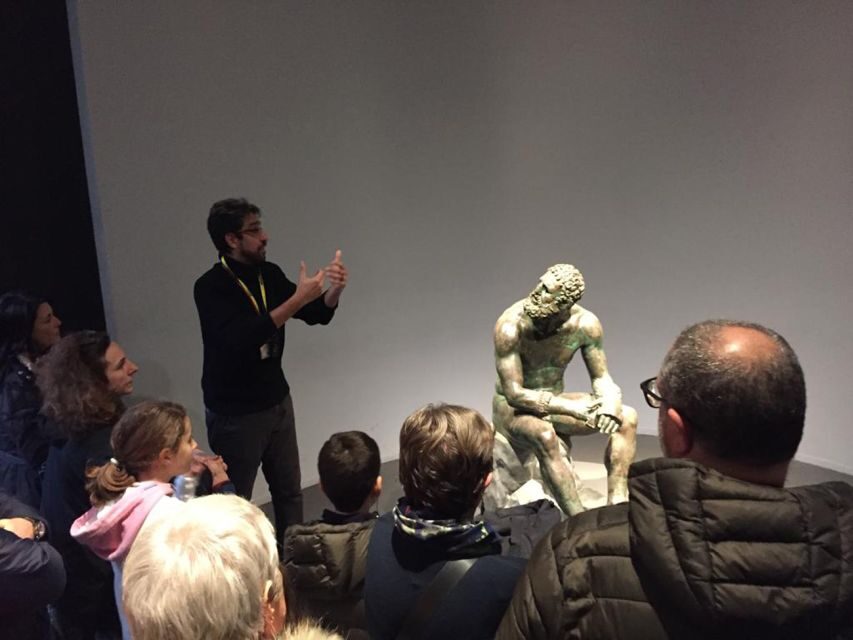
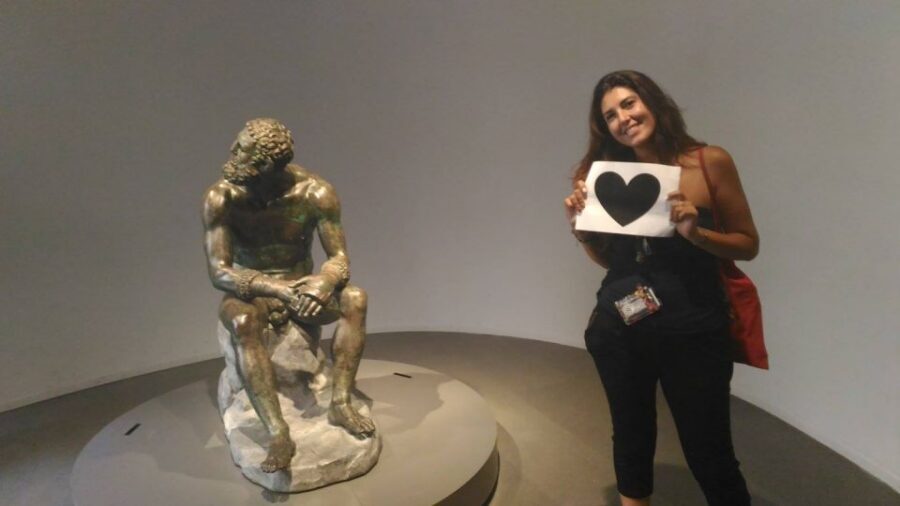
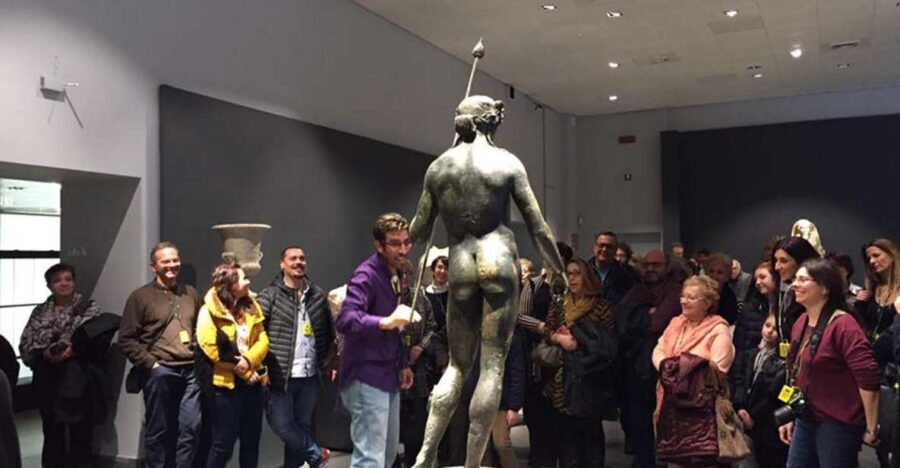
The Boxer at Rest is one of those sculptures you might recognize from books or posters, but it lands differently in the museum. Up close, you notice details you’d never spot in a photo—surface texture, posture, and the intensity frozen into stillness.
What makes it a highlight on a guided tour is the way the guide connects the statue to Roman ideas about bodies, discipline, and heroism. Romans loved portraits of important people and admired strength and achievement, and they translated those values into art.
The payoff is simple. Once you understand what the sculpture is communicating, you stop thinking of it as just an ancient athletic figure. You start seeing it as a message—an image of character, not only muscle.
Villa of Livia frescoes: learning what Romans meant by a decorated home
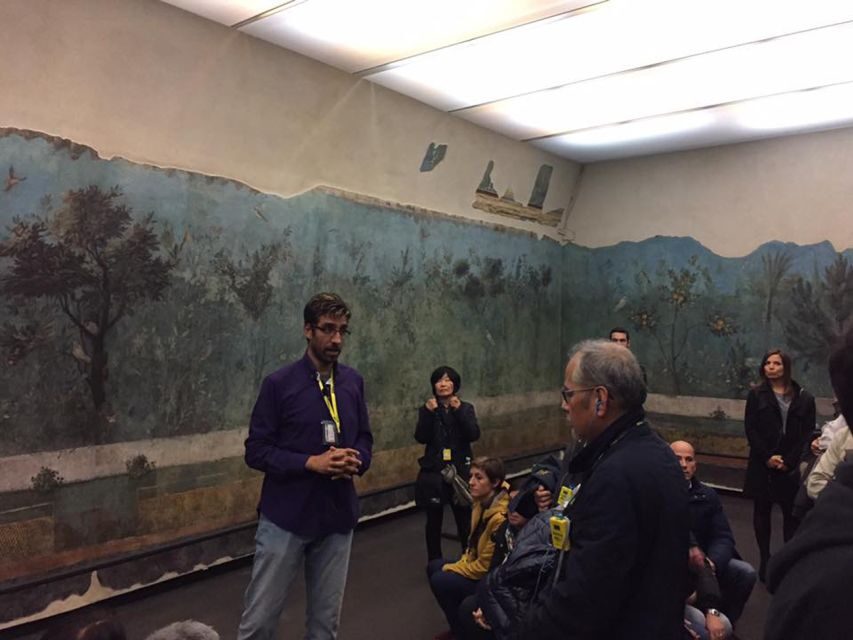
From big, public life, you move into the world of interiors. The tour highlights the frescoes of the Villa of Livia—and this is where Roman culture becomes tangible.
A well-run museum guide doesn’t just point at paint and say it’s old. It explains why people bothered to decorate walls so carefully. You’ll hear how Roman households used decoration to communicate identity: taste, education, and status, all wrapped into scenes meant to shape daily life.
Even if you’re not a “fresco person,” this stop helps you read the bigger picture. You’ll come away with a better sense of how Romans used art at home—not only for beauty, but for meaning.
You can also read our reviews of more museum experiences in Rome





Marble gods: Roman and Greek deities in one visual conversation
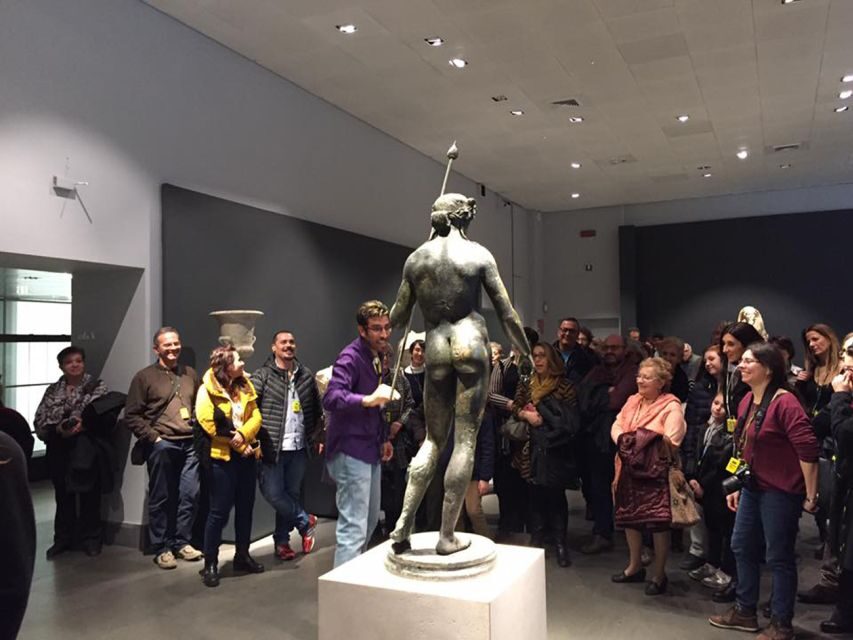
Another standout is the chance to walk among marble statues of Roman and Greek gods. This isn’t just a roster of names. With a guide, it becomes a lesson in how Rome handled culture it inherited and adapted.
You’ll learn to look for the visual language that links Greek influence with Roman use. The point isn’t memorizing mythology. It’s understanding how Romans treated religion as part of public life and personal comfort—something you honored through statues, ceremonies, and stories.
This stop is also where the museum feels “alive.” The gods aren’t remote figures; they’re part of how Romans organized the world.
Portonaccio sarcophagus: funerals, religious belief, and a battle scene
The Sarcophagus of Portonaccio is a major moment. It’s impressive on size and presence, and it comes with a dramatic scene: a battle. That combination—public violence and private mourning—makes it a powerful object to see with interpretation.
What I found most useful is how the tour frames sarcophagi as more than decoration. Romans cared deeply about how the deceased were honored. Funerary art carried religious importance. It wasn’t an afterthought.
So when you’re looking at battle imagery on a tomb, your guide helps you connect the dots: this is a visual way to express identity, legacy, and beliefs about what comes next. You leave the museum understanding that Roman religion wasn’t only temples and holidays. It showed up in how families marked death.
How this tour turns a museum visit into a clear story
The best tours don’t just list masterpieces. They teach you how to connect them. This one does that by repeatedly circling back to how Romans lived: timekeeping and institutions, portraits and heroes, home decoration, and religious practice—especially around the deceased.
It’s also a tour where the guide’s delivery makes a difference. In one case, I learned that Vincenzo was described as excellent: very engaging, lively, and informative, with animated explanations that helped the group understand key characters and activities in ancient Rome. That’s exactly what you want. Ancient Rome can feel abstract fast, and a lively guide keeps it human.
You also get a practical kind of education. Instead of drowning you in dates, you get anchored meaning—why these objects matter and what they were doing in Roman life.
Price and value for a private 2-hour tour
The price here is $130.28 per person for a 2-hour private tour (check availability for starting times). For many people, the question isn’t just cost. It’s what you’re buying.
You’re not buying a long museum sprint. You’re buying:
- a guide to interpret major works without you guessing
- entry tickets
- a private experience where the guide can pace and explain for your group
That can be strong value if you care about understanding art and Roman daily life, not just collecting photos. If your group is the type that enjoys conversation and explanations, the per-person cost often feels fair because you’re getting genuine guidance, not “audio tour plus silence.”
If you prefer roaming freely and reading everything on your own, a guide might feel like overkill. Also, since it’s only 2 hours, you’ll get a curated path rather than full museum coverage. Still, for many visitors, “focused and meaningful” beats “exhausted and overwhelmed.”
Who this private tour suits best
This is a great fit if you:
- want a guided introduction to Roman culture that’s not heavy on jargon
- care about art and want help understanding what you’re seeing
- like museums where daily life, religion, and politics connect through objects
- are visiting Rome for a short stay and want real context fast
It also works well for mixed ages, as long as you can travel light. Just note the museum restriction: no luggage or large bags. If you’re coming with kids, bring a passport or ID card for children as requested.
A practical note on what to do (and what not to do)
For a smooth visit, keep expectations aligned with the format. You’ll be inside, guided, and structured around key pieces. You shouldn’t plan on carrying around large bags.
If you want to add extra time afterward, consider building in personal time in the museum before or after. This tour gives you the framework. Then you can choose what you want to re-see at your own pace.
Should you book this Palazzo Massimo private tour?
Yes—if you want the museum to make sense quickly. This tour is best when you value interpretation: the why behind Roman calendars, portrait culture, decorated homes, gods in marble, and funerary belief. It’s also a smart choice when you don’t have hours and hours to self-navigate.
Book it especially if your group includes at least one person who learns best through conversation. You’ll feel that in how the guide frames each artifact: the story sticks because it’s explained in plain language and tied to real Roman habits and institutions.
Skip it only if your top priority is unsupervised wandering and you’re happy reading labels on your own. For everyone else, this is a concentrated, guided way to experience Palazzo Massimo without wasting time.
FAQ
How long is the National Museum of Palazzo Massimo private tour?
The tour lasts 2 hours.
Is this tour private or shared?
It’s a private group tour.
What languages are offered for the guide?
The live guide speaks English and Italian.
What’s included in the price?
The package includes entry tickets, the guide, and the private tour.
Is hotel pickup or drop-off included?
No, hotel pickup and drop-off are not included.
Where do we meet the guide?
You meet in front of the museum entrance, and the guide will be holding a sign with the name of the tour.
What time should we arrive?
Please arrive 15 minutes before the activity starts.
Is the tour canceled for bad weather?
No. The tour takes place rain or shine.
Are luggage or large bags allowed?
No. Luggage or large bags are not allowed.