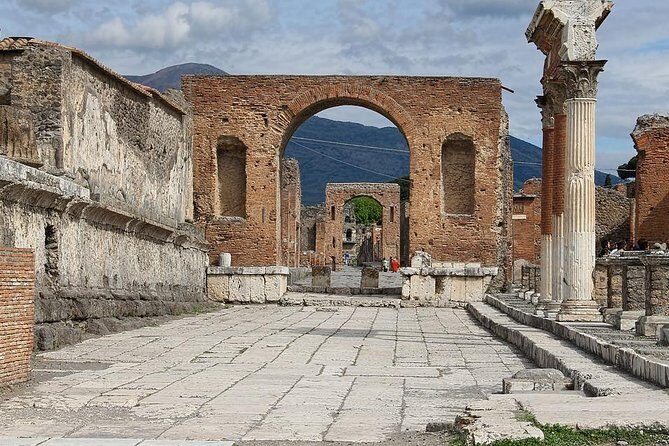
REVIEW · WORKSHOPS
Micromosaic Jewelry Workshop in Rome, Italy
Book on Viator →Operated by Studio Cassio - Arte del Mosaico · Bookable on Viator
Tiny glass, big Rome story.
In Rome’s hip Monti neighborhood, this micromosaic jewelry workshop pairs hands-on crafting with a real lineage of mosaic know-how tied to the historic Trajan’s Market. I like that you learn the Roman mosaic technique and context first, then get to work with micromosaic glass-cutting methods right away in an intimate setting of just seven people. One thing to consider: the craft is very detailed, so you’ll want patience (and ideally a good pair of glasses for close work).
What I also really like is the finished result is built for wearing, not just display: you choose a silver pendant frame and chain, cut and set your tiny glass pieces, and then take home your piece in a sturdy jewelry box. The session is about 2 hours 30 minutes, starts at 10:00 am, and includes water plus tea or coffee so you’re not doing art class while also hunting for caffeine.
In This Review
- Key highlights
- Monti Micromosaic: Where Studio Cassio Teaches in Rome
- A 2.5-Hour Workshop That Moves With Real Craft Time
- Trajan’s Market Origins: The History You Hear Before the Glass Starts
- What You Choose: Pendant Frame, Chain, and Materials
- Micromosaic in Action: Cutting Tiny Glass and Setting Pieces
- The Finish: Wearable Art You Can Actually Bring Home
- Value and Price: Why $142.97 Can Feel Fair
- When This Workshop Is a Perfect Fit (And When It Isn’t)
- Practical Tips to Get the Best Pendant From the Class
- Quick reality check on logistics (so you’re not surprised)
- Should You Book Micromosaic Jewelry in Rome?
- FAQ
- How long is the micromosaic jewelry workshop?
- Where is the workshop meeting point in Rome?
- What time does the class start?
- How big is the group?
- What do I make and what’s included?
- Is transportation included?
- What is the minimum age to participate?
- What is the cancellation policy?
Key highlights
- Seven-person maximum keeps the focus on you and your piece
- Monti location means you can combine class time with real neighborhood Rome
- Trajan’s Market roots: Roman mosaic technique and the studio’s 19th-century practice
- All tools and premium glass materials included so you can start without prep
- Silver pendant frame with chain + jewelry box makes it a ready-to-gift souvenir
- History brief before you cut glass helps your work feel meaningful (not just random craft)
Monti Micromosaic: Where Studio Cassio Teaches in Rome
The meeting point is Studio Cassio – Arte del Mosaico, Via Urbana, 98 (00184 Roma), and the class starts at 10:00 am. This is one of those Rome experiences where the setting matters. You’re in Monti, not tucked away in a tourist-only pocket. After class, you can wander without feeling like you just escaped one line only to join another.
The practical win here is simple: you don’t need to figure out a complicated route once you’re in the neighborhood. The workshop is near public transportation, and it ends right back at the start, so your morning stays tidy.
For families and groups, size is part of the charm. There’s a maximum of seven people, which is small enough that you actually get hands-on help as you go. Also, the minimum age is 12, and children must be accompanied by an adult. Service animals are allowed, and most people can participate if they’re comfortable working at a tabletop.
You can also read our reviews of more tours and experiences in Rome



A 2.5-Hour Workshop That Moves With Real Craft Time
This isn’t a fast demonstration where you mostly watch. Expect a structured flow, but with enough time to do the work: about 2 hours 30 minutes.
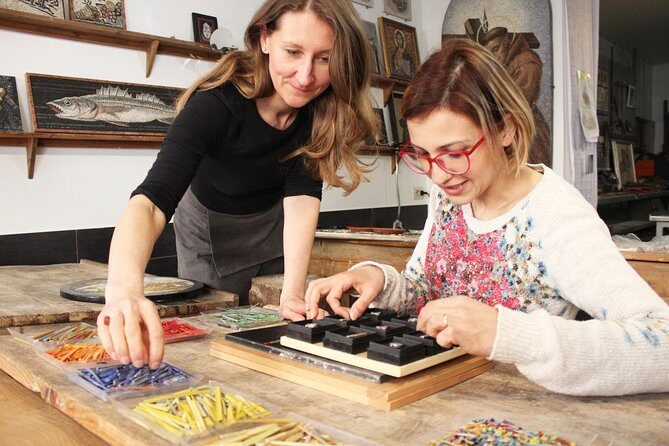
In the first part of the session, you get an introduction to mosaic technique and how the craft evolved in Rome. Then the workshop shifts into building your micromosaic pendant piece-by-piece using the studio’s methods and tools.
The biggest advantage of this timing is that it matches micromosaic reality. Tiny glass work can’t be rushed without making your piece frustrating. You’ll likely start slowly, get a rhythm after a while, and then finish with enough time to feel like you actually made something you’ll wear.
One more detail that makes a difference: you’ll be working in a group small enough that the instructors and studio assistants can correct issues early. That matters because micromosaic relies on fit and packing, not guesswork.
Trajan’s Market Origins: The History You Hear Before the Glass Starts
One of the most satisfying parts of this class is the order of operations. You don’t begin with cutting first and history second. You learn technique and context up front.
This studio traces micromosaic practice to the family’s workshop area connected with historic Trajan’s Market, where the practice was established in the 19th century. That story gives your work a backbone: you’re not just copying a modern craft project. You’re learning a technique that has been refined over generations.
You also get a short history of mosaics and the Roman mosaic technique as part of the instruction. In practice, that makes your final pendant feel less like a souvenir you bought and more like a miniature version of a tradition.
And yes, the Vatican connection shows up in how the class is taught. People have described the studio as restoration-focused expertise, and that shows in the care given to placement and stability. If you like learning why a craft is done a certain way, you’ll appreciate the explanation before you ever start setting pieces.
What You Choose: Pendant Frame, Chain, and Materials
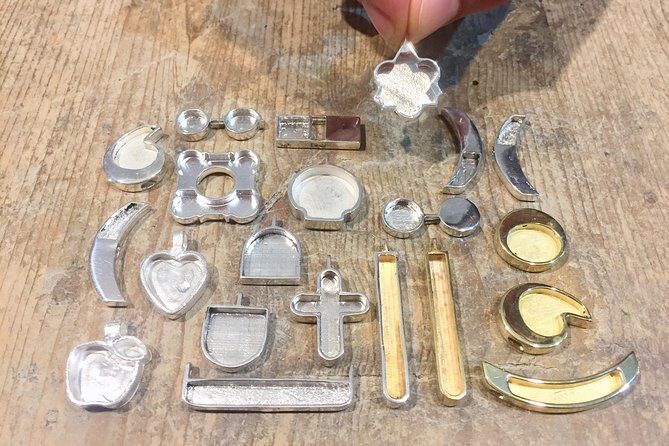
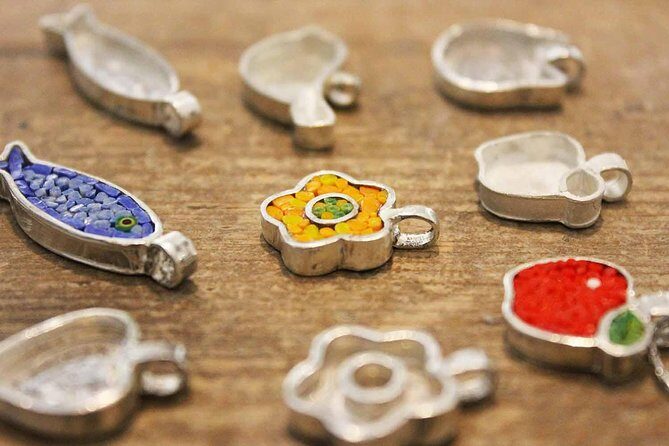
Right after the intro, you move to the creative portion: choosing what you’ll make. The included item is specific and useful—your choice of a high-quality silver pendant frame with a chain. This means the class isn’t just about making a flat mosaic panel. Your work becomes a wearable jewelry piece from the start.
You’ll also have access to premium glass micromosaic materials and tools. The studio supplies what you need, so you’re not shopping for specialty supplies or worrying about whether your tools match theirs.
In addition, you’ll get a sturdy jewelry box for storing your artwork. This is underrated value. A fragile handmade piece deserves more than a flimsy bag. The box also makes it easier to gift or pack for the rest of your trip.
You’ll be offered bottled drinks—water, and tea or coffee—as part of the workshop. Several people mention cappuccinos or coffee options while they worked, which helps because micromosaic asks for concentration.
Micromosaic in Action: Cutting Tiny Glass and Setting Pieces
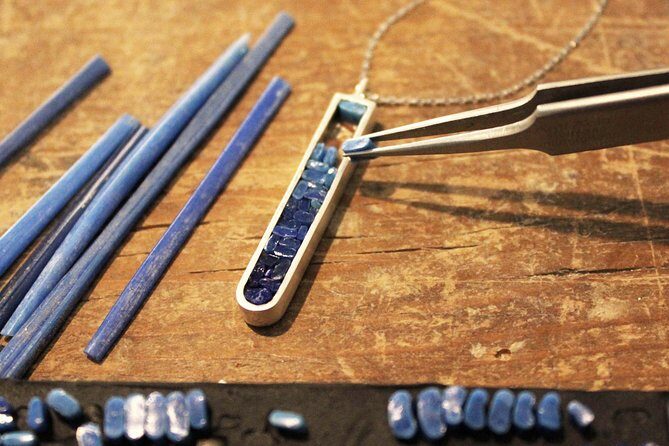
Now for the part you came for: the micromosaic process.
You’ll use micromosaic glass-cutting methods to create your design. The work is fiddly by nature. The pieces are small, placement is precise, and the frame needs tight packing so everything stays secure.
Expect step-by-step guidance from the main instructor and other studio staff. In the class experience, instructors like Juliana have been mentioned by name, along with Sara + Juliana in at least one family session. Even when you’re doing your own design, the staff can guide you when your technique starts drifting.
Here’s what I’d tell you to watch for if you’re hoping for a satisfying outcome:
- Plan for follow-the-method craft control. The studio’s approach is designed for stability, not for maximum chaos in your design.
- Use the tools they recommend. In one case, a participant felt their file didn’t match the technique shown, which led to frustration. You can avoid similar issues by sticking closely to the provided tools and asking if you want to change anything early.
- Don’t fight the material at the end. Micromosaic is easier when you build momentum. Stop to ask for help once you notice something off, not after you’re already deep into a complicated area.
Also, this craft is the opposite of multitasking. You’ll want to focus, take it slow, and accept that your first few pieces might look a little rough until you find the rhythm.
If you wear glasses or need magnification for close work, bring them. One review explicitly called out bringing a good pair of glasses, and that advice is practical. Your pendant is small enough that eye strain is real.






The Finish: Wearable Art You Can Actually Bring Home
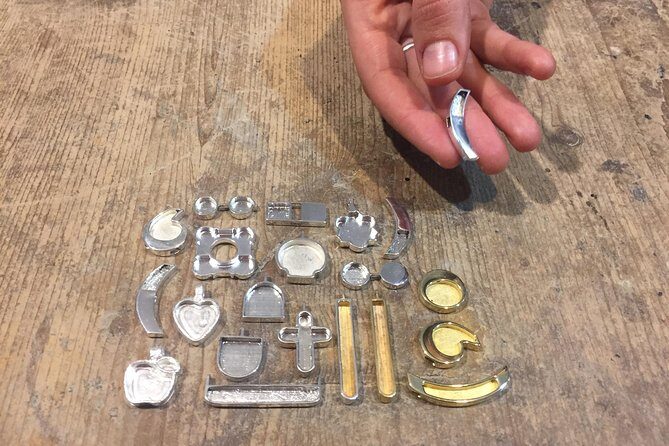
By the end, you take home the finished jewelry piece you created, plus the chain, all in a sturdy jewelry box.
What makes this class especially rewarding is that it ends with something tangible. You’re not leaving with a demo photo or a half-finished craft project you have to complete later. You leave with a pendant that fits into daily life—something you can wear on future trips as a reminder of Rome.
And because you’re making it yourself, the piece becomes more personal. You picked the frame. You set the glass. You shaped your choices into a small wearable artwork.
If you’re the type who wants a souvenir that doesn’t sit in a drawer, this hits the mark. It’s also a strong gift option for people at home, because you’ll have the box and a finished pendant rather than a loose craft item.
Value and Price: Why $142.97 Can Feel Fair
The price is $142.97 per person for about 2 hours 30 minutes. That’s not a bargain like a street snack tour. But the class also isn’t selling you a vague experience.
You’re paying for several concrete things:
- Your silver pendant frame with chain
- Access to premium glass micromosaic materials and tools
- Instruction that includes history and technique
- A finished product you can wear immediately
- A sturdy jewelry box
- Drinks like bottled water and tea or coffee
If you price out just the materials and the time of skilled instruction for detailed tiny work, the number starts making more sense. Also, the small group size (maximum seven) means you’re less likely to get pushed aside. You’re not competing for one tool or one instructor glance.
One timing note: on average, this experience is booked about 31 days in advance, so it’s worth securing your spot earlier rather than treating it like an afterthought.
When This Workshop Is a Perfect Fit (And When It Isn’t)
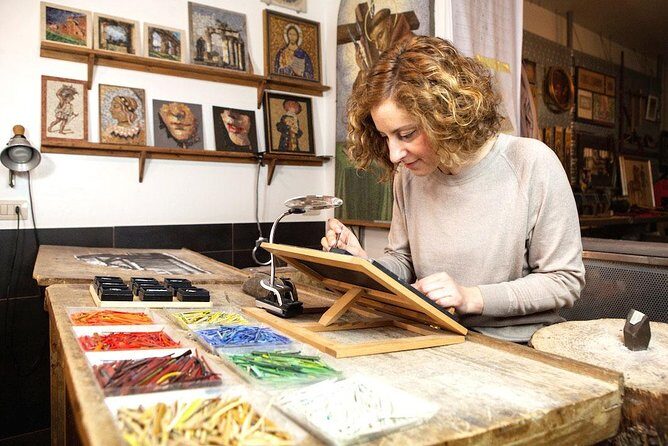
This is a great fit if you want a Roman activity that doesn’t feel like a museum visit. It’s hands-on, local-feeling, and creative without requiring prior experience.
It’s also ideal if you enjoy craftsmanship and want context. The workshop begins with technique and mosaic history, so the making part connects to why the craft mattered—especially through the story linked to Trajan’s Market and the long family tradition.
You’ll enjoy it most if you’re willing to:
- sit and focus for a couple hours
- handle small, detailed steps
- follow the studio’s method as you go
- ask questions when you’re stuck
Where you might hesitate is if your main goal is total artistic control. Micromosaic requires tight packing and specific methods, and the instruction is designed to keep your piece stable. If you’re hoping for a highly custom outcome that ignores the studio’s technique, you may find the process frustrating.
Also, remember the difficulty level. One participant described the work as very detailed and emphasized patience. That tracks with what you should expect from micro glass cutting and setting.
Practical Tips to Get the Best Pendant From the Class
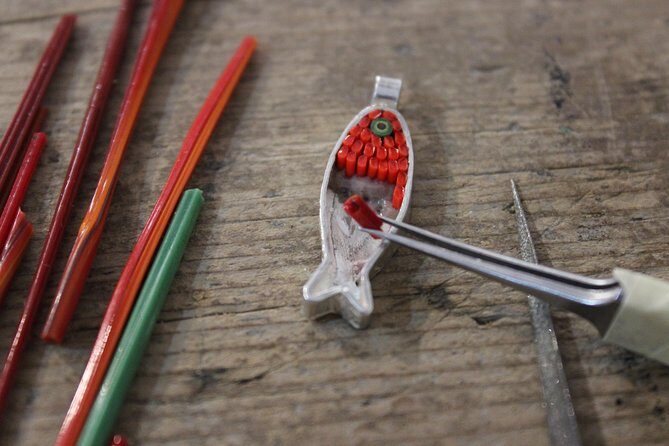
You’ll get the best results by treating this like a craft session, not a casual art break.
Bring:
- your best pair of glasses (if you need them) for tiny placement
- a calm attitude for precise work
- a simple mind-set at the start: do the steps first, then refine
During the class:
- choose your design with the frame in mind. The included pendant frame sets the boundary for what will look balanced.
- ask early if you want adjustments. Micromosaic problems compound when you wait too long.
- stay close to their tools. If you’re offered options, use what matches their demonstrated method.
And after class:
- plan a low-stress rest of your day. Your hands and eyes might feel a little tired from all that careful work.
- since you’re in Monti, you can pair the experience with non-touristy browsing and good local food, without needing a special plan to get back.
Quick reality check on logistics (so you’re not surprised)
The class takes place at Studio Cassio – Arte del Mosaico and ends back at the meeting point. Transportation isn’t included, so you’ll rely on your own plans to get there and then leave after the workshop.
The session language is English. Confirmation arrives at booking time, and the workshop allows service animals.
If you’re traveling with kids, the minimum age is 12, and children need an adult with them.
Should You Book Micromosaic Jewelry in Rome?
I’d book this workshop if you want a Rome memory you can wear. The combination of small-group attention, a guided start with mosaic history, and a finished pendant with chain and jewelry box makes it a meaningful use of a morning.
I would think twice if you hate detailed, slow tasks or if you’re determined to create a design that doesn’t match the studio’s method. In micromosaic, stability and fit matter. The workshop is set up to protect the integrity of your piece, so you’ll do best by working with their approach.
Bottom line: if you’re the type who likes craft, technique, and a souvenir that doesn’t feel mass-produced, this is a strong choice in Rome.
FAQ
How long is the micromosaic jewelry workshop?
It lasts about 2 hours 30 minutes.
Where is the workshop meeting point in Rome?
You meet at Studio Cassio – Arte del Mosaico, Via Urbana, 98, 00184 Roma RM, Italy.
What time does the class start?
The start time is 10:00 am.
How big is the group?
The workshop has a maximum of 7 travelers.
What do I make and what’s included?
You make a micromosaic jewelry piece. You choose a silver pendant frame with a chain, and you get premium glass micromosaic materials and tools. You also receive a sturdy jewelry box, plus bottled water and tea or coffee.
Is transportation included?
No. Transportation to and from attractions is not included.
What is the minimum age to participate?
The minimum age is 12, and children must be accompanied by an adult.
What is the cancellation policy?
Free cancellation is available. You can cancel up to 24 hours in advance for a full refund. If you cancel less than 24 hours before the start time, the amount paid is not refunded. Cut-off times are based on the local time of the experience.