REVIEW · MUSEUMS
House of Augustus, Palatine Museum and Palatine Hill w PhD Archaeologist
Book on Viator →Operated by Tours of the Colosseum · Bookable on Viator
You get a rare look at how power felt in ancient Rome. This private tour uses an archaeologist guide to connect the Augustan Age with what you actually see on Palatine Hill and inside the House of Augustus. You’ll walk a hill, but you’ll also get the story behind the stones, including how emperors turned homes, art, and architecture into political messaging.
Two things I really like: the guide is a PhD archaeologist, so the explanations are grounded in real excavation and interpretation, and the stops are arranged so you see the ruins first, then you move into the museum to place them in context. One thing to consider: Palatine Hill does mean real walking and climbing. If you’re sensitive to stairs or uneven ground, plan for it.
In This Review
- Key highlights to look forward to
- Why Palatine Hill plus the House of Augustus hits different
- What the private PhD archaeologist tour experience feels like
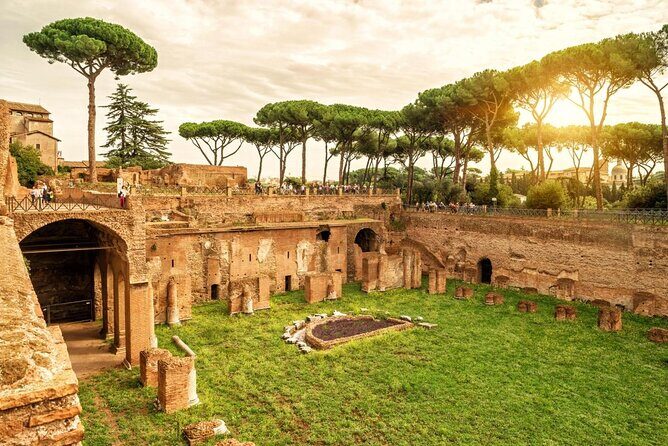
- Stop 1: Palatine Hill walk and the Emperors’ Palace ruins
- Stop 2: Museo Palatino and the Augustan-era art and everyday details
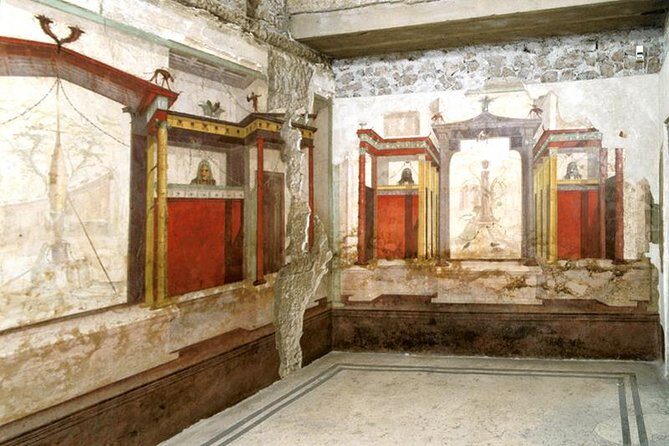
- Stop 3: House of Augustus and how private space served power
- Photos, reconstructions, and why good guides use visuals
- Value check: is $299.19 per person a smart buy?
- Who this tour suits best
- Should you book this Palatine Hill and House of Augustus tour?
- FAQ
- FAQ
- How long is the tour?
- Is this tour private?
- What language is the tour in?
- Are tickets included?
- Where does the tour start?
- Can I choose a morning or afternoon departure?
- What happens if I need to cancel?
- Is it suitable for most travelers?
Key highlights to look forward to
- PhD archaeologist guide who explains buildings, art, and political meaning, not just dates
- Private group so questions actually get time, and pacing matches your crew
- Three linked stops: Palatine Hill ruins, Museo Palatino artifacts, then the House of Augustus
- Tickets included for the main sites so you’re not juggling entry lines
- Morning or afternoon departure options to match your day in Rome
- Reconstruction help like reconstructions shown on an iPad, which makes the ruins easier to picture
Why Palatine Hill plus the House of Augustus hits different
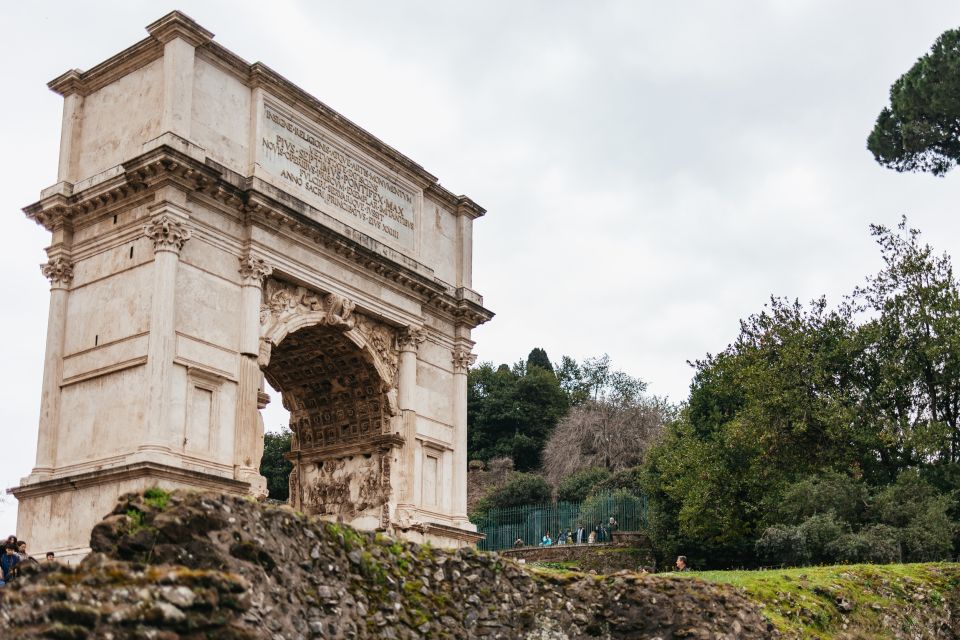
Rome has lots of ruins. But Palatine Hill is a special kind of “wow” because it’s tied to the first emperor and to the place emperors styled as home, image, and authority.
This tour focuses on the Augustan Age, the time of Augustus, and that’s exactly why the ruins feel purposeful instead of random. You’re not just looking at old walls. You’re seeing a political space reworked into a statement about rule. That’s what makes the storytelling land.
You’ll start on Palatine Hill, where the buildings that formed the imperial palace complex sit above you like a puzzle. Then you’ll walk into the Museo Palatino, where the finds help you understand what the spaces likely looked and felt like. Finally, you’ll visit the House of Augustus, the private residence of Rome’s first emperor. The sequence matters. It turns stone into meaning.
You can also read our reviews of more museum experiences in Rome



What the private PhD archaeologist tour experience feels like
This is offered in English and it runs about 2 hours 30 minutes. It’s a private tour/activity, meaning only your group participates. That matters at Palatine Hill, where good explanations can get swallowed by crowds on standard group tours.
You can pick a morning or afternoon departure, so you’re not locked into a schedule that fights your other plans in Rome. And because the tour starts and ends at the meeting point, you don’t lose time to complicated transfers.
One practical win: admission tickets for the main stops are included, so you can focus on the walk and the explanations rather than shopping for entries. Another win is the guide quality. People have raved about guides such as Bruno, Julia, Thomas, Tommaso Bergamo, and Donato for strong communication, enthusiasm, and a strong ability to turn archaeology into a story.
In other words, you’re not paying just for access. You’re paying for someone to help you read the site.
Stop 1: Palatine Hill walk and the Emperors’ Palace ruins
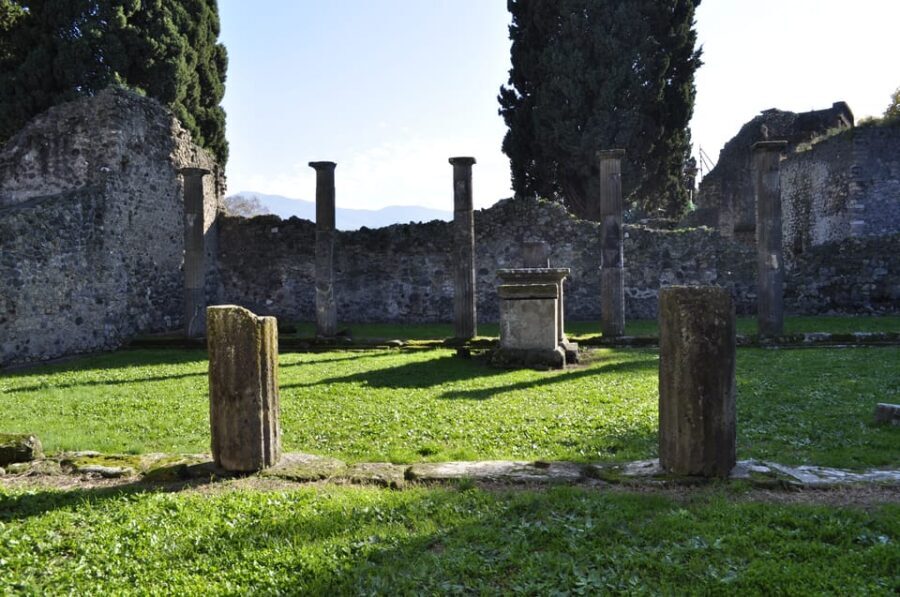
You begin by climbing Palatine Hill and getting your bearings among the remains of the imperial palaces. This is where your imagination does the heavy lifting, unless your guide points out what to look for.
Expect a mix of physical ruins and interpretive context: where spaces likely connected, how the imperial complex functioned, and why this part of the city carried so much symbolism. The best part of Palatine Hill isn’t one single wall. It’s the way the area scales. You start to see how Roman elites could control views, movement, and public perception just by owning this hill.
A downside to plan for: it’s uphill. The site is also uneven, so good shoes help. The tour says most travelers can participate, but that generally means you should be comfortable with outdoor walking rather than expecting flat, easy terrain.
Stop 2: Museo Palatino and the Augustan-era art and everyday details
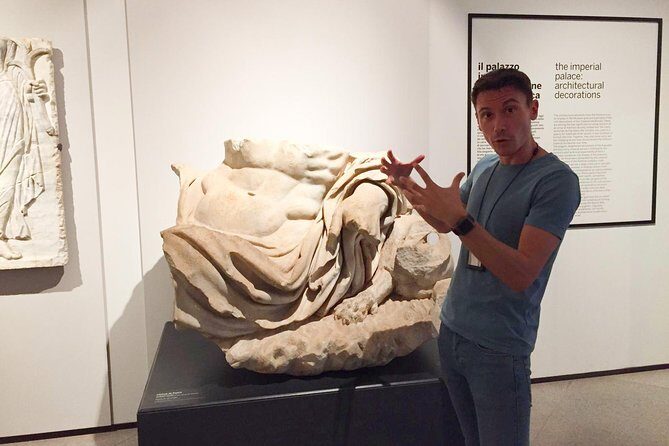
After the hill, you’ll step into the Museo Palatino on Palatine Hill. If you’ve ever looked at ruins and thought, I know what I’m seeing, but I don’t know what it meant, this is your fix.
Here’s what makes this stop useful: the museum helps connect the architectural remnants to objects excavated from the same world you’re seeing outside. You’ll explore exhibits tied to ancient Rome when Palatine Hill served as the center of town and the home for emperors.
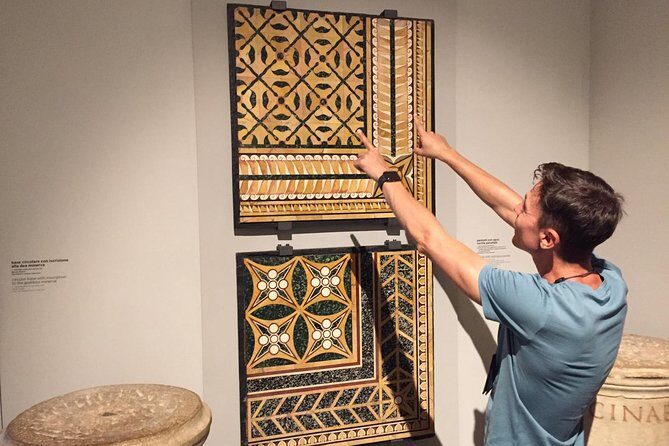
You’ll also get a sense of what changes across levels of time and status. On the ground floor, you can see pre-existing structures related to houses of nobility. On the first floor, you’ll focus on works from the Age of Augustus, including paintings and mosaics. Even if you’re not a museum person, mosaics and wall paintings are the fastest way to understand how people wanted their surroundings to communicate wealth and taste.
This stop balances the outdoor fatigue. Your legs get a break, and your brain gets a boost.
Stop 3: House of Augustus and how private space served power
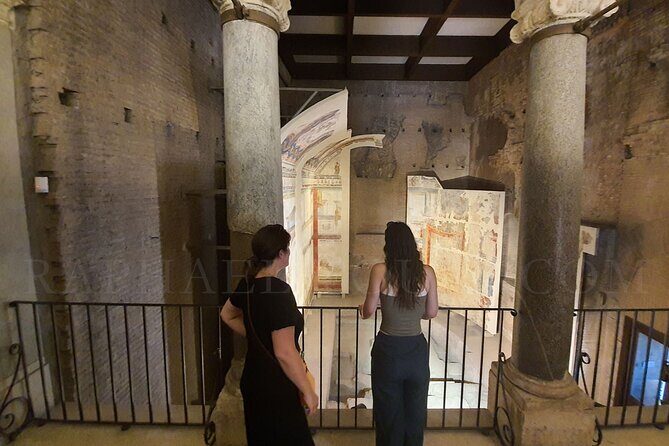
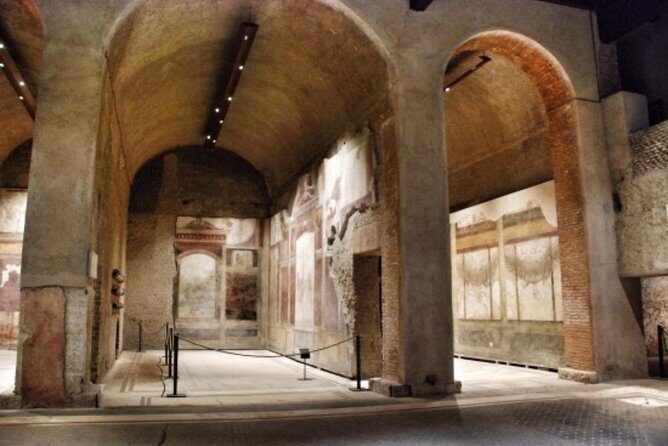
Then comes the big one: the House of Augustus, the private residence of the first Roman emperor. This is where the tour title becomes real, because you’re moving from imperial context to a specific personal space linked to Augustus himself.
The House of Augustus matters because it shows how early imperial rule tried to look like stability and tradition, not just new control. The idea is often less about luxury for its own sake and more about signaling authority through domestic architecture and decoration.
At this point, you should start noticing patterns you picked up on Palatine Hill. Your guide’s job is to help you connect the dots—how the home fits into the larger palace world, what audiences would have imagined, and how the Augustan style works in both art and built form.
Time here is tight, around another half hour. So go in with a strategy: don’t try to see every corner. Focus on what the guide points to, especially any visual clues about layout, decoration, and how rooms functioned.




Photos, reconstructions, and why good guides use visuals
Palatine Hill can be confusing if you’re seeing it for the first time. The ruins are ancient, but your brain needs help picturing what once stood there.
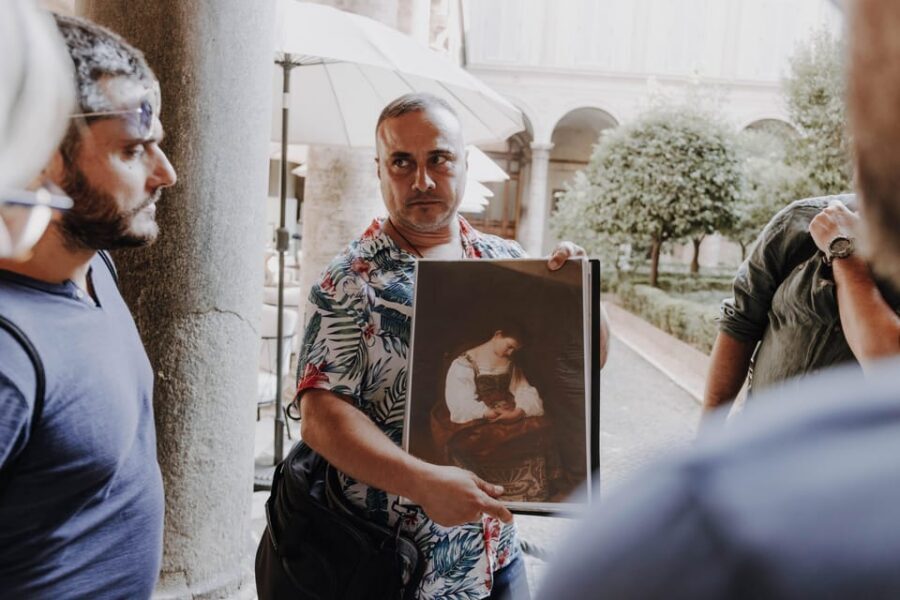
One of the most praised strengths from past guests is that guides use visual aids, including reconstructions shown on an iPad. That kind of support is more than nice. It helps you translate partial remains into a whole room or corridor in your head. And once you can picture the original layout, the site stops feeling like scattered rubble.
You’ll also have chances for photos, and some of the viewing points are genuinely rewarding. Even with a time limit, getting a few shots that show scale helps you remember what Palatine Hill felt like. It’s the difference between taking photos of ruins and taking photos that communicate why this place mattered.
Value check: is $299.19 per person a smart buy?
At $299.19 per person, this isn’t a budget add-on. You should think of it as a guided interpretation experience, not just museum entry.
So is it worth it? It often is, if two things match your priorities:
1) You care about understanding how archaeology and art relate to the politics of Rome.
2) You want a private tour so the guide can answer questions and adjust pace.
The included tickets for Palatine Hill’s stops help. And because the guide is a PhD archaeologist, you’re paying for explanation quality, not only access.
There are also group discounts, which can make a big difference if you’re traveling with friends or family. If your group can split the cost, the per-person value becomes more realistic.
The only time I’d pause is if you’re happy with a quick self-guided walk and you don’t need deep context. For pure wandering, you can do Palatine on your own. But for a story-driven, interpretation-first visit, this price is closer to what you’re actually buying.
Who this tour suits best
This tour fits you if you want a guided, structured experience that teaches you how to read ruins. It’s also a strong fit for people who ask questions. Multiple guides have been praised for being receptive and helpful, and for making the time feel personal rather than rushed.
It can also work for families. One guide was praised for keeping small children interested, which is no small task on Palatine Hill. That said, you’ll still be outdoors and climbing, so keep your kids’ stamina in mind.
If you’re the type who loves Roman emperors, Augustan art, and how buildings reflect power, you’re going to enjoy this. If you only want instagram-level ruins without interpretation, you might feel the money go to your guide’s narration rather than your own exploration.
Should you book this Palatine Hill and House of Augustus tour?
I’d book it if you want the Augustan Age explained in a way that makes the site click. The biggest reason is the combination: Palatine Hill first, museum objects second, House of Augustus third. That order builds understanding instead of scattering it.
I’d skip or rethink if you don’t handle walking uphill well or if you’d rather spend less and accept a lighter explanation. In Rome, you can always choose your own pace, but you’ll trade away the archaeology-based storytelling that makes Palatine Hill feel coherent.
FAQ
FAQ
How long is the tour?
It runs about 2 hours 30 minutes.
Is this tour private?
Yes. It’s a private tour/activity, so only your group participates.
What language is the tour in?
The tour is offered in English.
Are tickets included?
Yes. Admission tickets are included for the Palatine Hill, Museo Palatino, and House of Augustus stops.
Where does the tour start?
You’ll meet at Via di S. Gregorio, 30, 00186 Roma RM, Italy.
Can I choose a morning or afternoon departure?
Yes. You can choose between morning and afternoon departure options.
What happens if I need to cancel?
This experience is non-refundable and cannot be changed for any reason.
Is it suitable for most travelers?
The tour notes that most travelers can participate, and it’s also near public transportation.