REVIEW · ROME
Renaissance Women of Caravaggio and the Borgia Family
Book on GetYourGuide →Operated by Storytelling Rome Tours & Walks · Bookable on GetYourGuide
Renaissance Rome gets a lot livelier here. This walking tour spotlights seven Renaissance women tied to major artists like Caravaggio and Raphael, plus scandalous connections to the Borgia world. I love how the stories are fun and forceful, not dry lectures, and I also like that you’re seeing real places downtown as you go, including churches where the setting actually matters. The main drawback is simple: you must dress for church entry (covered shoulders), so plan your outfit before you meet.
If you want history that moves at human speed, you’ll probably enjoy this. It runs about 3 hours, starts near Piazza Venezia by Trajan’s Column, and ends in the lively Piazza Farnese area where people like to grab a drink and decompress. One more consideration: it’s more story-and-place than detailed art lecture, so if you came only for museum-level art analysis, you’ll want to pair it with time inside museums or galleries later.
In This Review
- Key things I think you should know
- Renaissance Women of Caravaggio and the Borgia Family: what the tour really feels like
- Price and time: is $44 for 3 hours good value?
- Where you start by Trajan’s Column (Piazza Venezia)
- Walking through downtown: the Galleria Doria Pamphilj area and city-center connections
- Santa Maria sopra Minerva: entering a church with the right outfit
- Sant’Agostino and Santa Maria della Pace: why multiple churches matter
- The 16th-century homes moment: where the stories feel grounded
- Scarlet Ladies storytelling: what you learn beyond the scandal
- The ending in the Piazza Farnese area (and a good place to pause)
- Who this tour suits best (and who might want a different plan)
- Dress code and church entry rules: the one practical hurdle
- FAQ
- FAQ
- How long is the tour?
- How much does the tour cost?
- Where does the tour start?
- Where does the tour end?
- Is the tour guided in English?
- Does the tour include church visits?
- What clothing is not allowed?
- What dress code should I follow inside churches?
- Is the tour wheelchair accessible?
- Can I take a break or buy snacks/drinks?
- Should you book this Renaissance women-focused walking tour?
Key things I think you should know
- Seven courtesans, one walking storyline: you follow women who became muses, power players, and targets of gossip.
- Caravaggio and Raphael connections: the guide ties famous imagery to the real women behind it.
- Borgia-family mistresses in the mix: it’s not only about paintings. There’s politics and dangerous social climbing too.
- Church stops on purpose: you’ll enter multiple churches, which shapes the pacing and makes dress code important.
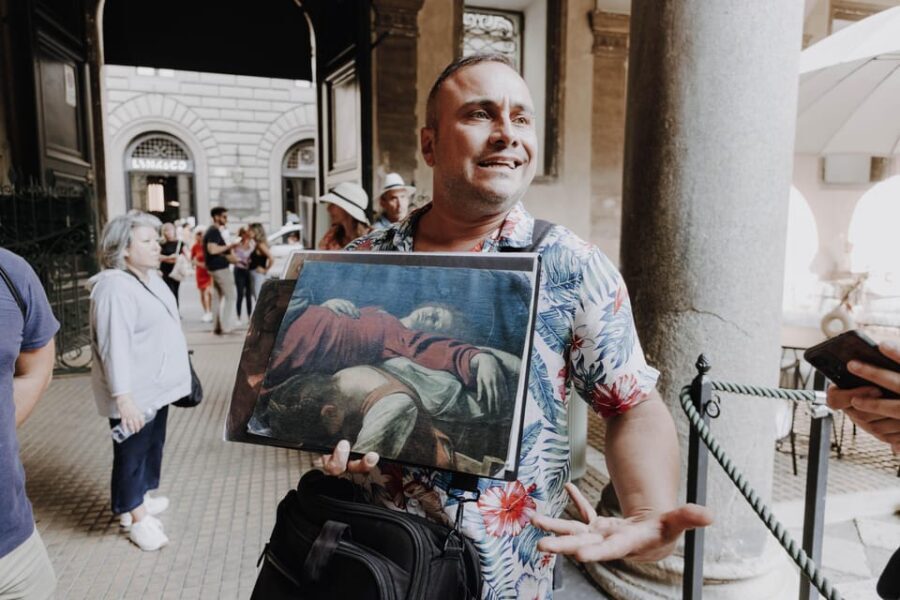
- Massimo’s storytelling style: fast, energetic, and funny enough to keep you engaged through dense topics.
- Downtown finish for a break: the tour ends near Piazza Farnese, with Campo de’ Fiori mentioned as a great pause point for wine or spritz.
Renaissance Women of Caravaggio and the Borgia Family: what the tour really feels like
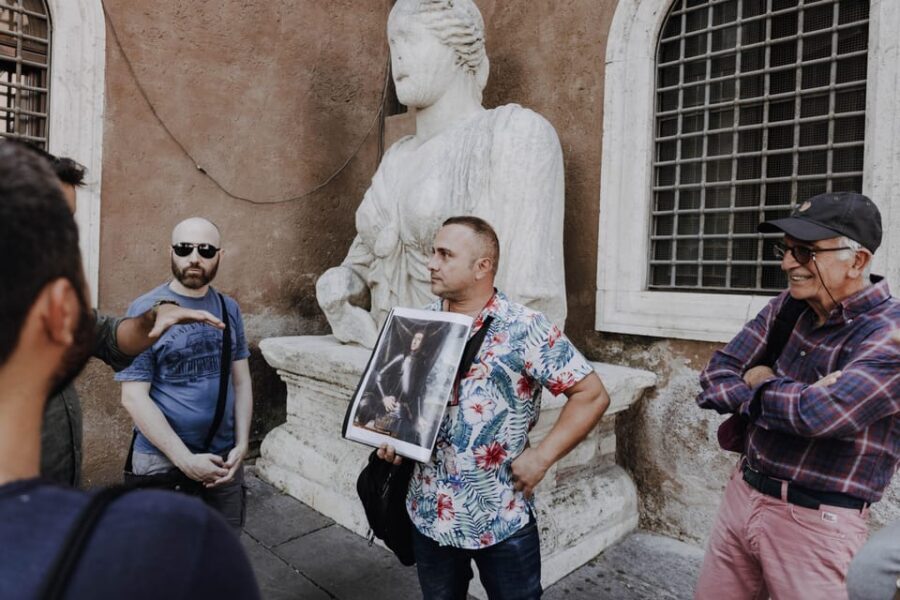
Rome already has drama built in. You’re walking past ancient and Renaissance layers that make it hard to keep a straight face. This tour leans into that. Instead of treating the Renaissance as a timeline of dates, it treats it like a social network with rivals, secrets, ambition, and consequences.
The core idea is straightforward: the women behind the art were not background characters. They were actors in their own lives—bold enough to survive a system that often shut women out of formal education. In that vacuum, courtesans could become influential. Not always safely, but often effectively. That’s why the stories land. You don’t just hear what happened—you understand why the choices were limited, and why the outcomes could be complicated.
Two things make this tour especially rewarding. First, it’s built as storytelling. The guide, Massimo, doesn’t just name figures; he brings their motives and pressure points into focus so you can follow the logic of scandal. Second, it’s built around specific Roman locations, not a vague drive-by of landmarks. As you move, the city becomes part of the narrative.
You can also read our reviews of more tours and experiences in Rome.



Price and time: is $44 for 3 hours good value?
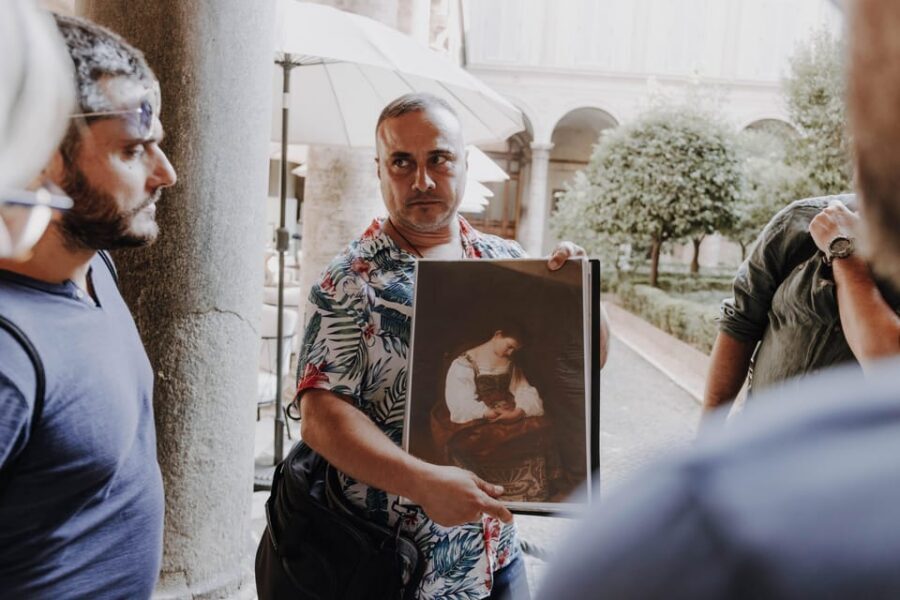
For $44 per person, you’re paying for a tight 3-hour format with a focused theme. That can be great value in Rome, where you pay for time and attention. You’re not bouncing across the city for unrelated sights. You’re walking through a compact central route centered on Renaissance-era settings and multiple church interiors.
Is it worth it compared with doing art museums solo? If you’re the type who learns best through stories, yes. A guided walk helps you connect what you see on the street to what you might later recognize in paintings or film-like retellings. If you prefer quiet self-guided museum time, you might feel this is more about people than objects.
The best way to judge value here is your personal preference:
- If you want a human, narrative Rome—this is a strong use of an afternoon.
- If you want hands-on art study—you’ll still want museum time, and this tour works as the contextual setup.
Where you start by Trajan’s Column (Piazza Venezia)
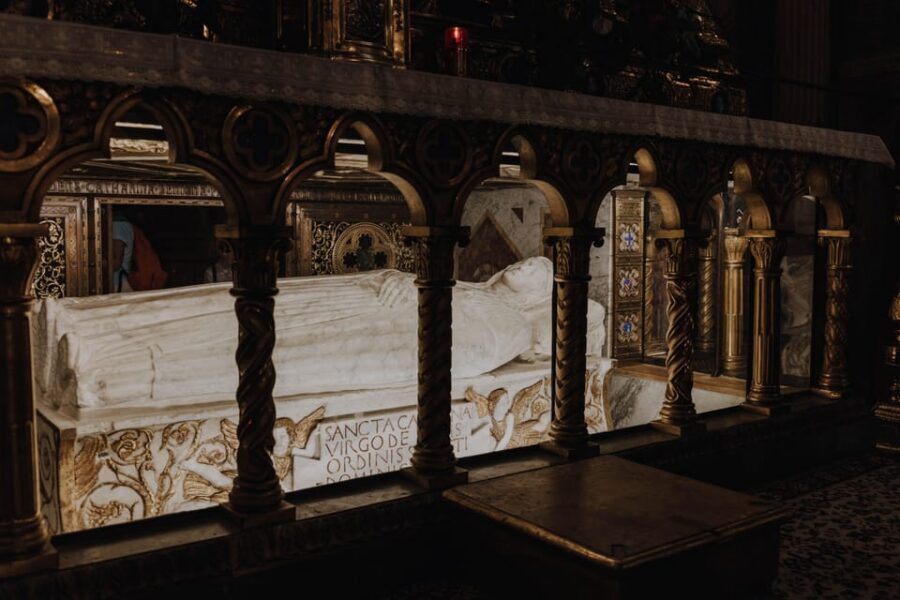
Your meeting point is by Trajan’s Column, right beside Piazza Venezia. The guide waits holding a Renaissance Scarlet Ladies Tour sign. This is a smart start point because it gets you into downtown fast, and it helps you orient quickly in Rome’s center.
Early on, you’ll feel the tour’s tempo. It’s not a slow walk with occasional facts. Expect continuous storytelling as you move from the monument area toward Renaissance Rome’s lanes and church-heavy streets.
Practical tip: arrive a few minutes early. Piazza Venezia is busy, and you’ll want an easy moment to spot the sign and get settled before the group begins.
Walking through downtown: the Galleria Doria Pamphilj area and city-center connections
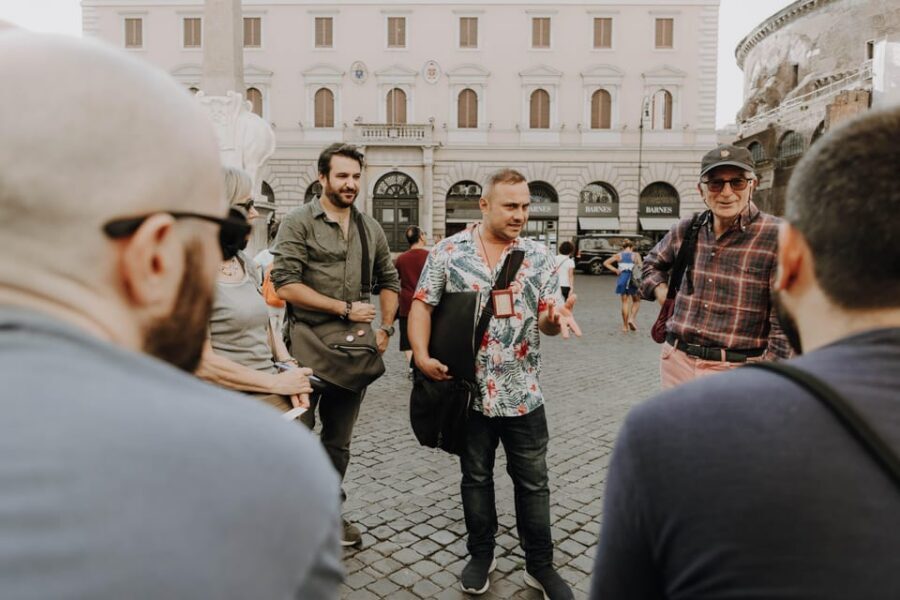
One of the things I like about this route is that it’s not only about huge, obvious icons. You’ll also walk by the Galleria Doria Pamphilj, which gives you a hint that Renaissance power also lived in palaces and private spaces, not just churches and public squares.
The tour uses those settings to underline a key theme: women could gain influence, but that influence often ran through patrons, salons, and the social mechanics of the wealthy. Even if you’ve never cared about court politics, the guide translates it into plain language—who held leverage, why reputation mattered, and how survival often depended on social strategy.
One consideration: since you’re walking in central Rome, expect typical city traffic noise and street-life interruptions. The upside is you’re also seeing the real texture of Rome as you learn.
Santa Maria sopra Minerva: entering a church with the right outfit
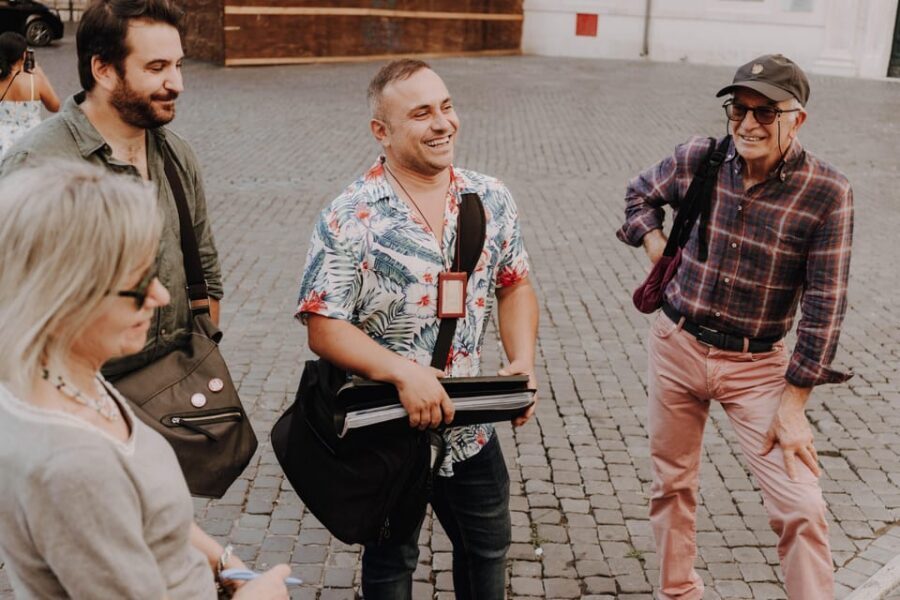
Santa Maria sopra Minerva is one of the headline church stops. The tour includes multiple churches, so the dress code is not optional. Shoulders must be covered when inside, including the deltoids. That means no sleeveless shirts.
If you wear a top that exposes shoulders, you might be denied entry. Italy’s church rules can be strict, and this tour schedule assumes you can get in. If you’re unsure, choose something safe: a light layer that covers your shoulders is usually the easiest fix.
What’s the value of a church stop on a tour like this? It’s the contrast. You’re hearing scandalous, human stories, and then you’re stepping into a sacred space that once helped shape public judgment. The guide uses that tension to explain why Rome both celebrated and condemned the women it painted and gossiped about.



Sant’Agostino and Santa Maria della Pace: why multiple churches matter
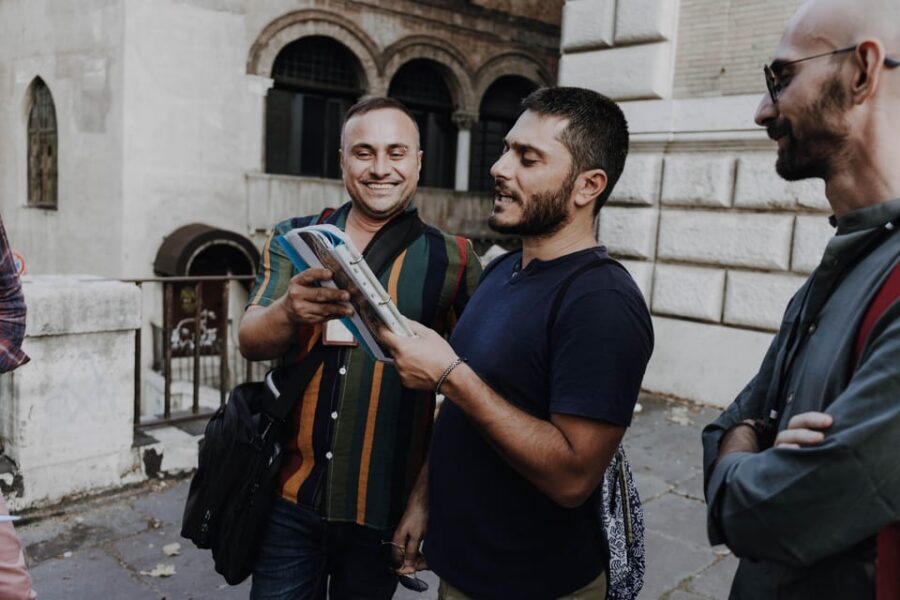
You’ll visit more churches as the tour moves through central Rome, including Sant’Agostino and Santa Maria della Pace. Multiple church stops do two useful things for you:
- They give structure to the afternoon, so the story keeps moving without feeling like one endless lecture.
- They create a physical contrast—public devotion versus private manipulation—which fits the theme perfectly.
From what I’ve seen in tour reviews, Massimo’s pacing is a big part of the experience. People mention that the storytelling can swing between uplifting moments and genuinely emotional ones. That makes sense: if you’re talking about women who had limited options, the narrative can’t stay light the whole way.
Practical note: bring comfortable shoes. Even with a “3 hours” duration, the walking is real, and the church entrances mean you’ll be stopping and moving repeatedly.
The 16th-century homes moment: where the stories feel grounded
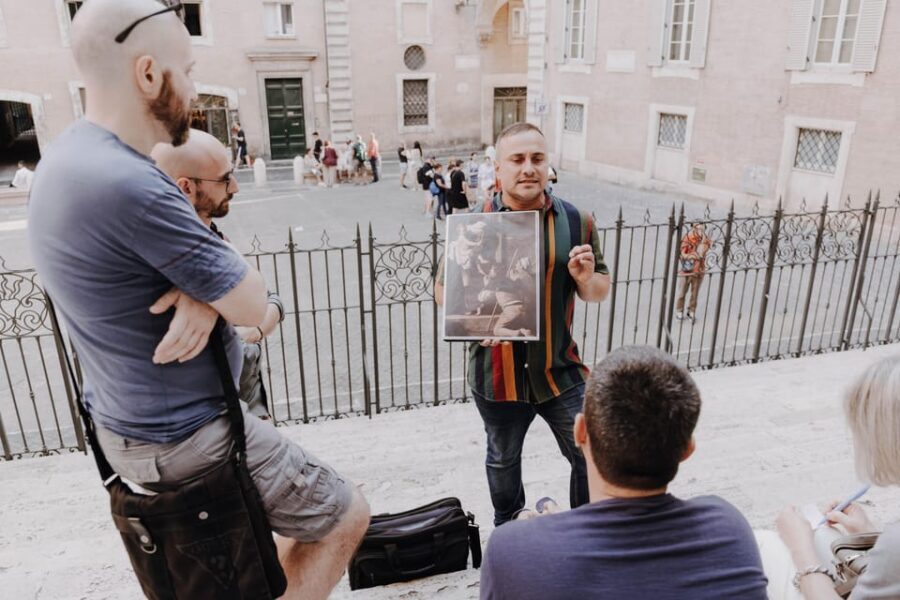
A standout part of this tour is that you don’t only sit in churches or stare at major squares. The route includes stops at still-standing 16th-century homes, which helps the theme land in a more believable way.
It’s one thing to hear about courtesans as an idea. It’s another to stand near a structure that still looks like it belongs in the same era. The guide uses those locations to connect the women to the social world that produced art—patrons, households, and the complicated route to influence when formal education was often blocked for women.
If you like tours that connect theme to place (instead of place to theme), this part is worth it.
Scarlet Ladies storytelling: what you learn beyond the scandal
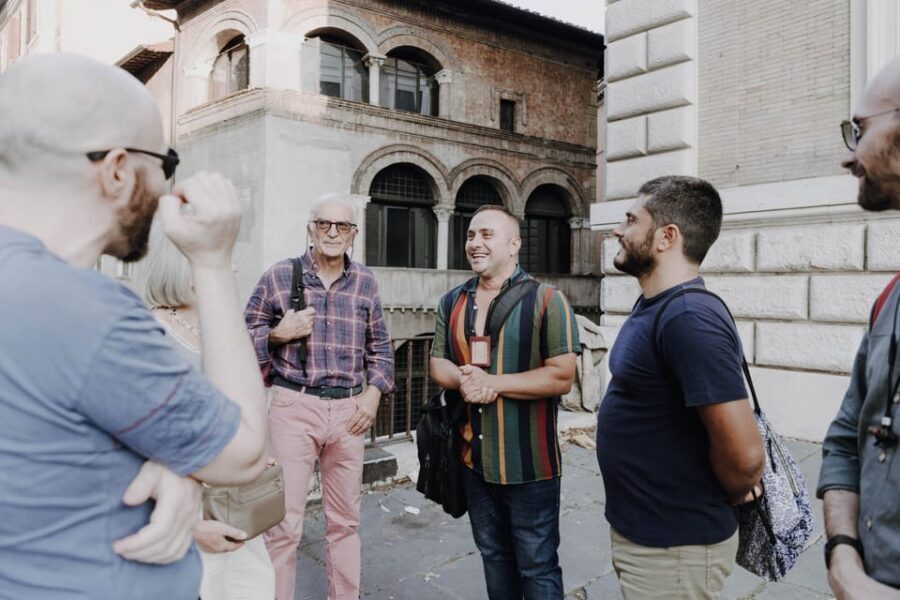
Yes, there’s plenty of “oh wow” material—Borgia mistresses, forbidden love, political intrigue. But the best learning here is the bigger picture: how women could become cultural forces in a system that restricted them.
A few specific details can make this feel more real. Reviews mention stories involving Cleopatra and Julia Domna. That’s useful for you because it signals the tour doesn’t stay inside one narrow lane of famous names; it’s willing to connect broader power narratives to Renaissance-era social mechanics and the artists’ muses.
Also, you’ll hear how these women were models for paintings and church-wall imagery. Even if you don’t know Caravaggio or Raphael deeply, you’ll start to recognize how art can be a record of someone’s image and someone’s status—sometimes at the same time.
The ending in the Piazza Farnese area (and a good place to pause)
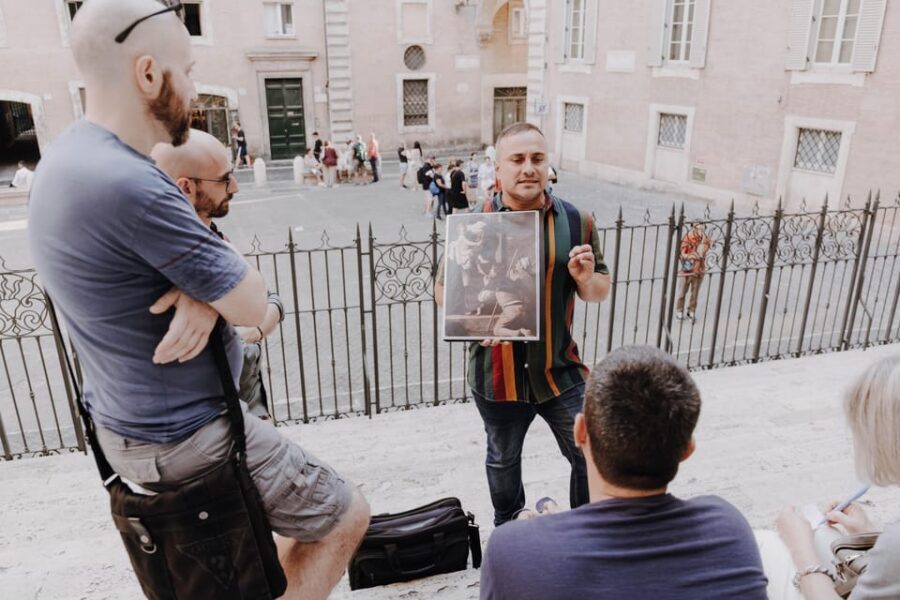
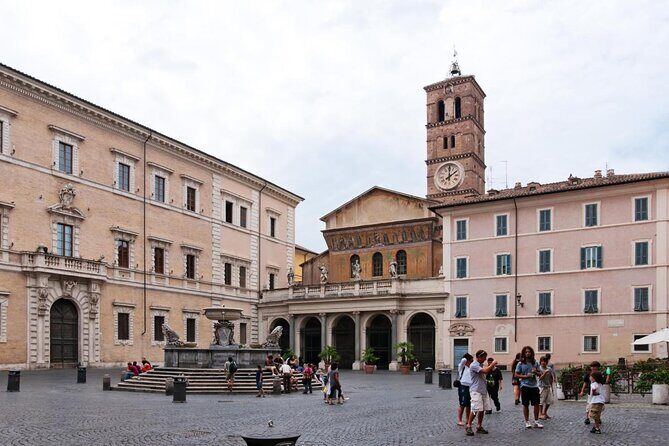
The tour ends at Piazza Farnese, which is a great spot to transition from guided story mode into regular tourist mode. Expect the walk to close with a chance to stop for a glass of wine or dinner, and to take a moment to let what you just heard settle.
One review specifically called out Campo de’ Fiori as a perfect finale stop for wine or spritz. Since both areas are in the same downtown zone, this is a helpful reminder for you: plan to have an easy, nearby option for a drink right after the tour, so you don’t waste energy hunting when you’re already tired.
Who this tour suits best (and who might want a different plan)
This is a strong match if you:
- Want story-led history over textbook history.
- Enjoy Renaissance Rome but want it through the lens of women’s roles and survival tactics.
- Like art connections (Caravaggio and Raphael) without needing a museum ticket to understand the context.
It may be less ideal if you:
- Came for a quiet, slow stroll with minimal talking.
- Want detailed, technical art interpretation inside major galleries only.
The good news is this tour pairs well with almost anything. Think of it as your “make the Renaissance make sense” afternoon, then build the rest of your day with museum visits or wandering.
Dress code and church entry rules: the one practical hurdle
This tour includes church visits, and the rules are explicit:
- Not allowed: short skirts and sleeveless shirts
- When inside: shoulders must be covered (deltoids included)
- Shorts are only okay if they end just above the knee
- If you dress wrong, the church may refuse entry
So before you go, I’d plan your outfit like you’re going to a formal church service, not a casual museum stop. A light scarf or layer can save the day, and it keeps you from having to scramble outside a doorway while everyone else is already stepping in.
FAQ
FAQ
How long is the tour?
It lasts 3 hours.
How much does the tour cost?
The price is $44 per person.
Where does the tour start?
The guide waits by Trajan’s Column, next to Piazza Venezia, holding a Renaissance Scarlet Ladies Tour sign.
Where does the tour end?
It ends in the Piazza Farnese area.
Is the tour guided in English?
Yes, it’s a live tour guide in English.
Does the tour include church visits?
Yes. The tour enters churches, and you’ll need to follow the dress code.
What clothing is not allowed?
Short skirts and sleeveless shirts are not allowed.
What dress code should I follow inside churches?
Shoulders must be covered, including the deltoids. Short pants or skirts are only ok if they end just above the knee.
Is the tour wheelchair accessible?
Yes, it’s listed as wheelchair accessible.
Can I take a break or buy snacks/drinks?
The information says there’s a possible short break halfway through, and you can buy snacks or beverages at your own expense.
Should you book this Renaissance women-focused walking tour?
If you want a Rome afternoon that feels like a story you can walk through, I’d book it. The value sits in the tight 3-hour format, the focused theme on Renaissance women, and the way Massimo ties the women to places you can still stand in today. Just go prepared for church entry rules, wear comfy shoes, and plan a drink stop after—this tour is much easier to enjoy when your outfit and timing are taken care of.