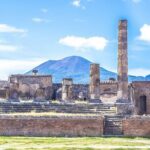
Want Rome without the shoulder-to-shoulder chaos? This private, driver-led loop is built to get you out of the tight historic crush and into Roman places most visitors miss. I particularly love the hotel pickup and drop-off, and I love how the day centers Via Appia Antica and the aqueduct countryside instead of only the main-ticket sights.
One thing to keep in mind: the schedule is efficient, so a couple of big-name stops are short (like a brief look at the Baths of Caracalla). Also, during the Jubilee, some monuments may be under restoration, so you’ll want to read any updates you receive and stay flexible.
In This Review
- Key highlights to look forward to
- Why this private driver setup makes Rome feel easier
- Via Appia Antica: walking the Queen of Roads without the main-crowd pressure
- Catacombe San Sebastiano: underground spaces that explain early Rome
- Parco degli Acquedotti: aqueduct ruins where you can actually breathe
- Baths of Caracalla, plus the Tiber as a quiet guide
- Trastevere, Santa Maria in Trastevere, and the Janiculum views
- How much should you budget, and what makes it worth the money?
- Who this tour is best for (and who might want something else)
- Before you go: small planning moves that make the day smoother
- Should you book Hidden Rome with a private driver?
- FAQ
- How long is the Hidden Rome tour?
- What’s included in the tour price?
- Are any admissions included besides the catacombs?
- Is food provided?
- What language is the tour offered in?
- Can I cancel for a full refund?
Key highlights to look forward to
- Door-to-door hotel pickup that saves you the commute scramble
- Via Appia Antica on well-preserved Roman paving under a quieter sky
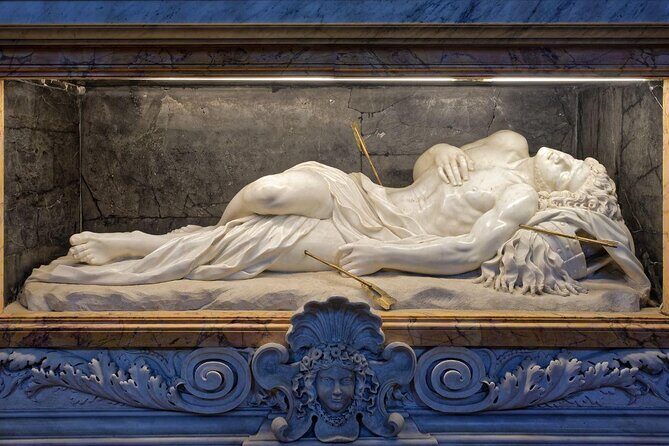
- Catacombe San Sebastiano, an underground cemetery with early Christian connections
- Parco degli Acquedotti for aqueduct ruins without the usual crowds
- Trastevere + Janiculum viewpoints to balance ancient sites with Rome’s lived-in streets
- Private vehicle and personal pacing so you can linger where it matters to you
Why this private driver setup makes Rome feel easier
Rome can be fun and exhausting at the same time. Big sights are crowded, buses are slow, and you end up spending energy just getting from one “must-see” to the next. This tour flips the problem by using a private car plus a driver and local guide, so you spend more time at the sites and less time stuck in traffic or backtracking.
The value isn’t only convenience. The route is also smarter for first-timers and repeat visitors. You still get iconic Rome markers later in the day, like Trastevere and hilltop views, but you start with quieter, sturdier ancient infrastructure: the Appian Way and the aqueduct park.
Pricing at $330.40 per person for about 6 hours is not “cheap.” But with private transport, hotel pickup, and catacombs admission included, you’re paying for reduced friction and a tighter use of time. If your priority is seeing harder-to-reach Rome with a calm plan, this makes sense.
You can also read our reviews of more private tours in Rome



Via Appia Antica: walking the Queen of Roads without the main-crowd pressure
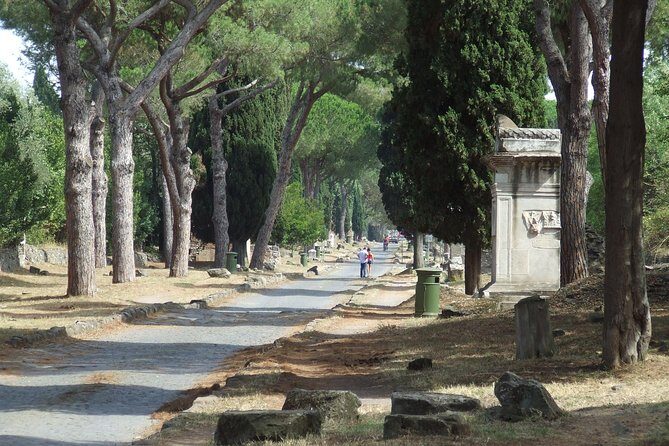
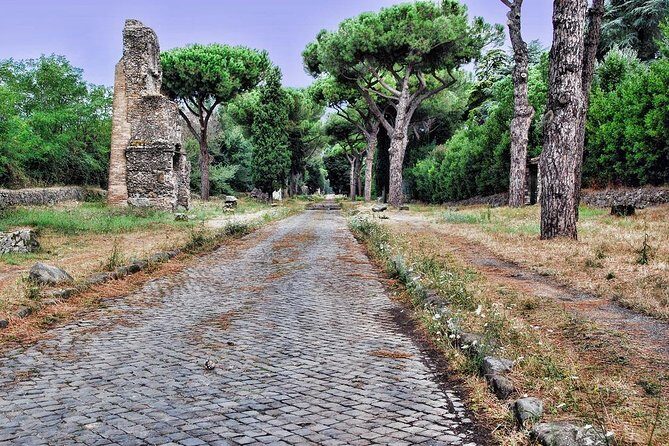
Your first stop is the Appian Way, or Via Appia Antica. This road was crucial to the Roman Empire, linking Rome to Capua near Naples and eventually stretching all the way to Brindisi in Puglia. It was built starting around 312 BC, associated with Appius Claudius Caecus, and it was called the Queen of Roads for a reason: it was both massive in scale and built to last.
What you’ll notice most is how well-preserved it feels. The paving stones are large and flat, and they’ve survived centuries of foot traffic and wheel wear. It’s the kind of place where the “architecture” is the walk itself—less about a single monument, more about experiencing how Rome built for movement and control.
Good practical tip: wear shoes with grip. The stones can be uneven, and you’ll be walking a true road, not a polished walkway. Also, with the tour starting early (around 9:00 am), you’re more likely to beat the busiest times.
If you want photos, aim for the feeling of depth along the road—one long line can look more dramatic than a single close-up. And if you like Roman engineering, you’ll get a lot out of simply imagining the empire’s logistics along this route.
Catacombe San Sebastiano: underground spaces that explain early Rome
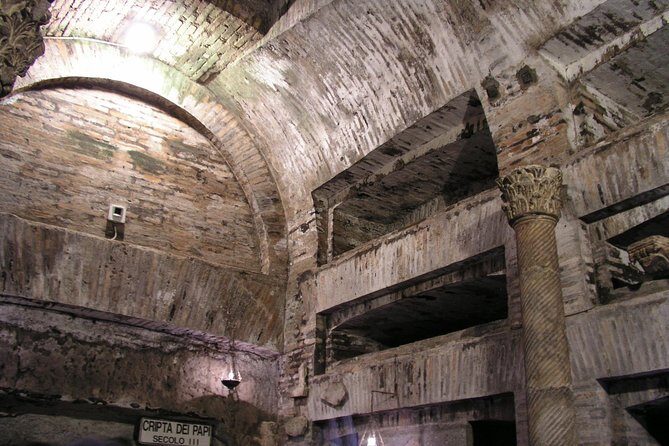
Next comes Catacombe San Sebastiano. This is a subterranean Christian cemetery named for St. Sebastian, who is said to be buried here. The name itself traces back to the idea of being “near the hollows,” likely tied to local tuff mines.
A key context point: in Roman-era cemeteries like this, you’re not just looking at one chapel or tomb. You’re stepping into a whole system of space that includes caves and tunnel areas. Over time, loculi (rectangular wall tombs) and colombari (smaller niches, often for urns) were used alongside more elaborate underground arrangements.
There’s also a broader historical layer. The site was associated with the Apostolic Memorial, connected to liturgical celebrations devoted to the apostles Peter and Paul in the early centuries. Aboveground structures also existed, including residential buildings with wall paintings, which helps you remember this wasn’t only an underground secret.
This stop is about timing and comfort. The tour allots around 1 hour here, with admission included. That’s usually enough time to understand the layout and spot the different types of tomb spaces without rushing you through.
One practical note: underground spaces can feel cooler and dim. A light layer can help, even in warm months, and it’s worth checking your comfort level before booking if you get claustrophobic.
Parco degli Acquedotti: aqueduct ruins where you can actually breathe
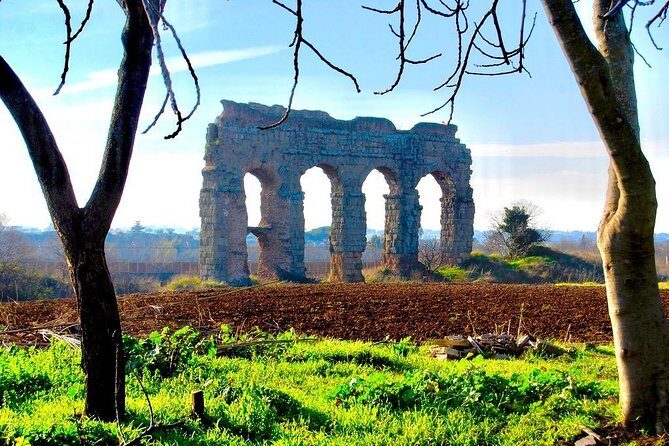
Parco degli Acquedotti is one of Rome’s best “get out and walk” experiences, especially if you want ancient remains with space around them. This park sits on the outskirts and is tied to the ancient need to move fresh water into the city.
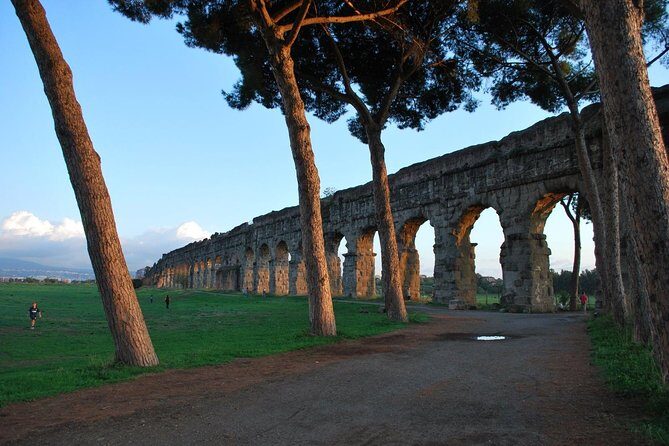
You’ll see long stretches of the Aqua Felix and parts of Aqua Claudia. Even if you don’t know every Roman water system detail, the structures communicate the scale. These weren’t small channels. They were major infrastructure built to sustain a huge city.
What makes this stop special is that it feels quieter than the center. The ruins and wide meadows create an “other Rome” effect: you can look up and still feel the open sky. On weekends, you might see picnicking families, and you can even rent a bike to move faster, but the main joy is strolling at a human pace.
For your visit, go with a mindset that this is a walk, not a museum stop. Give yourself time to angle your photos and to trace how the aqueduct line disappears into the distance. If you’re the type who likes reading stonework and imagining daily life, you’ll love this.
Admission is listed as free, and the tour gives around 1 hour. With decent walking conditions, you can get a lot of meaning from that single hour.
Baths of Caracalla, plus the Tiber as a quiet guide
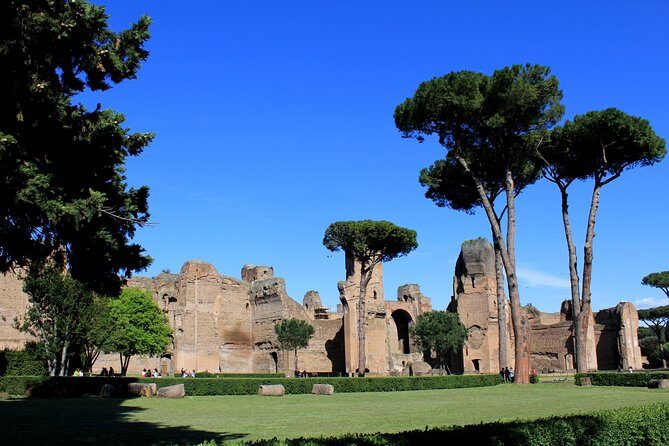
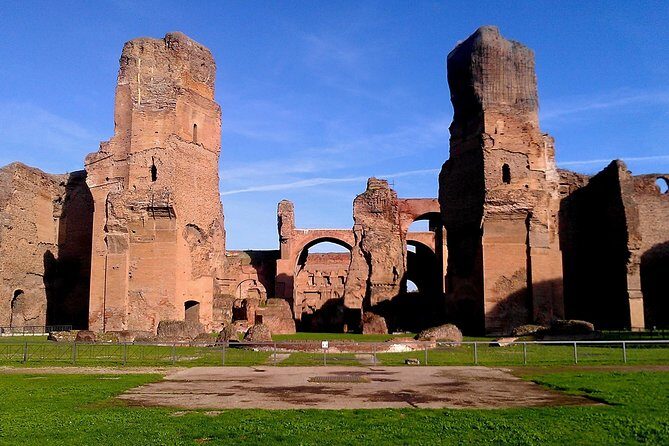
After the aqueduct park, the day shifts to Baths of Caracalla. The baths were built between 212 and 216 under Emperor Marcus Aurelius Antoninus Augustus, better known as Caracalla. In their prime, this was one of the great thermal complexes of the ancient world.
Today, you mostly see brick walls and collapsed vaults. That can sound disappointing until you realize it changes the feel. You’re not trying to “see it as it was” with a restored building. You’re experiencing the bones of a massive place that dominated daily life, then got swallowed by time.
You’ll likely get about 30 minutes here. Admission is noted as not included, so budget extra if you want to enter or pay any site fees required for your visit. Even with limited time, the baths are still worth it because they connect to how Romans moved through the city: through public spaces that weren’t just for bathing, but for socializing and routine.
Between stops, you’ll also move through areas defined by the Tiber. Rome’s layout is closely tied to this river. Most of the city lies to the east, while the west side includes the island in the Tiber, Insula Tiberina (also called Insula Sacra). As you pass along the route, the river is a useful landmark for getting your bearings fast.
Even if you don’t stop at the river itself, it helps to keep it in mind. Rome feels more logical when you mentally separate east and west.
You can also read our reviews of more tours and experiences in Rome





Trastevere, Santa Maria in Trastevere, and the Janiculum views
Then comes Trastevere, a neighborhood just down the Tiber from the Vatican. It’s famous for its “city within a city” identity—cobbled alleyways, a medieval maze of piazzas, and a strong local pride. This is where Rome feels less like a postcard and more like a place people still live in.
Your time here is short—around 30 minutes—but that’s enough for the essentials: sit for a coffee vibe, wander a few lanes, and soak in the everyday tone. If you only do Trastevere from the main streets, you’ll miss the feel. With a private tour, you can walk a little with less stress.
After Trastevere, you visit Basilica di Santa Maria in Trastevere. This church was restored recently, giving new life to Pietro Cavallini mosaics from the 12th century, along with frescoes and marbles. You’ll also find a Baroque 16th-century octagonal gold ceiling and Domenichino’s painting L’Assunzione della Vergine from 1616 to 1617.
One reason this stop works is the time depth. The church has a decent claim to being among the earliest official Christian worship places in the city, with origins reaching back to at least the third century. In other words, you’re not just seeing beauty. You’re seeing continuity.
Finally, you end on Colle del Gianicolo, also known as the Janiculum Hill. This is one of Rome’s best view points for central Rome—domes, bell towers, and the visual “layers” you can’t get from street level. The hill also connects to several important sites, including San Pietro in Montorio and the Tempietto designed by Donato Bramante, which marks the traditional location associated with St. Peter.
There’s also Fontana dell’Acqua Paola, built by Pope Paul V in the late 17th century. You might not have time for every side stop, but you’ll get a meaningful slice of why this hill has long attracted scholars and institutions.
Expect around 10 minutes here. Bring your camera, but also bring your patience—Rome views always look best when you stop thinking like a tourist and start looking like a Roman for a minute.
How much should you budget, and what makes it worth the money?
Let’s talk value, because $330.40 per person is a real number. The big question is what you’re buying besides access.
You’re buying:
- Private vehicle transport, so you’re not riding a crowded bus between far-flung ancient areas
- Hotel pickup and drop-off, which is a huge time win in Rome
- A local guide, plus a driver who handles the moving parts of the day
- Catacombs admission included, which saves you the cost and planning step for that specific site
- A route that balances “big names” with lesser-visited spaces, like Via Appia and Parco degli Acquedotti
That last point matters. Many Rome itineraries cram the same central highlights and call it a day. Here, you’re getting infrastructure and atmosphere: road paving, aqueduct engineering, and underground burial culture, followed by neighborhood wandering and a high viewpoint.
Still, the private format isn’t a magic wand. One drawback to watch: some parts of the day are brief. Baths of Caracalla is short, and Trastevere is short. If you’re the type who wants to spend 2 hours in a single monument, you may feel the time pressure.
Also, the quality of guidance can affect the experience. The best versions of this tour are the ones where the guide explains what you’re seeing and helps you connect it to Rome’s larger story. If you want more talk-time at a stop, ask questions right away rather than waiting.
Who this tour is best for (and who might want something else)
This is a strong fit if:
- You’ve already seen the top central sights and want Rome’s infrastructure and quieter corners
- You want a calmer plan with door-to-door pickup
- You’re short on time but still want meaningful depth at several places
- You like mixing outdoor ancient sites with churches and neighborhood walking
It’s less ideal if:
- You want long, leisurely museum-style visits at every stop
- You dislike underground spaces or worry about being in enclosed areas
- You’re on a tight budget and prefer self-guided transit
It can also be a smart choice for people who don’t want to navigate pickup points across the city. The tour is explicitly private, so your group is the only group involved.
Before you go: small planning moves that make the day smoother
Start with your shoes and layers. You’ll walk on Roman paving at Via Appia and stroll in an outdoor park at Parco degli Acquedotti. Underground catacombs can feel cooler, so pack accordingly.
Plan on food being up to you. Food and drinks are not included, so either eat before the tour or ask your guide what’s nearby for a quick lunch or snack. In the same spirit, keep water with you during the outdoor segments.
Finally, stay alert to Jubilee-era changes. Some monuments may be under restoration, and the tour information notes that you should pay attention to messages about potential changes. The best approach is flexibility, not disappointment.
Should you book Hidden Rome with a private driver?
Yes, you should book this if your goal is a quieter, smarter Rome in one day. The combination of Via Appia Antica, Catacombe San Sebastiano, and Parco degli Acquedotti is exactly the kind of ancient focus that most itineraries skip because it takes effort to reach. Add Trastevere, Santa Maria in Trastevere, and a Janiculum viewpoint, and you get a full-spectrum day that still feels manageable.
Book it with realistic expectations: a few major sites are brief, and you may not get a “hang out all day” pace. But if you want to see more of Rome with less stress, this private format and route design deliver good value.
FAQ
How long is the Hidden Rome tour?
It runs about 6 hours.
What’s included in the tour price?
The tour includes a driver/guide, a local guide, hotel pickup and drop-off, a private vehicle, private tour service, and Catacombs San Sebastiano admission.
Are any admissions included besides the catacombs?
Appian Way, Parco degli Acquedotti, Trastevere, Basilica di Santa Maria in Trastevere, and Colle del Gianicolo are listed as free. Baths of Caracalla is listed as not included.
Is food provided?
No. Food and drinks are not included.
What language is the tour offered in?
It’s offered in English.
Can I cancel for a full refund?
Yes. You can cancel up to 24 hours in advance for a full refund. Canceling less than 24 hours before the start time is not refunded.