REVIEW · FOOD
Gourmet Street Food and Guided Sightseeing Tour In Rome
Book on Viator →Operated by Tours of the Vatican with Francesco & his team · Bookable on Viator
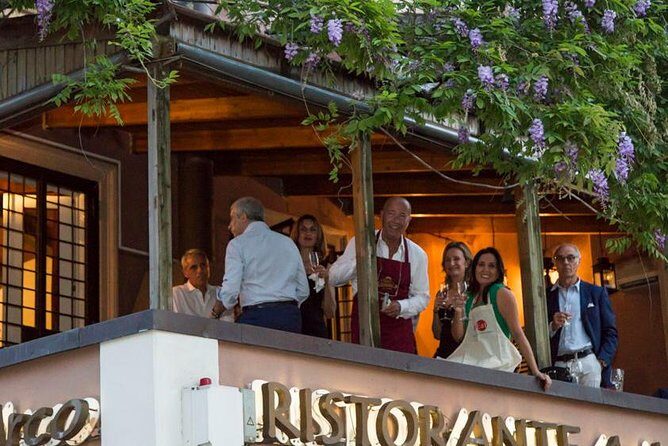
Rome tastes better with a guide. This is a small-group food-and-sightseeing walk that pairs traditional Roman street bites with landmark stops, led in English and designed for a smooth 2.5-hour rhythm through the center of town. Each stop’s admission is listed as free, so the time you pay for goes straight into tasting and seeing.
I especially like the way it starts at Campo de’ Fiori, where the market vibe is the perfect opener for tasting things like pestos and balsamic vinegar and even salami samples with wine. I also like that the route goes beyond postcard Rome and includes the Roman Ghetto—compact, pedestrian-friendly, and full of everyday Jewish-Roman life—before it turns toward big architecture at the Pantheon.
One consideration: this tour is not set up for everyone’s diet. It does not accommodate vegan, gluten-free, or dairy-free needs, and it warns about possible cross-contamination if you have allergies to nuts or dried fruits.
In This Review
- Key things to know before you go
- Street Food + Sights in 2½ Hours: What the format feels like
- Campo de’ Fiori: Where the tour starts with market energy
- The Roman Ghetto: A short walk with big atmosphere
- Largo Argentina (Area Sacra): Caesar’s shadow and Roman ruins
- Pantheon: The world-class building moment you don’t want to rush
- Basilica di Sant’Eustachio: Finishing in a quiet square
- Food tastings: How to think about value (and what you might try)
- Group size and pace: The sweet spot for seeing Rome without burning out
- Practical tips that will make your tour smoother
- Who this tour suits best (and who should think twice)
- Should you book this Rome food-and-sights tour?
- FAQ
- What is the duration of the tour?
- Where does the tour start and end?
- What’s included in the price?
- Are drinks included?
- Can vegetarians join?
- Does the tour run in rain?
- What if I need to cancel?
Key things to know before you go
- Small group (max 14) keeps the tour from feeling like a food parade with no time to ask questions.
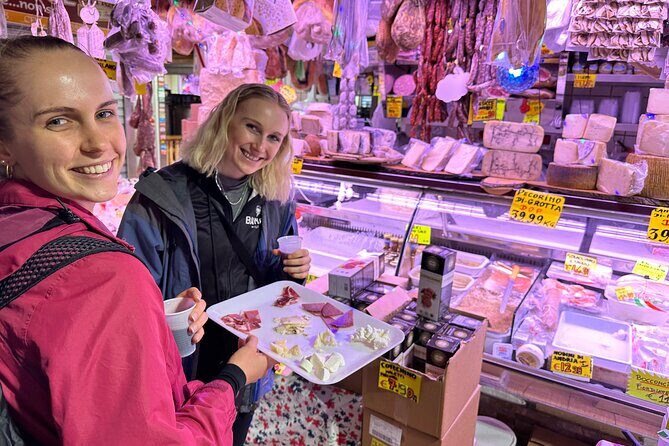
- Street-food tastings are the main event, not a side quest; you’ll get multiple bites across the route.
- Free admission at the stops listed on the route means you’re paying for guidance and food, not entry fees.
- English-language tour with a local expert leader (I’ve seen the name Arieanna noted in reviews).
- Lunch or dinner timing options let you match the walk to your day.
- Diet limits are strict: no vegan, gluten-free, or dairy-free options; vegetarians can be accommodated if you flag it early.
Street Food + Sights in 2½ Hours: What the format feels like
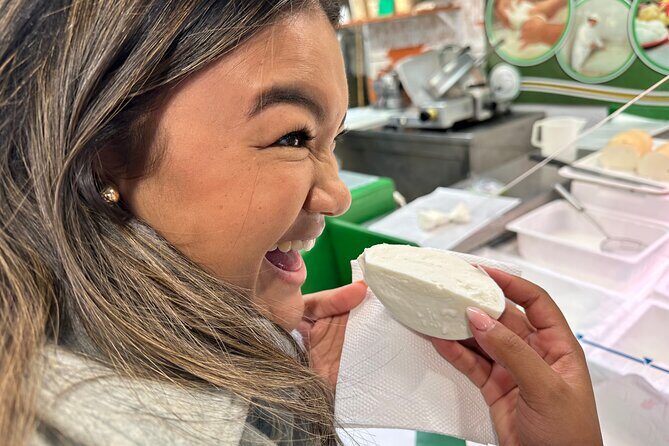
This is the kind of Rome tour that’s built for people who want two wins at once: you taste real street food, and you also get a guided route that makes the city’s older layers make sense. With a max group size of 14, you don’t feel glued to the back of a crowd, and you usually have room to hear what the guide is pointing out without turning your head every ten seconds.
The pricing sits at $54.42 per person, which is reasonable for this mix of guided walking plus multiple tastings, especially since the stop admissions are listed as free. Drinks are not included, so plan on ordering water (or whatever you like) separately if you’re thirsty. The tradeoff is you’ll likely leave full enough that you won’t feel the need to hunt for another meal right after.
Also, the tour runs rain or shine, which matters in Rome. If the weather turns, you’ll still get your sights, just in a grippier “keep walking” way.
You can also read our reviews of more food & drink experiences in Rome


Campo de’ Fiori: Where the tour starts with market energy
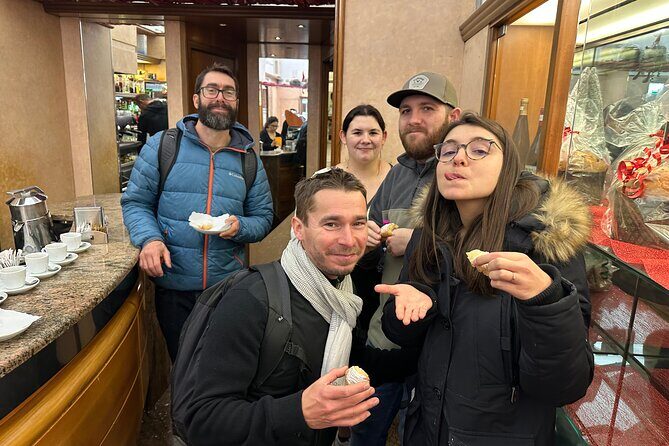
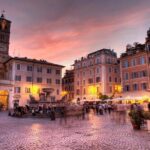
You begin at Piazza Campo de’ Fiori, a square that’s been tied to commerce for centuries. The name goes back to the Middle Ages when the area was described as a meadow, but today it’s known for daily market life. That’s a smart starting point: you get your first tastes in the kind of place locals actually treat as routine.
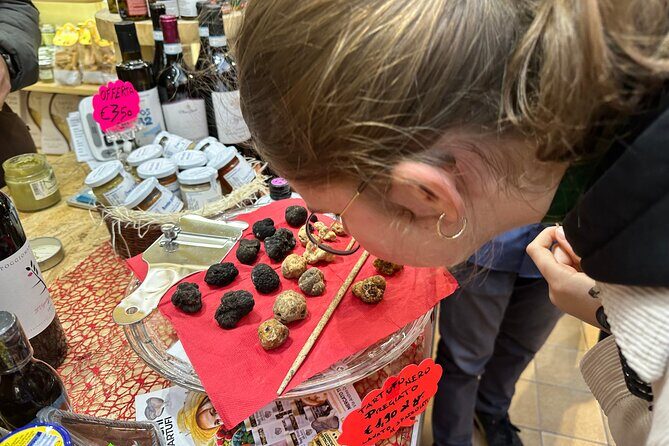
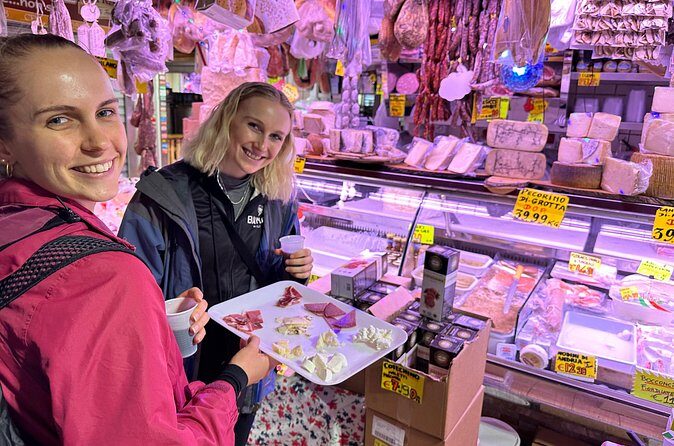
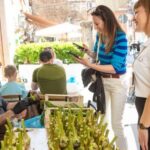
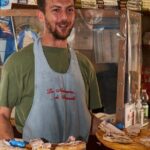
Expect the first tastings to set the tone for the rest of the evening. From what’s been described in reviews, people have tried things like pesto and balsamic vinegar, and the market stop can include a spread-style moment with multiple salami types and wine. Even if the exact items vary, the goal is the same: quick, classic Roman flavors that get your appetite engaged right away.
What to watch for: market stops can be a little chaotic before a tour settles into a tasting rhythm. Go with the flow and keep your eyes on the guide. If you’re prone to getting distracted by crowds, this is one time to stay mentally “on the clock.”
The Roman Ghetto: A short walk with big atmosphere
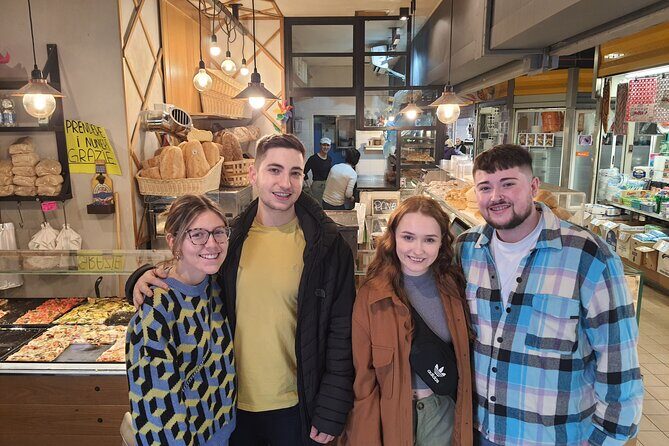
Next up is the Roman Ghetto, one of the most atmospheric areas in the city. This is not just a museum stop. It’s described as the oldest Jewish settlement in Europe, dating back to the 2nd century B.C., and you’ll pass a landscape of small businesses, synagogue life, and everyday food spots.
You also get a guided context for why this area feels so lived-in. It’s compact, very pedestrian-friendly, and easy to understand on foot—perfect for a food tour format because the flavors you try fit the neighborhood you’re walking through.
Food-wise, this is often where the tastings get a little more specific. One review described fried artichoke as part of the Ghetto stop. Even if your exact bite list differs, this part of the route is a strong example of why guided matters: you’ll be more likely to notice the cues in the area, not just eat and move on.
Largo Argentina (Area Sacra): Caesar’s shadow and Roman ruins
Then you hit Area Sacra di Largo Argentina, a stop that’s all about Roman political drama and archaeology. Here you’re in the orbit of the Theater of Pompey, built between 61 and 55 B.C. by Pompey the Great. Julius Caesar is described as having been killed at the foot of Pompey’s statue, which is exactly the kind of detail that turns a sidewalk into a story.
Today, archaeologists have uncovered a structure in that area, described as nearly 10 feet wide and 6.5 feet tall. It may have been connected to efforts after the assassination—another reminder that Rome’s layers are not just decorative. They’re physical evidence of what happened next.
The practical value of this stop is how it “connects the dots.” After eating in markets and neighborhoods, you suddenly understand you’re walking through spaces that shaped the city’s power. Even if you’re not a full-on history nerd, this is a memorable contrast.
Pantheon: The world-class building moment you don’t want to rush
If you only have time for one major monument on a food-and-sights walk, the Pantheon is it. It’s a former Roman temple that became a church, and it’s presented here with the kind of context that helps you look at it like an architect, not just a tourist.
Here’s the key info to keep in mind while you’re there: it’s a cylindrical building with a portico and a rotunda under a coffered concrete dome. The dome is famous for having a central opening—an oculus—to the sky. The tour notes the dimensions that make it feel almost impossible: the height to the oculus and the interior diameter of the circle are both 43 meters (142 ft). It’s also described as the world’s largest un-reinforced concrete dome, and it’s one of the best-preserved ancient Roman buildings largely because it stayed in continuous use.
Why this stop matters for a food tour: you’re getting big “how did they build that?” moments right after tasting. It keeps Rome from being only about food or only about photos. You’ll come away with both a full stomach and a clearer sense of scale.
Tip: if you care about photos, try to pause just long enough for the dome and oculus perspective. The Pantheon can feel crowded, so don’t burn all your time there if you still want to enjoy the last part of the route.
You can also read our reviews of more tours and experiences in Rome


Basilica di Sant’Eustachio: Finishing in a quiet square
Your tour ends at Piazza di S. Eustachio, a small square built around the basilica of Sant’Eustachio (Saint Eustace). This is a gentler ending compared to the intensity of the Pantheon. The basilica and the square keep things local and calm.
The legend you’ll hear is part of why the square feels memorable. Eustace is described as a Christian martyr and soldier saint. The story goes that before conversion he was a Roman general who served emperor Trajan. While hunting a stag in Tivoli, he had a vision of a crucifix between the stag’s antlers, which led to conversion. The tour also notes that the stag remains the symbol for both Saint Eustace and the square.
It’s the kind of finishing stop that gives you a sense of how Rome holds onto stories in places you’d otherwise walk past. And it’s a nice way to end: you don’t feel like you’re sprinting through another giant attraction right at the finish line.
Food tastings: How to think about value (and what you might try)
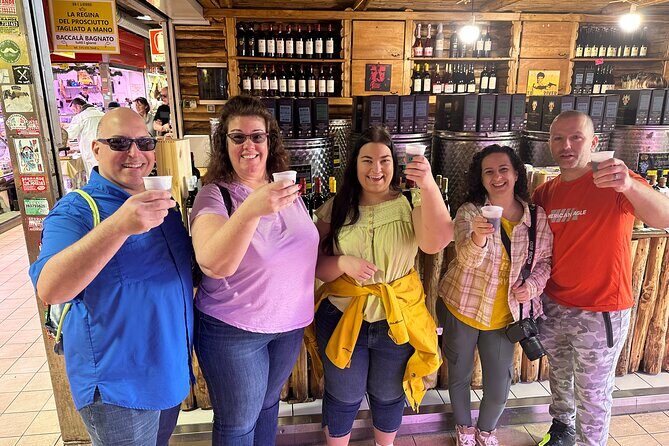
This tour centers on traditional Roman street food sampling, but with guided context so you understand what you’re eating and why it belongs here. Drinks are not included, so budget for water as needed.
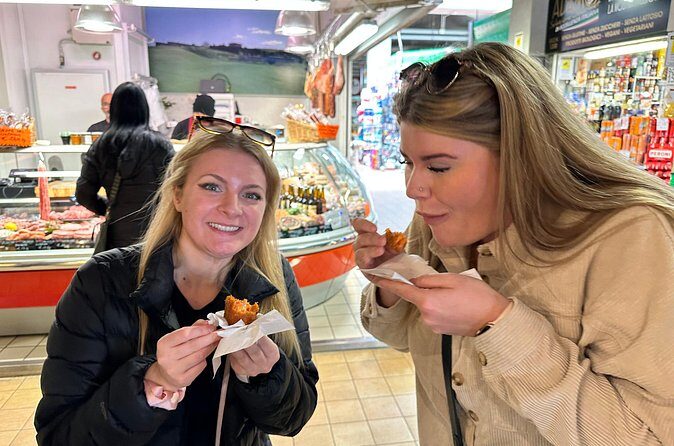
From the tastings described, people have enjoyed a range of Roman favorites, such as:
- at the market stop: pestos and balsamic vinegar, plus multiple salami varieties with wine
- later stops: suppli (deep-fried rice balls), plus pizza samples and beer
- at the Ghetto stop: fried artichoke
- and often a sweet ending: gelato
Two notes to keep it honest:
1) Your exact menu can vary because the tour lists that stops are subject to change.
2) The “wow” of this tour comes less from gourmet presentation and more from getting guided access to where these foods naturally fit.
Value angle: even at $54.42, you’re effectively paying for a compact walking route through major sights plus multiple tastings. If you try to do this on your own, you’ll likely spend similar time wandering, then pay extra for tastings and end up piecing together who knows what.
Group size and pace: The sweet spot for seeing Rome without burning out
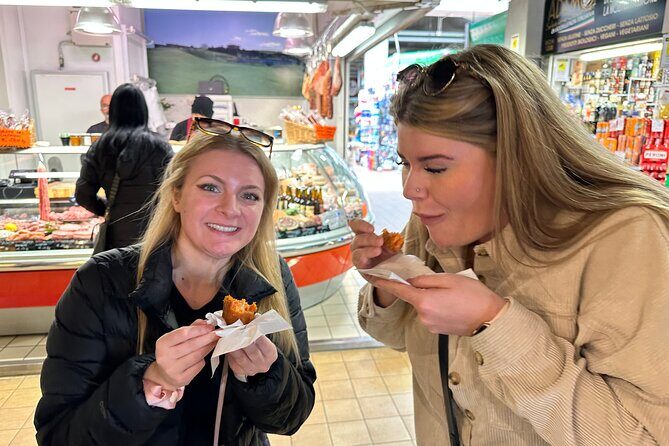
The max group size of 14 is a big deal in central Rome. You avoid the long shuffling lines you get on bigger bus-to-walk tours, and you can actually hear the guide. It also helps that the route uses short, timed segments (each stop is roughly around 30 minutes), which keeps the tour from dragging.
That said, you’re still doing walking between several key areas. Plan for it. Wear comfortable shoes, and keep water handy since you’ll be tasting and moving in warm weather.
The tour offers choice of lunch or dinner timing. That’s useful because the experience changes with the light and crowd levels. If you’re choosing, I generally like the earlier slot for comfort (less heat) and the later slot if you want the market energy to feel more evening-like.
Practical tips that will make your tour smoother
A few things that can save you minor frustrations:
- Diet limits are strict. The tour does not offer vegan, gluten-free, or dairy-free options. Vegetarian may be possible if you advise in advance. If you have concerns, message ahead early.
- Allergies: treat it seriously. There’s an explicit warning about possible cross contamination for allergies to nuts or dried fruits. If that applies to you, don’t assume you’ll be safe—ask directly before booking.
- Bring some cash instinct, but expect mobile ticket use. The tour uses a mobile ticket, so you don’t need to dig through paper. Drinks are not included, though.
- Expect a guided walk, not a museum sprint. Many big sights are only a short stop here. That’s good for energy, but it means you won’t get deep independent time to linger.
Who this tour suits best (and who should think twice)
This tour is a strong match if you want:
- a tasting-focused Rome experience with a clear route
- major sights like the Pantheon without spending all day in lines
- a small-group feel where you can ask questions
It may not be a fit if you:
- need vegan, gluten-free, or dairy-free meals (not offered)
- have nut/dried-fruit allergies and need strict allergen control (cross contamination is mentioned)
- hate walking and prefer a totally seated “hop on hop off” style
If you’re traveling with kids or a mixed group, the food stops can be fun, but only if everyone is okay eating the standard items. The tour is listed as suitable for most travelers, but food constraints can still make it tricky.
Should you book this Rome food-and-sights tour?
I think this is worth booking if you like your Rome plan to include both bites and understanding—market energy at the start, neighborhood texture in the middle, then the Pantheon as a payoff. The small-group size and the mix of street food plus guided context make it feel like more than just sampling snacks.
Skip it only if your diet restrictions don’t match what’s offered. And if you’re the type who likes to spend a long, quiet hour inside monuments, you might find the stop time too short—but that’s usually not the goal of a street-food guided walk.
If you’re ready to walk, taste, and learn a little in the process, book it and come hungry. Rome rewards that approach.
FAQ
What is the duration of the tour?
It runs about 2 hours 30 minutes.
Where does the tour start and end?
It starts at Piazza Campo de’ Fiori and ends at Piazza di S. Eustachio.
What’s included in the price?
The tour includes traditional Roman street food tastings, a small-group tour (max 14), and a local expert tour leader.
Are drinks included?
No. Drinks and beverages are not included.
Can vegetarians join?
Vegetarians can be accommodated if you advise in advance. The tour does not accommodate vegan diets.
Does the tour run in rain?
Yes, it takes place rain or shine.
What if I need to cancel?
Free cancellation is available. You can cancel up to 24 hours in advance for a full refund. If you cancel less than 24 hours before the start time, the amount is not refunded.