REVIEW · ROME
Golf Cart Around Imperial Rome
Book on Viator →Operated by FREEWAY-CAR · Bookable on Viator
Sore-foot Rome? Not today. This 3-hour open-air golf cart loop is a smart way to see a big slice of Imperial Rome without turning your afternoon into a blister contest. I especially like how the cart gets you fast between major sights, and how guides such as Alessandro and Leonardo tend to explain what you’re actually looking at while you’re moving.
I also like that it’s built for real life: a max 10 people group, quick stops for photos, and plenty of time to step out and look around at your own pace. You get an English-speaking driver/guide, a mobile ticket, and pickup is offered, with the tour ending back at the start point.
One thing to consider: Rome’s streets can be rough. On cobblestones the ride can feel bumpy, and some seats face backward, so it may be harder to hear the narration.
In This Review
- Key highlights
- Getting started at Via Ludovisi (and why it matters)
- Why a golf cart works for Imperial Rome
- The route in 3 hours: Piazza Navona to Villa Borghese
- Piazza Navona: the Domitian stadium feel in real life
- Trevi Fountain: coin toss time without losing your afternoon
- Circo Massimo: a quick look at Rome’s huge entertainment space
- Colosseum area viewing: famous from every direction
- Pantheon: seeing the temple-to-all-gods moment
- Spanish Steps and Barcaccia: the stair-and-square pairing
- Villa Borghese: the heart-of-Rome stop
- Price and value: is $150.18 worth it?
- Comfort, sound, and the real-world ride feel
- The guide experience: names you might get and what they do well
- Who should book this golf cart tour
- Quick tips to make it smooth
- Should you book this tour?
- FAQ
- How long is the Golf Cart Around Imperial Rome tour?
- What does the tour cost?
- Is the tour offered in English?
- How big is the group?
- Is pickup available?
- Where is the meeting point?
- What is included in the price?
- Are museum entrances included?
- What is the cancellation policy?
Key highlights
- Open-air carts that keep you comfortable and moving through tight central streets
- Max 10 people for a less chaotic feel than big bus tours
- Timed stops at Piazza Navona, Trevi Fountain, Pantheon, Spanish Steps and more
- Domitian Stadium vibes at Piazza Navona plus the Fountain of the Four Rivers area
- Views that connect Circo Massimo with the Palatine in the background
- Great fit if you want to see a lot but don’t want to walk nonstop
Getting started at Via Ludovisi (and why it matters)
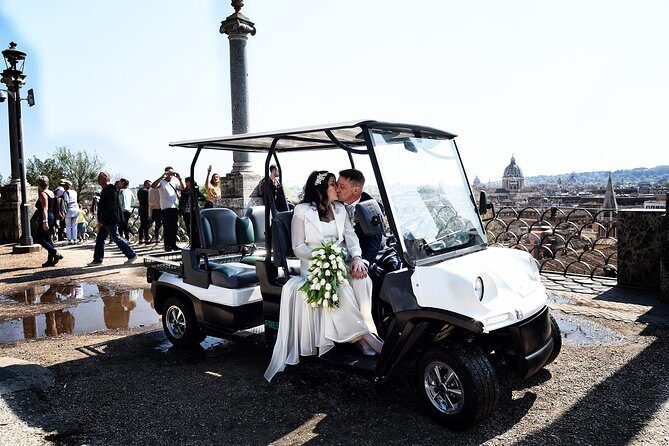
The action starts at Via Ludovisi, 00187 Roma RM, right in Rome’s central area. If you’re using public transit, you’ll likely find the meeting point convenient, and the tour runs with a mobile ticket, so you should be ready to show it and go.
Pickup is offered, which can be a big deal in Rome. In a city where walking can easily steal an hour, being picked up (when your schedule allows) helps you actually enjoy the tour instead of timing it like a math problem.
The tour ends back at the meeting point. That’s normal for this style of hop-on, hop-off sightseeing, but it’s still worth planning your next move. If you’ve got dinner reservations, aim to keep some breathing room.
You can also read our reviews of more tours and experiences in Rome.



Why a golf cart works for Imperial Rome
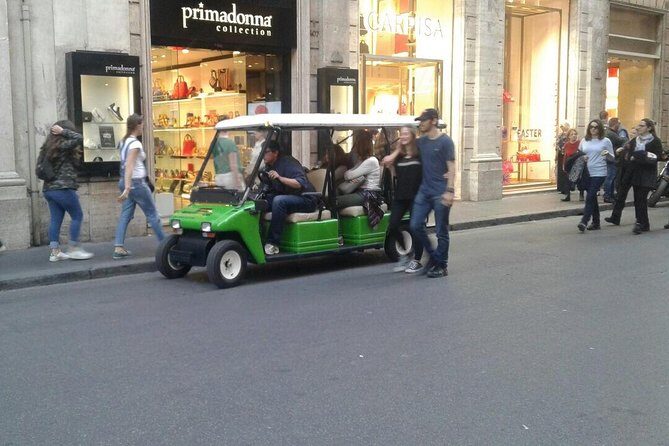
Rome’s famous monuments are spread out, and they’re surrounded by pedestrian zones and narrow streets. A golf cart-style ride helps you cover distance without the stop-and-go frustration you get in regular traffic, especially when cars can’t go where you want to see.
You also get a nice “Roman breeze” effect. Because the carts are open-air, you’re not stuck inside a hot vehicle while the city slides by. That matters in summer, and even in shoulder season when you still want the comfort.
And yes, this is a comfort-and-pace tour. Stops are short enough to see multiple highlights in one outing, but long enough to step in for photos and quick looks. It’s not a museum-thon, and that’s part of the appeal.
The route in 3 hours: Piazza Navona to Villa Borghese
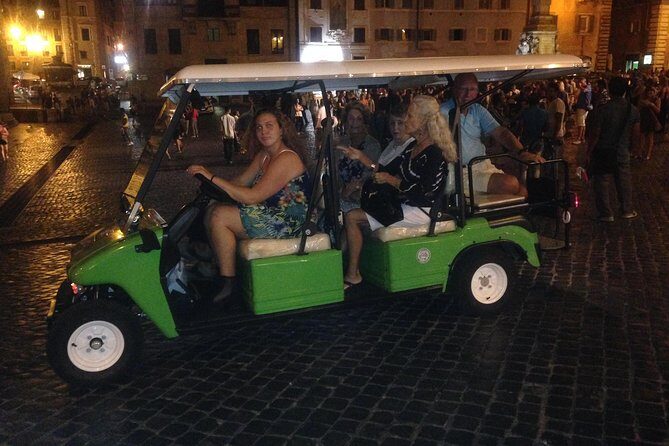
This tour is built around a straightforward rhythm: ride, stop, look, photo, move on. The total time is about 3 hours, with time divided across seven classic locations.
Here’s what the timing is designed to do:
- It gets you to the top-name sights you’d otherwise fight for on your own.
- It keeps you from spending the entire day in transit.
- It gives you enough time to enjoy each place without feeling like you’re rushing a checklist.
Keep one expectation in mind: with stop lengths like 10 to 20 minutes, you’ll want to decide quickly what you want to focus on. If you try to do everything at each stop, you’ll feel the clock.
Piazza Navona: the Domitian stadium feel in real life
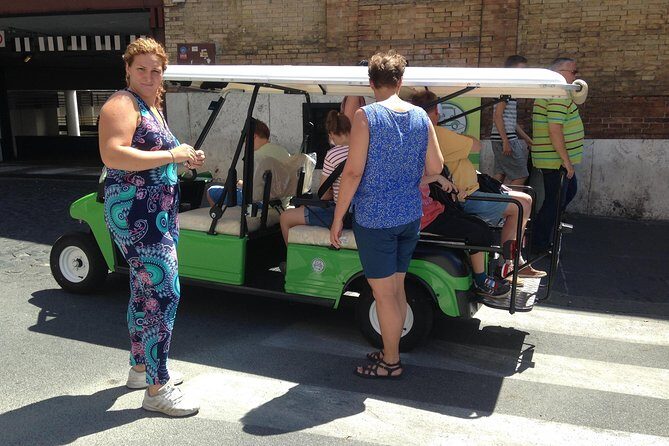
Your first major stop is Piazza Navona, and it’s not just a pretty square. You walk around an area connected to the ancient Domitian stadium, which gives the whole place a sense of scale even when you’re standing in the middle of a modern piazza.
This is also where you’ll get the classic sight picture: the fountain area with the Fountain of the Four Rivers vibe and the nearby church setting around Sant’Agnese in Agona. The square is busy, but being here early in the tour usually helps you get oriented without feeling like you’ve landed in chaos.
Practical tip: if you want photos with clear backgrounds, pick one side of the fountain area and wait for a moment when pedestrian flow thins. Quick, simple choices beat complicated ones in a crowded piazza.
Trevi Fountain: coin toss time without losing your afternoon
Next up is Trevi Fountain, with time set aside for the full moment: walk in close, take photos, and yes, do the coin toss ritual. Even if you’ve seen photos a hundred times, standing close to Trevi is different. The scale hits you, and you get the sculptural details in a way that’s hard to appreciate from far away.
The stop is about 15 minutes, so treat it like a photo window plus a short stroll. If you want a long, slow sit-down, you’ll need to add extra time on your own later.
One smart way to enjoy Trevi is to pick your shot early. Get the money shot fast, then walk a short loop to view the fountain from an angle that gives you a different frame.



Circo Massimo: a quick look at Rome’s huge entertainment space
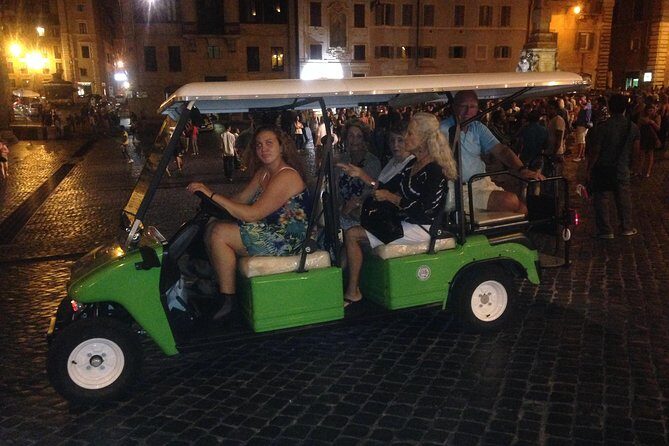
You’ll also stop at Circo Massimo, around 10 minutes. This is one of those places where the setting tells the story: you’re looking at the ancient circus grounds, with the Palatine area acting as a dramatic backdrop.
Even without going deep into excavations, it’s a great sight for getting your mental map straight. It helps you connect that part of ancient Rome to what you’ll see later near major monuments.
Because the stop is short, don’t over-plan. Just take in the open space and let your guide’s explanation point out what to notice.
Colosseum area viewing: famous from every direction
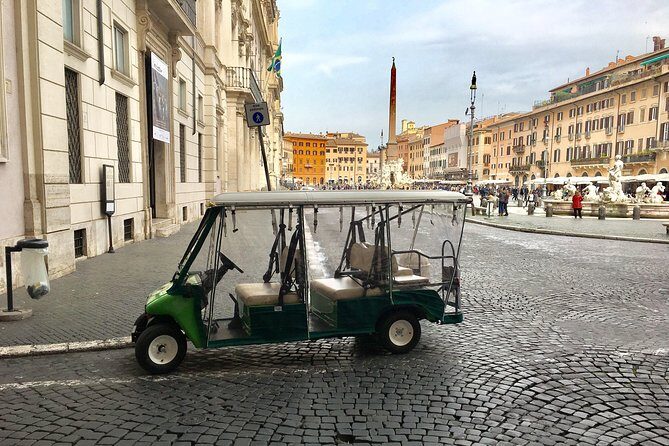
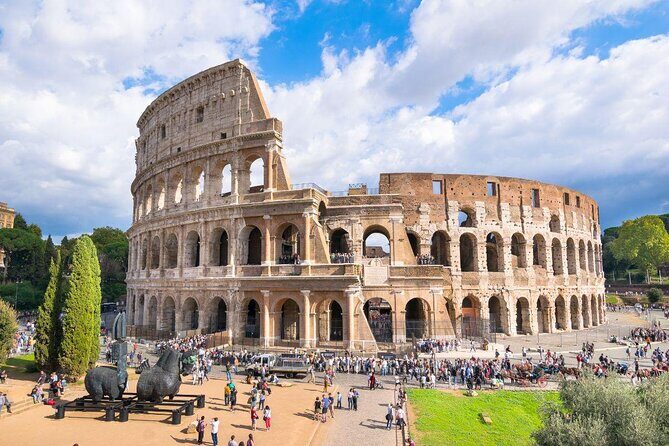
Then you move to the Colosseum area for about 20 minutes. You’ll be able to admire Rome’s most famous monument from a viewpoint that works well for a quick stop.
This is where the golf cart format helps. You’re not spending half your time trying to find where to stand or how to get through crowds. The cart brings you close, and you get time to actually look.
Practical note: this kind of stop usually means exterior viewing, not a full inside ticket plan. If you want the big-ticket interior experience, you’d need a separate museum or site visit.
Pantheon: seeing the temple-to-all-gods moment
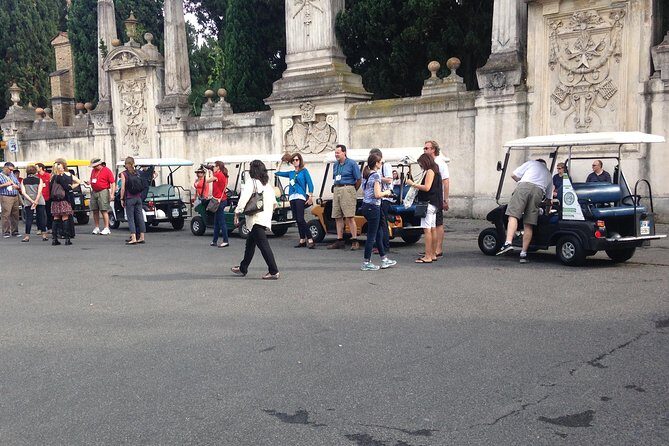
Your next classic stop is the Pantheon, also around 20 minutes. The key word here is visibility: it’s one of those places that instantly reads as important, even if you can’t yet name every architectural element.
You’ll see it as a temple concept often described as the home of multiple gods. That idea makes it feel different from other Roman monuments you’ll see on the route.
Again, treat this as a look-and-photo window. In a short stop, you’ll get the best results by deciding what you want most: the dome impact, the front façade, or the surrounding street-level perspective.
Spanish Steps and Barcaccia: the stair-and-square pairing
The tour then hits the Spanish Steps area, with about 15 minutes. It’s one of Rome’s most recognizable stair-and-square scenes, and the Barcaccia fountain is part of that visual package.
This stop is perfect for quick wander time because the space invites you to look both up and around. You’ll likely want a couple of shots: one straight-on style and one angled from a nearby viewpoint.
Because it’s a popular photo location, expect crowds. A good strategy is to move a few steps away from the densest center and shoot from a calmer corner.
Villa Borghese: the heart-of-Rome stop
Finally, you end at Villa Borghese for about 20 minutes, described as Il cuore di Roma. This stop works like a “breathe and reset” moment after the heaviest hitters.
You’re not doing a museum marathon here. Instead, you get a taste of the Borghese area and a change of pace from the tight, monument-dense streets earlier in the tour.
If you still have energy after the cart drops you back, Villa Borghese is a logical place to extend your day. Just don’t plan your entire afternoon around it unless you already know what you want to see.
Price and value: is $150.18 worth it?
At $150.18 per person for about 3 hours, you’re paying for convenience: speed between sights, open-air comfort, and a guide who helps you notice what matters.
What’s included is straightforward: a driver/guide. What’s not included is where value can swing for different people: museum entrance fees and food and drinks.
So here’s the honest way to judge it:
- If you want to hit major landmarks with limited walking, this price can feel fair.
- If you’re the type who plans deep museum time and likes long, independent wandering, the tour can feel like you’re paying for a fast overview.
For many people, the best use of this tour is as an intro. It helps you map Rome quickly, so your later solo time makes more sense.
Comfort, sound, and the real-world ride feel
This tour is open-air, which is great for comfort, but it also means you’ll feel the street. Rome’s cobblestones can make the ride a bit rough, and one practical issue that comes up is sound. With some seats facing backward, it can be harder to hear narration clearly.
If you care about audio, pick a seat where you can face the guide directionally when possible. Bring your attention more than your ears. Treat it as short stories and key facts, not a lecture.
Also consider safety gear details. One participant reported that only one front facing seat had a seatbelt. If that matters to you, ask before booking so you can choose the arrangement that works best for your comfort.
The guide experience: names you might get and what they do well
The biggest strength of this tour isn’t the vehicle. It’s the guide. The same pattern shows up across different guides: friendly tone, good English, and a knack for making each stop feel connected.
Guides such as Alessandro (often called Sa) are known for being humorous, enthusiastic, and helpful with older guests. Damiano is praised for insightful commentary at major sites like the Pantheon and Colosseum area. Leonardo stands out for handling special needs by describing everything in detail for a blind visitor, and for accommodating people with mobility challenges.
Then there are guides like Giovanni who use the ride itself as a learning tool, pointing out how the cart can go places cars and buses often can’t. Louisa is described as knowledgeable and especially helpful for people who don’t want to walk a lot.
You don’t need a specific name to benefit. But it’s a strong sign that whoever shows up, the tour is meant to be a guided city experience, not just a transport ride.
Who should book this golf cart tour
This tour fits best if you:
- Want a fast, comfortable overview of major Imperial Rome sights in a single outing.
- Have kids in tow or anyone who doesn’t want long walks.
- Prefer being seated while still getting close-up views and easy photo access.
- Want a first-day plan that helps you understand the city layout quickly.
It may be less ideal if you want:
- Long, slow museum time at multiple interior sites.
- A quiet, audio-perfect experience with minimal crowd contact.
- A very flexible itinerary that changes every 10 minutes on the fly.
Quick tips to make it smooth
A few practical steps can make a big difference:
- Wear shoes you can stand in during short stops. Even with the cart, you’re still doing museum-level footing outside.
- Bring sunglasses and water. Food and drinks aren’t included, and open-air carts mean you’ll feel the sun.
- Decide your top two priorities ahead of time, like Trevi and the Pantheon. You’ll enjoy the stop more if you’re not trying to do everything.
- If you’re sensitive to bumpy rides, sit where the motion feels least annoying for you.
Should you book this tour?
I’d book it if your main goal is getting your bearings fast and seeing a lot of headline sights without wearing out your feet. The route is efficient, the cart format helps you move through tight areas, and the guide quality is a clear theme.
I wouldn’t book it as your only Rome plan if you’re serious about interiors and museums. Treat this as the way to set context and get close to the big monuments. Then use the rest of your time for the deeper dives you actually want.
If your schedule is tight, consider keeping some buffer after the tour for photos or a spontaneous dinner stop. Rome is Rome, and even small delays can happen.
FAQ
How long is the Golf Cart Around Imperial Rome tour?
It lasts about 3 hours.
What does the tour cost?
The price is $150.18 per person.
Is the tour offered in English?
Yes, it’s offered in English.
How big is the group?
The tour has a maximum of 10 people.
Is pickup available?
Yes, pickup is offered.
Where is the meeting point?
The tour starts at Via Ludovisi, 00187 Roma RM, Italy.
What is included in the price?
A driver/guide is included, and you’ll use a mobile ticket.
Are museum entrances included?
No. Entrance fees for museums are not included.
What is the cancellation policy?
You can cancel for a full refund up to 24 hours in advance of the experience start time. Free cancellation is available as long as you meet that cutoff.