REVIEW · COLOSSEUM TOURS
Rome Imperial Past Colosseum, Forum and Palatine Tour
Book on Viator →Operated by Show Me Italy · Bookable on Viator
Rome rewards the guided version of ancient ruins. This tour is interesting because you get an official live guide walking you through three connected sites, with headsets so you can actually hear the story even when crowds press in. What I like most is the built-in explanations that turn scattered stone into something you can follow, and the reserved visit that keeps the day moving. One thing to consider: it’s a focused route with plenty of walking and a pace that can feel tight if you want to linger for photos.
The structure is simple and smart: Colosseum first, then Foro Romano, and finally Palatine Hill, all with admission handled for you. You can start in the morning or the afternoon, and you meet near Santi Cosma e Damiano (Via dei Fori Imperiali, 1) before ending at Largo della Salara Vecchia.
In This Review
- Key highlights to know before you go
- A 2.5-hour loop through Rome’s most intense ancient core
- Choosing your morning or afternoon start time
- Entering the Colosseum with a reserved, guided visit
- Roman Forum stops: temples, shrines, and marketplaces you can finally place
- Palatine Hill walk: making sense of what’s left above the city
- Headsets, crowd control, and how the group stays together
- What you’re paying for: value beyond the entrance tickets
- Where to meet, what to bring, and how not to lose time
- Who this tour fits best (and who should think twice)
- Should you book this Colosseum, Forum and Palatine tour?
- FAQ
- How long is the Rome Imperial Past Colosseum, Forum and Palatine tour?
- Which sites are included in the tour?
- Is admission included for all three stops?
- Are headsets provided?
- What about food, drinks, or transfers?
- Where do we meet, and where does the tour end?
- Is the tour limited to a small group?
- What ID do I need for entry?
- Does the tour run in rain?
- Can I cancel and get a full refund?
Key highlights to know before you go
- Official guide + headsets: easier listening in a noisy, crowded site
- Three classics in one run: Colosseum, Roman Forum, and Palatine Hill in about 2.5 hours
- Admission is included: Colosseum ticket plus the reservation fee are part of the price
- Small group cap (max 25): more manageable than the huge group circus
- Real-world pacing: fast enough to see a lot, not so slow that the day drags
- Rain or shine: you go unless the monument closes for safety
A 2.5-hour loop through Rome’s most intense ancient core
This tour works because it doesn’t try to be everything. In about 2 hours 30 minutes, you cover the Colosseum, the Roman Forum, and Palatine Hill, which means you get the big-picture sweep without spending half your day in transit or lineup limbo.
You’ll feel the rhythm right away: you enter, you listen, you move. The stops are timed (Colosseum gets about an hour, and each of the other two stops gets around 45 minutes), so you’re not stuck in one spot waiting for the whole group to catch up. That’s a plus on a hot Rome afternoon or when the crowds swell.
If you’re the kind of person who likes to know what you’re looking at while you’re looking at it, this is a strong match. The guide is there to help you connect what remains to what used to be there—especially in the Forum and on Palatine Hill, where ruins can look like random piles until someone gives you the map.
You can also read our reviews of more tours and experiences in Rome.



Choosing your morning or afternoon start time
You can choose between a morning or afternoon start, which matters more than it sounds. Rome’s central sights can get packed, and even with a guided plan, you’ll still be walking through busy areas.
If you’re sensitive to heat, a morning start often feels easier, since you’re less likely to hit the peak sun intensity. If you’re saving mornings for Vatican museums or side streets, the afternoon start still makes sense—you just want to show up prepared to move and expect heavier foot traffic.
Also, expect the day to be fluid. The meeting time can change, and in that case you’ll be contacted by email. That’s not unusual for a high-demand area, but it’s a good reason to keep your phone handy and check your inbox before you head out.
Entering the Colosseum with a reserved, guided visit
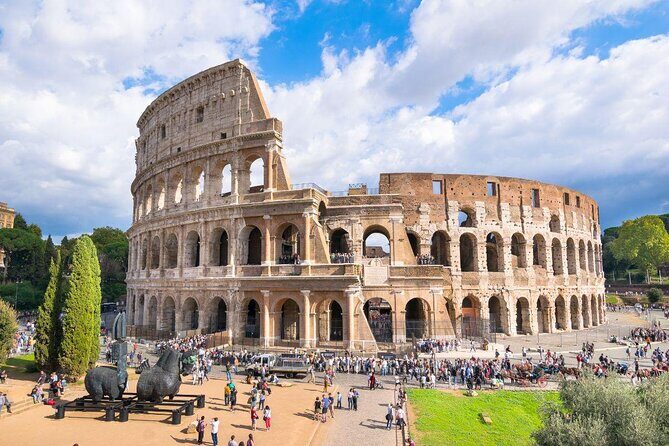
The Colosseum is the headline, and it earns the hype. You get about an hour there with an official guide, and admission is included. It’s one of the New7Wonders of the World, but what really helps is having someone point out how to read the site instead of just staring at it from one angle.
You’ll also get headsets, which is a big quality-of-life upgrade when multiple tours converge. The goal is simple: you hear the guide without having to elbow your way toward their microphone. Do know this: some people have reported audio issues when the mic volume wasn’t clear, so if it sounds off, say something right away so it can be fixed during the tour.
One practical tip for your body: the Colosseum involves steps and uneven surfaces. There’s also a lift option for levels, so if stairs are a problem, use it and tell your guide. The difference between a visit that feels doable and one that turns into a knee-or-waist battle can be that simple.
If you care about the upper tiers and extra sections, watch the pace. A rushed group can skip parts you might want to see later. Your best move is to ask the guide early what areas they plan to cover and how much time you’ll get in each zone.
Roman Forum stops: temples, shrines, and marketplaces you can finally place
After the Colosseum, you shift to Foro Romano, with about 45 minutes there. This is where a guide earns their paycheck.
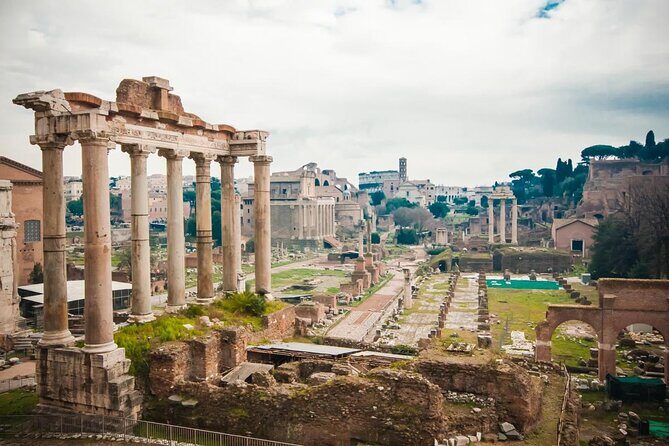
The Forum is made of remains—temples, shrines, and spaces that once served as marketplaces and gathering points. Up close, it can be hard to imagine the original layout. With a guide, those fragments get connected into a coherent story: where people likely moved, what kinds of buildings stood in the area, and how the space functioned in daily life.
You also get help with logistics. In a place like the Forum, it’s easy to get stuck following your own instinct and accidentally wander in the wrong direction. A good group leader keeps everyone from scattering, which helps you actually cover what you came for.
One small but real benefit: the guide can point you toward better photo stops. This isn’t about taking ten versions of the same shot. It’s about not wasting your limited time on a spot that doesn’t show what you think it shows.
Palatine Hill walk: making sense of what’s left above the city
Palatine Hill is the final stop, again around 45 minutes. The ruins here can feel different from the Forum because you’re walking through a broader sense of the site rather than a single courtyard view.
Your guide helps you interpret what you’re seeing as you move through the remains. That matters, because Palatine can look like “more ruins” until someone explains the logic of what’s where. With guidance, you start noticing patterns you’d otherwise miss.
This is also where you’ll feel the day’s walking load. Surfaces can be uneven, and the steps can add up when you’re already coming off the Colosseum. If mobility is limited, build your plan around breaks and the lift option when available.
If you’re traveling with kids or you’re visiting during hot weather, this stop can still work well because guides often adjust the pace and group management to keep everyone steady. I’ve seen guides handle families in sweltering conditions and keep the tour moving without turning it into chaos.



Headsets, crowd control, and how the group stays together
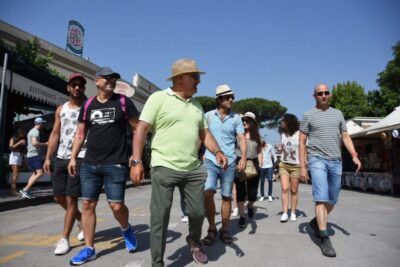
Headsets are included, and they’re there for a reason: these sites are loud, and you’ll constantly hear other tour groups nearby. In an ideal scenario, you can walk with the guide and actually follow the commentary.
In real life, it depends on the guide’s microphone position and the crowd noise. Some people have said audio clarity wasn’t great. If that happens, don’t just grin and suffer. Mention it quickly so adjustments can be made.
The tour caps at 25 travelers, which is the sweet spot for this kind of itinerary. Big groups move like a slow wave. Small groups move more like a train, where you can see what’s happening and stay oriented.
Guide styles vary, but the common thread is group management. Guides you might encounter include Maria, Luca, Marta, Magda, Radu, Laura, Alessandra Tosti, and Nick. From what you can expect in practice, they tend to keep the group moving while giving context that helps the sites click.
What you’re paying for: value beyond the entrance tickets
At $54.19 per person for about 2.5 hours, this is priced in the “you’re not just buying a ticket” category. The Colosseum ticket is included, and the listing breaks it down as a ticket value of €18 per person plus a Colosseum reservation fee valued at €2 per person.
That leaves the rest of your payment covering the service pieces: the official guide, the headsets, and the coordination that makes a multi-site visit feasible in one sitting. When you’re traveling through the Colosseum-Forum-Palatine cluster, timing is everything, and a reserved, organized plan usually beats the DIY approach if you want clarity and minimal stress.
Is it a bargain? It can be, especially if you’re the type who hates wandering and guessing. If you’re a “wander and read every sign” person, you might not need a guided push. But if you want the sites explained while you’re there—this is a reasonable way to get it.
Where to meet, what to bring, and how not to lose time
The meeting point is Santi Cosma e Damiano, Via dei Fori Imperiali, 1, 00186 Roma RM, Italy. Tours end at Largo della Salara Vecchia, L.go della Salara Vecchia, 00186 Roma RM, Italy.
Arrive 15 minutes early. Late arrivals can miss the chance to join, and refunds don’t get issued for no-shows or lateness. If you’re building in buffer time, you’ll enjoy the tour more and worry less.
Bring a valid passport or ID that matches the name used at booking. Names provided at booking cannot be changed, and you must present a voucher with all travelers’ full names at the ticket office before entry. If those names don’t line up, you risk being denied entry to the Colosseum and Roman Forum.
What about what you carry? Don’t bring weapons (including pocket knives), glass bottles, or large backpacks. If you want to move comfortably through crowded lines and narrow paths, travel light.
Also note: food and drinks aren’t included. If you skip breakfast or you’re heat-sensitive, plan for water. Vendors often walk around selling bottles, and you may want to buy on-site rather than trying to carry too much.
Who this tour fits best (and who should think twice)
This tour is a good fit for you if:
- you want a guide to help you understand what you’re looking at
- you’d rather spend your energy listening and moving than figuring out the logistics
- you’re okay with a fast pace and lots of walking on uneven ground
- you enjoy asking questions during the walk
It can be a tougher fit if:
- you want long photo stops and extra time sitting with one view
- you’re relying on perfect audio to enjoy the tour and can’t tolerate crowd noise
- you have mobility limits and stairs are a big issue (use the lift where available, but be prepared for a more active day)
One more reality check: because the Colosseum and surrounding areas are famous and crowded, the schedule can feel behind at peak times. Some people have mentioned major crowd pressure during high-traffic periods. If you’re traveling with a fixed dinner reservation, build a buffer so you don’t feel rushed leaving the ruins.
Should you book this Colosseum, Forum and Palatine tour?
Book it if you want the fastest way to connect the three big ancient hits into one coherent visit. The combination of official guide + headsets + admission handled is exactly what you want when the sites are crowded and the ruins don’t automatically tell you what they used to be.
Skip it (or consider a more flexible plan) if your ideal day in Rome is slow, quiet, and full of unscheduled wandering. This tour is structured. It’s designed to move, not to linger.
If you do book, pack smart: bring matching ID, show up early, and think about your comfort on stairs. Then let the guide do the heavy lifting. Once the story clicks, the Colosseum, Forum, and Palatine Hill stop feeling like separate stops and start feeling like one connected Rome.
FAQ
How long is the Rome Imperial Past Colosseum, Forum and Palatine tour?
It runs for about 2 hours 30 minutes.
Which sites are included in the tour?
You visit the Colosseum, the Roman Forum (Foro Romano), and Palatine Hill.
Is admission included for all three stops?
Yes. Entrance to the Colosseum, Roman Forum, and Palatine Hill is included, including the Colosseum entrance ticket and Colosseum reservation fee.
Are headsets provided?
Yes, headsets are included so you can follow the guide’s commentary in busy areas.
What about food, drinks, or transfers?
Food and drinks aren’t included, and there are no transfers. You’ll need to handle your own meals and get to the meeting point.
Where do we meet, and where does the tour end?
You start at Santi Cosma e Damiano, Via dei Fori Imperiali, 1, 00186 Roma RM, Italy, and the tour ends at Largo della Salara Vecchia, L.go della Salara Vecchia, 00186 Roma RM, Italy.
Is the tour limited to a small group?
Yes. The tour has a maximum of 25 travelers.
What ID do I need for entry?
You must present a valid passport or ID document that matches the name provided at booking. You also need to present a voucher with all travelers’ full names at the ticket office prior to entry.
Does the tour run in rain?
It runs rain or shine unless the monument is closed by officials for safety reasons.
Can I cancel and get a full refund?
Yes. You can cancel up to 7 days in advance for a full refund. If you cancel less than 7 full days before the experience starts, your payment is not refunded.