REVIEW · CITY TOURS
German port city of Ostia Antica
Book on Viator →Operated by Deutsche Römerin · Bookable on Viator
Ostia Antica feels like Rome’s ocean secret. This tour takes you just outside the city to a former inland port, where the Tiber and the sea have shifted over thousands of years. You’ll see how goods from across the Mediterranean flowed to Rome—and how daily life kept going long after Pompeii ended in AD 79.
What I love most is the sense of place: theatre, apartments, forum areas, and bath life are all laid out in one walk. I also like that you get headsets with a German-speaking city guide, so you can actually follow the story without leaning in all the time. One thing to note: you have about 2 hours, so it’s enough for highlights, but not for slow reading every wall and floor mosaic you see.
A big reason this tour works is that Ostia isn’t a theme park version of antiquity. It’s a real archaeological park where you can connect the dots—port logistics, housing blocks, public buildings, and even the quieter details of everyday life like latrines. In the reviews, guides like Philip (an archaeologist) and Rob Miller (a standout storyteller) were called out for making the stone-and-brick evidence feel alive. Still, like any guided tour, quality can vary by guide and your expectations: if you want very deep, super technical explanations for every building, the time window may feel a bit tight.
In This Review
- Key Highlights You’ll Care About
- Getting Oriented: Why Ostia Antica Beats a Second Trip to Rome
- Quick fit check: who this tour suits
- Price and Value: Free Isn’t the Whole Story
- Meeting Point to Archaeological Park: How the 2-Hour Flow Works
- What “2 hours” means on the ground
- Stop-by-Stop Breakdown: What You’ll Actually See
- Theatre: Public life without the museum fog
- Multi-storey apartment buildings: How people actually lived
- Forum: The center of daily decisions
- Antique bakeries and inns: Food and travel logic
- Neptune thermal baths: Comfort and routine, not luxury
- Latrines: The unglamorous detail that feels real
- Guides Matter: What Made the Best Ones Work
- One caution on expectations
- How to Plan Your Day Without Stress
- Transport and timing
- Bring the essentials
- What Makes Ostia Antica a Better “First-Time” Choice Than a Second Time in Rome
- Should You Book This Tour?
- FAQ
- FAQ
- How long is the tour?
- What’s the start time?
- Where do I meet the guide?
- Where does the tour end?
- Is the entrance fee included?
- Are headsets provided?
- Is transport included?
- What should I bring since snacks aren’t included?
- Is there a cancellation refund?
Key Highlights You’ll Care About
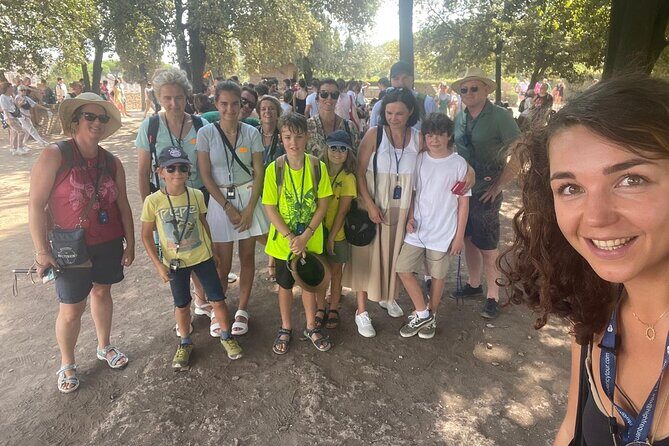
- Ancient port city, not just ruins: Ostia helped supply Rome, so the buildings explain trade and daily life together.
- Theatre + multi-storey apartments: you’ll get a good cross-section of public life and housing design.
- Neptune thermal baths: Roman bathing culture shows up in a very practical way on-site.
- Forum space and everyday stopovers: shops, bakeries, inns, and the feel of commerce are part of the route.
- Latrines included in the story: the tour doesn’t dodge the human details.
Getting Oriented: Why Ostia Antica Beats a Second Trip to Rome
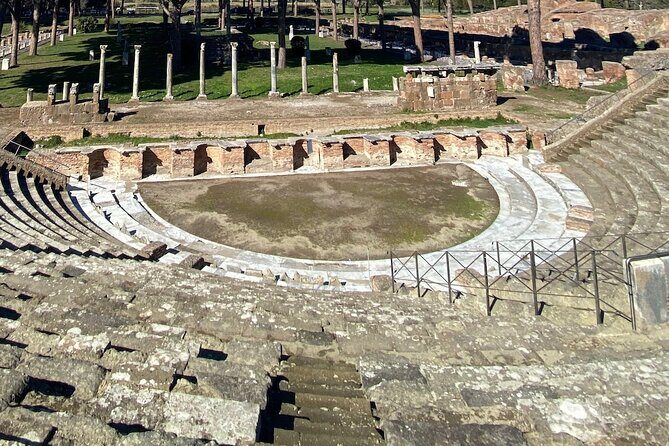
If you’ve already seen the Colosseum and Vatican photos, Ostia Antica gives you a different kind of wow. Rome’s ancient power wasn’t just temples and emperors—it was also shipping routes, warehouse work, and people living and shopping every day. Ostia’s location is the whole point: it became the inland port for Rome, even though the coastline you can picture today is not the one ancient Romans knew.
That shift matters for what you’ll notice. When you stand in the archaeological park, you’re looking at a city shaped by water—arrival, storage, distribution, and a constant flow of Mediterranean goods. Over centuries, the sea and the Tiber changed, so the site you visit is a snapshot of how geography can rewrite a city’s role. It’s a strange feeling, and it makes the buildings more than pretty backgrounds.
I also like that the tour’s tone is practical. You aren’t just handed facts. You’re guided through what each part of the city would have meant in daily rhythm—walk in, buy food, pass through public spaces, bathe, sit in the theatre, and keep living. And since Ostia continued into late antiquity (unlike Pompeii, which ended in AD 79), you can feel continuity instead of a single disaster story.
You can also read our reviews of more city tours in Rome

Quick fit check: who this tour suits
This is a strong choice if you want:
- A break from Rome’s crowded centers
- A guided walk where you can understand the language (German-speaking guide + headsets)
- A “real city” view, including housing and daily routines, not only monuments
It’s also a good family-friendly option in spirit because the site is spread in a way that doesn’t force a single one-file line like some museums. (Just remember: it’s outdoors and built for walking.)
Price and Value: Free Isn’t the Whole Story
Your listing price shows $0.00 per person, and the experience also includes entrance tickets to Ostia Antica. That’s a big value signal. Even when a tour looks free, I treat it like a math problem: what’s included, what costs extra, and what you actually gain.
Here’s the practical breakdown:
- Included: headsets, entrance tickets, the German-speaking guide, and the guided route through the key highlights.
- Not included: transport and snacks.
So your real cost is mostly time and getting there. The tour description also says Ostia Antica is easy to reach by train, which is exactly what you want for a half-day plan. If you’re already in Rome and thinking about a light excursion, this is one of the rare setups where the “paywall” part is basically removed.
In other words: the free ticket doesn’t mean “cheap experience.” It means you’re spending your money (or $0) mostly on interpretation—and interpretation is what turns a pile of stones into something you can picture.
Meeting Point to Archaeological Park: How the 2-Hour Flow Works
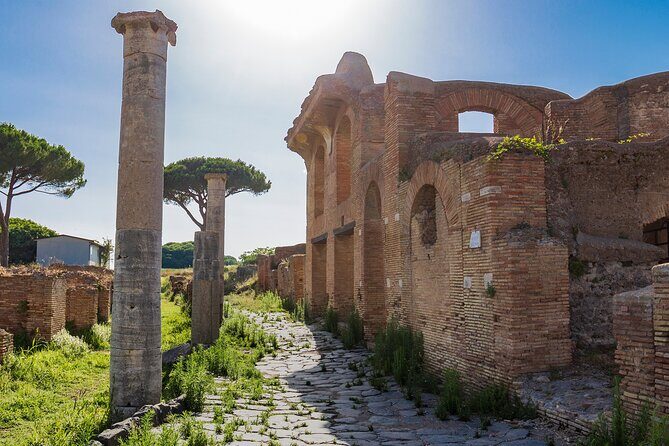
You start at Viale dei Romagnoli, 717, 00119 Roma RM with a 10:00 am start. The tour ends in the archaeological park area (not back at the first meeting spot). From there you can either head back to Rome or go one stop further to Ostia Lido.
That last option is handy. Two hours is a clean chunk of time, but it also leaves you flexible. If you want more than ruins, you can keep the day going. If you want a calm return, you’re free to go right back.
What “2 hours” means on the ground
Two hours in an archaeological park is plenty to cover:
- Major public buildings
- High-impact areas like baths and theatre zones
- The “this is how the city worked” story beats
But it’s not enough to become a catalog of every inscription. If you’re the kind of person who likes to stop for long periods at each wall, plan to do a bit of self-guided roaming after the tour ends.






Stop-by-Stop Breakdown: What You’ll Actually See
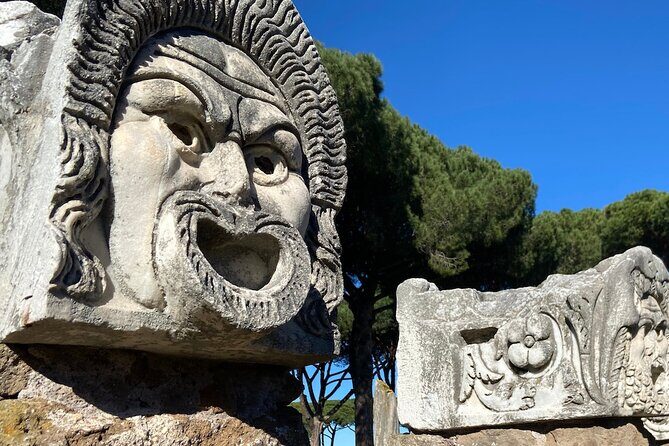
The highlights are built around a realistic picture of Roman city life. Instead of hopping randomly, the route gives you a sequence: public life → daily life → bathing/comfort → and the spaces where people gathered and went to work and eat.
Theatre: Public life without the museum fog
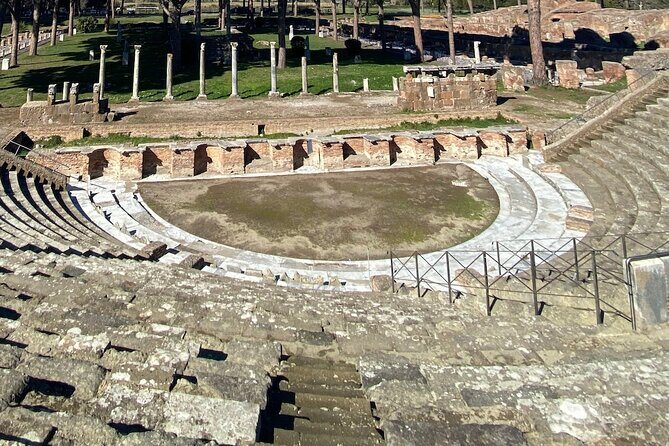
Roman theatres were about more than entertainment. They were social. They were also civic theater—people showing up, seeing friends, and being reminded that the city had institutions.
In Ostia, the theatre works because it sits inside an urban landscape. You’re not looking at a single landmark isolated from context. You’re seeing how performance space fits next to housing blocks and practical city areas. Even if you don’t catch every architectural detail, the sheer fact that a theatre belongs to daily routine helps you understand the city’s energy.
Multi-storey apartment buildings: How people actually lived
One of the best parts of Ostia Antica is that you don’t only look at grand buildings. You see housing: multi-storey apartment buildings. That detail makes Roman life feel less distant. If you picture Rome only in terms of villas and emperors, these apartments correct that.
You’ll be able to imagine:
- regular, dense urban living
- shared public rhythms (walking routes, foot traffic, access to services)
- the way a city could grow complex without feeling like a modern metropolis
Forum: The center of daily decisions
The forum is where a Roman city did business with itself. It’s where people would meet, talk, handle civic stuff, and keep things moving. In Ostia, the forum area is powerful because it connects the dots between trade, commerce, and community.
This is where you start to see why the port mattered. When goods move, people follow. And when people follow, they need services, storage, workspaces, and everyday places to eat and shop.
Antique bakeries and inns: Food and travel logic
One of the most charming parts of this site is that it recognizes how hungry cities are. The tour highlights antique bakeries and inns, which turns the city into something you can smell in your head (even if you definitely won’t be eating ancient bread today).
What you’ll appreciate is the practical function:
- bakeries feed locals
- inns support visitors, workers, and the movement of goods and people
- these stopovers are part of the infrastructure of trade
This is the kind of Roman detail that makes Ostia feel human. You’re not only learning about governments—you’re walking through the “where do people eat?” logic of an ancient port.
Neptune thermal baths: Comfort and routine, not luxury
Roman baths weren’t just self-care. They were social infrastructure. The tour includes the Neptune thermal baths, and that’s a highlight for a reason. Baths were where people spent time, talked, and processed the day.
Even with limited time, you can learn a lot by looking at how the bath complex is positioned and how it relates to the surrounding city life. It tells you that comfort and routine were part of daily urban culture—so the city wasn’t only about labor and shipping.
Latrines: The unglamorous detail that feels real
The inclusion of latrines is a sign of a good tour. It’s easy to skip these parts when you want “pretty ruins.” Ostia’s latrines help you picture logistics: waste, water management, and the fact that city life solved uncomfortable problems with built space.
It’s also one of those stops that makes your imagination work fast. Suddenly the city isn’t a backdrop—it’s a place that handled real bodies and real needs.
Guides Matter: What Made the Best Ones Work
From the experience feedback, the tour shines when the guide can tie stones to stories. Two names show up clearly in Ostia-related praise: Philip and Rob Miller.
- Philip is described as an archaeologist who knows the site deeply and can bring history to life in a very concrete way. That kind of guide helps when you’re standing in front of structures and wondering what you should even be looking at.
- Rob Miller is praised for storytelling and for guiding people through the site after a Rome-to-Ostia train connection. When a guide also handles pacing—keeping the walk moving while answering questions—it makes a short tour feel complete.
Headsets help here. When you can hear clearly, you catch the meaning behind the buildings, not just random facts. In a 2-hour outing, that difference is huge.
One caution on expectations
A minority of feedback points to feeling the information was too superficial or that the enthusiasm didn’t match the site. That’s not something you can totally control, but it’s a fair warning if you’re the type who hates vague answers. If you prefer dense explanations, show up ready to ask questions and don’t be shy about clarifying what you want to understand.
How to Plan Your Day Without Stress
This is an excursion-style tour: you go out, you see a lot, and you come back (or move on to the beach area if you want). That structure reduces stress.
Transport and timing
Since transport isn’t included, your smooth day depends on how you get to the meeting point and then out to the park. The tour description says it’s easy to reach by train, which is ideal. You’ll want to build in extra buffer time around Rome traffic and station confusion.
Because the tour starts at 10:00 am, try not to schedule anything that same morning that could make you late. If you’re coming from a hotel in central Rome, give yourself a little cushion.
Bring the essentials
Snacks aren’t included, so pack something small. Also bring water, since you’ll be walking outside on a real archaeological site. Wear shoes with grip because stone and uneven ground are normal here.
What Makes Ostia Antica a Better “First-Time” Choice Than a Second Time in Rome
Rome can feel like an endless highlight reel: you’re always doing the next big monument. Ostia Antica changes the tone. It slows you down in a different way.
Here’s what I think you’ll find most satisfying:
- You learn how a port city actually worked (not just what it looked like).
- You see social spaces (theatre, forum) next to everyday spaces (bakeries, inns).
- You get housing reality via multi-storey apartment buildings.
- You’re reminded that history isn’t only wars and rulers—it’s baths, meals, and daily routines.
And because the site continued into late antiquity, your mental timeline has less of a single “end date” feeling than Pompeii. Instead of disaster ending life abruptly, you see a city with long-lived layers.
Should You Book This Tour?
Yes, if you want an efficient, guided introduction to a Roman city that feels more lived-in than most “ruins-only” stops. The combo of German-speaking city guides, headsets, and entrance tickets included makes it a low-risk way to get real interpretation in a short time.
You might skip it (or at least add extra self-guided time after) if:
- you want a very long, slow archaeology lesson
- you’re hoping for indoor museum comfort
- you’re very sensitive to how much you hear on a guide-by-guide basis
If your goal is a smart half-day that takes you outside Rome’s main crowds and gives you a vivid sense of how people worked, ate, bathed, and gathered—this is a strong choice.
FAQ
FAQ
How long is the tour?
It runs for about 2 hours.
What’s the start time?
The tour starts at 10:00 am.
Where do I meet the guide?
The meeting point is Viale dei Romagnoli, 717, 00119 Roma RM, Italy.
Where does the tour end?
It ends in the archaeological park area. From there, you can return to Rome or go one stop further to Ostia Lido.
Is the entrance fee included?
Yes. Entrance tickets to Ostia Antica are included.
Are headsets provided?
Yes. Headsets are included so you can hear the German-speaking guide clearly.
Is transport included?
No. Transport is not included.
What should I bring since snacks aren’t included?
Snacks are not included, so it’s smart to bring your own. Water and comfortable walking shoes are also a good idea for an outdoor archaeological park.
Is there a cancellation refund?
The experience is non-refundable and cannot be changed for any reason. If you cancel or ask for an amendment, the amount paid is not refunded.