REVIEW · 1-DAY TOURS
From Rome: Pompeii Day Trip by Fast Train and Car
Book on GetYourGuide →Operated by Through Eternity Tours · Bookable on GetYourGuide
Pompeii feels close up here. This day trip puts you in the ruins of a city buried and preserved by the eruption near Vesuvius, without the usual circus of long lines and guesswork. You’ll ride fast train from Rome to Naples, switch to a private driver, then walk into Pompeii with an expert archaeologist guide for an intimate, well-paced visit.
I especially like the smart train-to-car setup. It saves time and reduces stress compared with bus-only tours. The other big win is the skip-the-line entry plus a private group tour, so you can actually hear explanations and move at a human speed instead of getting swept along.
One thing to plan for: this is a real walking day. Expect steps and uneven walkways, and you can’t bring luggage or large bags, so pack light and wear shoes you trust.
In This Review
- Key things worth knowing before you go
- Getting from Rome to Pompeii: Termini to Napoli Centrale in about 1 hour 10 minutes
- The 9:30 start: how the driver handoff keeps your day from slipping
- Skip-the-line entry and a 2.5-hour archaeologist-led walk in Pompeii
- Forum Baths: where you get a feel for daily life
- Amphitheater of Pompeii: entertainment shaped by the city’s schedule
- House of the Faun and House of the Vettii: turning stones into neighbors
- Walking shoes, water, and how to pack light for the archaeological park
- Value check: why fast train, private car, and skip-the-line add up
- Who this Pompeii day trip suits best
- Should you book this Pompeii day trip?
- FAQ
- What time does the Pompeii tour start?
- How long is the train ride from Rome to Naples?
- Does the tour include skip-the-line entry?
- How long is the guided tour in Pompeii?
- What stops are included during the guided tour?
- What languages are the guides available in?
- Is the tour wheelchair accessible?
- What should I bring and what is not allowed?
- Can I cancel for a full refund?
Key things worth knowing before you go
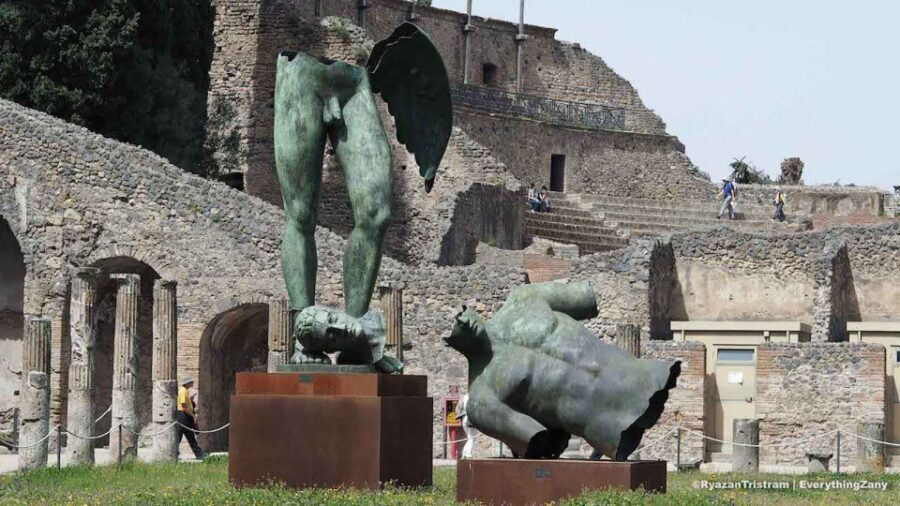
- Fast train + private car: You switch smoothly from Termini to Naples and onward to Pompeii.
- Skip-the-line entrance: You enter through a separate route and start the guided time faster.
- Expert archaeologist guide: You get context as you walk, not just photo stops.
- Private group pacing: No big clumps of people, so questions are easier and the tour feels calmer.
- 2.5-hour guided visit inside: Focused time for major highlights without a sprint.
- Wheelchair accessible, with caveats: It’s listed as wheelchair accessible, but the archaeological park has steps and uneven areas.
Getting from Rome to Pompeii: Termini to Napoli Centrale in about 1 hour 10 minutes

The best part of this trip starts before you even reach Pompeii. You leave Rome from Termini Station, and you’ll take a short train ride of 1 hour and 10 minutes to Naples. That timing matters because Pompeii visits can balloon fast once you add waiting, traffic, and ticket lines. Here, the schedule is built around getting you to the site with less friction.
Naples is also where the whole day becomes practical. Your private driver meets you at Napoli Centrale, right at the train platform. That means you don’t have to hunt for a taxi, decode signage, or play “which bus is this?” You’re handed off directly from train travel to car pickup.
It’s a simple pattern, but it’s the kind of pattern that makes the day feel doable. You’ll spend your energy on Pompeii, not on logistics.
You can also read our reviews of more tours and experiences in Rome



The 9:30 start: how the driver handoff keeps your day from slipping
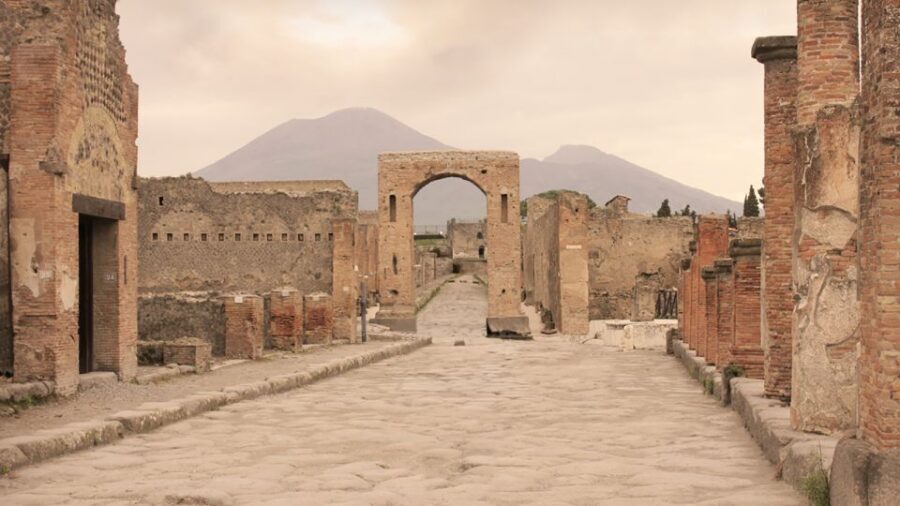
Your private tour starts at 9:30 AM. Meeting works in two steps: you depart from Rome (Termini Station), then the driver meets you at Napoli Centrale to take you and your guide to Pompeii Scavi.
Why I like this format for day-trippers: it keeps the day structured. A lot of Pompeii trips turn into “meet at some time, figure it out, hope the guide is here.” This one is more organized, because the driver’s role is clearly defined as the bridge between train and site.
Also, you’re not just getting transportation. You’re getting local coordination. The driver can handle the Naples-to-Pompeii portion without you needing to understand the route yourself. After the tour, you return to Napoli Centrale in time to catch your train back to Rome.
One note from a review: one guide/driver combination even went the extra mile and took the group around Naples for pizza and coffee after the Pompeii stop. That’s not guaranteed in the tour description, but it does give you a sense of how the private element can create flexibility if your driver is in a good mood and the timing works.
Skip-the-line entry and a 2.5-hour archaeologist-led walk in Pompeii

Once you reach the site, you skip the long entry lines using a separate entrance. Then you’re escorted directly inside for an intimate 2.5-hour guided tour.
The guide is an archaeologist (expert archeology focus is part of the experience), and that changes the whole vibe. Ruins can turn into a scatter of stones if no one explains what you’re looking at. With an archaeologist leading the tour, you get the why behind the layout and the way Pompeii was used—so the site feels like a living place rather than a giant open-air museum.
This is also where private group time really helps. Instead of listening from the back of a crowd, you’ll be in a group small enough to hear explanations clearly and ask questions when something catches your eye. You’ll walk through the abandoned streets of the ancient city buried in lava and ash on that fateful day in 79 A.D. The guide keeps that timeline meaningful as you move.
Expect walking. Even with guidance, you’re traversing a large archaeological park. Steps and uneven ground are part of the bargain, so comfortable shoes are not optional.
Forum Baths: where you get a feel for daily life
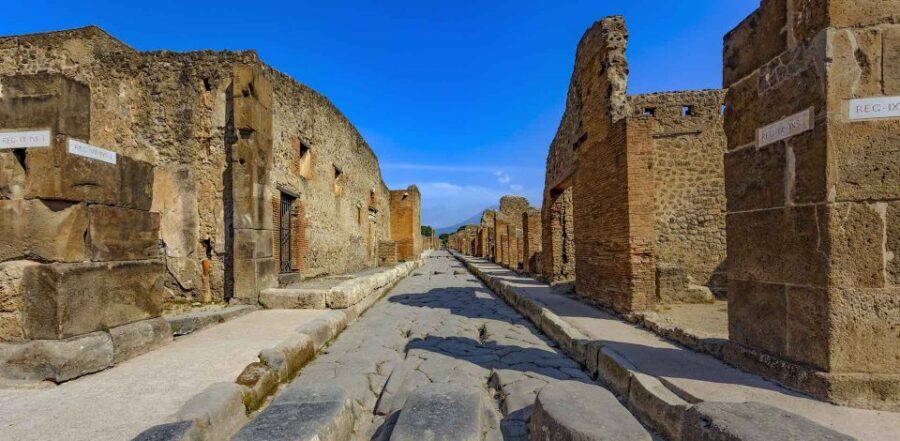
One of the listed stops is the Forum Baths. Even if you’re not trying to memorize every detail, this kind of stop matters because it anchors Pompeii in routine. Baths were part of everyday civic life, and a guided pause here helps you understand that the city wasn’t built just for monuments. People lived, washed, chatted, and did ordinary things inside a very structured urban plan.
A guided visit also helps you read the space. In a place like Pompeii, it’s easy to see walls and columns and miss the rhythm of movement. A good archaeologist guide turns the route into a story: where people would gather, how the space functioned, and how that connects to the broader layout.
The practical takeaway for your legs: this is one of the stops you’ll likely spend time at without racing through. If you tend to rush, remind yourself this is a guided experience, and slow down just enough to absorb the explanations.
Amphitheater of Pompeii: entertainment shaped by the city’s schedule
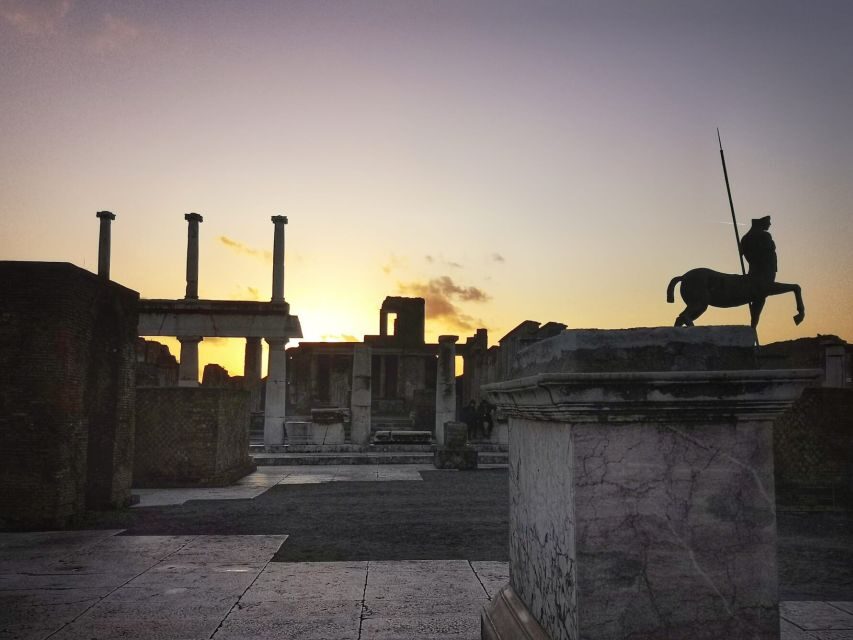
Next up on the itinerary is the Amphitheater of Pompeii. The name alone tells you the angle of the stop: this is the civic entertainment side of town. It’s the kind of place that helps you picture Pompeii as more than a set of ruins. You can get a sense of how communal gatherings and public events fit into daily life.
From a visitor standpoint, an amphitheater stop has another advantage. It often gives you an orientation moment. Even in a well-signposted site, it’s easy to lose your bearings after walking through multiple streets. A big focal structure helps you understand how different areas connect.
The drawback? If you’re sensitive to crowds, even on private tours you’ll be sharing space with other visitors. Pompeii is popular, and the amphitheater is a magnet. The tour’s private pacing helps, but you still might see foot traffic around major landmarks.






House of the Faun and House of the Vettii: turning stones into neighbors
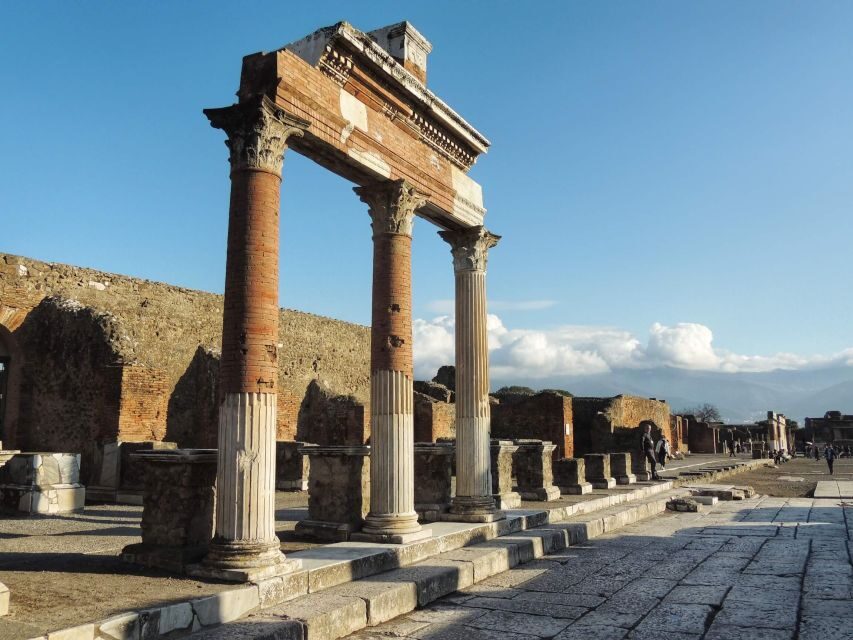
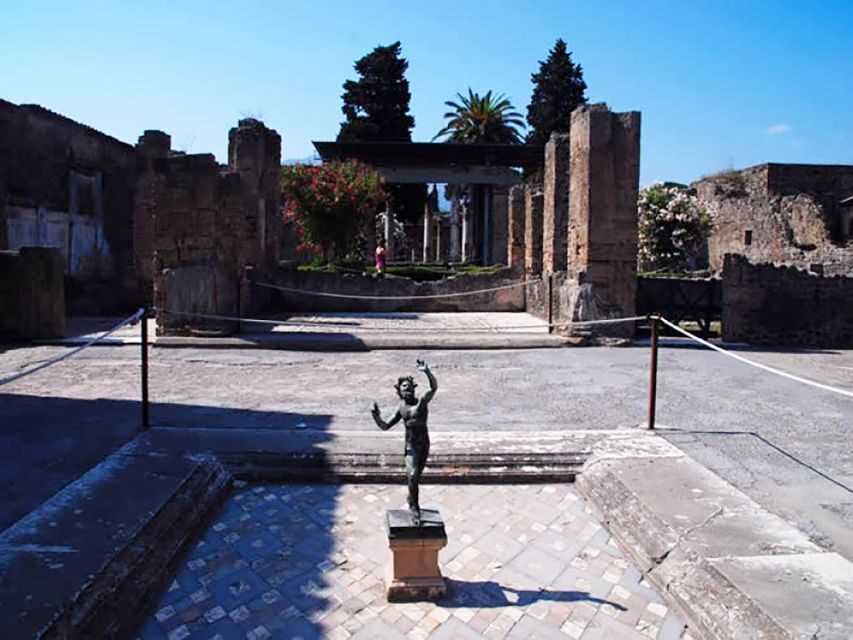
The itinerary includes two house visits: the House of the Faun and the House of the Vettii. This is where Pompeii shifts from public spaces to private life. Houses like these are a strong reminder that Pompeii wasn’t only temples, streets, and civic buildings. It was families, routines, and social spaces—people living their days behind thresholds that are now open to the world.
In practical terms, house visits are also the best antidote to the “ruins blur together” problem. Public sites can feel similar after a while, but domestic spaces tend to have a different atmosphere. Even without getting lost in architectural trivia, you’ll likely notice how the guide explains daily living patterns: where people might have spent time, how rooms connect, and how social status could show up in the home.
Why I think this stop combo works for most visitors: it gives you balance. A Pompeii day trip can easily overfocus on the biggest monuments. Here you get both civic anchors (like the amphitheater and baths) and domestic reality (these houses). That mix helps Pompeii feel human.
Also, you’ll probably appreciate that the tour is built as a sequence. You’re not sent wandering alone. The guide’s route keeps the experience coherent, so the houses feel like part of a connected story instead of separate photo targets.
Walking shoes, water, and how to pack light for the archaeological park
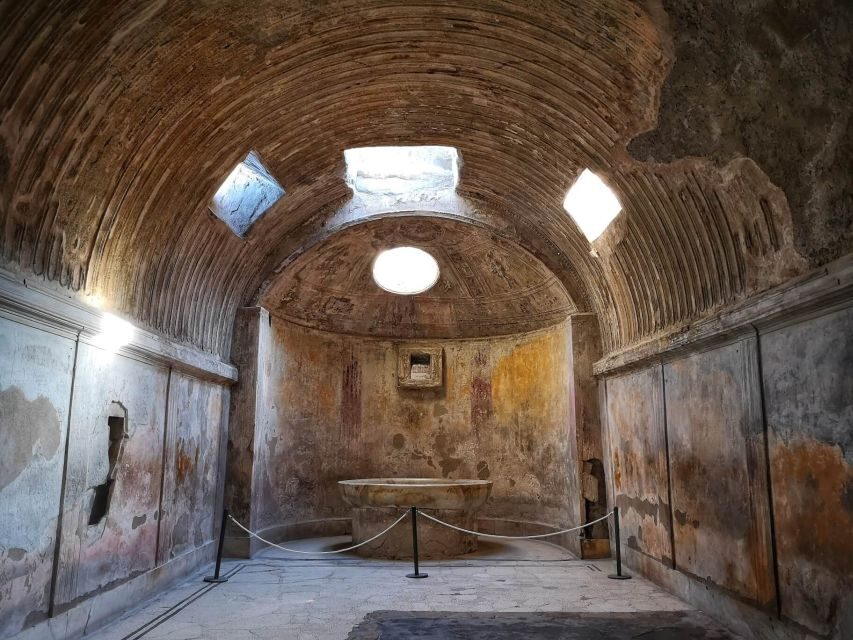
This tour is explicitly a walking experience through an archaeological park with steps and uneven walkways. So here’s the no-drama advice that matters:
- Wear comfortable shoes with real grip.
- Bring a bottle of water.
- Pack light because luggage or large bags aren’t allowed.
That last point can surprise people. Pompeii isn’t a place for dragging a suitcase around, and the rules reflect that. If you’re traveling from Rome that day, plan to carry only what you need for a few hours on foot.
If you have mobility concerns, you should flag them ahead of time. The tour notes that accommodations can be best arranged when the operator knows about mobility needs. It’s listed as wheelchair accessible, but archaeological sites always come with real-world obstacles. The earlier you communicate, the smoother the day tends to be.
Value check: why fast train, private car, and skip-the-line add up
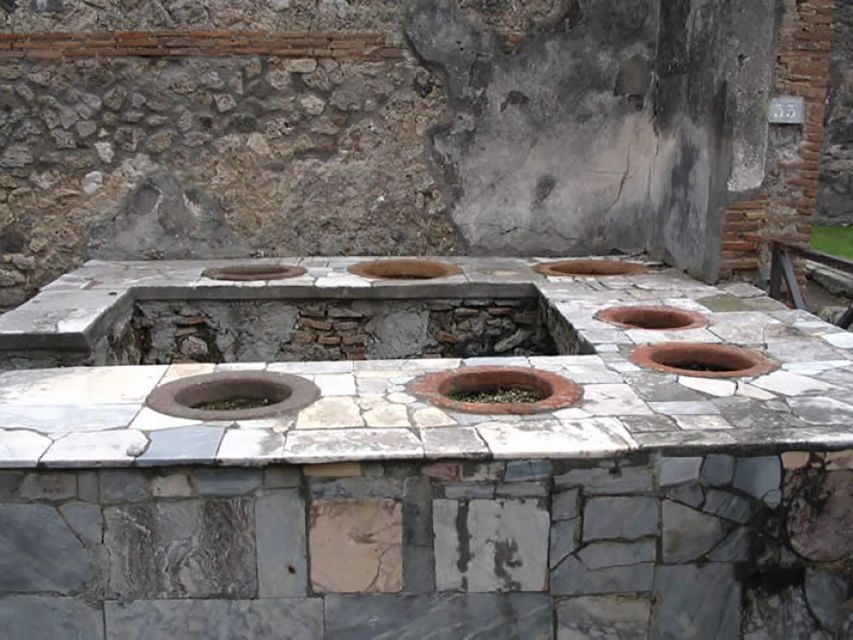
This isn’t just a “see Pompeii” ticket. The value comes from the number of problems the tour handles for you:
1) Less travel friction. A short rail ride from Rome to Naples plus a private car handoff means fewer delays than bus-only schedules and less waiting around. The private driver also keeps the handoff simple.
2) Time saved at the site. Skip-the-line entry through a separate entrance is the kind of benefit you feel immediately. It protects the most valuable resource you have on a day trip: your limited time in Pompeii.
3) A guide with context. With a guided tour through major stops, you’re not left to guess what you’re looking at. An archaeologist guide is a big deal in a place where “stone + label” can still leave you wondering what it meant.
4) Private group comfort. Private group tours can be a lifesaver if you don’t want to fight for sight lines or listen to instructions from across the crush.
One more value point from a review: the private driver experience can be more than transport. In at least one case, the driver took the group around Naples after Pompeii for pizza and coffee spots. Even if you don’t count on that, it reinforces that private service often feels more flexible in practice.
Who this Pompeii day trip suits best
This tour is a strong fit if you want:
- A small, private group experience instead of a large bus tour crush
- Skip-the-line entry and a guided route through key areas
- An efficient day plan using fast train plus private car service
- A guide-led explanation in English or Italian
It’s also a great match if you like the idea of pairing Pompeii with the looming presence of Vesuvius and want the story of 79 A.D. to make sense as you walk. Pompeii hits harder when you understand what happened and why the city survived in such a preserved state.
If you’re the type who hates tight schedules, keep in mind the day is organized around train timing. You’ll return to Naples to catch your train back to Rome. Plan to stay focused on the schedule rather than lingering too long outside the planned flow.
Should you book this Pompeii day trip?
Yes, I’d book it if your priorities are clear: time efficiency, private-group pacing, and a guided Pompeii route. The fast train plus private driver setup is built for real day-trippers who don’t want to lose half the day to getting stuck in traffic or lines.
You might skip this option if your biggest priority is maximum independence. If you want to roam on your own for hours without following a structured route, you’ll want a different style of ticket. Also, if walking is difficult for you, you’ll need to think carefully about steps and uneven walkways even with accessibility support.
Overall, this tour feels like the practical version of Pompeii. You get inside efficiently, you get guided time in the ruins, and you come back to Rome without turning the day into a logistics puzzle.
FAQ
What time does the Pompeii tour start?
The private tour starts at 9:30 AM.
How long is the train ride from Rome to Naples?
The train trip from Rome Termini Station to Naples takes 1 hour and 10 minutes.
Does the tour include skip-the-line entry?
Yes. You’ll skip the line through a separate entrance and be escorted directly inside Pompeii.
How long is the guided tour in Pompeii?
The guided tour inside Pompeii lasts 2.5 hours.
What stops are included during the guided tour?
The listed stops include Forum Baths, the Amphitheater of Pompeii, the House of the Faun, and the House of the Vettii.
What languages are the guides available in?
The live guide is available in English and Italian.
Is the tour wheelchair accessible?
It is listed as wheelchair accessible. The park involves steps and uneven walkways, so it’s best to advise the provider about mobility concerns.
What should I bring and what is not allowed?
Bring comfortable shoes and a bottle of water is strongly recommended. Luggage or large bags are not allowed.
Can I cancel for a full refund?
Free cancellation is available up to 24 hours in advance for a full refund.