REVIEW · MUSEUMS
Florence: Uffizi Gallery Small Group Guided Tour
Book on GetYourGuide →Operated by Italy Wonders · Bookable on GetYourGuide
You feel the Renaissance before you even enter. This small-group Uffizi Gallery tour is built around a tight 1.5-hour guided route through the museum’s biggest hits, so you’re not wandering and guessing. I like the skip-the-line setup because it saves you from the worst waiting moments. I also like the pacing, which keeps the art coming without turning the visit into a speed-run. One thing to keep in mind: during high season, security lines can still be longer, so arriving on time matters.
You’ll start at Piazzale degli Uffizi and get a guided walkthrough of works like Botticelli’s The Birth of Venus, Michelangelo’s Tondo Doni, and Caravaggio’s dramatic realism. If your guide happens to be Mateo (a standout name mentioned with this tour), you’ll likely get clear, practical storytelling rather than vague art-speak. The main drawback is simple: there’s no hotel pickup, so you’ll need to get to the meeting point yourself.
In This Review
- Key highlights worth your time
- First stop: lining up at Piazzale degli Uffizi
- Getting into the Uffizi fast: skip-the-line done the practical way
- Your 90-minute Uffizi route: how the highlights fit together
- Botticelli: The Birth of Venus and Primavera in context
- Michelangelo’s Tondo Doni: form, focus, and why it hits
- Caravaggio’s drama: realism you can feel
- Titian and Raphael: closing with two different kinds of beauty
- What the guide actually does for you
- Duration and pacing: why 1.5 hours is a sweet spot
- Logistics that affect your day (and how to handle them)
- Value check: is $100.40 worth it?
- Who this tour suits best
- Should you book this Uffizi Gallery small-group tour?
- FAQ
- FAQ
- What’s the duration of the Florence Uffizi Gallery guided tour?
- Where do I meet the host?
- Where does the tour end?
- Does the tour include skip-the-line entry?
- What’s included in the price?
- Are hotel pickup and drop-off included?
- What languages is the guide available in?
- Is the tour accessible for wheelchair users?
- Is it okay to bring unaccompanied minors?
Key highlights worth your time
- Skip-the-line entrance through a separate route, so you can start faster than self-guided lines
- A focused 1.5-hour visit that hits major masterpieces instead of spreading thin across the whole museum
- Botticelli spotlight with The Birth of Venus and Primavera to ground you in Florentine Renaissance style
- Michelangelo + Caravaggio pairing that contrasts idealized form with raw, dramatic emotion
- Titian and Raphael stops so you see how the Uffizi collected the big names across styles
- Live guide in Spanish, Italian, or English to help you actually see what matters
First stop: lining up at Piazzale degli Uffizi
This tour meets at Piazzale degli Uffizi, at the Andrea Obgagna statue. The directions are specific: look for the first statue on the left, in the corner between Piazzale degli Uffizi street and Via della Nina street. It’s easy to miss if you don’t arrive early, so I recommend showing up about 10 minutes before the start.
Why that detail matters: Uffizi entry depends on organization. If you’re late, you can get separated from the group timing and lose the advantage of the skip-the-line entrance. Once you’re with the host, the tour keeps moving toward the gallery and the security process.
Also, high season can mean longer waiting times for security. This is not something the tour can magically erase, but starting on schedule and following the meeting instructions gives you the best shot at a smooth entry.
You can also read our reviews of more guided tours in Rome



Getting into the Uffizi fast: skip-the-line done the practical way
The big promise here is skip-the-line entrance. That means you use a separate entrance rather than blending into the general queue. For most people, that’s the difference between enjoying art and spending your energy staring at paperwork, stanchions, and timelines.
Realistically, you should still expect security checks. The tour is set up to reduce museum-line friction, not remove security entirely. When you plan your day, treat this like an entry win that helps you start your 1.5-hour visit sooner.
Tip: plan something close by for after. The tour ends back at the meeting point, so you’ll want to avoid booking something across town that depends on you exiting exactly on time.
Your 90-minute Uffizi route: how the highlights fit together
A 1.5-hour tour doesn’t try to show everything. That’s the point. The Uffizi is huge, and without a plan you can end up spending most of your time walking. Instead, you get a guided route built around landmark works tied to major Renaissance names.
Here’s how the time typically feels: you’ll spend enough minutes at each stop to actually look—not just pass by. The guide keeps the stories clear and connected, so the paintings start talking to each other rather than feeling like random masterpieces pinned to walls.
The tour is also small-group. Even without a stated group size, small usually means you don’t get lost in a crowd at the wall. It also helps the guide keep an eye on everyone so the schedule stays steady. The result is a visit with momentum.
Botticelli: The Birth of Venus and Primavera in context
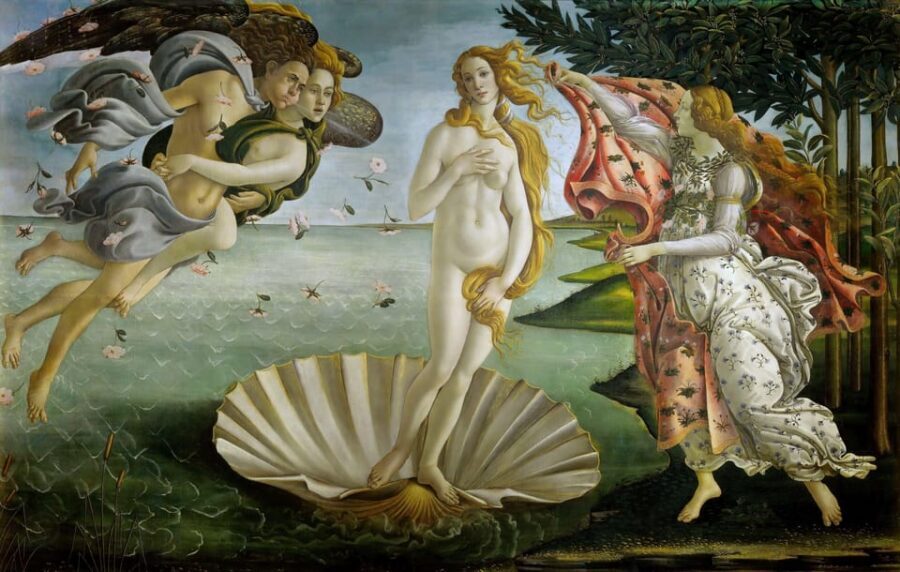
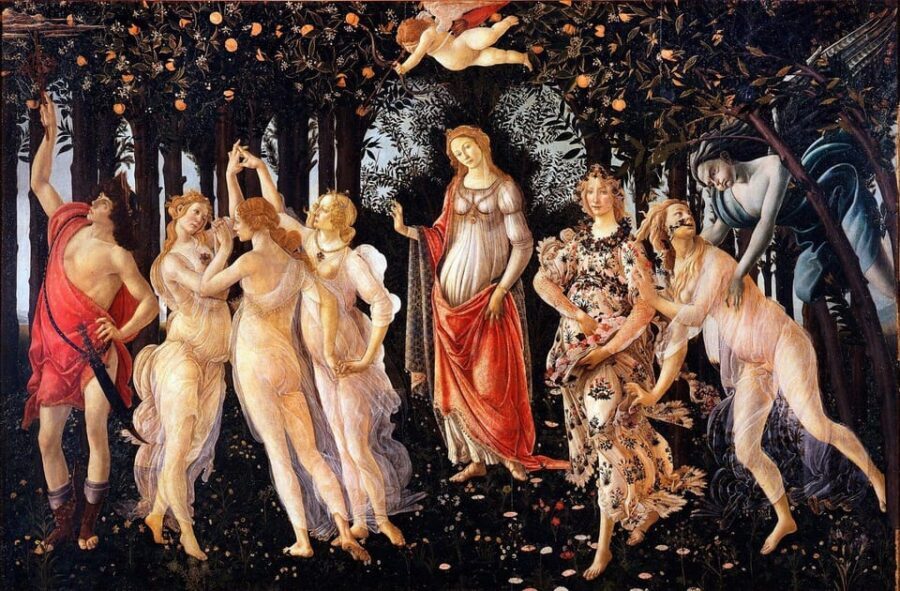
Botticelli is the kind of artist you see and instantly recognize, even if you didn’t grow up studying art. This tour gives you that effect by focusing on two touchstones: The Birth of Venus and Primavera.
What I like about having these together is that they work like bookends for how Botticelli’s imagery feels. The Birth of Venus is iconic and instantly captivating, and it’s the kind of painting where a good guide helps you notice the details that make it more than a famous image on a postcard. Then Primavera shifts the mood into allegory and symbolic richness, which can otherwise feel confusing if you’re standing there alone.
With a guide, you’re not just asking what you’re seeing. You’re learning how to look. That makes a huge difference when the room is busy and people are pointing at the painting from far away.
A practical note: these popular works draw crowds. When the group arrives, you’ll get a moment to center yourself before the room fills in around you. That’s one more reason “organized and good pace” matters on this kind of tour.
Michelangelo’s Tondo Doni: form, focus, and why it hits
Stop after Botticelli takes you into Michelangelo territory, with Tondo Doni as the named highlight. The word tondo means circular format, and seeing it in person is a different experience than seeing it in a book. You have to look differently—your eye tracks in a tighter space, and the composition feels more concentrated.
This is one of those stops where a guide helps you separate what’s impressive at first glance from what rewards a second look. In short: you learn what to notice quickly, then you can let your eyes do the rest.
If you’re the type who loves seeing artistic techniques up close, this is a strong reason to book a guided tour instead of going solo. Without context, you might only pick up the headline features. With context, you start to notice relationships—between faces, gestures, and the overall structure.
You can also read our reviews of more museum experiences in Rome




Caravaggio’s drama: realism you can feel
The tour also calls out Caravaggio’s dramatic realism, with a focus that includes his famous emotional intensity. Caravaggio is a very specific kind of painter: the body language, the light, and the sense of immediacy feel less like mythology and more like a scene you could walk into.
This stop works well because the Uffizi collections are famous for high Renaissance and mythological imagery. Caravaggio’s approach can feel like a punch of human reality. On this tour, the guide helps you make that contrast quickly, so you don’t just think Caravaggio is different—you understand why it feels that way.
Even if you’re not a hardcore art nerd, you’ll probably know what this means the moment you stand in front of one of his works: it’s not polite. It’s direct.
Titian and Raphael: closing with two different kinds of beauty
The final stretch of the highlight list includes Titian’s Venus of Urbino and Raphael’s Madonna of the Goldfinch. These two bring different emotional tones.
Titian’s Venus of Urbino is sensual and grounded in the way it’s presented. A guide helps you see the painting as something more than a famous nude figure. You start paying attention to the staging, the mood, and the way the image commands your attention without needing a “story” in the literal sense.
Then Raphael’s Madonna of the Goldfinch leans more toward gentle clarity and religious tenderness. If you’ve been thinking about paint styles and composition, this is a nice way to finish: you get a sense of how Raphael’s work balances calm structure with warmth.
Why ending with these matters: the Uffizi can feel overwhelming if you try to brute-force it. A guided route that ends with major names gives you a satisfying finish, and it makes the earlier stops feel less scattered.
What the guide actually does for you
This tour includes a license guide, and that’s important. The difference between a “look at this painting” experience and a good guide is time spent helping you see.
From the way this tour is described, the guide brings the works to life with stories and insights rather than dumping a timeline. And the guide’s language options—Spanish, Italian, English—mean you’ll have a better chance of catching the key points clearly.
Also, one highlight name associated with this tour is Mateo. Even if your guide isn’t Mateo, the fact that a specific guide name is singled out is a good sign that this provider pays attention to quality and delivery, not just check-in logistics.
Duration and pacing: why 1.5 hours is a sweet spot
For first-timers, 1.5 hours is a manageable time block. It’s long enough to take in big works like Botticelli, Michelangelo, Caravaggio, Titian, and Raphael without rushing. It’s short enough that you don’t end the day feeling museum-fatigued.
I also like that it’s built for art lovers. If you love Florence but art is your real focus, this fits nicely between other sightseeing plans. If you’re more of a “quick highlights” visitor, the tour still works because it doesn’t demand you understand every aspect of Renaissance history to enjoy what’s on the wall.
Logistics that affect your day (and how to handle them)
Here’s what you need to know so the experience stays smooth:
- No hotel pickup or drop-off, so your day needs a plan for getting to the meeting point.
- The tour ends back at the meeting point, so don’t build a tight connection far away.
- Security can take longer during high season. That’s the one thing you can’t fully control, so give yourself a bit of buffer.
- You must meet the host at the Andrea Obgagna statue spot, and you should arrive 10 minutes early.
One more key rule: unaccompanied minors aren’t allowed. If you’re traveling with kids, this matters for choosing the right tour.
Value check: is $100.40 worth it?
At $100.40 per person, this isn’t a budget add-on. So you’re paying for three main things:
- A live, licensed guide who helps you understand what you’re seeing.
- A small-group pace that makes the time at each masterpiece count.
- Skip-the-line entrance, which can genuinely improve your experience at a museum that’s often crowded.
If you’re the type who can wander museums for hours and enjoy reading wall labels, you might question the price. But if you want to see the Uffizi’s biggest names with guidance, and you want to reduce the time lost to entry lines, this price can feel fair.
For me, the best argument is the time. In 1.5 hours, you’re not just doing “a museum visit.” You’re doing a targeted, high-impact art session with organization built in.
Who this tour suits best
This works well if you:
- Want the Uffizi’s top masterpieces without spending a full day inside
- Prefer a plan over wandering aimlessly through rooms
- Like your art with context and storytelling, not just captions
- Need the convenience of skip-the-line entry
It may not be the best match if you:
- Want to explore the Uffizi completely at your own pace for hours
- Need flexibility to stay longer at every room you find interesting
- Are traveling with unaccompanied minors, since that isn’t allowed
Should you book this Uffizi Gallery small-group tour?
I’d book it if you want a fast, high-value art focus and you know you’ll enjoy Botticelli, Michelangelo, Caravaggio, Titian, and Raphael. The combination of skip-the-line access, a tight 1.5-hour route, and a live guide is exactly the kind of structure that turns a famous museum into a satisfying visit.
If you’re on the fence, use this test: if you’re likely to spend money or time just to reduce chaos at entry, then the $100.40 feels easier to justify. If you’re the kind of visitor who wants to “read everything and linger everywhere,” you might prefer going independently and building your own route.
FAQ
FAQ
What’s the duration of the Florence Uffizi Gallery guided tour?
The tour lasts 1.5 hours.
Where do I meet the host?
Meet the host in front of the Andrea Obgagna statue in Piazzale Degli Uffizi, at the first statue of the left in the corner between Piazzale degli Uffizi street and Via della Nina street.
Where does the tour end?
The activity ends back at the meeting point.
Does the tour include skip-the-line entry?
Yes. It includes skip-the-line entrance to the Uffizi Gallery through a separate entrance.
What’s included in the price?
Included are skip-the-line entrance and a license guide.
Are hotel pickup and drop-off included?
No. Hotel pickup and drop-off are not included.
What languages is the guide available in?
The live guide is available in Spanish, Italian, and English.
Is the tour accessible for wheelchair users?
Yes. The tour is wheelchair accessible.
Is it okay to bring unaccompanied minors?
No. Unaccompanied minors are not allowed.