REVIEW · MUSEUMS
Doria Pamphilj Gallery and Palace Private Tour
Book on Viator →Operated by Capitolium Tours · Bookable on Viator
One palace visit in Rome can change your eye. The Doria Pamphilj Palace is still privately owned, and your guide helps you read the baroque rooms like a living document instead of just pretty walls. I love how the tour focuses on context, not just objects. I also like that you get a real private guide feel—your pace, your questions, no milling around.
The main thing to keep in mind is that some of the city’s big sites may be under restoration during the Jubilee, so you’ll want to watch for any day-of updates. Also, this is a short visit, so you won’t “see everything in Rome”—you’ll see the right things, explained well.
In This Review
- Key highlights to look for
- Why Doria Pamphilj Palace feels like a smart Rome detour
- Getting there on Via del Corso: easy start, clean route
- Family Chapel: baroque storytelling in one focused stop
- Red and Yellow Rooms: seeing color as architecture
- Main Painting Gallery: where the art becomes a map
- How the private guide changes the whole experience
- Price, admission, and what $44 really buys you
- Timing tips for a smooth Jubilee-era palace visit
- Who this tour is best for
- Should you book this Doria Pamphilj Palace tour?
- FAQ
- How long is the Doria Pamphilj Palace private tour?
- Where is the meeting point for this tour?
- Does the tour include admission tickets?
- Is this tour private or group-based?
- What will I see during the visit?
- Is the tour near public transportation?
- Do I need good weather for this experience?
- During the Jubilee, could there be changes?
- Is cancellation free?
Key highlights to look for
- Privately owned palace access to a major art collection in Rome
- Family chapel visit with religious art tied to the family’s story
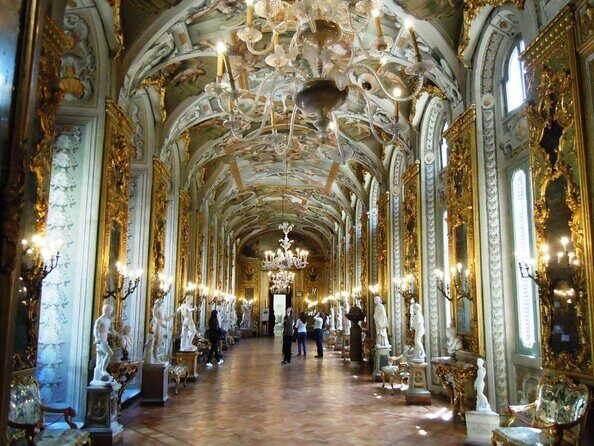
- Red and yellow rooms where color and design do the talking
- Main painting gallery explained with clear art-historical context
- Group discounts on a private tour format (price-per-person can get nicer)
- Inclusion of admission ticket so you’re not juggling extra steps
Why Doria Pamphilj Palace feels like a smart Rome detour
Rome has a lot of “big” museums where you move through rooms like you’re on rails. This tour is different because it’s inside a living-feeling palace—still connected to a princely family. That matters. You don’t just look at art. You see how status, faith, and taste were displayed through space.
The palace experience also helps with a common problem in Rome: the baroque can look flashy from the outside, but confusing up close. Here, the guide’s job is to translate the symbols and design choices. You start noticing patterns: what’s placed where, how light and color steer your attention, and how the family’s identity shows up in the decoration.
And yes, the setting is beautiful. Not in a postcard way. More like a “how did they even think this up?” kind of way. Expect ornate room details and a curated flow through the highlights.
You can also read our reviews of more private tours in Rome



Getting there on Via del Corso: easy start, clean route

Your meeting point is Via del Corso, 305 (00186 Roma RM). That’s a location you’ll recognize quickly if you’re already walking central Rome. The tour also notes it’s near public transportation, which is handy when you’re mixing this with other stops.
The format is straightforward: you meet, the guide takes your group in, and the tour ends back at the meeting point. That’s a big deal in Rome, where some attractions scatter you across the city. Here, you keep your day tidy.
One practical note: when you’re in a palace setting, things can move faster than you expect at entry points, and ticket situations don’t always go perfectly. One review I saw mentioned arriving directly at the ticket office without a reservation showing up, and the guide quickly found them and resolved it. So if anything feels off at first, don’t panic—flag it right away.
Family Chapel: baroque storytelling in one focused stop
One of the most interesting parts of the tour is the family chapel. Chapels in baroque palaces aren’t just spiritual spaces; they’re also identity spaces. In a single room, you often get layered meaning: devotion, family pride, and artistic ambition all tied together.
In practical terms, what you’re looking for is how the chapel is staged—how the space guides your attention and how artwork supports the atmosphere. With a private guide, you can ask the basic questions that make the art click: Why is this placed here? What does this style communicate? How does it fit with the palace’s broader look?
What I like about including the chapel in a short, 1 to 1.5 hour visit is that it gives the trip emotional range. You’re not only admiring. You’re also understanding why the family invested in this kind of setting.
If you’re the type who reads quickly and wants a fast “what am I looking at?” experience, this stop helps you get traction fast.
Red and Yellow Rooms: seeing color as architecture
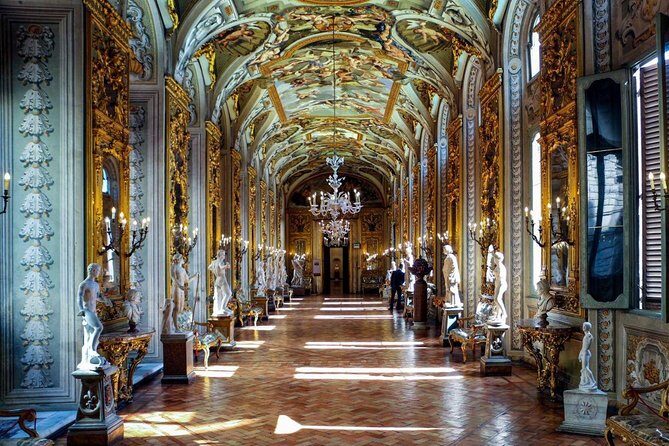
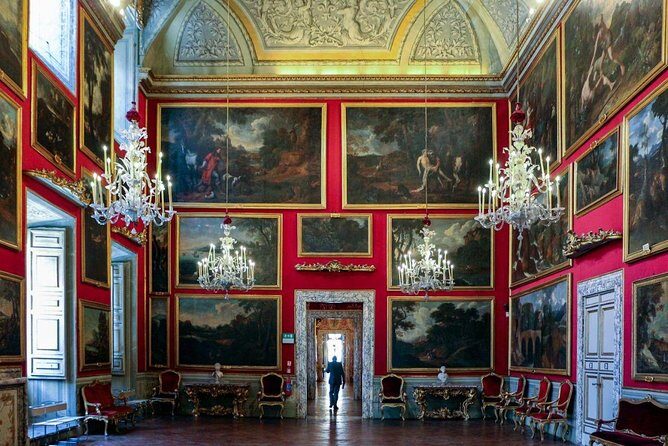
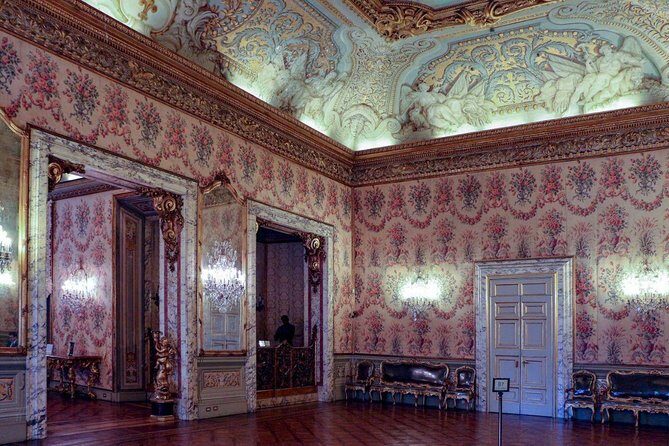
The tour includes the palace’s red and yellow rooms, which is a smart choice because these palettes aren’t random. In baroque interiors, color often works like a spotlight. It frames surfaces, shapes the mood, and makes the decorative details feel intentional rather than chaotic.
Here’s what you’ll want to watch for while you’re in these rooms:
- How the color changes your perception of the ceiling and walls
- How ornamentation looks different depending on where you stand
- How the guide connects the room design to baroque taste and display
The value of a guide in rooms like this is that they’ll point out what you’d otherwise breeze past. Without context, red-and-gold rooms can feel like they all blur together. With context, you start noticing the differences that are easy to miss when you’re just moving quickly.
A possible drawback: because the palace interior is the star, the tour is more about interpretation than about sweeping exterior views. If you’re craving rooftop views or big outdoor scenery, you may feel a little “locked in” indoors for part of the time.
Main Painting Gallery: where the art becomes a map
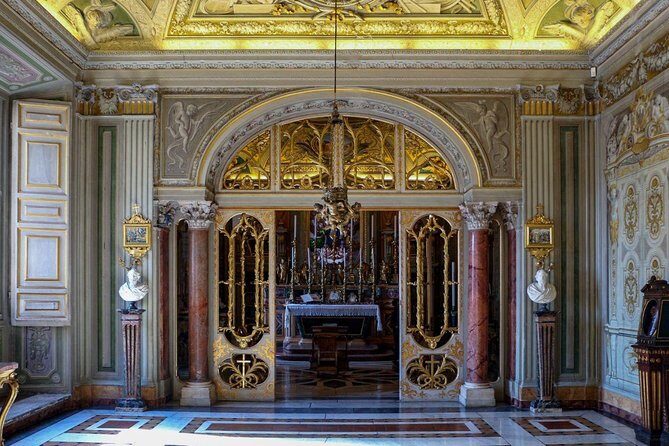
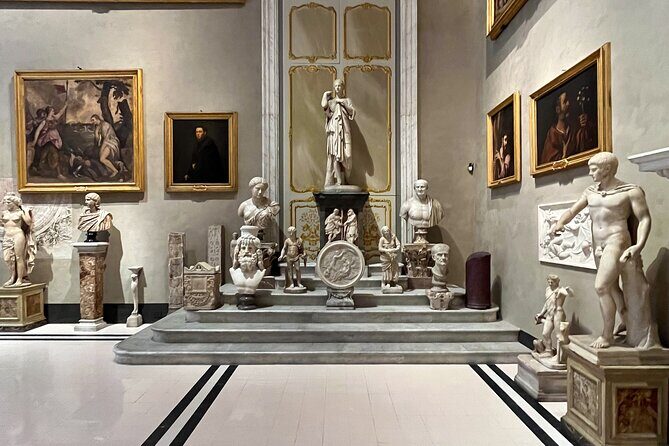
The main painting gallery is the payoff for art lovers. This is where your guide can connect the family’s collecting instincts to what you’re actually seeing on the walls. In palaces, artworks weren’t always displayed the same way museums do now. They were arranged to communicate ideas—status, refined taste, religious themes, power, memory.
With a private tour format, you can slow down on the paintings that catch your eye. You don’t have to pretend you’re interested in everything equally. If one artist or subject stands out, you can follow that thread with the guide’s explanations.
One review described the tour as fun and interesting with a knowledgeable guide, and that matches the best way to experience the gallery: treat it like a conversation. Ask how the collection connects to the palace and the family. Ask what the guide thinks you should look at first. You’ll get more out of the paintings if you’re not just staring, but learning how to look.
You can also read our reviews of more museum experiences in Rome





How the private guide changes the whole experience
This is a private tour, so only your group participates. That small detail matters more than it sounds, especially in Rome’s busy cultural sites. You’re not forced into someone else’s pace, and you can ask questions without feeling like you’re “holding the line.”
In reviews, the strongest praise focused on the guide experience: being knowledgeable, making the visit fun and interesting, and clearing up entry issues quickly. That tells you something important about value: you’re paying not just for access, but for interpretation and smooth problem-solving.
What you can do to get even more value:
- Go with 1 or 2 questions you already have about baroque art or palace interiors
- If you’re unsure where to look in a room, point it out and ask for a starting point
- Don’t try to take in everything—pick the rooms and paintings you care most about, then let the guide steer you
The duration—about 1 hour to 1.5 hours—is also a smart slot. It’s long enough for a real experience, short enough to not wreck your whole day.
Price, admission, and what $44 really buys you
The price is $44, with admission included. That’s a key detail for value in Rome. Some “cheap” tours turn into a more expensive day once you add entry fees and then scramble for tickets. Here, you already have the main ticket covered.
It’s also a private tour, which usually costs more than group museum entries. The listing notes group discounts, so if you’re traveling with a friend or family member and can share the cost, you’ll often come out feeling like you bought something more personal than a standard museum ticket.
So who gets the best deal? You’ll likely feel it if:
- You like palace interiors and baroque art, but want help understanding them
- You hate standing around with a headset and no chance to ask questions
- You want a compact Rome plan that still feels meaningful
If you only want casual wandering and you’re totally comfortable reading guidebooks on your own, you might skip a private tour. But if you want the art to make sense, this price is reasonable for the attention you get.
Timing tips for a smooth Jubilee-era palace visit
Rome’s Jubilee period can bring restoration work and site changes. The tour specifically warns that some monuments may be under restoration, and you may get messages about potential changes. That means your best move is simple: stay alert to updates after booking.
Also, the experience requires good weather. Since this is an indoor-heavy palace visit, you might think weather doesn’t matter—but it can still affect transit, scheduling, and connections around central Rome. If weather looks bad, keep flexibility in your broader day plan.
Most travelers can participate, and the meeting point is near public transportation, which helps if you’re juggling multiple neighborhoods in one day.
Who this tour is best for
This is a strong fit if you:
- Want a private guide explanation without a huge time commitment
- Like baroque interiors, religious art, and palace collecting
- Enjoy structured highlights more than open-ended wandering
It’s also good for couples and small families who want control over pacing. Because you stay together as a group, you can spend extra time where someone’s most curious.
If your travel style is strictly outdoors, with constant street scenes and long walking loops, you might pair this with nearby exterior attractions—but use it as your “indoors for a reset” stop.
Should you book this Doria Pamphilj Palace tour?
Yes, I’d book it if your goal is to understand what you’re seeing. The combination of palace context, chapel focus, and guided stops through the red and yellow rooms plus the main painting gallery is exactly the kind of plan that turns a short visit into a memorable one.
You should consider skipping only if you want pure self-guided roaming and don’t care about interpretation. Also, if you hate any indoor time, plan accordingly.
Overall, the value is strong for a private, guided palace visit with admission included, and the guide experience seems to be the real driver—especially when entry details don’t go perfectly on arrival.
FAQ
How long is the Doria Pamphilj Palace private tour?
It lasts about 1 hour to 1 hour 30 minutes.
Where is the meeting point for this tour?
The meeting point is Via del Corso, 305, 00186 Roma RM, Italy.
Does the tour include admission tickets?
Yes. The admission ticket is included.
Is this tour private or group-based?
It’s a private tour. Only your group will participate.
What will I see during the visit?
You’ll explore Palazzo Doria Pamphilj, including the family chapel, red and yellow rooms, and the main painting gallery (plus more within the palace).
Is the tour near public transportation?
Yes, the meeting area is near public transportation.
Do I need good weather for this experience?
Yes. The experience requires good weather, and if it’s canceled due to poor weather, you’ll be offered a different date or a full refund.
During the Jubilee, could there be changes?
Yes. Some monuments may be under restoration during the Jubilee, and you may receive messages about potential changes.
Is cancellation free?
Free cancellation is available up to 24 hours in advance for a full refund.