REVIEW · WORKSHOPS
Ancient Art Workshop: Fresco
Book on Viator →Operated by Officina delle Arti Antiche · Bookable on Viator
If you want Rome to feel hands-on, this workshop is a smart bet. You’ll recreate an ancient subject in fresco painting (and a mosaic detail), guided by Italian artists using materials similar to what was used long ago. It’s not about staring at art. It’s about making it, then walking out with your finished piece.
I particularly like the natural pigments approach and the way the lesson explains what makes fresco last. And I love that you can take your artwork home right away, which turns a fun class into a real souvenir instead of a flimsy memory.
One thing to consider: because it’s very hands-on and teacher-led, you’ll want to show up on time and plan around a two-hour slot. If your day is tight, that timing matters.
In This Review
- Key points to know before you go
- A hands-on workshop on the Appian Way
- What you make: Sistine Chapel-inspired fresco or Roman floor detail
- Inside the two-hour class: how the session flows
- One small practical note
- The instructors and why their guidance really matters
- Materials you can see, not just read about
- Rome value check: why this can beat another museum stop
- Getting there and timing your day on Metro A
- Who this workshop suits best
- Should you book Ancient Art Workshop: Fresco?
- FAQ
- How long is the fresco workshop?
- What’s included in the price?
- What does the class cover?
- Where is the workshop located?
- Do I need to speak Italian?
- Can children participate?
- Is it a private group activity?
- What’s the cancellation policy?
Key points to know before you go
- Natural pigments and plaster technique: you learn what helps the paint bond to the surface and endure.
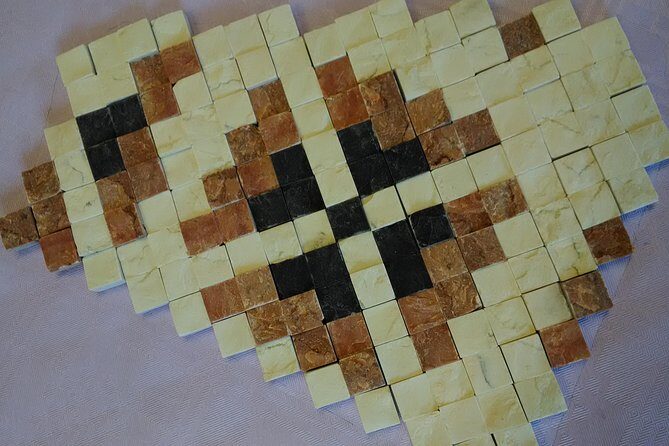
- Marble-tile mosaics using colored stone: the mosaic part uses colored marble tiles, not cheap stand-ins.
- Pick your subject: you can choose something inspired by the Sistine Chapel or a detail from a Roman floor.
- Small-group feel: priced per group (up to 2), which usually keeps the instruction personal.
- Instant take-home result: you finish with a finished piece you can leave with the same day.
- Family-friendly: designed for adults and children, including ages that enjoy creative activities.
A hands-on workshop on the Appian Way
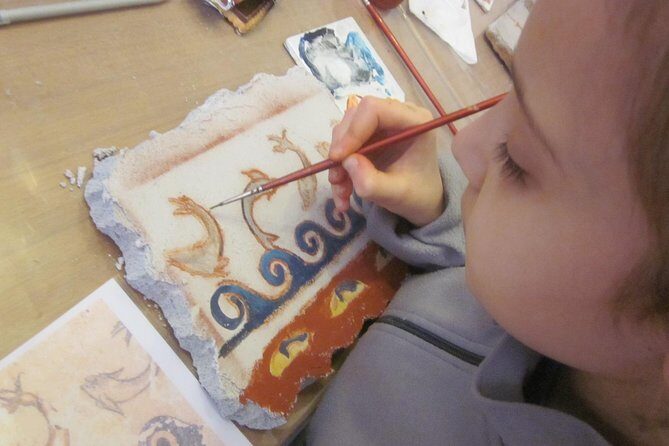
This is a Rome activity built around doing, not sightseeing. The studio sits on the Appian Way and is described as easily reachable by Metro A, which matters because Rome can eat your time fast. If you’ve already done a full day of churches and big-ticket ruins, this gives you a calmer change of pace without leaving the city.
The session runs about two hours, so it’s long enough to actually learn a process and finish a piece, but not so long that you’ll burn the day. It also helps if you travel with kids or you’re not trying to turn every hour into a workout.
The experience is private for your group, and you’ll get instruction in multiple languages. The activity is offered in English, and it can also be carried out in Italian, French, German, and Spanish. That flexibility is useful if you’re with mixed-language friends or family.
You can also read our reviews of more tours and experiences in Rome

What you make: Sistine Chapel-inspired fresco or Roman floor detail
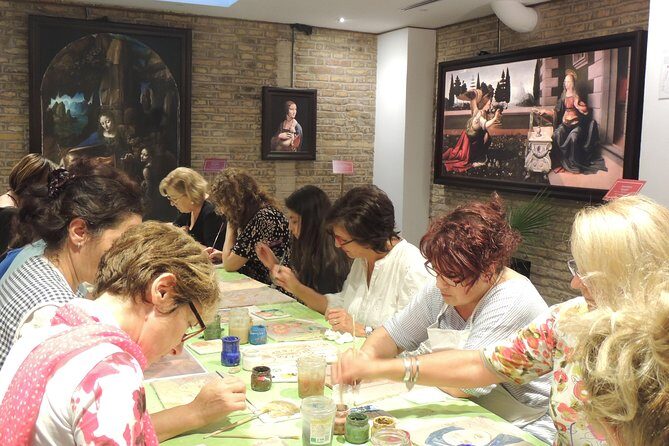
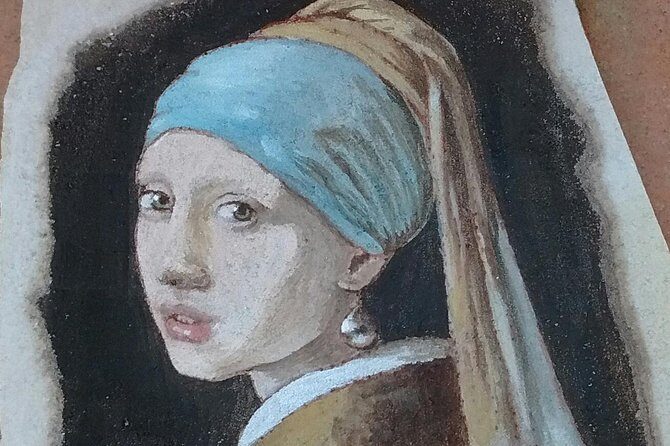
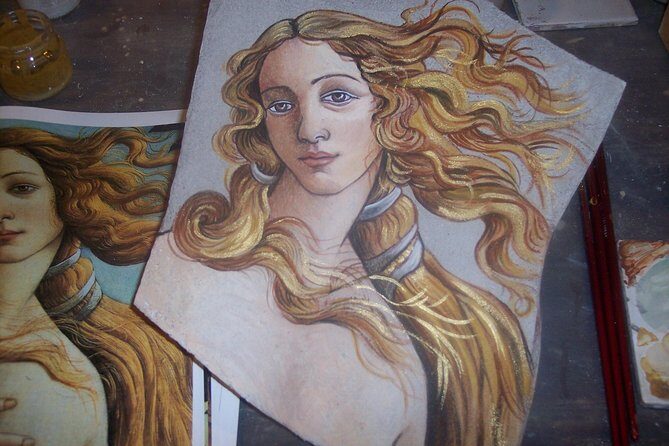
The subject choice is one of the best parts, because it changes the emotional payoff. You’re not just practicing brushstrokes. You’re reproducing an ancient-style image, with options tied to two very different visual worlds: a Michelangelo-style Sistine Chapel subject (or a detail-inspired alternative) and a Roman floor detail.
Here’s why that matters for value. If you’re the type who loves the big art names but doesn’t want another museum lecture, the Sistine option turns famous fresco work into something you can touch. If you prefer Roman material culture—floors, tiles, pattern logic—the Roman-detail option gives you a clear “aha” moment about how mosaics and decoration worked as daily environment.
And the mosaic element isn’t an afterthought. The workshop includes both fresco painting and mosaic work to recreate an ancient subject. You’re using natural pigments and colored marble tiles, so the tactile experience is real. You’ll feel the difference between stone, color, and surface texture.
Inside the two-hour class: how the session flows
Even though you’re only in the studio for about two hours, the structure is designed to keep you moving in the right order. The goal is simple: create an ancient-style piece, using methods that teach you why fresco worked in the first place.
A typical flow looks like this:
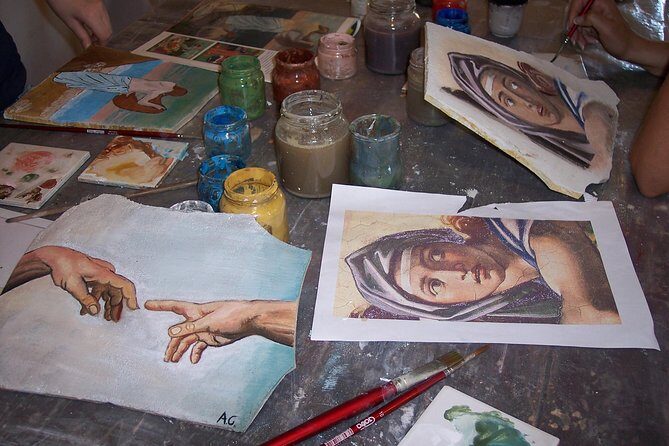
You start by choosing your project. Then the teacher helps you translate your design onto the painting surface. Fresco work depends on careful transfer and layering, so don’t expect a “free paint and hope” style class. You’ll get guidance that covers both technique and historical logic.
Next comes the part that makes fresco different from regular wall paint. You’ll work with pigments and plaster in a way meant to show how the paint bonds as part of the process. In feedback from past students, instructors—such as Cecelia and Nina—emphasize the science behind the durability, including how the pigment interacts with the plaster to create a lasting layer. You don’t need art school for this, but you do need to pay attention for a few key steps.
Finally, you complete your artwork and leave with it. That “take it home immediately” promise is huge. Most Rome experiences are temporary: you watch, you learn, you walk away. This one ends with something physical.
One small practical note
This is not a super-fast craft session. If you tend to get frazzled in structured activities, plan to relax and go with it. The best outcomes come when you follow the sequence the instructor gives you.
The instructors and why their guidance really matters
In this kind of class, the teacher can make or break the experience. The feedback you provided consistently highlights instruction style: patient, step-by-step, and encouraging even for people who don’t think of themselves as artists.
Names that come up include Cecelia and Nina, both described as kind, attentive, and skilled in fresco teaching. One student also specifically mentioned an instructor’s background as a restoration specialist, and that personal, technical perspective is exactly what you want here. Restoration knowledge tends to come with an understanding of materials and cause-and-effect, which helps you grasp why certain steps matter.
So what should you look for in the instructor-led experience?
- Clear explanations you can actually use while your hands are busy
- Helpful tips for mixing and blending color
- Guidance that works for both confident artists and first-timers
The nice part is that this workshop is designed to handle mixed skill levels. Parents reported that kids and adults both had a great time, and that the instructions were approachable. That’s a strong sign the teachers adapt to the room.






Materials you can see, not just read about
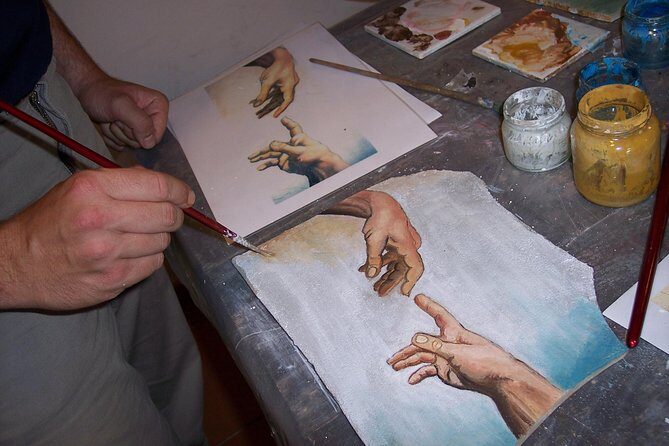
A big reason people rate this kind of workshop so highly is the material honesty. This experience is explicit about using natural pigments and colored marble tiles. When an art class makes those choices, it changes what you notice.
You’ll likely pay attention to:
- How pigments behave when applied
- How surface preparation affects the look
- How mosaic tiles look and feel as you place them
One of the most fascinating ideas in fresco—shared in the instructor explanations reported in your materials—is the bonding that helps fresco survive. That’s the difference between “paint on top” and “paint as part of the wall system.”
I also like that the workshop doesn’t pretend you’re performing cathedral-scale fresco labor. It’s instructional, but it’s still tied to the historic logic. That’s how you get appreciation that carries into your Rome sightseeing after the class.
Rome value check: why this can beat another museum stop
Let’s talk price and why it can still feel fair.
This costs $246.90 per group (up to 2) for about two hours. On paper, that’s not “cheap.” But the value is in three places:
- You create something real and take it home immediately.
- Materials are included—colors, brushes, marble tiles, and what you need to make the piece.
- Instruction is hands-on and private for your group, which usually means less waiting and more personal help than a typical group museum setup.
If you’re comparing against a museum ticket alone, you might wonder why you’d pay for a workshop instead of just seeing the Sistine Chapel or Roman mosaics again. Here’s the practical difference: this workshop gives your eyes a new filter. After learning the sequence and materials, you’ll likely notice fresco technique and surface logic in churches and ruins in a way you didn’t before.
Also, it can be a smart midday choice. One of the feedback notes singled out this class as a perfect break in hot weather. Even if you don’t travel in a heat wave, a two-hour indoor creative activity can save your energy for Rome’s outdoor walking later.
Getting there and timing your day on Metro A
The meeting point is listed as Bsocial, Via del Commercio 12 G, 00154 Roma RM. The studio is on the Appian Way and is described as reachable by Metro A, which is a big deal for a simple reason: it reduces stress. Rome navigation can be charming or chaotic depending on your day. If you’re relying on public transit, that Metro A connection helps you plan.
Because the class runs about two hours, I’d schedule it as a mid-day anchor. It’s also listed as available within opening hours of 10:00 AM–6:00 PM (Mon–Fri) across the given service window. The exact start time for your booking will be confirmed when you book, but the key idea is: you’re not stuck with some impossible early-morning slot.
And yes, you’re on your own for transport and meals. The workshop does not include transportation, food, or drinks. That’s normal. Just plan a quick snack before or after so you’re focused during the hands-on part.
Who this workshop suits best
This experience is built for a wide range of travelers. The data says most travelers can participate, and it’s described as suitable for adults and children, which is great if you’re traveling as a family.
It’s especially a good match if:
- You want an art activity that results in a take-home souvenir
- You’ve visited or plan to visit fresco-heavy sights and want a technical understanding
- You enjoy quiet, creative time without a long museum queue
- Your group includes different skill levels and you want instruction that adapts
It may be less ideal if you dislike structured activities or you can’t reliably manage a two-hour block. In that case, you may feel rushed, because fresco and mosaic steps aren’t designed to be done at speed.
Should you book Ancient Art Workshop: Fresco?
I’d book it if you want a genuinely memorable Rome experience that’s not just photo stops. The combo of natural materials, guided technique, and a finished take-home piece is hard to beat for the time you spend. If you love Renaissance art, the Sistine-inspired option gives you a personal connection. If you prefer Roman design, the floor detail and mosaic element can make Roman decoration click.
One caution: any workshop can have a rare disruption because real people run it. Your materials include an example of a last-minute cancellation, so if your schedule is extremely rigid, give yourself a small buffer on your calendar.
If you have the flexibility to enjoy the process and leave with something made by your own hands, this is a strong choice.
FAQ
How long is the fresco workshop?
It lasts about 2 hours.
What’s included in the price?
The price includes all materials you need for the workshops, such as colors, brushes, and marble tiles.
What does the class cover?
You do a fresco painting workshop and also create a mosaic element using materials made for the project.
Where is the workshop located?
It’s on the Appian Way in Rome. The meeting point is Bsocial, Via del Commercio 12 G, 00154 Roma RM, Italy. It’s described as easily reachable by Metro A.
Do I need to speak Italian?
Not if you’re choosing English. The activity is offered in English, and it can also be carried out in Italian, French, German, and Spanish.
Can children participate?
Yes. The experience is suitable for adults and children and is described as ideal for families.
Is it a private group activity?
Yes. It’s described as private, meaning only your group participates.
What’s the cancellation policy?
There is free cancellation. You can cancel up to 24 hours in advance for a full refund.
If you’d like, tell me your travel month and who’s coming (ages and art interest level). I’ll suggest a good time slot in the day and how to pair it with nearby Rome sights for best flow.